Cloudborne Travel
Colorado is the highest state in the United States by average elevation. The Rocky Mountains run through its center, with more than 50 peaks rising above 4,200 meters. Denver is the gateway in the east, and you can reach the mountains in 1–2 hours by car. Rocky Mountain National Park’s high mountain roads, Aspen’s aspen groves, the cliff dwellings and Great Sand Dunes in the southwest all offer something different.
The best seasons are July–August for alpine wildflowers and mid-September–early October for golden aspens. Mountain weather changes quickly. Summer brings afternoon thunderstorms almost every day, so try to finish hikes and high-elevation drives in the morning. Winter is ski season, and mountain roads require snow tires.
Elevation is the first thing to take seriously. Denver sits at about 1,600 meters, while mountain roads rise above 3,700 meters. It’s common to have headaches, shortness of breath, or trouble sleeping during your first 1–2 days. Spend your first night in Denver to acclimate, drink plenty of water, limit alcohol, and don’t head straight up into the mountains after landing.
High mountain roads are open June–September. Wildflowers peak in July–August, and golden aspens appear from mid-September–early October. December–March is snow season, and mountain roads require traction equipment.
Monthly weather
Based on DenverBest time to visit Monthly precipitation (mm) Open-Meteo (ERA5), 1996–2025 average
| Month | Average high (°C) | Average low (°C) | Monthly precipitation (mm) | Days with 1 mm or more of precipitation |
|---|---|---|---|---|
| Jan | 6.2 | -7.1 | 22 | 6 |
| Feb | 7.2 | -6.6 | 26 | 6 |
| Mar | 12.6 | -2.3 | 48 | 8 |
| Apr | 16.3 | 1.4 | 66 | 9 |
| May | 21.1 | 6.7 | 85 | 11 |
| Jun(Good time to visit) | 27.9 | 12.2 | 49 | 8 |
| Jul(Good time to visit) | 31.2 | 15.7 | 39 | 7 |
| Aug(Good time to visit) | 29.9 | 14.8 | 38 | 6 |
| Sep(Good time to visit) | 26.1 | 10.5 | 37 | 6 |
| Oct(Good time to visit) | 18.7 | 3.7 | 38 | 6 |
| Nov | 12 | -2.3 | 26 | 5 |
| Dec | 6.7 | -6.7 | 22 | 5 |
Sights
-
 1
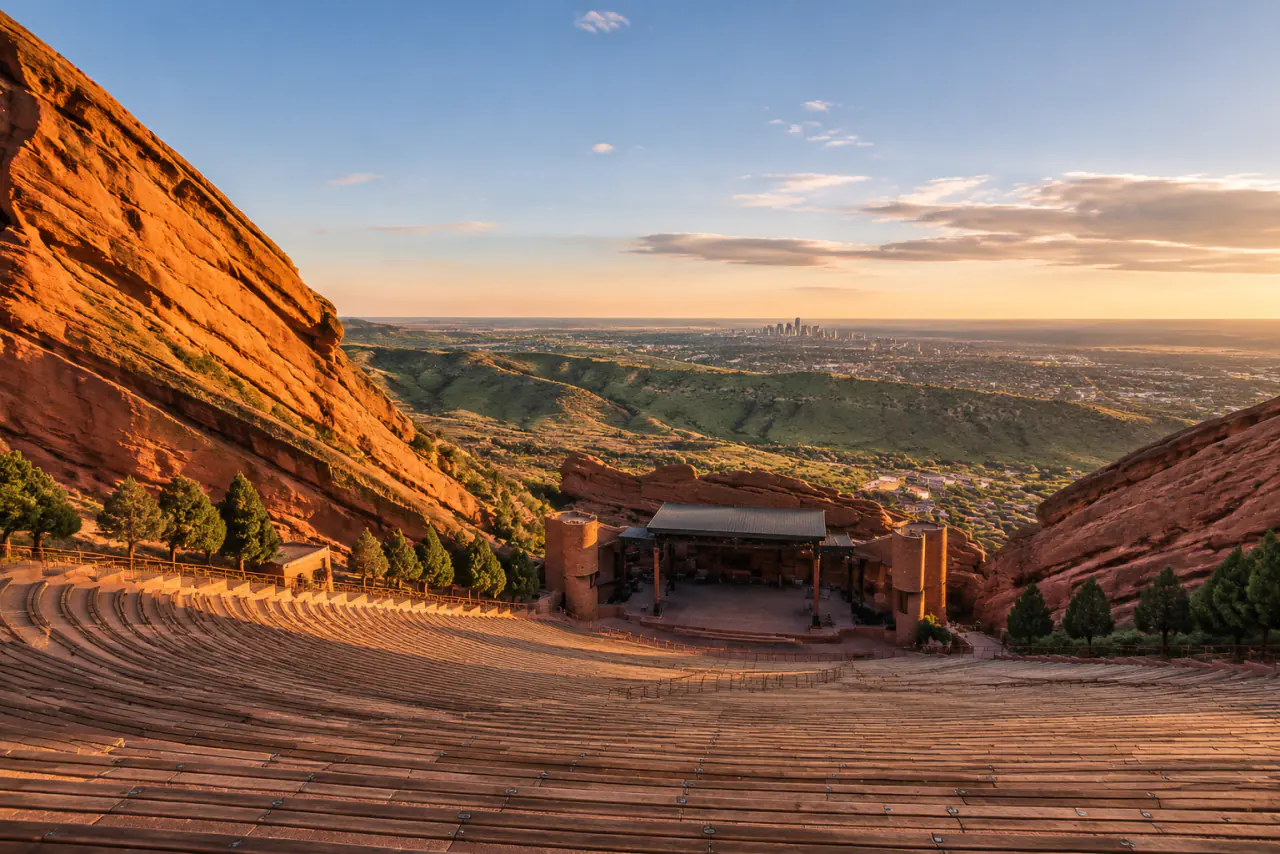
Denver and Red Rocks
Denver & Red Rocks
Denver is known as the “Mile High City,” at about 1,600 meters above sea level. The restored Union Station area anchors Lower Downtown, with restaurants and craft breweries clustered nearby. One step at the State Capitol is marked “one mile high.” Red Rocks, a 30-minute drive west, is built between two enormous red rock formations. Entry is free when no event is taking place, and an outdoor concert on a summer night is hard to beat.
Spend your first night in Denver to adjust to the elevation. Red Rocks tickets sell out early, so check the event calendar ahead of time.
-
 2
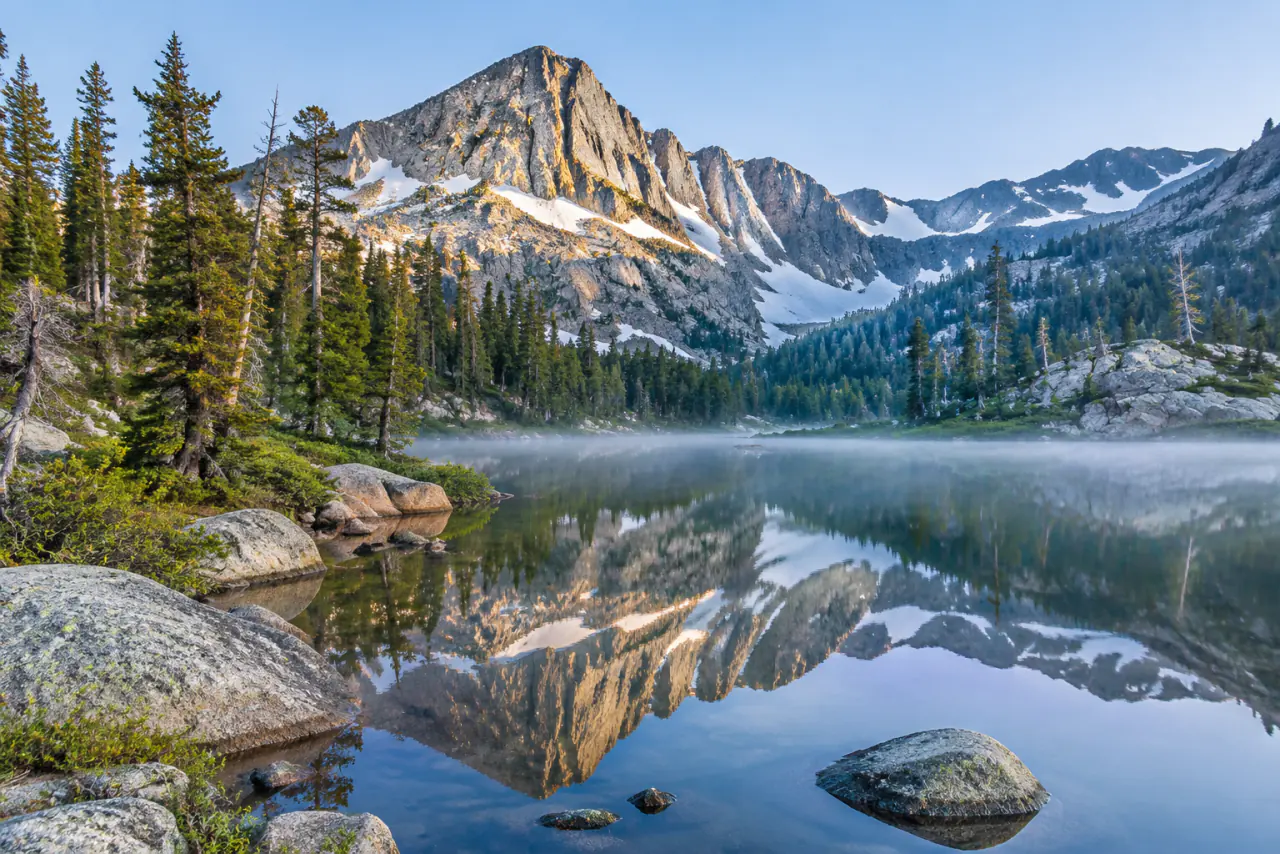
Rocky Mountain National Park
About 2 hours from Denver, with the entrance in Estes Park. The Bear Lake corridor is best for most visitors: the loop around Bear Lake is about 1 kilometer, while the round-trip hike to Dream Lake and Emerald Lake is about 6 kilometers. The trail passes alpine lakes and cirques. In fall, large herds of elk are common in the meadows, and bulls bugle during the September rut.
Timed-entry reservations are required from May 22, 2026–mid-October. The Bear Lake corridor requires a 5–18 entry time, while other areas require 9–14.
-
 3
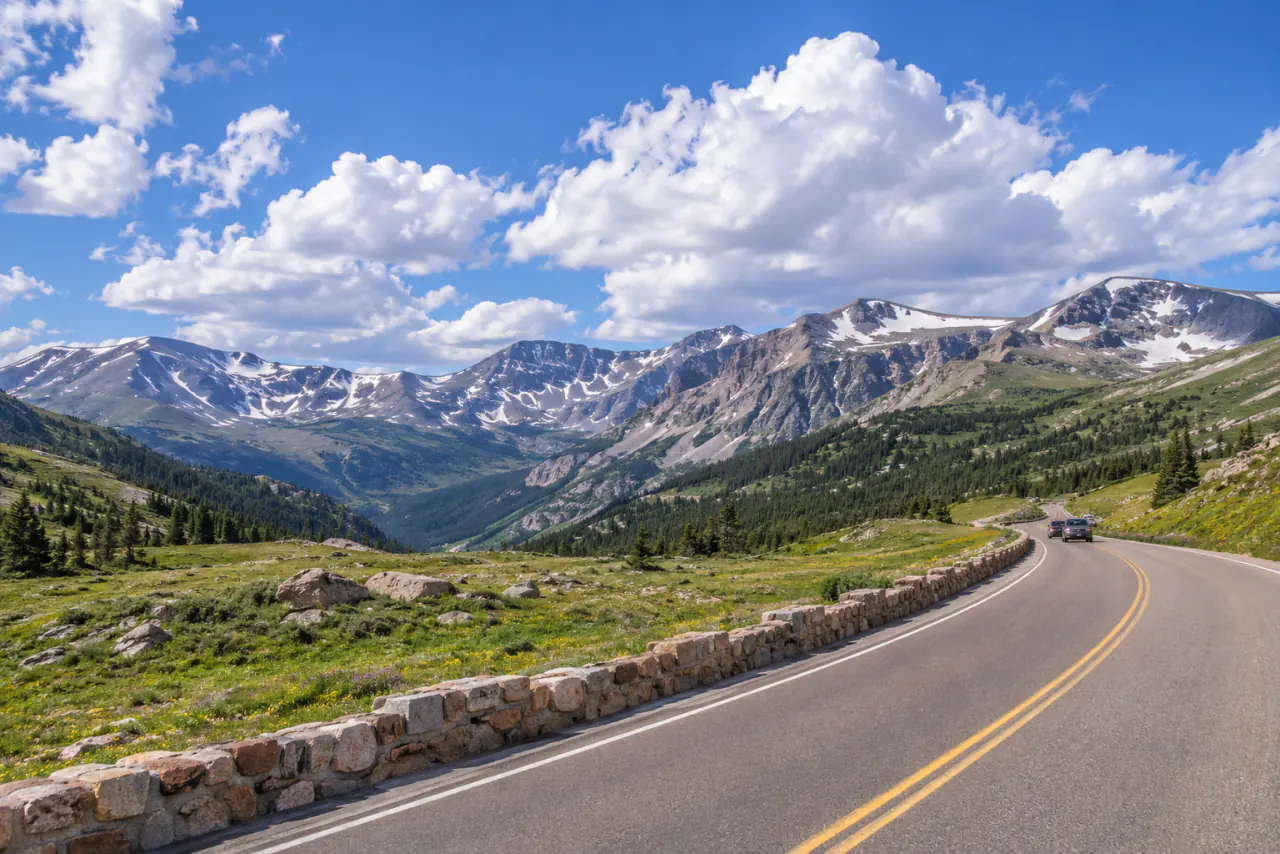
Trail Ridge Road
This high mountain road crosses Rocky Mountain National Park. Its highest point is about 3,713 meters, making it the highest continuous paved road in the United States. For more than a dozen kilometers in the middle, the road stays above the tree line, with tundra and distant snowcapped peaks on both sides. Marmots and elk are often visible along the road. Driving from Estes Park to Grand Lake on the west side takes about 2 hours for 77 kilometers, even without stops.
The road is generally open from late May–mid-October. Afternoon thunderstorms are common, so don’t linger at the summit and bring a jacket.
-
 4
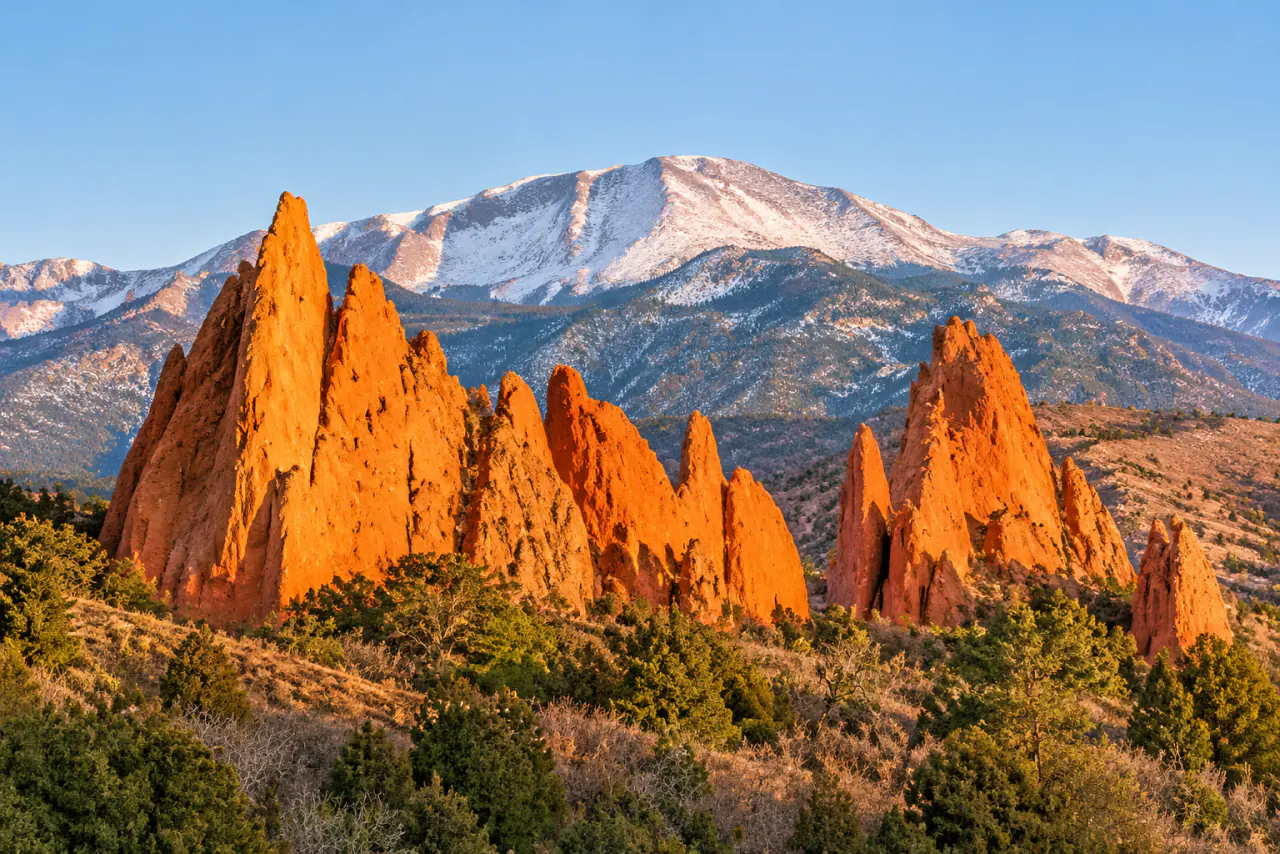
Garden of the Gods
This free city park on the edge of Colorado Springs features rows of upright red sandstone formations, with Pikes Peak behind them. A flat, paved trail loops around the central formations for about 2 kilometers and is manageable for older adults and children. Climbing routes and horseback riding are also available. Just over 1 hour from Denver, it’s a good stop on the way to Great Sand Dunes or farther south.
The rocks glow brightest at sunrise, when parking is also easier. The visitor center terrace offers views of the formations and Pikes Peak in the same frame.
-
 5
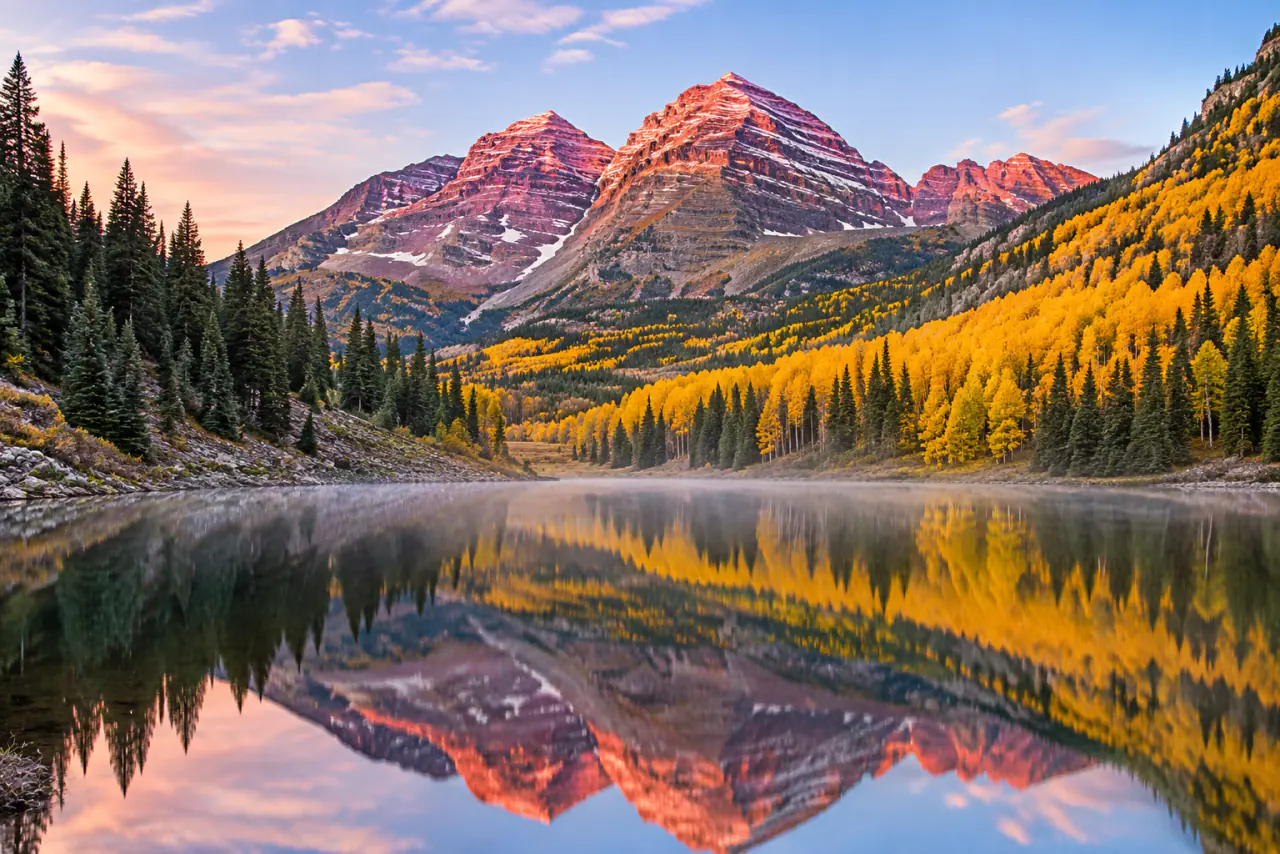
Maroon Bells
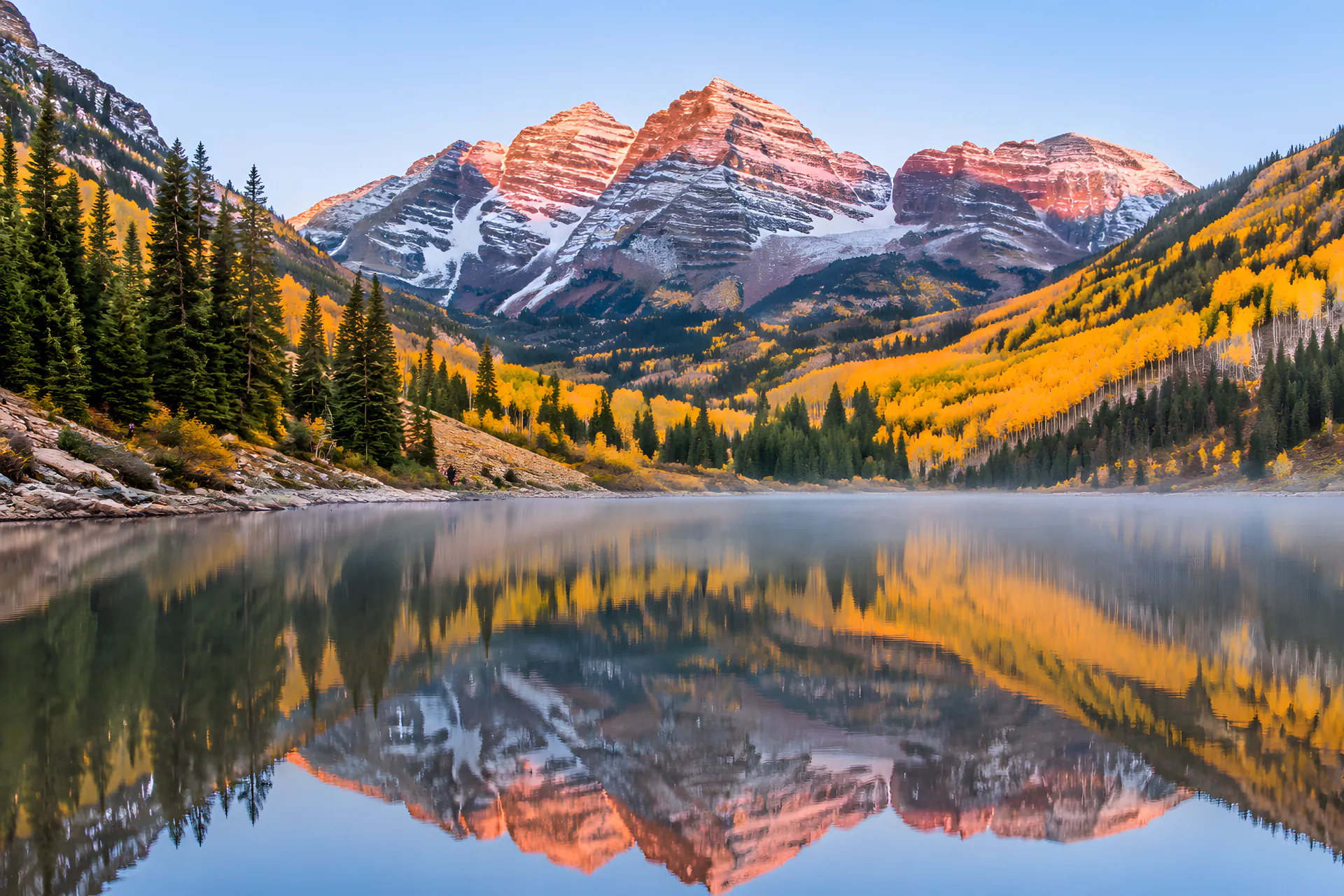
About 16 kilometers southwest of Aspen, the two striped, maroon-colored peaks are reflected in Maroon Lake. They are among Colorado’s most photographed mountain scenes. The aspen-covered slopes turn bright gold in late September, making this the busiest time. A level path runs along the lake, and those who want a longer walk can hike to Crater Lake, about 5.8 kilometers round trip.
From May–October, reserve a shuttle or parking permit on the official website. Permits go quickly during aspen season.
-
 6
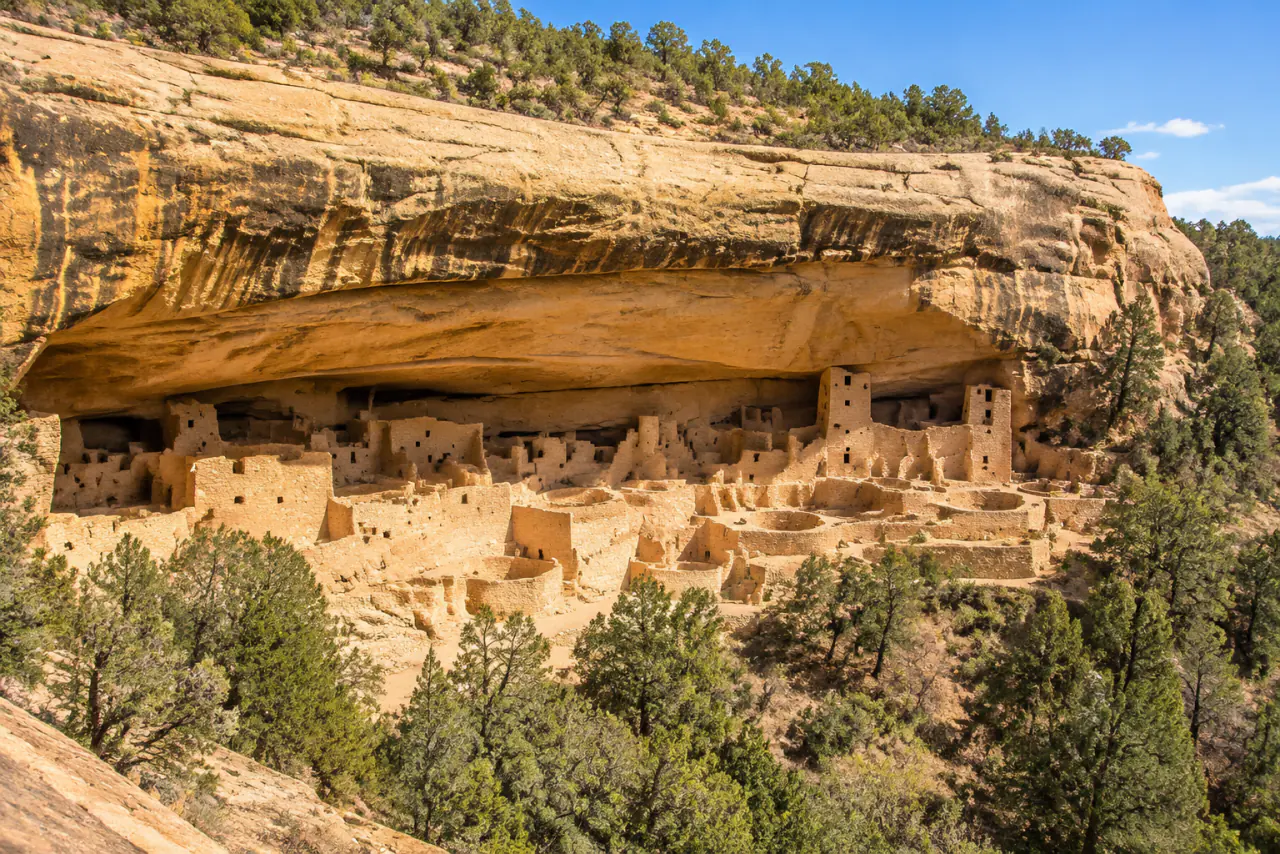
Mesa Verde National Park
Seven or eight hundred years ago, Pueblo people built stone villages in cliff alcoves on the mesa. Cliff Palace has more than 100 rooms and is the largest cliff dwelling in North America. You can see it from roadside overlooks, but a ranger-led tour is more rewarding: you’ll descend stone steps and climb several ladders. The drive from Durango to the entrance takes about 1 hour, followed by another 45 minutes on mountain roads to the cliff dwellings.
Cliff dwelling tours generally run from May–October. Tickets are released on recreation.gov 14 days in advance and cost about $8 per person. The park does not accept cash.
-
 7
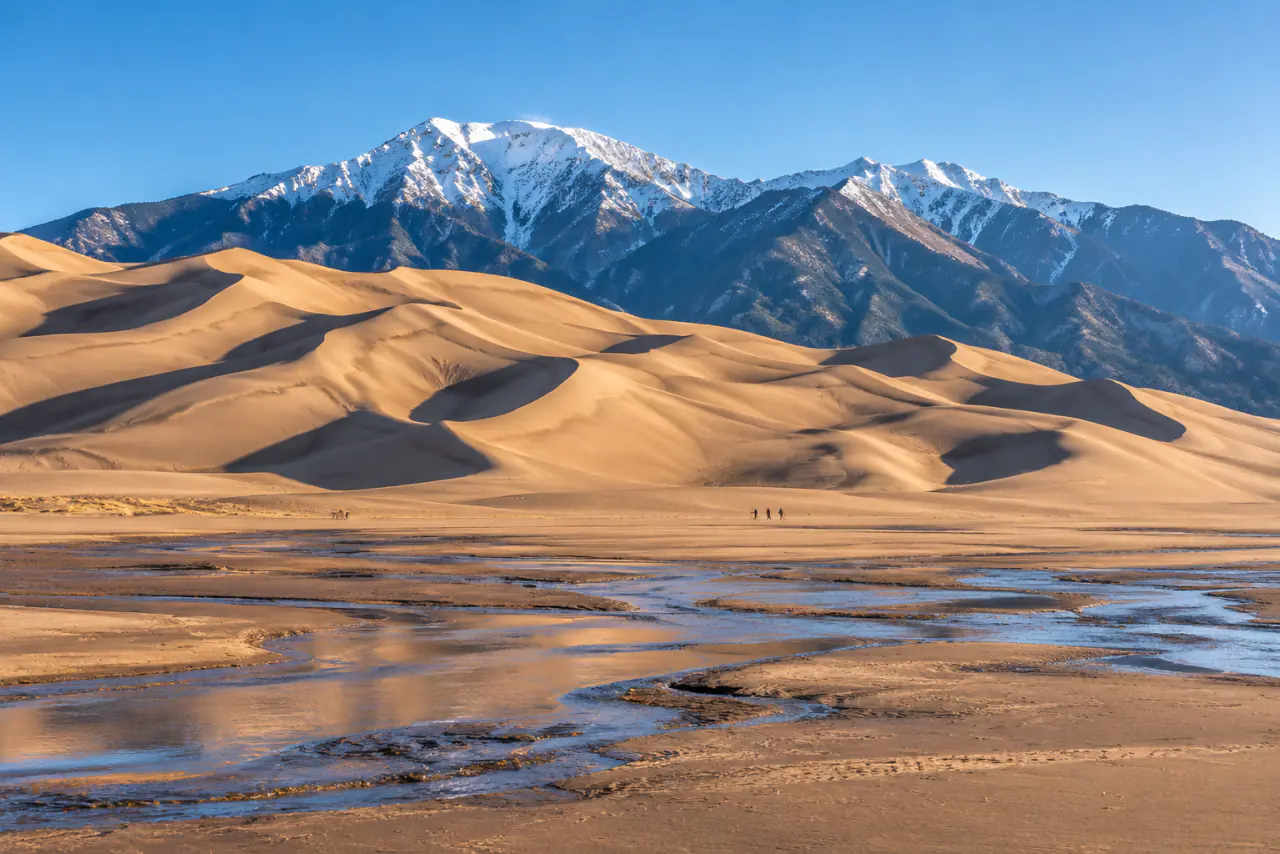
Great Sand Dunes National Park
The tallest sand dunes in North America rise suddenly at the foot of the Rockies, reaching about 230 meters, with snowcapped ridges behind them. You can climb the dunes or go sandboarding. From late May–June, snowmelt feeds Medano Creek into a shallow stream in front of the dunes, where children play in the water. The park is relatively quiet, and the night skies are excellent.
In summer, the sand is extremely hot in the afternoon and thunderstorms are common, so go in the morning. Rent a sandboard outside the park before entering.
-
 8
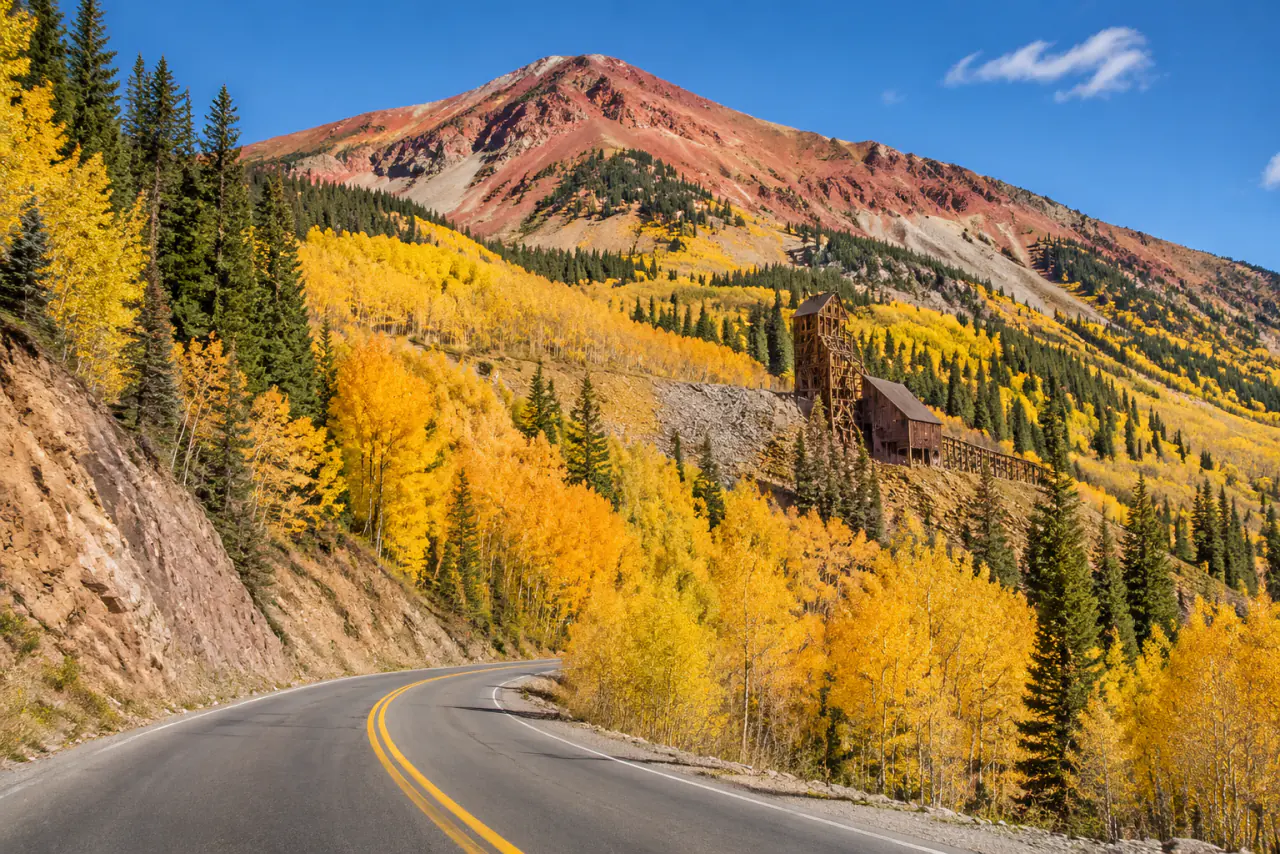
Million Dollar Highway
Million Dollar Highway (US 550)
The 40-kilometer section of US 550 between Silverton and Ouray crosses Red Mountain Pass at about 3,350 meters. The road hugs steep cliffs, and many curves have no guardrails. Along the way are abandoned mines, red slopes, and waterfalls. The scenery is best when the aspens turn gold in late September. Ouray sits at the bottom of a canyon and is known as “the Switzerland of America,” with hot springs for soaking.
If you’re afraid of heights, drive slowly in daylight on a clear day. Avoid the road after dark or during snow. It is often closed temporarily in winter because of snow.
What to eat

Colorado green chile
A thick stew made with roasted green chiles and chunks of pork. It’s spicy and fragrant. Locals like to “smother” almost anything with it, including burritos, burgers, hash browns, and even breakfast eggs. Chiles from Pueblo in southern Colorado are especially prized.
Mexican restaurants and breakfast spots in Denver · About $12–18 for a smothered burrito

Denver omelette
A classic American diner breakfast: eggs filled with diced ham, green peppers, and onions, often topped with cheese and served with hash browns and toast. Have a filling breakfast in Denver before heading into the mountains, and you won’t go hungry on the drive.
Casual breakfast restaurants in Denver · About $12–16 per serving, excluding tip
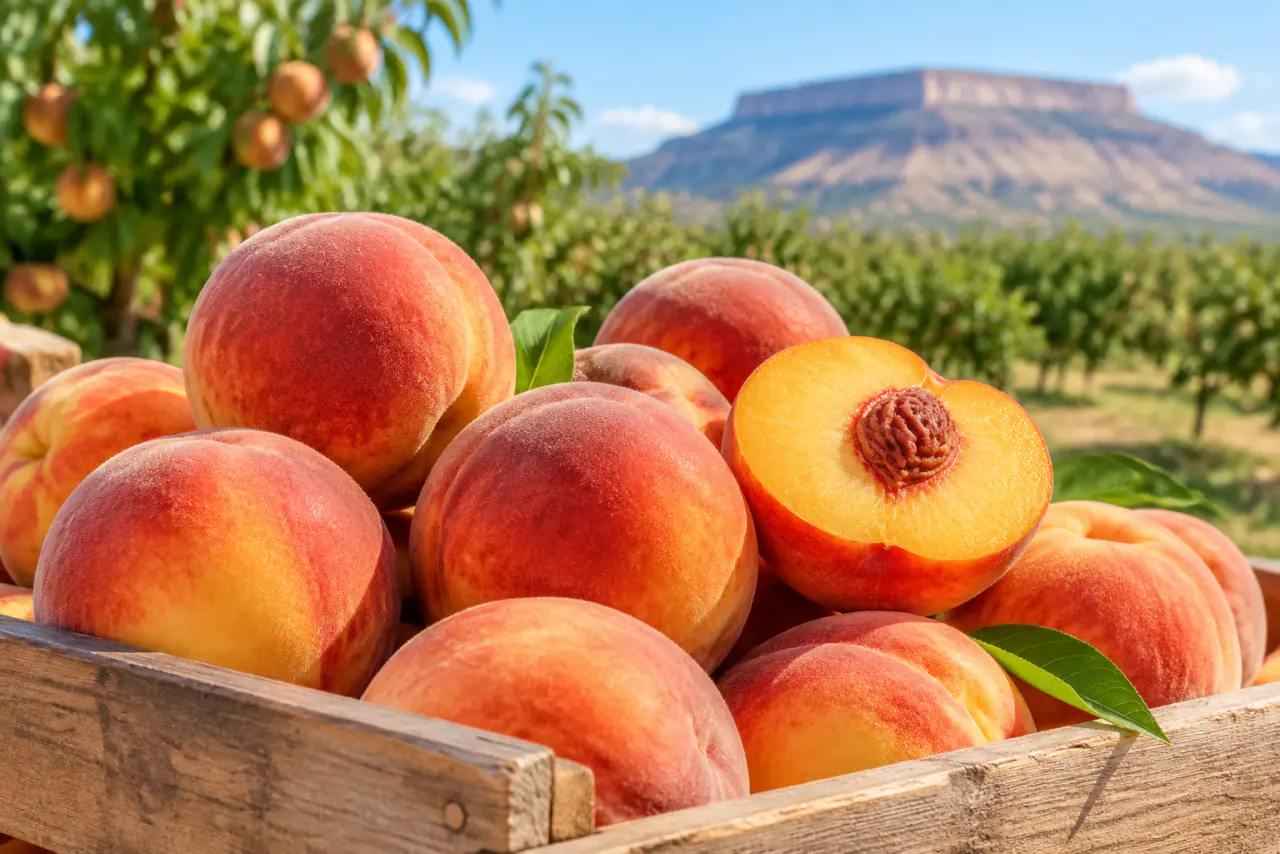
Palisade peaches
The town of Palisade, near Grand Junction in western Colorado, is a major peach and grape-growing region. Abundant sunshine and large day-to-night temperature swings produce exceptionally juicy, sweet peaches. Roadside stands sell them by the box from late July–September, and Denver farmers markets also carry them.
Palisade orchards and Denver farmers markets (July–September)

Craft beer
Denver and Boulder have more craft breweries than you can count. Many have tasting rooms where you can order a flight of small pours. Alcohol affects you more quickly at high elevation, so drink less during your first 1–2 days. If you’re renting a car, make sure someone in your group stays sober.
Denver’s RiNo Art District and Lower Downtown · About $7–9 per glass

Rocky Mountain oysters
Despite the name, these are battered and fried bull testicles, a dish left over from ranching days. The texture is somewhat like fried chicken. They’re a novelty dish available at some old-school Western steakhouses and sports venues in Denver, usually served with cocktail sauce.
Western-style steakhouses in Denver
Getting there · Where to stay
Most routes connect through San Francisco, Los Angeles, or Seattle. The transpacific leg takes about 11–13 hours, followed by about 2.5 hours to Denver.
The A Line commuter train reaches downtown in about 37 minutes. Rocky Mountain National Park’s east entrance is about 1.5–2 hours by car.
Driving to Denver via I-70 takes about 8 hours for 840 kilometers (520 miles). From Moab, it’s another 6 hours east.
Colorado Springs is about 110 kilometers and 1–1.5 hours away. Aspen takes about 3.5 hours, and Great Sand Dunes takes about 4 hours.
Stay near Denver Union Station when arriving or departing. Base yourself in Estes Park for Rocky Mountain National Park, Aspen or nearby Snowmass for fall colors, and Durango or Ouray for Mesa Verde and the Million Dollar Highway in the southwest.
Know this before you go
- High elevation: Denver is about 1,600 meters above sea level, and high mountain roads exceed 3,700 meters. Slow down, drink plenty of water during your first 1–2 days, and descend if a headache gets worse.
- Rocky Mountain National Park charges an additional $100 per foreign visitor age 16 and over. Mesa Verde and Great Sand Dunes do not charge this fee. The annual pass costs $250 and covers one entire vehicle.
- Mountain areas see afternoon thunderstorms almost every day in summer. Get below the tree line before noon, and turn back as soon as you hear thunder.
- From September–May, traction laws may be activated on the mountain section of I-70. Confirm tire requirements with your rental company. Licence rules depend on where your licence was issued; check with the rental company about carrying your passport and an English translation.
Source (2026-11)
NPS: Rocky Mountain National Park entry fees, NPS: Rocky Mountain National Park 2026 timed-entry reservations, NPS: Non-U.S. resident fee, NPS: Mesa Verde entry fees, NPS: Mesa Verde cliff dwelling tours, NPS: Great Sand Dunes entry fees, Aspen Chamber: Maroon Bells reservations, Aspen Snowmass: Maroon Bells transportation and shuttles