 Cloudborne Travel
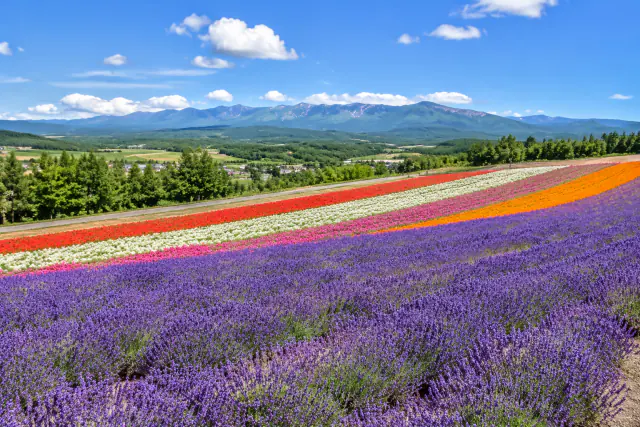 Hokkaido Garden · 1–2 hours Farm Tomita Furano's best-known lavender farm. The fields are at their most vivid in early to mid-July, with rows of colorful flowers nearby. Admission is free, and almost everyone gets a lavender ice cream. It's not far from JR Naka-Furano Station and is reachable on foot or by taxi. Outside flower season, there is little to see. Flower fields
Flower fields
A full season of flowers follows the cherry blossoms: wisteria and nemophila in late April, hydrangeas in June, and Hokkaido lavender in July. Bloom periods are more stable, and crowds are lighter.
April–August25 sights8 regions
Hokkaido Garden · 1–2 hours Farm Tomita Furano's best-known lavender farm. The fields are at their most vivid in early to mid-July, with rows of colorful flowers nearby. Admission is free, and almost everyone gets a lavender ice cream. It's not far from JR Naka-Furano Station and is reachable on foot or by taxi. Outside flower season, there is little to see. Flower fields 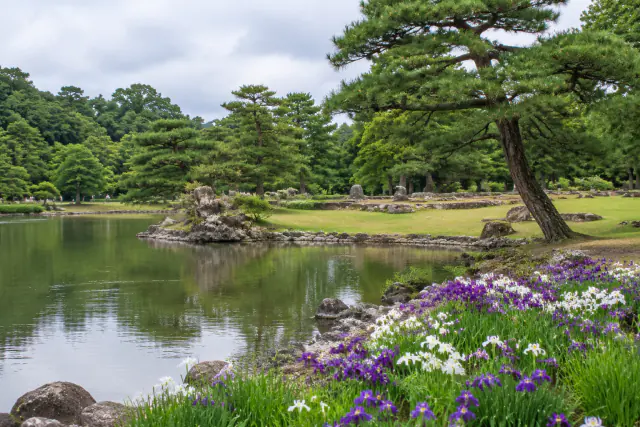 Iwate Garden · about 1 hour Motsu-ji The original temple buildings burned down long ago, leaving a peaceful Heian-period Pure Land garden with a large pond, curving stone banks, and foundation stones from the ruins. It is much quieter than Chuson-ji. About a 7-minute walk from Hiraizumi Station, it pairs well with Chuson-ji in a single day. Historic sitesFlower fields
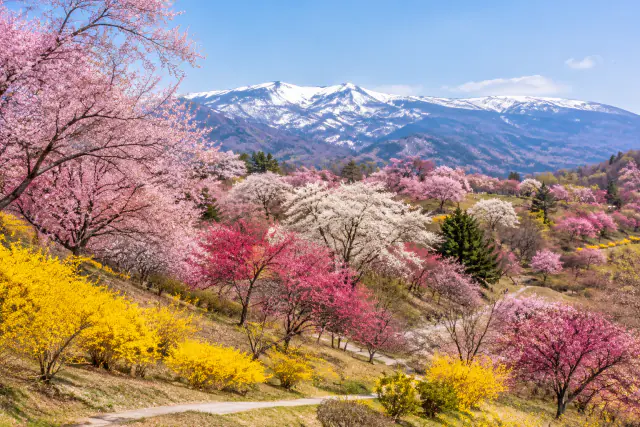 Fukushima Park · 1–2 hours Hanamiyama Park A flower farmer opened this family-owned hillside to the public for free. In early to mid-April, cherry blossoms, forsythia, magnolias, and peach blossoms bloom together in shades of pink, yellow, and white, with the still-snowy Azuma Mountains in the distance. A full loop takes about 1 hour, and several routes of different lengths are available. Cherry blossomsFlower fields
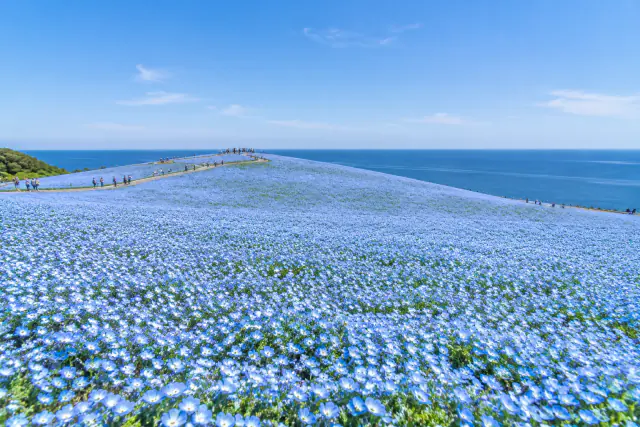 Ibaraki Park · 3–4 hours Hitachi Seaside Park Ibaraki's best-known sight. In spring, nemophila cover Miharashi Hill in blue that seems to stretch to the horizon. In October, rounded kochia bushes on the same hillside gradually turn from green to red. The park is large, with a sightseeing train and bicycle rentals. A bus from Katsuta Station's east exit takes about 15 minutes to the park's west entrance. Flower fieldsIslands
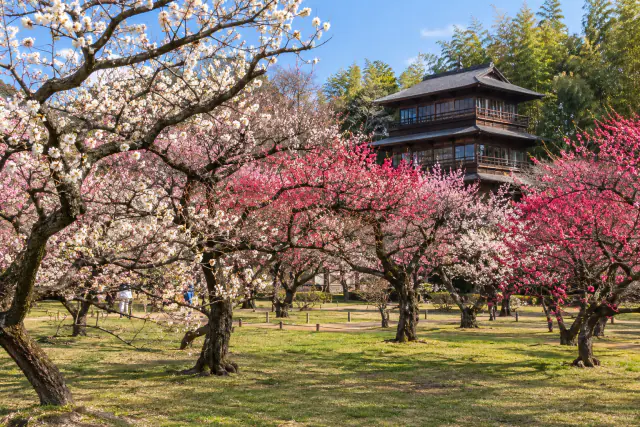 Ibaraki Garden · 1.5–2 hours Kairaku-en One of Japan's 3 great gardens, built in the 19th century by the lord of Mito for the public to enjoy. It has about 3,000 plum trees in more than 100 varieties. The Mito Plum Blossom Festival runs from mid-February to late March. Kobuntei, a wooden pavilion in the garden, overlooks Lake Senba from its upper floor. Take a bus from Mito Station's north exit for about 15 minutes, or walk along Lake Senba for 30 minutes. Flower fieldsHistoric sites
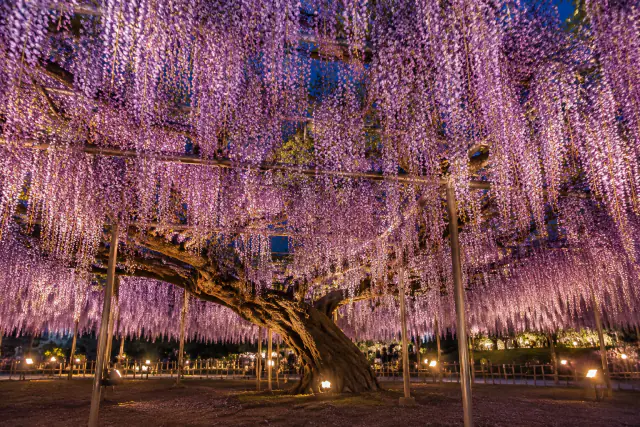 Tochigi Park · 2–3 hours Ashikaga Flower Park The park is famous for its wisteria. A 160-year-old wisteria spreads across its trellis like a purple ceiling, while a white wisteria tunnel stretches about 80 meters. The Wisteria Festival runs from mid-April to mid-May, and the park feels even more dreamlike after the evening lights come on. Admission varies with the day's bloom conditions. JR's Ryōmō Line has a dedicated Ashikaga Flower Park Station, a 3-minute walk from the entrance. Flower fields
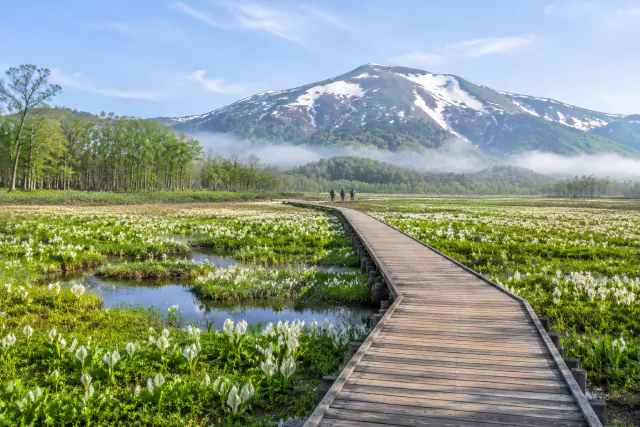 Gunma Hiking · 1 day Ozegahara Marsh Honshu’s largest alpine wetland has boardwalks stretching for several kilometers through open marshland, backed by Mount Shibutsu and Mount Hiuchigatake. Asian skunk cabbage blooms from late May to June, followed by Nikko daylilies in July. The grasses turn gold from late September to early October. From Gunma, the usual entry point is Hatomachitoge Pass. Allow a full day for the round trip. Flower fieldsAutumn leavesMountains
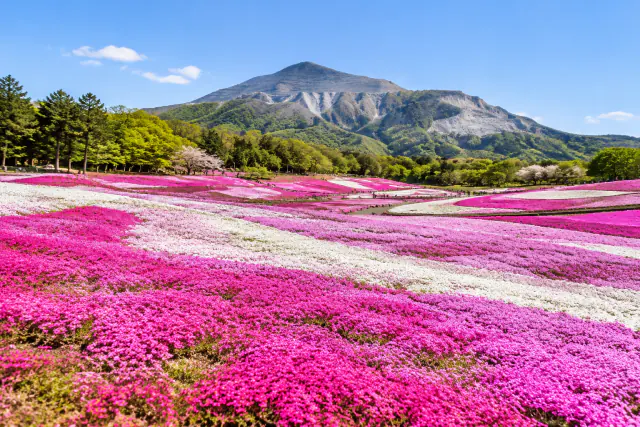 Saitama Park · 1.5–2 hours Hitsujiyama Park From mid-April to early May, pink, purple, and white moss phlox cover the hillsides in colorful carpets, with Mount Buko rising behind them. It is a 15–20-minute walk from Seibu-Chichibu Station. Outside the blooming season, the park is free and offers a hilltop view over Chichibu. Flower fields
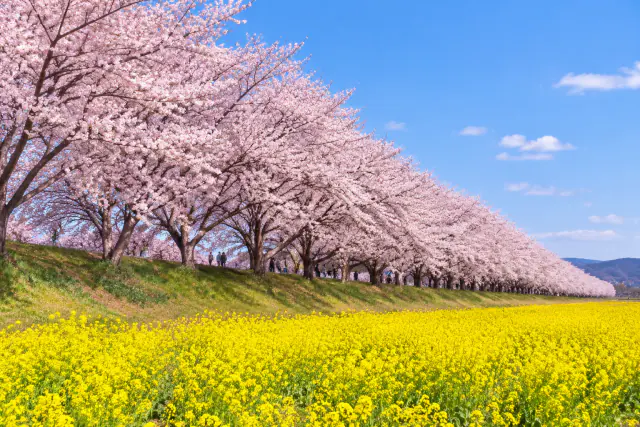 Saitama Park · 1–2 hours Gongendo Sakura Embankment Someiyoshino cherry trees line this roughly one-kilometer-long embankment. From late March to early April, the blossoms bloom alongside rapeseed flowers below, creating a classic Kanto scene of pink and yellow. Hydrangeas bloom in June, followed by red spider lilies in late September. From Satte Station on the Tobu Nikko Line, take a bus to the Gongendo-iriguchi stop, then walk 5 minutes. Cherry blossomsFlower fields
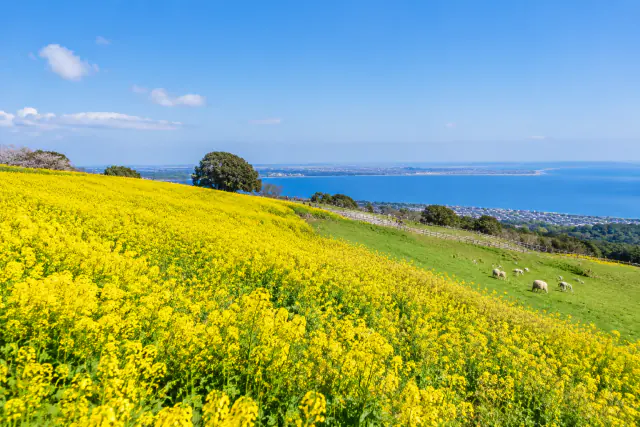 Chiba Park · Half a day Mother Farm This large tourist farm sits in the hills of the Bōsō Peninsula. You can see and feed sheep, alpacas and cows, and try milking a cow. In spring, the canola fields on the hillsides are spectacular. Depending on the season, you may also see nemophila, hydrangeas and cosmos. The farm's soft-serve ice cream made with freshly milked milk is popular. It is a good place to spend a full day with children. Flower fields
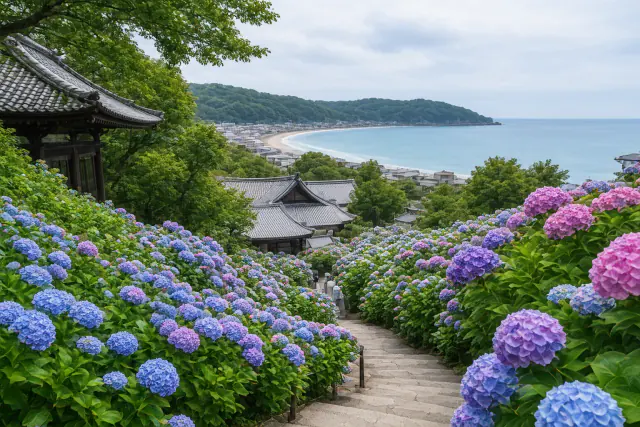 Kanagawa Temple · About 1 hour Hase-dera Built halfway up a hillside, this temple houses a more than 9-meter-tall Eleven-Headed Kannon in its Kannon Hall. The observation platform overlooks Kamakura Bay. Flowers bloom here year-round, with the hydrangeas on the hillside being the most famous in June. It is a 5-minute walk from Hase Station and lies along the same route as the Great Buddha of Kamakura. Flower fieldsIslands
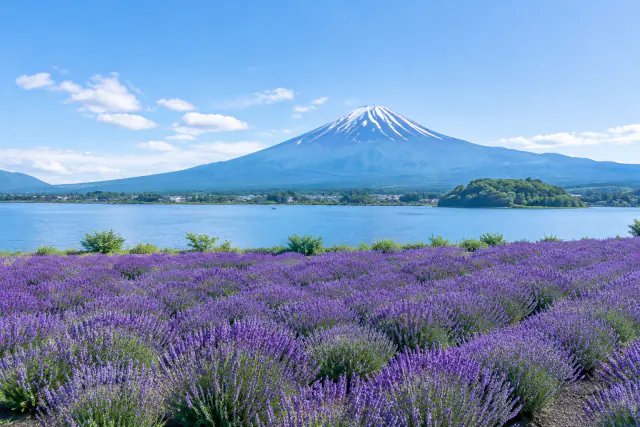 Yamanashi Park · 1–2 hours Lake Kawaguchi (Oishi Park) The easiest of the Fuji Five Lakes for transportation and accommodation, Lake Kawaguchi offers views of Mt. Fuji across the lake from Oishi Park on the north shore. Lavender blooms from late June through July, while kochia turns red in fall, giving each season a different foreground. Sightseeing buses circle the lake, and you can also rent a bicycle and ride along the shore. Flower fieldsMountains
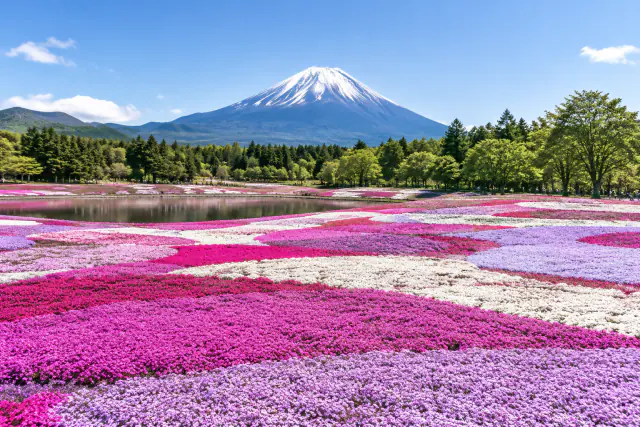 Yamanashi Park · 1.5–2 hours Fuji Shibazakura Festival The festival venue near Lake Motosu is planted with about 500,000 moss phlox plants. Pink, white, and purple flowers form a vast carpet with Mt. Fuji behind them. The festival runs from mid-April to late May each year, with peak bloom generally around early May. A seasonal shuttle bus runs from Kawaguchiko Station and takes about 40 minutes. Flower fields
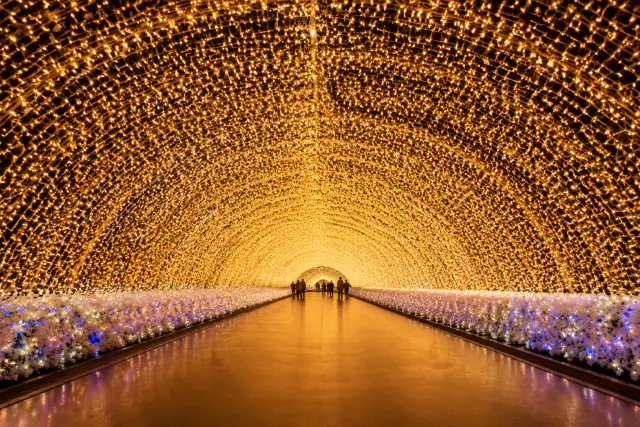 Mie Garden · 2–3 hours Nabana no Sato This large garden in Kuwana combines seasonal flower displays with a huge greenhouse. Its hydrangea and iris gardens in early summer are said to be among Japan's largest. The biggest draw is the light show from fall and winter through spring, when millions of bulbs form tunnels and themed displays. It's about 40 minutes by highway bus from Nagoya Station. Flower fields
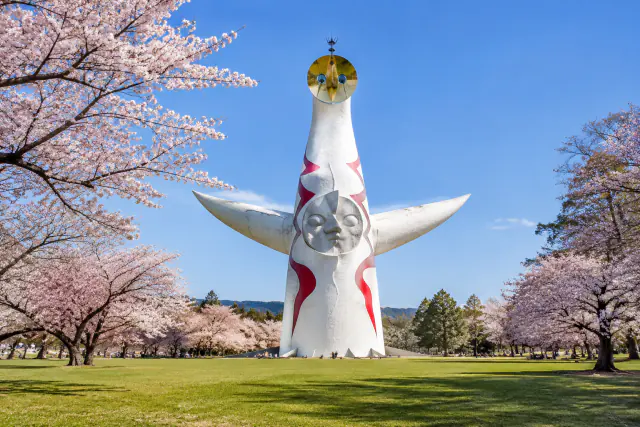 Osaka Park · 2–3 hours Expo '70 Commemorative Park This is the former site of the 1970 Osaka Expo. Taro Okamoto's Tower of the Sun stands dramatically in the middle of the lawn. The large park offers seasonal flowers, including cherry blossoms in spring, poppies in early summer, and cosmos and fall foliage in autumn. From Umeda, take the subway and transfer to the monorail; the trip takes about 40 minutes. ArtCherry blossomsFlower fields
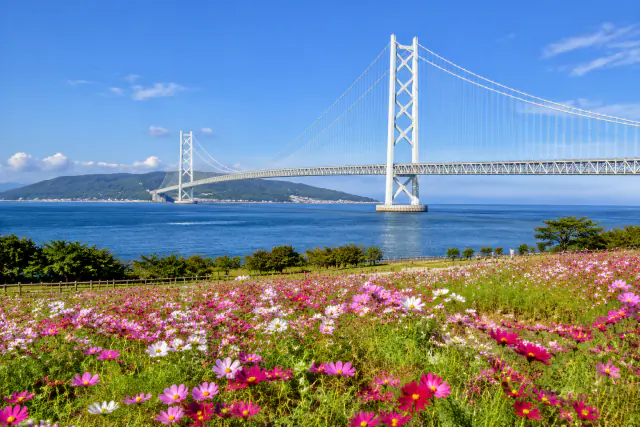 Hyogo Islands · 1 day Awaji Island Cross the Akashi Kaikyo Bridge to this large island for sea views, flowers, and local onions. Tadao Ando's Awaji Yumebutai is near the island end of the bridge, and Akashi Kaikyo National Government Park has broad sweeps of flowers in spring. Local buses are limited. The easiest way to reach the island is by highway bus from Sannomiya. IslandsFlower fieldsArt
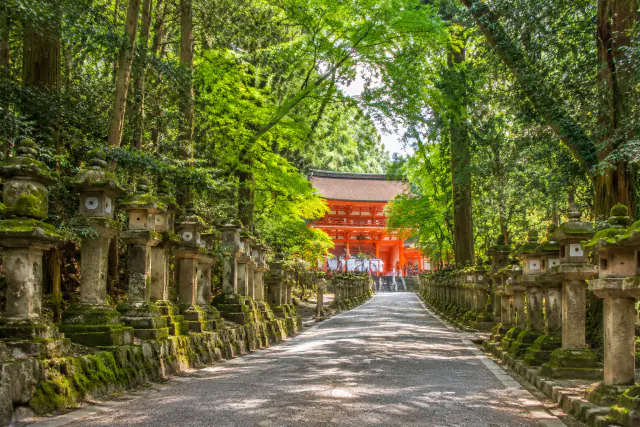 Nara Shrine · About 1 hour Kasuga Taisha The vermilion shrine buildings sit beside an ancient forest. About 2,000 moss-covered stone lanterns line the approach, and more than 1,000 bronze lanterns hang inside the shrine. The atmosphere is quieter than at Todai-ji. The wisteria along the corridors is famous in early summer, and during the Mantoro festivals in early February and mid-August, all the lanterns are lit. Historic sitesFlower fields
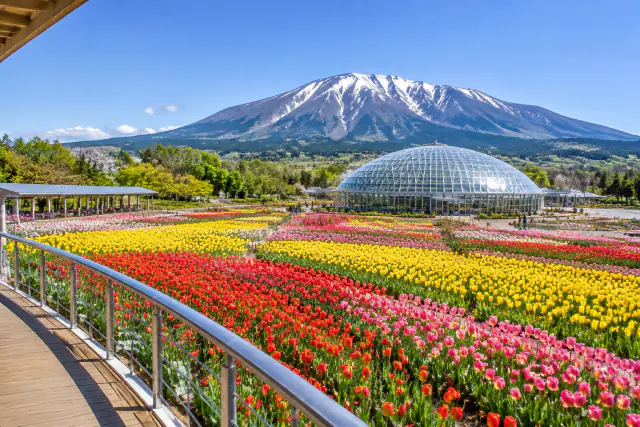 Tottori Park · 2–3 hours Tottori Hanakairo Flower Park One of Japan's largest flower parks, Tottori Hanakairo has a circular walkway around broad flower fields, with Mount Daisen in the background. Tulips bloom in spring, lilies in early summer, and cosmos in fall. Winter brings a large-scale illumination show. Public transportation is limited, so plan it for the same day as Mount Daisen. Flower fields
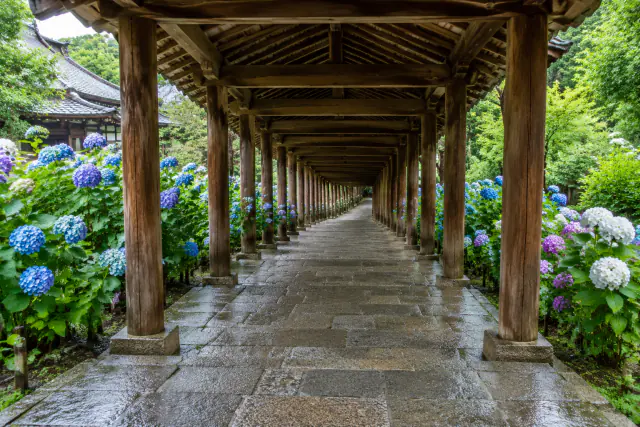 Okayama Shrine · 1 hour Kibitsu Shrine This shrine is dedicated to Kibitsuhiko-no-Mikoto, said to be the model for Momotaro. The main hall is a National Treasure, and a photogenic wooden corridor about 360 meters long extends along the hillside behind it. Hydrangeas bloom beautifully beside the corridor in June. From Okayama Station, take the JR Kibi Line for about 20 minutes. It makes an easy half-day trip from the city. Historic sitesFlower fields
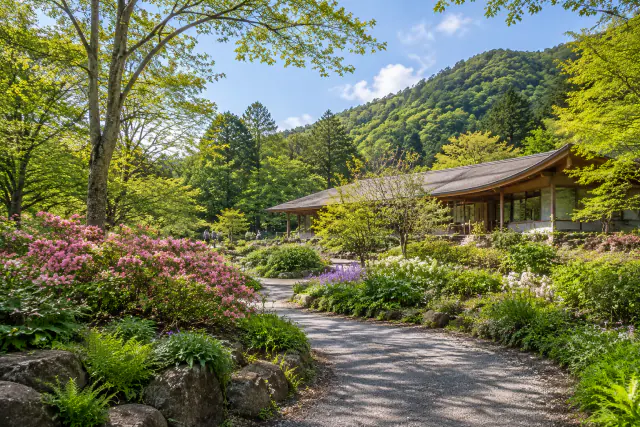 Kochi Garden · 2 hours Makino Botanical Garden Built to honor Tomitaro Makino, known as the 'father of Japanese botany,' this hillside garden has a greenhouse, native plant areas, and beautifully designed exhibition buildings. Flowers bloom year-round, with the busiest displays in spring and early summer. It is on Mount Godai, in the same direction as Katsurahama Beach, so the two can be visited on the same day. Flower fieldsMountains
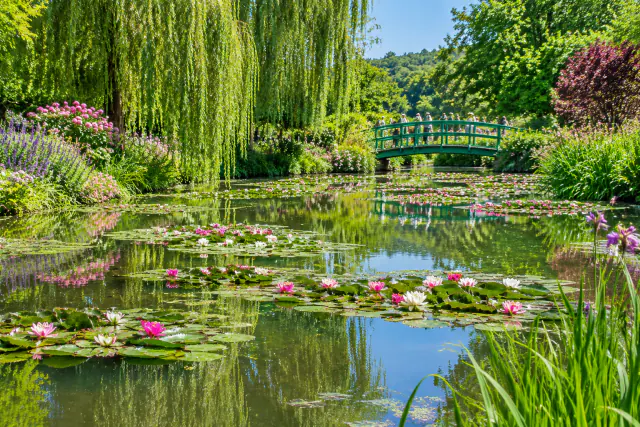 Kochi Garden · 2 hours Monet's Garden Marmottan Modeled after Monet's garden in Giverny, this is the only garden outside Giverny officially authorized by a Monet-related foundation to use the name 'Monet's Garden.' It has a water-lily pond, Japanese bridge, and garden cottage. The water lilies are at their best in spring and summer. In eastern Kochi, it takes about 2 hours from Kochi City by train and bus, so plan a full day for it. Flower fieldsArt
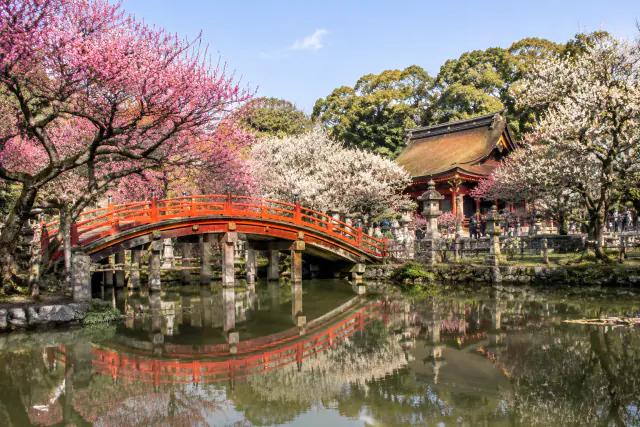 Fukuoka Shrine · half a day Dazaifu Tenmangu Dedicated to Sugawara no Michizane, the deity of learning, this shrine draws many visitors seeking good luck before exams. Plum blossoms fill the grounds in early spring, and the approach is lined with shops selling umegae mochi. Eating one as you walk is part of the experience. The Kyushu National Museum is right next door. Take the escalator through the tunnel behind the shrine to reach it, and you can see both in half a day. Historic sitesFlower fields
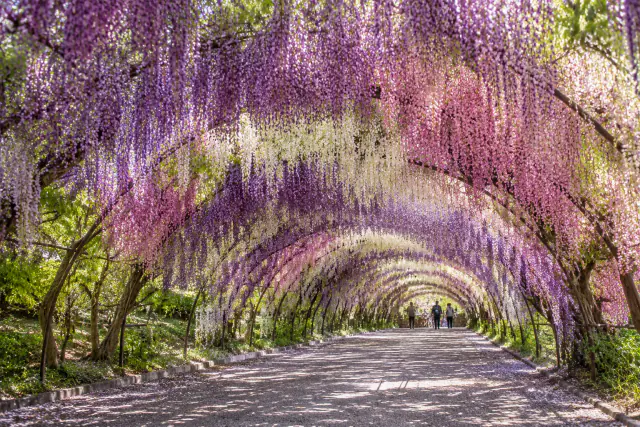 Fukuoka Garden · 1.5–2 hours Kawachi Fujien This privately run wisteria garden is known for its seemingly endless wisteria tunnels during the bloom season, which draws many visitors to northern Kyushu. The flowers usually bloom from late April to early May. The garden also opens briefly for fall foliage. Admission varies with bloom conditions, and tickets are not sold at the gate. Flower fieldsAutumn leaves
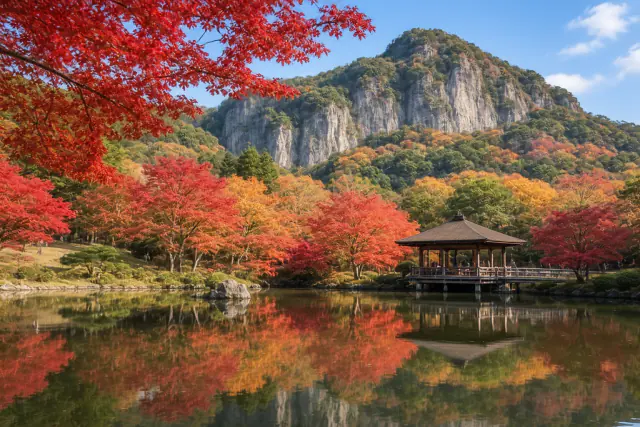 Saga Garden · 1.5–2 hours Mifuneyama Rakuen A large garden built against a steep mountain. In spring, azaleas and cherry blossoms cover the slopes. In fall, leaves are reflected in the ponds, and evening light displays take place. It's in the same small city as Takeo Onsen, making it easy to combine a soak with a garden visit in one day. Autumn leavesFlower fieldsCherry blossoms
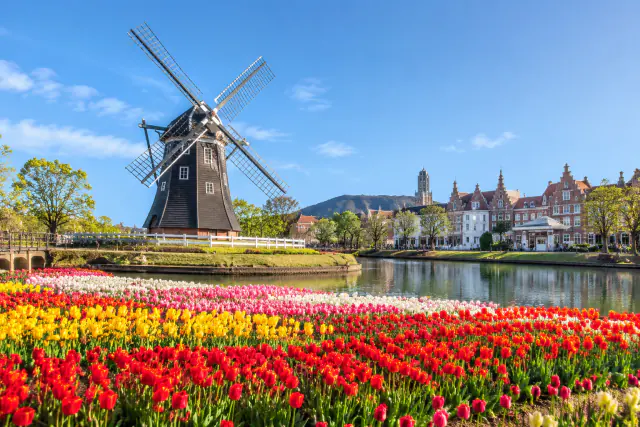 Nagasaki Theme park · 1 day Huis Ten Bosch This large theme park recreates Dutch streets, with canals, windmills, and European-style buildings spread across a wide area. It is best known for spring tulips and winter illuminations. The nighttime lights are a major reason many people visit. Plan on a full day, especially for couples and families. Flower fields