Cloudborne Travel
Iwate is the largest prefecture on Honshu, but most visitors focus on two areas: Hiraizumi and Ichinoseki in the south, and the prefectural capital, Morioka, in the north. Hiraizumi's Chuson-ji Konjikido is a World Heritage site, and with the two nearby gorges, it makes a full day out. Morioka's city center is compact and easy to explore on foot, with plenty of noodles to try.
Morioka is a major Shinkansen hub, with Aomori to the north and Kakunodate in Akita to the west along the way. Many travelers stay one night here while traveling through Tohoku. The Sanriku Coast to the east has beautiful scenery but slow transportation, so skip it if you're short on time.
Morioka's Ishiwarizakura blooms in mid-to-late April, while Hiraizumi's fall colors peak from late October to early November. In winter, gorge cruises have kotatsu tables.
Monthly weather
Based on MoriokaBest time to visit Monthly precipitation (mm) Open-Meteo (ERA5), 1996–2025 average
| Month | Average high (°C) | Average low (°C) | Monthly precipitation (mm) | Days with 1 mm or more of precipitation |
|---|---|---|---|---|
| Jan | 2 | -6.3 | 69 | 13 |
| Feb | 3.1 | -6 | 58 | 11 |
| Mar(Good time to visit) | 7.6 | -1.4 | 99 | 15 |
| Apr(Good time to visit) | 14.3 | 5 | 95 | 14 |
| May(Good time to visit) | 20.2 | 11.1 | 94 | 13 |
| Jun | 23.9 | 16.1 | 105 | 12 |
| Jul | 27.4 | 20.7 | 149 | 17 |
| Aug | 28.6 | 21.6 | 133 | 15 |
| Sep(Good time to visit) | 24.8 | 17 | 134 | 12 |
| Oct(Good time to visit) | 18.3 | 9.5 | 107 | 11 |
| Nov(Good time to visit) | 11.4 | 3.6 | 83 | 13 |
| Dec | 4.7 | -2.5 | 82 | 14 |
Sights
-
 1
Chuson-ji Konjikido
中尊寺金色堂
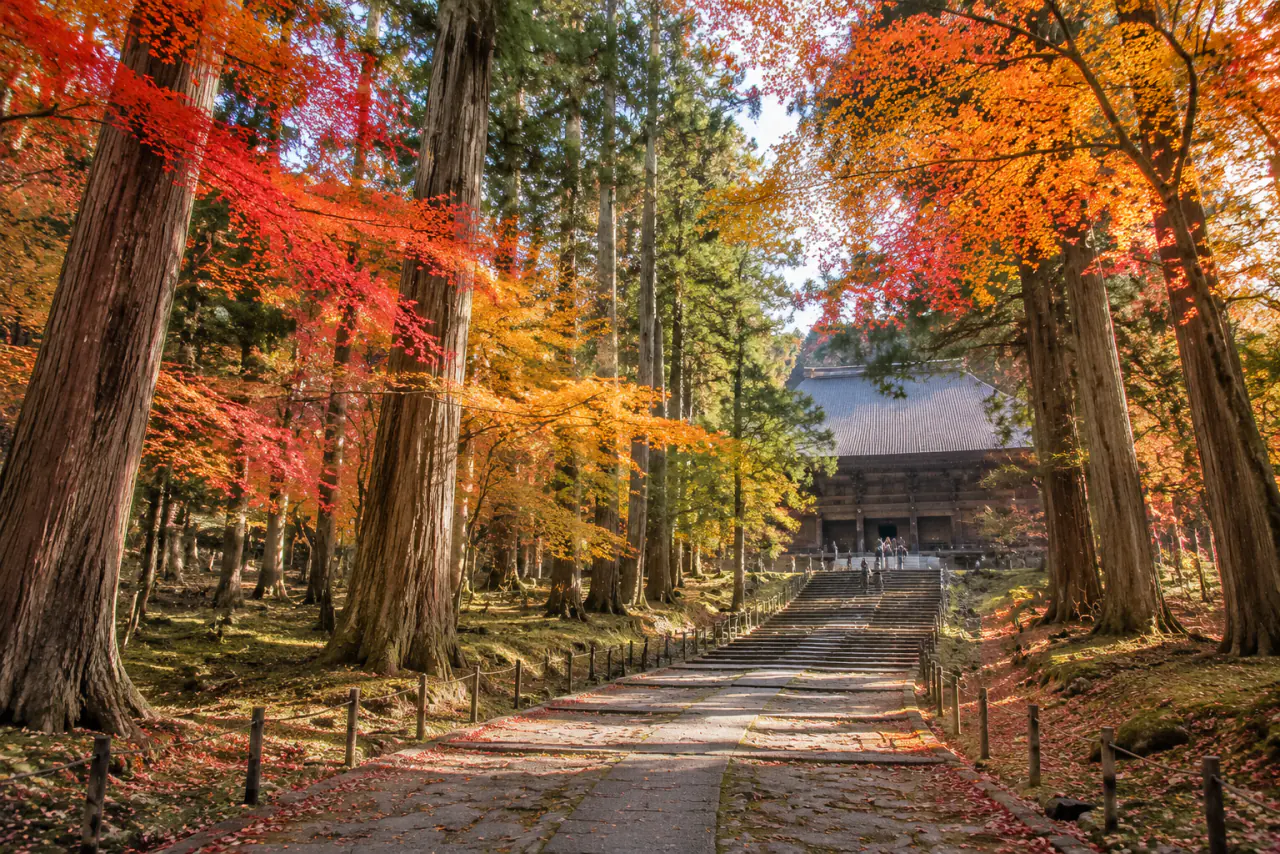
Built by the Oshu Fujiwara clan more than 900 years ago, this Buddhist hall was covered inside and out with gold leaf. It is now viewed through glass inside a protective concrete shelter. From the entrance, a steep cedar-lined path leads uphill along Tsukimizaka. Part of the Hiraizumi World Heritage site, it is busiest during fall foliage season.
Tsukimizaka is steep, so wear comfortable shoes. Photography is not allowed inside Konjikido.
-
 2
Motsu-ji
毛越寺
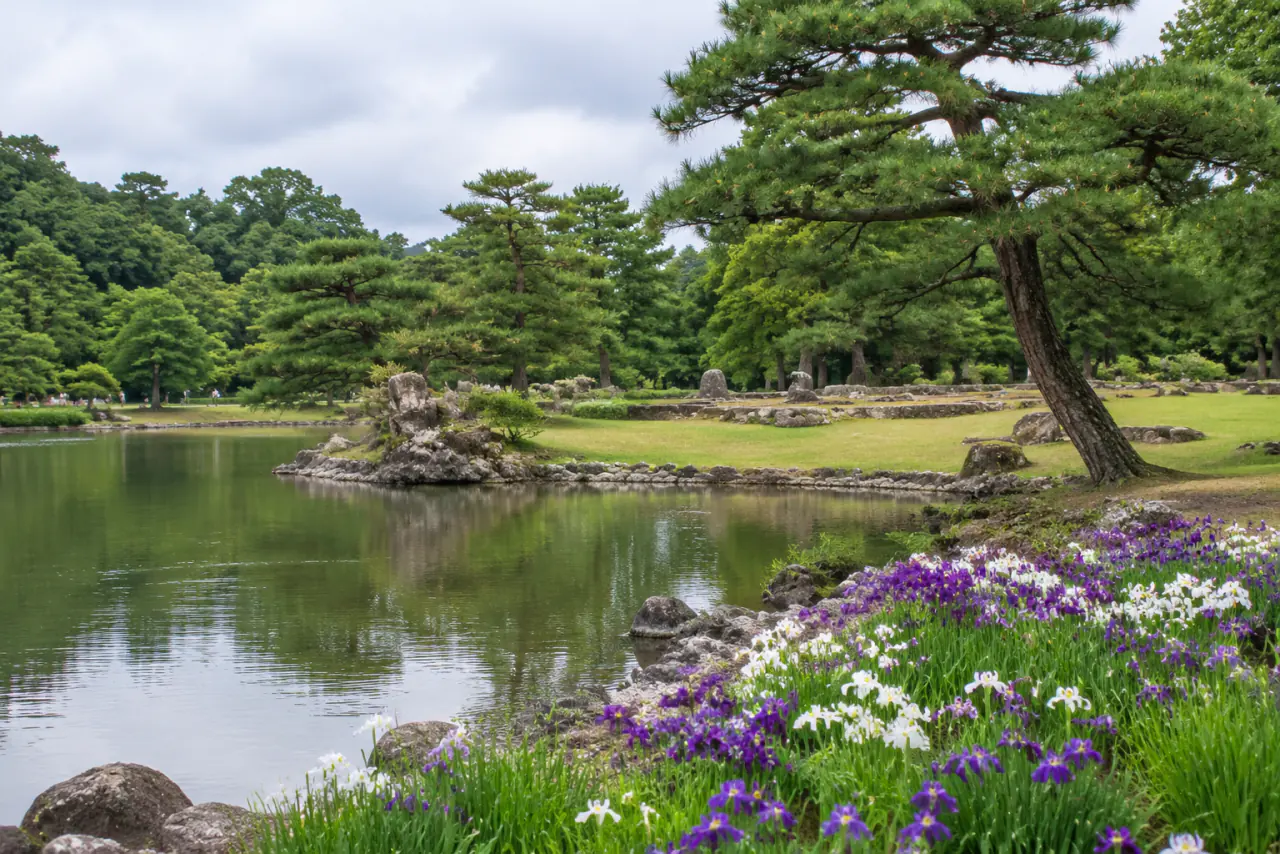
The original temple buildings burned down long ago, leaving a peaceful Heian-period Pure Land garden with a large pond, curving stone banks, and foundation stones from the ruins. It is much quieter than Chuson-ji. About a 7-minute walk from Hiraizumi Station, it pairs well with Chuson-ji in a single day.
Iris bloom beside the pond in June–July, when the scenery is beautiful and crowds are light.
-
 3
Geibikei Gorge
猊鼻渓
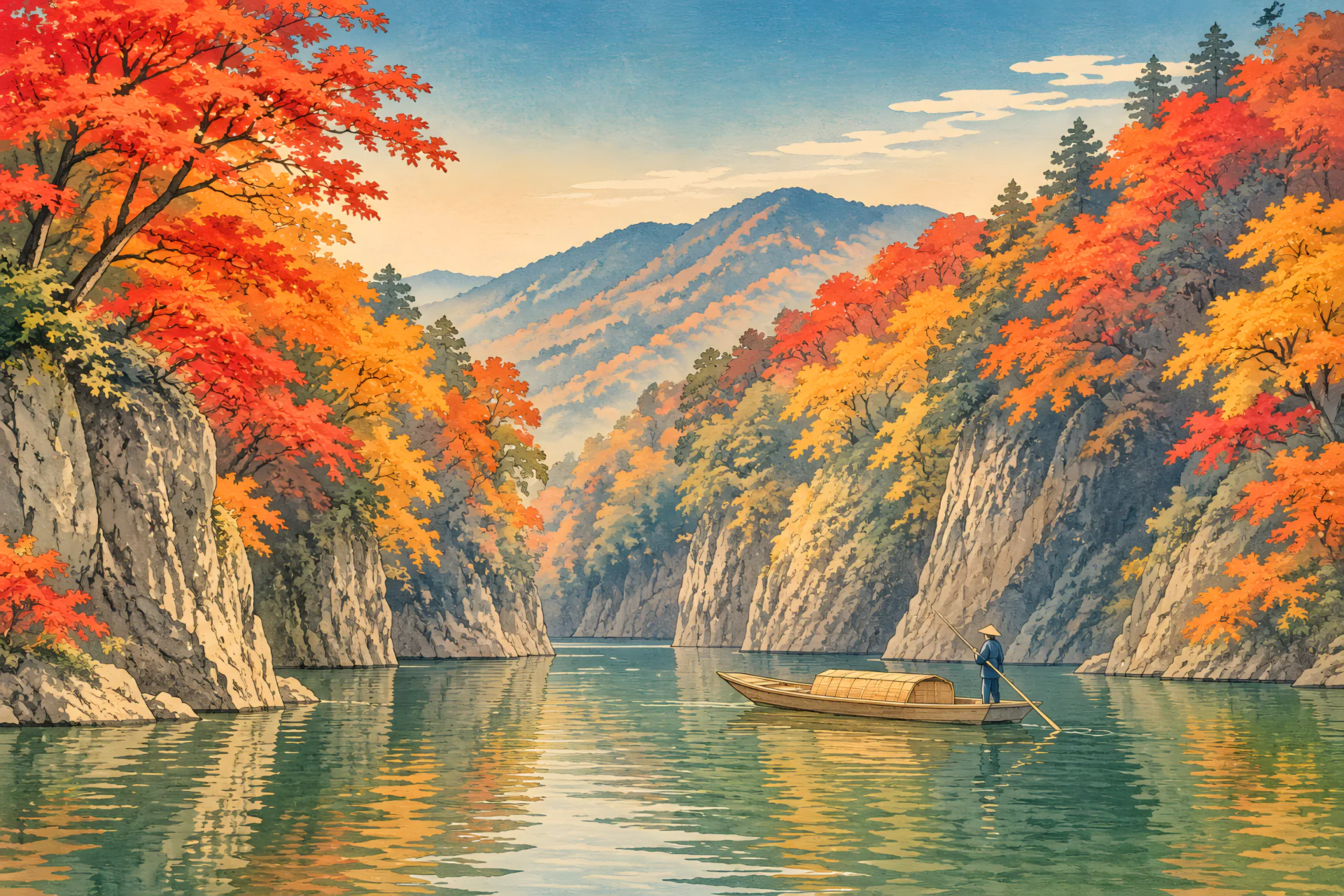
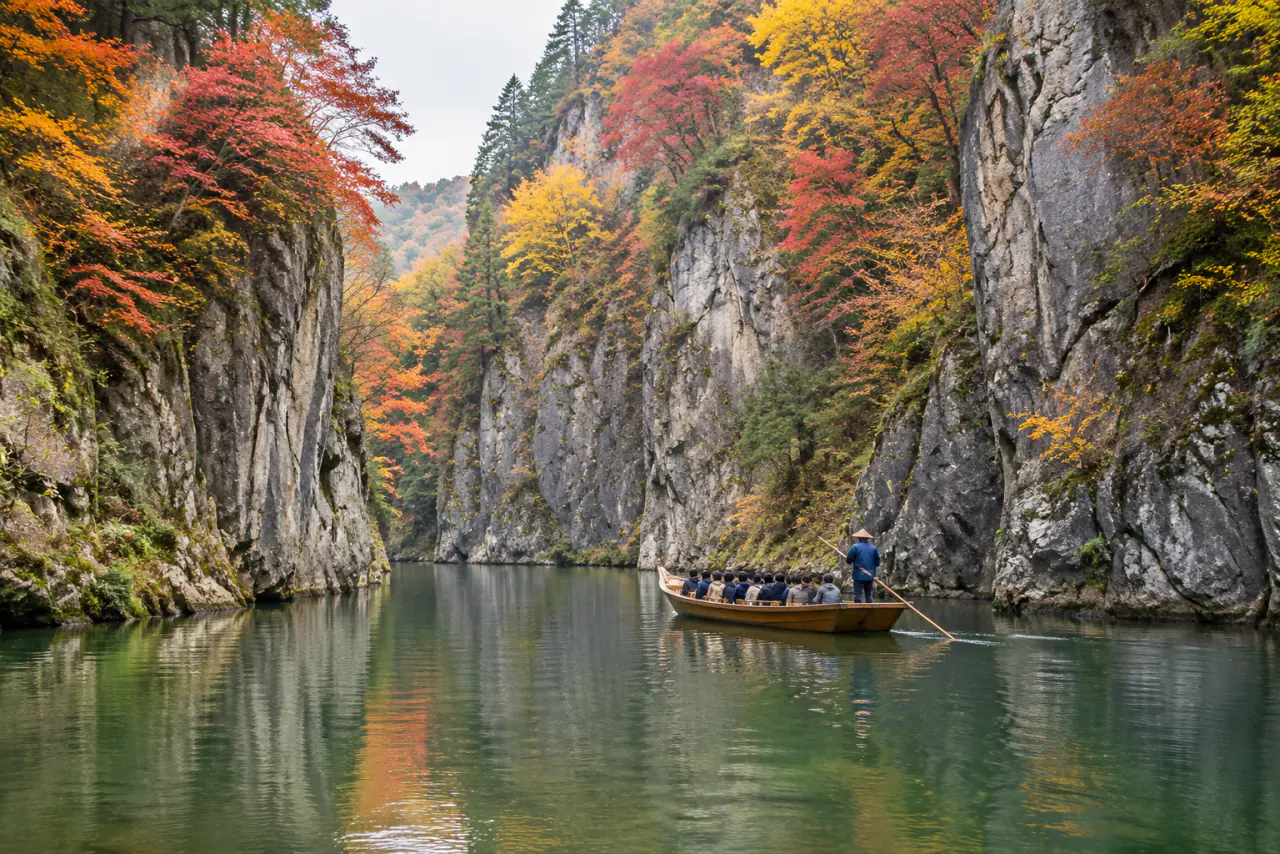
Boatmen pole flat-bottomed wooden boats through a limestone gorge, singing local folk songs as they go. The round trip takes about 1.5 hours, with time to walk ashore midway. You can try tossing a small lucky stone into a cave on the opposite bank. In winter, boats have kotatsu tables, so you can watch the snowy scenery from under a blanket.
From Ichinoseki Station, take the JR Ofunato Line to Geibikei Station. Services are infrequent, so check the schedule ahead of time.
-
 4
Genbikei Gorge
厳美渓
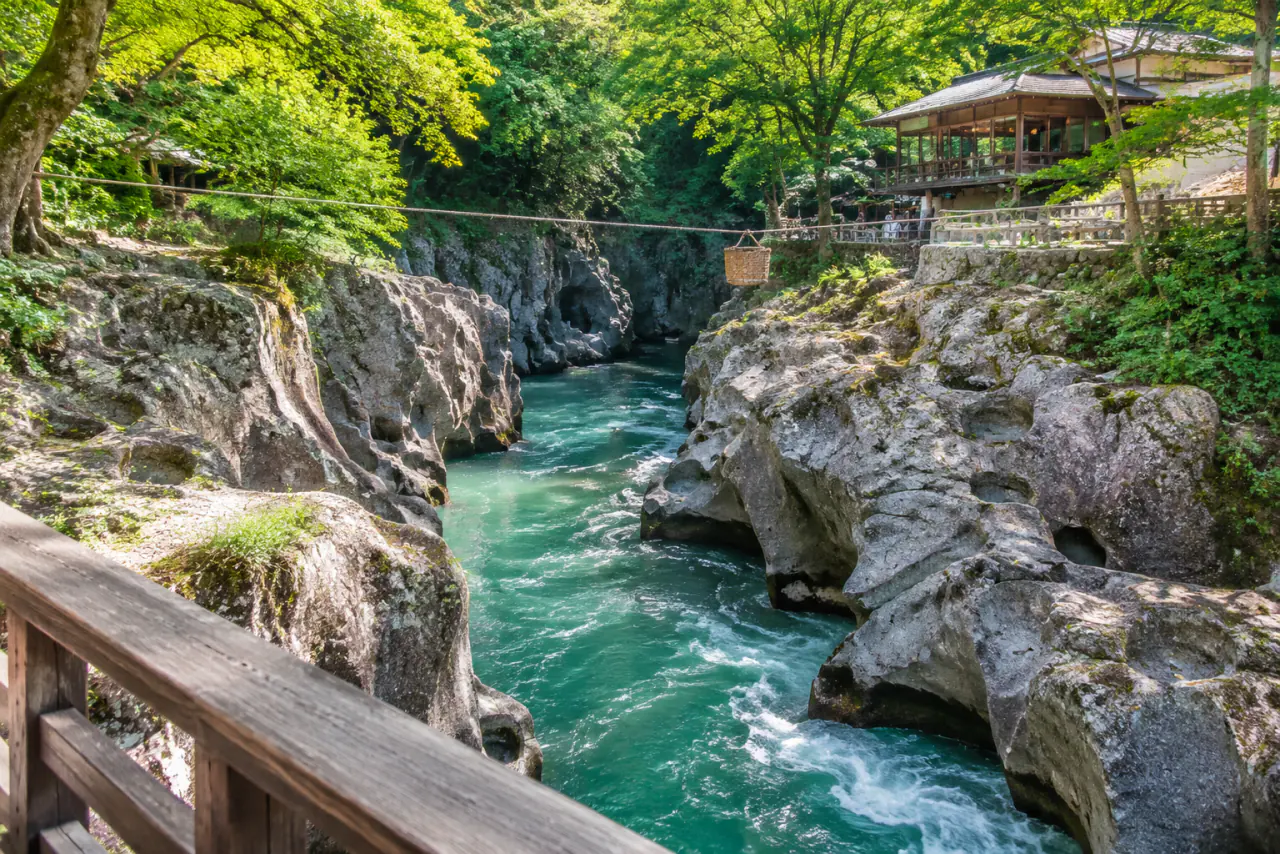
This small gorge west of central Ichinoseki has water-worn potholes throughout the stream. The highlight is flying dango: a teahouse on the opposite bank hangs a basket from a cable. Put your money inside and knock on the board, and dango and tea slide over to you. A full walk around the gorge takes just 30–40 minutes.
The bus from Ichinoseki Station takes about 20 minutes. Genbikei can be combined with Hiraizumi in a single day.
-
 5
Ishiwarizakura
石割桜
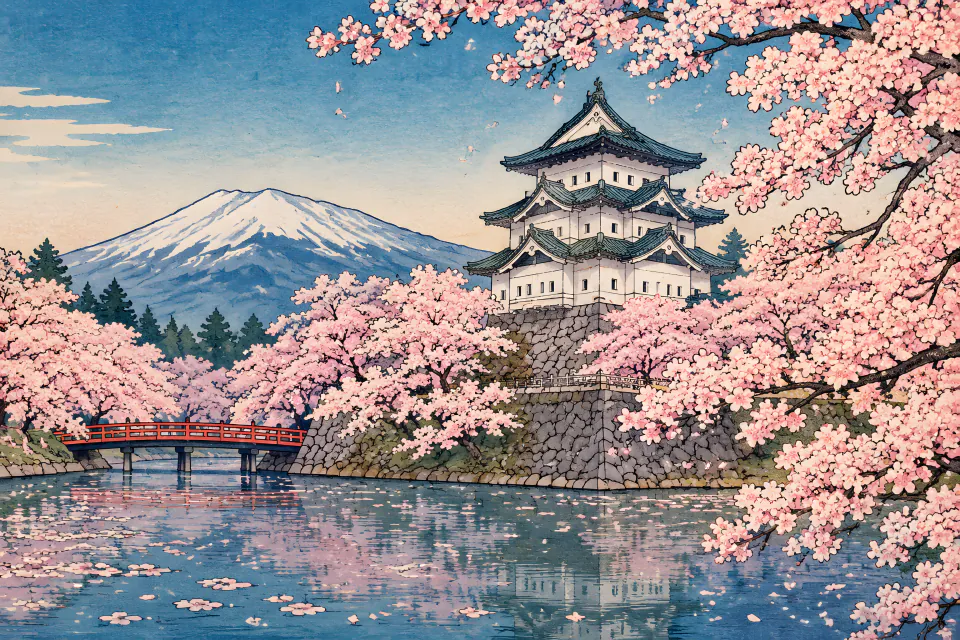
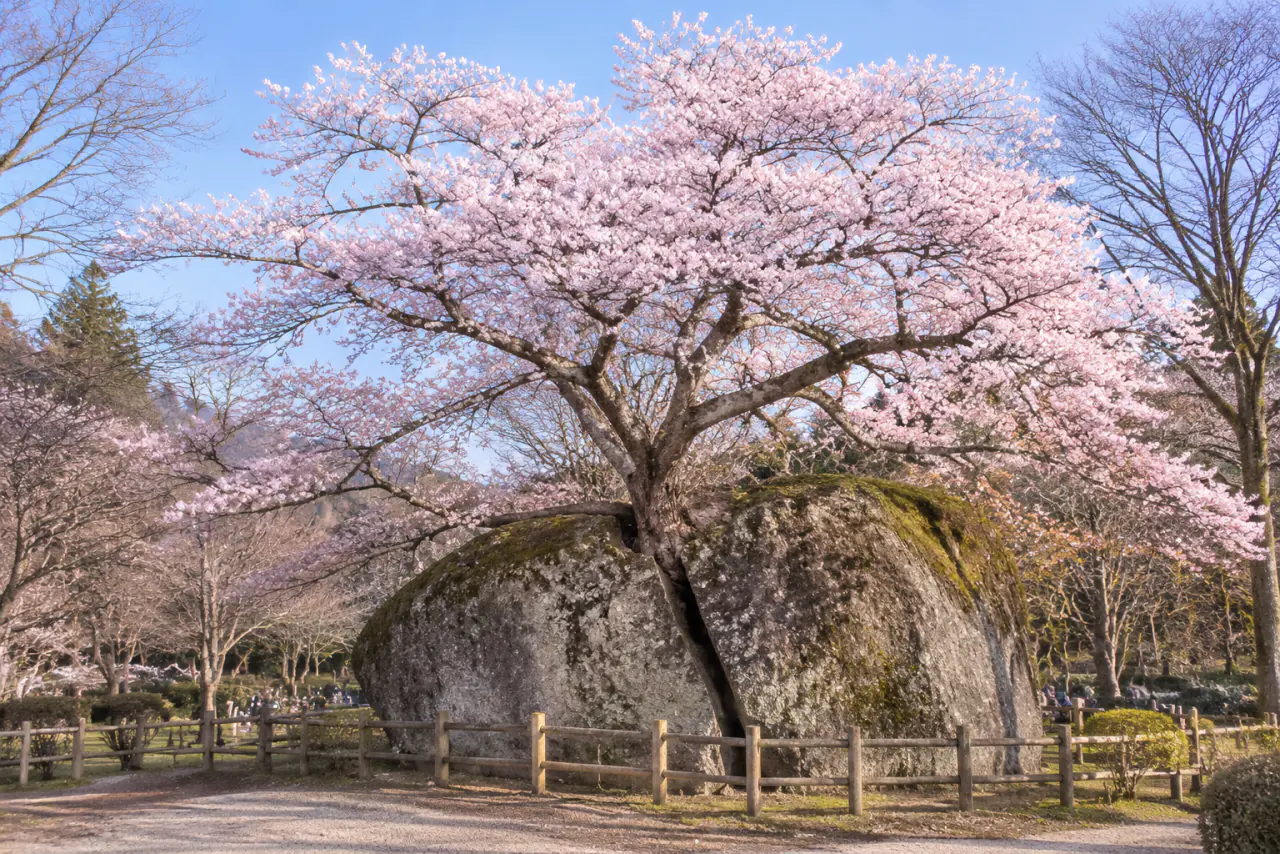
This cherry tree grows from a crack in a massive granite boulder and is said to be more than 300 years old. It stands in the grounds of the Morioka District Court. It blooms in mid-to-late April. Stop by Morioka Castle Ruins Park nearby, then explore the rest of downtown on foot.
It is in the city center, so just stop by during cherry blossom season rather than making a special trip.
-
 6
Koiwai Farm
小岩井農場
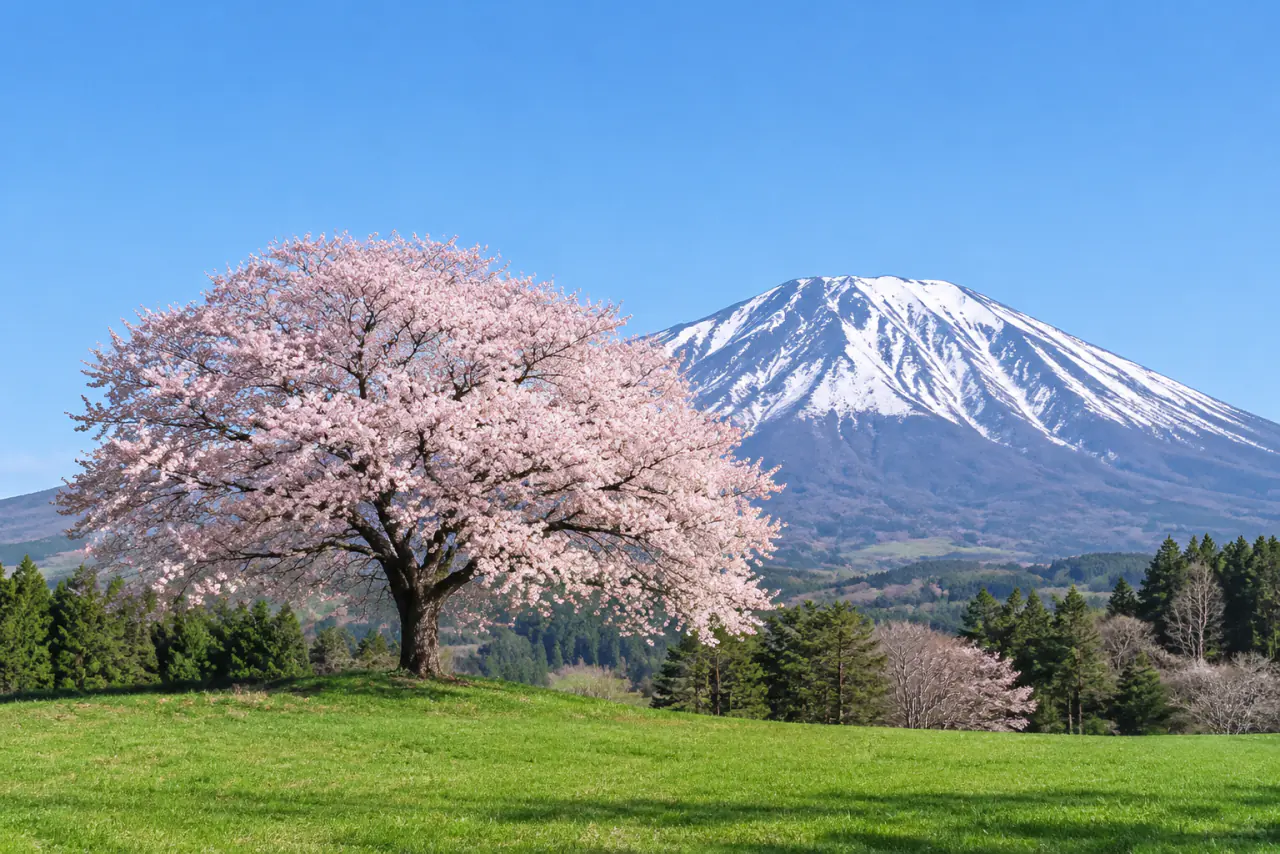
This century-old farm west of Morioka has a visitor area where you can feed sheep and ride a horse-drawn carriage. Its own milk, ice cream, and cheese are well known. In late April, the farm's Ipponzakura cherry tree against the still-snowy Mount Iwate is a popular photo subject.
Some areas close in winter. Families with children will enjoy visiting most in spring or summer.
-
 7
Jodogahama Beach
浄土ヶ浜
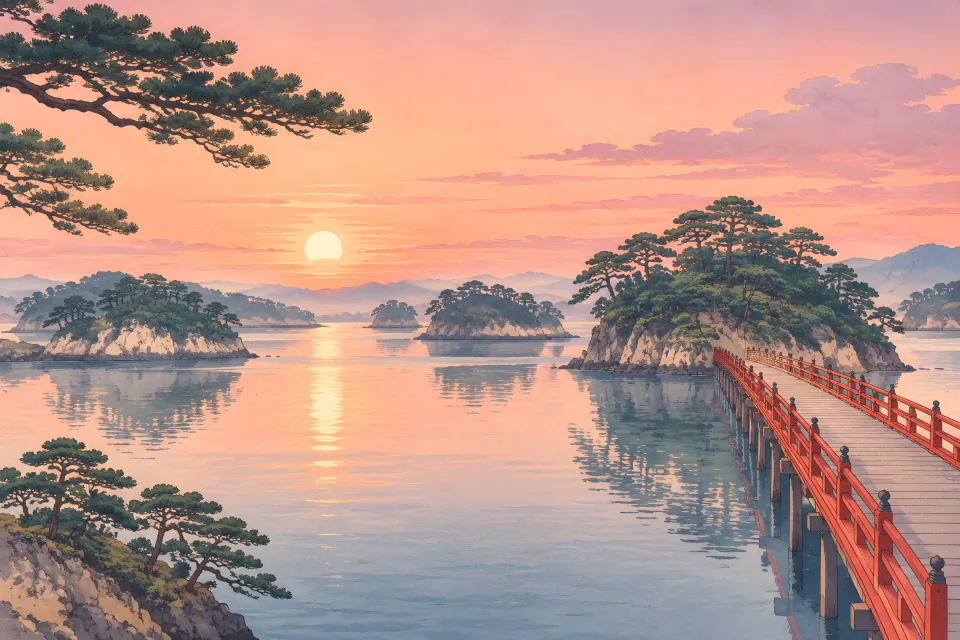
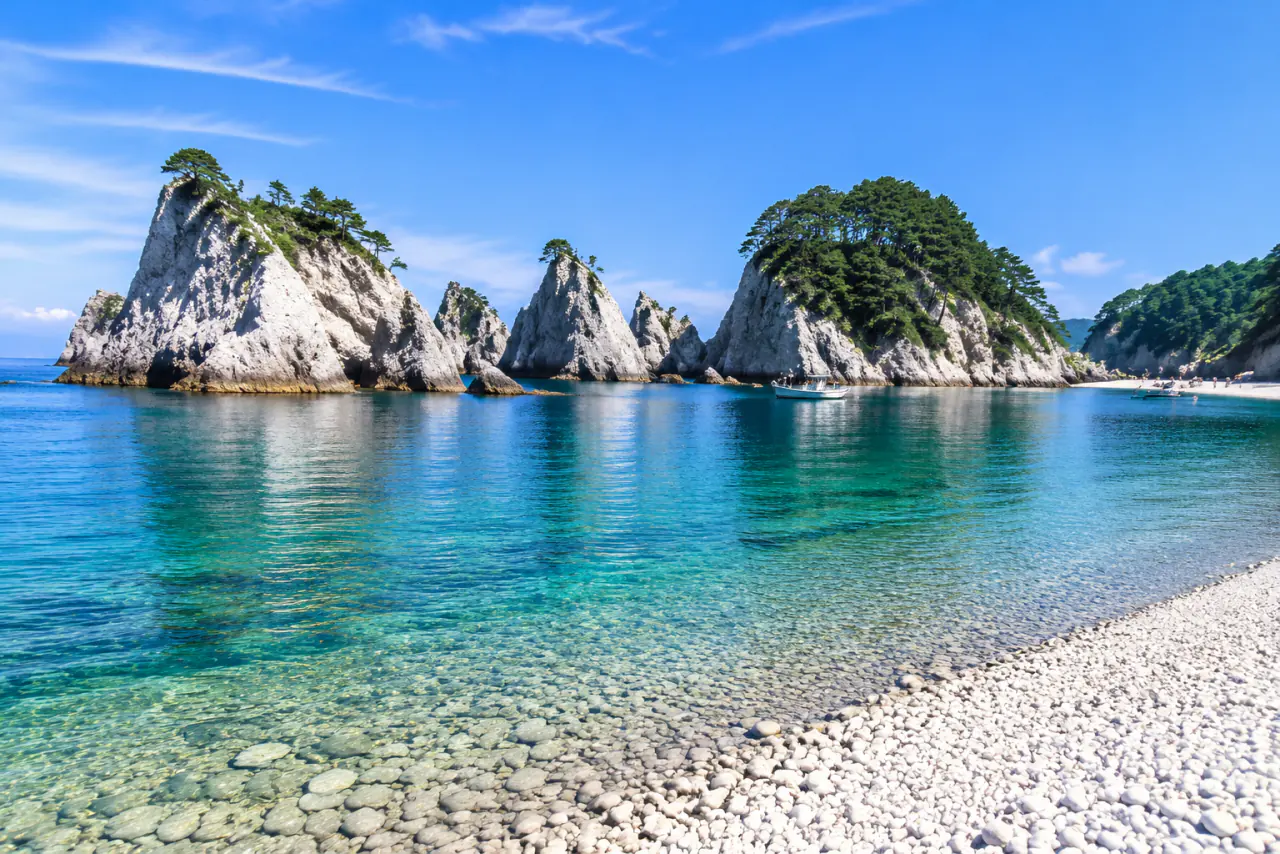
White rhyolite islets line a shallow bay along the Sanriku Coast, where the water is clear and green. Take a sightseeing boat to watch gulls grab food, or board a small boat in the shallows to visit the Blue Cave. The bus from Morioka takes more than 2 hours, so this is better for a second visit or a slow trip along the coast.
Swimming and Blue Cave boats are available only in summer. Many activities stop in winter.
What to eat
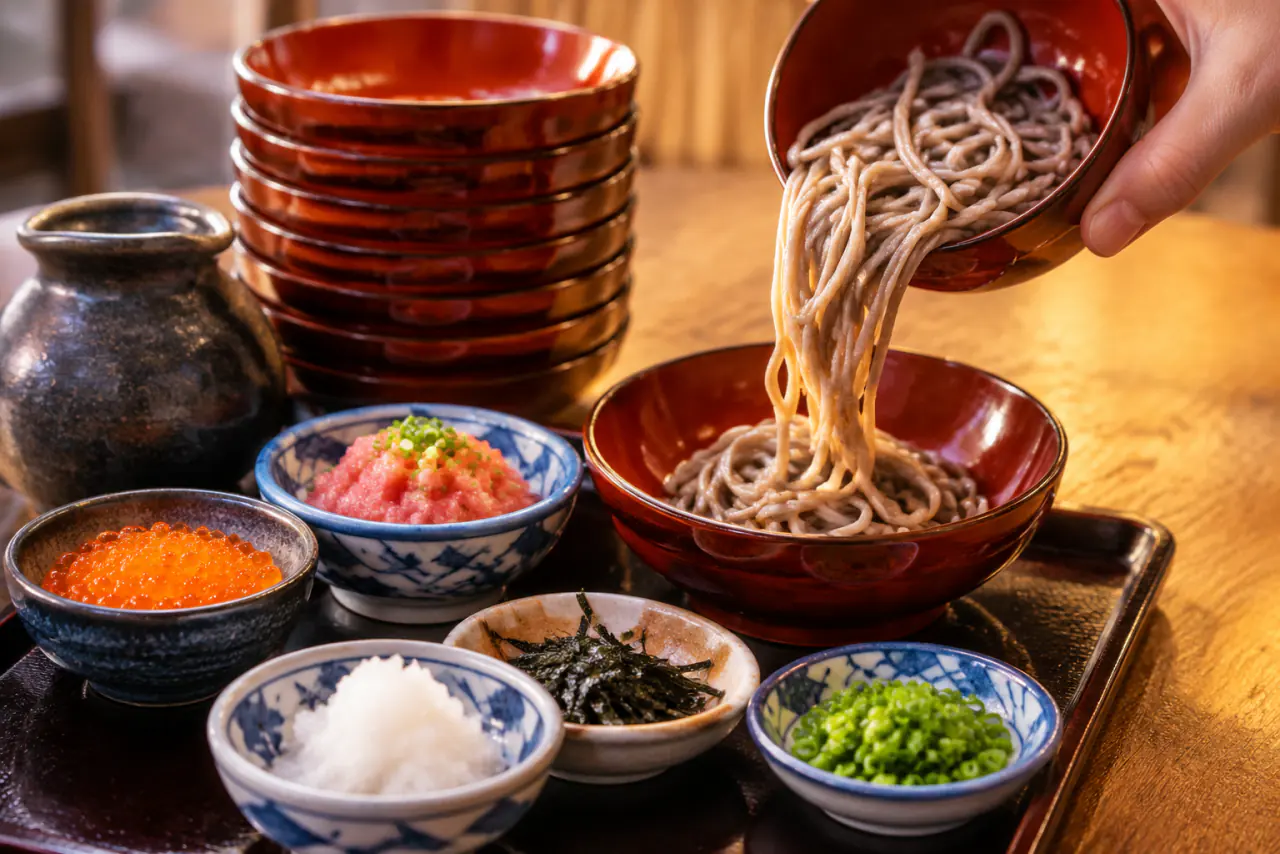
Wanko soba
A server stands beside you and adds another bite of soba to your bowl as soon as you finish the last one, calling out a chant each time. They keep going until you cover the bowl. Most people eat 30–50 bowls; the fun is in the spectacle.
Long-established soba restaurants in central Morioka · about ¥3,500–4,500 per person
Morioka reimen
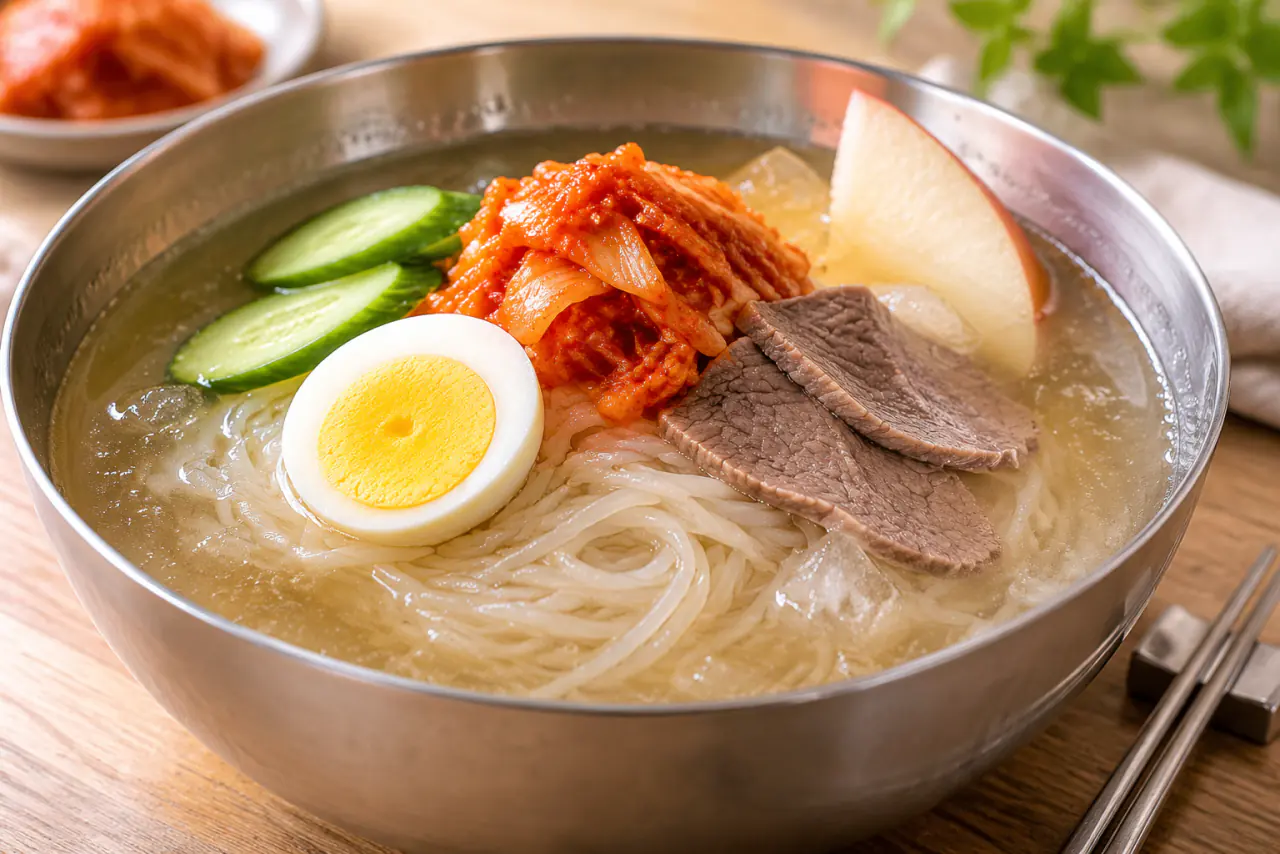
Inspired by Korean naengmyeon, these chewy, translucent noodles come in a cold broth with kimchi and fruit. You can choose the spice level. Almost every yakiniku restaurant in Morioka serves them, and a bowl makes a perfect finish after grilled meat.
Yakiniku restaurants and reimen specialty shops around Morioka Station · about ¥1,000–1,300 per bowl
Jajamen
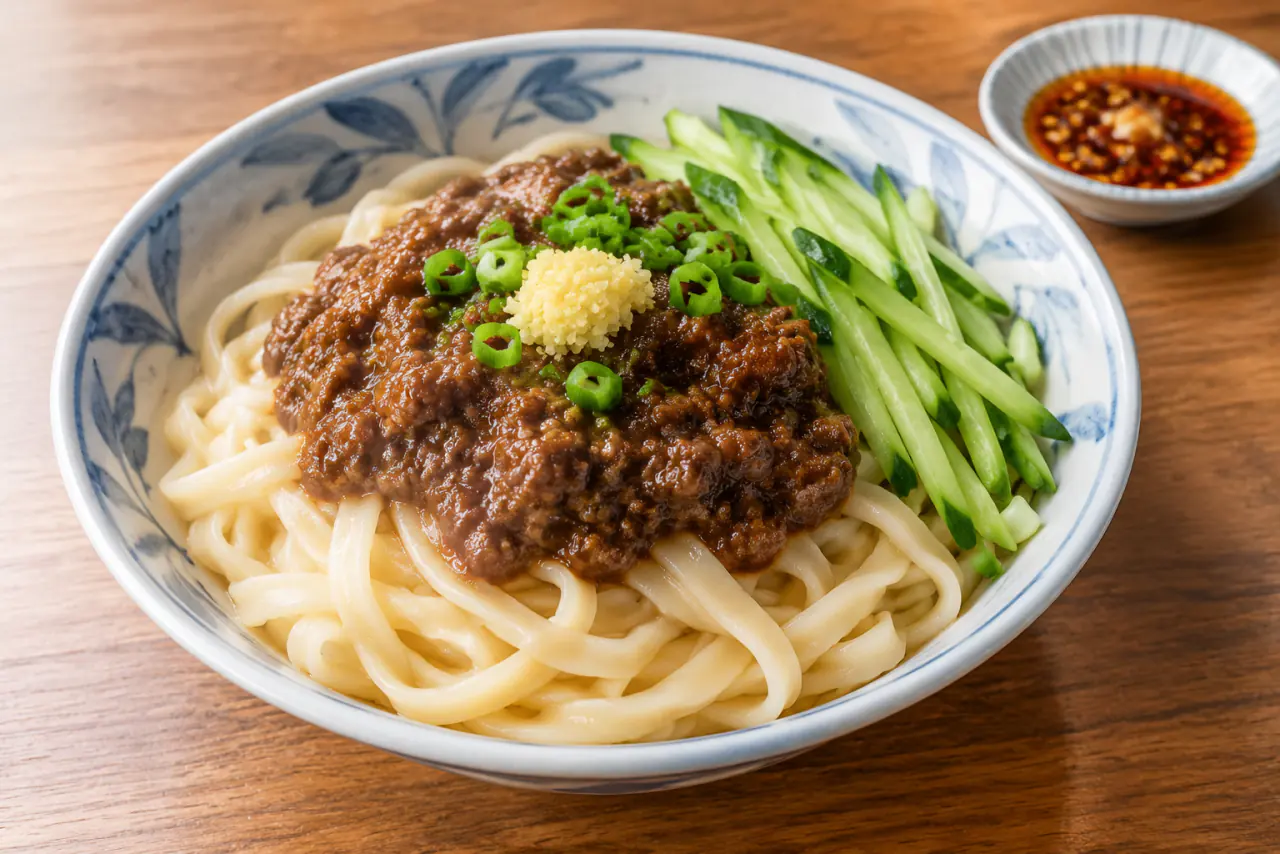
These thick, flat noodles are topped with meat miso, cucumber, and scallions, then mixed together. At the end, crack a raw egg into the bowl and ask the server to add hot broth. This turns it into a bowl of egg soup, the local way to finish.
Central Morioka · about ¥700–1,000 per bowl
Ichinoseki mochi cuisine
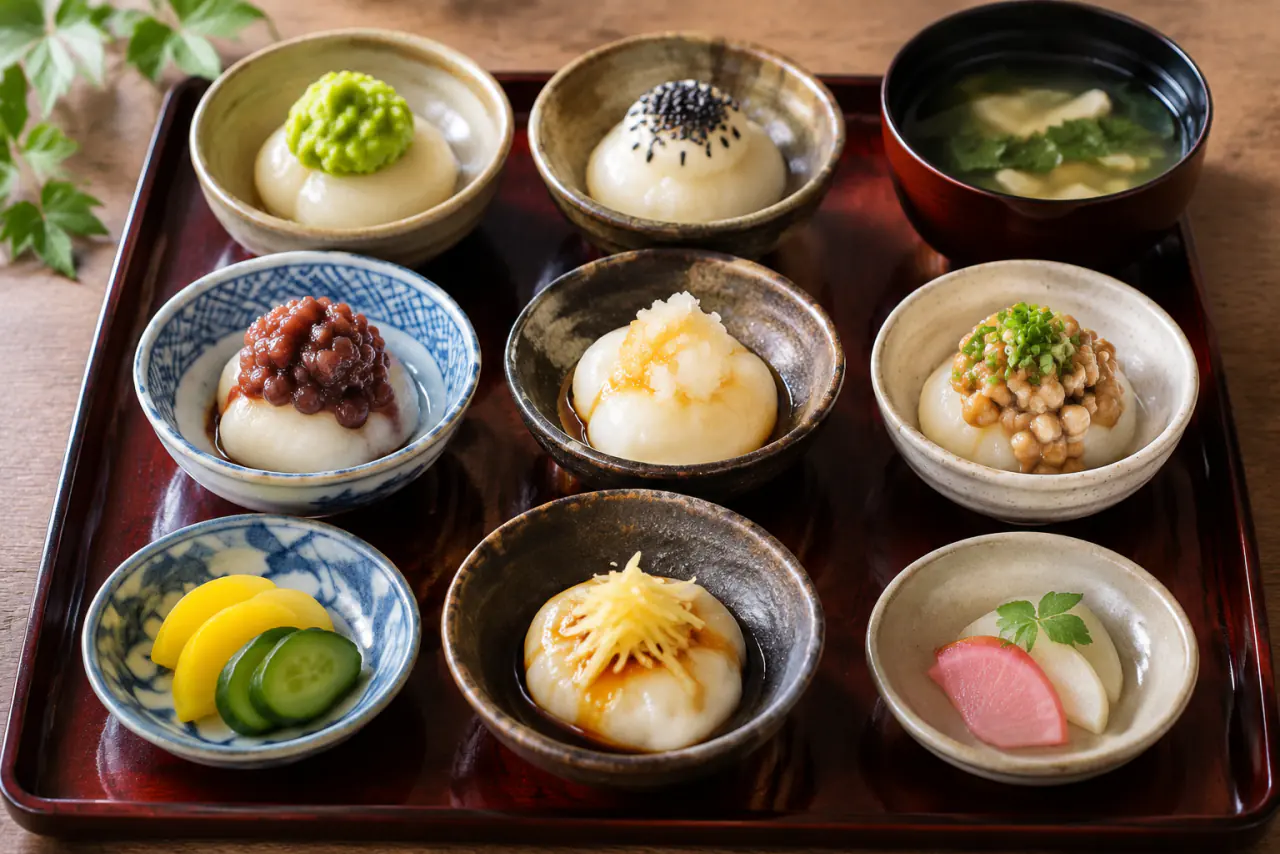
Ichinoseki and Hiraizumi have a tradition of eating mochi. A set meal comes with several small dishes of mochi served with different toppings and sauces, including edamame paste, sesame, grated daikon, and natto, so you can try many varieties at once.
Around Ichinoseki Station and near Chuson-ji in Hiraizumi · about ¥1,500–2,500 per set
Getting there · Where to stay
The Hayabusa on the Tohoku Shinkansen takes as little as about 2 hours 13 minutes to Morioka. For Hiraizumi, get off at Ichinoseki Station.
The Shinkansen takes a little over 30 minutes to Ichinoseki and about 40 minutes to Morioka.
The JR Tohoku Main Line takes about 8 minutes to Hiraizumi Station.
Stay around Morioka Station for plenty of dining options and easy trips to Hiraizumi, Kakunodate, and Aomori. If you're only visiting Hiraizumi, staying near Ichinoseki Station also works.
Know this before you go
- Whether you can drive in Japan depends on your licence and required documents. Check the official rules. A loop bus from in front of Hiraizumi Station connects the main sights.
- The sights in Hiraizumi are fairly close together. To save money, rent a bicycle in front of the station.
- Many wanko soba restaurants require reservations. Call or book online ahead of time on weekends and during peak seasons.
- Check the bus schedule carefully before heading to the Sanriku Coast. Some routes run only a few times a day.