 Cloudborne Travel
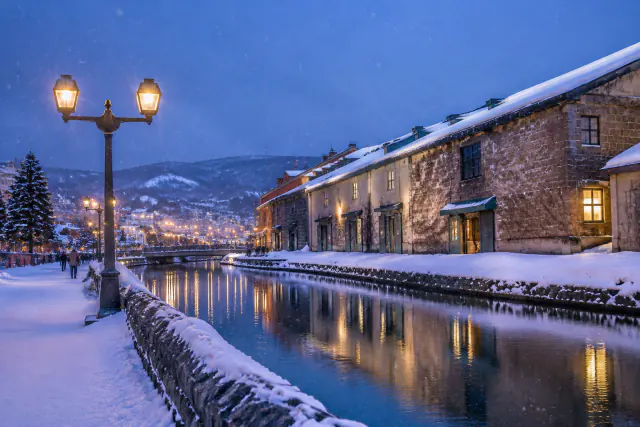 Hokkaido Old town · Half a day Otaru Canal The canal is lined with stone warehouses built more than 100 years ago, now converted into restaurants and shops. The canal itself is short; 20 minutes is enough for photos. The main attraction is browsing the glass shops, music box stores, and dessert shops along Sakaimachi Street. In February, the Snow Light Path fills the canal and streets with small candles. Historic sitesSnow country
Historic sites
Temples, shrines, castles, and old streets are the least seasonal parts of a Japan trip. Go a little earlier for fewer people and better light.
Year-round149 sights9 regions
Hokkaido Old town · Half a day Otaru Canal The canal is lined with stone warehouses built more than 100 years ago, now converted into restaurants and shops. The canal itself is short; 20 minutes is enough for photos. The main attraction is browsing the glass shops, music box stores, and dessert shops along Sakaimachi Street. In February, the Snow Light Path fills the canal and streets with small candles. Historic sitesSnow country 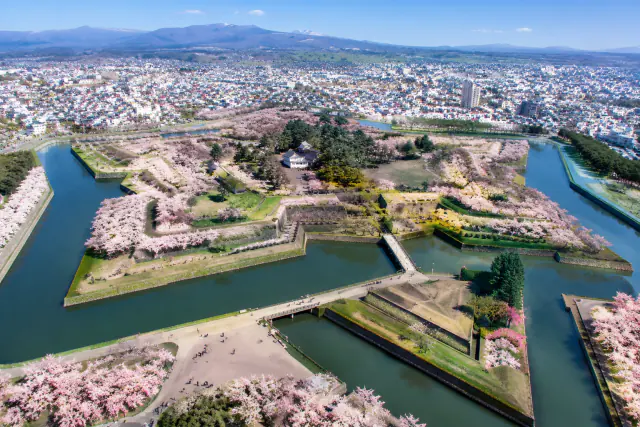 Hokkaido Castle · 1.5–2 hours Goryokaku A Western-style star-shaped fortress built at the end of the Edo period. Its shape is hard to see from the ground, so go up the nearby Goryokaku Tower for the full five-pointed star. Cherry trees line the moat and bloom from late April to early May. The reconstructed Hakodate Magistrate's Office inside the park is also worth visiting. Cherry blossomsHistoric sites
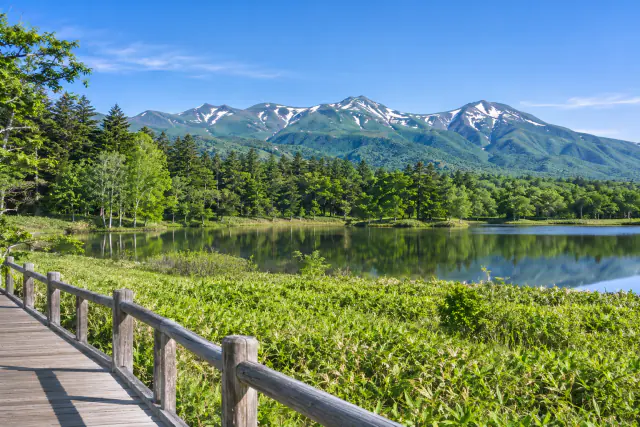 Hokkaido Hiking · 1–3 hours Shiretoko Five Lakes Five pristine forest lakes on the Shiretoko Peninsula, a World Natural Heritage site. The free 800-meter elevated boardwalk is unaffected by brown bear activity. To take the ground trails around all five lakes, you need a paid guide from May 10 to July 31. At other times, attend a lecture lasting about 10 minutes first. The area closes in winter. MountainsHistoric sites
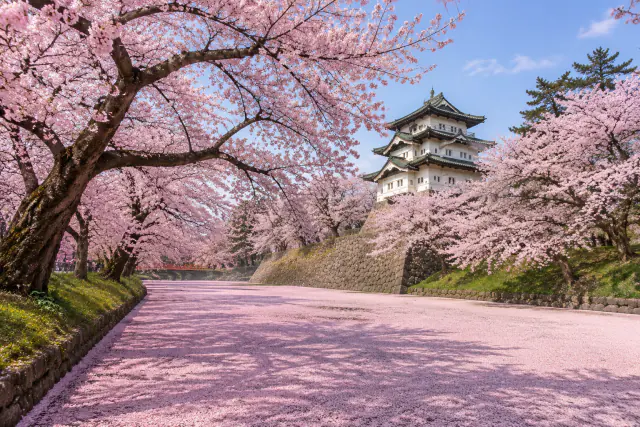 Aomori Castle · 2–3 hours Hirosaki Castle and Hirosaki Park One of Japan's twelve remaining original castle keeps. The park has about 2,600 cherry trees, which bloom in late April. The most photogenic sight is the moat covered with fallen petals, known as a 'flower raft.' The fall colors and February Snow Lantern Festival are also worth seeing. From Aomori, Hirosaki Station is about 40 minutes by JR Ou Main Line. Cherry blossomsHistoric sitesAutumn leaves
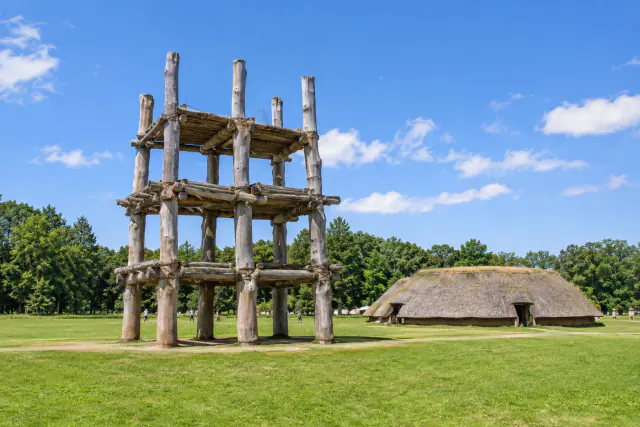 Aomori Museum · 1.5–2 hours Sannai-Maruyama Site The remains of a large Jomon-period settlement dating back about 5,000 years, now a World Cultural Heritage site. The most striking feature is a reconstructed raised structure made with six huge chestnut posts. The museum has many pieces of pottery and clay figurines. Next door, the Aomori Museum of Art makes an easy half-day combination. Historic sites
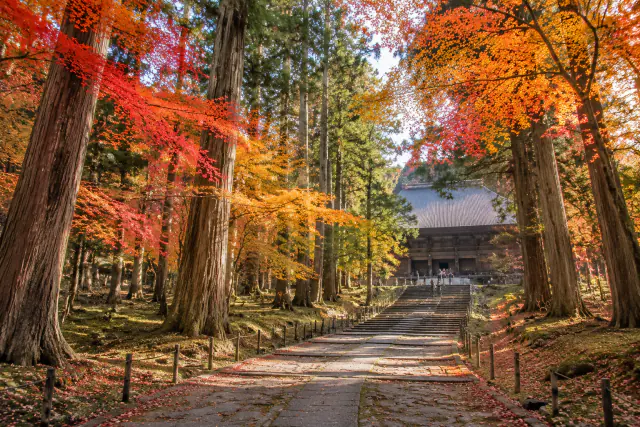 Iwate Temple · 2–3 hours Chuson-ji Konjikido Built by the Oshu Fujiwara clan more than 900 years ago, this Buddhist hall was covered inside and out with gold leaf. It is now viewed through glass inside a protective concrete shelter. From the entrance, a steep cedar-lined path leads uphill along Tsukimizaka. Part of the Hiraizumi World Heritage site, it is busiest during fall foliage season. Historic sitesAutumn leaves
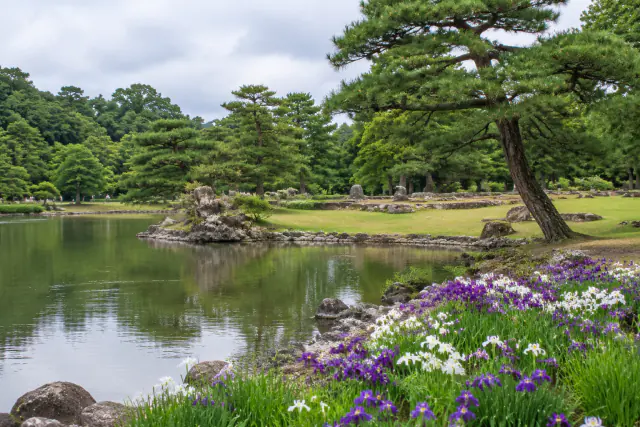 Iwate Garden · about 1 hour Motsu-ji The original temple buildings burned down long ago, leaving a peaceful Heian-period Pure Land garden with a large pond, curving stone banks, and foundation stones from the ruins. It is much quieter than Chuson-ji. About a 7-minute walk from Hiraizumi Station, it pairs well with Chuson-ji in a single day. Historic sitesFlower fields
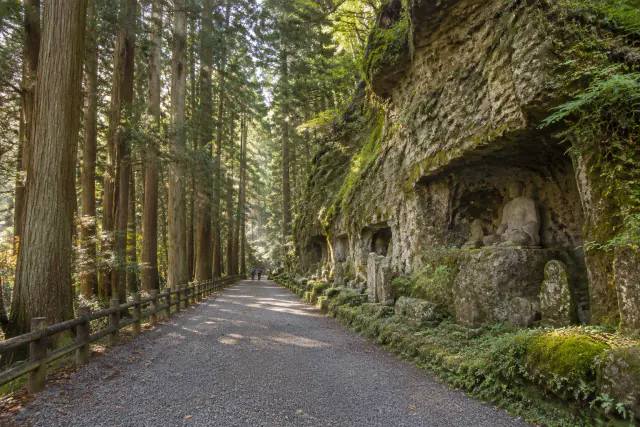 Miyagi Temple · About 1 hour Zuigan-ji This Zen temple, built by Date Masamune, is about a 10-minute walk from Matsushima-Kaigan Station. Highlights include the richly decorated sliding-door paintings in the main hall, the cedar trees along the approach, and the rock caves in the hillside. Combined with Matsushima Bay, it makes a good half-day outing. Historic sites
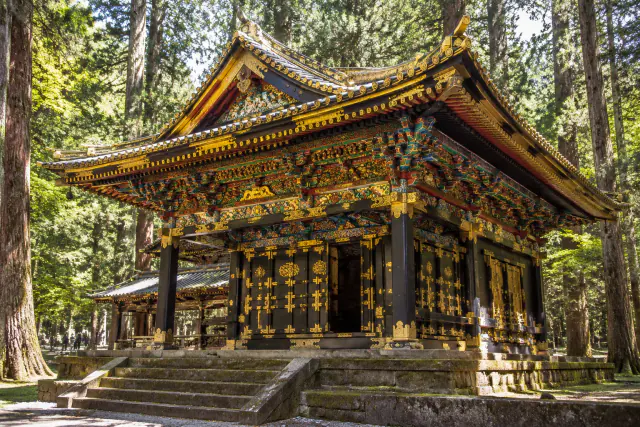 Miyagi Temple · About 1 hour Zuihoden The mausoleum of Date Masamune stands out among the cedar trees with its black-lacquered buildings covered in colorful carvings and gold details. The original was destroyed in World War II, so today's structure is a vivid reconstruction. Take Sendai's Loople sightseeing bus to get there. Historic sitesArt
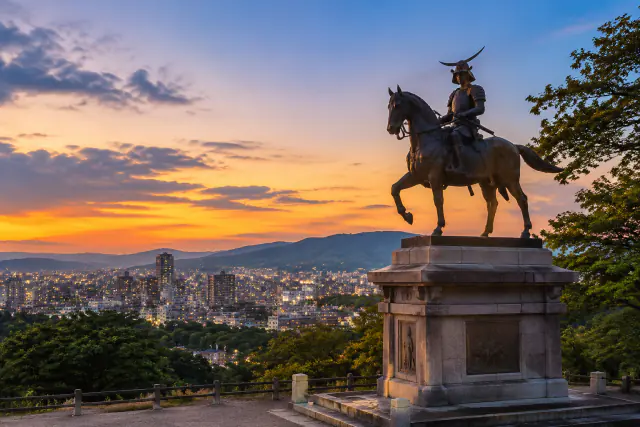 Miyagi Castle · About 1 hour Sendai Castle Ruins The castle is long gone, leaving only stone walls and an equestrian statue of Date Masamune. But the hill offers sweeping views of Sendai, and it's also a good spot for night views. Stop here on a Loople sightseeing bus route and visit it and Zuihoden in the same morning. Historic sites
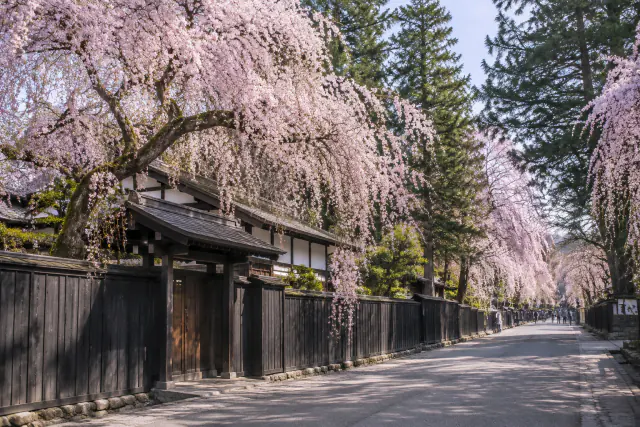 Akita Old town · 2–3 hours Kakunodate Samurai District Samurai residences with black wooden walls line this broad historic street. You can visit homes such as the Ishiguro and Aoyagi residences. In late April, weeping cherry trees spill over the walls, while a cherry-blossom tunnel stretches for about 2 km along the Hinokinai River nearby. The fall colors and winter snow scenes are also beautiful. Cherry blossomsHistoric sitesAutumn leaves
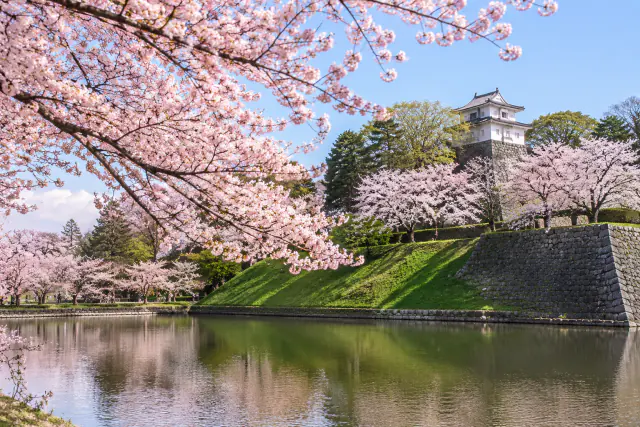 Akita Park · About 1 hour Senshu Park The ruins of Kubota Castle are about a 10-minute walk from Akita Station. Cherry blossoms bloom beside the moat in spring, and lotus flowers fill it in summer. The gates and observation tower are reconstructions. If you're short on time, it's an easy walk while waiting for a train in Akita City. Cherry blossomsHistoric sites
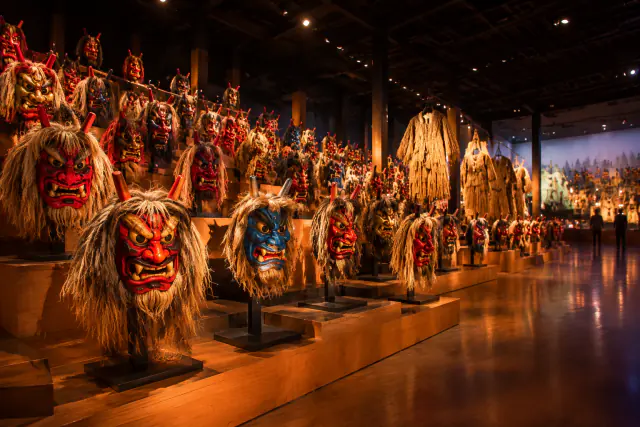 Akita Museum · About 1.5 hours Namahage Museum On New Year's Eve, people on the Oga Peninsula wear demon masks and go door to door frightening lazy people and children. This Namahage tradition is listed as a UNESCO Intangible Cultural Heritage. The museum displays more than 100 masks from different villages. The neighboring Folklore Museum holds live demonstrations, and plenty of visitors get a fright. Historic sites
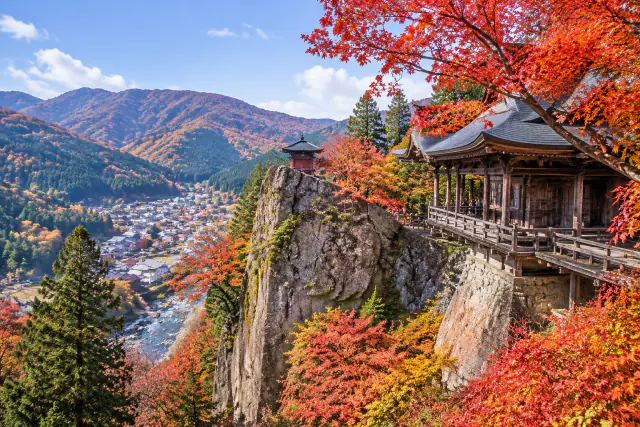 Yamagata Temple · 2–3 hours Yamadera (Risshaku-ji) This ancient temple is built into a rocky mountain. From the temple gate to Okunoin, there are about 1,015 stone steps, taking about 1.5 hours round trip. Godaido offers sweeping valley views and the best photo spot. Basho wrote his famous cicada haiku here. The temple is beautiful among summer greenery and fall colors. Historic sitesAutumn leaves
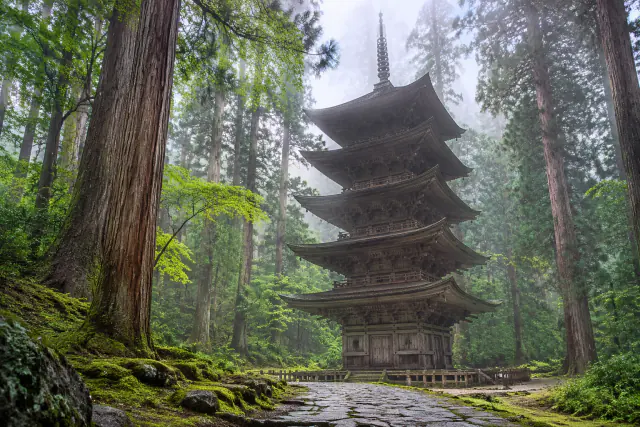 Yamagata Hiking · Half a day Mount Haguro One of the Three Mountains of Dewa and a sacred mountain of Shugendo. From the base, climb about 2,446 stone steps through an old cedar forest. The National Treasure Five-Story Pagoda stands alone among the trees and has a striking atmosphere. The climb to the summit takes about 1 hour. If you prefer not to climb, take a bus directly to the summit. Historic sitesMountains
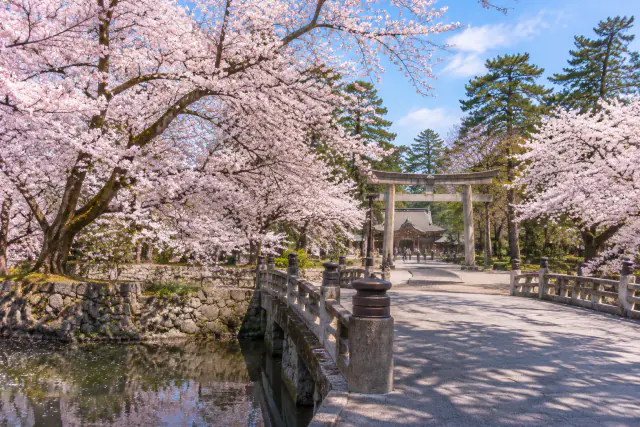 Yamagata Shrine · About 1 hour Uesugi Shrine and Yonezawa This shrine, dedicated to the Warring States-period warlord Uesugi Kenshin, stands on the site of Yonezawa Castle. Cherry trees line the moat. Yonezawa is a stop on the Yamagata Shinkansen, making it a convenient place to stop for Yonezawa beef and a quick visit. In February, the Uesugi Snow Lantern Festival fills the area with snow lanterns. Historic sitesCherry blossoms
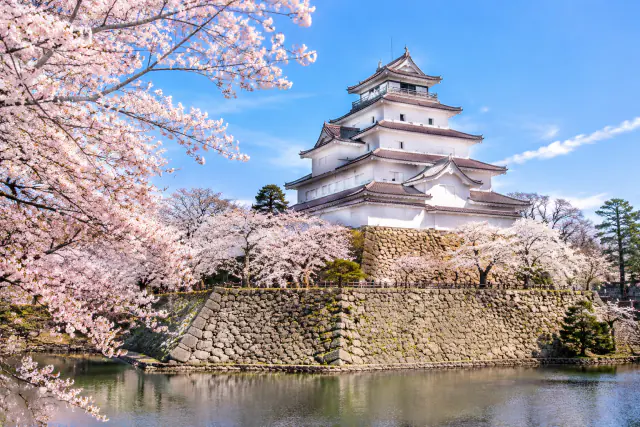 Fukushima Castle · 1.5–2 hours Tsuruga Castle Aizu forces held this castle for a month during the Boshin War. The current keep is a reconstruction, with an unusual red-tile roof. Inside is a history museum, and the top floor has views across the city. Around 1,000 cherry trees bloom around the castle in mid-to-late April, while snow on the red roof makes a beautiful winter scene. Historic sitesCherry blossomsSnow country
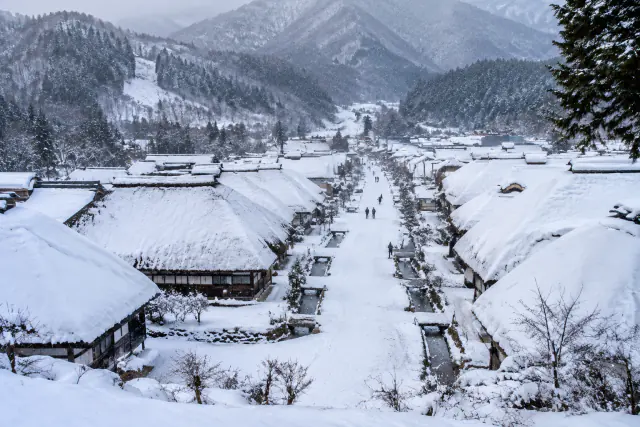 Fukushima Old town · 2–3 hours Ouchi-juku This Edo-period post town has more than 30 old houses with thatched roofs lining a dirt road. Most now house soba restaurants and souvenir shops. Climb the small hill at the end of the village for a view down the entire street. The snow-covered roofs are especially beautiful in winter, and a lantern-lit Snow Festival is held every February. Historic sitesSnow country
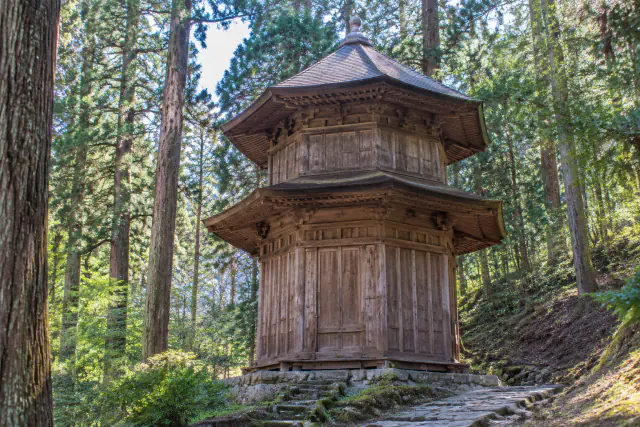 Fukushima Temple · About 1 hour Iimoriyama & Sazaedo Iimoriyama is where the young Byakkotai members took their own lives during the Boshin War, and their graves are on the mountain. Sazaedo, a wooden double-helix pagoda on the hillside, has two nonintersecting ramps for going up and down. It is one of a kind in Japan. You can reach it by loop bus from Tsuruga Castle. Historic sitesArt
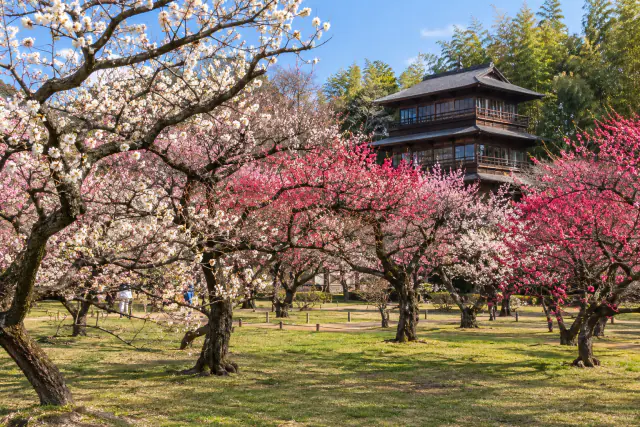 Ibaraki Garden · 1.5–2 hours Kairaku-en One of Japan's 3 great gardens, built in the 19th century by the lord of Mito for the public to enjoy. It has about 3,000 plum trees in more than 100 varieties. The Mito Plum Blossom Festival runs from mid-February to late March. Kobuntei, a wooden pavilion in the garden, overlooks Lake Senba from its upper floor. Take a bus from Mito Station's north exit for about 15 minutes, or walk along Lake Senba for 30 minutes. Flower fieldsHistoric sites
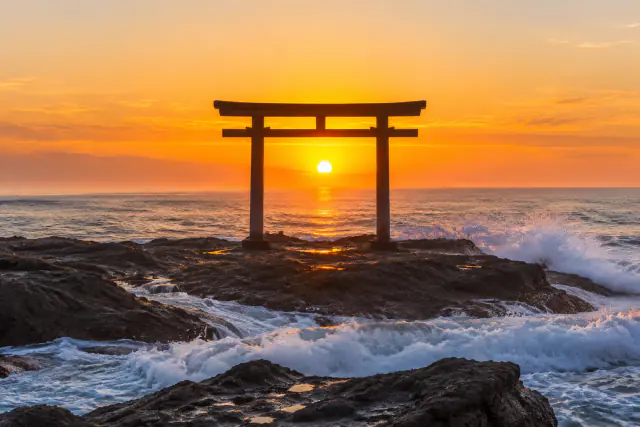 Ibaraki Shrine · 1–2 hours Ōarai Isosaki Shrine The shrine itself stands on a small hill, but its best-known feature is Kamiiso no Torii, a torii gate on coastal rocks. Waves crash dramatically around it, and the rising sun silhouettes the gate at dawn. Nearby are Aqua World Ibaraki Prefectural Oarai Aquarium and a seafood market. You can combine a visit with Mito in the same day. IslandsHistoric sites
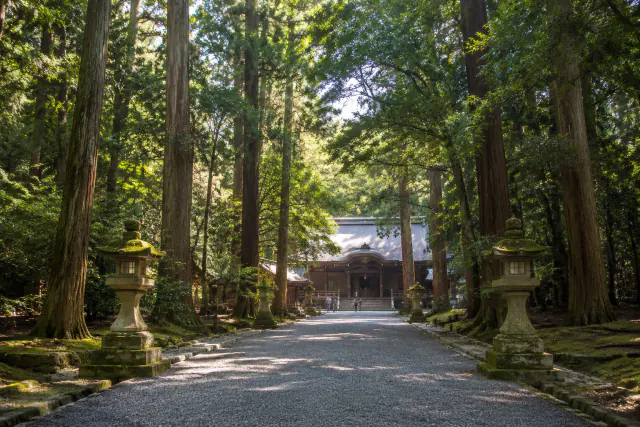 Ibaraki Shrine · 1.5–2 hours Kashima Jingu One of the oldest shrines in Kanto, dedicated to a god of martial arts and long revered by samurai. Beyond the approach lies a quiet, ancient forest. At the far end is Mitarashi Pond, fed by a natural spring. Sacred deer are also kept on the grounds. A direct highway bus from Tokyo Station is simpler than making several train transfers. Historic sitesMountains
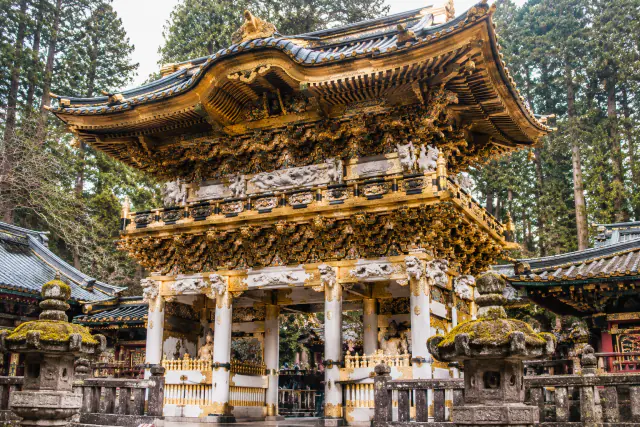 Tochigi Shrine · 2–3 hours Nikkō Tōshō-gū This shrine is dedicated to Tokugawa Ieyasu. Unlike Kyoto's understated style, it is covered in gold leaf, bright lacquer, and elaborate carvings. You could look at Yōmeimon Gate all day and still find new details. Look for the Three Wise Monkeys—"see no evil, hear no evil, speak no evil"—and the sleeping cat carving. Pass through the Sleeping Cat Gate and climb more than 200 stone steps to Ieyasu's mausoleum. It is about 10 minutes by bus from the station. Historic sitesArt
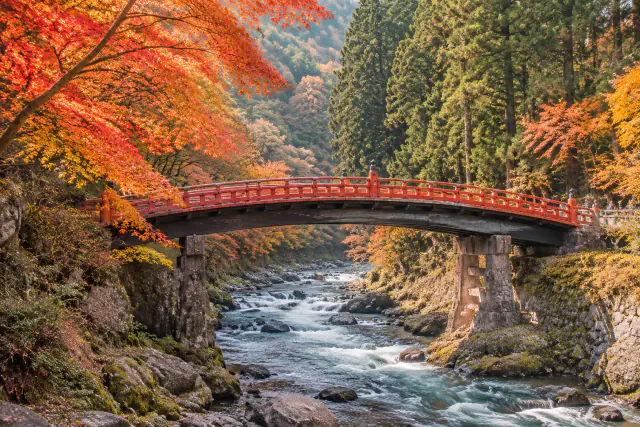 Tochigi Old town · 15–30 minutes Shinkyō Bridge This vermilion arch bridge crosses the Daiya River. It is the first major sight on the way to Tōshō-gū and Nikko's signature gateway. The bridge belongs to Futarasan-jinja. You can pay to walk across it, but most visitors are happy taking photos from the road bridge beside it. In fall, the gorge and colorful trees below set off the vermilion bridge—a classic Nikko postcard view. Autumn leavesHistoric sites
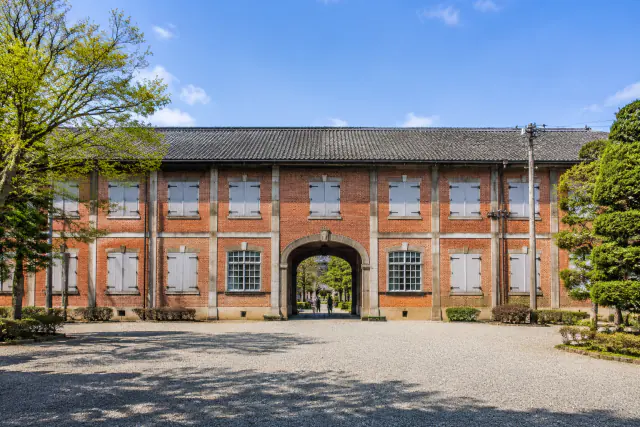 Gunma Museum · 1–2 hours Tomioka Silk Mill Built in 1872 by the Meiji government with help from French engineers, this state-run silk mill helped launch Japan’s modernization. Its long red-brick warehouses and silk-reeling workshop are well preserved, earning it World Heritage status. Tours and original machinery show how silk exports helped build Japan’s economy. Take the Joshin Railway from Takasaki for about 35 minutes, then walk 10–15 minutes from the station. Historic sitesArt
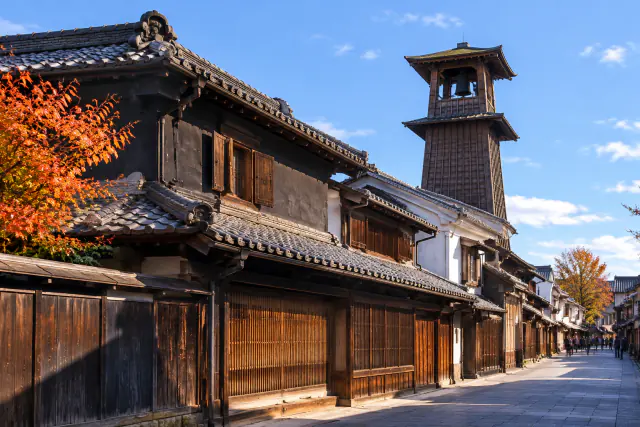 Saitama Old town · Half a day Kawagoe Warehouse District During the Edo period, Kawagoe was a merchant town that supplied Edo. Wealthy merchants built fire-resistant storehouses with thick black-and-gray plaster walls, creating the distinctive warehouse district that survives today. The landmark Toki no Kane clock tower rings several times a day. Nearby Kashiya Yokocho is lined with old-fashioned candy shops, making it a fun place to snack as you walk. Historic sites
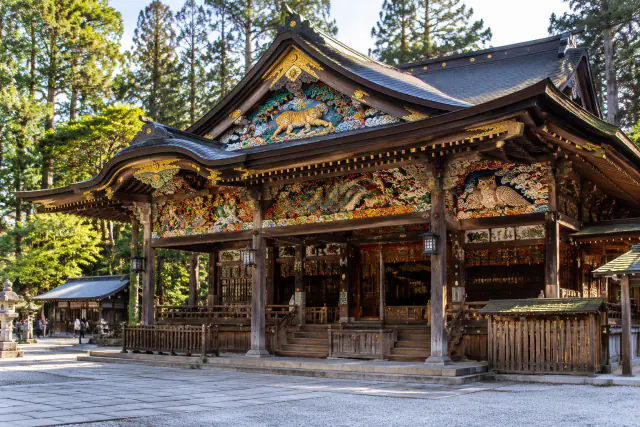 Saitama Shrine · 30–60 minutes Chichibu Shrine Chichibu's main shrine is known for its finely detailed, colorful carvings. Some are by Hidari Jingoro, who is also credited with the sleeping cat at Nikko Toshogu. Held each year on December 2–3, the Chichibu Night Festival is one of Japan's three major float festivals. Huge floats are pulled uphill through the winter night, accompanied by fireworks. The shrine is about a 15-minute walk from Seibu-Chichibu Station. Historic sitesArt
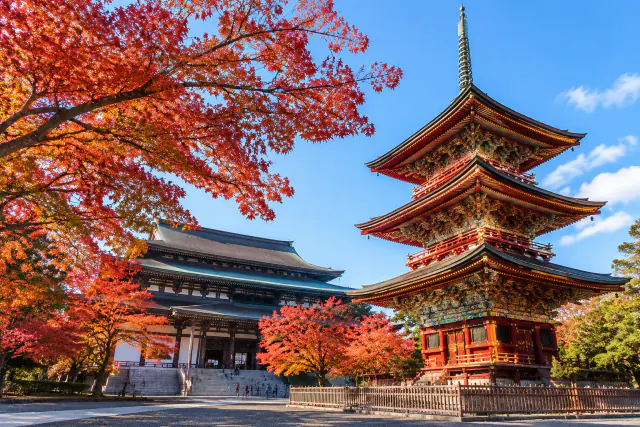 Chiba Temple · 2–3 hours Naritasan Shinshō-ji This thousand-year-old temple is Japan's most popular destination for hatsumōde, the first temple visit of the year. From JR or Keisei Narita Station, walk along Omotesandō for about 13 minutes. The street is lined with old inns, eel restaurants and souvenir shops. The temple grounds include the Main Hall and a three-story pagoda. Behind them, Naritasan Park has ponds and maple trees, with beautiful autumn colors in mid-to-late November. Historic sitesAutumn leaves
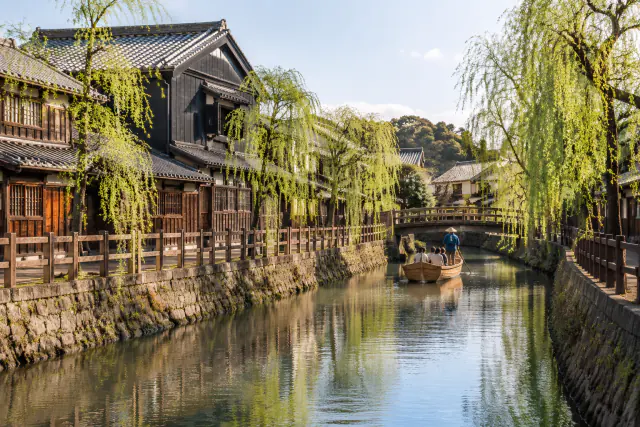 Chiba Old town · 2–3 hours Sawara Historic District This merchant town prospered during the Edo period through shipping on the Tone River. Wooden shops and warehouses line both sides of the Ono River. It was the first area in the Kantō region to be designated a Preservation District for Groups of Traditional Buildings. You can take a slow boat along the river, and the nearby former home of Inō Tadataka, who created one of Japan's first complete maps, is also worth seeing. It is about a 10-minute walk from JR Sawara Station. Historic sites
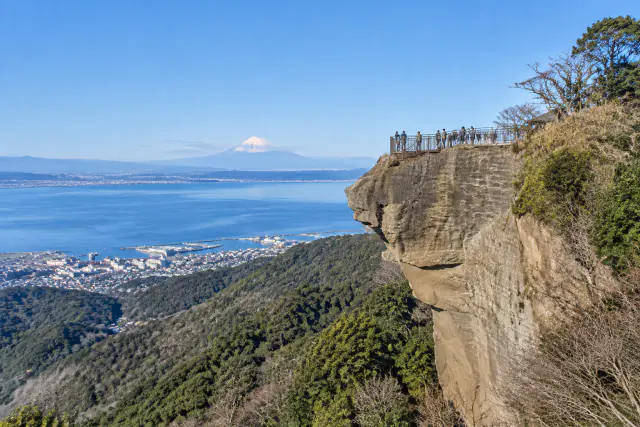 Chiba Temple · Half a day Mount Nokogiri and Nihon-ji This former quarry has cliffs cut into a jagged, sawtooth shape. The entire mountain belongs to Nihon-ji, home to a 31-meter stone Buddha, the Hyaku-shaku Kannon carved into the rock face, and more than 1,000 statues of arhats. The best-known spot is Jigoku Nozoki, a rock that juts out over a cliff. From it, you can look down over Tokyo Bay and see Mount Fuji on clear days. Take the ropeway up from near Hamakanaya Station. MountainsIslandsHistoric sites
 Chiba Viewpoint · 1–2 hours Inubōsaki Lighthouse This cape marks the easternmost point of the Kantō Plain. Apart from outlying islands and high mountains, it is the first place in Japan to see the New Year's sunrise. The white brick lighthouse, designed by a British engineer in 1874, is open for views over the Pacific. A coastal path offers wide-open scenery. From Chōshi, take the Chōshi Electric Railway to Inubō Station, then walk about 10 minutes. IslandsHistoric sites
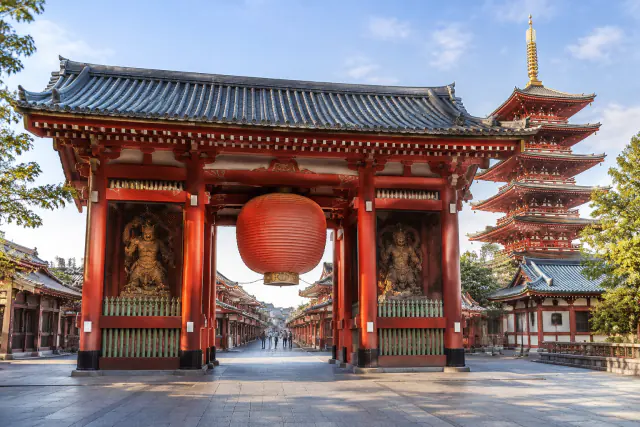 Tokyo Temple · 1.5–2 hours Sensō-ji Tokyo's oldest temple. Enter through Kaminarimon Gate and follow Nakamise Shopping Street, lined with ningyoyaki cakes, senbei, and souvenirs. The main hall and five-story pagoda are at the end. Admission is free. The old streets around Asakusa are perfect for a slow stroll, and Tokyo Skytree stands across the Sumida River, making the two sights a good half-day outing. Historic sites
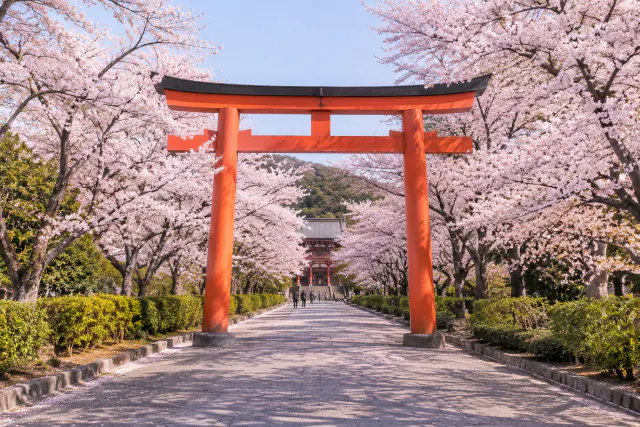 Kanagawa Shrine · About 1 hour Tsurugaoka Hachimangu Kamakura's spiritual center, Tsurugaoka Hachimangu was moved to its current location when Minamoto no Yoritomo established his shogunate. From the east exit of Kamakura Station, walk about 10 minutes along Wakamiya Oji's raised central walkway, the Dankazura, lined with cherry trees in spring. Komachi Street, directly opposite, is packed with food and shops and is ideal for a stroll after visiting the shrine. Cherry blossomsHistoric sites
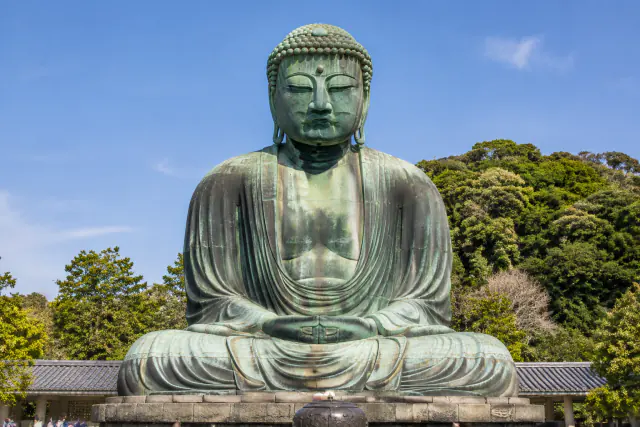 Kanagawa Temple · 30–45 minutes Kōtoku-in (Great Buddha of Kamakura) This bronze Amida Buddha stands about 11 meters tall and was cast in the 13th century. After the original hall was destroyed by a tsunami, the statue remained outdoors. It is a 5–10-minute walk from Hase Station on the Enoden. For about ¥50 extra, you can enter the statue and see the casting seams inside—a hit with children. Historic sites
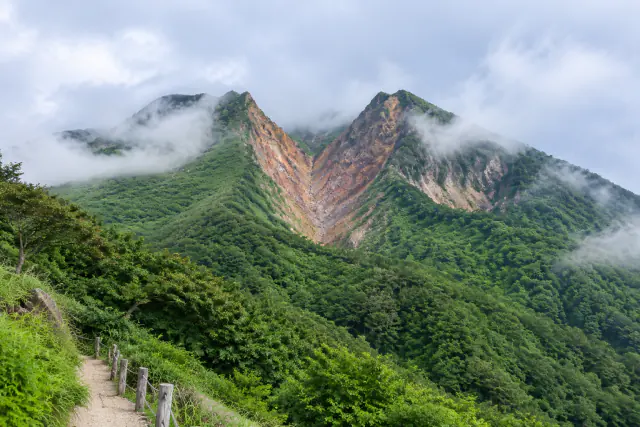 Niigata Museum · 2–3 hours Sado Gold Mine Gold and silver were mined here for nearly 400 years beginning in the Edo period. In 2024, it was added to the World Heritage list as Sado Island Gold Mine. At the Sohdayu Mine, moving figures recreate the miners' work. The Doyu Mine shows Doyu no Warito, a mountain split open by mining. Buses on the island require transfers and run infrequently, so consider booking a local day-tour bus. Historic sites
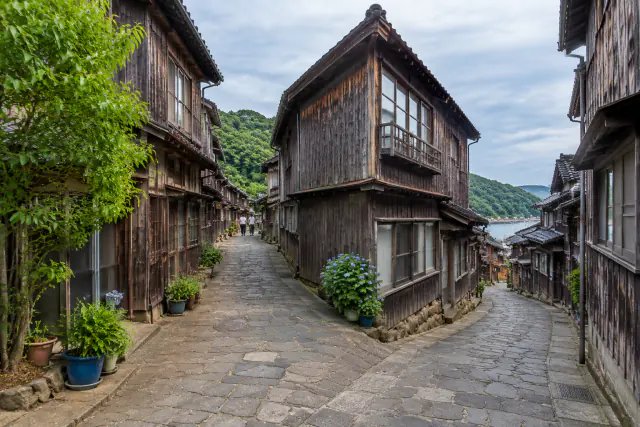 Niigata Old town · 1 hour Shukunegi This small fishing village at the southern tip of Sado Island grew wealthy during the Edo period through the Kitamaebune trade. More than 100 wooden houses crowd its narrow lanes, including a distinctive triangular house known as the Boat House. Nearby Ogi Port offers rides in tarai bune, traditional washtub boats. The village is tiny and takes about 30 minutes to walk through, making it easy to combine with Sado Gold Mine for a 2-day island trip. Historic sitesIslands
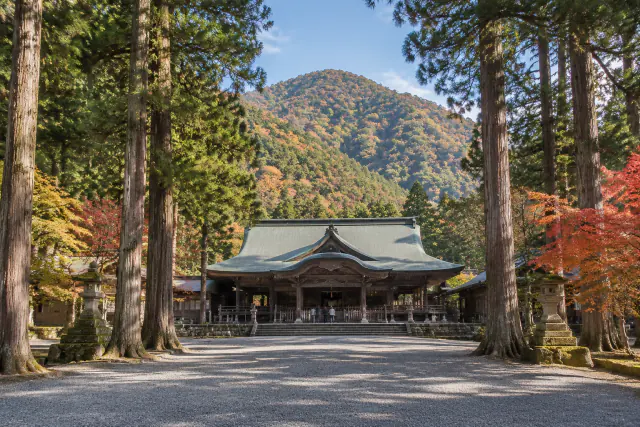 Niigata Shrine · 2–3 hours Yahiko Shrine Echigo's Ichi-no-miya, with a quiet approach lined by ancient trees. A ropeway behind the shrine goes up Mount Yahiko, which is 634 meters high—the same height as Tokyo Skytree. From the summit, you can look over the Echigo Plain and the Sea of Japan, and on clear days, see Sado Island. A chrysanthemum festival takes place in November, when the nearby Maple Valley also turns red. Historic sitesAutumn leaves
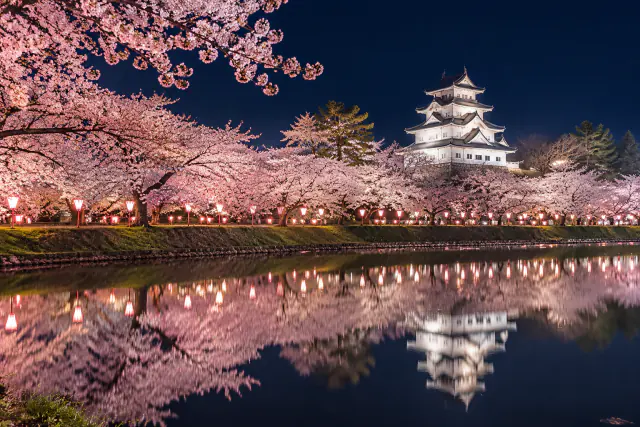 Niigata Park · 1–2 hours Takada Castle Site Park This castle site park in Joetsu is home to about 4,000 cherry trees. In early to mid-April, the trees are illuminated at night, and the pink blossoms reflect in the moat. The display is considered one of Japan's three great nighttime cherry blossom views. From Hokuriku Shinkansen's Joetsu-Myoko Station, transfer to Takada Station, then walk about 20 minutes. Cherry blossomsHistoric sites
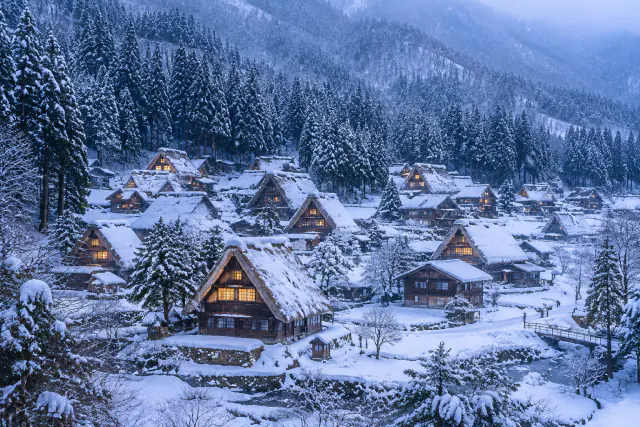 Toyama Old town · 1–2 hours Gokayama Ainokura This village of gassho-style houses shares World Heritage status with Shirakawa-go in Gifu. More than 20 thatched houses dot the hillside. With far fewer crowds than Shirakawa-go, it feels more like an everyday mountain village. Stay overnight in a traditional house; snowy winter nights are especially peaceful. The World Heritage Bus runs from Shin-Takaoka Station, and access from Shirakawa-go is also easy. Historic sitesSnow country
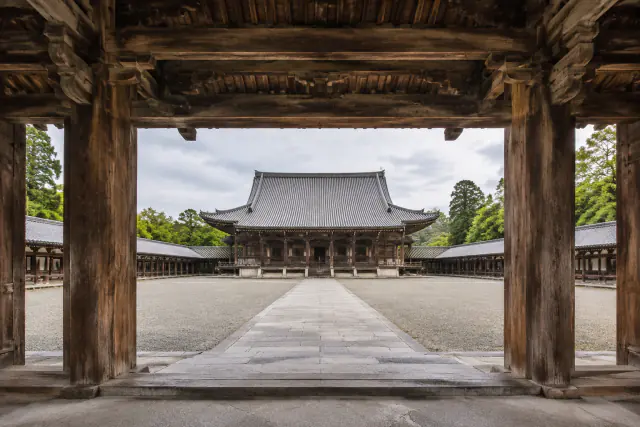 Toyama Temple · 1 hour Zuiryuji Temple This is the family temple of Maeda Toshinaga, the second lord of the Kaga Domain. Its main gate, Buddha hall, and Dharma hall are all National Treasures. Covered corridors enclose the buildings in a neat square, giving the grounds a strong sense of Zen order. About a 10-minute walk from Takaoka Station’s south exit, it can be combined with the Great Buddha of Takaoka in half a day. Historic sites
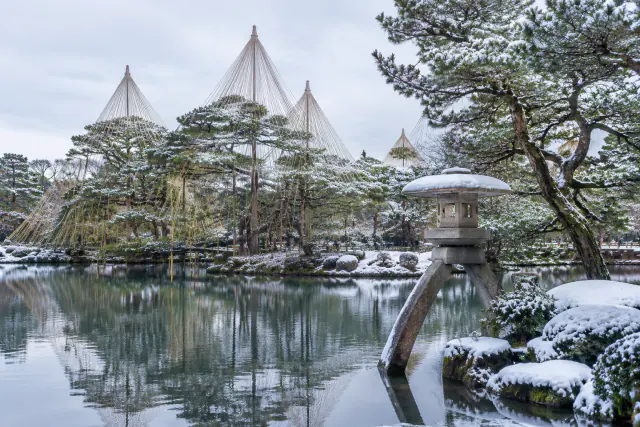 Ishikawa Garden · 1.5–2 hours Kenrokuen Garden One of Japan's three great gardens, Kenrokuen was developed over generations by the lords of the Kaga Domain as a strolling garden. Its signature feature is the Kotoji Toro lantern, with two legs of different lengths, beside Kasumigaike Pond. Starting in November, pine trees are fitted with umbrella-shaped yukitsuri ropes to protect them from heavy snow. The combination of fall colors and snow is one of Kanazawa's most photogenic scenes. The garden is across the street from Kanazawa Castle, so the two are easy to visit together. Autumn leavesSnow countryHistoric sites
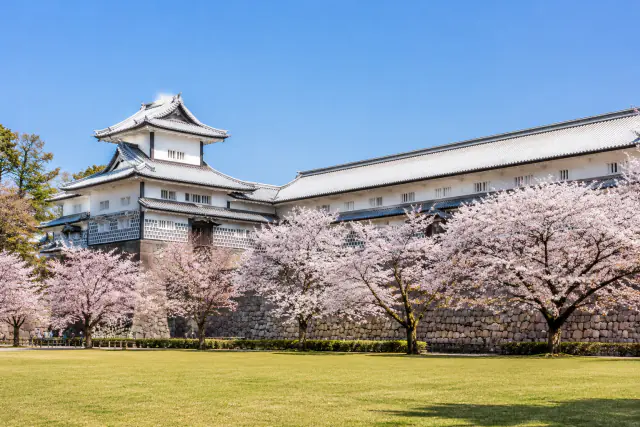 Ishikawa Castle · 1 hour Kanazawa Castle Park The former castle of the Maeda family no longer has its keep, but the reconstructed Hishi Yagura turret, Gojukken Nagaya warehouse, and white lead-tile roofs are impressive. The castle grounds are free to enter and have broad lawns and plenty of cherry trees in spring. The easiest route is to enter through Ishikawa-mon Gate from Kenrokuen, then exit on the other side toward Omicho Market or Oyama Shrine. Historic sitesCherry blossoms
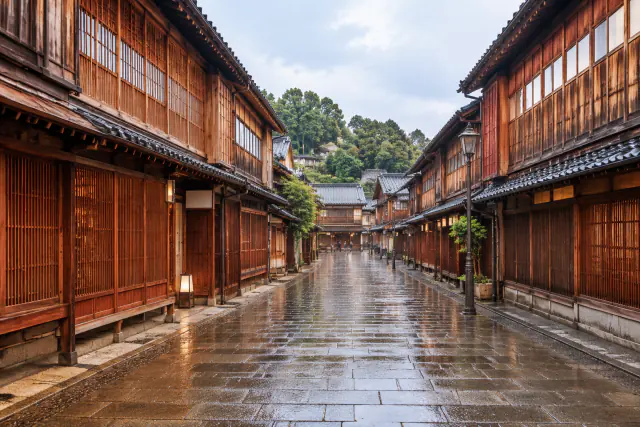 Ishikawa Old town · 1–2 hours Higashi Chaya District This Edo-period geisha district is lined with two-story wooden buildings with lattice facades. Today, many house cafés, gold-leaf craft shops, and dessert shops. Step inside one of the historic teahouses open to visitors to see the second-floor banquet room, then sit down for a cup of matcha. Across the Asano River is the quieter Kazuemachi Chaya District. Historic sites
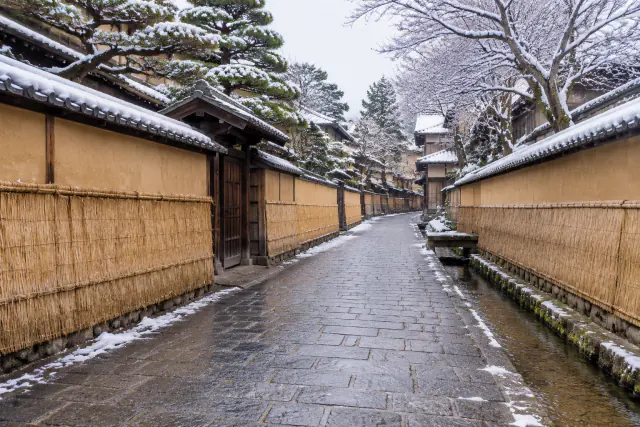 Ishikawa Old town · 1 hour Nagamachi Samurai District A few narrow lanes behind Korinbo make up this former residential area for middle- and lower-ranking samurai. Earthen walls, stone paths, and open drainage channels line the streets. You can enter the Nomura House to see its garden. In winter, the earthen walls are covered with straw mats called komokake to protect them from frost, creating a striking scene. The district is about a 5-minute walk from the Korinbo shopping area. Historic sitesSnow country
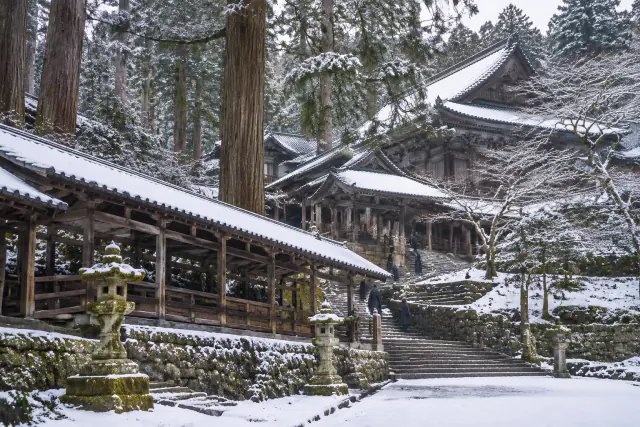 Fukui Temple · 1.5–2 hours Eiheiji Temple The head temple of the Soto school of Zen, founded by Dogen in 1244. More than 100 monks still train here. More than 70 buildings line the mountainside, linked by long wooden corridors. You may see monks moving between buildings during your visit. The ceiling in the Eihei-ji Temple's Eten-no-Ma room is painted with more than 200 bird-and-flower paintings. Historic sitesAutumn leavesSnow country
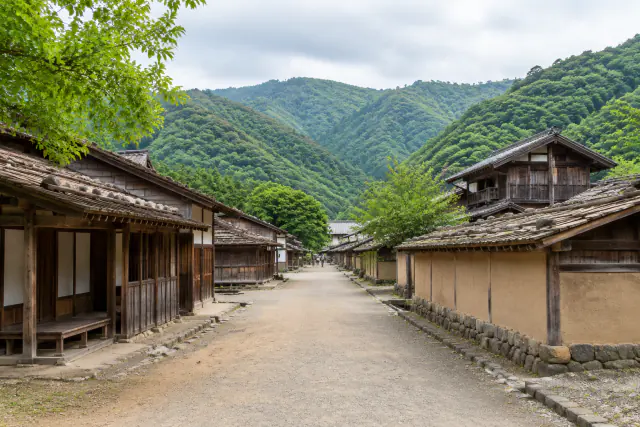 Fukui Museum · 2 hours Ichijodani Asakura Clan Ruins This castle town belonged to the Sengoku-period Asakura clan. After Oda Nobunaga burned it down in 1573, it lay buried beneath farmland for 400 years. Excavations uncovered a restored section of samurai residences and merchant streets that feels like a Sengoku film set. The museum next to Ichijodani Station displays excavated artifacts and a full-scale reconstruction of the Asakura residence. The restored streets are a little farther away. From Fukui Station, the JR Kuzuryu Line takes about 15 minutes. Historic sites
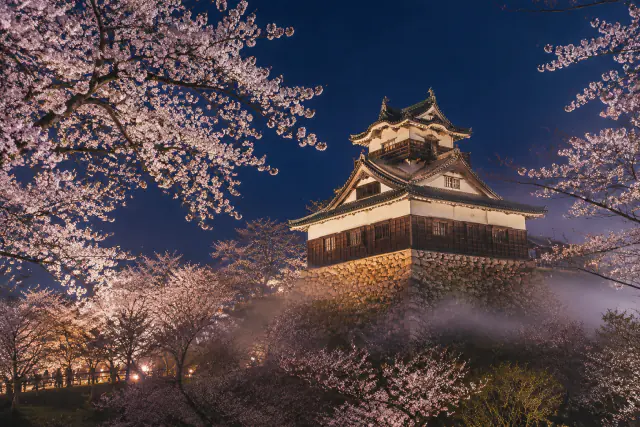 Fukui Castle · 1 hour Maruoka Castle One of Japan's 12 surviving original castle keeps. It is small, with a simple appearance and a roof covered in stone tiles. About 400 cherry trees bloom on the castle hill in early April, and the grounds are lit up at night. When the mist is heavy, the whole castle seems to float above the clouds, earning it the nickname “Kasumi Castle.” Take a bus from Fukui Station or Awaraonsen Station. Historic sitesCherry blossoms
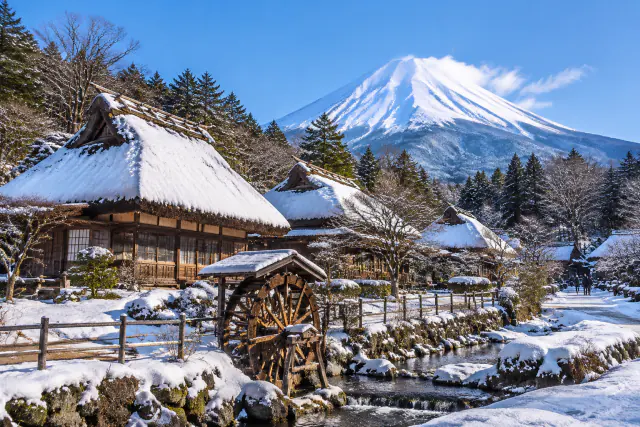 Yamanashi Old town · 1–1.5 hours Saiko Iyashi-no-Sato Nenba A restored thatched-roof village on the shore of Lake Saiko, with about twenty traditional houses arranged along the slope. Inside are craft workshops, small museums, and teahouses. On clear days, you can see Mt. Fuji from the village entrance. Quieter than Oshino Hakkai, it is a good place to slow down and take photos. After a snowfall, it has the feel of a Japanese folktale. Take the Saiko sightseeing bus from Kawaguchiko Station. Historic sitesSnow country
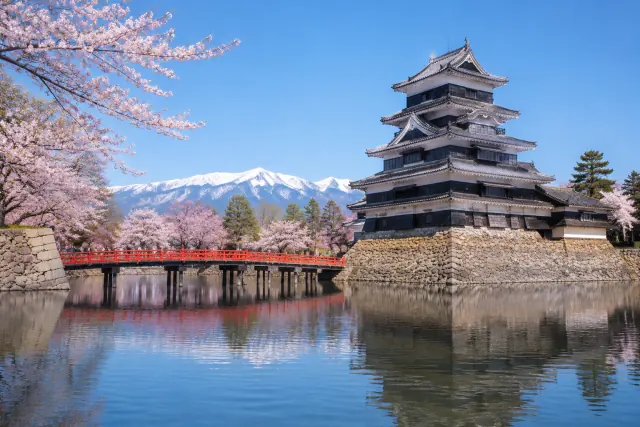 Nagano Castle · 1.5 hours Matsumoto Castle One of Japan’s 5 national treasure castle keeps, with black-lacquered exterior walls. It is often called “Crow Castle.” The keep has survived from the late 16th century, and its interior retains the original timber structure. Climb all the way to the sixth floor for views of Matsumoto and the Northern Alps. The best reflections are by the moat, which is lit up at night during cherry blossom season in early April. Historic sitesCherry blossoms
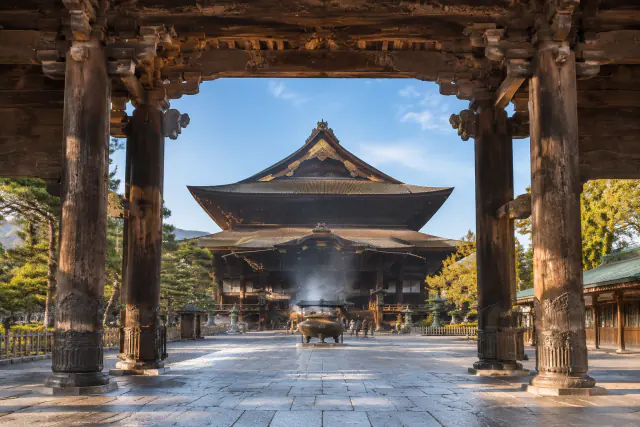 Nagano Temple · 1.5–2 hours Zenkoji Temple An ancient temple with about 1,400 years of history. It is open to all Buddhist sects and has long been associated with the saying, “You should visit Zenkoji once in your life.” The main hall is a national treasure. Its most unusual feature is the Kaidan Meguri, a pitch-dark passage beneath the main hall where you feel your way forward to find the legendary “key to paradise.” It is about a 30-minute walk or a bus ride from Nagano Station. Historic sites
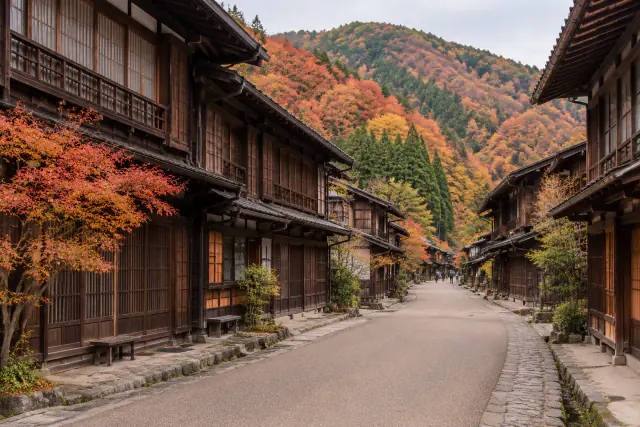 Nagano Old town · Half a day Tsumago-juku One of the best-preserved post towns along the Nakasendo. Even the utility poles have been hidden, making the whole street feel like a return to the Edo period. The classic route is to hike from Magome-juku on the Gifu side to Tsumago. The full trail is about 8 kilometers and takes 2.5–3 hours, crossing Magome Pass and passing stone paths, waterfalls, and teahouses. Take a JR train to Nagiso Station, then walk or take a bus. Historic sitesAutumn leaves
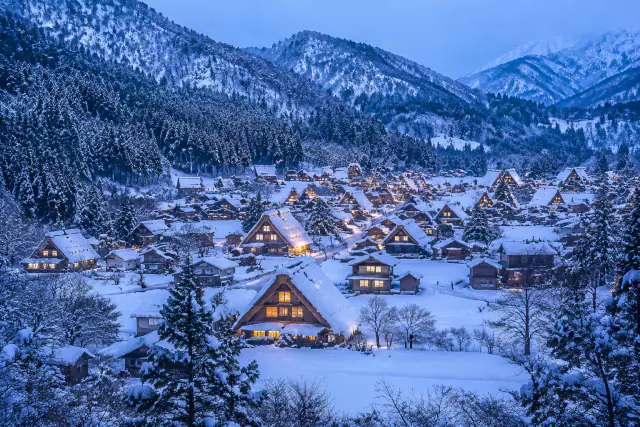 Gifu Old town · 2–3 hours Shirakawa-go (Ogimachi) This gassho-style village became a World Heritage Site in 1995. More than 100 old houses with steep thatched roofs are scattered among the fields, and people still live in many of them. You can enter some houses, such as Wada House, to see their three-story attics. The Ogimachi Castle Ruins viewpoint north of the village looks over the entire area and offers a classic postcard view. The bus ride from Takayama takes about 50 minutes. Historic sitesSnow country
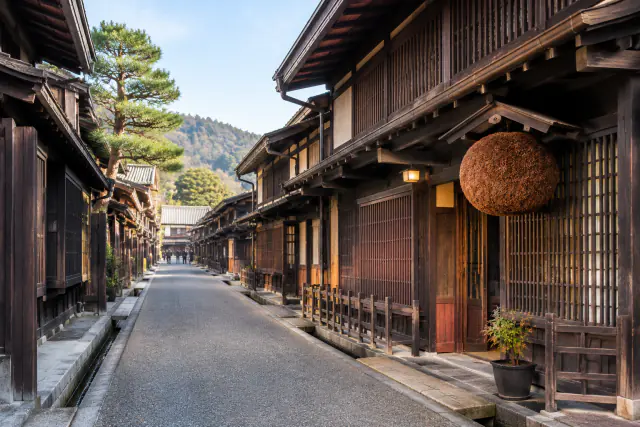 Gifu Old town · 2–3 hours Takayama Sanmachi Old Town One traditional merchant house after another lines these streets, with lattice-fronted wooden buildings dating to the Edo period. Sake breweries have cedar-ball decorations, called sugidama, hanging by their entrances, and many offer paid tastings. The streets are packed with Hida beef sushi, dango, and miso shops, making it easy to spend two hours snacking as you walk. At the spring and fall Takayama Festivals, elaborate floats are pulled through the streets. The festival is one of Japan's three most beautiful. Historic sites
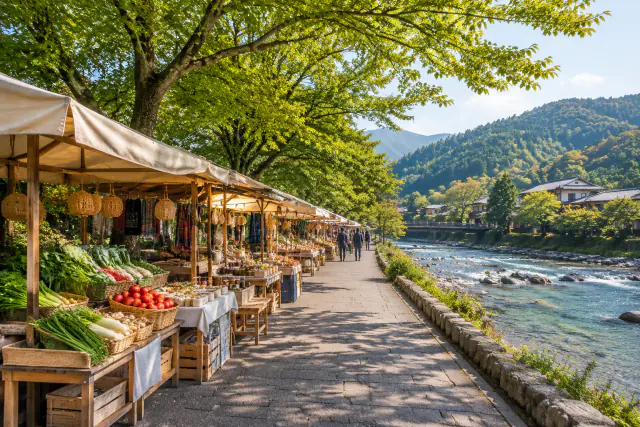 Gifu Market · 1.5–2 hours Miyagawa Morning Market and Takayama Jinya Every morning, farmers set up stalls along the Miyagawa River selling vegetables, pickles, apples, and handicrafts. There are also food stalls for snacks on the go. Another morning market is held in front of Takayama Jinya, the office used by the Edo shogunate to govern Hida. It is the only surviving building of its kind in Japan. Allow about 30 minutes inside. Historic sites
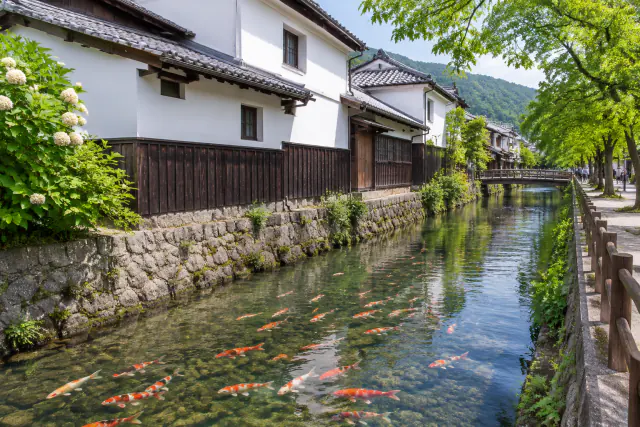 Gifu Old town · 2 hours Hida-Furukawa This town is about 15 minutes north of Takayama by JR train. White-walled sake breweries line the Seto River, whose canals are home to more than 1,000 colorful carp. It is much quieter than Takayama. The town also served as one of the models for the town in the anime film Your Name, and fans often take photos around the station and library. You can explore at a relaxed pace in half a day. Historic sites
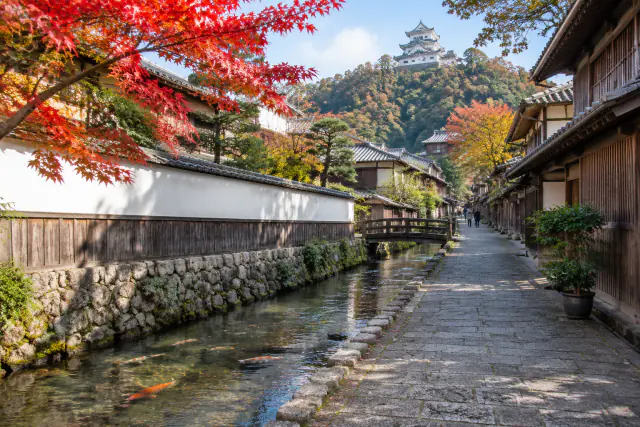 Gifu District · Half a day Gujo Hachiman This small mountain town is surrounded by clear streams. Canals run beside the old streets, and residents still wash vegetables and dishes in shared tiered water basins called mizubune. Gujo Hachiman Castle on the hill is a reconstructed wooden keep that looks especially beautiful with fall foliage. From July–September, the Gujo Odori dance is held for dozens of nights, with all-night dancing during the Bon Festival. The town is also Japan's center for food replicas, and you can try making one yourself. Historic sitesAutumn leaves
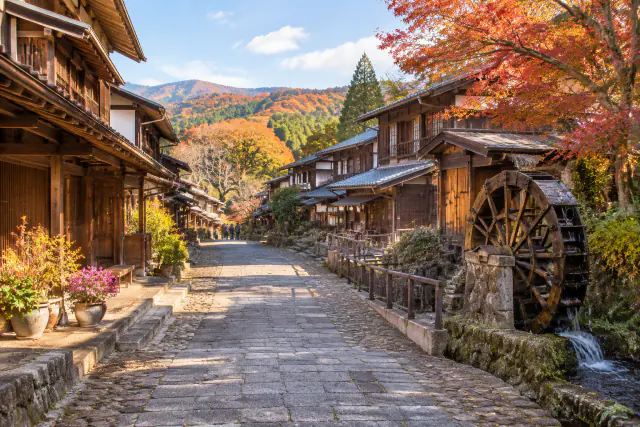 Gifu Hiking · Half a day Magome-juku This post town on the Nakasendo was built along a slope, with wooden houses and waterwheels lining its stone-paved streets. It was the hometown of writer Shimazaki Toson. From here, the hike over Magome Pass to Tsumago-juku in Nagano is about 8 km and takes 2.5–3 hours. It is fairly easy because most of the route is downhill. The bus from JR Nakatsugawa Station takes about 25 minutes. Historic sitesAutumn leaves
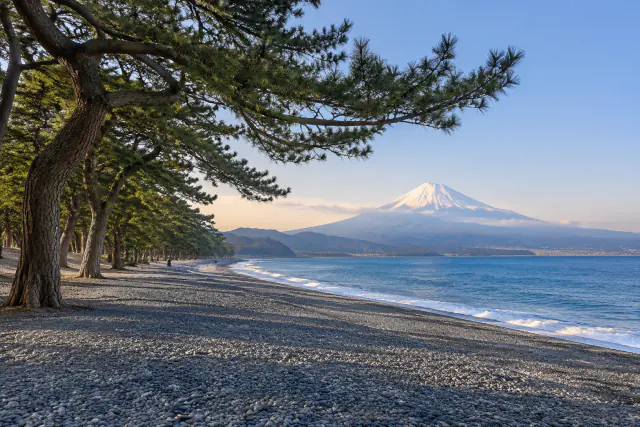 Shizuoka Nature · 1–1.5 hours Miho no Matsubara A seaside pine grove stretching about 7 km, with views of Mount Fuji across Suruga Bay. It has appeared in ukiyo-e prints and waka poetry since ancient times. In 2013, it was registered as a component of the Mount Fuji World Heritage Site. Walk from the pine grove's Kami no Michi wooden path to the shore, then visit the nearby museum to learn about the Hagoromo legend. About 25 minutes by bus from Shimizu Station. Historic sitesIslands
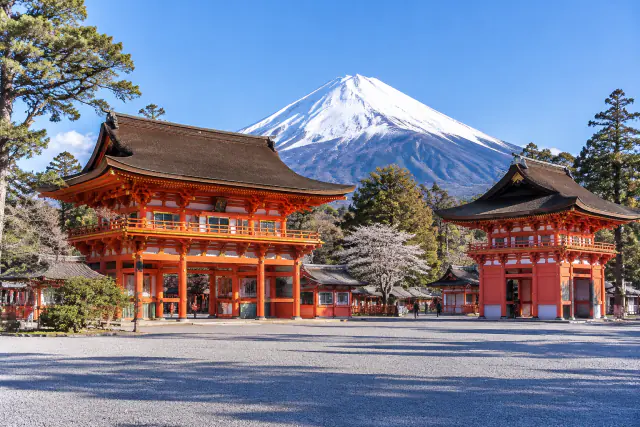 Shizuoka Shrine · 1 hour Fujisan Hongu Sengen Taisha The head shrine of more than 1,000 Sengen shrines across Japan, dedicated to the deity of Mount Fuji. Everything above the eighth station of Mount Fuji legally belongs to the shrine. The main hall is an unusual two-story structure. The Wakutama Pond on the grounds is fed by a spring of snowmelt from Mount Fuji, clear enough to see the bottom. About a 10-minute walk from JR Fujinomiya Station. Historic sites
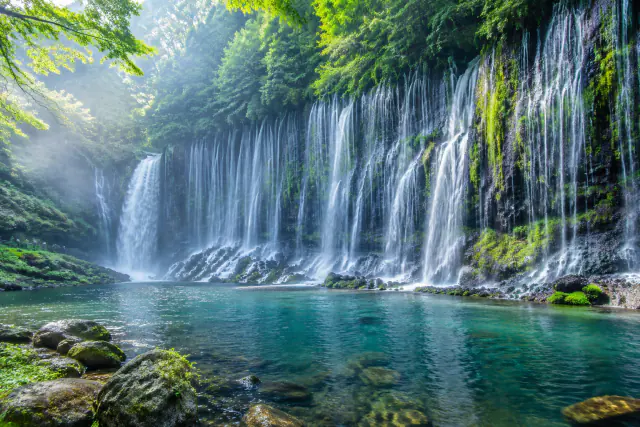 Shizuoka Nature · 1 hour Shiraito Falls Snowmelt from Mount Fuji seeps through cracks in the rock to form a curved curtain of water about 150 meters wide, like countless white threads hanging over the moss. It is also part of the Mount Fuji World Heritage Site. Nearby Otodome Falls has a much heavier flow. About 30 minutes by bus from Fujinomiya Station. Pair it with Sengen Taisha for a half-day outing. MountainsHistoric sites
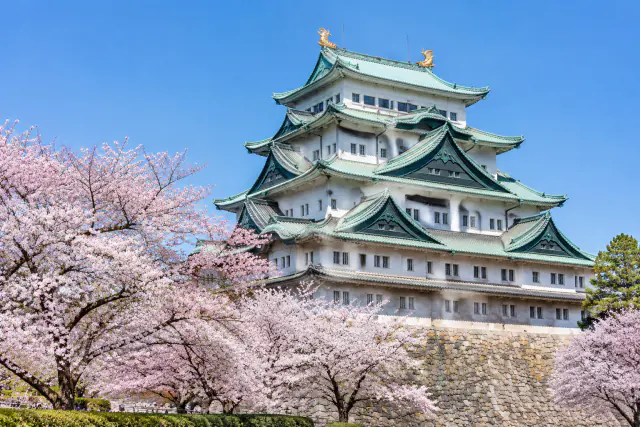 Aichi Castle · 1.5–2 hours Nagoya Castle This massive castle was built by Tokugawa Ieyasu for his son. Its roof is topped with golden shachihoko, mythical creatures with tiger heads and carp bodies. The reinforced-concrete keep is currently closed for a planned wooden reconstruction, so you can't go inside, but you can still photograph the exterior. The real highlight is the Honmaru Palace, restored in 2018 and filled with dazzling wall paintings. Admission is included. Historic sitesCherry blossoms
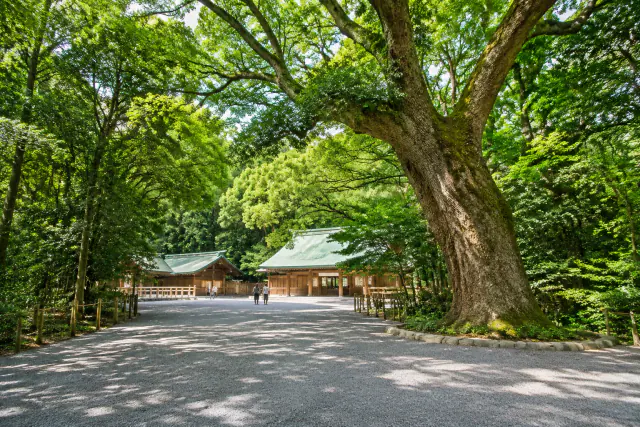 Aichi Shrine · 1 hour Atsuta Jingu This ancient shrine enshrines the Kusanagi sword, one of Japan's Three Sacred Treasures, and ranks just below Ise Jingu in importance. Its grounds are shaded by a large old-growth forest and a thousand-year-old camphor tree. The treasure hall displays many swords. It's a few minutes' walk from Meitetsu Jingu-mae Station or the subway's Jingu-nishi Station. You can also stop nearby for hitsumabushi. Historic sites
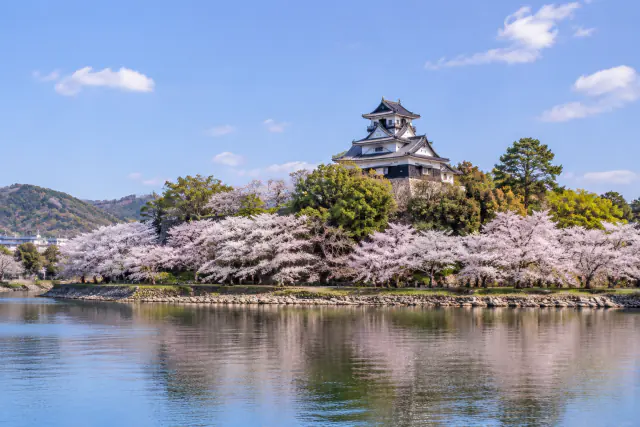 Aichi Castle · Half a day Inuyama Castle One of Japan's 5 national treasure keeps, this castle sits on a small hill beside the Kiso River. Its keep is one of the oldest surviving examples of its kind. At the top, you can walk along the open-air gallery and look over the Kiso River and Nobi Plain. The wind is strong. The old castle-town streets below are lined with skewers, dango, and other snacks. From Meitetsu Nagoya, the train to Inuyama Station takes about 30 minutes. Historic sitesCherry blossoms
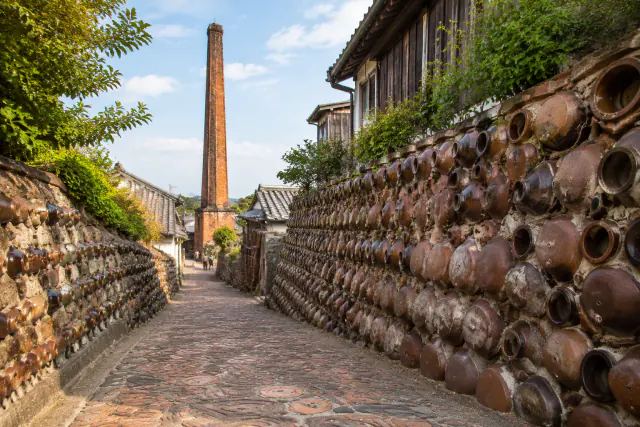 Aichi Old town · 1.5–2 hours Tokoname Pottery Footpath This old kiln district in Tokoname, one of Japan's Six Ancient Kilns, has sloping lanes lined with walls embedded with clay pipes and shochu bottles. Brick chimneys rise above the rooftops, and former workshops are now pottery studios and cafés. The best-known spot is Toko-zaka. Tokoname Station is only two stops and about 5 minutes from the airport, making this a good stop for 1–2 hours on the day you arrive or depart. Historic sitesArt
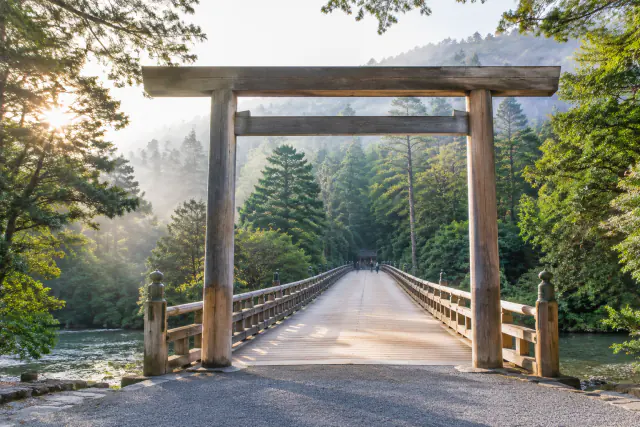 Mie Shrine · 1.5–2 hours Ise Grand Shrine Naiku Naiku, dedicated to Amaterasu, is the heart of Ise Jingu. After crossing Uji Bridge, follow the gravel approach through a forest of ancient cedars. At the main sanctuary, visitors can pray only from outside the white curtain, and photography is not allowed. The entire forest is quiet and solemn, completely unlike Kyoto's busy shrines. Admission is free. It opens at 5 a.m. Historic sitesMountains
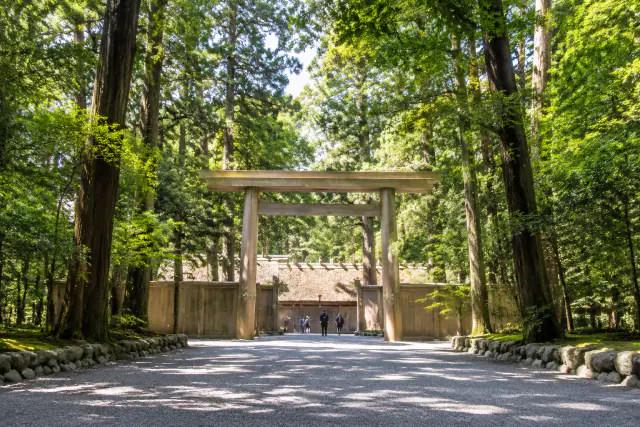 Mie Shrine · About 1 hour Ise Grand Shrine Geku Traditionally, visitors pray at Geku before Naiku. Geku is about a 5-minute walk from Iseshi Station. Its flat approach is quieter than Naiku's. The nearby Sengukan Museum introduces the Shikinen Sengu rebuilding ceremony. Afterward, take a bus to Naiku in about 15 minutes. Historic sites
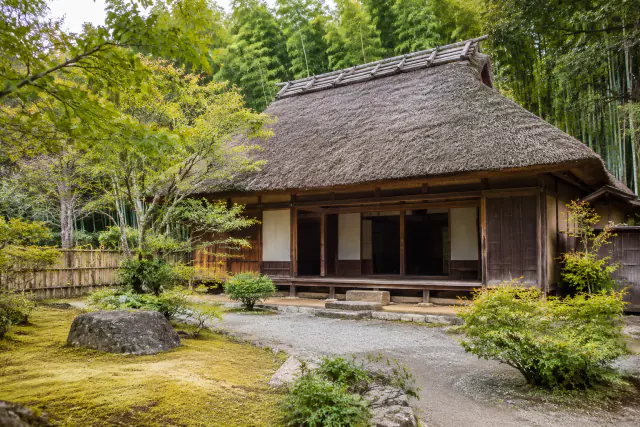 Mie Museum · 1.5–2 hours Iga-ryu Ninja Museum Iga is one of Japan's birthplaces of ninjas. The museum has a ninja house packed with secret mechanisms, including revolving walls, hidden doors, and underground passages. Staff demonstrate the features, and there are also shuriken and ninja performances. Iga Ueno Castle is next door, making this a good stop for families. Historic sites
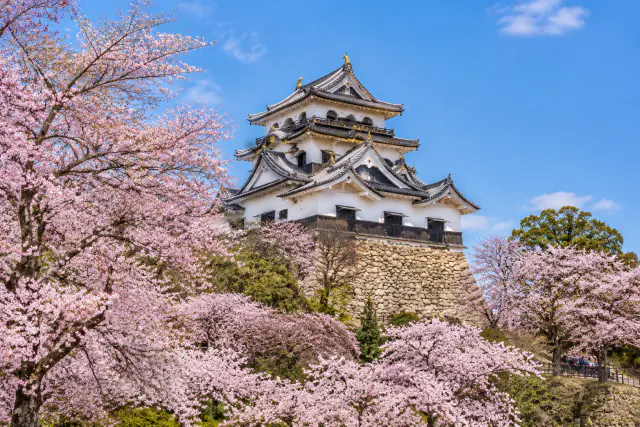 Shiga Castle · 2–3 hours Hikone Castle One of only five castle keeps in Japan designated as National Treasures, this compact, elegant wooden keep survives from more than four hundred years ago. The top floor overlooks Lake Biwa. About a thousand cherry trees line the moat, making spring especially beautiful. Nearby Genkyuen Garden offers views of the keep reflected in its pond, and the mascot Hikonyan appears at scheduled times each day in the castle grounds. Historic sitesCherry blossoms
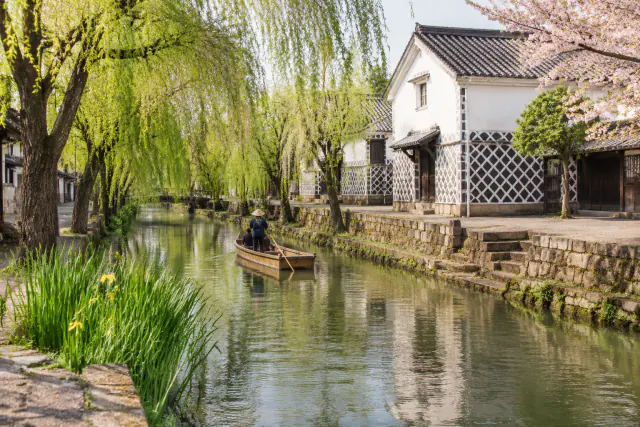 Shiga Old town · Half a day Omi-Hachiman The hometown of Edo-period Omi merchants, Omi-Hachiman has white-walled storehouses and stone steps lining the Hachiman-bori canal. A ride through the reeds in a hand-rowed boat feels like stepping into a period drama. You can visit merchant houses in the old town and enjoy the greenery at nearby Himure Hachimangu Shrine. The popular dessert destination La Collina Omihachiman is on the outskirts. Historic sites
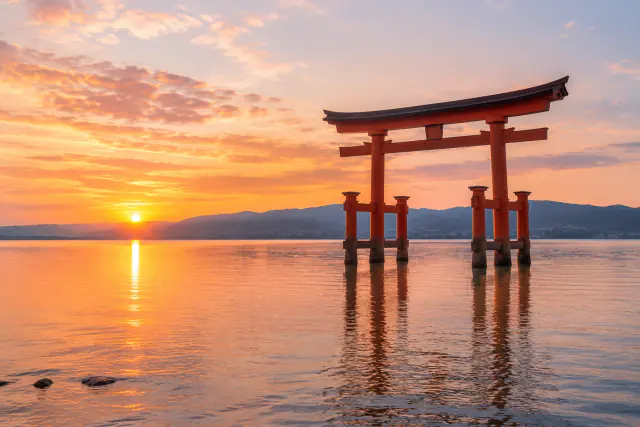 Shiga Shrine · About 30 minutes Shirahige Shrine’s lakeside torii A vermilion torii stands in the water off Lake Biwa’s west shore, backed by open water and distant mountains. Most beautiful at sunrise, it is known as the “Itsukushima of Omi.” The shrine itself is small; allow about half an hour to see the torii. Walk about 40 minutes from JR Omi-Takashima Station or take a taxi. IslandsHistoric sites
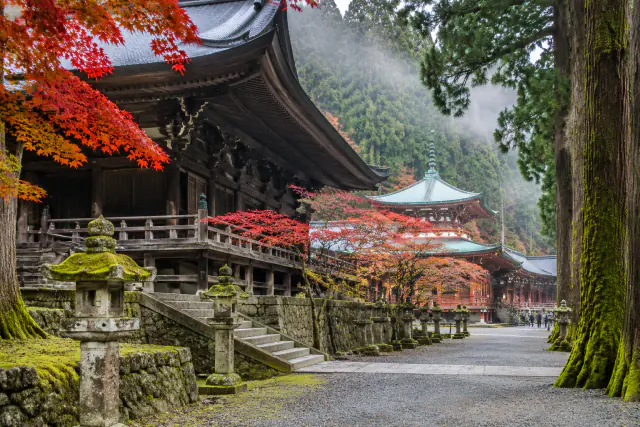 Shiga Temple · Half a day Enryaku-ji The head temple of Japan’s Tendai Buddhist school and a World Heritage Site, Enryaku-ji spans Mount Hiei. Its three areas—Todo, Saito, and Yokawa—sit among deep, quiet woods. The “eternal flame” in the Konpon Chudo hall is said to have burned for more than twelve hundred years. The mountain overlooks Lake Biwa and has beautiful fall foliage. You can take a cable car up from Sakamoto. Historic sitesAutumn leavesMountains
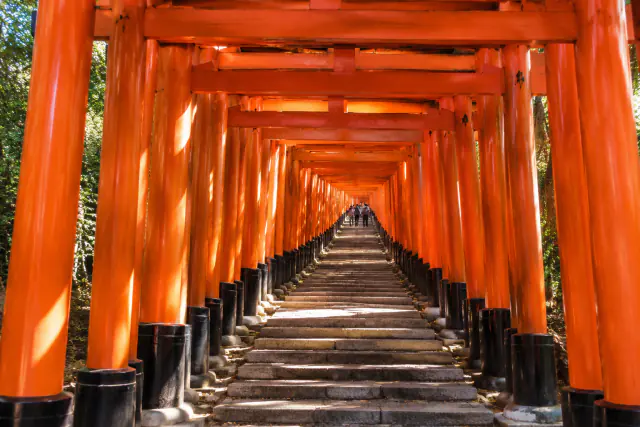 Kyoto Shrine · 1.5–3 hours Fushimi Inari Taisha Thousands of vermilion torii form a tunnel through the hills, making this Kyoto's most photographed sight. The entrance is the busiest area, and the crowds thin out as you climb. From Yotsutsuji halfway up, you can look over Kyoto. The round trip to the summit takes about 2–3 hours. JR Inari Station is right outside the gate. The shrine is open 24 hours and admission is free. Historic sites
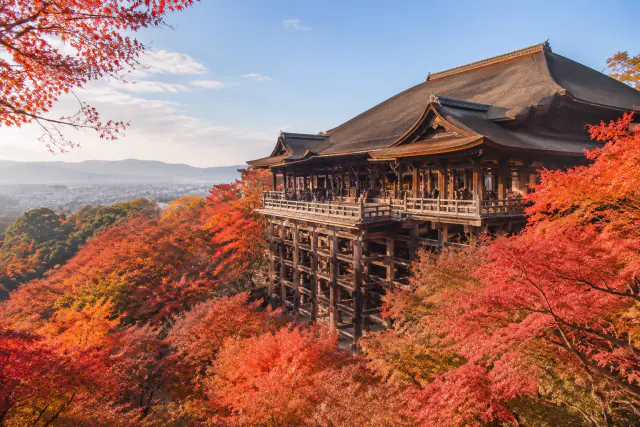 Kyoto Temple · 2–3 hours Kiyomizu-dera & Sannenzaka The wooden Kiyomizu Stage, suspended over the hillside, is one of Kyoto's signature views. Cherry blossoms in spring and fall foliage in autumn spread out below. Walk downhill along the stone-paved lanes of Sannenzaka and Ninenzaka, lined with traditional shops and teahouses, then continue to Yasaka Shrine and Gion. Historic sitesCherry blossomsAutumn leaves
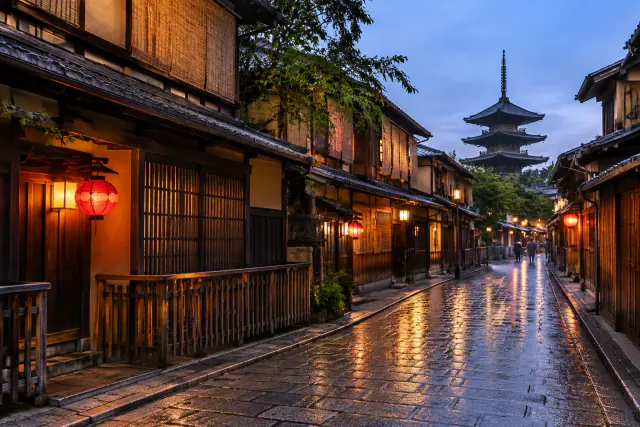 Kyoto Old town · 1–2 hours Gion & Hanamikoji This is Kyoto's most atmospheric traditional neighborhood. Teahouses and ryotei line the stone-paved streets, which look their best when the lanterns come on at dusk. You can also walk along the Shirakawa River and visit Yasaka Shrine, which stays lively at night. This is where geiko and maiko live and work—not a staged tourist attraction. Historic sitesCherry blossoms
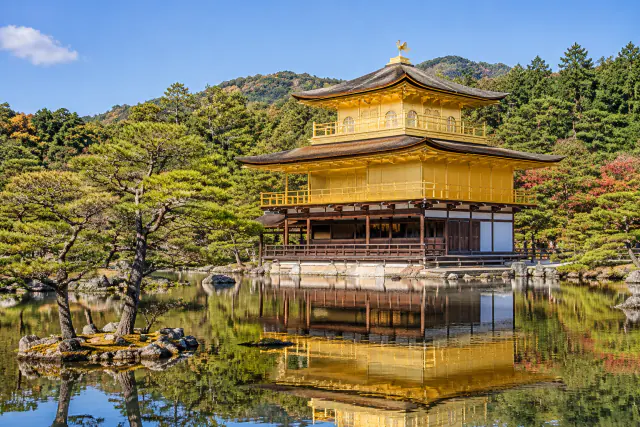 Kyoto Temple · About 1 hour Kinkaku-ji The Golden Pavilion, covered in gold leaf, is reflected in Kyokochi Pond. It is one of Kyoto's most famous postcard views. The route is one-way and takes 30–40 minutes. Nearby Ryoan-ji and Ninna-ji can be combined for a half-day northern Kyoto route. The pavilion covered in snow is a rare sight. Historic sites
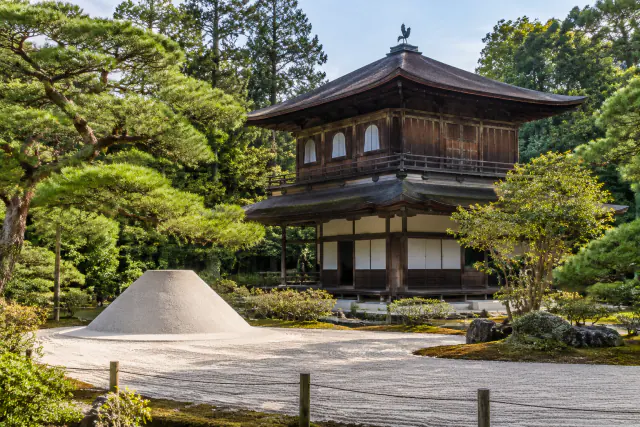 Kyoto Temple · 2–3 hours Ginkaku-ji & Philosopher's Path Ginkaku-ji is not actually silver. The highlights are the white-sand Silver Sand Sea and the moss garden. From the entrance, follow the canal south to the Philosopher's Path, a flat route about 2 kilometers long. In spring it is lined with cherry blossoms, and in fall with colorful leaves. At the end, you can continue to Nanzen-ji and Eikando. Cherry blossomsAutumn leavesHistoric sites
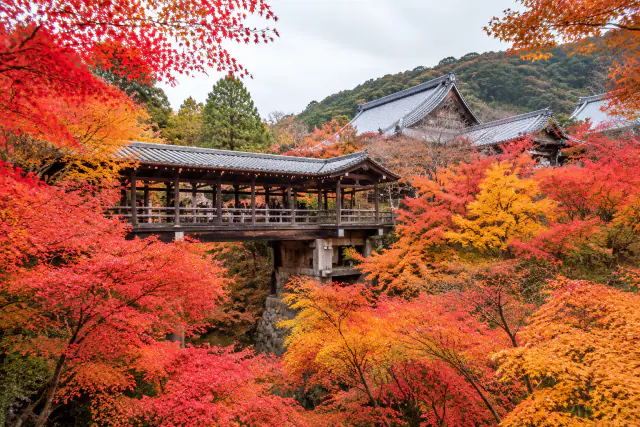 Kyoto Temple · 1–1.5 hours Tofuku-ji One of Kyoto's top fall foliage spots. From the wooden Tsutenkyo Bridge, you can look down over a valley filled with maple trees. In late November, the colors are almost fiery. The abbot's square moss garden is a modern garden masterpiece. It is only one stop from Fushimi Inari, so you can see the foliage in the morning and walk through the torii in the afternoon. Autumn leavesHistoric sites
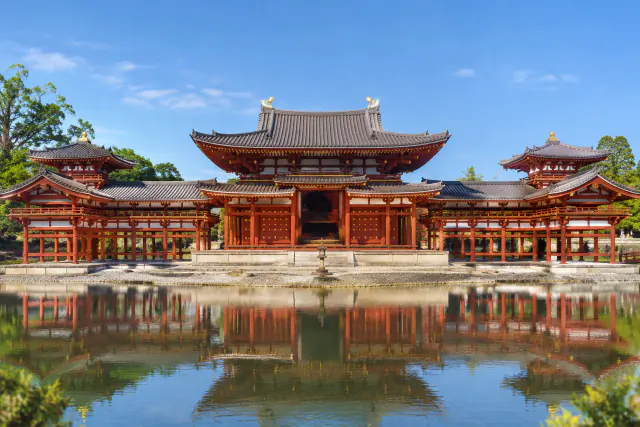 Kyoto Temple · Half a day Byodo-in, Uji The Phoenix Hall depicted on the back of the ¥10 coin stands here. This original Heian-period building is especially beautiful reflected in the pond. Uji is also a major matcha-producing area. The approach is lined with tea shops where you can drink tea and try matcha desserts, then take a stroll along the Uji River. From Kyoto, the JR Nara Line takes about 20–30 minutes. Historic sitesArt
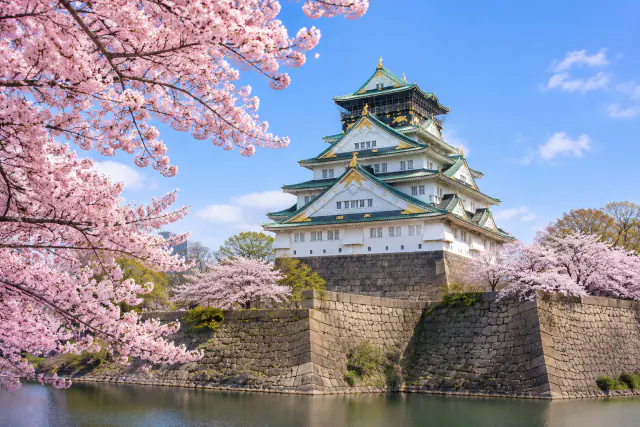 Osaka Castle · 2–3 hours Osaka Castle This famous castle was built by Toyotomi Hideyoshi. The current keep is a reinforced-concrete reconstruction from 1931, with a history museum inside and city views from the top floor. The huge stone walls, moat, and park outside are more impressive. Nishinomaru Garden is a popular cherry blossom spot, and a yakatabune boat ride around the moat is another good option. Cherry blossomsHistoric sites
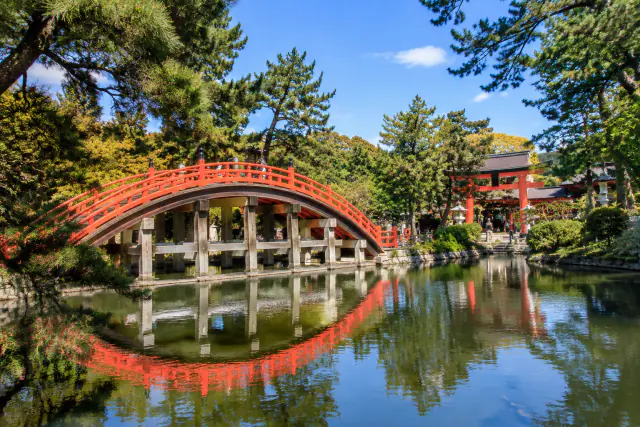 Osaka Shrine · About 1 hour Sumiyoshi Taisha One of Osaka's oldest shrines, Sumiyoshi Taisha has several main halls designated as National Treasures and preserves an ancient shrine style from before the arrival of Buddhism. The steep vermilion Sorihashi Bridge at the entrance is the main photo spot. It gets far fewer visitors than Kyoto's shrines and is about 10 minutes from Namba by Nankai train. Historic sites
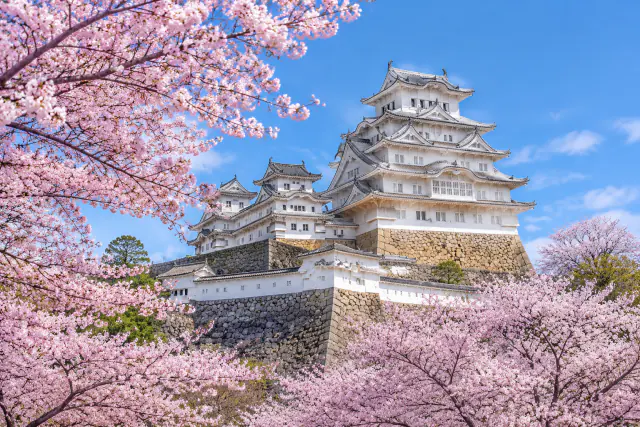 Hyogo Castle · 2–3 hours Himeji Castle Japan's best-preserved original castle keep is a World Heritage Site. Its white walls and roof resemble a white heron spreading its wings, earning it the name White Heron Castle. Inside, you remove your shoes and climb six floors on steep wooden stairs. Walk straight from Himeji Station for about 20 minutes to reach the castle. The neighboring Kokoen garden has lovely fall colors. Historic sitesCherry blossoms
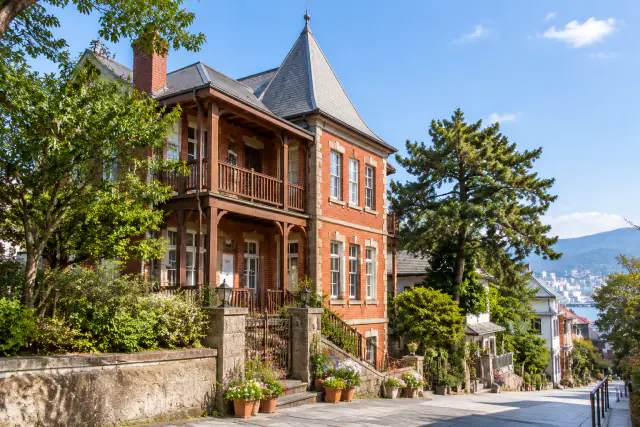 Hyogo Old town · 1.5–2 hours Kitano Ijinkan These Western-style houses on the slopes north of Sannomiya were home to foreign merchants after the port opened. Red brick, pointed roofs, and wooden balconies give the area a distinctive feel. Many houses charge separate admission, so choose one or two to enter and admire the rest from outside. The hillside cafes and bakeries are good breakfast stops. ArtHistoric sites
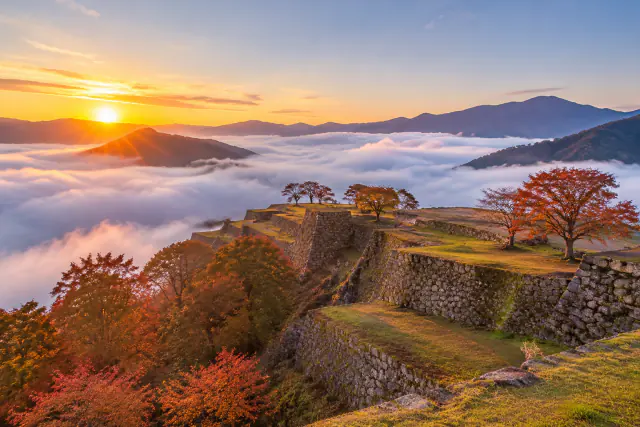 Hyogo Castle · Half a day Takeda Castle Ruins Only stone walls remain of this mountaintop castle. On misty autumn mornings, it seems to float above a sea of clouds, earning it the name “castle in the sky.” The most dramatic views are from Ritsuunkyo across the valley. Access takes some effort: hike from JR Takeda Station or take a seasonal bus. It suits photographers willing to get up early. Historic sitesAutumn leavesMountains
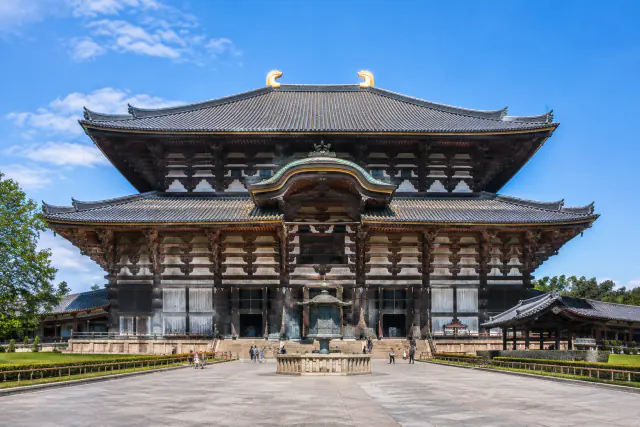 Nara Temple · 1–1.5 hours Todai-ji Great Buddha Hall One of the world's largest wooden buildings, it houses a bronze Great Buddha about 15 meters tall. You don't realize how enormous the hall is until you walk through the entrance. A hole at the base of one pillar is said to bring good luck to anyone who crawls through it, and most of those in line are children. Don't miss the two fierce guardian statues at the Great South Gate. Historic sites
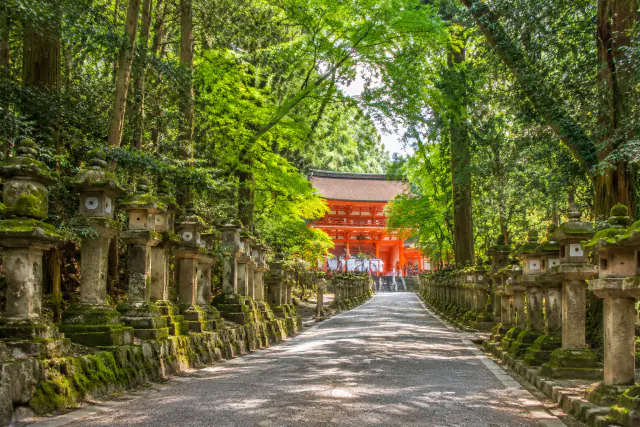 Nara Shrine · About 1 hour Kasuga Taisha The vermilion shrine buildings sit beside an ancient forest. About 2,000 moss-covered stone lanterns line the approach, and more than 1,000 bronze lanterns hang inside the shrine. The atmosphere is quieter than at Todai-ji. The wisteria along the corridors is famous in early summer, and during the Mantoro festivals in early February and mid-August, all the lanterns are lit. Historic sitesFlower fields
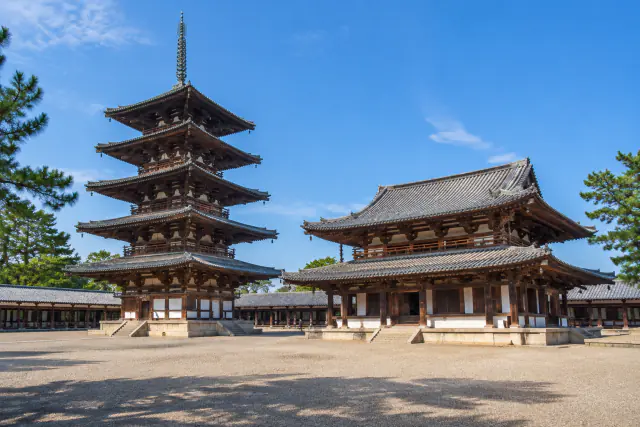 Nara Temple · 2–3 hours Horyu-ji The world's oldest surviving group of wooden buildings includes a 1,300-year-old five-story pagoda and main hall. It is Japan's first World Heritage site. Much quieter than Todai-ji, it is ideal for anyone interested in architecture and Buddhist statues. From Nara Station, take JR for about 15 minutes to Horyu-ji Station, then walk about 20 minutes or take a bus. Historic sitesArt
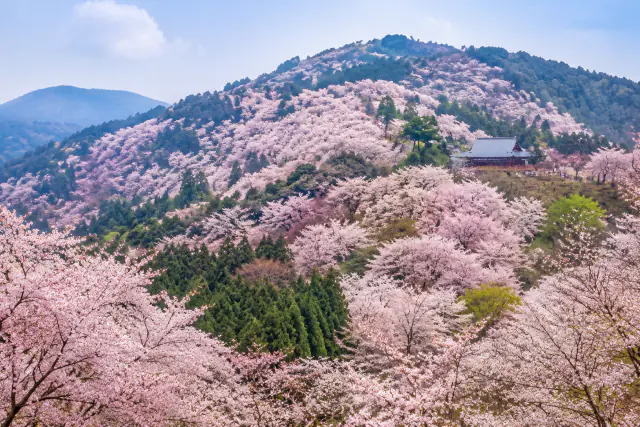 Nara Nature · Half a day–1 day Mt. Yoshino Japan's most famous cherry blossom mountain has about 30,000 mountain cherry trees that bloom in stages from the foot upward: Shimo-senbon, Naka-senbon, Kami-senbon, and Oku-senbon. The World Heritage site Kinpusen-ji stands midway up the mountain. From Osaka-Abenobashi, take the Kintetsu line for about 1 hour 15 minutes to Yoshino Station, then take the ropeway or a bus up the mountain. Cherry blossomsHistoric sitesMountains
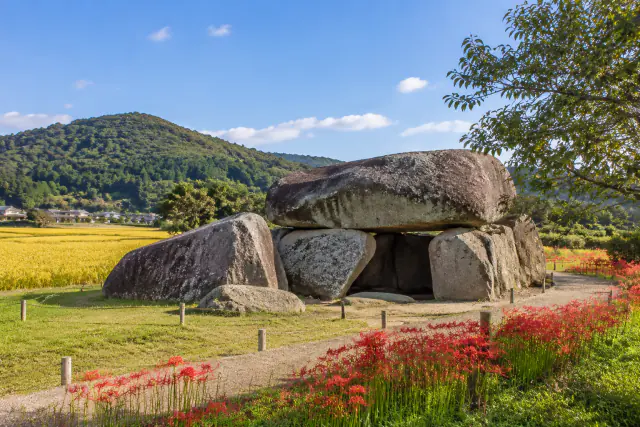 Nara Nature · Half a day–1 day Asuka This area was home to Japan's earliest capital and is now a rural landscape dotted with historic sites: the Ishibutai Tomb, built from huge stones; Asuka-dera's oldest surviving Buddhist statue in Japan; and terraced rice fields. Rent a bicycle at Asuka Station and spend half a day to a full day exploring at an easy pace. In autumn, the rice fields turn golden and red spider lilies bloom along the roads. Historic sitesMountains
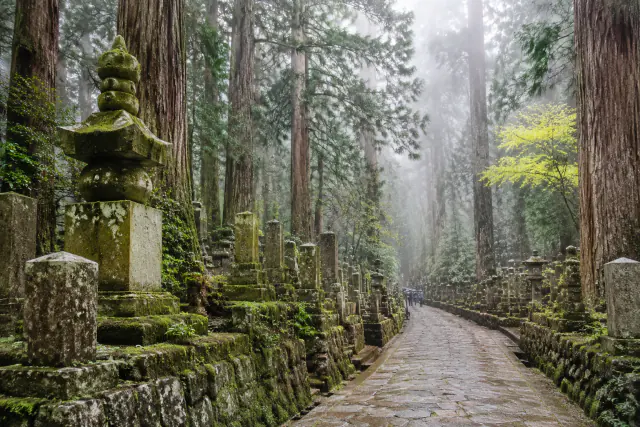 Wakayama Temple · 2–3 hours Koyasan Okunoin The final resting place of Kobo Daishi Kukai. The approach from Ichi-no-hashi to the mausoleum is about 2 km, lined with towering cedars and more than 200,000 gravestones and memorial stupas, from feudal lords to modern companies. It is remarkably cool and quiet. Most temple lodgings offer evening tours, and the atmosphere is even more intense at night. Historic sitesAutumn leaves
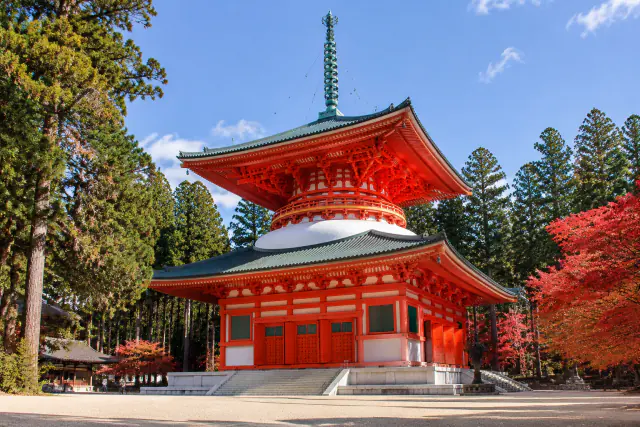 Wakayama Temple · 2–3 hours Kongobu-ji & Danjo Garan The head temple of Koyasan Shingon Buddhism, Kongobu-ji has Japan's largest rock garden, Banryu-tei, and grand halls decorated with painted sliding screens. Danjo Garan is a few minutes' walk west. Its red Konpon Daito is one of Koyasan's symbols. Together with Okunoin, these are Koyasan's highlights, and buses connect them around the mountain. Historic sitesArt
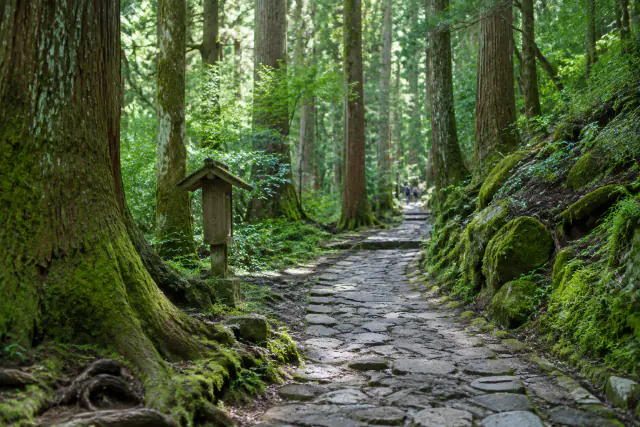 Wakayama Hiking · Half a day–1 day Kumano Kodo Nakahechi A thousand-year-old pilgrimage route and a World Heritage site. Beginners should walk from Hosshinmon-oji to Kumano Hongu Taisha, a route of about 7 km that takes 2–3 hours. It is mostly downhill, with forest paths and stone steps, small shrines, and villages along the way. Afterward, soak your feet in Yunomine or Kawayu Onsen to relax. MountainsHistoric sites
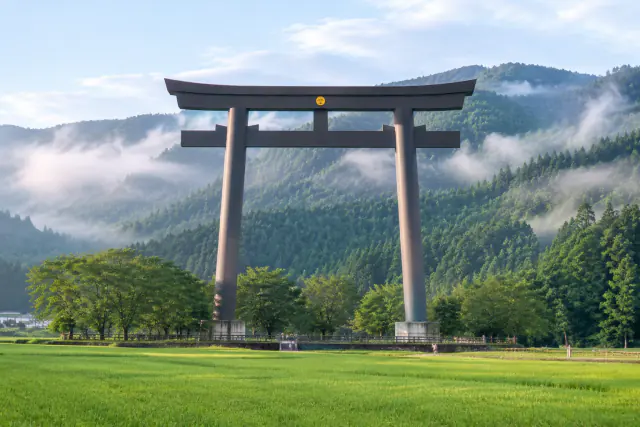 Wakayama Shrine · About 1 hour Kumano Hongu Taisha The center of the Kumano Sanzan, this shrine has simple, dignified buildings with cypress-bark roofs. A few minutes away is the former site, Oyunohara, marked by one of Japan's largest torii gates, about 34 meters high. It makes a striking sight standing in the middle of the fields. The ancient trail ends here, making it a good first stop on a Kumano trip. Historic sitesMountains
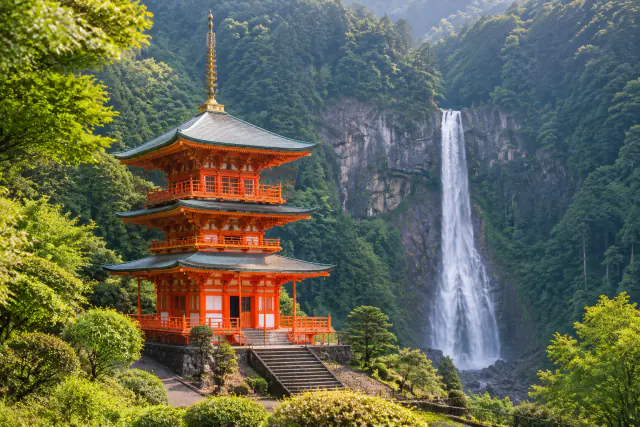 Wakayama Nature · 2–3 hours Nachi Falls With a drop of 133 meters, Nachi Falls is Japan's tallest single-drop waterfall. From Seiganto-ji beside Kumano Nachi Taisha, the red three-story pagoda frames the falls in Wakayama's most iconic view. You can also climb the stone steps from Daimon-zaka, a walk of about 30 minutes through towering old-growth trees that evokes the area's pilgrimage history. MountainsHistoric sites
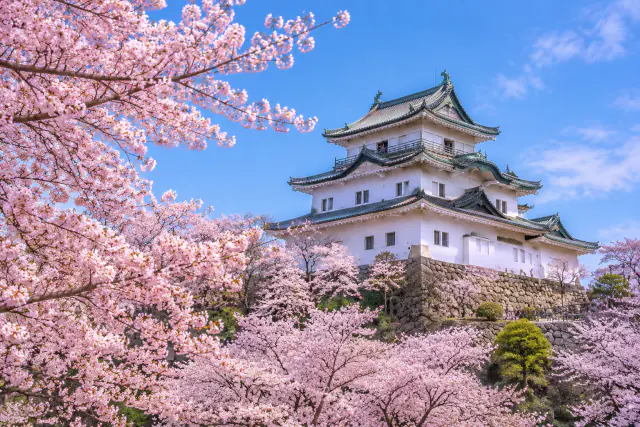 Wakayama Castle · 1–1.5 hours Wakayama Castle The former stronghold of the Kishu Tokugawa family, one of the three major branches of the Tokugawa clan. Its white keep stands on a hill in the city center, surrounded by well-preserved stone walls and gardens. About 600 cherry trees bloom in the park in spring, making it Wakayama City's top cherry-blossom spot. It is about a 10-minute walk from Wakayamashi Station and easy to visit on the way to the airport or Koyasan. Cherry blossomsHistoric sites
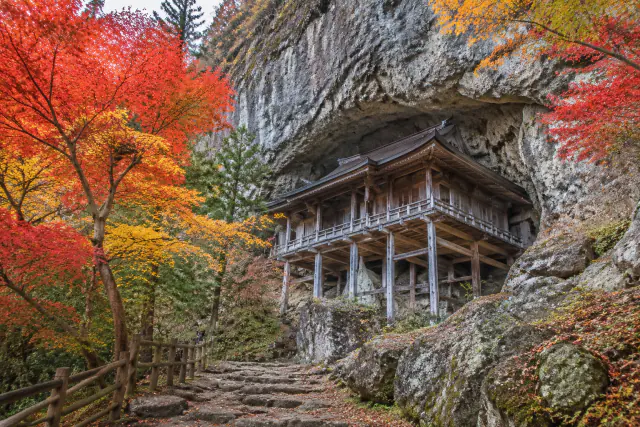 Tottori Hiking · Half a day Mitokusan Nageiredo This temple hall, a designated national treasure, is built into a hollow in a cliff. Its name means "thrown in," reflecting how it appears to have been placed there. Reaching it requires climbing over tree roots and rocks using both hands and feet. The one-way climb takes about 1 hour, and the rules are strict: you must go with at least one other person, and staff inspect your shoes at the entrance. If they are unsuitable, you must change into straw sandals. Snow closes the mountain from December to March. Historic sitesMountainsAutumn leaves
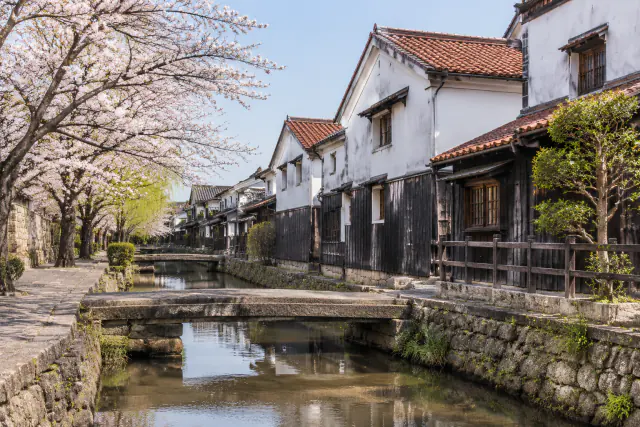 Tottori Old town · 1–1.5 hours Kurayoshi White-Walled Storehouses White-walled, red-tile storehouses line the Tamagawa River in a row, linked by small stone bridges. Many now house cafes, soy sauce shops, and general stores. The area is compact and takes a little over an hour to explore at a relaxed pace. About 15 minutes by bus from Kurayoshi Station. Stop here on the way to Misasa Onsen. Historic sites
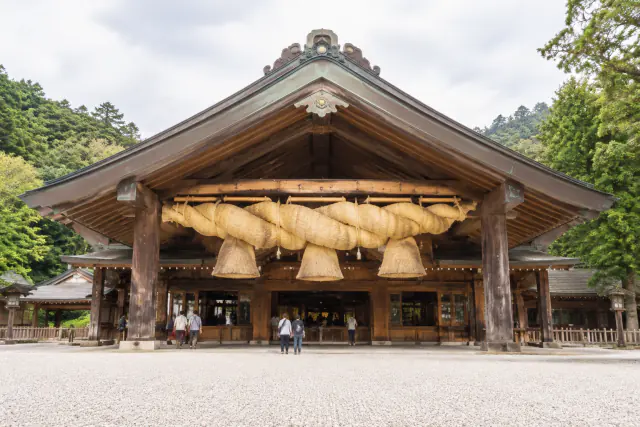 Shimane Shrine · 1.5–2 hours Izumo Taisha One of Japan’s oldest shrines, dedicated to Okuninushi Okami, the deity of matchmaking. A huge shimenawa rope hangs in front of the Kaguraden, creating an impressive sight. Worship here follows a different custom from most shrines: two bows, four claps, and one bow. From Izumoshi Station, take a bus for about 25 minutes, or take the Ichibata Railway to Izumotaisha-mae Station. Historic sites
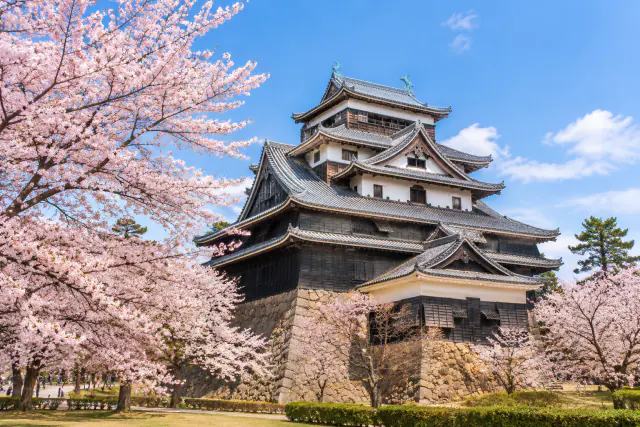 Shimane Castle · 2 hours Matsue Castle One of Japan’s 12 original castle towers and one of its 5 national treasure castle towers. Its black wooden exterior feels imposing, and the stairs are steep and narrow. From the top, you can see Lake Shinji and the entire castle town. Outside the castle, take a Horikawa sightseeing boat around the moat. The ride takes about 50 minutes, and the roof lowers when the boat passes under low bridges, which is great fun. Historic sitesCherry blossoms
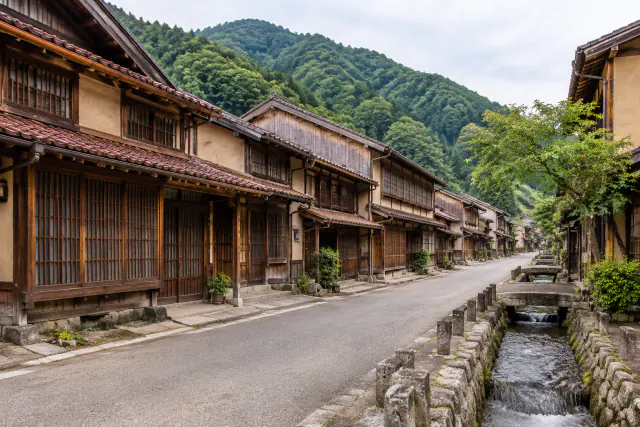 Shimane Old town · Half a day Iwami Ginzan Silver Mine This former mine produced a large share of the world’s silver and became a World Heritage Site in 2007. Omori’s old town in the valley is so quiet it feels frozen in time. The walk along the stream to the open Ryugenji Mabu mine shaft takes about 40–50 minutes. You can also rent an electric bicycle. From Ota-shi Station, take a bus for about 30 minutes to Omori. Historic sitesMountains
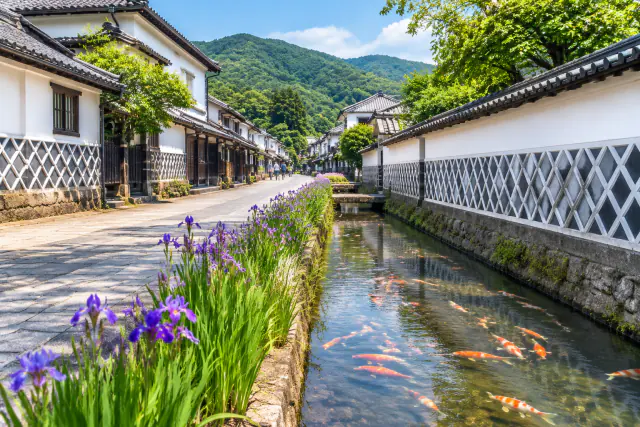 Shimane Old town · Half a day Tsuwano This small castle town is surrounded by mountains. Tonomachi Street is lined with white walls and lattice windows, and schools of koi swim in the drainage channels. On the mountainside, Taikodani Inari Shrine has a path lined with more than 1,000 red torii gates. From Shin-Yamaguchi Station in Yamaguchi Prefecture, take a JR limited express for about 1 hour. Tsuwano is often combined with Hagi in Yamaguchi Prefecture. Historic sites
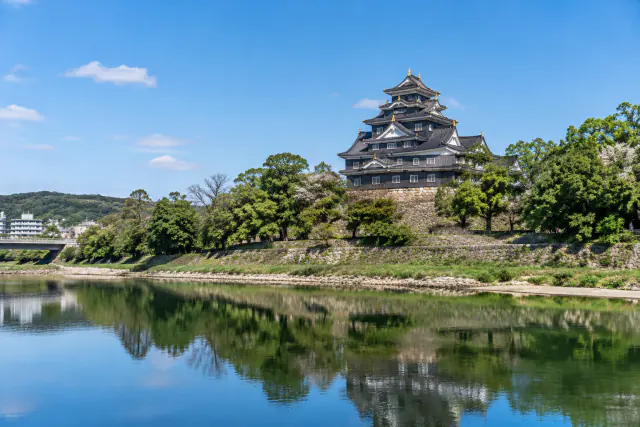 Okayama Castle · 1 hour Okayama Castle Its black exterior has earned it the nickname "Crow Castle." It faces Okayama Korakuen Garden across the Asahi River, just over Tsukimi Bridge. The keep was rebuilt after the war. After renovations in 2022, the interior became a museum about Okayama's history, and the top floor offers panoramic views of the garden. The best photo angle is from the garden or the opposite riverbank, where the black keep is reflected in the water. Historic sites
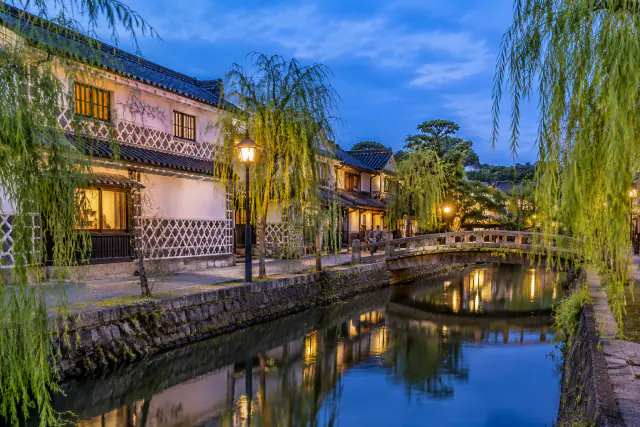 Okayama Old town · Half a day Kurashiki Bikan Historical Quarter This Edo-period merchant district has whitewashed, black-tiled storehouses lining a willow-lined canal. It is about a 10-minute walk from JR Kurashiki Station. You can take a boat ride of about 20 minutes along the canal. Buy tickets at the Kurashikikan Tourist Information Center. The narrow lanes are filled with denim shops and cafés, and look their best after the evening lights come on. Historic sites
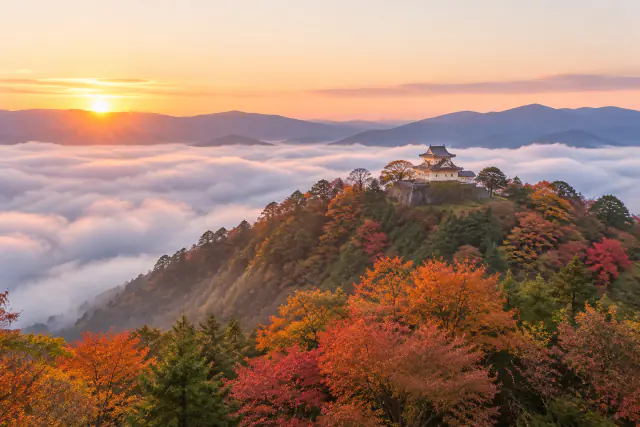 Okayama Castle · Half a day Bitchu Matsuyama Castle This historic castle sits atop a mountain at an elevation of about 430 meters. Its keep is an original from the Edo period. When surrounded by a sea of clouds on fall and winter mornings, it is known as a "castle in the sky." From Okayama Station, take the JR Hakubi Line for about 35–50 minutes to Bitchu-Takahashi Station, then take a vehicle to the middle of the mountain. The final approach requires about 20 minutes of uphill walking. Historic sitesAutumn leavesMountains
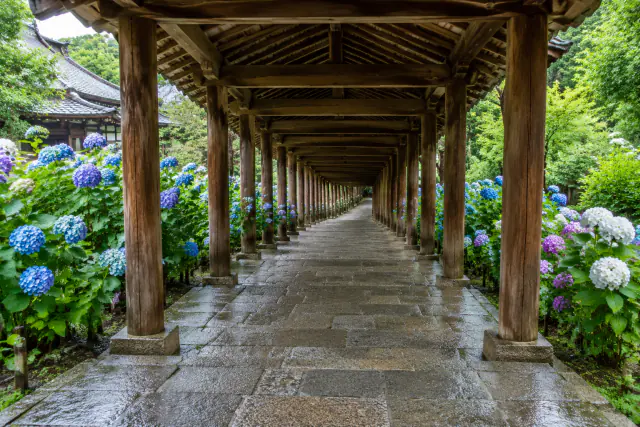 Okayama Shrine · 1 hour Kibitsu Shrine This shrine is dedicated to Kibitsuhiko-no-Mikoto, said to be the model for Momotaro. The main hall is a National Treasure, and a photogenic wooden corridor about 360 meters long extends along the hillside behind it. Hydrangeas bloom beautifully beside the corridor in June. From Okayama Station, take the JR Kibi Line for about 20 minutes. It makes an easy half-day trip from the city. Historic sitesFlower fields
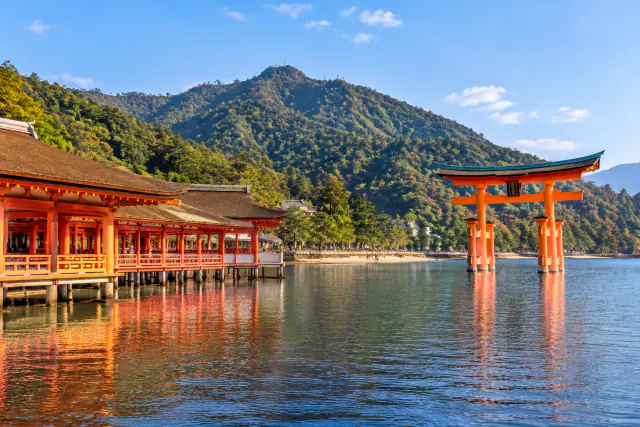 Hiroshima Shrine · 1–2 hours Itsukushima Shrine The great torii gate on the sea and vermilion corridors are Miyajima's signature sights. At high tide, the gate appears to float on the water; at low tide, you can walk to its base. Both views are worth seeing, so check the tide chart before you go. Walking around the shrine buildings takes about 30 minutes. Do not feed the deer on the island. They may snatch paper bags and maps. Historic sitesIslands
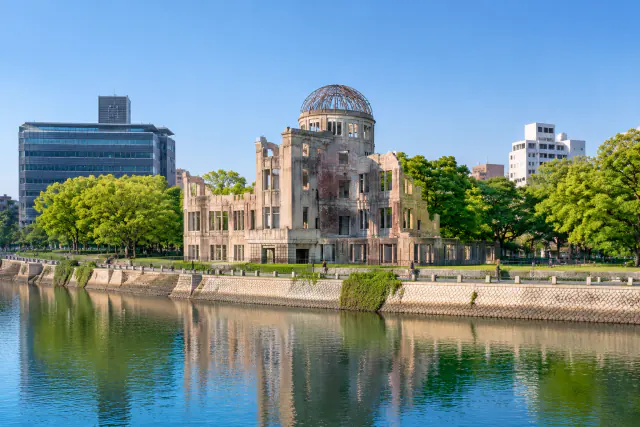 Hiroshima Park · 2–3 hours Peace Memorial Park The Atomic Bomb Dome stands across the river much as it did after the 1945 bombing. The Peace Memorial Museum is at the south end of the park. Its exhibits are frank and difficult, so allow plenty of time to take them in. From Hiroshima Station, take the streetcar to Atomic Bomb Dome-mae Station; the ride takes about 15 minutes. The park and dome are free. Historic sites
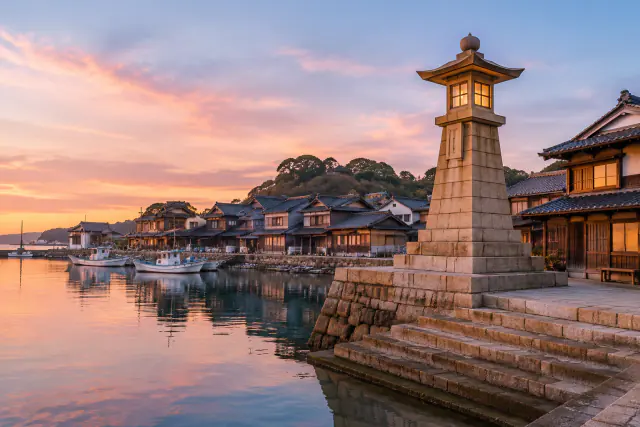 Hiroshima Old town · Half a day Tomonoura This old port town on the Seto Inland Sea still has stone night lanterns and a stepped pier much as they appeared in the Edo period. It also helped inspire Hayao Miyazaki's Ponyo. The bus from Fukuyama Station takes about 30 minutes. Half a day is ideal, and you can take a ferry for a few minutes to nearby Sensui Island. IslandsHistoric sites
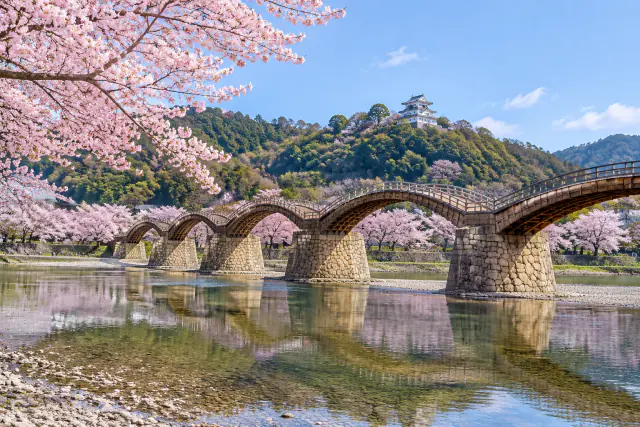 Yamaguchi Park · 2–3 hours Kintai Bridge This wooden bridge spans the Nishiki River in five graceful arches and is considered one of Japan's three great bridges. There is a fee to cross. Kikko Park is on the far bank, with a ropeway up to Iwakuni Castle. Early April is the busiest time, when cherry blossoms line both banks. Fall brings colorful foliage. Allow half a day for a trip from Hiroshima. Historic sitesCherry blossoms
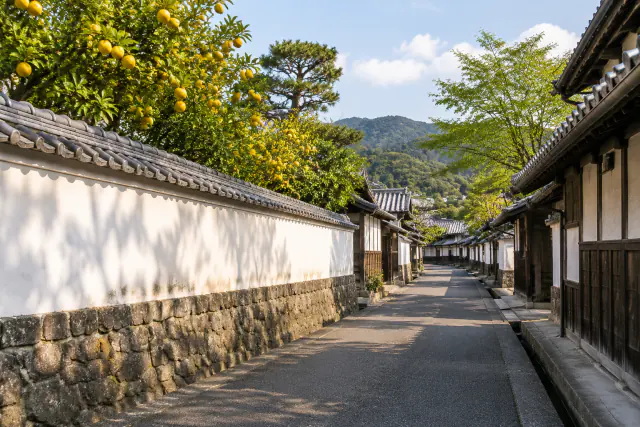 Yamaguchi Old town · Half a day Hagi Castle Town Once the castle town of the Choshu domain during the Edo period, Hagi preserves streets of samurai residences enclosed by white plaster walls, earthen walls, and summer orange trees. Rent a bicycle to explore at an easy pace. Several key figures in the Meiji Restoration came from here, and related sites, including Shokasonjuku Academy, have World Heritage status. Hagi ware pottery is also well known; look for a teacup to take home. Historic sites
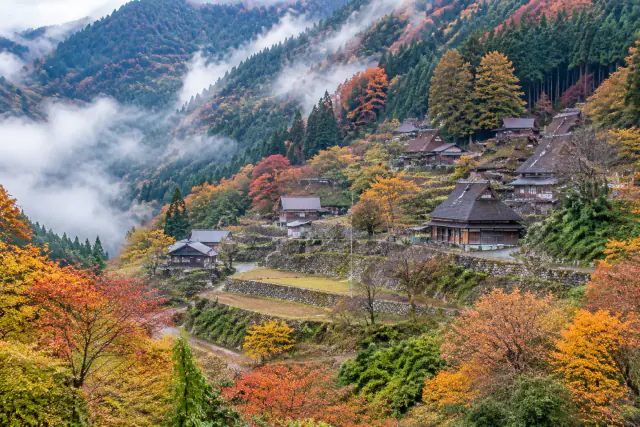 Tokushima Viewpoint · 1 hour Ochiai Village This mountain village in Higashi-Iya has old houses, stone walls, and rice terraces climbing steep slopes from the valley floor. With its dramatic elevation change, it has been designated a Preservation District for Groups of Traditional Buildings. The best view is from the observation deck on the opposite slope. It is especially beautiful in the morning mist and during fall foliage season. Buses are infrequent, so most visitors drive or hire a car and driver. Historic sitesMountains
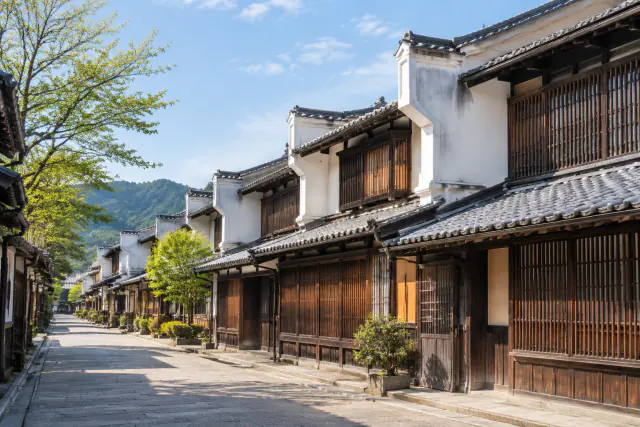 Tokushima Old town · 1 hour Wakimachi Udatsu Street This former merchant district grew wealthy through indigo dyeing. The old houses have firewalls called udatsu at both ends of their roofs. Only wealthy families could afford them, and the Japanese expression meaning “can't raise the udatsu” means “can't get ahead.” The street is short, making it a good 1-hour stop on the way to Iya. You can also see Awa indigo dyeing. Historic sites
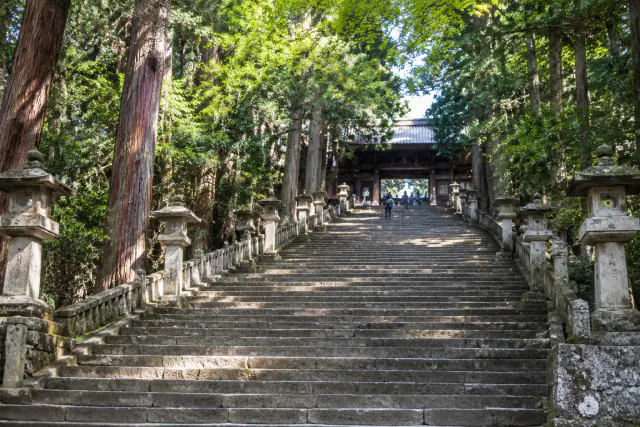 Kagawa Shrine · 2–3 hours Kotohiragu Shrine Known affectionately as “Konpira-san,” this is the head shrine of the god of seafaring. From the entrance to the approach, it is 785 stone steps to the main shrine, taking about 1 hour one way. The climb continues to the inner shrine, for a total of 1,368 steps. Souvenir shops and udon restaurants line the steps, and the main shrine overlooks the Sanuki Plain. From Takamatsu, the trip to Kotohira takes about 1 hour by JR or Kotoden. Historic sites
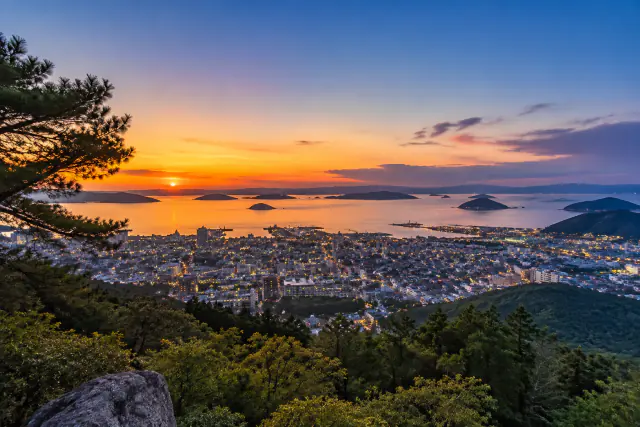 Kagawa Viewpoint · 2 hours Yashima This flat-topped plateau east of Takamatsu was the site of a major battle between the Genji and Heike clans. Yashima-ji, one of the 88 temples on the Shikoku pilgrimage, stands at the summit. The observation deck overlooks Takamatsu and the islands of the Seto Inland Sea. It is scenic from evening through the night, and the newer observation facilities have a distinctive design. It takes about 30 minutes by car from central Takamatsu. Historic sitesIslands
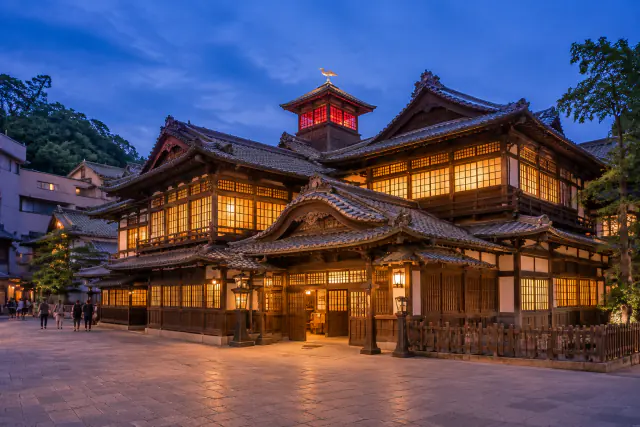 Ehime Hot springs · 1–2 hours Dogo Onsen Honkan Built in 1894, this wooden public bathhouse was the first public bath in Japan to be designated an Important Cultural Property. A preservation and restoration project lasting about 6 years was completed in December 2024. The simplest option is to bathe in Kami no Yu on the first floor. Pay extra to relax and have tea on the second floor. The nearby Asuka-no-Yu and Tsubaki-no-Yu baths are also worth trying. Hot springsHistoric sites
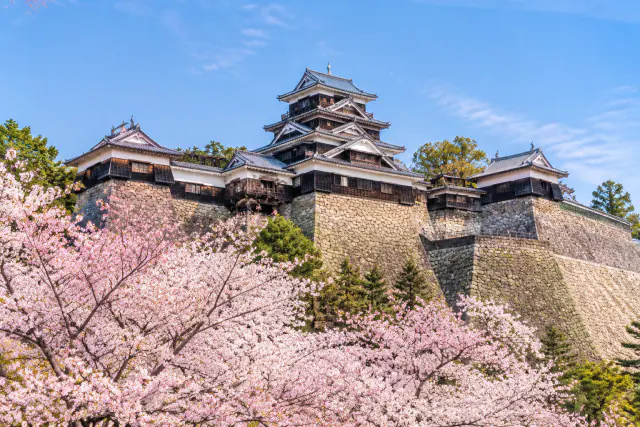 Ehime Castle · 2 hours Matsuyama Castle This castle stands atop Mount Katsuyama in the city center and is one of Japan's 12 original castle keeps. Its many layers of walls are impressive. Take the ropeway or chairlift up. On the way down, you can take either one, or walk for about 20 minutes. The top floor of the keep overlooks the entire Matsuyama Plain and the Seto Inland Sea. The grounds are full of cherry blossoms in spring. Historic sitesCherry blossoms
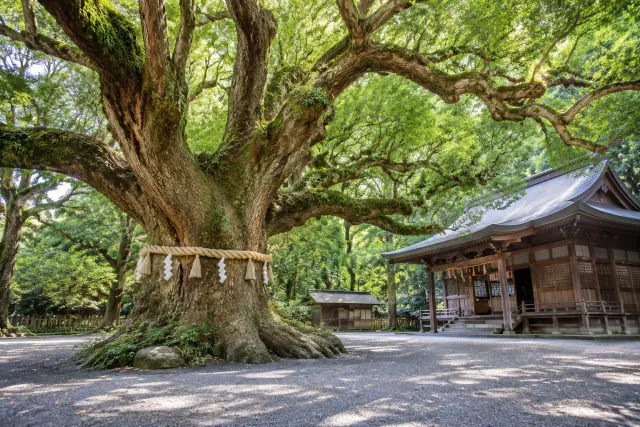 Ehime Shrine · 1 hour Oyamazumi Shrine This ancient shrine on Omishima is dedicated to the mountain and sea gods. Generations of warriors came here to pray for victory and later offered armor and swords, so the treasure museum holds a large collection of weapons designated as National Treasures and Important Cultural Properties. The grounds contain a camphor tree said to be about 2,600 years old. Stop here along the way when cycling the Shimanami Kaido. Historic sites
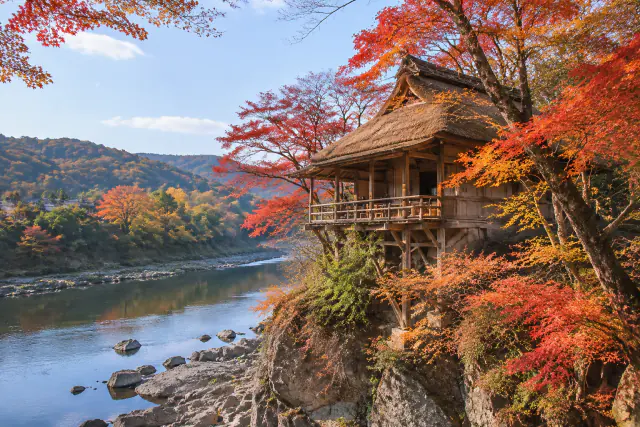 Ehime Old town · Half a day–1 day Uchiko & Ozu These two quiet towns south of Matsuyama are each about 30 minutes away by JR limited express. Uchiko grew wealthy from wood wax and retains white-walled streets and the 1916 Uchiko-za kabuki theater. Ozu has a wooden reconstruction of Ozu Castle and Garyu Sanso, a villa built on a riverside cliff. The fall foliage is beautiful. Historic sitesAutumn leaves
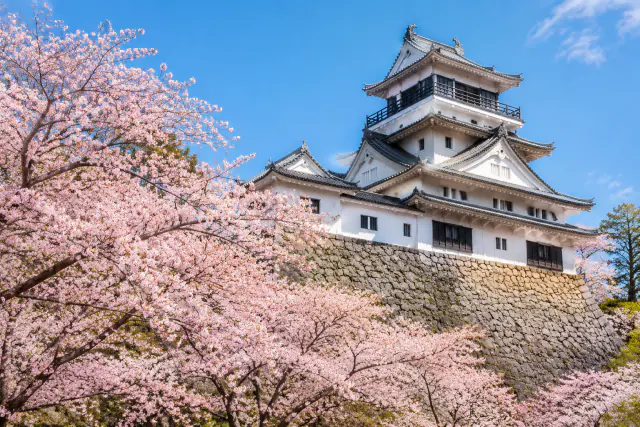 Kochi Castle · 1.5 hours Kochi Castle One of Japan's 12 original castle keeps and the only castle whose buildings inside the honmaru have all survived. Its keep is connected to the honmaru palace, where you can see the former domain lord's office. The castle is about 10 minutes from Kochi Station by streetcar. A 1-kilometer open-air Sunday market stretches below the castle. Historic sitesCherry blossoms
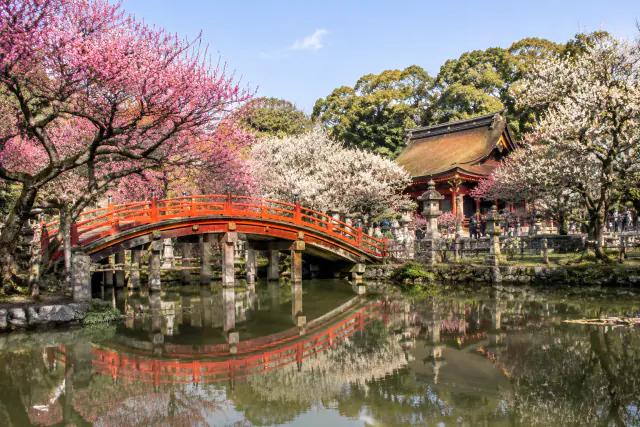 Fukuoka Shrine · half a day Dazaifu Tenmangu Dedicated to Sugawara no Michizane, the deity of learning, this shrine draws many visitors seeking good luck before exams. Plum blossoms fill the grounds in early spring, and the approach is lined with shops selling umegae mochi. Eating one as you walk is part of the experience. The Kyushu National Museum is right next door. Take the escalator through the tunnel behind the shrine to reach it, and you can see both in half a day. Historic sitesFlower fields
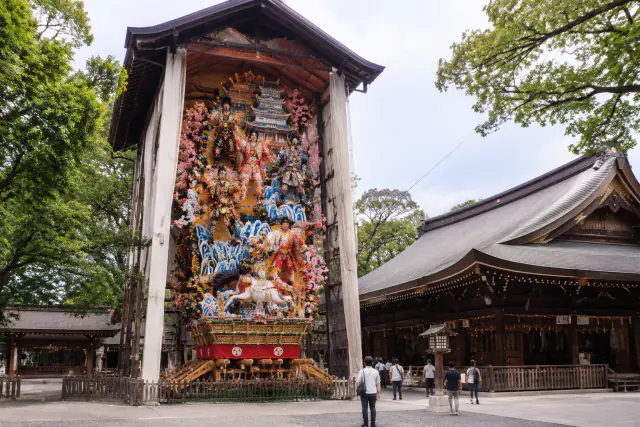 Fukuoka Shrine · 30–60 minutes Kushida Shrine Hakata's main guardian shrine and the starting point of the Hakata Gion Yamakasa festival. A decorative float more than ten meters high is displayed here year-round, so you can see one even outside the July festival. It is a short walk from Hakata Station and Nakasu, making it an easy stop while exploring downtown. Kawabata Shopping Arcade is just beyond it. Historic sites
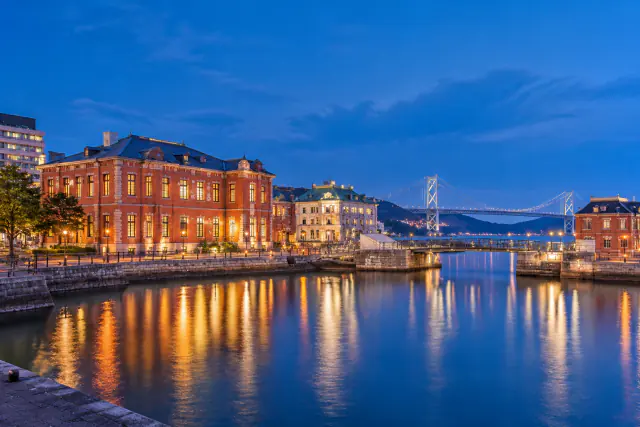 Fukuoka Old town · half a day–1 day Mojiko Retro This former international trading port preserves a group of red-brick Western-style buildings and the restored Mojiko Station. The waterfront is great for photos, and a ferry takes about 5 minutes to reach Karato Market in Shimonoseki, across the strait, for sushi. Plan half a day to a full day. Go in the afternoon, stay for the night view, and then return to Fukuoka. Historic sitesArt
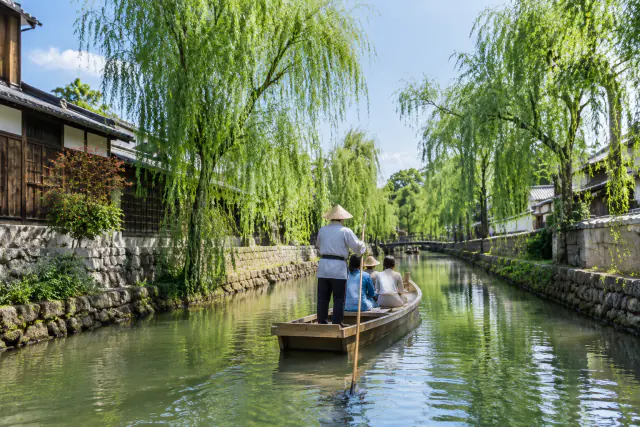 Fukuoka Old town · half a day Yanagawa River Cruise Yanagawa is a small city threaded with canals. Boatmen slowly pole flat-bottomed boats past willows and old homes on a ride lasting about an hour, with commentary and songs along the way. After getting off, eat a serving of steamed eel over rice—the classic Yanagawa itinerary. Historic sites
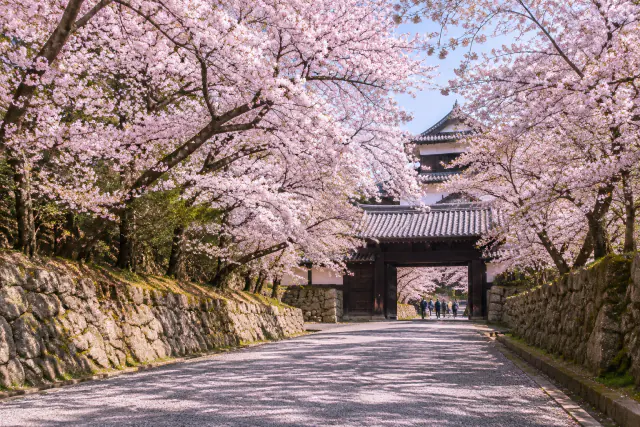 Fukuoka Old town · half a day Akizuki Known as the Little Kyoto of Chikuzen, this small castle town retains its stone walls, old homes, and moat. The Sugi-no-Baba area becomes a tunnel of cherry blossoms in spring, while the ruins of Akizuki Castle are famous for fall foliage. It is usually quiet and ideal for a leisurely walk. Cherry blossomsAutumn leavesHistoric sites
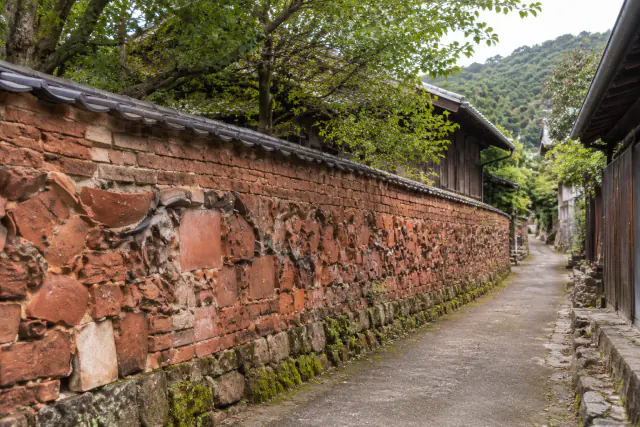 Saga Old town · Half a day Arita ceramic district Arita is where Japan first produced porcelain. The main street is lined with ceramic shops and kiln studios, while back alleys reveal old walls built from discarded kiln bricks. It's quiet outside the festival season and a good place to take your time choosing tableware. The Ceramic Fair from late April to early May fills the streets with shoppers. ArtHistoric sites
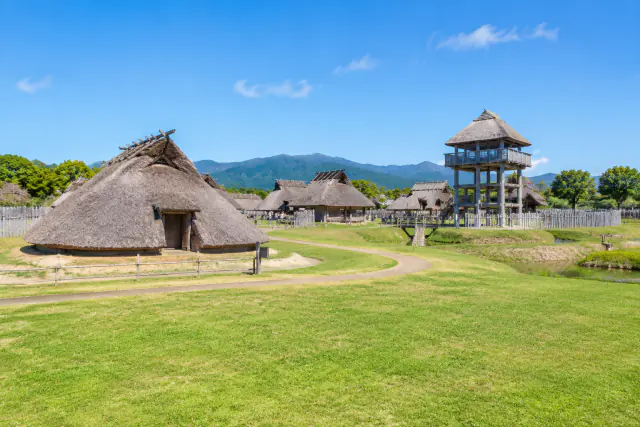 Saga Museum · 2–3 hours Yoshinogari Historical Park Japan's largest Yayoi-period moated settlement site. Reconstructed watchtowers, raised-floor storehouses, and a ceremonial hall offer a look at what a village may have looked like 2,000 years ago. The grounds are extensive, making it a good choice for families and history buffs. Wheelchairs and strollers are available to borrow free of charge. Historic sites
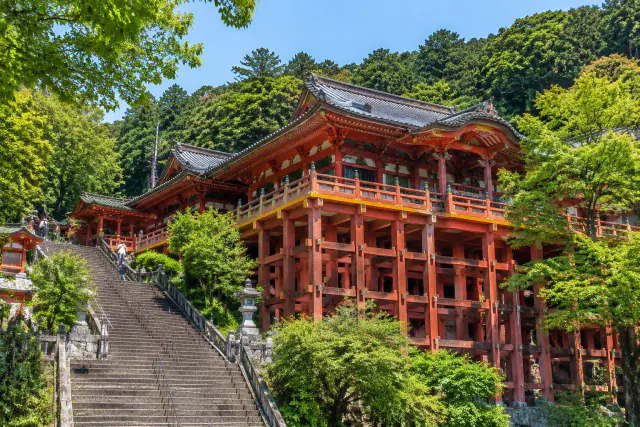 Saga Shrine · 1.5–2 hours Yutoku Inari Shrine One of Japan's three major Inari shrines. Its vermilion main hall stands on tall wooden supports against the mountainside and is striking from a distance. A path of red torii gates leads up the rear mountain to a viewpoint over the main hall. It's far less crowded than Kyoto's Fushimi Inari Taisha. Historic sites
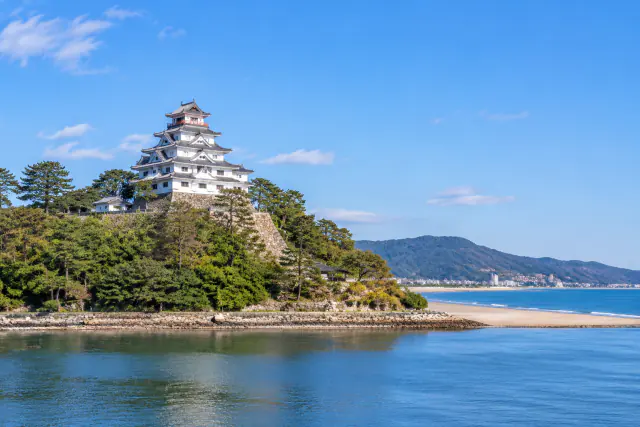 Saga Castle · 1–2 hours Karatsu Castle A seaside castle built on a small hill. The keep houses a museum, and the top floor looks out over Karatsu Bay and the long stretch of Niji-no-Matsubara pine forest. The old streets below the castle have several pottery shops, and Karatsu ware is simple and durable. In early November, the Karatsu Kunchi Festival features a procession of huge lacquered floats. Historic sitesIslands
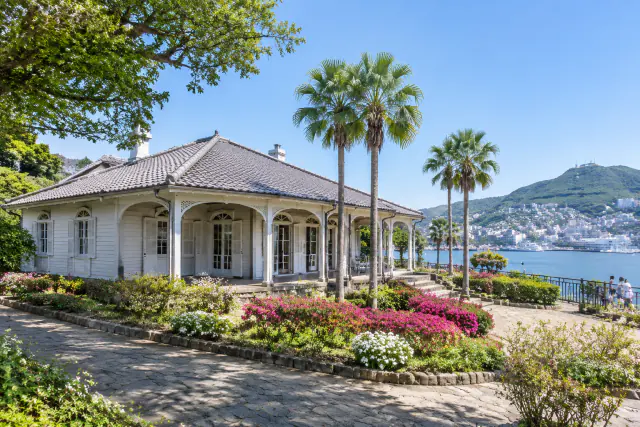 Nagasaki Garden · 1.5–2 hours Glover Garden Several Western-style homes from the Meiji period remain on the hillside. The Former Glover Residence is Japan’s oldest surviving Western-style wooden house and a World Heritage site. Walking downhill gives you views over Nagasaki Port. Oura Church is just below the entrance, and combo tickets are available. Historic sitesArt
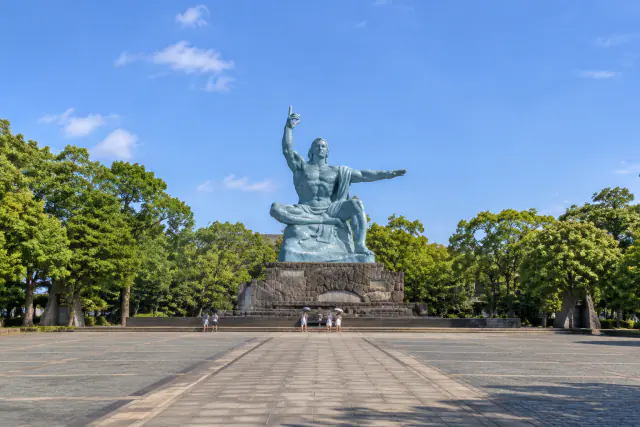 Nagasaki Park · 2–3 hours Peace Park and Atomic Bomb Museum The Peace Statue in the park is one of Nagasaki’s symbols. A few minutes south are the hypocenter and the Atomic Bomb Museum. Exhibits include melted bottles, a clock stopped at 11:02, and victims’ belongings. The material is heavy but important, so allow plenty of time. Historic sites
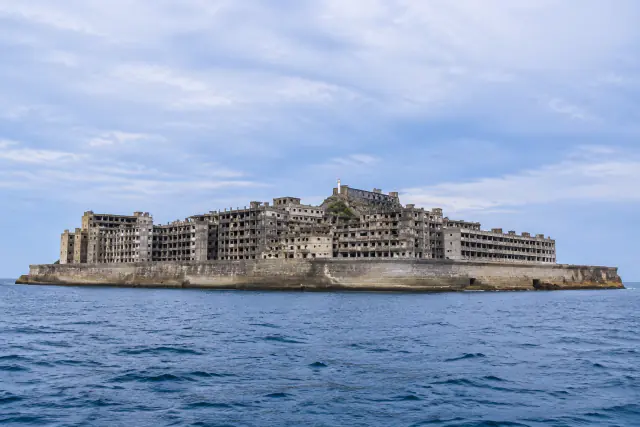 Nagasaki Islands · About 3–4 hours Hashima (Gunkanjima) island tour This abandoned undersea coal-mining island looks like a warship from a distance. Its dense cluster of crumbling concrete buildings forms part of a World Heritage site. You can land only as part of a boat tour. Boats leave from Nagasaki Port, and the trip takes about half a day including the cruise. Once ashore, visitors must stay on designated paths. Historic sitesIslands
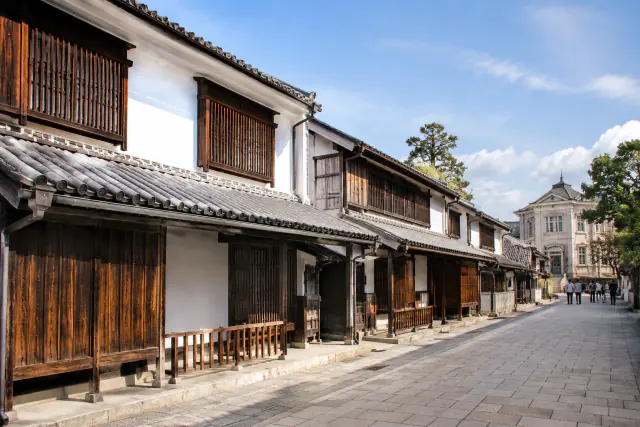 Nagasaki Museum · 1 hour Dejima This fan-shaped artificial island once housed the Dutch trading post during Japan’s period of isolation. The residences, warehouses, and kitchen have been reconstructed and furnished in period style. You can see some of the earliest Western tableware, billiard tables, and coffee introduced to Japan. An hour is enough for a visit. Historic sites
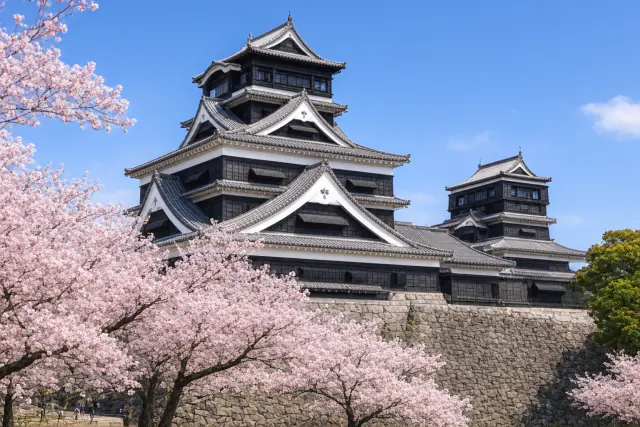 Kumamoto Castle · 2–3 hours Kumamoto Castle One of Japan's three great castles, known for its steep Musha-gaeshi stone walls. The keep has reopened after earthquake repairs and now houses an exhibition. The top floor offers views across Kumamoto. An elevated viewing walkway brings you close to stone walls and turrets that are still being repaired. Historic sitesCherry blossoms
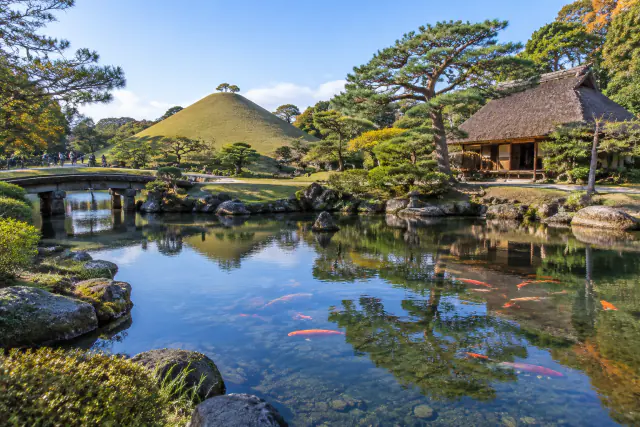 Kumamoto Garden · 1 hour Suizenji Jojuen Garden A strolling garden built by the Hosokawa family, lords of Kumamoto. It features a small hill modeled on Mount Fuji, and its pond is fed by Aso's underground water. The water is clear enough to see the carp. The garden is small and takes less than an hour to walk around. Stop at Kokin Denju-no-Ma by the pond for a cup of matcha. Historic sites
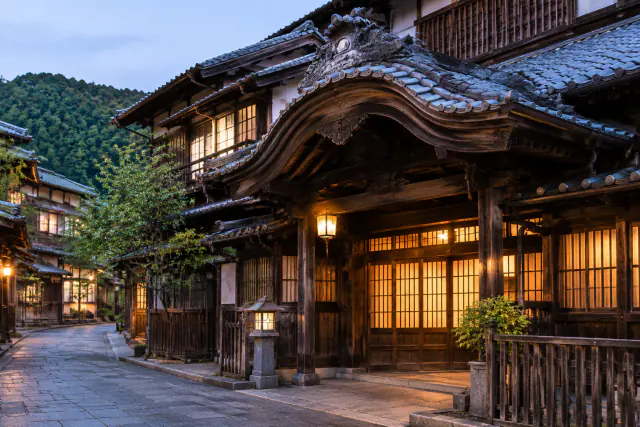 Oita Hot springs · 1 hour Takegawara Onsen A wooden public bathhouse that opened during the Meiji era, with an impressive karahafu roof. It's tucked into the old streets near Beppu Station. Besides a regular hot-spring bath, it offers sand baths, where staff cover you in hot sand. You'll work up a sweat in about ten minutes. It's a memorable experience. Hot springsHistoric sites
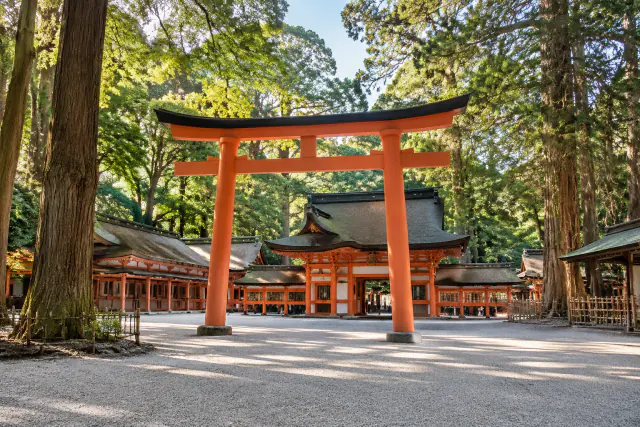 Oita Shrine · 1.5–2 hours Usa Jingu The head shrine of more than 40,000 Hachiman shrines across Japan, Usa Jingu has a vermilion main hall designated a national treasure. Its worship ritual is different from elsewhere: bow twice, clap four times, then bow once. The grounds are extensive, with an approach, ponds, and tree-lined paths. It's less crowded than Beppu and ideal for history lovers. Historic sites
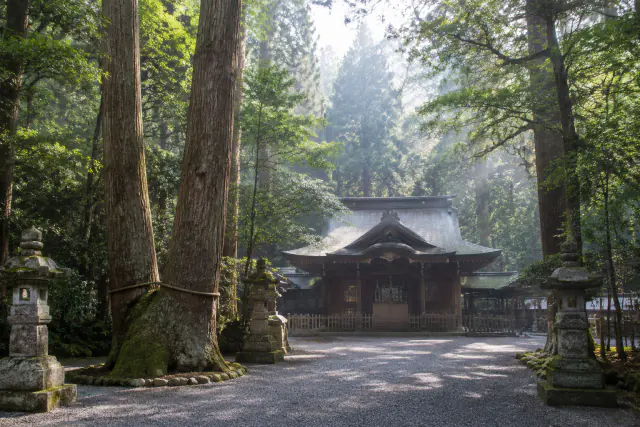 Miyazaki Shrine · 1 hour Takachiho Shrine This ancient shrine is surrounded by cedar trees and has two married cedar trees joined at the roots. Each evening, a night kagura performance at the kagura hall uses dance to tell the myth of Amaterasu hiding in a cave. It lasts about one hour and is the main reason to spend a night in Takachiho. Historic sites
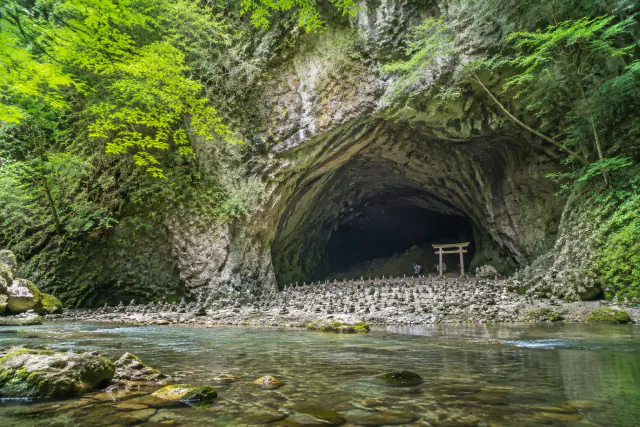 Miyazaki Shrine · 1–1.5 hours Amano Iwato Shrine This shrine enshrines the cave where Amaterasu is said to have hidden. At the West Sanctuary, you can follow a priest to a viewpoint overlooking the cave. About a 10-minute walk along the river from the shrine is Amano Yasugawara, a large cave filled with small stone towers stacked by visitors. The atmosphere is unique. Historic sitesMountains
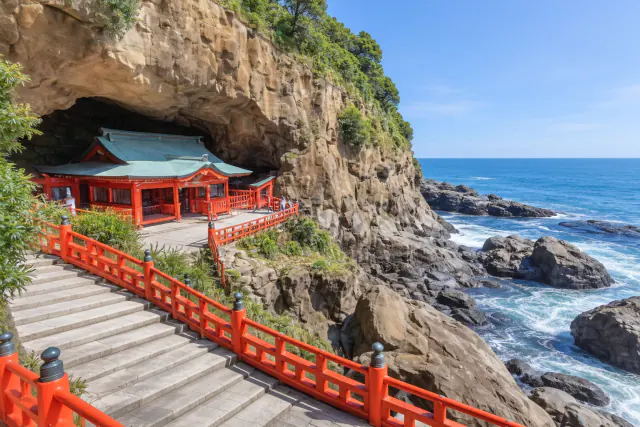 Miyazaki Shrine · 1 hour Udo Jingu The vermilion main hall sits inside a cave beneath a seaside cliff. You have to walk down a flight of stone steps to reach it. In the sea in front of the hall is a turtle-shaped rock. Toss a wishing stone through the rope circle on the rock to make a wish—men use their left hand, and women use their right. IslandsHistoric sites
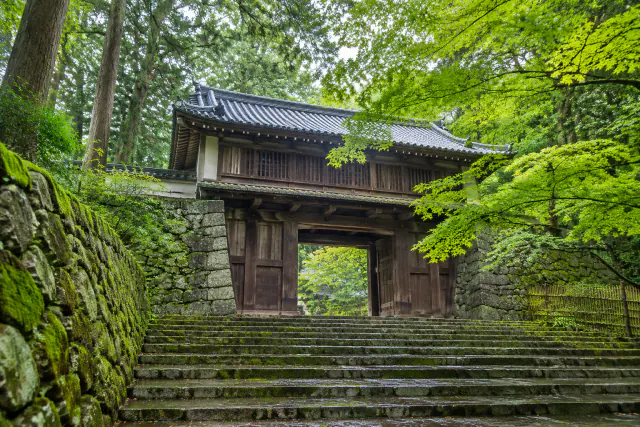 Miyazaki Old town · 2–3 hours Obi castle town Known as the Little Kyoto of Kyushu, this castle town has well-preserved stone walls and samurai residences. Obi Castle's Otemon Gate and moss-covered stone steps are especially photogenic. Buy a walk-and-eat pass to sample snacks such as fried fish cakes and thick rolled omelets as you explore. Historic sites
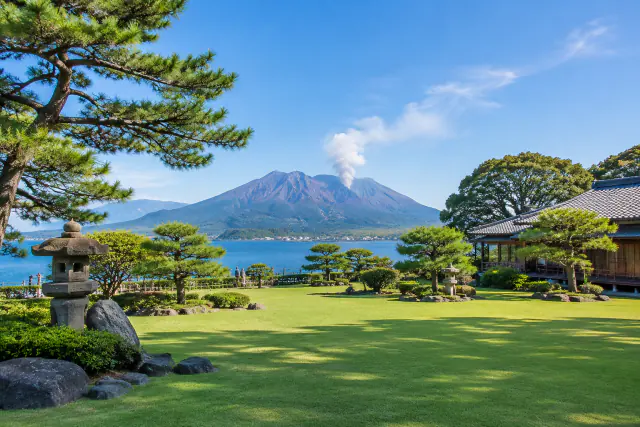 Kagoshima Garden · 1.5–2 hours Sengan-en This villa garden of the Shimazu family, lords of the Satsuma domain, uses Sakurajima across the bay as a borrowed landscape, like a miniature mountain, and Kinko Bay as a pond. Its wide-open views are rare among Japanese gardens. The nearby Shoko Shuseikan Museum displays the remains of a modern factory from that era and is part of the World Heritage site commemorating Japan's Meiji Industrial Revolution. Historic sites
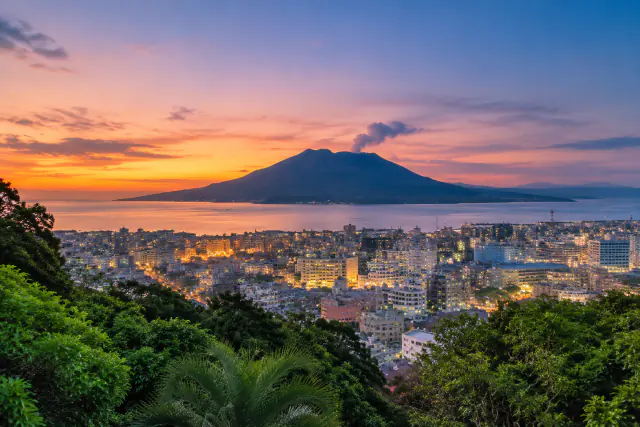 Kagoshima Viewpoint · 1 hour Shiroyama Observatory This small hill in the city center was the final battlefield of the Satsuma Rebellion. The observatory faces Kinko Bay and Sakurajima and offers the classic view of the volcano. You can also see the city lights at night. Along the path up the hill is the cave where Saigo Takamori hid during his final days. Historic sites
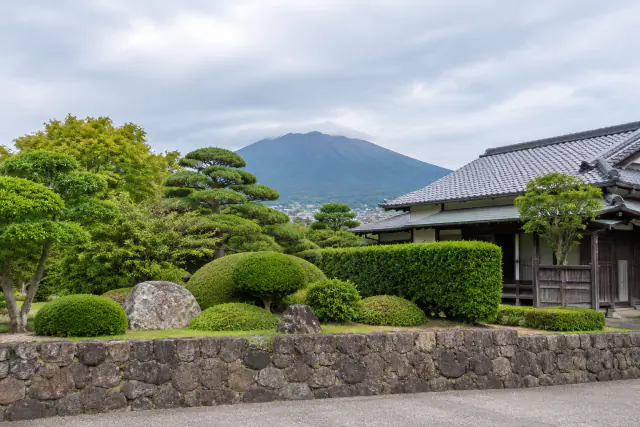 Kagoshima Old town · Half a day Chiran Samurai Residences & Peace Museum Chiran's samurai-residence district preserves seven gardens open to the public. The neatly trimmed hedges and stone walls have a distinctive charm. Nearby, the Chiran Peace Museum for Kamikaze Pilots tells the story of the young pilots who departed from here near the end of World War II and displays their farewell letters. The exhibits are sobering. Historic sites
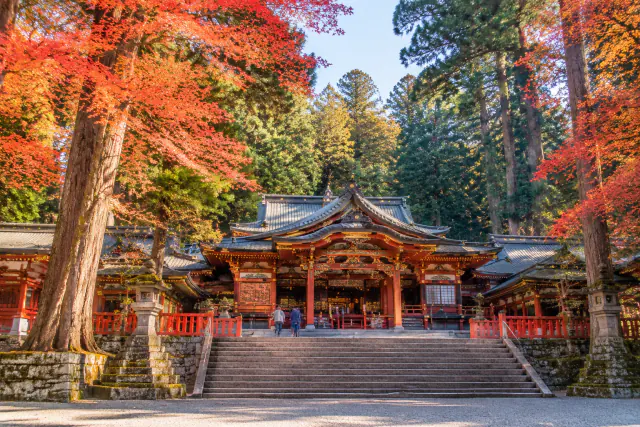 Kagoshima Shrine · 1–1.5 hours Kirishima Jingu Surrounded by towering cedar trees, this vermilion shrine has finely carved, brightly colored buildings and is known as the Nikko of western Japan. The maple leaves along the approach are beautiful in fall. Nearby Kirishima Onsen lets you pair a day of bathing with a shrine visit. Historic sitesAutumn leavesHot springs
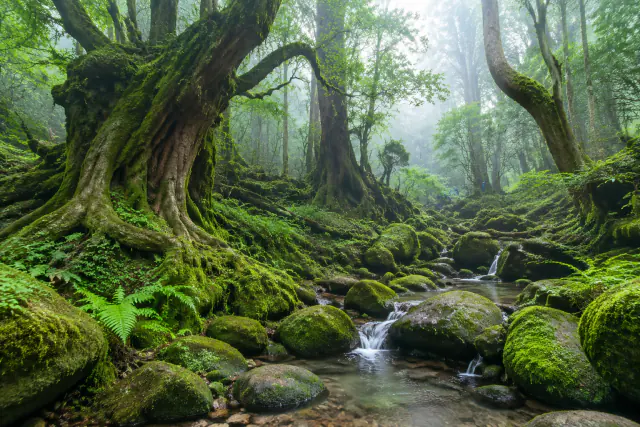 Kagoshima Hiking · 4–5 hours Shiratani Unsuikyo, Yakushima This primeval forest is thick with moss, streams, giant cedars, and moss-covered ground. It was one of the inspirations for Hayao Miyazaki's Princess Mononoke. The round trip to the mossy forest takes about 4 hours and is moderately difficult. It is much more manageable than the 10-hour route to Jomon Sugi and suits most visitors. MountainsHistoric sites
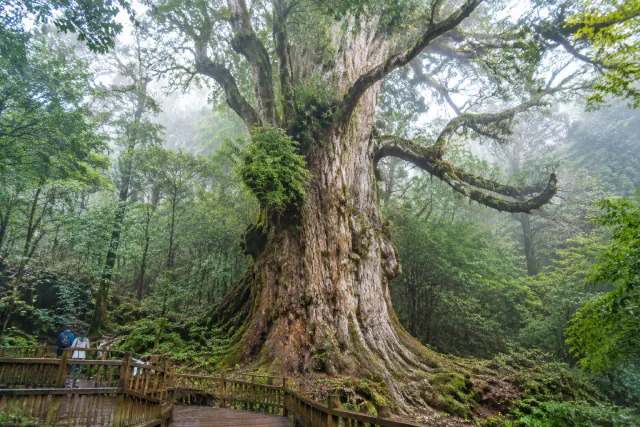 Kagoshima Hiking · About 10 hours Jomon Sugi Yakushima's most famous ancient cedar is said to be several thousand years old, with a trunk so broad that you have to walk around it. But the round trip from Arakawa Trailhead is about 22 kilometers and takes around 10 hours. Most of the route follows old railway tracks, with a climb near the end. If your fitness is average, consider joining a guided group. MountainsHistoric sites
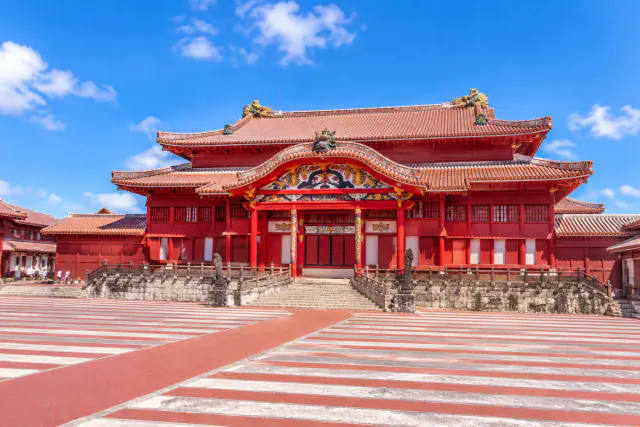 Okinawa Castle · 2–3 hours Shuri Castle The royal castle of the Ryukyu Kingdom. A fire destroyed the Seiden in 2019, and the reconstructed main hall will reopen on November 23, 2026. The red palace blends Chinese and Japanese styles, while the castle walls curve along the hillside. Shuri Castle Ruins and Sonohyan-utaki Ishimon are part of a World Heritage Site. Historic sites
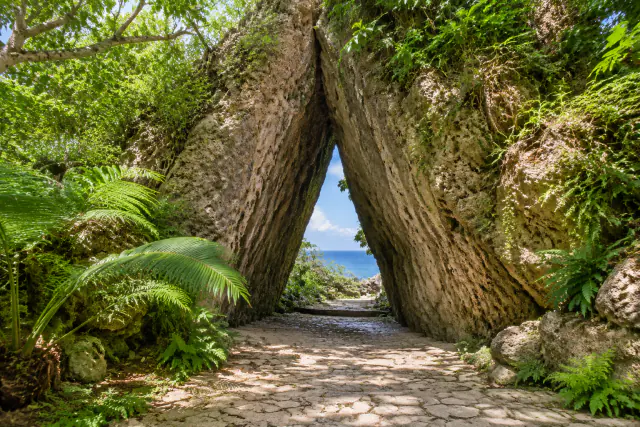 Okinawa Shrine · 1–1.5 hours Sefa-utaki The most sacred site of the Ryukyu Kingdom and a World Heritage Site. Follow a stone path through the forest and giant rocks to a triangular opening formed by two leaning boulders. From inside, you can look out toward Kudaka Island, known as the island of the gods. People still come here to pray, so keep quiet during your visit. Historic sitesMountains
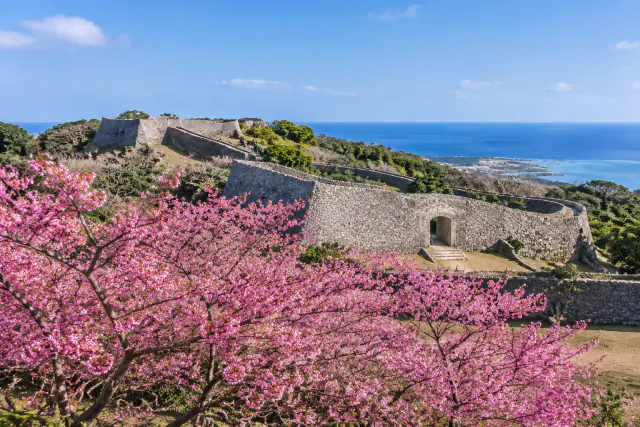 Okinawa Castle · 1–1.5 hours Nakijin Castle Ruins The castle of the king of Hokuzan before the Ryukyu Kingdom was unified. Its limestone walls rise and curve along the hillside, with views of the distant sea. No buildings remain inside, only the walls and sacred sites. It is a World Heritage Site. From late January to early February, deep-pink Taiwan cherry blossoms fill the area in front of the gate. Historic sitesCherry blossoms
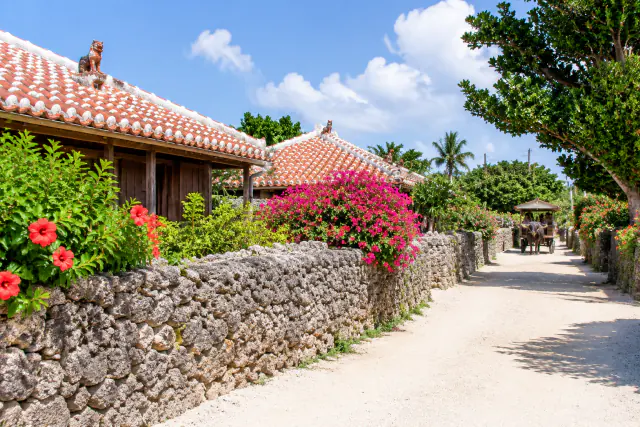 Okinawa Islands · Half a day–1 day Taketomi Island A small island just over 10 minutes by ferry from Ishigaki Port. Red-tile roofs, low coral-stone walls, and white-sand paths preserve the traditional Yaeyama village landscape. Take a slow water buffalo cart ride around the village, or rent a bicycle to visit Nishi Pier at sunset and search for star sand on the beach. It works as a half-day or full-day trip. IslandsHistoric sites