Cloudborne Travel
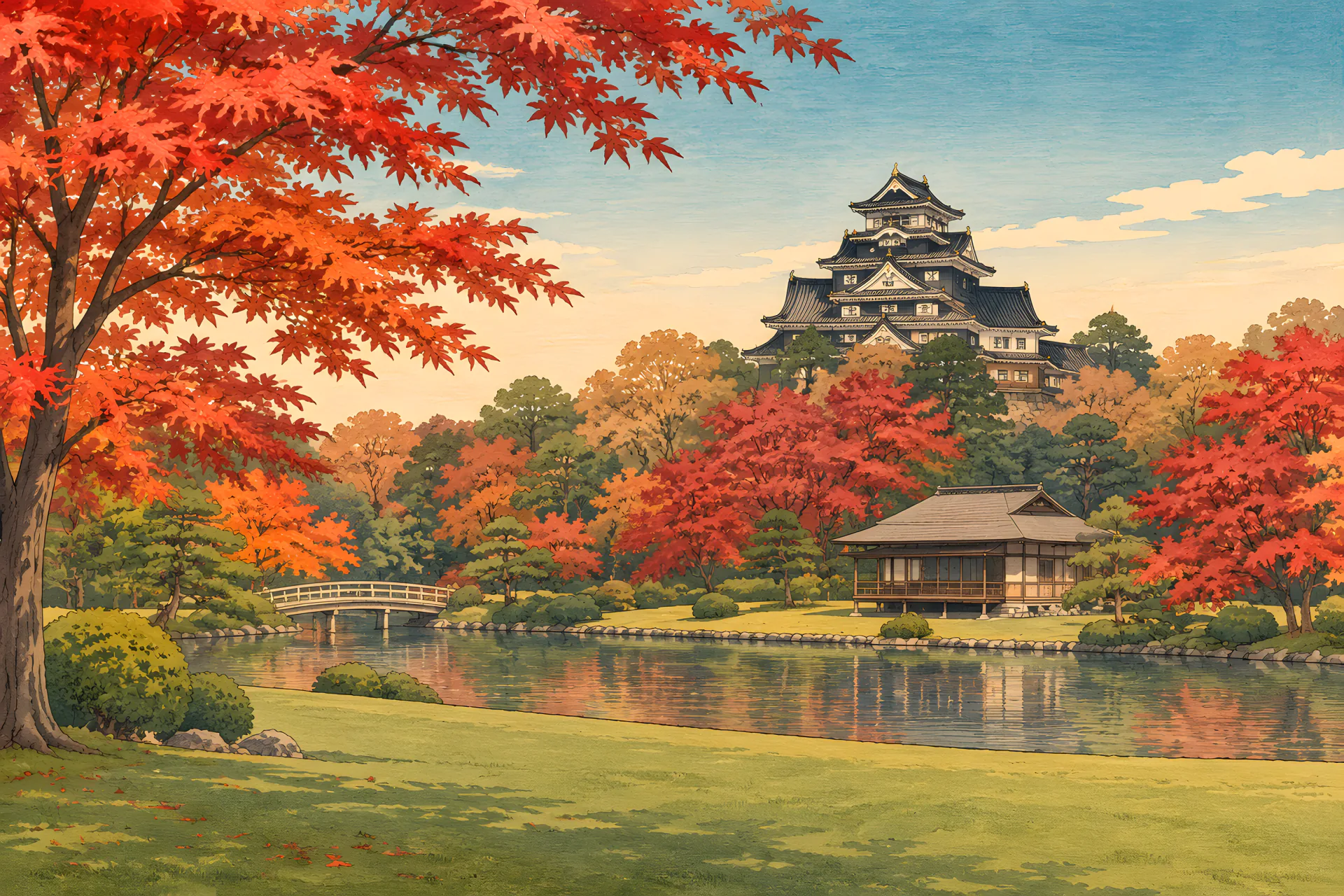
Okayama Prefecture lies between Kansai and Hiroshima. Okayama Station is a major Shinkansen stop. Head south across the Seto Ohashi Bridge to Shikoku, north by limited express to Tottori and Matsue, or southeast by ferry to Naoshima. Many travelers use Okayama as a transfer point, but it is worth staying for 1–2 days. Okayama Korakuen Garden, one of Japan's three great gardens, Okayama Castle with its black exterior, and the whitewashed storehouses of the Kurashiki Bikan Historical Quarter are all within a 30-minute drive.
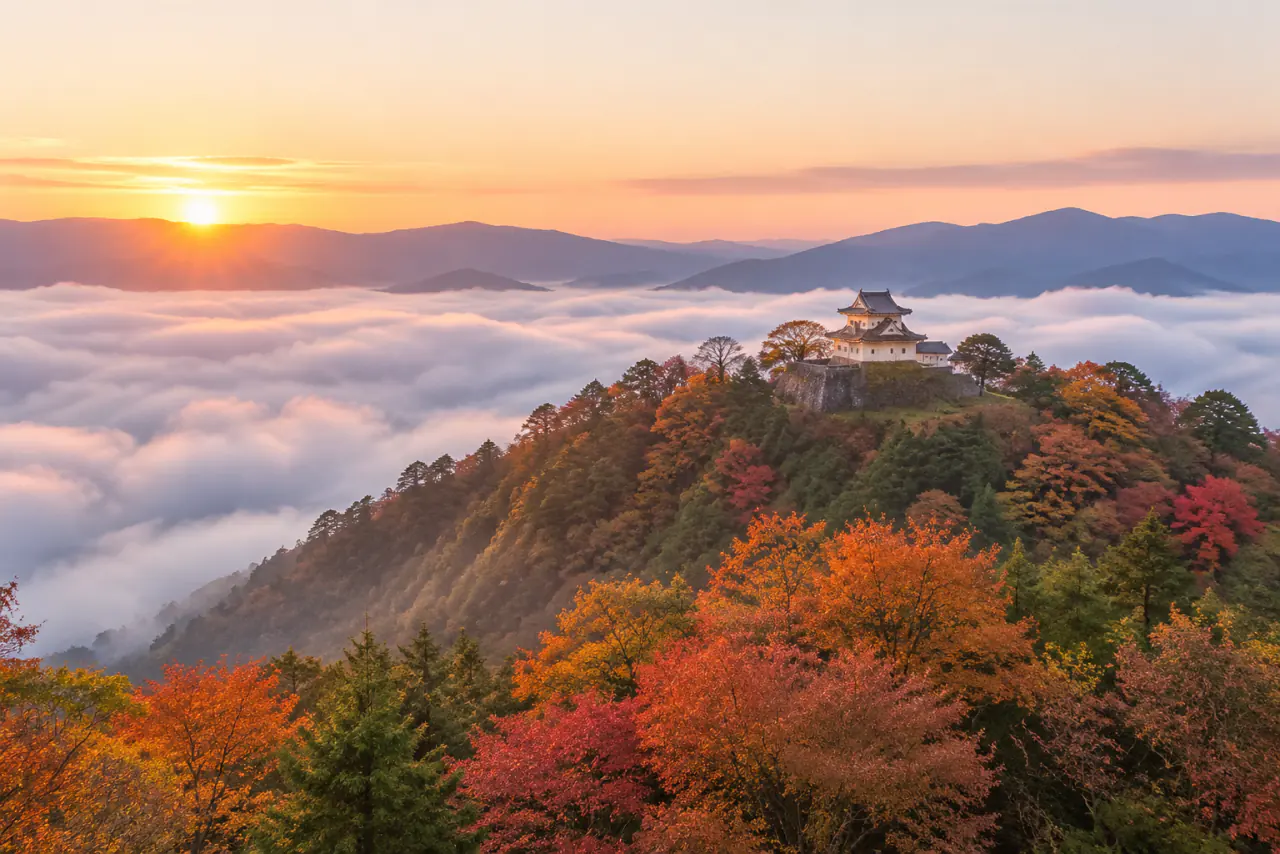
Okayama has many sunny days and few typhoons, earning it the nickname "Land of Sunshine." Its fruit is excellent. White peaches and Muscat of Alexandria grapes are expensive but delicious in summer. If you have time, head into the mountains to see Bitchu Matsuyama Castle above a sea of clouds. It is one of the few original castle keeps in Japan still standing today.
Spring and fall are the most comfortable seasons; July–September is white peach and grape season; on clear mornings in October–November, you may see Bitchu Matsuyama Castle surrounded by a sea of clouds.
Monthly weather
Based on OkayamaBest time to visit Monthly precipitation (mm) Open-Meteo (ERA5), 1996–2025 average
| Month | Average high (°C) | Average low (°C) | Monthly precipitation (mm) | Days with 1 mm or more of precipitation |
|---|---|---|---|---|
| Jan | 10.3 | 1.7 | 39 | 5 |
| Feb | 11.2 | 2.3 | 50 | 7 |
| Mar(Good time to visit) | 15.1 | 5.2 | 92 | 9 |
| Apr(Good time to visit) | 20.2 | 10.2 | 108 | 10 |
| May(Good time to visit) | 24.8 | 15.5 | 129 | 10 |
| Jun(Good time to visit) | 27.7 | 20.1 | 173 | 12 |
| Jul(Good time to visit) | 31.6 | 24.6 | 194 | 14 |
| Aug(Good time to visit) | 33.5 | 25.8 | 127 | 11 |
| Sep(Good time to visit) | 29.6 | 21.7 | 164 | 11 |
| Oct(Good time to visit) | 24 | 14.7 | 113 | 8 |
| Nov(Good time to visit) | 18.2 | 8.6 | 62 | 6 |
| Dec | 12.5 | 3.7 | 45 | 5 |
Sights
-
 1
Okayama Korakuen Garden
岡山後楽園
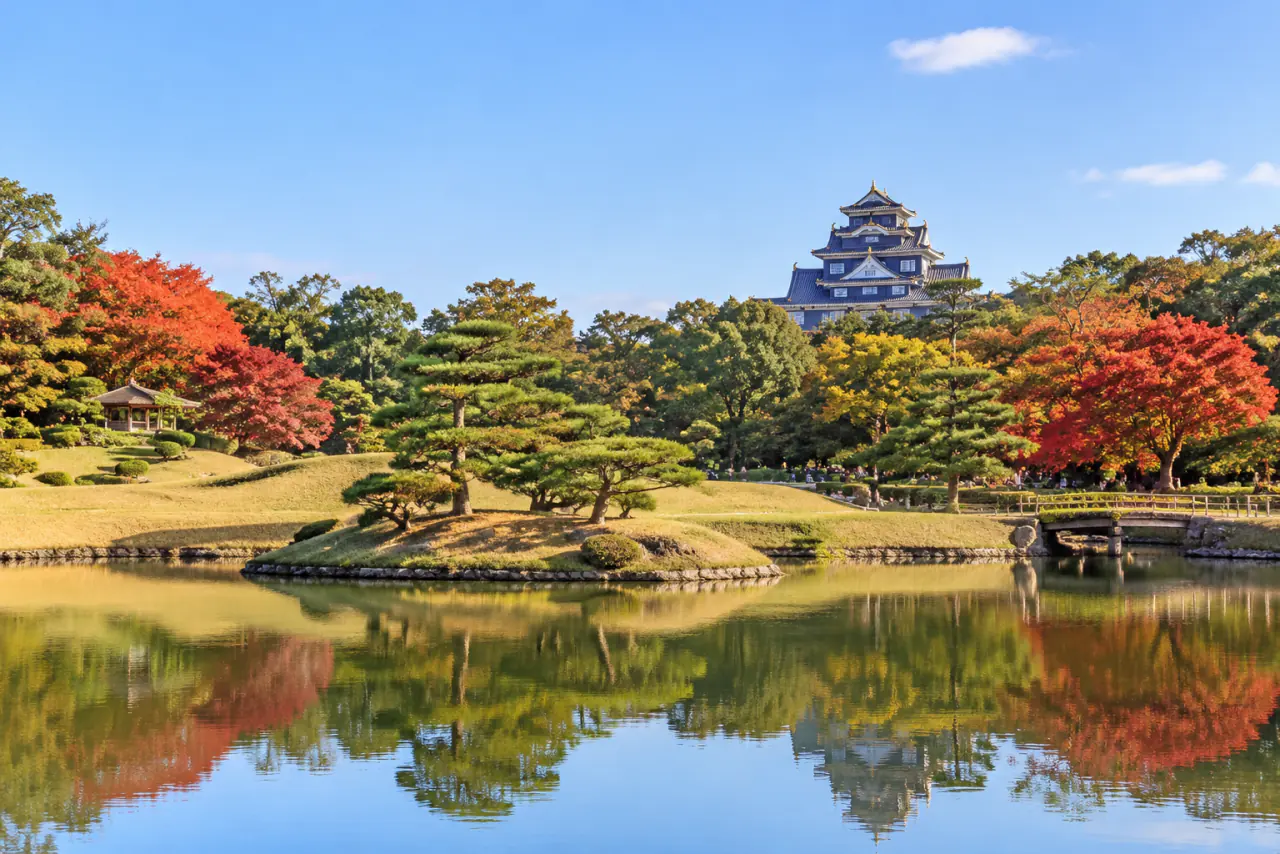
One of Japan's three great gardens, along with Kenrokuen in Kanazawa and Kairakuen in Mito. Broad lawns surround ponds and small hills, with open views and Okayama Castle visible in the distance. From Okayama Station, take the tram to "Shiroshita," then walk about 10 minutes. The cherry and plum blossoms are beautiful in spring, and the fall colors are lovely. There is also a nighttime illumination in late November.
Buy a combination ticket with Okayama Castle. It is cheaper than buying the tickets separately.
-
 2
Okayama Castle
岡山城
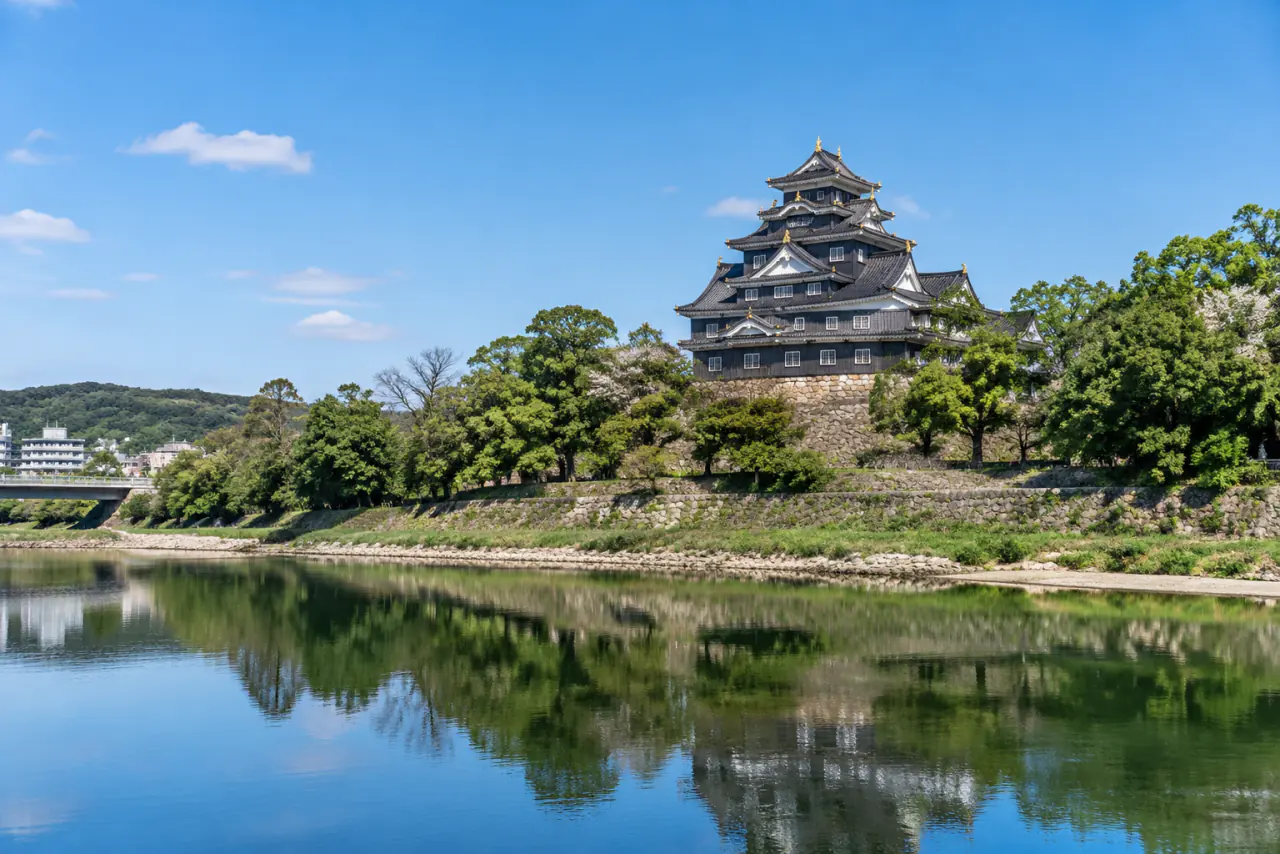
Its black exterior has earned it the nickname "Crow Castle." It faces Okayama Korakuen Garden across the Asahi River, just over Tsukimi Bridge. The keep was rebuilt after the war. After renovations in 2022, the interior became a museum about Okayama's history, and the top floor offers panoramic views of the garden. The best photo angle is from the garden or the opposite riverbank, where the black keep is reflected in the water.
-
 3
Kurashiki Bikan Historical Quarter
倉敷美観地区
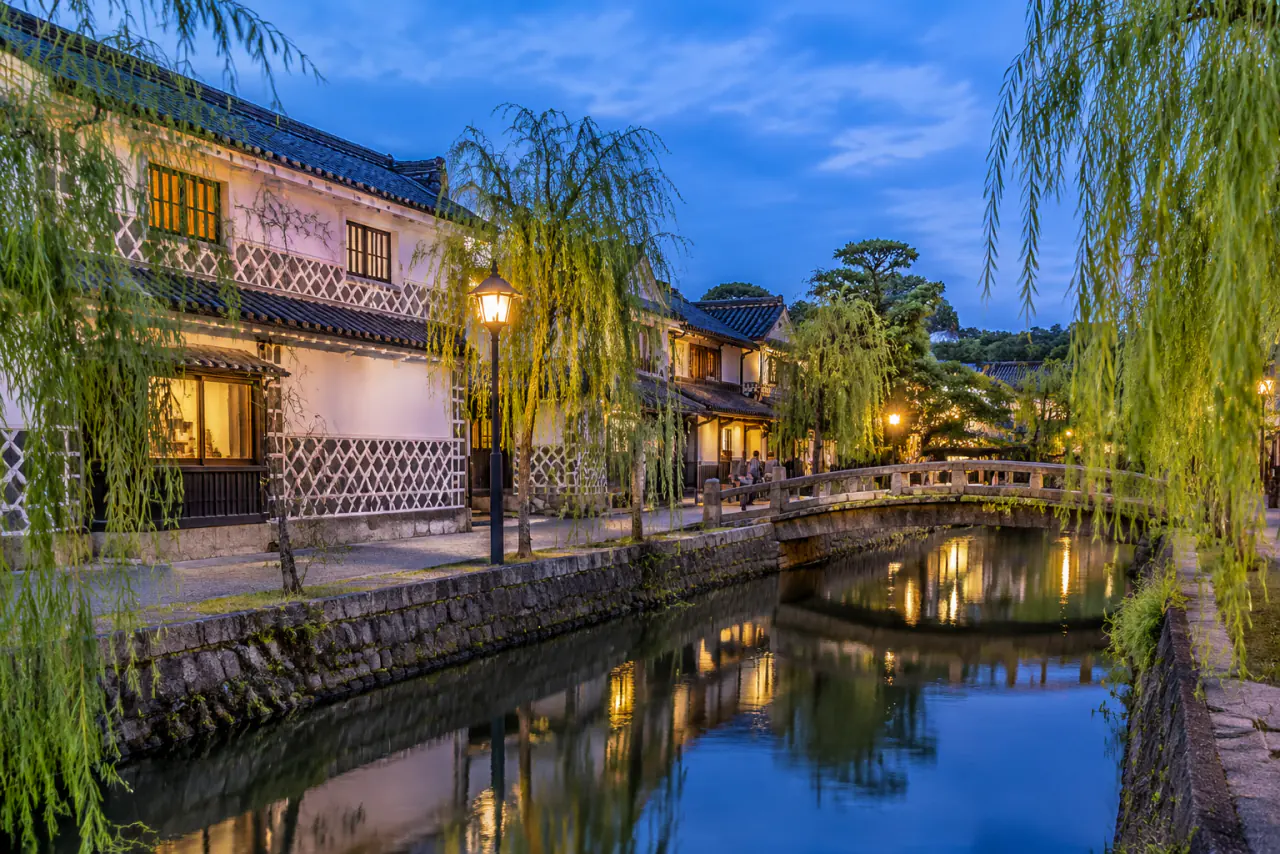
This Edo-period merchant district has whitewashed, black-tiled storehouses lining a willow-lined canal. It is about a 10-minute walk from JR Kurashiki Station. You can take a boat ride of about 20 minutes along the canal. Buy tickets at the Kurashikikan Tourist Information Center. The narrow lanes are filled with denim shops and cafés, and look their best after the evening lights come on.
Boat rides do not operate on the second Monday of each month. From January–February, they run only on weekends. If a boat is full, you have to wait for the next one.
-
 4
Ohara Museum of Art
大原美術館
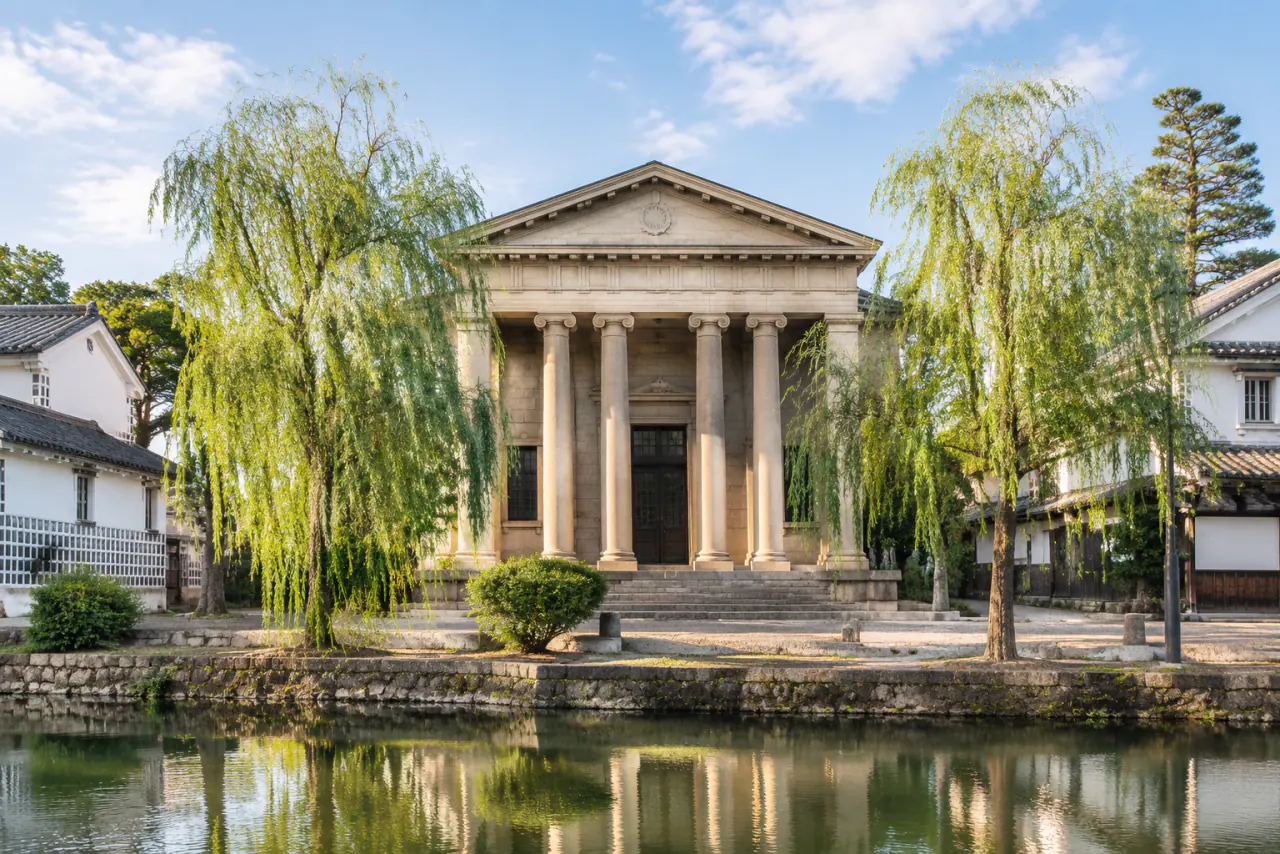
Japan's first private museum devoted mainly to Western art stands beside the Kurashiki canal. Its collection includes works by Monet and El Greco. One ticket covers the Main Gallery, the Craft Museum, the Oriental Museum, and other exhibition spaces. Art lovers should allow 2 hours; if you are less interested, you can see just the Main Gallery.
Closed Mondays, except on holidays. From December–February, it closes at 3 p.m.
-
 5
Bitchu Matsuyama Castle
備中松山城
This historic castle sits atop a mountain at an elevation of about 430 meters. Its keep is an original from the Edo period. When surrounded by a sea of clouds on fall and winter mornings, it is known as a "castle in the sky." From Okayama Station, take the JR Hakubi Line for about 35–50 minutes to Bitchu-Takahashi Station, then take a vehicle to the middle of the mountain. The final approach requires about 20 minutes of uphill walking.
To see the sea of clouds, go to the viewpoint on the mountain opposite the castle. You will need to take a reservation-only taxi or drive yourself, and your chances depend on the weather forecast.
-
 6
Kibitsu Shrine
吉備津神社
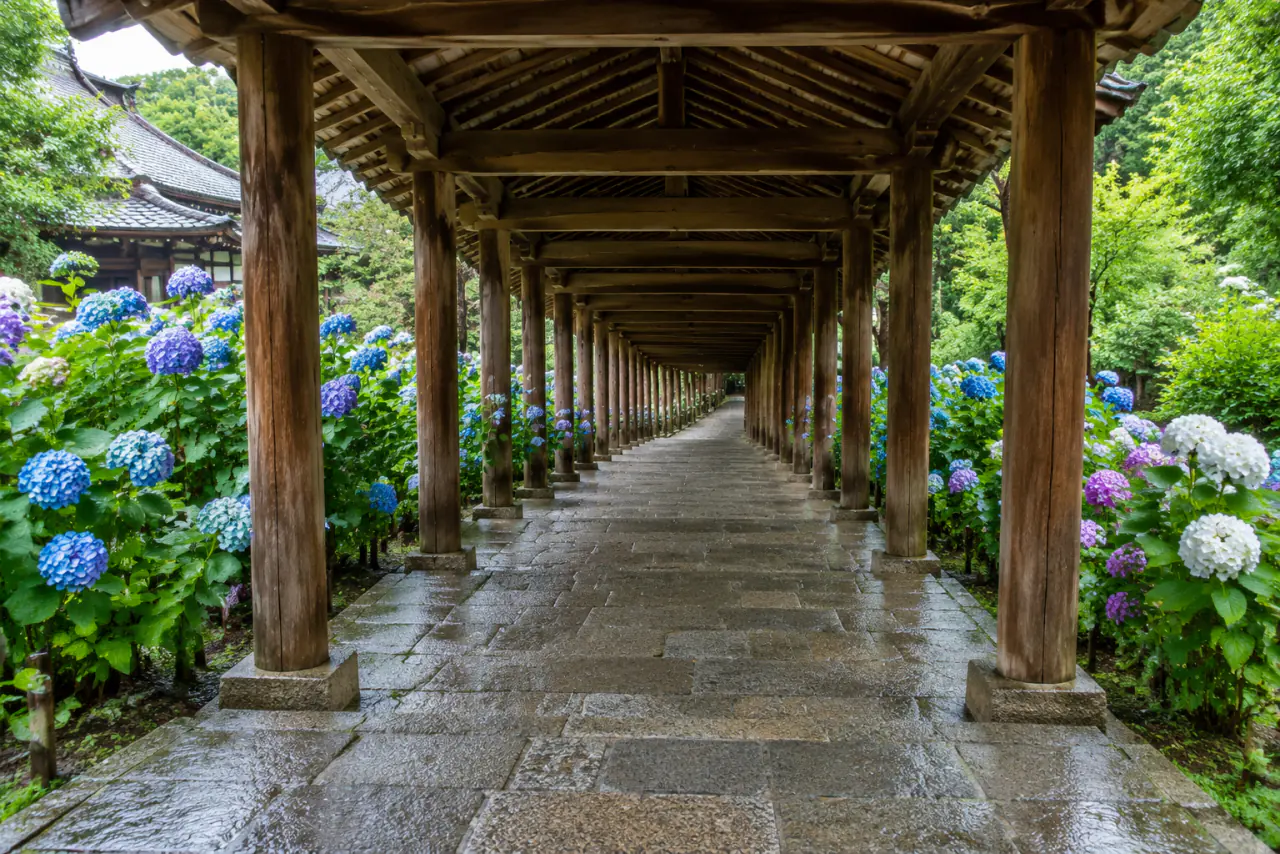
This shrine is dedicated to Kibitsuhiko-no-Mikoto, said to be the model for Momotaro. The main hall is a National Treasure, and a photogenic wooden corridor about 360 meters long extends along the hillside behind it. Hydrangeas bloom beautifully beside the corridor in June. From Okayama Station, take the JR Kibi Line for about 20 minutes. It makes an easy half-day trip from the city.
-
 7
Mount Washu
鷲羽山
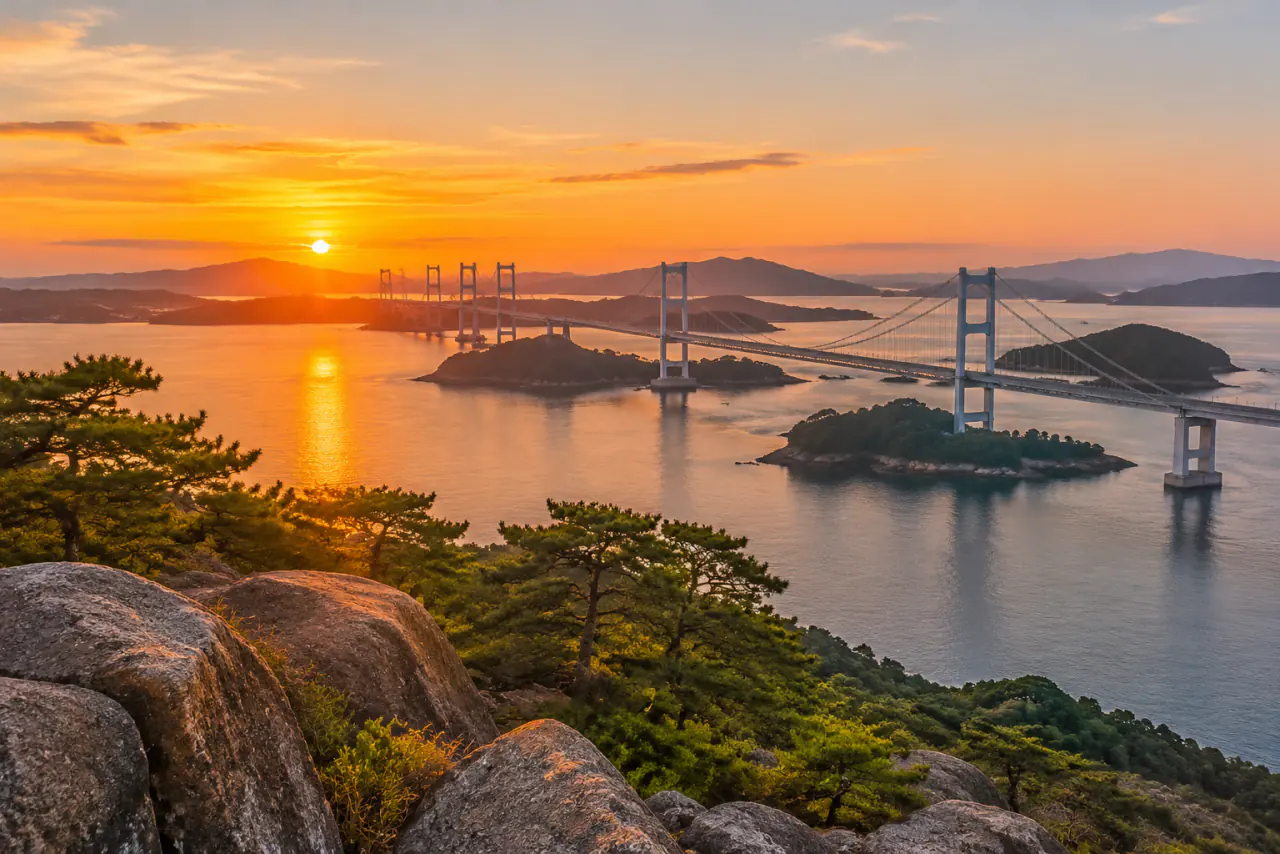
This is one of the best places to see the Seto Ohashi Bridge and the many islands of the Seto Inland Sea. The mountain is not high, and the viewpoints are just a few minutes' walk from the parking lot. At sunset, the bridge and islands look beautiful in silhouette. Without a car, take a taxi from JR Kojima Station for about 15 minutes. You can also visit Kojima's denim street along the way.
What to eat
White peaches
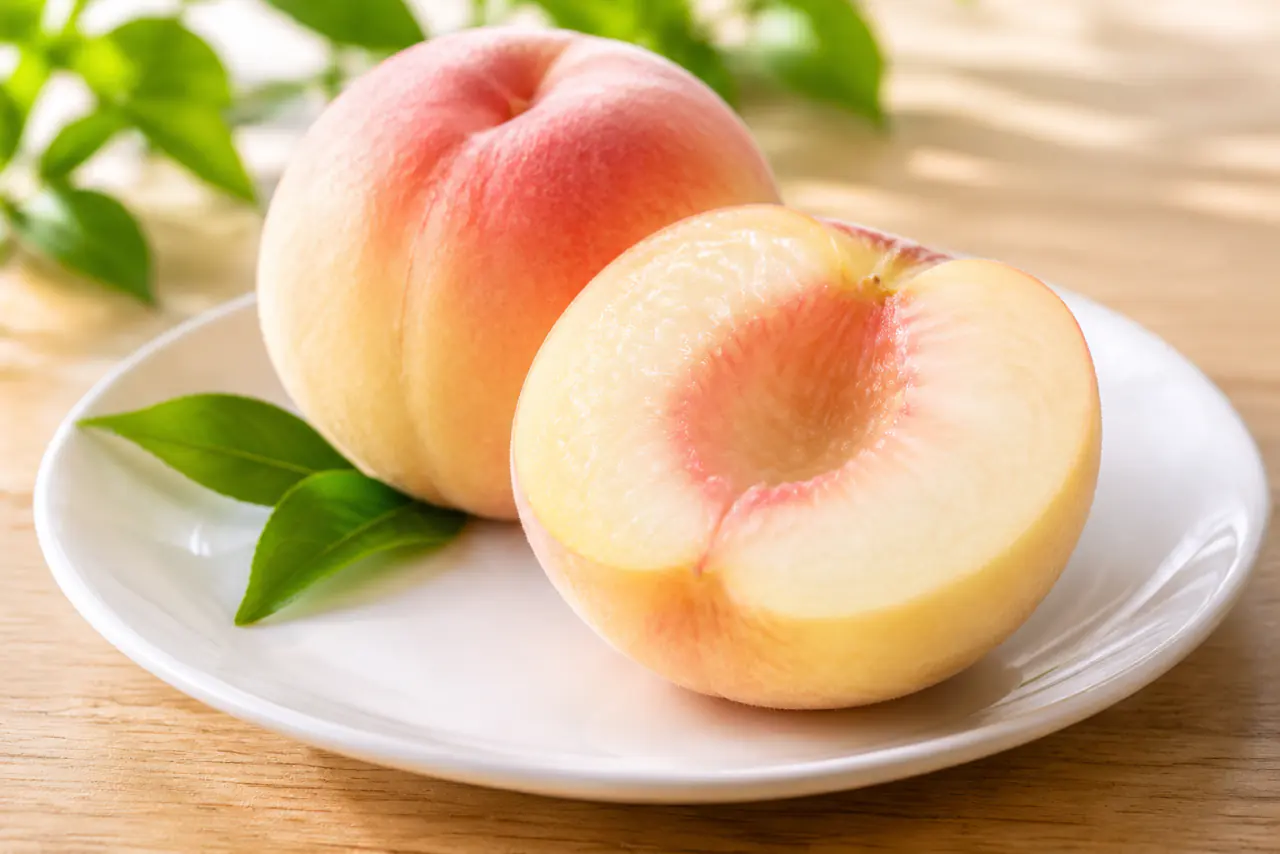
Okayama's white peaches are grown in bags, which keeps their skins white. They are juicy and highly fragrant, making them popular gifts. July–August is peak season. Buy one at a fruit shop or station and eat it fresh, or order a seasonal peach parfait at a café.
The gift shops inside Okayama Station, fruit shops in the city, and fruit cafés
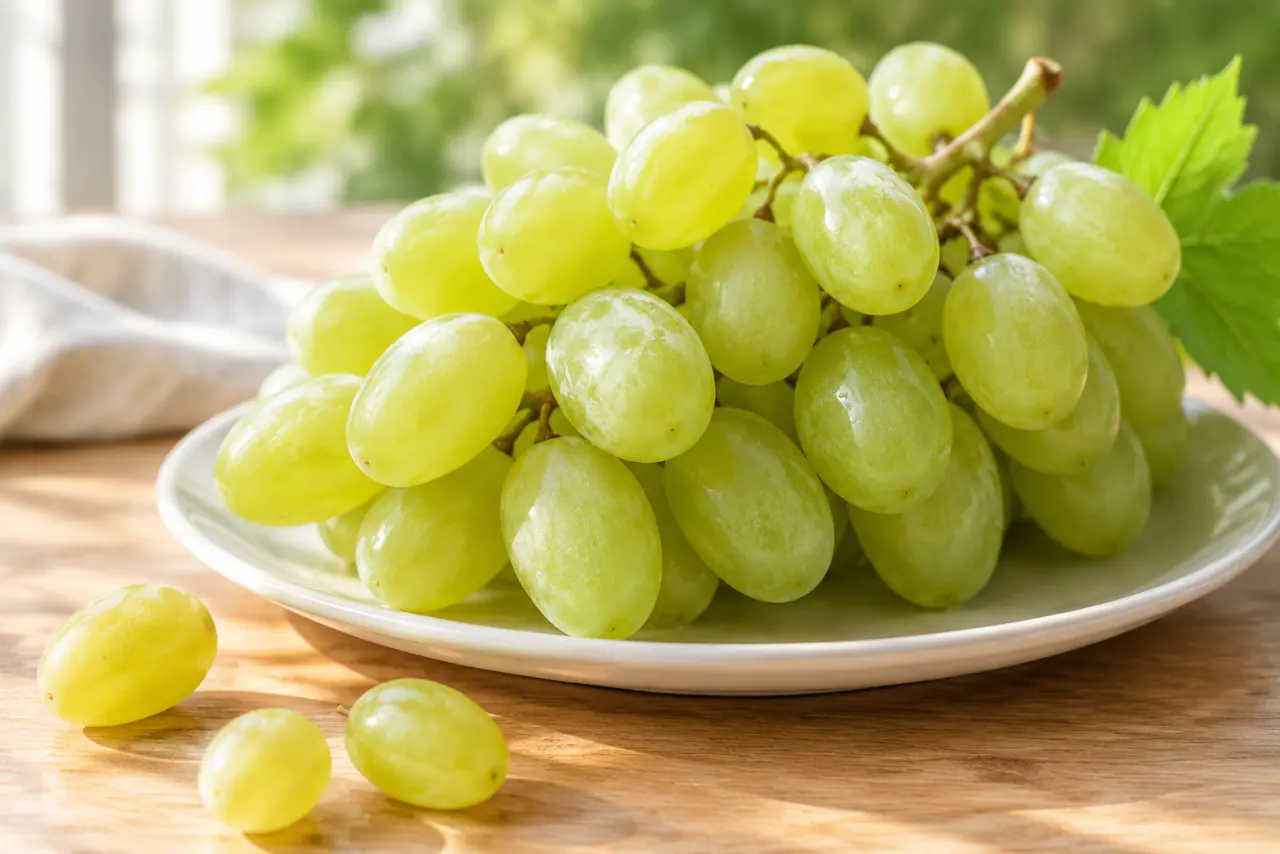
Muscat of Alexandria grapes
Okayama is Japan's leading producer of greenhouse-grown Muscat of Alexandria grapes. The grapes are large and intensely fragrant. They are at their best from August–October. If you do not want to buy a whole bunch, try a grape parfait or grape daifuku.
Fruit shops near Okayama Station and dessert shops in the Kurashiki Bikan Historical Quarter
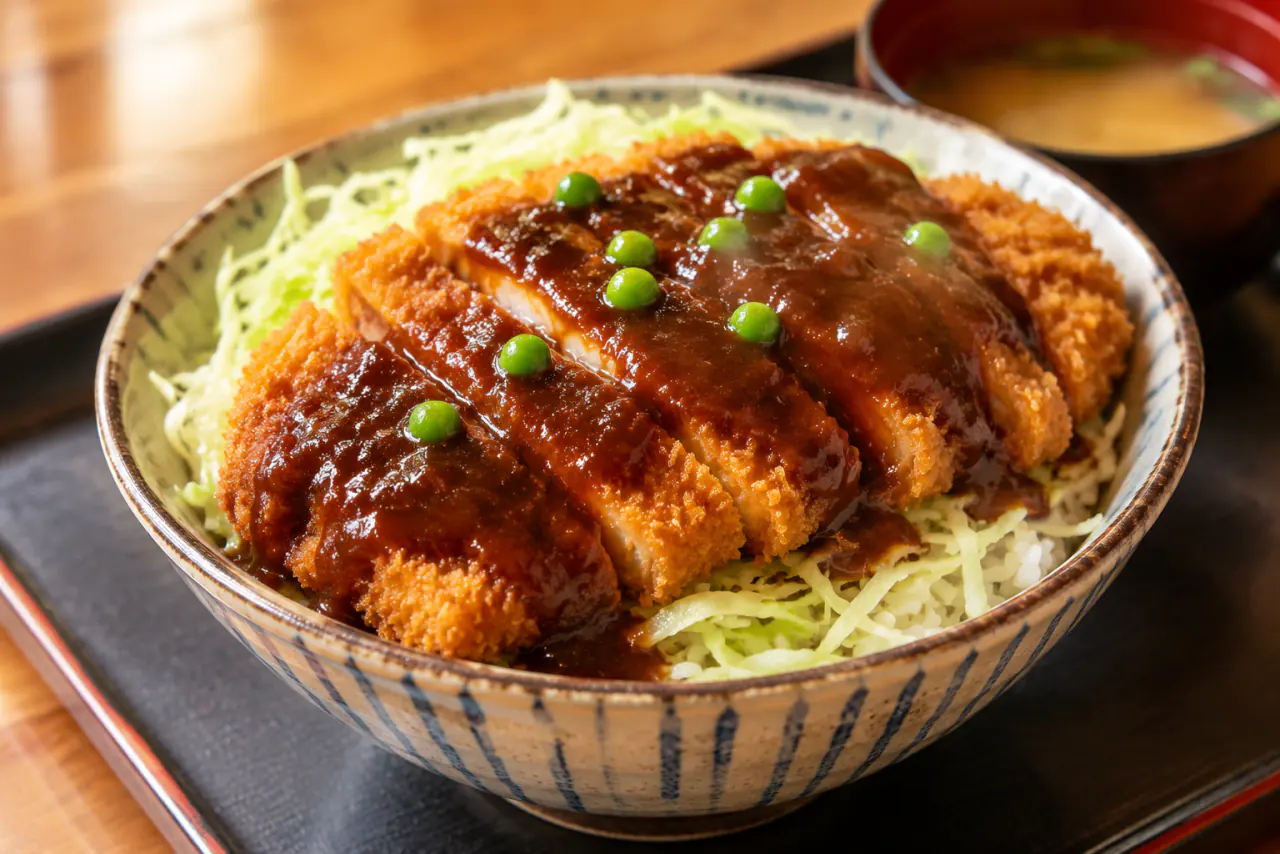
Demikatsudon
Okayama's specialty katsudon replaces the egg with a rich demi-glace sauce poured over the cutlet. It comes with rice and green peas underneath and has a Western-style feel. Locals eat it as a home-style meal, and the portions are generous.
Old-fashioned diners around Okayama Station and downtown · About ¥900–1,300 per person
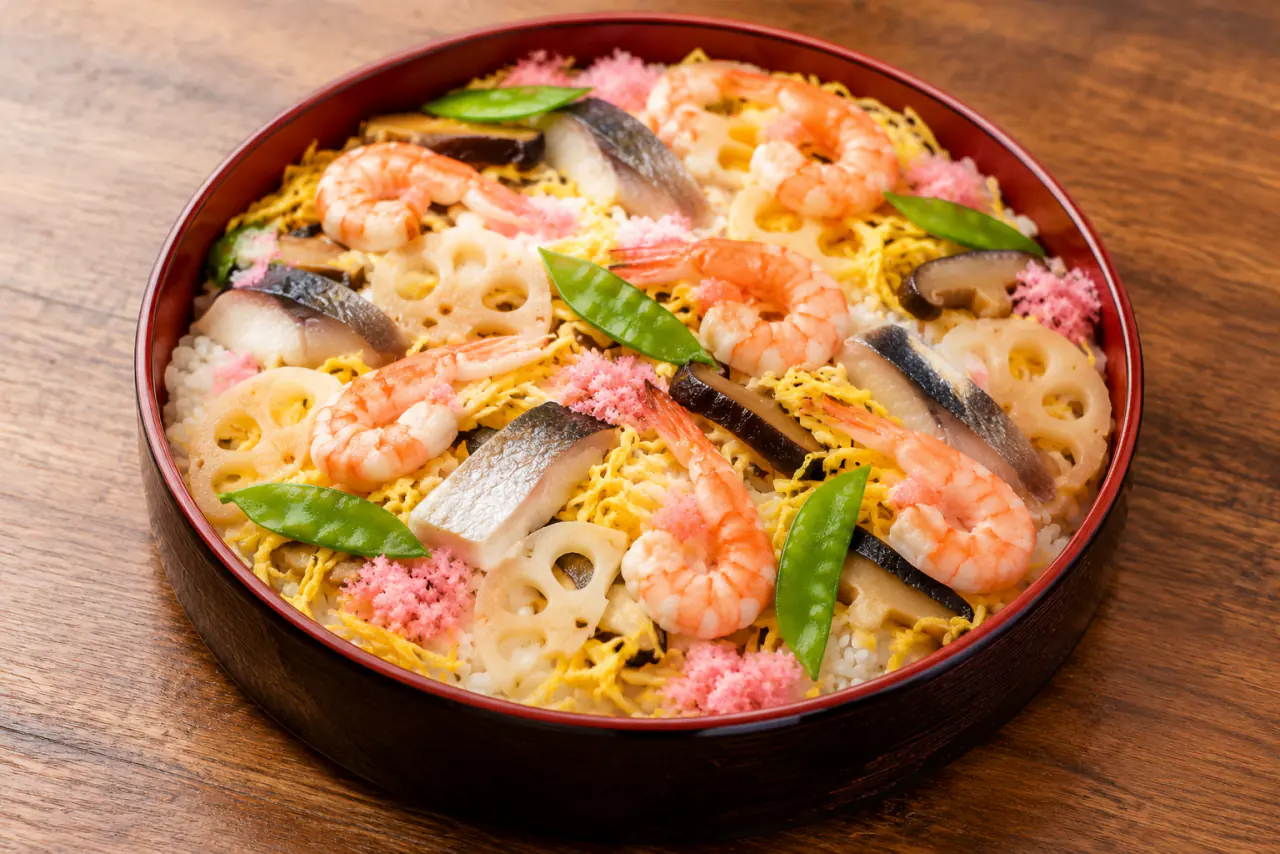
Bara-zushi
Vinegared rice is topped with more than a dozen ingredients, including Spanish mackerel, shrimp, lotus root, and shredded egg. The colorful dish was originally a home-style food served during festivals. Station shops sell bento versions that are convenient to eat on the Shinkansen.
Bento shops at Okayama Station and Japanese restaurants in the city
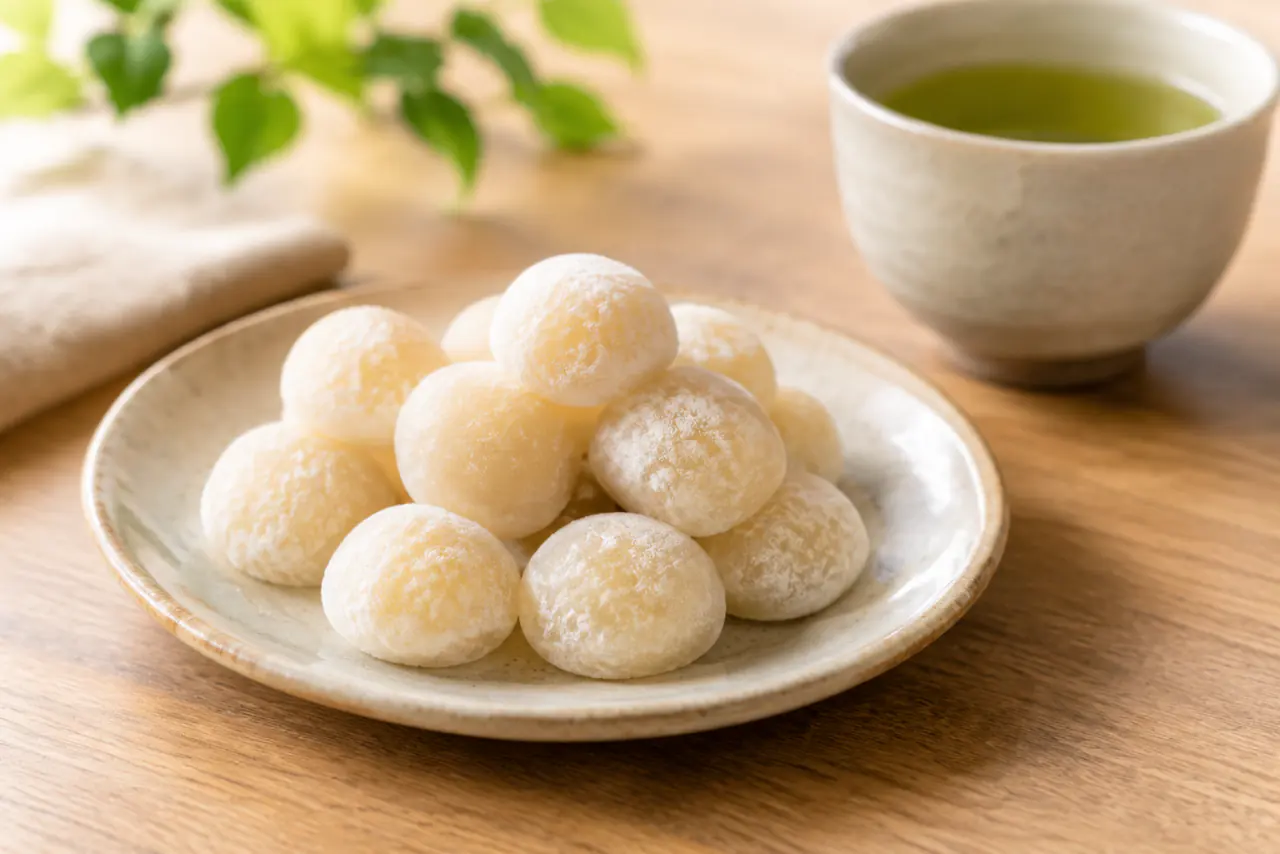
Kibidango
In the Momotaro story, this is what he gives the dog, monkey, and pheasant. Today's kibidango are soft, chewy rice-flour dumplings with a mild sweetness. They are Okayama's most common souvenir.
Okayama Station and souvenir shops around Okayama Korakuen Garden
Getting there · Where to stay
About 45 minutes–1 hour from Shin-Osaka to Okayama Station on the Sanyo Shinkansen
About 35–40 minutes from Hiroshima Station to Okayama Station by Shinkansen
About 30 minutes by airport bus to Okayama Station, about ¥1,000; flights serve Shanghai, Hong Kong, Taipei, and other destinations
About 55 minutes to Okayama Station on the JR Marine Liner Rapid Service across the Seto Ohashi Bridge
Staying near Okayama Station is most convenient. Kurashiki, Okayama Korakuen Garden, and Uno Port, for Naoshima, are all one train ride away. For evening views of the old streets, stay a night in Kurashiki.
Know this before you go
- You can take the tram from Okayama Station to Okayama Korakuen Garden, and use a transit card to pay.
- To reach Naoshima, take a JR train from Okayama Station to Uno Station, about 1 hour, then take the ferry. Check the sailing schedule in advance.
- Most shops in the Kurashiki Bikan Historical Quarter close around 17–18. Evenings are mainly for walking and enjoying the lights.
- The mountain path to Bitchu Matsuyama Castle is steep, and the stone steps are slippery when wet. Wear shoes with good traction.
Source (2026-11)
Okayama Korakuen Garden official website: Admission and combination tickets, Okayama City: Frequently asked questions about Okayama Castle and Korakuen Garden, Ohara Museum of Art: Visitor information, Okayama Tourism WEB: Kurashiki River boat tours, Takahashi Tourism Association: Bitchu Matsuyama Castle