 Cloudborne Travel
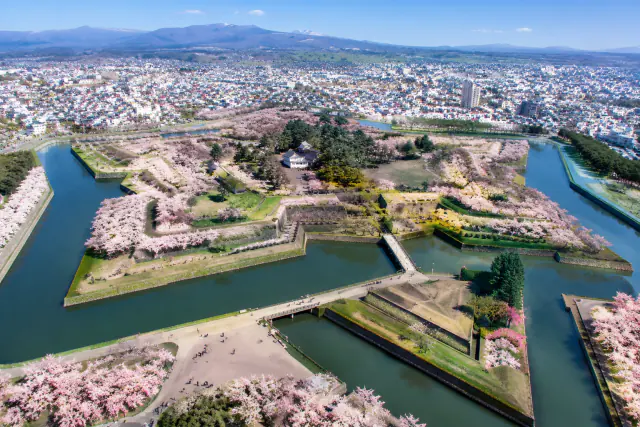 Hokkaido Castle · 1.5–2 hours Goryokaku A Western-style star-shaped fortress built at the end of the Edo period. Its shape is hard to see from the ground, so go up the nearby Goryokaku Tower for the full five-pointed star. Cherry trees line the moat and bloom from late April to early May. The reconstructed Hakodate Magistrate's Office inside the park is also worth visiting. Cherry blossomsHistoric sites
Cherry blossoms
The cherry blossom front starts in late March from Kyushu and around Tokyo, reaches Tohoku in mid-to-late April, and arrives in Hokkaido in early May. A tree stays in full bloom for only about one week. If you miss the blossoms in the lowlands, head north or up into the mountains.
Late March – early May49 sights9 regions
Hokkaido Castle · 1.5–2 hours Goryokaku A Western-style star-shaped fortress built at the end of the Edo period. Its shape is hard to see from the ground, so go up the nearby Goryokaku Tower for the full five-pointed star. Cherry trees line the moat and bloom from late April to early May. The reconstructed Hakodate Magistrate's Office inside the park is also worth visiting. Cherry blossomsHistoric sites 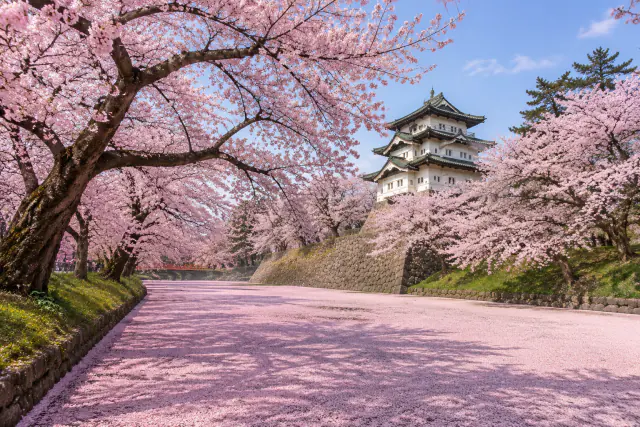 Aomori Castle · 2–3 hours Hirosaki Castle and Hirosaki Park One of Japan's twelve remaining original castle keeps. The park has about 2,600 cherry trees, which bloom in late April. The most photogenic sight is the moat covered with fallen petals, known as a 'flower raft.' The fall colors and February Snow Lantern Festival are also worth seeing. From Aomori, Hirosaki Station is about 40 minutes by JR Ou Main Line. Cherry blossomsHistoric sitesAutumn leaves
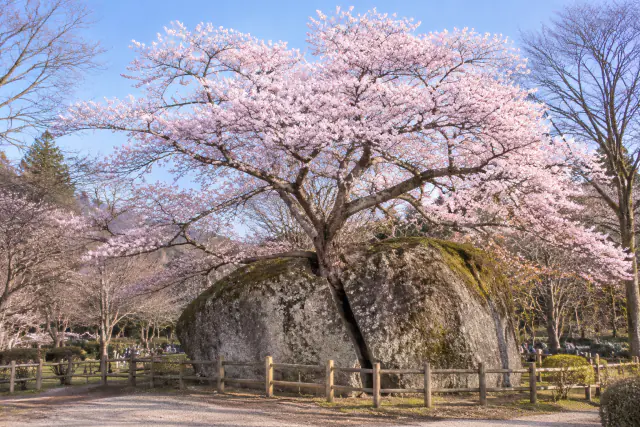 Iwate Park · about 30 minutes Ishiwarizakura This cherry tree grows from a crack in a massive granite boulder and is said to be more than 300 years old. It stands in the grounds of the Morioka District Court. It blooms in mid-to-late April. Stop by Morioka Castle Ruins Park nearby, then explore the rest of downtown on foot. Cherry blossoms
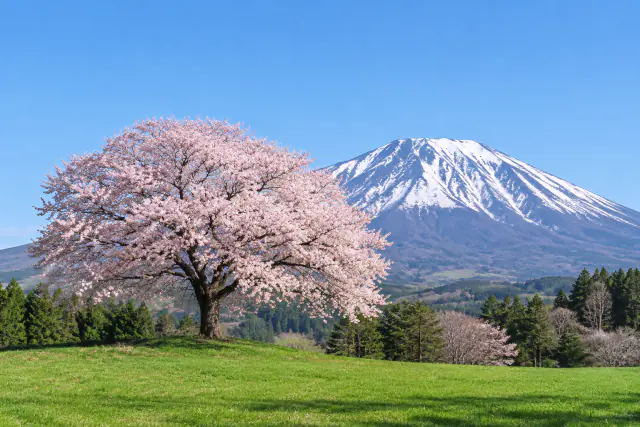 Iwate Park · half a day Koiwai Farm This century-old farm west of Morioka has a visitor area where you can feed sheep and ride a horse-drawn carriage. Its own milk, ice cream, and cheese are well known. In late April, the farm's Ipponzakura cherry tree against the still-snowy Mount Iwate is a popular photo subject. Cherry blossoms
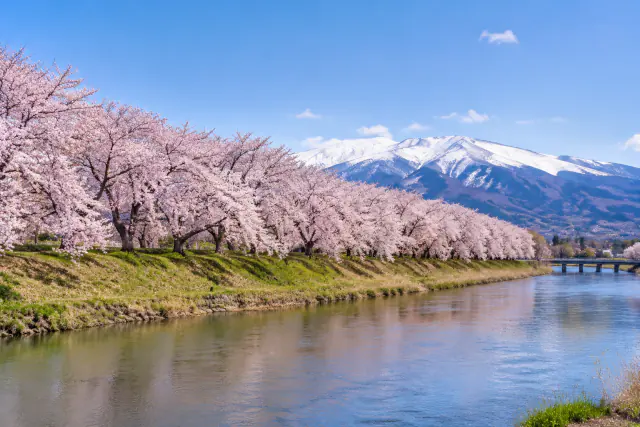 Miyagi Park · 2–3 hours Hitome Senbonzakura A cherry-lined path runs for about 8 kilometers along the Shiroishi River, with the snow-capped Zao mountain range in the background. From Sendai, take the JR Tohoku Main Line to Ogawara Station, about 40 minutes away. The river is right outside the station. Nearby Funaoka Castle Ruins Park has a slope train up the hill, offering elevated views of the riverside blossoms. Cherry blossoms
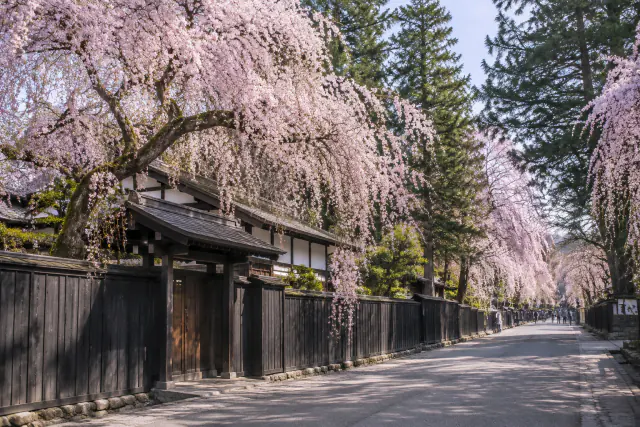 Akita Old town · 2–3 hours Kakunodate Samurai District Samurai residences with black wooden walls line this broad historic street. You can visit homes such as the Ishiguro and Aoyagi residences. In late April, weeping cherry trees spill over the walls, while a cherry-blossom tunnel stretches for about 2 km along the Hinokinai River nearby. The fall colors and winter snow scenes are also beautiful. Cherry blossomsHistoric sitesAutumn leaves
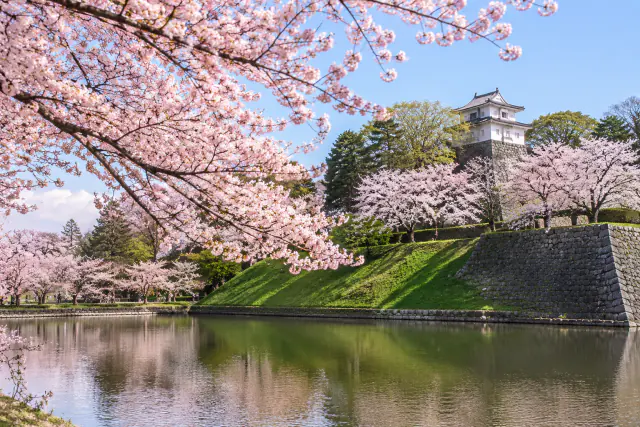 Akita Park · About 1 hour Senshu Park The ruins of Kubota Castle are about a 10-minute walk from Akita Station. Cherry blossoms bloom beside the moat in spring, and lotus flowers fill it in summer. The gates and observation tower are reconstructions. If you're short on time, it's an easy walk while waiting for a train in Akita City. Cherry blossomsHistoric sites
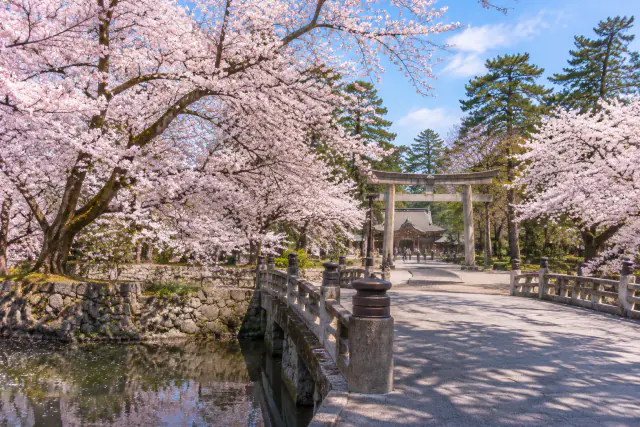 Yamagata Shrine · About 1 hour Uesugi Shrine and Yonezawa This shrine, dedicated to the Warring States-period warlord Uesugi Kenshin, stands on the site of Yonezawa Castle. Cherry trees line the moat. Yonezawa is a stop on the Yamagata Shinkansen, making it a convenient place to stop for Yonezawa beef and a quick visit. In February, the Uesugi Snow Lantern Festival fills the area with snow lanterns. Historic sitesCherry blossoms
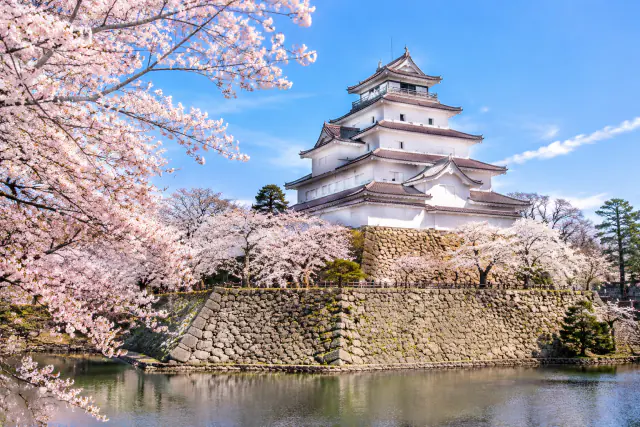 Fukushima Castle · 1.5–2 hours Tsuruga Castle Aizu forces held this castle for a month during the Boshin War. The current keep is a reconstruction, with an unusual red-tile roof. Inside is a history museum, and the top floor has views across the city. Around 1,000 cherry trees bloom around the castle in mid-to-late April, while snow on the red roof makes a beautiful winter scene. Historic sitesCherry blossomsSnow country
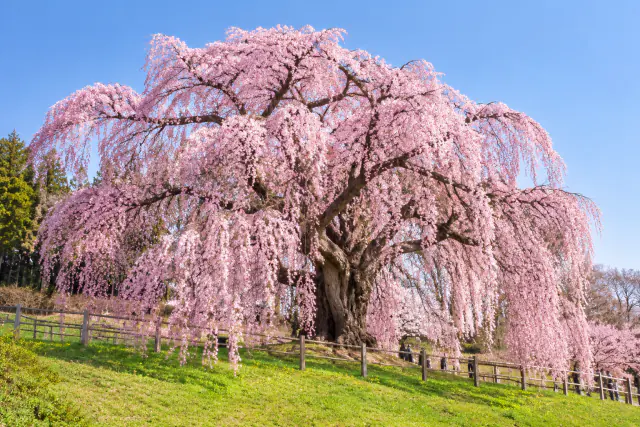 Fukushima Park · About 1 hour Miharu Takizakura This red weeping cherry tree is said to be more than 1,000 years old. Its branches cascade like a waterfall, and it is one of Japan's “Three Great Cherry Trees.” There is only one tree, but the view from beneath it is powerful. It usually blooms in mid-April. During the bloom period, admission is charged and temporary buses run from Miharu Station. Cherry blossoms
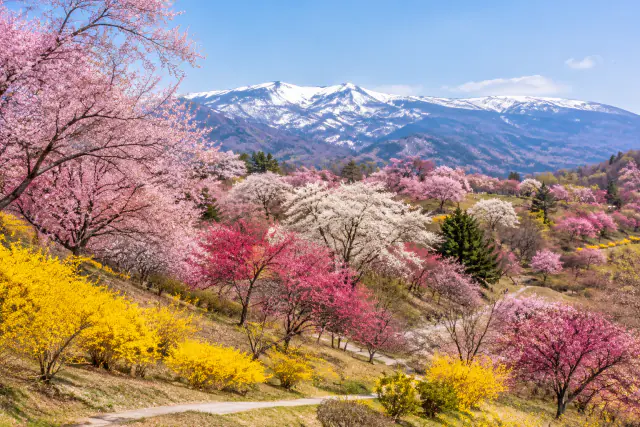 Fukushima Park · 1–2 hours Hanamiyama Park A flower farmer opened this family-owned hillside to the public for free. In early to mid-April, cherry blossoms, forsythia, magnolias, and peach blossoms bloom together in shades of pink, yellow, and white, with the still-snowy Azuma Mountains in the distance. A full loop takes about 1 hour, and several routes of different lengths are available. Cherry blossomsFlower fields
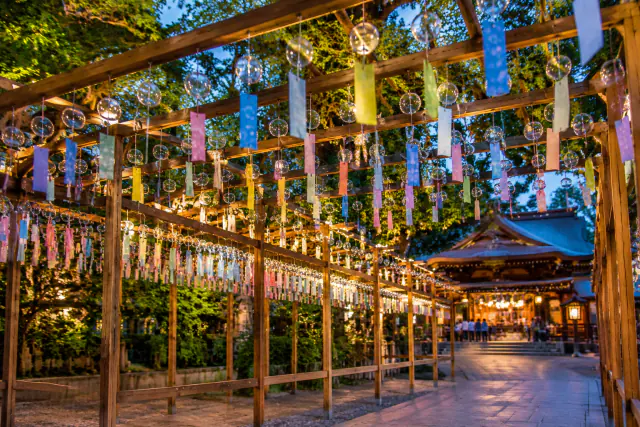 Saitama Shrine · 30–60 minutes Kawagoe Hikawa Shrine This shrine is famous as a place to pray for love and marriage, and it is within walking distance of the old town. In summer, an arcade is filled with Edo-style wind chimes that tinkle in the breeze and are lit up at night. Visitors can also fish for fortunes written on small sea bream-shaped slips, a popular activity with younger visitors. Cherry blossoms line the Shingashi River behind the shrine in spring. Cherry blossoms
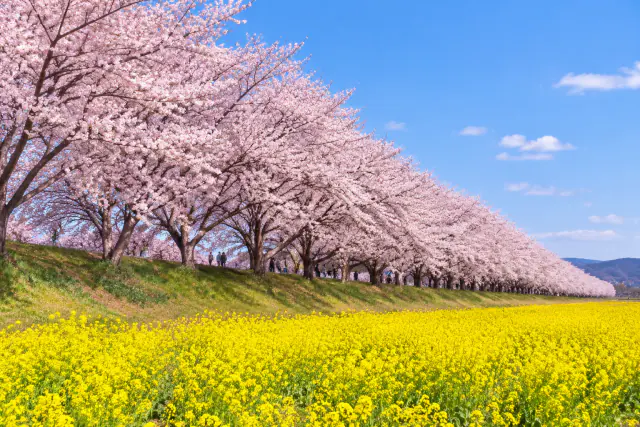 Saitama Park · 1–2 hours Gongendo Sakura Embankment Someiyoshino cherry trees line this roughly one-kilometer-long embankment. From late March to early April, the blossoms bloom alongside rapeseed flowers below, creating a classic Kanto scene of pink and yellow. Hydrangeas bloom in June, followed by red spider lilies in late September. From Satte Station on the Tobu Nikko Line, take a bus to the Gongendo-iriguchi stop, then walk 5 minutes. Cherry blossomsFlower fields
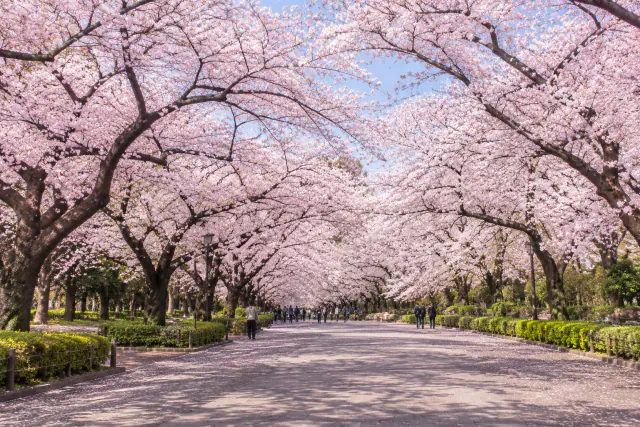 Tokyo Park · 2–4 hours Ueno Park One of Tokyo's liveliest cherry-blossom parks. In spring, rows of cherry trees line the main paths, with picnickers filling the ground beneath them. The park is also home to the Tokyo National Museum, the National Museum of Western Art, and Ueno Zoo, so there are places to go even when it rains. Ameyoko Shopping Street is a few minutes outside the park, with dried goods, snacks, and inexpensive seafood. Cherry blossomsArt
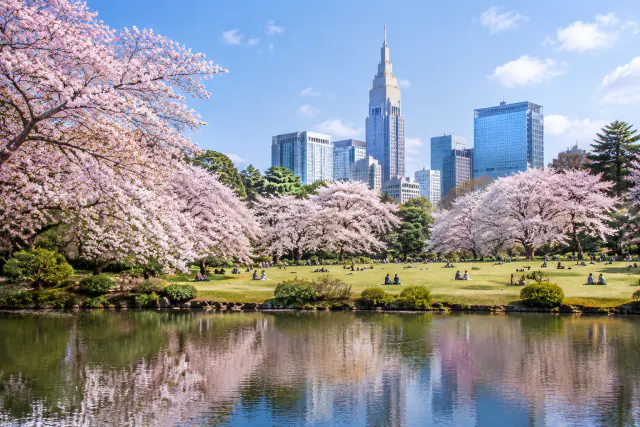 Tokyo Garden · 1.5–2 hours Shinjuku Gyoen National Garden A large garden beside Shinjuku's shopping district, with Japanese, English, and French-style gardens. It has many cherry varieties and a long blossom season, while the ginkgo trees and fall foliage are beautiful in autumn. The broad lawns are ideal for taking a break with a bento. It's a good place to escape the crowds after exploring Shinjuku, and it's a few minutes' walk from Shinjuku-gyoemmae Station. Cherry blossomsAutumn leaves
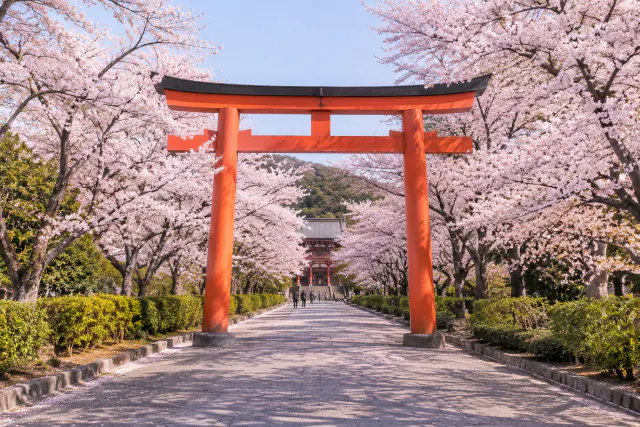 Kanagawa Shrine · About 1 hour Tsurugaoka Hachimangu Kamakura's spiritual center, Tsurugaoka Hachimangu was moved to its current location when Minamoto no Yoritomo established his shogunate. From the east exit of Kamakura Station, walk about 10 minutes along Wakamiya Oji's raised central walkway, the Dankazura, lined with cherry trees in spring. Komachi Street, directly opposite, is packed with food and shops and is ideal for a stroll after visiting the shrine. Cherry blossomsHistoric sites
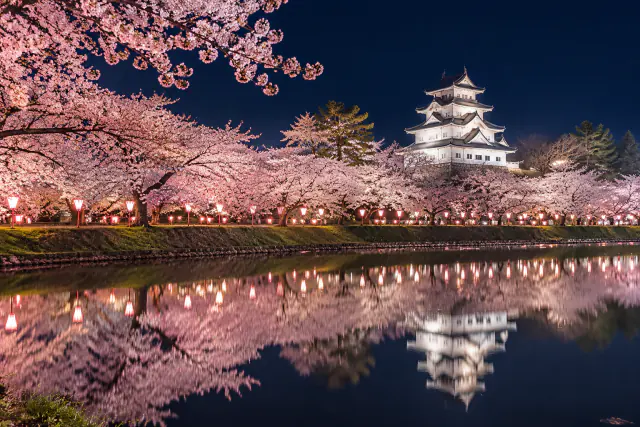 Niigata Park · 1–2 hours Takada Castle Site Park This castle site park in Joetsu is home to about 4,000 cherry trees. In early to mid-April, the trees are illuminated at night, and the pink blossoms reflect in the moat. The display is considered one of Japan's three great nighttime cherry blossom views. From Hokuriku Shinkansen's Joetsu-Myoko Station, transfer to Takada Station, then walk about 20 minutes. Cherry blossomsHistoric sites
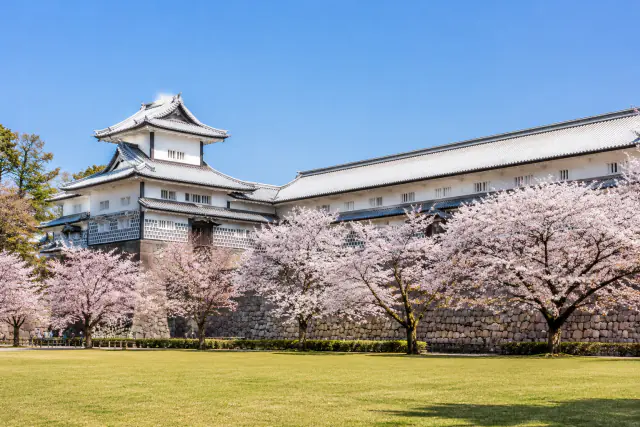 Ishikawa Castle · 1 hour Kanazawa Castle Park The former castle of the Maeda family no longer has its keep, but the reconstructed Hishi Yagura turret, Gojukken Nagaya warehouse, and white lead-tile roofs are impressive. The castle grounds are free to enter and have broad lawns and plenty of cherry trees in spring. The easiest route is to enter through Ishikawa-mon Gate from Kenrokuen, then exit on the other side toward Omicho Market or Oyama Shrine. Historic sitesCherry blossoms
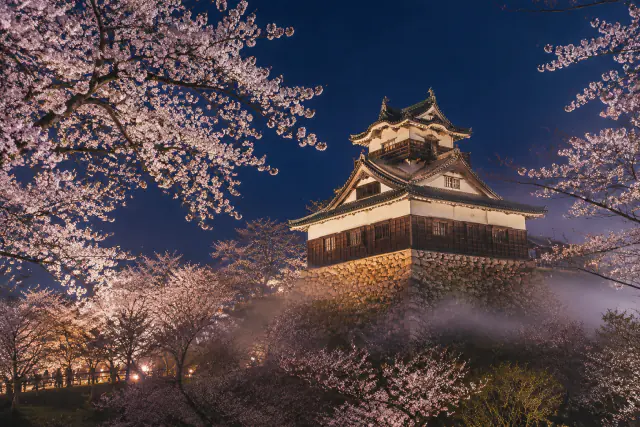 Fukui Castle · 1 hour Maruoka Castle One of Japan's 12 surviving original castle keeps. It is small, with a simple appearance and a roof covered in stone tiles. About 400 cherry trees bloom on the castle hill in early April, and the grounds are lit up at night. When the mist is heavy, the whole castle seems to float above the clouds, earning it the nickname “Kasumi Castle.” Take a bus from Fukui Station or Awaraonsen Station. Historic sitesCherry blossoms
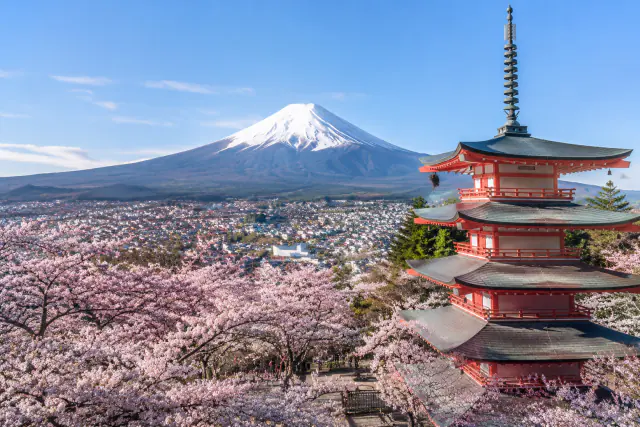 Yamanashi Viewpoint · 1–1.5 hours Arakurayama Sengen Park (Chureito Pagoda) The classic view of a red five-story pagoda, cherry blossoms, and Mt. Fuji is here. From Shimoyoshida Station on the Fujikyu Line, walk about 10 minutes to the foot of the hill, then climb nearly 400 steps to the viewpoint. It looks best during the cherry blossom season in early to mid-April and the fall foliage season in November. On ordinary days, early morning is quieter and the light is softer. Cherry blossomsAutumn leaves
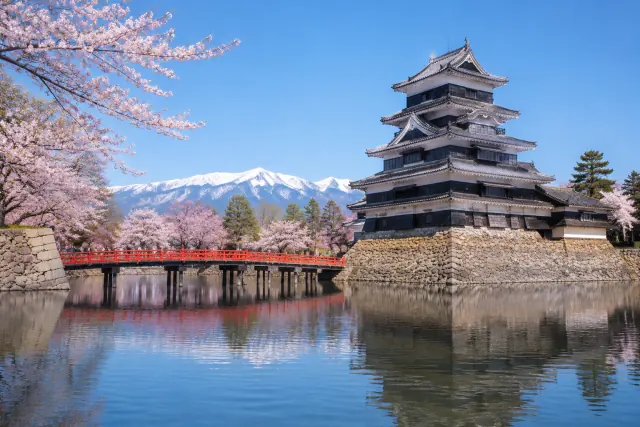 Nagano Castle · 1.5 hours Matsumoto Castle One of Japan’s 5 national treasure castle keeps, with black-lacquered exterior walls. It is often called “Crow Castle.” The keep has survived from the late 16th century, and its interior retains the original timber structure. Climb all the way to the sixth floor for views of Matsumoto and the Northern Alps. The best reflections are by the moat, which is lit up at night during cherry blossom season in early April. Historic sitesCherry blossoms
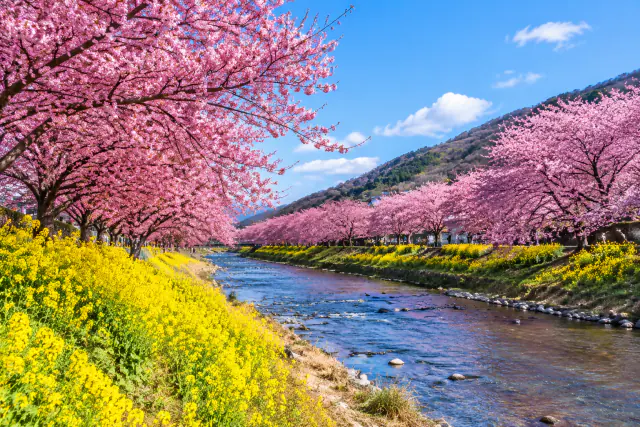 Shizuoka Park · 2 hours Kawazu Cherry Blossoms Kawazu cherry trees bloom early and have deeper-colored flowers than Somei Yoshino trees. They usually bloom from early February to early March. From Izu-Kyuko Kawazu Station, follow the Kawazu River. Cherry trees line both banks for several kilometers, with fields of yellow rapeseed flowers below. You can see the blossoms more than a month earlier than in Tokyo, making this a good choice for a late-winter or early-spring trip. Cherry blossoms
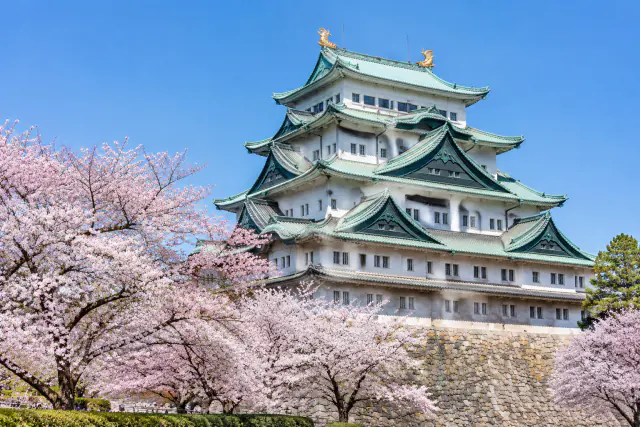 Aichi Castle · 1.5–2 hours Nagoya Castle This massive castle was built by Tokugawa Ieyasu for his son. Its roof is topped with golden shachihoko, mythical creatures with tiger heads and carp bodies. The reinforced-concrete keep is currently closed for a planned wooden reconstruction, so you can't go inside, but you can still photograph the exterior. The real highlight is the Honmaru Palace, restored in 2018 and filled with dazzling wall paintings. Admission is included. Historic sitesCherry blossoms
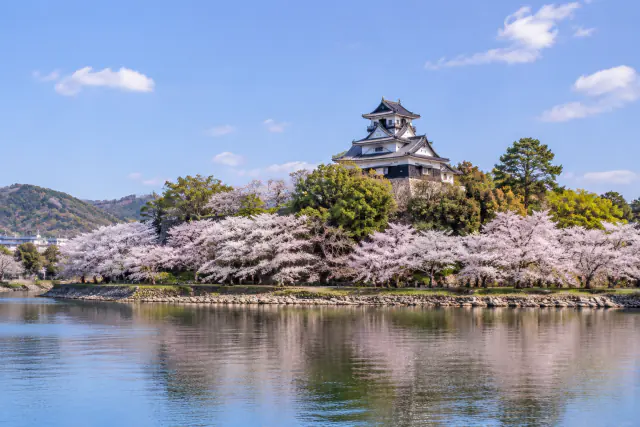 Aichi Castle · Half a day Inuyama Castle One of Japan's 5 national treasure keeps, this castle sits on a small hill beside the Kiso River. Its keep is one of the oldest surviving examples of its kind. At the top, you can walk along the open-air gallery and look over the Kiso River and Nobi Plain. The wind is strong. The old castle-town streets below are lined with skewers, dango, and other snacks. From Meitetsu Nagoya, the train to Inuyama Station takes about 30 minutes. Historic sitesCherry blossoms
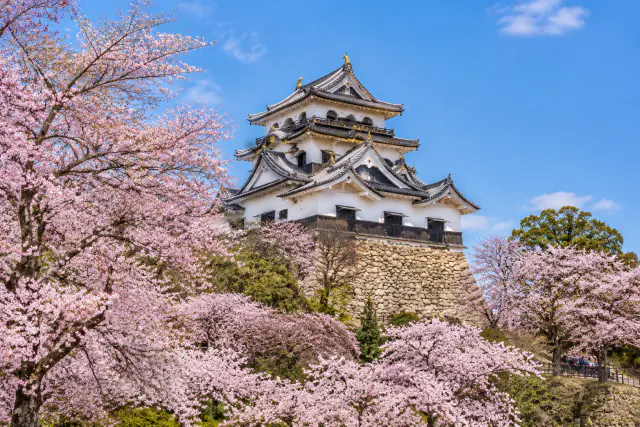 Shiga Castle · 2–3 hours Hikone Castle One of only five castle keeps in Japan designated as National Treasures, this compact, elegant wooden keep survives from more than four hundred years ago. The top floor overlooks Lake Biwa. About a thousand cherry trees line the moat, making spring especially beautiful. Nearby Genkyuen Garden offers views of the keep reflected in its pond, and the mascot Hikonyan appears at scheduled times each day in the castle grounds. Historic sitesCherry blossoms
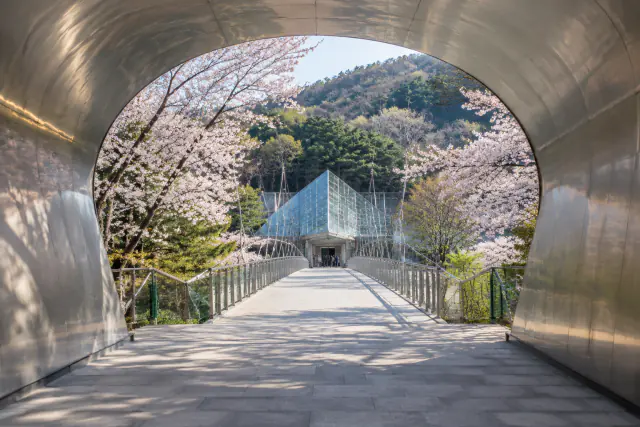 Shiga Museum · Half a day Miho Museum Designed by I. M. Pei, this mountain museum draws on the idea of the “Peach Blossom Spring,” a hidden paradise. You pass along a cherry-lined path, through a stainless-steel tunnel, and across a suspension bridge before reaching the galleries. The architecture is the main attraction, with a collection of ancient artifacts from East and West. Buses from JR Ishiyama Station take about 50 minutes and run infrequently. ArtCherry blossoms
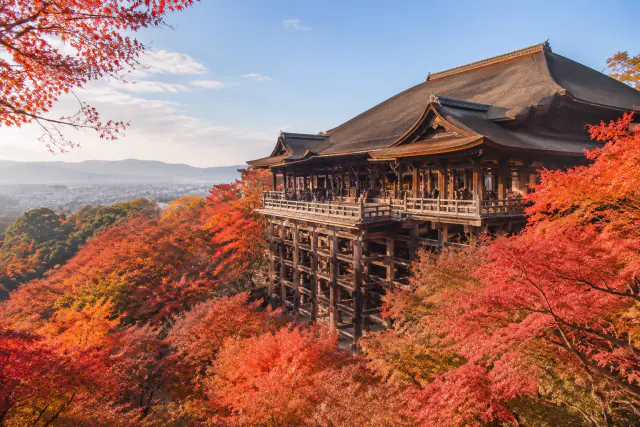 Kyoto Temple · 2–3 hours Kiyomizu-dera & Sannenzaka The wooden Kiyomizu Stage, suspended over the hillside, is one of Kyoto's signature views. Cherry blossoms in spring and fall foliage in autumn spread out below. Walk downhill along the stone-paved lanes of Sannenzaka and Ninenzaka, lined with traditional shops and teahouses, then continue to Yasaka Shrine and Gion. Historic sitesCherry blossomsAutumn leaves
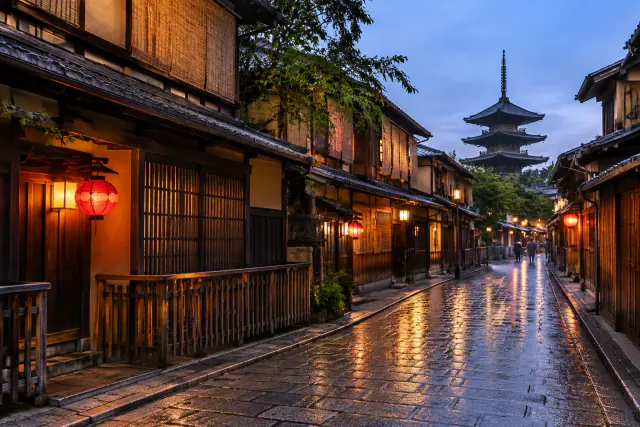 Kyoto Old town · 1–2 hours Gion & Hanamikoji This is Kyoto's most atmospheric traditional neighborhood. Teahouses and ryotei line the stone-paved streets, which look their best when the lanterns come on at dusk. You can also walk along the Shirakawa River and visit Yasaka Shrine, which stays lively at night. This is where geiko and maiko live and work—not a staged tourist attraction. Historic sitesCherry blossoms
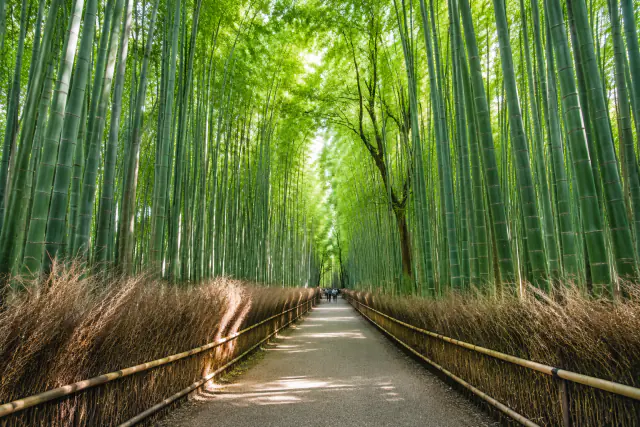 Kyoto Nature · Half a day–1 day Arashiyama & Tenryu-ji This scenic district lies in western Kyoto. The garden at World Heritage-listed Tenryu-ji uses the mountains of Arashiyama as its backdrop. The north gate opens onto the bamboo grove, with smaller temples such as Jojakko-ji farther north. The fall colors are beautiful. Togetsukyo Bridge offers the broadest mountain views, and you can also rent a boat or ride the Sagano Romantic Train. Autumn leavesCherry blossomsMountains
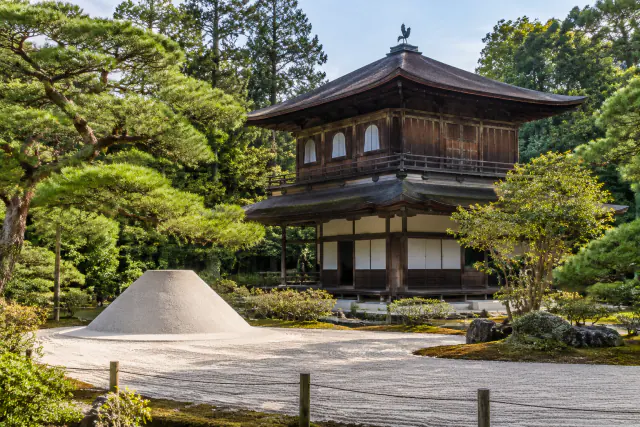 Kyoto Temple · 2–3 hours Ginkaku-ji & Philosopher's Path Ginkaku-ji is not actually silver. The highlights are the white-sand Silver Sand Sea and the moss garden. From the entrance, follow the canal south to the Philosopher's Path, a flat route about 2 kilometers long. In spring it is lined with cherry blossoms, and in fall with colorful leaves. At the end, you can continue to Nanzen-ji and Eikando. Cherry blossomsAutumn leavesHistoric sites
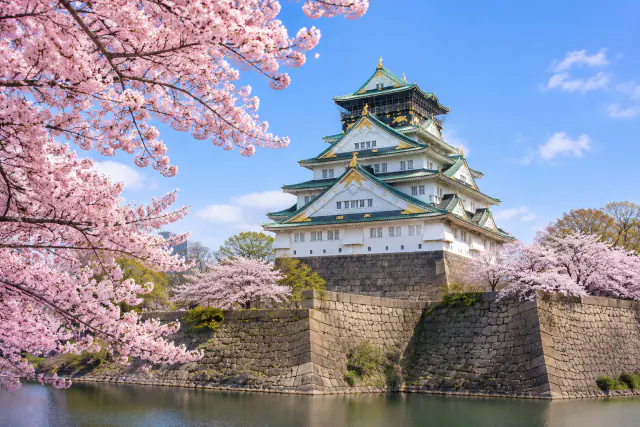 Osaka Castle · 2–3 hours Osaka Castle This famous castle was built by Toyotomi Hideyoshi. The current keep is a reinforced-concrete reconstruction from 1931, with a history museum inside and city views from the top floor. The huge stone walls, moat, and park outside are more impressive. Nishinomaru Garden is a popular cherry blossom spot, and a yakatabune boat ride around the moat is another good option. Cherry blossomsHistoric sites
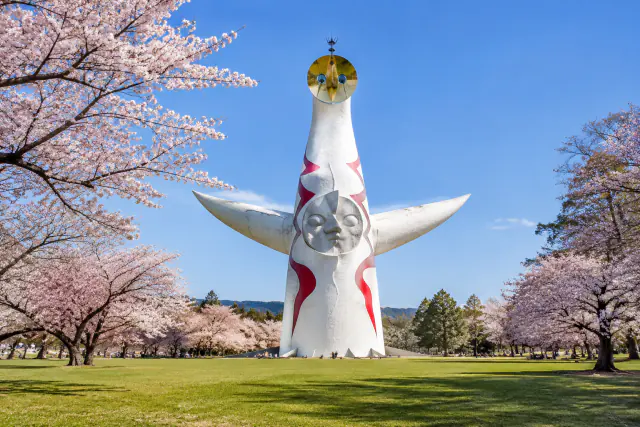 Osaka Park · 2–3 hours Expo '70 Commemorative Park This is the former site of the 1970 Osaka Expo. Taro Okamoto's Tower of the Sun stands dramatically in the middle of the lawn. The large park offers seasonal flowers, including cherry blossoms in spring, poppies in early summer, and cosmos and fall foliage in autumn. From Umeda, take the subway and transfer to the monorail; the trip takes about 40 minutes. ArtCherry blossomsFlower fields
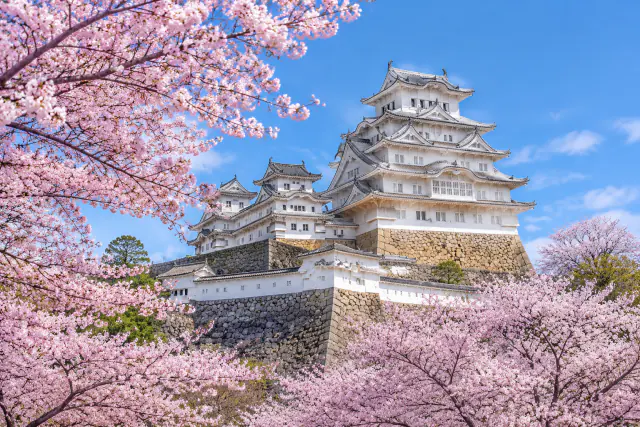 Hyogo Castle · 2–3 hours Himeji Castle Japan's best-preserved original castle keep is a World Heritage Site. Its white walls and roof resemble a white heron spreading its wings, earning it the name White Heron Castle. Inside, you remove your shoes and climb six floors on steep wooden stairs. Walk straight from Himeji Station for about 20 minutes to reach the castle. The neighboring Kokoen garden has lovely fall colors. Historic sitesCherry blossoms
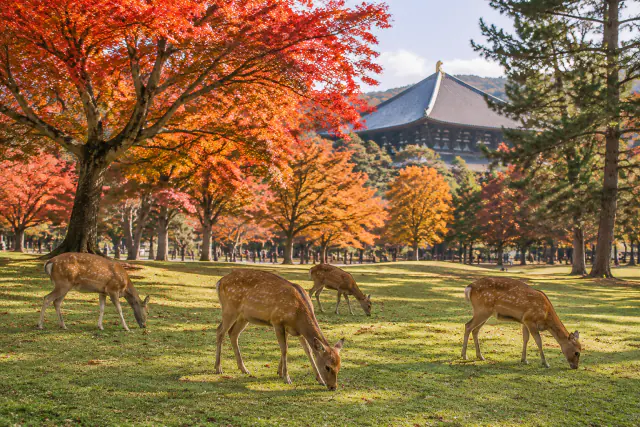 Nara Park · 2–4 hours Nara Park and the deer Todai-ji, Kasuga Taisha, and Kofuku-ji all stand in this large park, where more than 1,000 deer roam across the grass. Vendors sell shika senbei, crackers made for feeding the deer, which bow to ask for food. The park is flat and open, with cherry blossoms in spring and fall foliage in autumn. Take your time and spend a full day walking around. Cherry blossomsAutumn leavesMountains
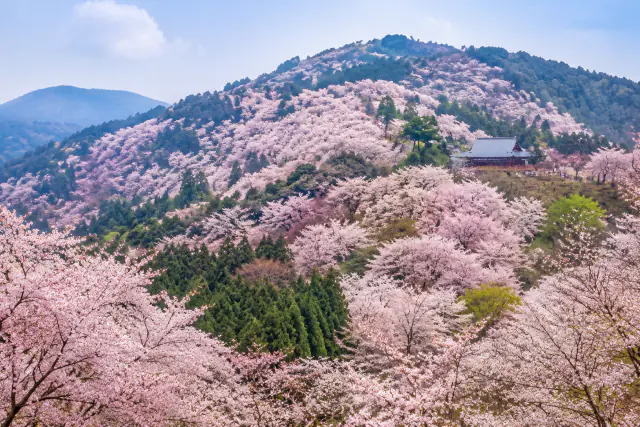 Nara Nature · Half a day–1 day Mt. Yoshino Japan's most famous cherry blossom mountain has about 30,000 mountain cherry trees that bloom in stages from the foot upward: Shimo-senbon, Naka-senbon, Kami-senbon, and Oku-senbon. The World Heritage site Kinpusen-ji stands midway up the mountain. From Osaka-Abenobashi, take the Kintetsu line for about 1 hour 15 minutes to Yoshino Station, then take the ropeway or a bus up the mountain. Cherry blossomsHistoric sitesMountains
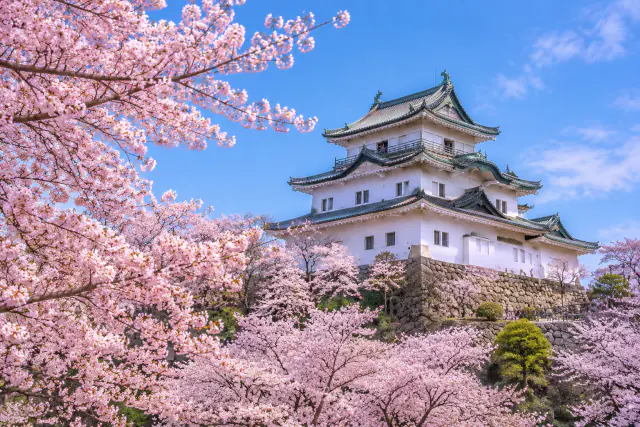 Wakayama Castle · 1–1.5 hours Wakayama Castle The former stronghold of the Kishu Tokugawa family, one of the three major branches of the Tokugawa clan. Its white keep stands on a hill in the city center, surrounded by well-preserved stone walls and gardens. About 600 cherry trees bloom in the park in spring, making it Wakayama City's top cherry-blossom spot. It is about a 10-minute walk from Wakayamashi Station and easy to visit on the way to the airport or Koyasan. Cherry blossomsHistoric sites
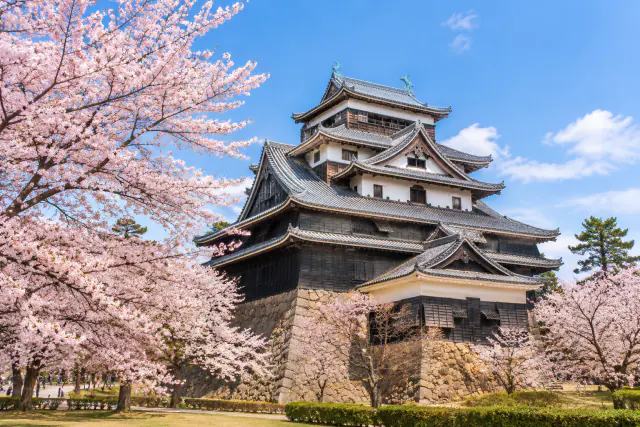 Shimane Castle · 2 hours Matsue Castle One of Japan’s 12 original castle towers and one of its 5 national treasure castle towers. Its black wooden exterior feels imposing, and the stairs are steep and narrow. From the top, you can see Lake Shinji and the entire castle town. Outside the castle, take a Horikawa sightseeing boat around the moat. The ride takes about 50 minutes, and the roof lowers when the boat passes under low bridges, which is great fun. Historic sitesCherry blossoms
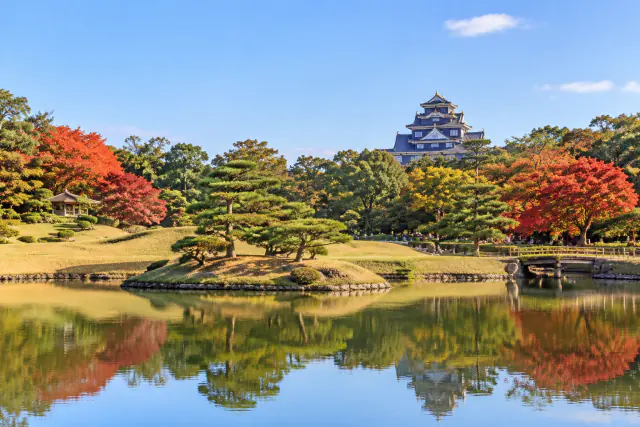 Okayama Garden · 1–1.5 hours Okayama Korakuen Garden One of Japan's three great gardens, along with Kenrokuen in Kanazawa and Kairakuen in Mito. Broad lawns surround ponds and small hills, with open views and Okayama Castle visible in the distance. From Okayama Station, take the tram to "Shiroshita," then walk about 10 minutes. The cherry and plum blossoms are beautiful in spring, and the fall colors are lovely. There is also a nighttime illumination in late November. Cherry blossomsAutumn leaves
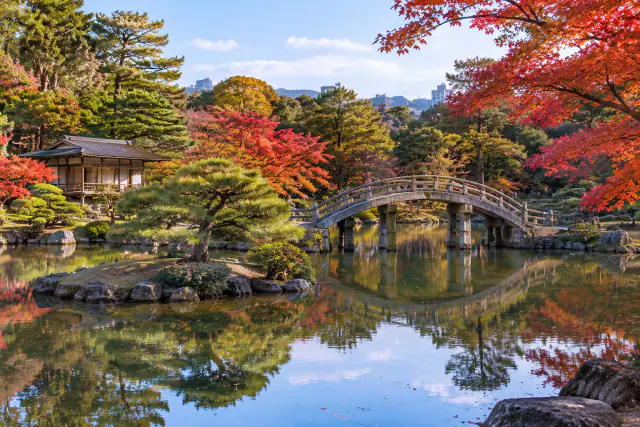 Hiroshima Garden · 1 hour Shukkeien Garden This strolling garden was built for the lords of Hiroshima. It is about a 15-minute walk from Hiroshima Station. Though compact, it is finely designed, and a walk around the pond takes about 40 minutes. Cherry blossoms in spring and fall colors in late November are the highlights. The garden was destroyed in the bombing and has been gradually restored since the war. Cherry blossomsAutumn leaves
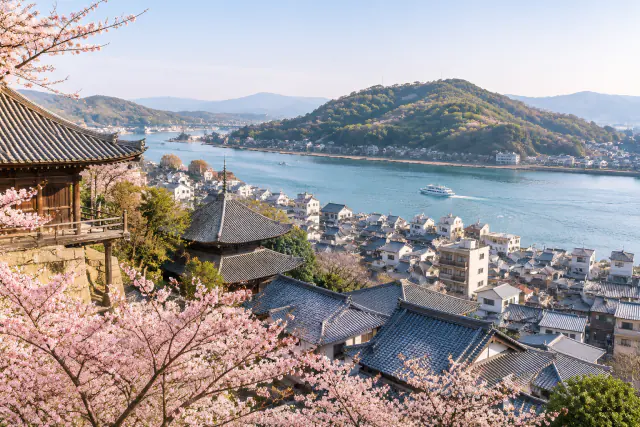 Hiroshima Old town · Half a day Onomichi slopes and Senko-ji This port town is packed with temples and old houses on the hillsides. Take the ropeway up to Senko-ji Park for views of the Onomichi Channel, then walk downhill along stone steps and lanes where cats roam. Onomichi is also the starting point for the Shimanami Kaido. Stay the night before and set out early the next morning for an easy start. Cherry blossoms
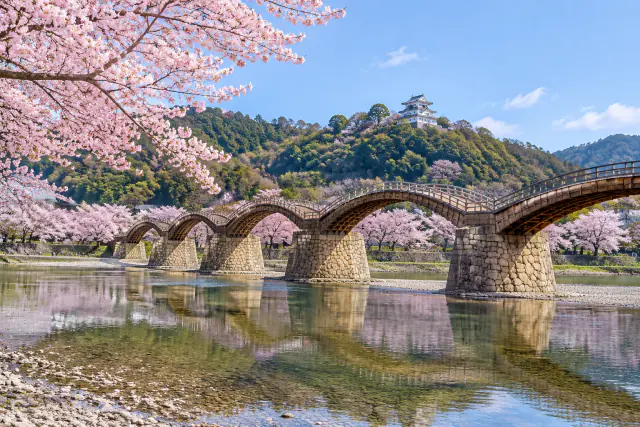 Yamaguchi Park · 2–3 hours Kintai Bridge This wooden bridge spans the Nishiki River in five graceful arches and is considered one of Japan's three great bridges. There is a fee to cross. Kikko Park is on the far bank, with a ropeway up to Iwakuni Castle. Early April is the busiest time, when cherry blossoms line both banks. Fall brings colorful foliage. Allow half a day for a trip from Hiroshima. Historic sitesCherry blossoms
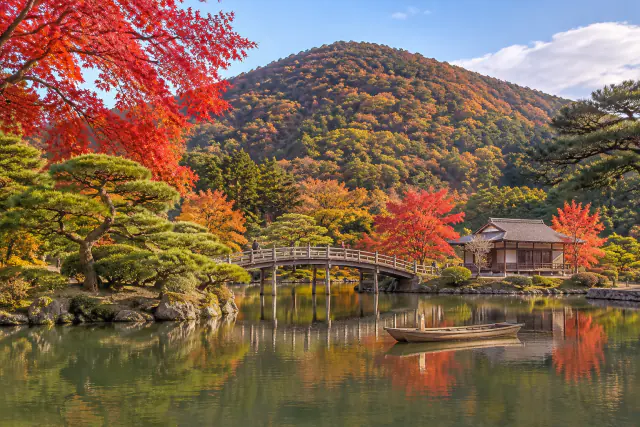 Kagawa Garden · 1.5–2 hours Ritsurin Garden The lords of Takamatsu spent more than 100 years creating this strolling garden, backed by Mount Shiun. It has six ponds, more than a dozen landscaped hills and meticulously pruned pine trees. Take a small boat around South Lake or enjoy matcha at Kikugetsu-tei. From Takamatsu Station, take the JR or Kotoden train to the area around Ritsurin Garden Station. Autumn leavesCherry blossoms
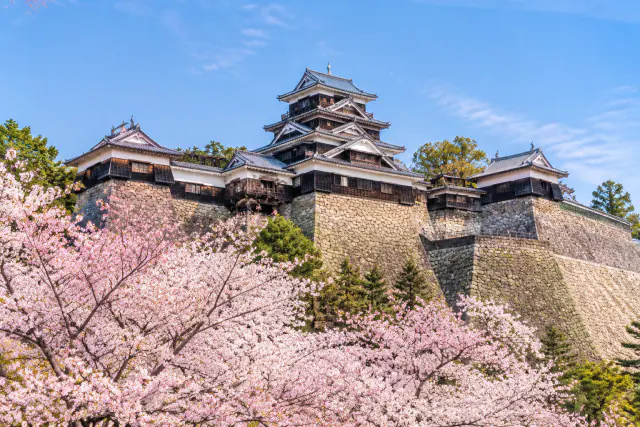 Ehime Castle · 2 hours Matsuyama Castle This castle stands atop Mount Katsuyama in the city center and is one of Japan's 12 original castle keeps. Its many layers of walls are impressive. Take the ropeway or chairlift up. On the way down, you can take either one, or walk for about 20 minutes. The top floor of the keep overlooks the entire Matsuyama Plain and the Seto Inland Sea. The grounds are full of cherry blossoms in spring. Historic sitesCherry blossoms
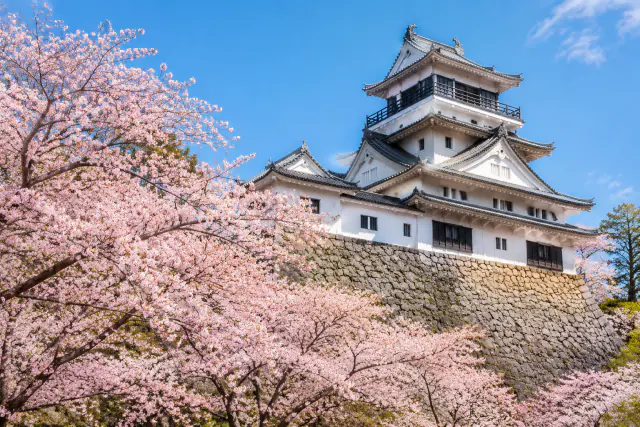 Kochi Castle · 1.5 hours Kochi Castle One of Japan's 12 original castle keeps and the only castle whose buildings inside the honmaru have all survived. Its keep is connected to the honmaru palace, where you can see the former domain lord's office. The castle is about 10 minutes from Kochi Station by streetcar. A 1-kilometer open-air Sunday market stretches below the castle. Historic sitesCherry blossoms
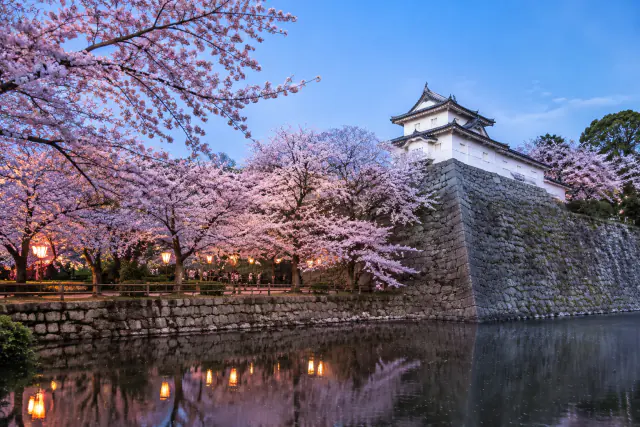 Fukuoka Park · 1.5–2 hours Ohori Park & Fukuoka Castle Ruins A large lake fills the center of Ohori Park, where locals jog and walk their dogs. One lap around the lake is about 2 kilometers. Nearby Maizuru Park contains the ruins of Fukuoka Castle, including its stone walls. It is the city's most popular cherry blossom spot in spring, with evening illuminations. Rest at the lakeside Starbucks or Japanese garden when you need a break. Cherry blossoms
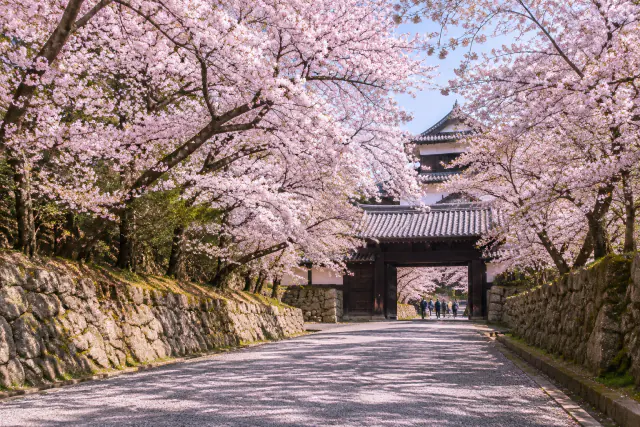 Fukuoka Old town · half a day Akizuki Known as the Little Kyoto of Chikuzen, this small castle town retains its stone walls, old homes, and moat. The Sugi-no-Baba area becomes a tunnel of cherry blossoms in spring, while the ruins of Akizuki Castle are famous for fall foliage. It is usually quiet and ideal for a leisurely walk. Cherry blossomsAutumn leavesHistoric sites
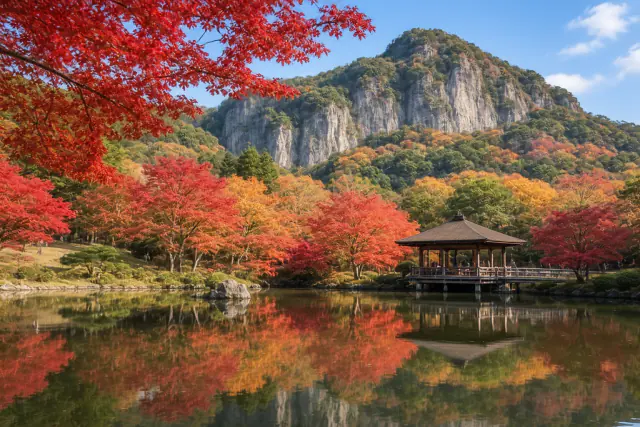 Saga Garden · 1.5–2 hours Mifuneyama Rakuen A large garden built against a steep mountain. In spring, azaleas and cherry blossoms cover the slopes. In fall, leaves are reflected in the ponds, and evening light displays take place. It's in the same small city as Takeo Onsen, making it easy to combine a soak with a garden visit in one day. Autumn leavesFlower fieldsCherry blossoms
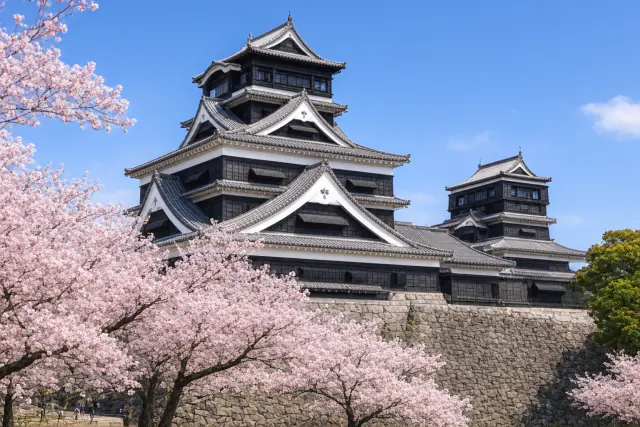 Kumamoto Castle · 2–3 hours Kumamoto Castle One of Japan's three great castles, known for its steep Musha-gaeshi stone walls. The keep has reopened after earthquake repairs and now houses an exhibition. The top floor offers views across Kumamoto. An elevated viewing walkway brings you close to stone walls and turrets that are still being repaired. Historic sitesCherry blossoms
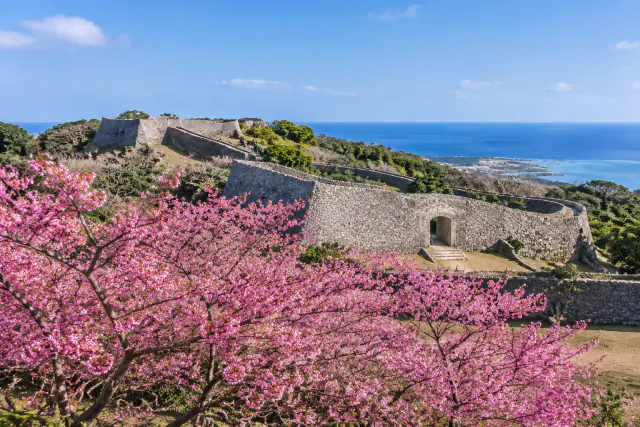 Okinawa Castle · 1–1.5 hours Nakijin Castle Ruins The castle of the king of Hokuzan before the Ryukyu Kingdom was unified. Its limestone walls rise and curve along the hillside, with views of the distant sea. No buildings remain inside, only the walls and sacred sites. It is a World Heritage Site. From late January to early February, deep-pink Taiwan cherry blossoms fill the area in front of the gate. Historic sitesCherry blossoms