 Cloudborne Travel
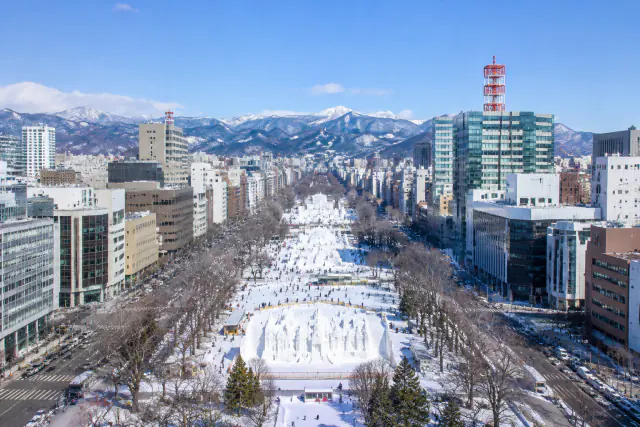 Hokkaido Park · About 1 hour Odori Park A long east–west park in central Sapporo. It has flower beds and a beer festival in summer and hosts the main Snow Festival site in winter. You don't need to set aside much time for it; a walk through is enough. You can go up the TV Tower at the eastern end for city views. The 2027 Snow Festival runs from February 4–11, so book your hotel two or three months ahead. Snow country
Snow country
The Sea of Japan coast is one of the snowiest places in the world. Visit Hokkaido, Tohoku, and Hokuriku in winter for snowy scenery, hot springs, and crab—it’s even more rewarding than summer.
December–February36 sights7 regions
Hokkaido Park · About 1 hour Odori Park A long east–west park in central Sapporo. It has flower beds and a beer festival in summer and hosts the main Snow Festival site in winter. You don't need to set aside much time for it; a walk through is enough. You can go up the TV Tower at the eastern end for city views. The 2027 Snow Festival runs from February 4–11, so book your hotel two or three months ahead. Snow country 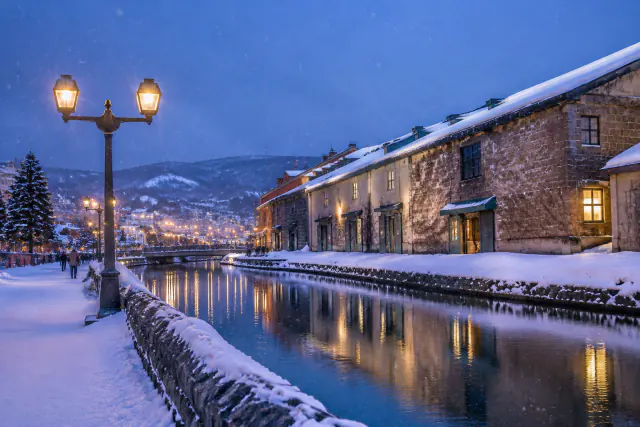 Hokkaido Old town · Half a day Otaru Canal The canal is lined with stone warehouses built more than 100 years ago, now converted into restaurants and shops. The canal itself is short; 20 minutes is enough for photos. The main attraction is browsing the glass shops, music box stores, and dessert shops along Sakaimachi Street. In February, the Snow Light Path fills the canal and streets with small candles. Historic sitesSnow country
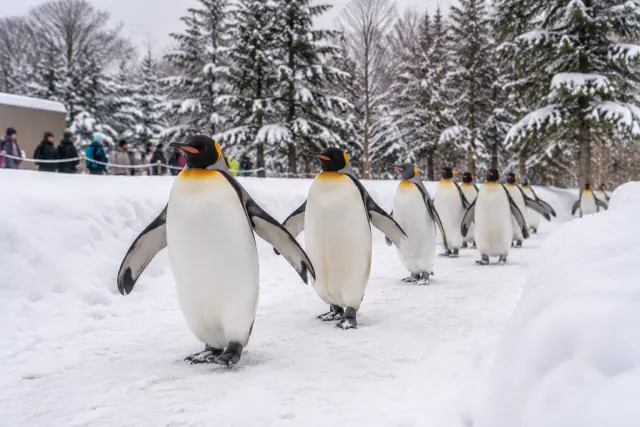 Hokkaido Park · 3–4 hours Asahiyama Zoo A municipal zoo known for its animal behavior exhibits. Penguins swim through a waterway over your head, and polar bears plunge into the water right in front of the glass. After snow falls in winter, penguins take walks outside, drawing long lines. The zoo is built on a hillside with plenty of slopes, so wear comfortable shoes. Snow country
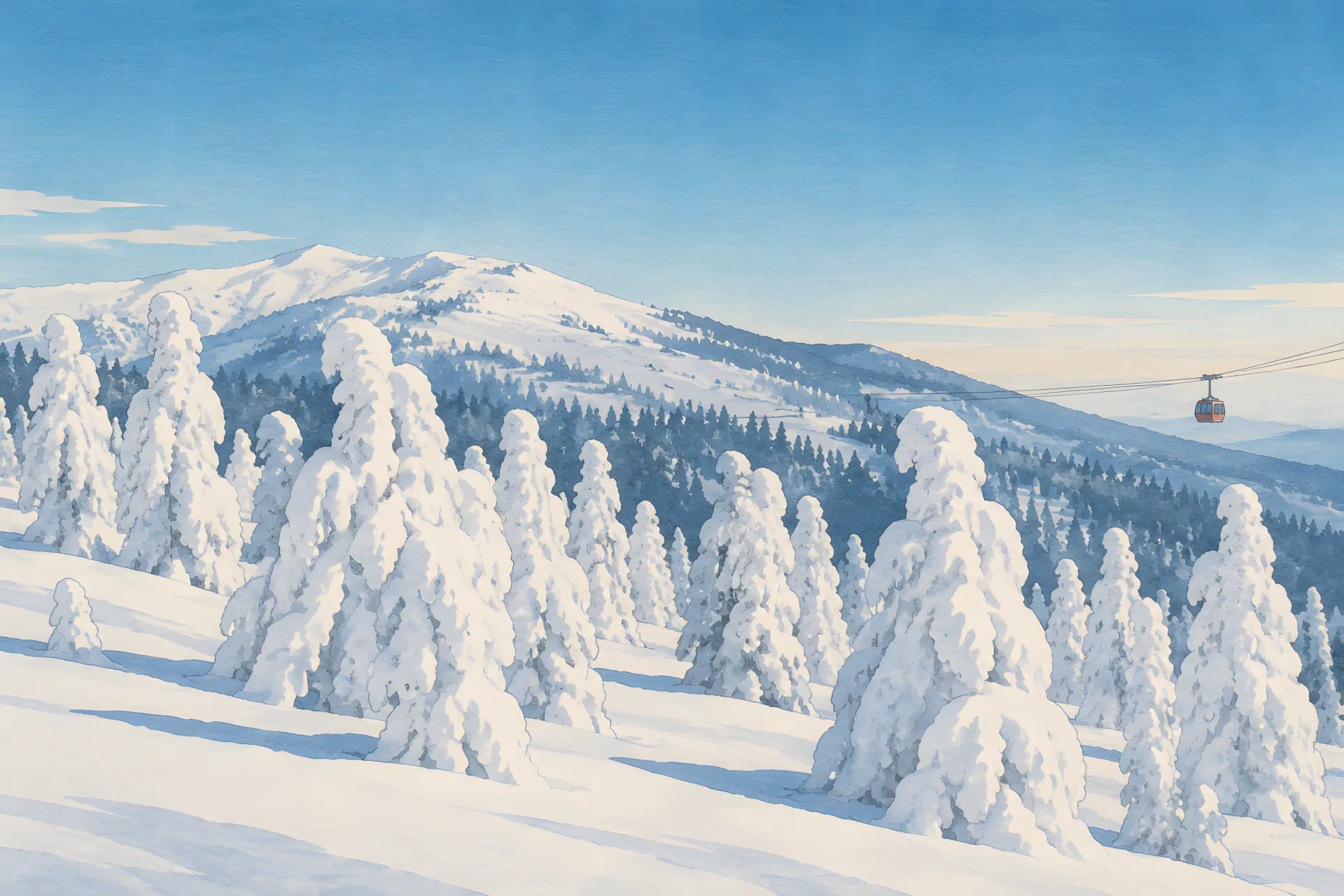
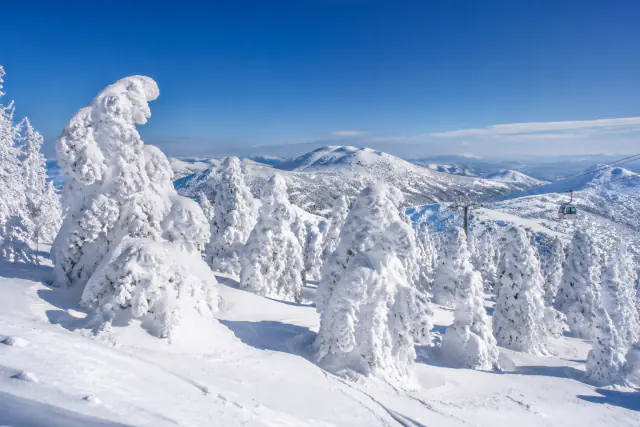 Aomori Viewpoint · 1.5–2 hours Hakkoda Ropeway The ride to Sancho Park Station takes about 10 minutes. On clear days, you can see Mutsu Bay. In January–February, wind and snow turn the fir trees at the summit into 'snow monsters,' making this one of Tohoku's best places to see rime-covered trees. In fall, the mountain slopes change color earlier than the lowlands, with peak color around early October. Snow countryAutumn leaves
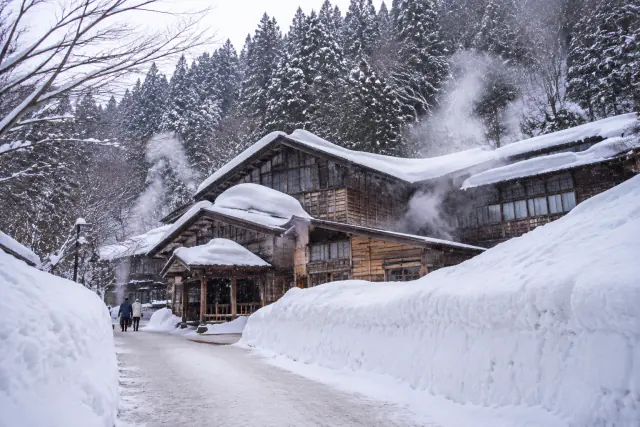 Aomori Hot springs · 1–2 hours Sukayu Onsen This historic hot-spring ryokan sits in the Hakkoda Mountains. Its signature bath is Sen-nin Buro, a huge wooden bathhouse with milky, acidic water. Traditionally, the bath is mixed-gender, with designated hours for women. Snowfall often reaches two or three meters in winter. The ryokan is on the same bus line as the Hakkoda Ropeway, so the two make a good combination. Hot springsSnow country
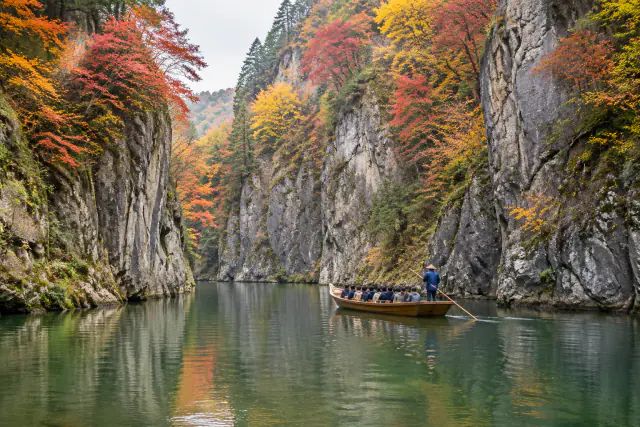 Iwate Nature · about 2 hours Geibikei Gorge Boatmen pole flat-bottomed wooden boats through a limestone gorge, singing local folk songs as they go. The round trip takes about 1.5 hours, with time to walk ashore midway. You can try tossing a small lucky stone into a cave on the opposite bank. In winter, boats have kotatsu tables, so you can watch the snowy scenery from under a blanket. MountainsAutumn leavesSnow country
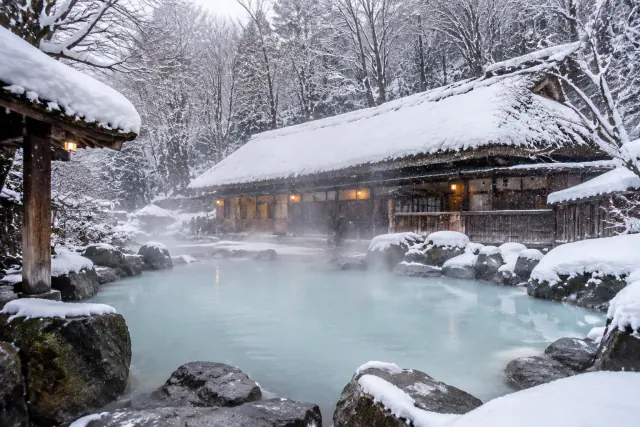 Akita Hot springs · Half a day to 1 night Nyuto Onsen Seven ryokan, each with its own spring source, are scattered through a beech forest. The best known is Tsurunoyu, with thatched roofs and milky outdoor baths surrounded by snow in winter. You can bathe without staying overnight, and a pass lets you visit several baths. The bus from Tazawako Station takes about 50 minutes. Hot springsSnow countryAutumn leaves
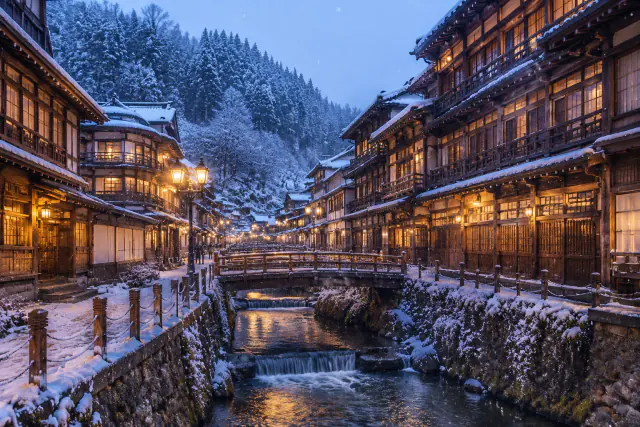 Yamagata Hot springs · Half a day to 1 night Ginzan Onsen Three- and four-story wooden inns line both sides of a small river. When the gas lamps come on at dusk, the town looks like a movie set, especially in the snow. The hot-spring district is small; 30 minutes is enough to walk around. The bus from JR Oishida Station takes about 40 minutes. Winter weekends draw many day-trippers. Hot springsSnow country
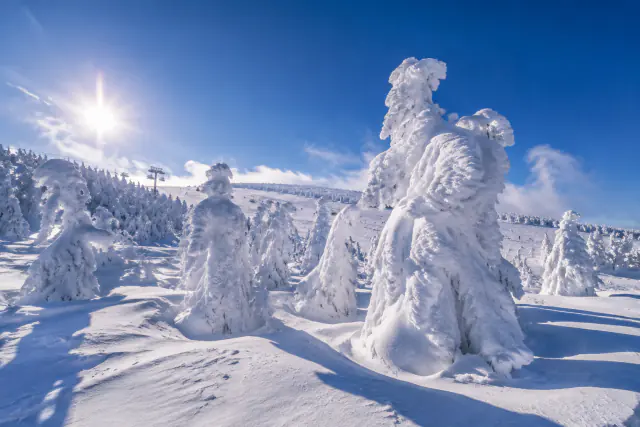 Yamagata Nature · 2–3 hours Zao Snow Monsters In winter, strong winds blow snow and supercooled fog onto fir trees, freezing layer by layer and creating the famous snow monsters. From Zao Onsen, take the Zao Ropeway to Jizo Sancho Station and walk into the snow-monster grove. The monsters are most impressive from late January to February. Illumination is offered at night, and skiers can ski between them. Snow country
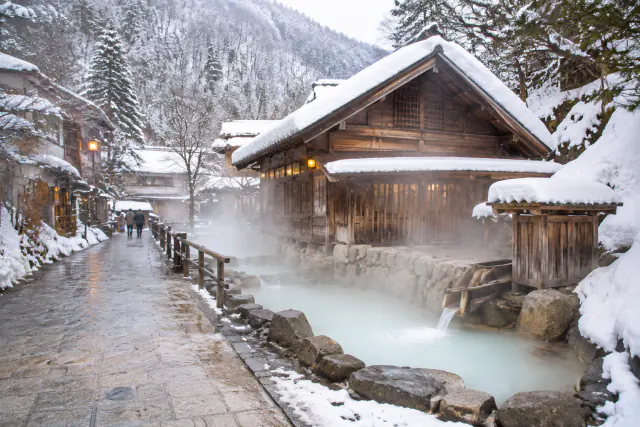 Yamagata Hot springs · Half a day to 1 night Zao Onsen At about 900 meters above sea level, Zao's strongly acidic sulfur springs are milky white and have a powerful smell. In winter, the area becomes a large ski resort. In summer, you can hike to see Okama Crater. The hot-spring town has several inexpensive public baths, plus a large outdoor bath in the mountains that closes in winter. Hot springsSnow country
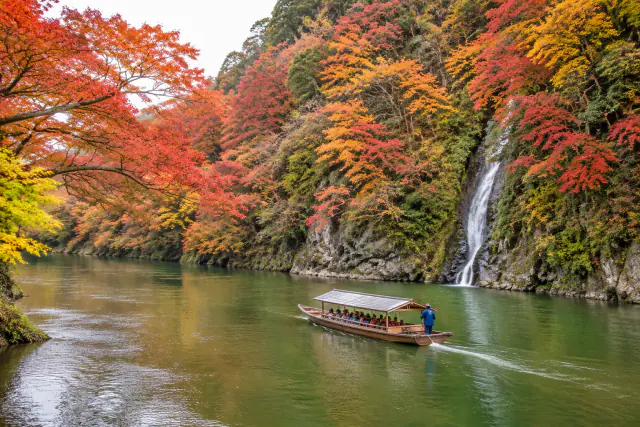 Yamagata Nature · About 2 hours Mogami River Boat Ride Ride a flat-bottomed wooden boat downstream through the Mogami Gorge for about 1 hour. Boatmen paddle while singing folk songs and telling stories. The gorge has steep walls and many waterfalls. Fall colors are beautiful, and in winter you can stay warm under a kotatsu. A bus from the endpoint returns to the departure point. Autumn leavesMountainsSnow country
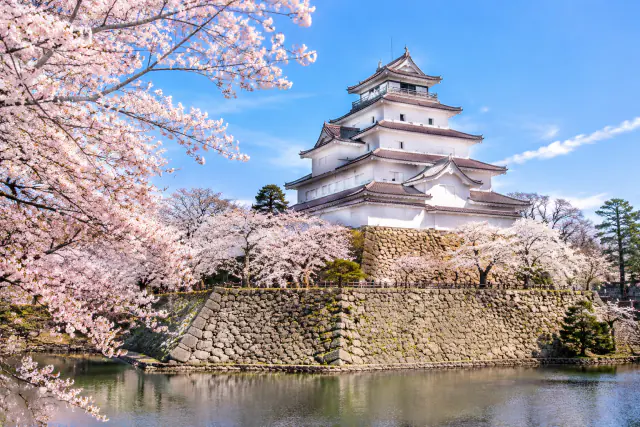 Fukushima Castle · 1.5–2 hours Tsuruga Castle Aizu forces held this castle for a month during the Boshin War. The current keep is a reconstruction, with an unusual red-tile roof. Inside is a history museum, and the top floor has views across the city. Around 1,000 cherry trees bloom around the castle in mid-to-late April, while snow on the red roof makes a beautiful winter scene. Historic sitesCherry blossomsSnow country
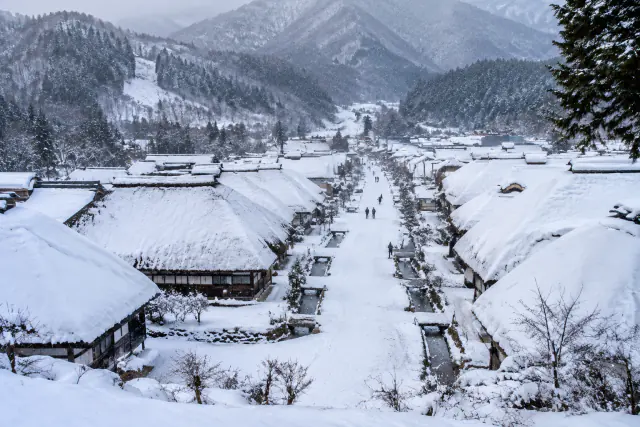 Fukushima Old town · 2–3 hours Ouchi-juku This Edo-period post town has more than 30 old houses with thatched roofs lining a dirt road. Most now house soba restaurants and souvenir shops. Climb the small hill at the end of the village for a view down the entire street. The snow-covered roofs are especially beautiful in winter, and a lantern-lit Snow Festival is held every February. Historic sitesSnow country
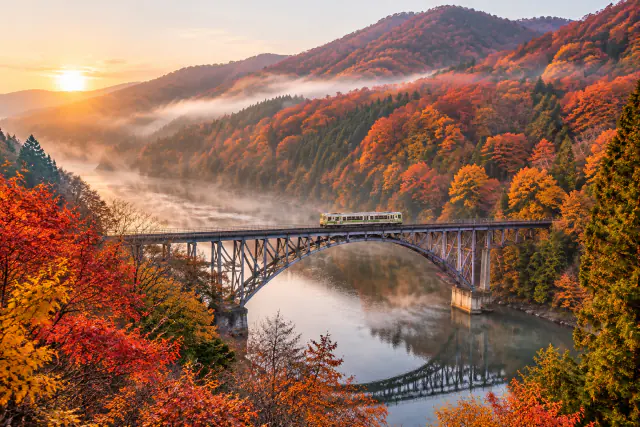 Fukushima Viewpoint · About 1 hour Tadami River First Bridge This is the classic view of a Tadami Line train crossing a railway bridge over the valley. It is especially atmospheric when mist rises from the river in the morning. Fresh green leaves in spring, fall foliage, and winter snow each create a different scene. The viewpoint is on the opposite hillside and takes just a few minutes to reach. You can also ride the Tadami Line across the bridge. Autumn leavesSnow countryMountains
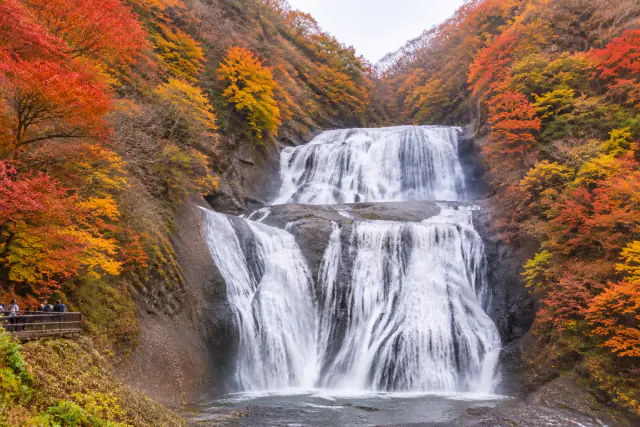 Ibaraki Nature · 1–2 hours Fukuroda Falls This waterfall drops about 120 meters over 4 tiers. Fall foliage covers the cliffs on either side, and in deep winter the falls can partially freeze. Walk through a viewing tunnel to a platform facing the falls, then take an elevator to a higher platform. Take the JR Suigun Line to Fukuroda Station, followed by a bus ride of about 10 minutes and a 10-minute walk. Autumn leavesSnow countryMountains
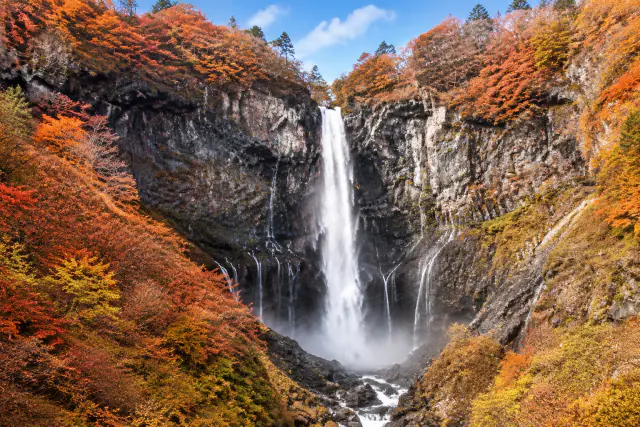 Tochigi Nature · 30–60 minutes Kegon Falls Water from Lake Chūzenji plunges nearly 100 meters over a cliff. It is one of Japan's three most famous waterfalls. The upper observation deck is free. Take the elevator down to the observation deck about 100 meters below for a dramatic head-on view. The surrounding colors are at their best in mid-to-late October, and the falls freeze into icicles in winter. Autumn leavesSnow countryMountains
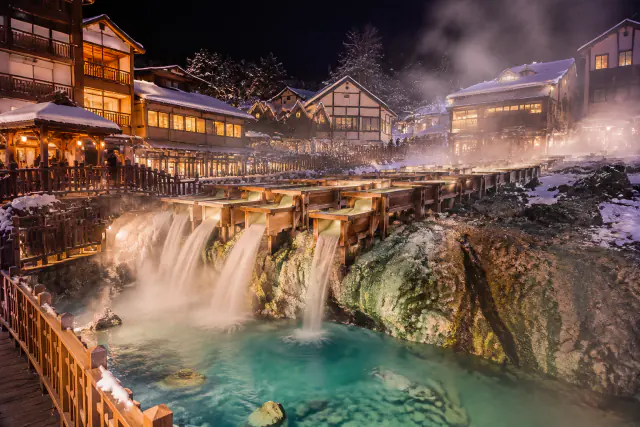 Gunma Hot springs · Half a day Yubatake, Kusatsu Onsen At this hot spring source in central Kusatsu, steaming water flows down rows of wooden channels to cool, filling the air with the smell of sulfur. It is especially beautiful when lit up at night. Shops, inns, and several free public baths surround it. Next door, Netsunoyu stages yumomi performances, with performers stirring the hot water with long wooden paddles to cool it while singing and dancing. Hot springsSnow country
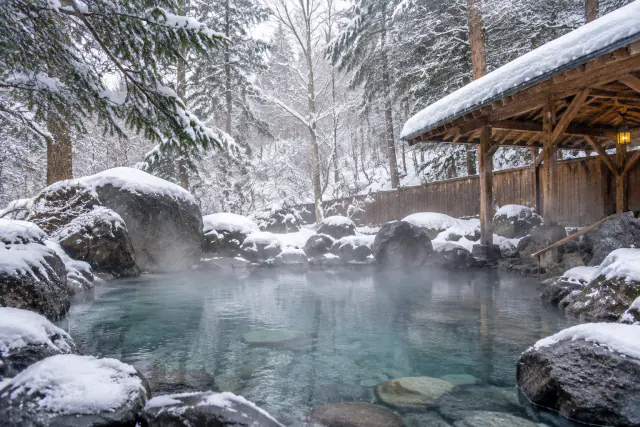 Gunma Hot springs · 1–2 hours Sainokawara Rotenburo Walk west from Yubatake for a little over 10 minutes through Sainokawara Park, past steaming streams and small pools. At the far end are two large outdoor baths, one for each gender, surrounded by wooded mountains. A soak is especially atmospheric when it snows. There is a free footbath by the entrance if you prefer to keep your clothes on. Hot springsSnow countryMountains
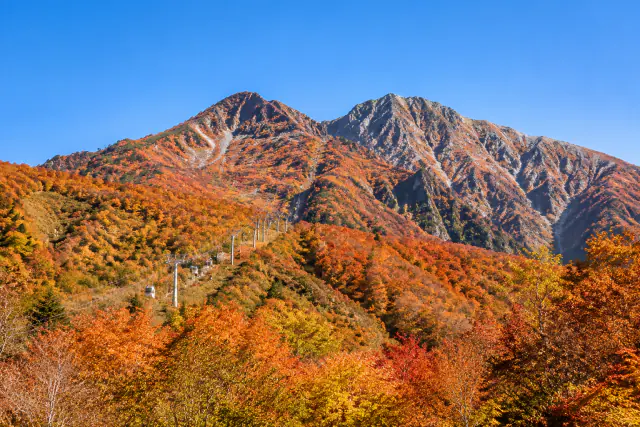 Gunma Hiking · Half a day–1 day Mount Tanigawa This prominent mountain straddles Niigata and Gunma. A ropeway takes you straight to Tenjindaira for views of its rugged cliffs without a hike. The slopes turn red and yellow in fall, and Tenjindaira becomes a ski area in winter. Experienced hikers can climb to the summit from the ropeway station; allow well over half a day for the round trip. Weather changes quickly, so bring proper gear. Buses run to the ropeway station from Jomo-Kogen or Minakami Station. Autumn leavesSnow countryMountains
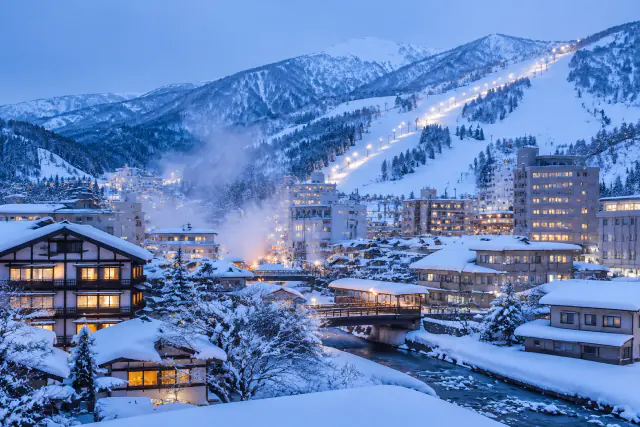 Niigata Hot springs · Half a day–1 day Echigo-Yuzawa Onsen This is the snowy country at the beginning of Snow Country. The hot-spring district starts right outside the Shinkansen station. During ski season, some Shinkansen trains continue to GALA Yuzawa Station, where the ski resort is right outside and you can rent equipment. Ponshukan inside the station offers coin-operated tastings of sake from across Niigata. It's easy to visit as a day trip from Tokyo or stay overnight. Hot springsSnow country
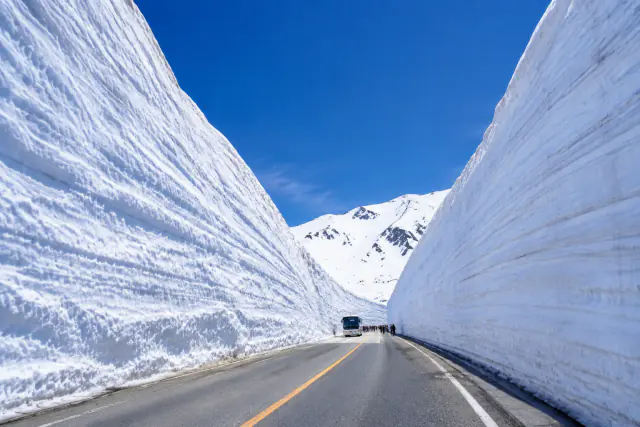 Toyama Nature · 1 day Tateyama Kurobe Alpine Route (Murodo) Murodo, the route’s highest point, sits at about 2,450 meters. In spring, buses pass between snow walls more than ten meters high. The Yuki-no-Otani walking area usually stays open until late June. In summer, a walk around the volcanic Mikurigaike Pond takes about 1 hour. Fall colors arrive early up here. In 2026, the full route operates from April 15 to November 30. Snow countryMountainsAutumn leaves
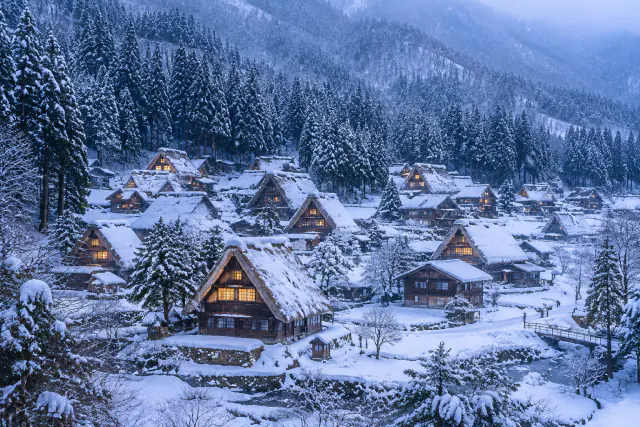 Toyama Old town · 1–2 hours Gokayama Ainokura This village of gassho-style houses shares World Heritage status with Shirakawa-go in Gifu. More than 20 thatched houses dot the hillside. With far fewer crowds than Shirakawa-go, it feels more like an everyday mountain village. Stay overnight in a traditional house; snowy winter nights are especially peaceful. The World Heritage Bus runs from Shin-Takaoka Station, and access from Shirakawa-go is also easy. Historic sitesSnow country
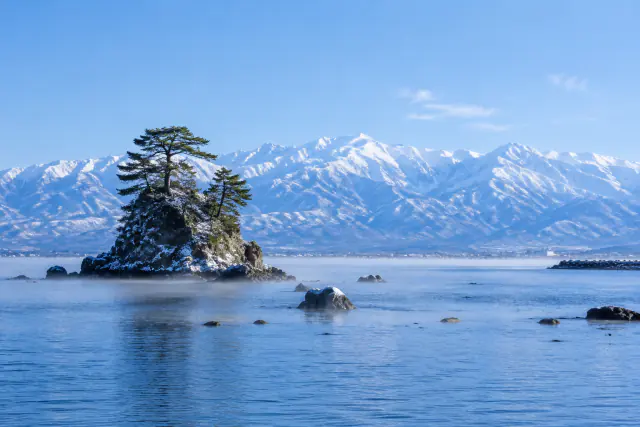 Toyama Viewpoint · 1 hour Amaharashi Coast Off the coast of Takaoka, the small rocky islet of Meiwa stands against the 3,000-meter peaks of the Tateyama mountain range across Toyama Bay. Snowy mountains rising straight beyond the sea are a rare sight worldwide. Clear, cold winter mornings offer the best chance of seeing them; summer is often hazy. It is about a 10-minute walk from Amaharashi Station on the JR Himi Line. IslandsSnow country
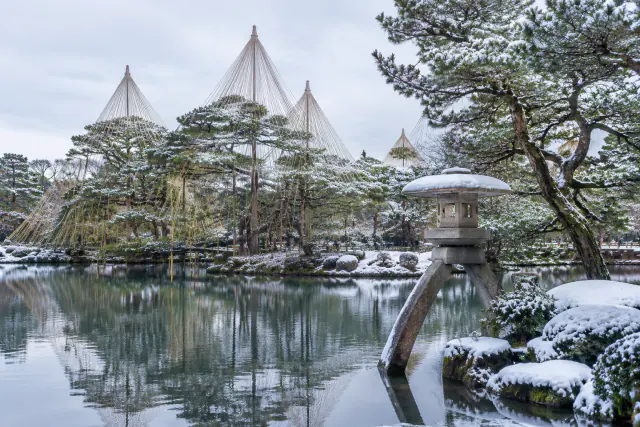 Ishikawa Garden · 1.5–2 hours Kenrokuen Garden One of Japan's three great gardens, Kenrokuen was developed over generations by the lords of the Kaga Domain as a strolling garden. Its signature feature is the Kotoji Toro lantern, with two legs of different lengths, beside Kasumigaike Pond. Starting in November, pine trees are fitted with umbrella-shaped yukitsuri ropes to protect them from heavy snow. The combination of fall colors and snow is one of Kanazawa's most photogenic scenes. The garden is across the street from Kanazawa Castle, so the two are easy to visit together. Autumn leavesSnow countryHistoric sites
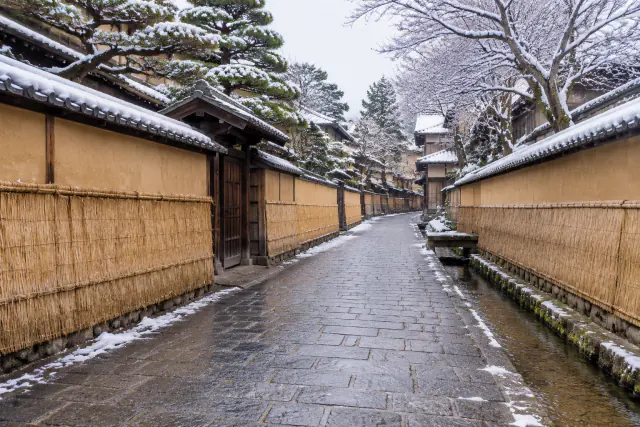 Ishikawa Old town · 1 hour Nagamachi Samurai District A few narrow lanes behind Korinbo make up this former residential area for middle- and lower-ranking samurai. Earthen walls, stone paths, and open drainage channels line the streets. You can enter the Nomura House to see its garden. In winter, the earthen walls are covered with straw mats called komokake to protect them from frost, creating a striking scene. The district is about a 5-minute walk from the Korinbo shopping area. Historic sitesSnow country
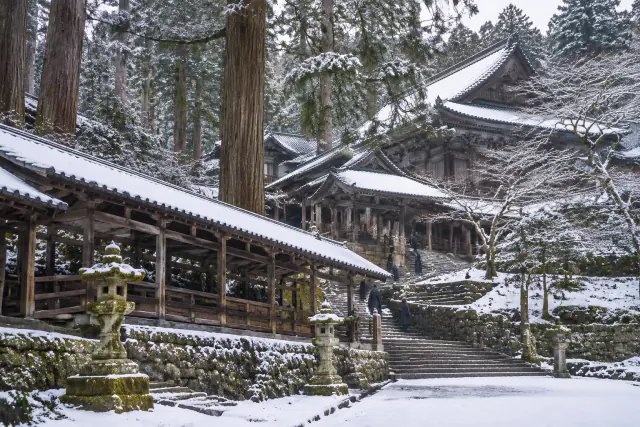 Fukui Temple · 1.5–2 hours Eiheiji Temple The head temple of the Soto school of Zen, founded by Dogen in 1244. More than 100 monks still train here. More than 70 buildings line the mountainside, linked by long wooden corridors. You may see monks moving between buildings during your visit. The ceiling in the Eihei-ji Temple's Eten-no-Ma room is painted with more than 200 bird-and-flower paintings. Historic sitesAutumn leavesSnow country
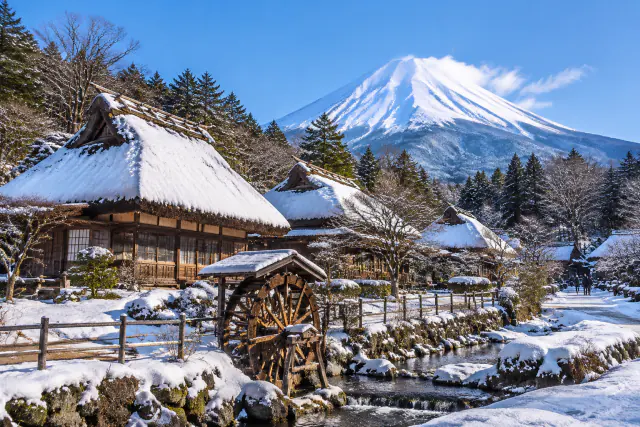 Yamanashi Old town · 1–1.5 hours Saiko Iyashi-no-Sato Nenba A restored thatched-roof village on the shore of Lake Saiko, with about twenty traditional houses arranged along the slope. Inside are craft workshops, small museums, and teahouses. On clear days, you can see Mt. Fuji from the village entrance. Quieter than Oshino Hakkai, it is a good place to slow down and take photos. After a snowfall, it has the feel of a Japanese folktale. Take the Saiko sightseeing bus from Kawaguchiko Station. Historic sitesSnow country
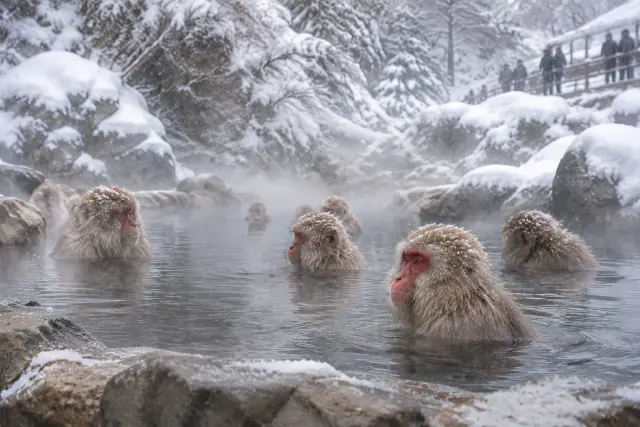 Nagano Park · Half a day Jigokudani Monkey Park The only place in the world where you can see wild monkeys bathing in hot springs. In winter, the monkeys doze in the steaming pool amid the snow. They are known overseas as “snow monkeys.” From Nagano Station, take the Nagano Dentetsu train to Yudanaka, change to a bus for the entrance, then walk along a forest road for about 30–40 minutes. You can combine the visit with nearby Shibu Onsen in one day. Snow countryHot springs
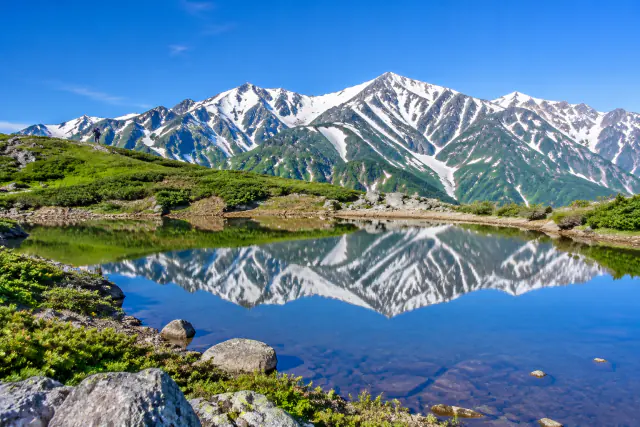 Nagano Nature · 1–3 days Hakuba The main alpine skiing venue for the 1998 Nagano Winter Olympics, with around a dozen resorts nearby. It has excellent snow, many international visitors, and relatively good access to English. In summer, take the gondola up Happo Ridge and hike to Happo Pond for reflections of the Hakuba Three Peaks. The round trip takes about 3 hours. Buses and the JR Oito Line run from Nagano Station and Matsumoto. Snow countryMountains
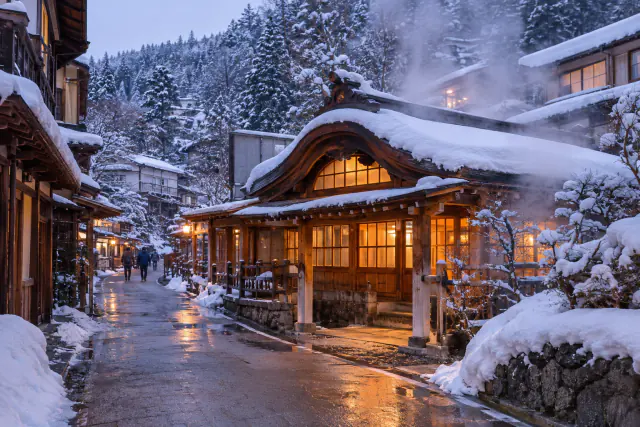 Nagano Hot springs · 1–2 days Nozawa Onsen The ski resort and hot spring village are connected. The village has more than a dozen free public baths, or sotoyu, maintained and cleaned by local residents. Enjoying them one by one in a yukata is part of the fun. Snow is deep in winter, and the Dosojin Fire Festival, one of Japan’s three major fire festivals, takes place on January 15. From Iiyama Station on the Hokuriku Shinkansen, the bus ride takes about 25 minutes. Hot springsSnow country
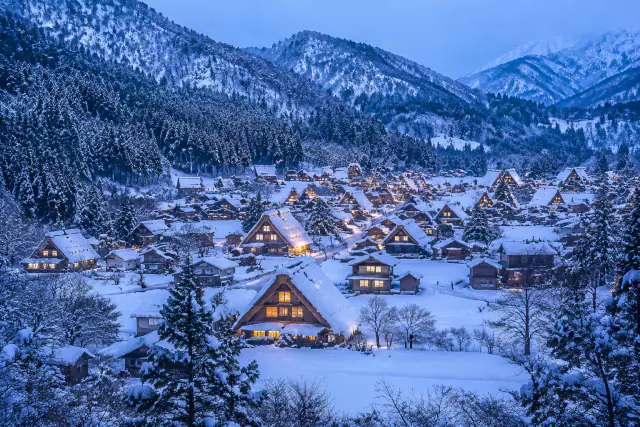 Gifu Old town · 2–3 hours Shirakawa-go (Ogimachi) This gassho-style village became a World Heritage Site in 1995. More than 100 old houses with steep thatched roofs are scattered among the fields, and people still live in many of them. You can enter some houses, such as Wada House, to see their three-story attics. The Ogimachi Castle Ruins viewpoint north of the village looks over the entire area and offers a classic postcard view. The bus ride from Takayama takes about 50 minutes. Historic sitesSnow country
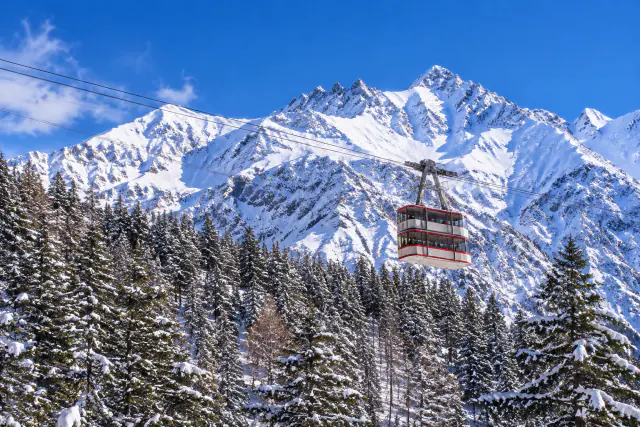 Gifu Viewpoint · Half a day Shinhotaka Ropeway Two ropeway sections carry passengers from the hot-spring town to Nishihotakaguchi at about 2,156 meters. The second section is Japan's only double-decker ropeway. The summit observation deck faces Mount Yari and the Hotaka mountain range in the Northern Alps. In winter, the mountains are covered in snow; in fall, the slopes turn red. The Nohi bus ride from Takayama takes about 1 hour 30 minutes. Snow countryAutumn leavesMountains
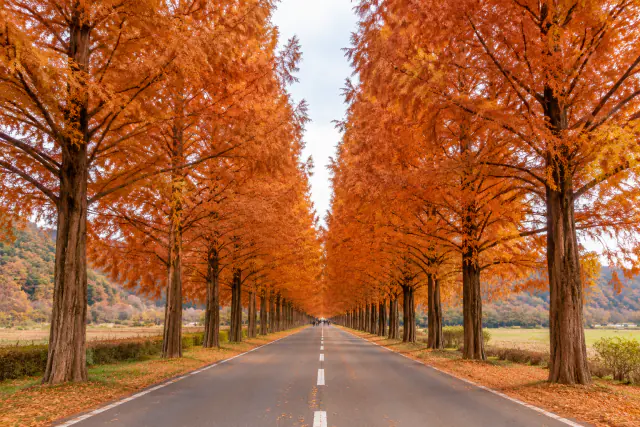 Shiga Nature · 1–2 hours Makino Metasequoia Avenue About 500 metasequoia trees line this roughly 2.4-kilometer road. Their colors change with the seasons: fresh green in spring, deep green in summer, orange-brown in fall, and a white tunnel after winter snow. About 10 minutes by bus or taxi from JR Makino Station, it suits anyone willing to go a little farther for photos. Autumn leavesSnow countryMountains
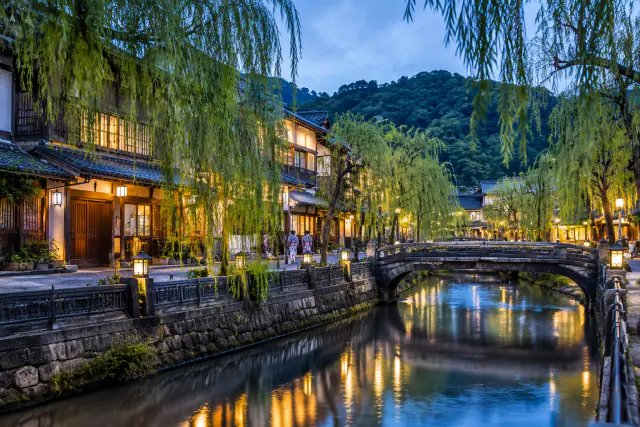 Hyogo Hot springs · 1–2 days Kinosaki Onsen Willows, a stream, and stone bridges surround seven public bathhouses. Guests stroll between them in yukata and wooden geta sandals, making this one of Japan's most atmospheric hot spring towns. Limited express trains take about 2.5 hours from Kyoto or Osaka. November to March is Matsuba crab season, when ryokan crab dinners are a major draw. Hot springsSnow country
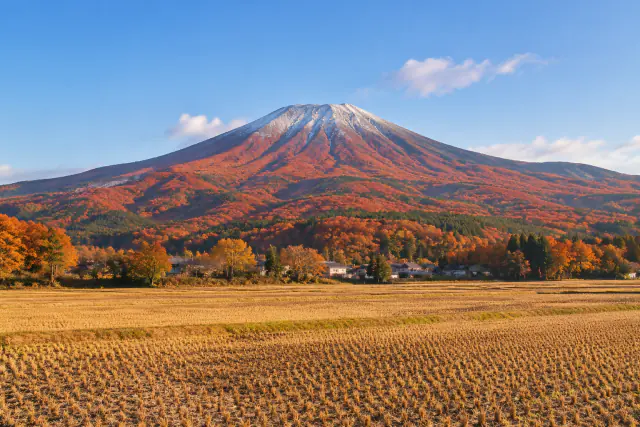 Tottori Nature · Half a day Mount Daisen and Daisenji Temple The highest mountain in the Chugoku region, Mount Daisen looks like Mount Fuji when viewed from the west, earning it the nickname "Mount Fuji of Hoki." If you don't want to climb the mountain, walk from Daisenji Temple along the long stone-paved approach to the Okunomiya Shrine of Ogamiyama. The forest is quiet, and the fall colors are beautiful. In winter, the area becomes a ski resort. About 50 minutes by bus from Yonago Station. MountainsAutumn leavesSnow country
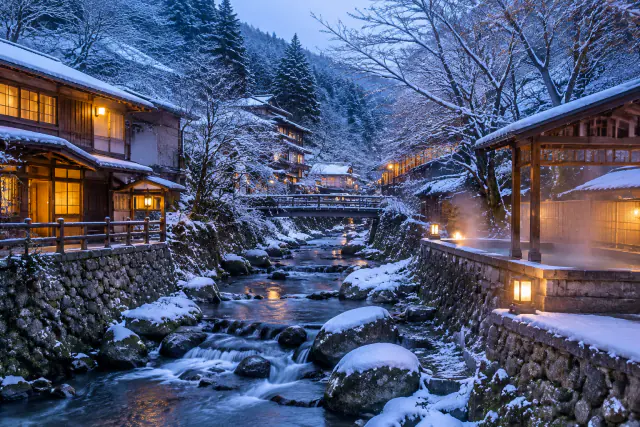 Kumamoto Hot springs · half a day–1 night Kurokawa Onsen A small hot spring town hidden in a mountain valley. About 30 ryokan line the stream, all built with wood and stone, with no high-rises or neon signs. Buy a Nyuto Tegata pass to choose three ryokan for open-air baths. After soaking in the evening, walking along the stream in a yukata is especially relaxing. Hot springsAutumn leavesSnow country