Cloudborne Travel
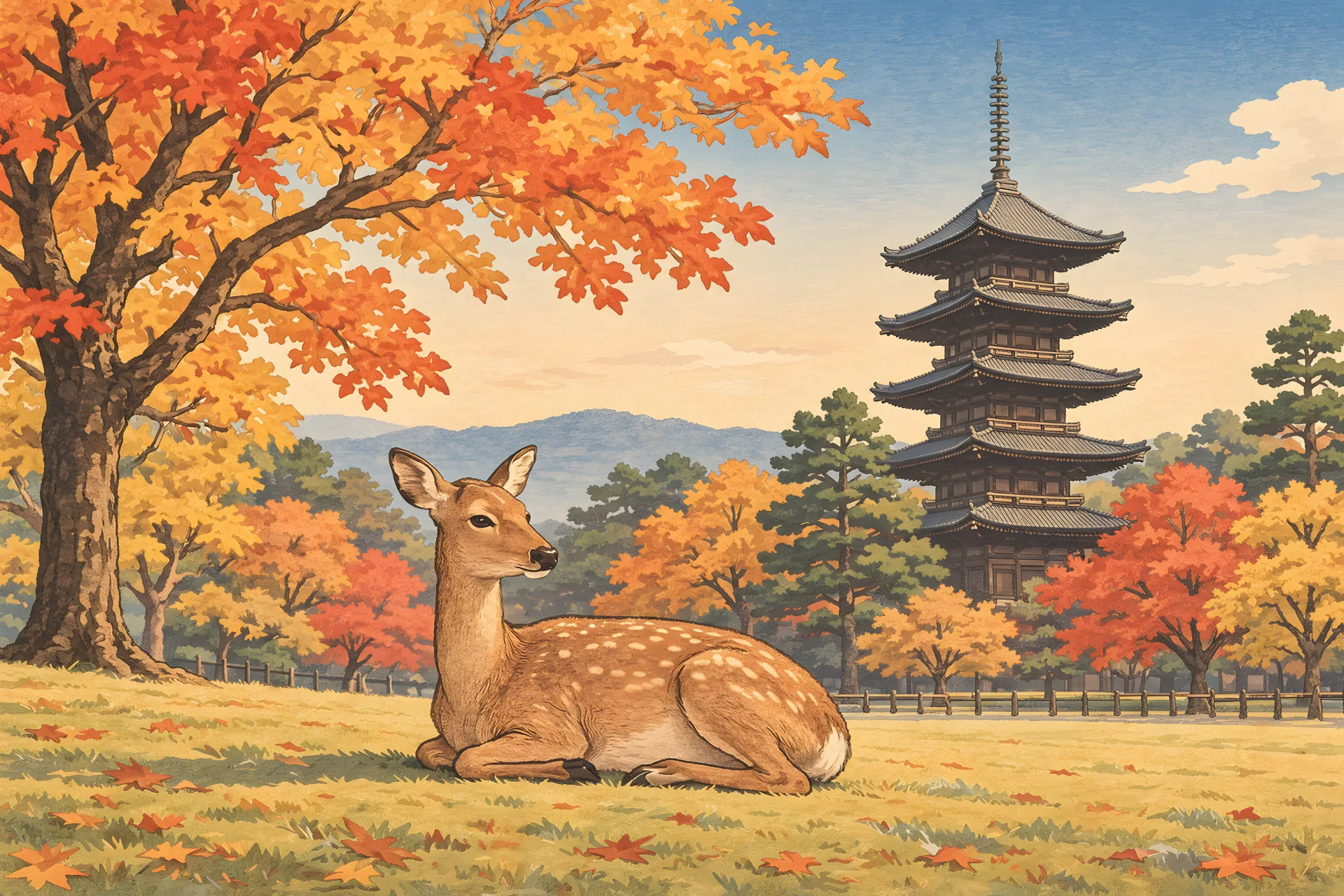
Nara became a capital before Kyoto. Todai-ji's Great Buddha, Kasuga Taisha, and Horyu-ji are all 1,200–1,300-year-old treasures. Sights in the city center cluster around Nara Park, and you can connect them on foot over mostly flat ground. More than 1,000 deer roam freely through the park, making this one of the easiest days out in Japan for families and first-time visitors.
Most people make a day trip from Kyoto or Osaka: visit Todai-ji and Kasuga Taisha in the morning, then explore Naramachi in the afternoon. For a quieter day, head south to Asuka and cycle past ancient burial mounds, or visit Mt. Yoshino in spring for hills covered in cherry blossoms. Nara gets quiet early at night, so staying overnight lets you have the park mostly to yourself in the morning.
Cherry blossoms bloom at Mt. Yoshino and Nara Park in early April, followed by fall foliage in November. Fawns are born in May–June, and the mothers can be irritable.
Monthly weather
Based on NaraBest time to visit Monthly precipitation (mm) Open-Meteo (ERA5), 1996–2025 average
| Month | Average high (°C) | Average low (°C) | Monthly precipitation (mm) | Days with 1 mm or more of precipitation |
|---|---|---|---|---|
| Jan | 9.3 | 1.5 | 57 | 7 |
| Feb | 10.3 | 1.8 | 63 | 8 |
| Mar(Good time to visit) | 14.3 | 4.5 | 107 | 11 |
| Apr(Good time to visit) | 19.7 | 9.5 | 115 | 10 |
| May(Good time to visit) | 24.5 | 14.9 | 136 | 10 |
| Jun | 27.8 | 19.7 | 179 | 12 |
| Jul | 31.6 | 24.2 | 168 | 14 |
| Aug | 33.7 | 25.3 | 104 | 10 |
| Sep(Good time to visit) | 29.7 | 21.5 | 134 | 11 |
| Oct(Good time to visit) | 23.4 | 14.7 | 143 | 10 |
| Nov(Good time to visit) | 17.5 | 8.6 | 75 | 7 |
| Dec | 11.8 | 3.6 | 55 | 6 |
Sights
-
 1
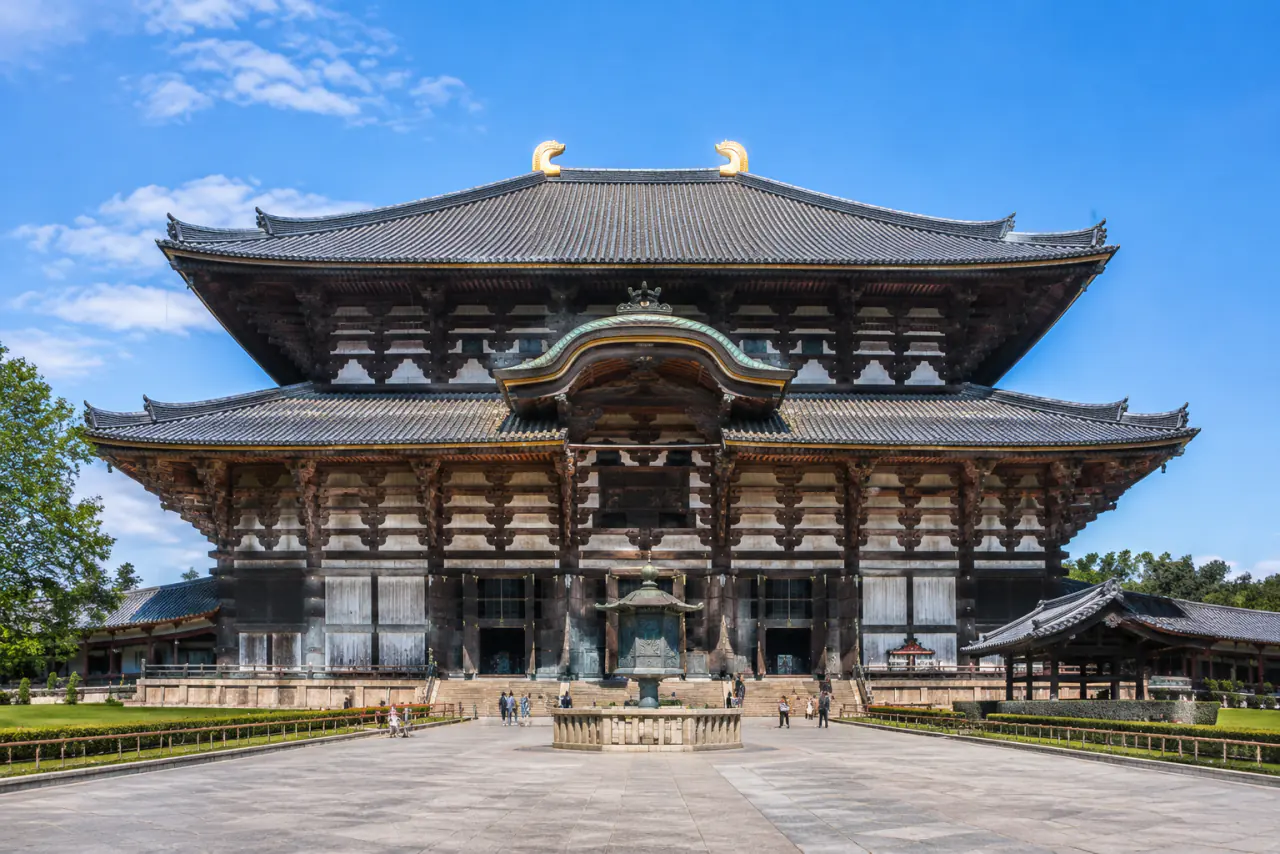
Todai-ji Great Buddha Hall
東大寺 · Todai-ji
One of the world's largest wooden buildings, it houses a bronze Great Buddha about 15 meters tall. You don't realize how enormous the hall is until you walk through the entrance. A hole at the base of one pillar is said to bring good luck to anyone who crawls through it, and most of those in line are children. Don't miss the two fierce guardian statues at the Great South Gate.
Arrive when it opens at 8. School groups usually don't arrive in large numbers until after 10.
-
 2
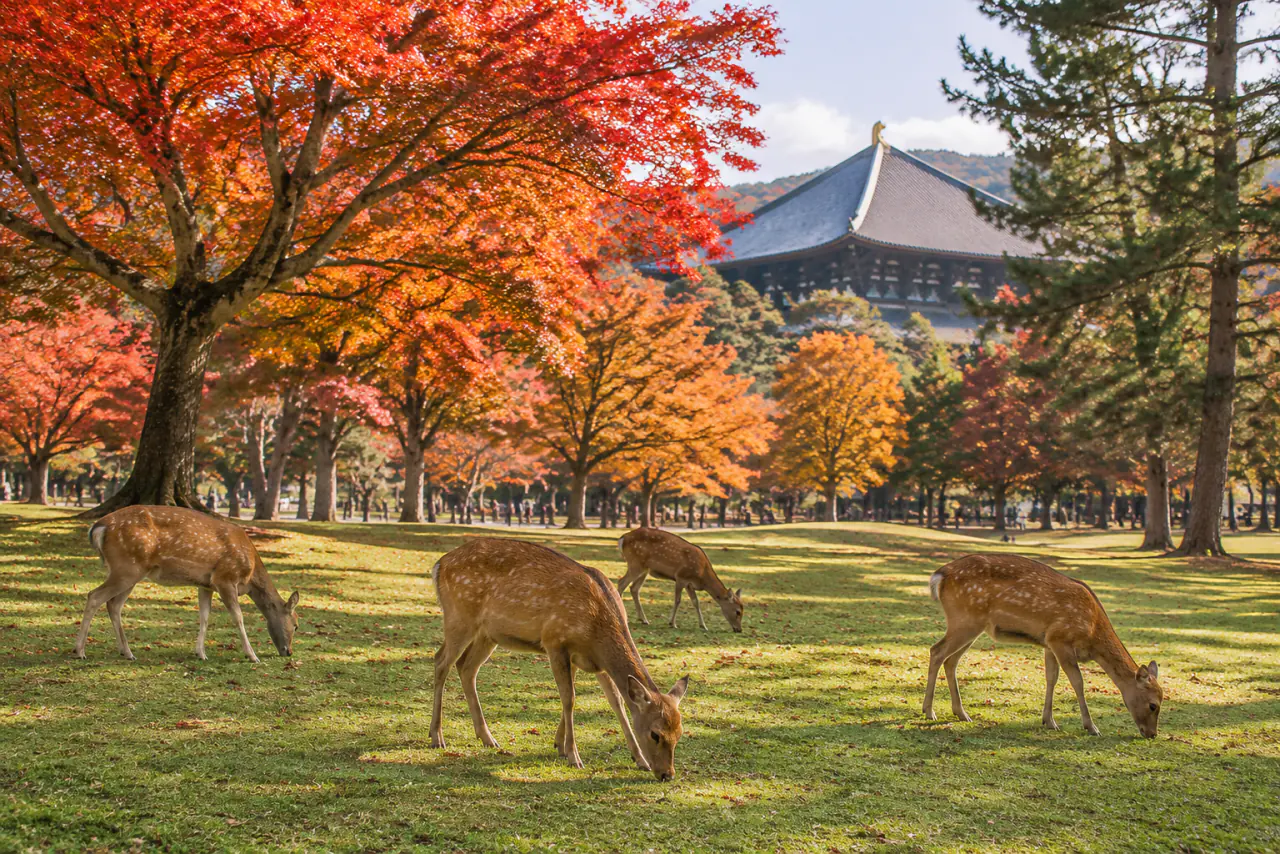
Nara Park and the deer
奈良公園 · Nara Park
Todai-ji, Kasuga Taisha, and Kofuku-ji all stand in this large park, where more than 1,000 deer roam across the grass. Vendors sell shika senbei, crackers made for feeding the deer, which bow to ask for food. The park is flat and open, with cherry blossoms in spring and fall foliage in autumn. Take your time and spend a full day walking around.
The deer are wild animals and may bite or head-butt. After you finish the crackers, hold out both hands to show that you have none left.
-
 3
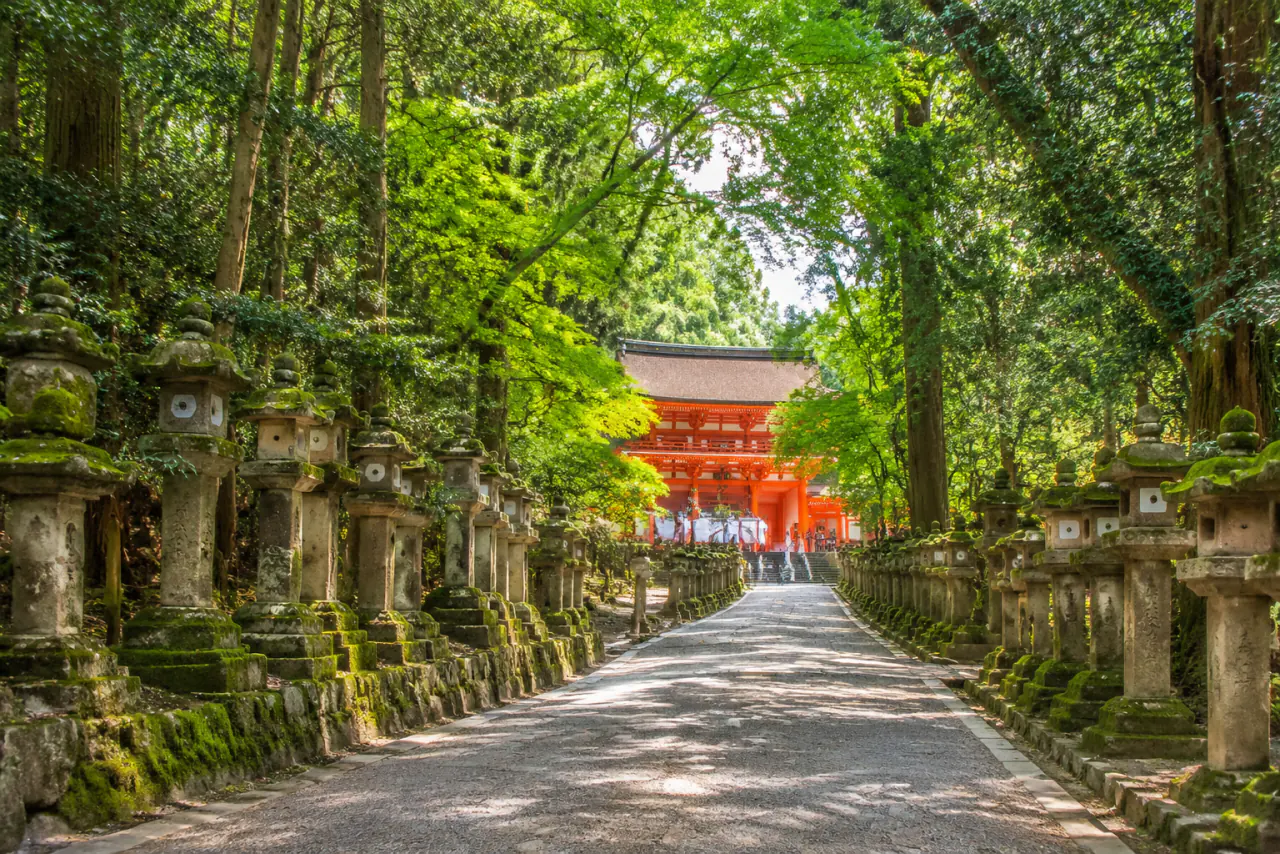
Kasuga Taisha
春日大社
The vermilion shrine buildings sit beside an ancient forest. About 2,000 moss-covered stone lanterns line the approach, and more than 1,000 bronze lanterns hang inside the shrine. The atmosphere is quieter than at Todai-ji. The wisteria along the corridors is famous in early summer, and during the Mantoro festivals in early February and mid-August, all the lanterns are lit.
The approach outside is free, but the inner shrine corridors require a separate admission fee.
-
 4
Naramachi
ならまち
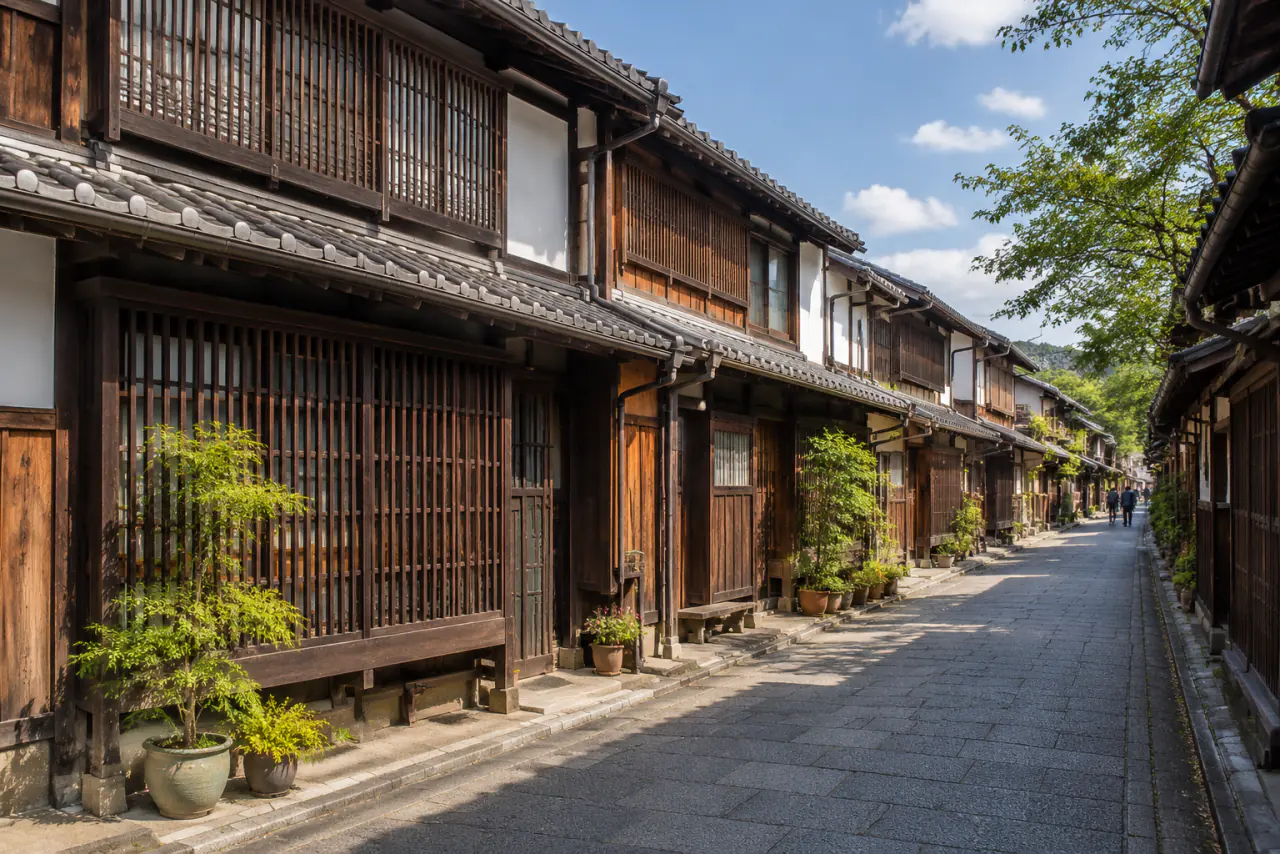
This old neighborhood south of the park preserves the layout of an Edo-period merchant district. Narrow lanes are lined with traditional wooden houses with lattice windows, along with cafes, general stores, and sake shops. The World Heritage site Gango-ji is here too. Walk over after seeing the Great Buddha for a snack and a glass of Nara sake.
Many shops close around 5 in the afternoon, so don't arrive too late.
-
 5
Horyu-ji
法隆寺
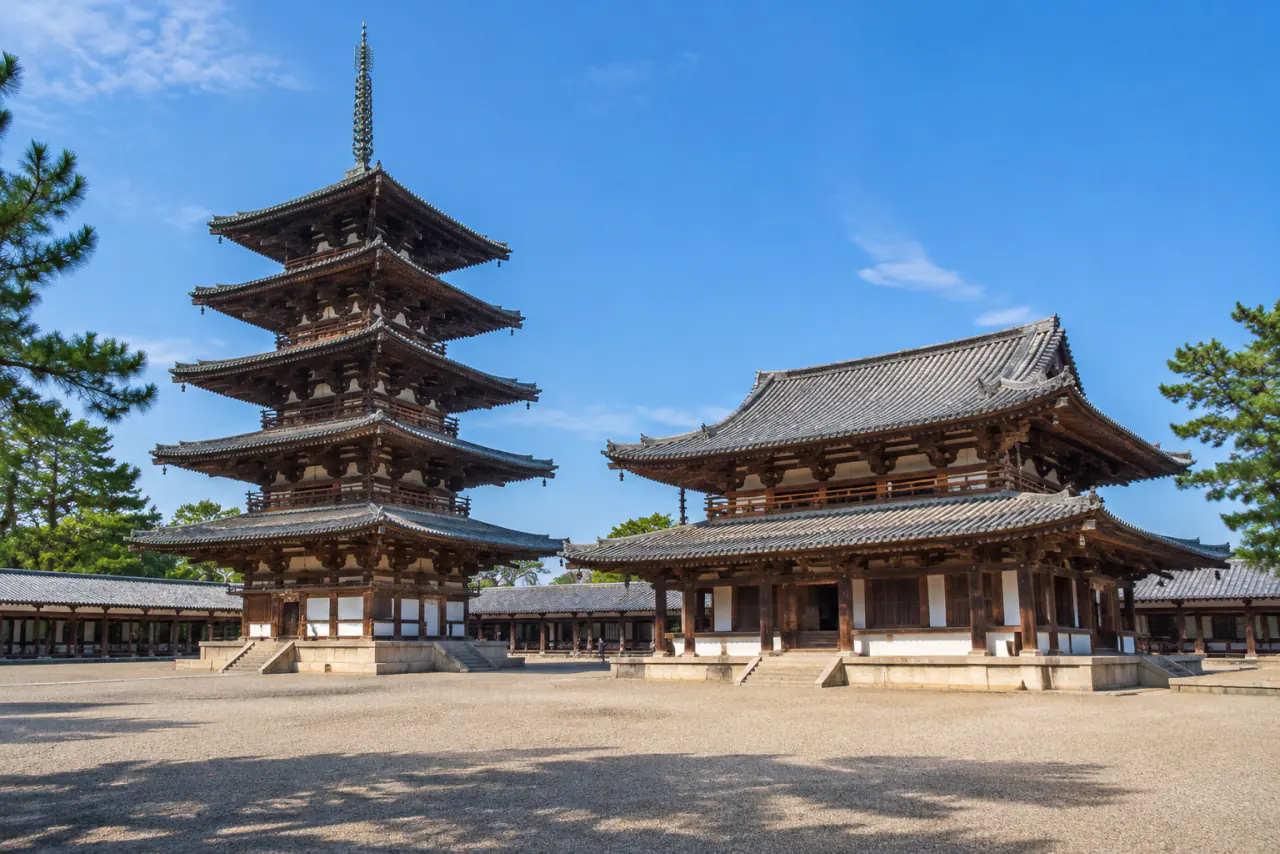
The world's oldest surviving group of wooden buildings includes a 1,300-year-old five-story pagoda and main hall. It is Japan's first World Heritage site. Much quieter than Todai-ji, it is ideal for anyone interested in architecture and Buddhist statues. From Nara Station, take JR for about 15 minutes to Horyu-ji Station, then walk about 20 minutes or take a bus.
It is separate from Nara Park, so allow half a day. If you're coming from Osaka, you can visit here first.
-
 6
Mt. Yoshino
吉野山
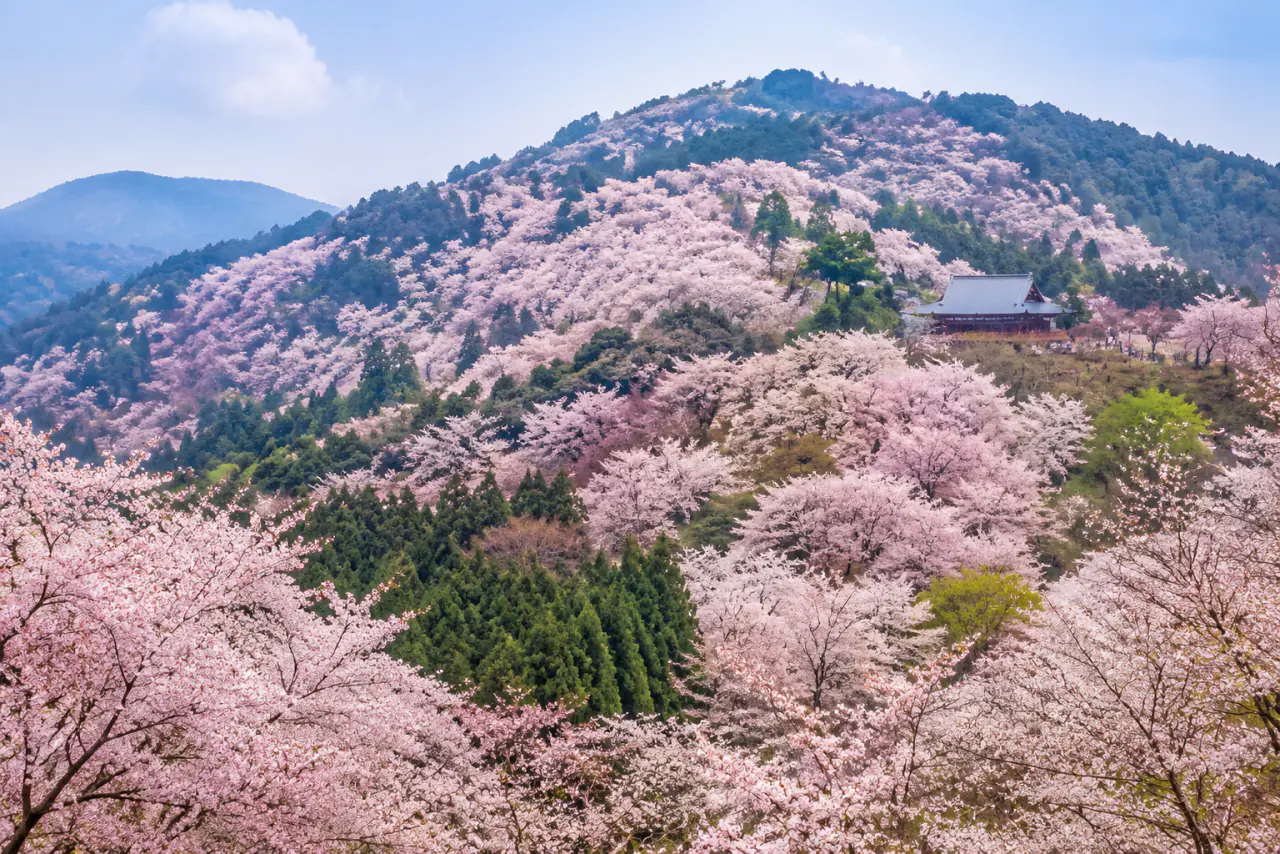
Japan's most famous cherry blossom mountain has about 30,000 mountain cherry trees that bloom in stages from the foot upward: Shimo-senbon, Naka-senbon, Kami-senbon, and Oku-senbon. The World Heritage site Kinpusen-ji stands midway up the mountain. From Osaka-Abenobashi, take the Kintetsu line for about 1 hour 15 minutes to Yoshino Station, then take the ropeway or a bus up the mountain.
The blossoms usually peak in early to mid-April, and weekends are crowded. Outside the peak season, it is quieter, but shops also close early.
-
 7
Asuka
明日香村
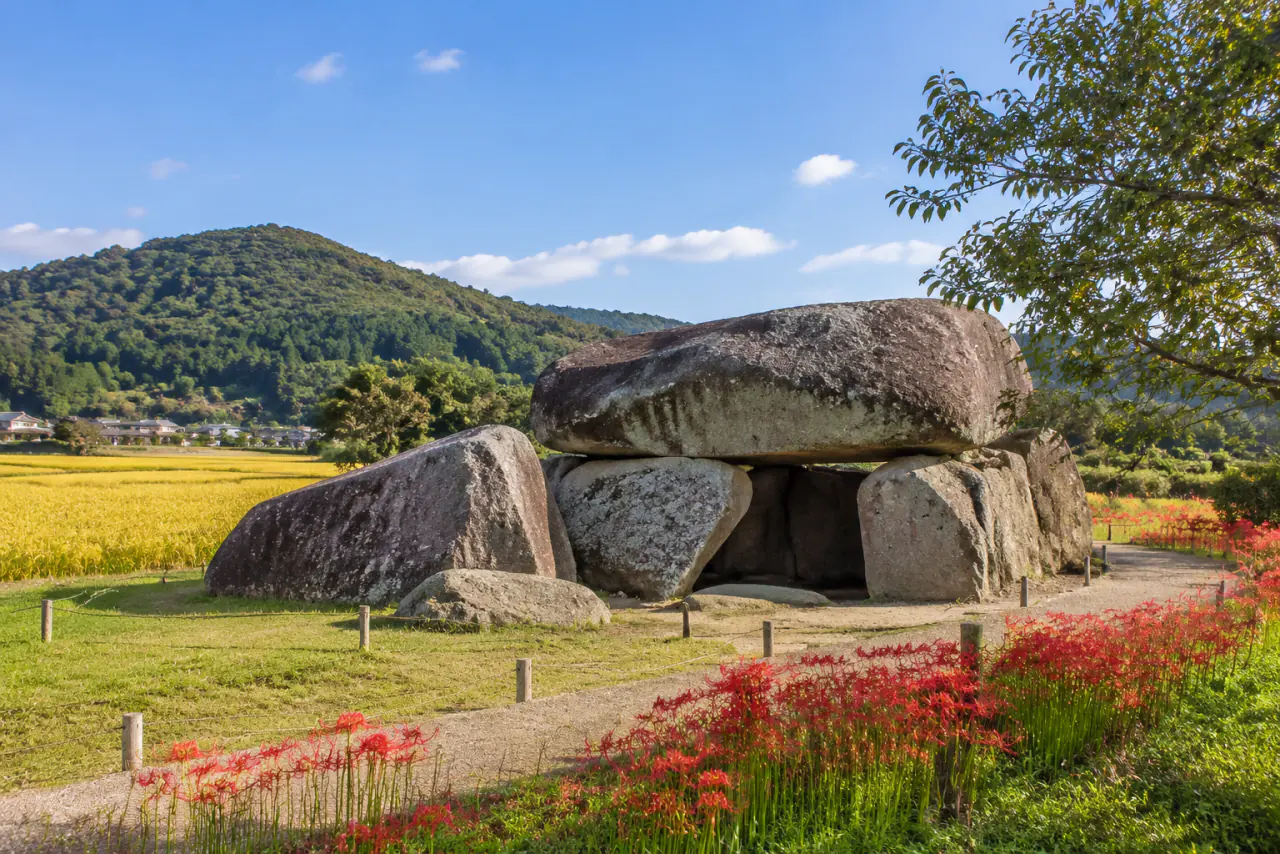
This area was home to Japan's earliest capital and is now a rural landscape dotted with historic sites: the Ishibutai Tomb, built from huge stones; Asuka-dera's oldest surviving Buddhist statue in Japan; and terraced rice fields. Rent a bicycle at Asuka Station and spend half a day to a full day exploring at an easy pace. In autumn, the rice fields turn golden and red spider lilies bloom along the roads.
There are some hills, so an electric-assist bike will make the ride much easier.
What to eat
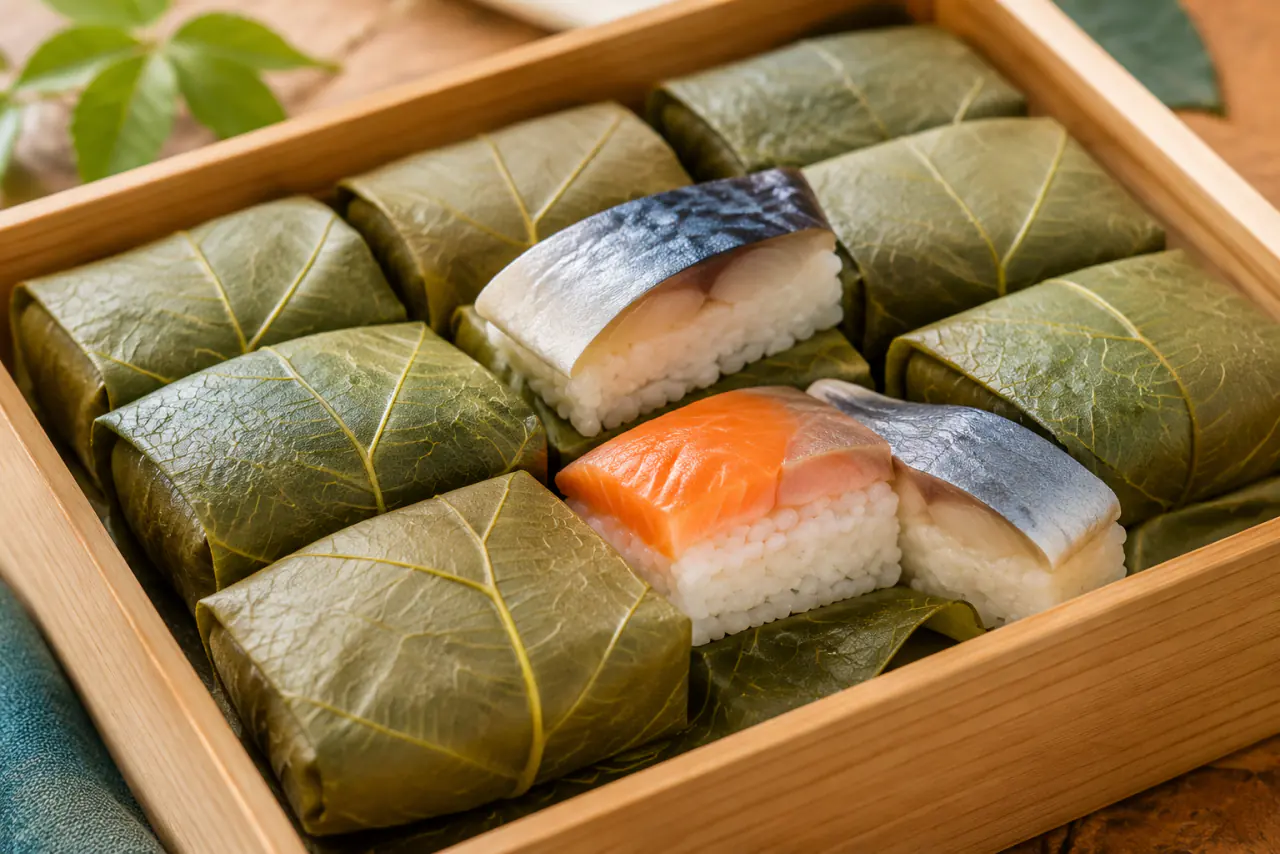
Kakinoha-zushi
Salt-cured mackerel or salmon is pressed onto vinegared rice and wrapped in a persimmon leaf. You don't eat the leaf, but it adds a faint fragrance and softens the fish's salty flavor. It is a good choice for lunch or a meal on the train.
Long-established shops and station bento stores near Kintetsu-Nara Station and Higashimuki Shopping Street. · About ¥1,000–2,000 per box
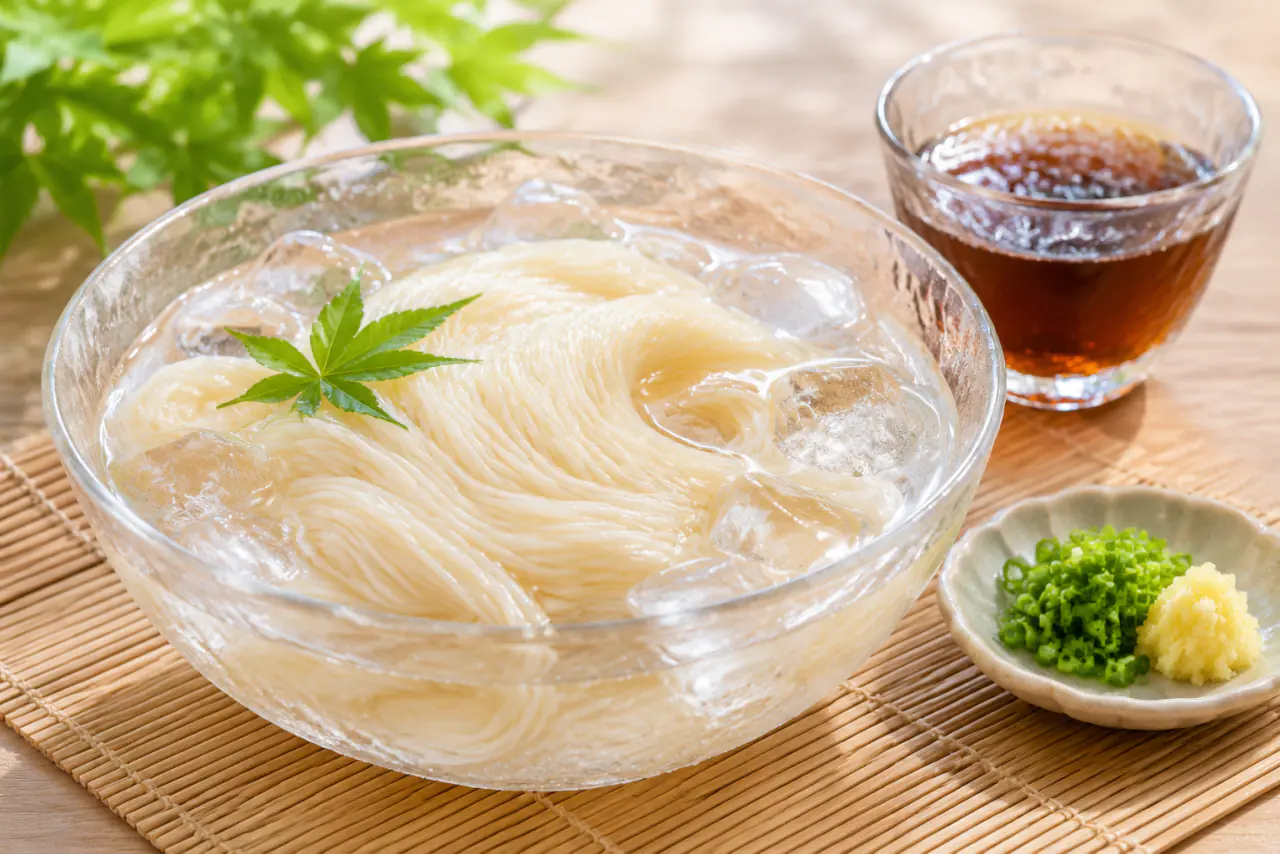
Miwa somen
The Miwa area of Nara is the birthplace of hand-pulled somen noodles. They are extremely thin but pleasantly chewy. Try cold somen in summer or hot nyumen in winter for a light, refreshing meal.
Noodle shops around Naramachi and Nara Park; there are more long-established shops near Miwa Station. · About ¥800–1,500 per person
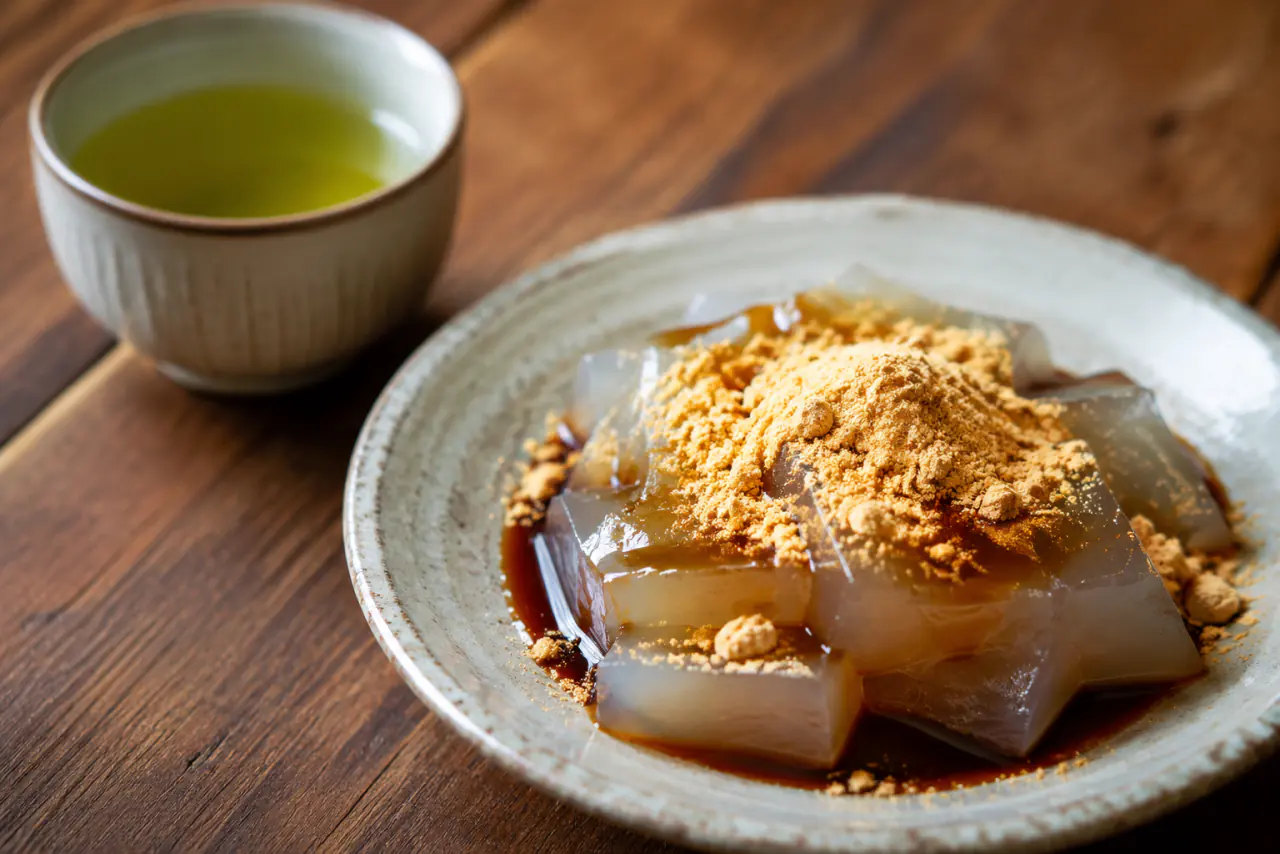
Kuzumochi and kuzukiri
Yoshino kuzu starch is made into translucent sweets with a cool, slippery texture. They are served with brown sugar syrup or soybean flour. A serving is especially refreshing after walking in the summer heat.
Dessert shops and teahouses in Naramachi and on Mt. Yoshino.
Getting there · Where to stay
Take the Kintetsu line from Osaka-Namba to Kintetsu-Nara Station. The rapid express takes about 40 minutes, and the station is the closest to Nara Park.
The Kintetsu line from Kyoto Station to Kintetsu-Nara takes about 35 minutes by limited express or 45 minutes by express. The JR Nara Line takes about 45–70 minutes.
A limousine bus takes about 1.5 hours to Nara. You can also take JR and transfer at Tennoji.
A day trip from Kyoto or Osaka is enough for most people. If you stay overnight, choose a place near Kintetsu-Nara Station. The park and Naramachi are both within easy walking distance, and the area is quieter at night and in the morning.
Know this before you go
- The deer in the park may snatch paper bags and maps. Don't wave snacks or paper items around in your hands.
- From Osaka, take the Kintetsu line to Kintetsu-Nara Station. It is about 15 minutes closer to the sights on foot than JR Nara Station.
- Many temples and shrines in Nara close around 5. There is little to do at night, so check whether a lantern festival is taking place if you want to see the city after dark.
- The path between Todai-ji and Kasuga Taisha has some gentle slopes. Flat shoes are fine, and bring a bottle of water.