 Cloudborne Travel
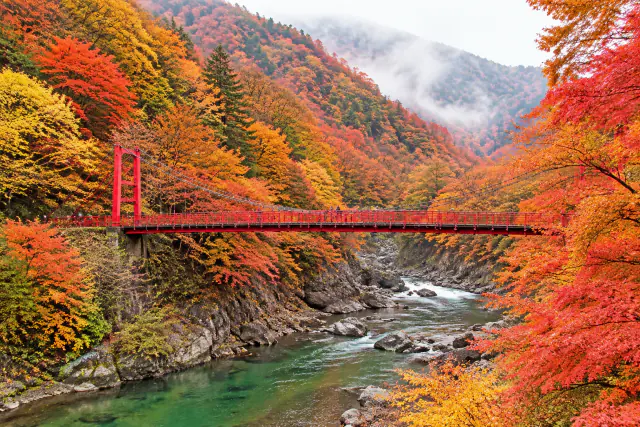 Hokkaido Hot springs · Half a day to 1 night Jozankei Onsen A hot spring valley within Sapporo. It's about 1 hour by road from the city center, making it a good choice if you want to stay at a hot spring ryokan without going far. The hills turn red in early to mid-October, and you can walk around the Futami Suspension Bridge area. In winter, soaking in an outdoor bath surrounded by snow is especially relaxing. Hot springsAutumn leaves
Autumn leaves
Autumn colors begin at Daisetsuzan in Hokkaido in late September, reach Tohoku and Nikko in mid-October, peak in Kyoto and Kansai in mid-to-late November, and arrive on the plains of Kyushu and Kanto in early December.
mid-October – early December85 sights8 regions
Hokkaido Hot springs · Half a day to 1 night Jozankei Onsen A hot spring valley within Sapporo. It's about 1 hour by road from the city center, making it a good choice if you want to stay at a hot spring ryokan without going far. The hills turn red in early to mid-October, and you can walk around the Futami Suspension Bridge area. In winter, soaking in an outdoor bath surrounded by snow is especially relaxing. Hot springsAutumn leaves 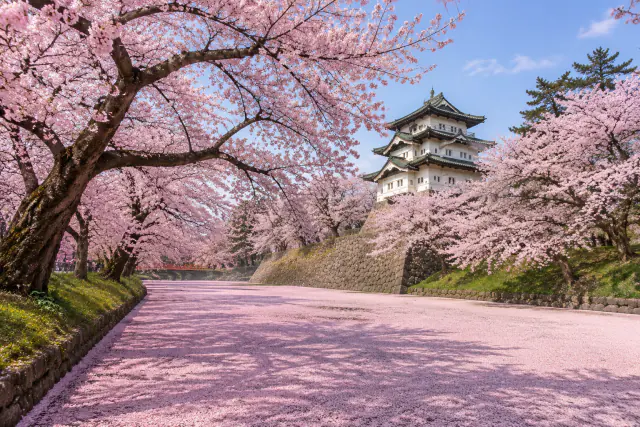 Aomori Castle · 2–3 hours Hirosaki Castle and Hirosaki Park One of Japan's twelve remaining original castle keeps. The park has about 2,600 cherry trees, which bloom in late April. The most photogenic sight is the moat covered with fallen petals, known as a 'flower raft.' The fall colors and February Snow Lantern Festival are also worth seeing. From Aomori, Hirosaki Station is about 40 minutes by JR Ou Main Line. Cherry blossomsHistoric sitesAutumn leaves
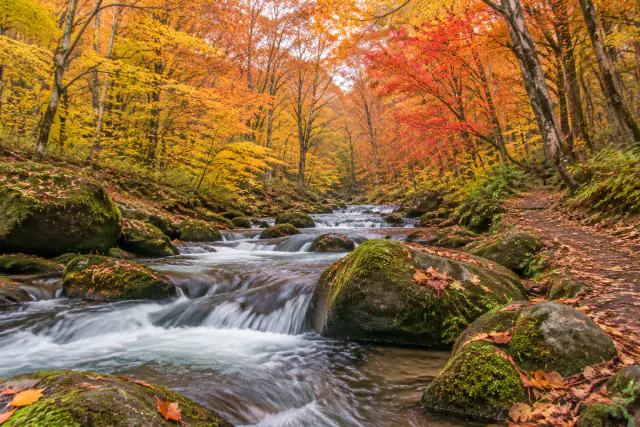 Aomori Hiking · 2–5 hours Oirase Stream This stream runs about 14 kilometers downstream from Nenokuchi on Lake Towada. Waterfalls appear one after another along the mostly gentle trail. Walking the entire route takes most of a day. Most visitors choose the section from Ishigedo to Nenokuchi, walking partway and taking the bus for the rest. Fresh greenery in May–June and fall colors in mid- to late October are the best times to visit. Autumn leavesMountains
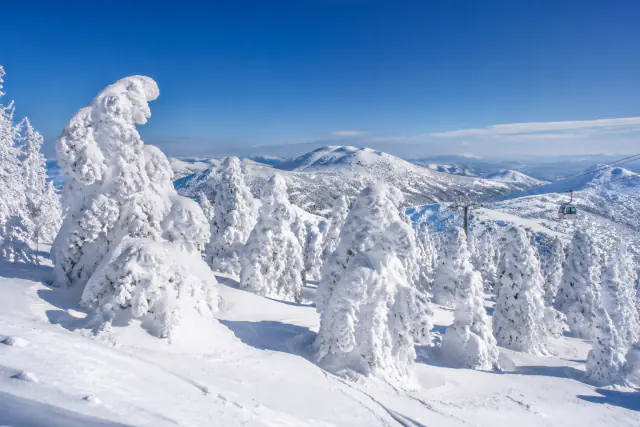 Aomori Viewpoint · 1.5–2 hours Hakkoda Ropeway The ride to Sancho Park Station takes about 10 minutes. On clear days, you can see Mutsu Bay. In January–February, wind and snow turn the fir trees at the summit into 'snow monsters,' making this one of Tohoku's best places to see rime-covered trees. In fall, the mountain slopes change color earlier than the lowlands, with peak color around early October. Snow countryAutumn leaves
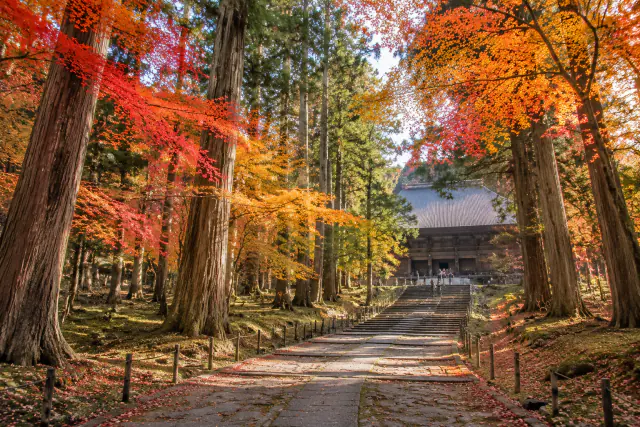 Iwate Temple · 2–3 hours Chuson-ji Konjikido Built by the Oshu Fujiwara clan more than 900 years ago, this Buddhist hall was covered inside and out with gold leaf. It is now viewed through glass inside a protective concrete shelter. From the entrance, a steep cedar-lined path leads uphill along Tsukimizaka. Part of the Hiraizumi World Heritage site, it is busiest during fall foliage season. Historic sitesAutumn leaves
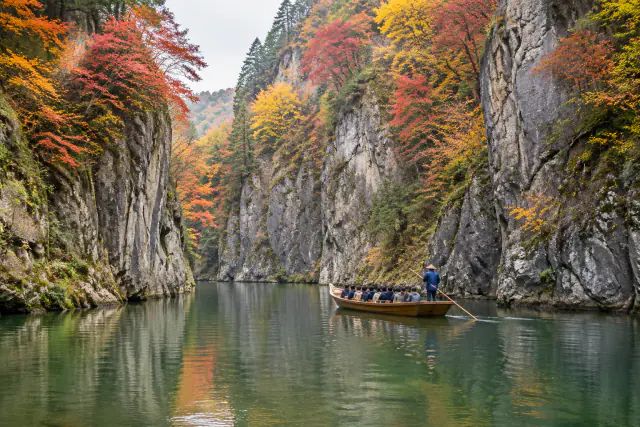 Iwate Nature · about 2 hours Geibikei Gorge Boatmen pole flat-bottomed wooden boats through a limestone gorge, singing local folk songs as they go. The round trip takes about 1.5 hours, with time to walk ashore midway. You can try tossing a small lucky stone into a cave on the opposite bank. In winter, boats have kotatsu tables, so you can watch the snowy scenery from under a blanket. MountainsAutumn leavesSnow country
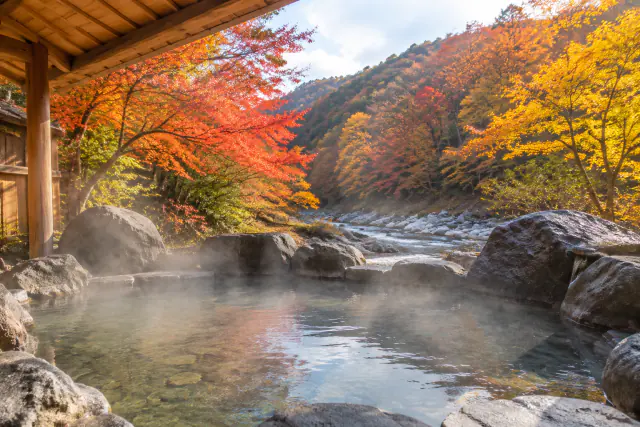 Miyagi Hot springs · Half a day to 1 night Akiu Onsen This historic hot-spring town in Sendai is about 50 minutes by bus from Sendai Station. Many inns are mid- to large-size hotels with open-air baths, and some offer shuttles from Sendai Station. In fall, continue farther into the area to see the more than 50-meter-high Akiu Great Falls. Hot springsAutumn leaves
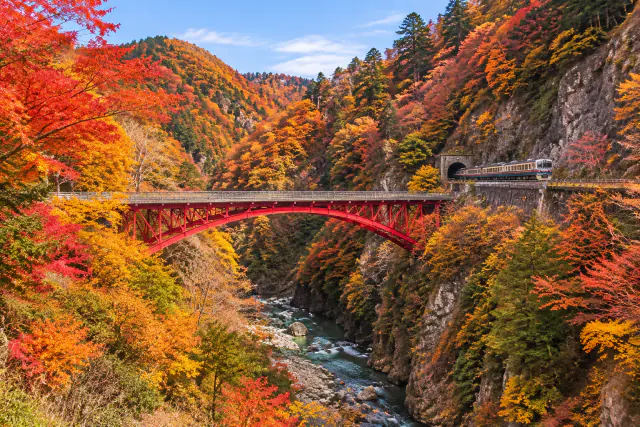 Miyagi Nature · 1–2 hours Naruko Gorge This V-shaped gorge is about 100 meters deep. From late October to early November, the hills turn red and gold. A train on the JR Rikuu East Line occasionally crosses the railway bridge above the gorge, creating one of Tohoku's most classic fall scenes. Afterward, soak in a bath at nearby Naruko Onsen. Autumn leavesMountains
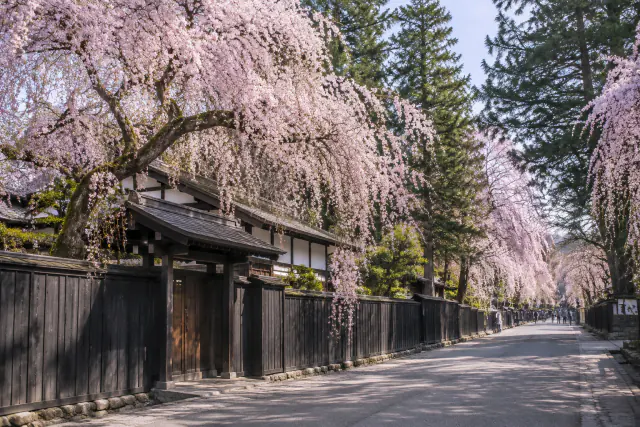 Akita Old town · 2–3 hours Kakunodate Samurai District Samurai residences with black wooden walls line this broad historic street. You can visit homes such as the Ishiguro and Aoyagi residences. In late April, weeping cherry trees spill over the walls, while a cherry-blossom tunnel stretches for about 2 km along the Hinokinai River nearby. The fall colors and winter snow scenes are also beautiful. Cherry blossomsHistoric sitesAutumn leaves
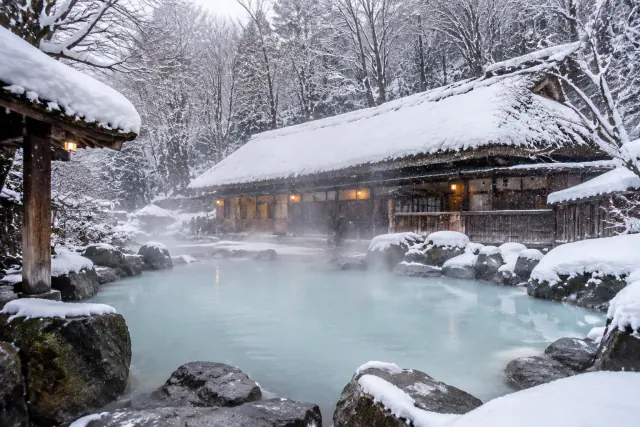 Akita Hot springs · Half a day to 1 night Nyuto Onsen Seven ryokan, each with its own spring source, are scattered through a beech forest. The best known is Tsurunoyu, with thatched roofs and milky outdoor baths surrounded by snow in winter. You can bathe without staying overnight, and a pass lets you visit several baths. The bus from Tazawako Station takes about 50 minutes. Hot springsSnow countryAutumn leaves
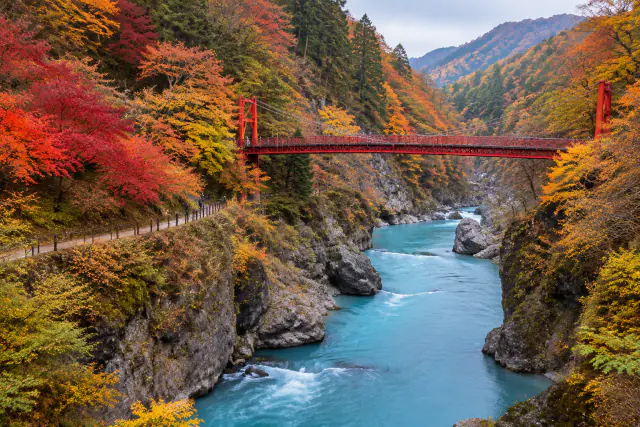 Akita Hiking · About 1.5 hours Dakigaeri Gorge This gorge lies between Kakunodate and Lake Tazawa. The river is a milky blue, and the red suspension bridge framed by fall colors is one of the best photo scenes in autumn. The walk to Mikaeri Falls and back takes about 1–1.5 hours. The trail is level and follows the river. The best time to visit is from late October to early November. Autumn leavesMountains
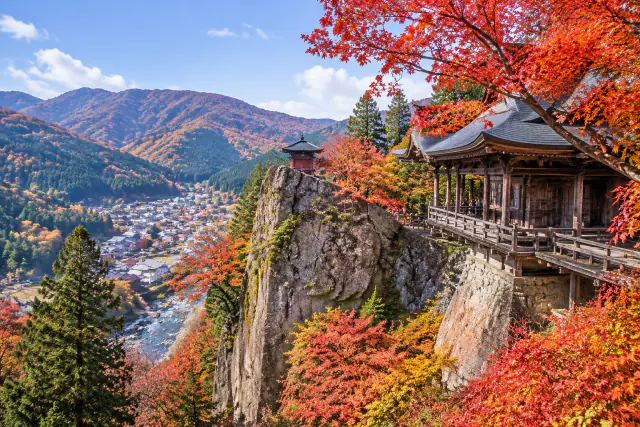 Yamagata Temple · 2–3 hours Yamadera (Risshaku-ji) This ancient temple is built into a rocky mountain. From the temple gate to Okunoin, there are about 1,015 stone steps, taking about 1.5 hours round trip. Godaido offers sweeping valley views and the best photo spot. Basho wrote his famous cicada haiku here. The temple is beautiful among summer greenery and fall colors. Historic sitesAutumn leaves
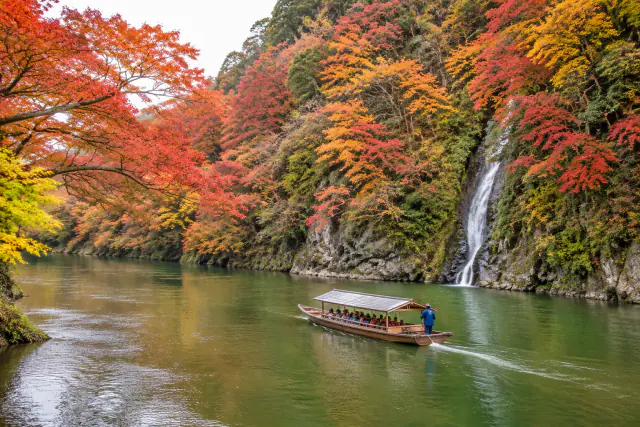 Yamagata Nature · About 2 hours Mogami River Boat Ride Ride a flat-bottomed wooden boat downstream through the Mogami Gorge for about 1 hour. Boatmen paddle while singing folk songs and telling stories. The gorge has steep walls and many waterfalls. Fall colors are beautiful, and in winter you can stay warm under a kotatsu. A bus from the endpoint returns to the departure point. Autumn leavesMountainsSnow country
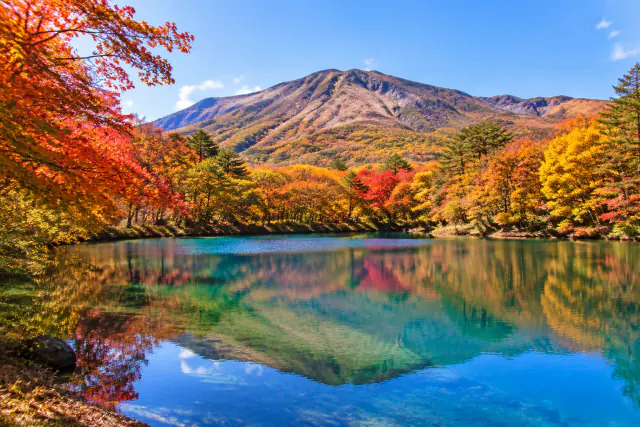 Fukushima Hiking · 1.5–2 hours Goshikinuma Ponds This chain of small lakes formed after Mount Bandai erupted in 1888. Each pond has a different color, from emerald green to cobalt blue, depending on volcanic minerals in the water, the weather, and the light. The lakeside trail is about 3.6 kilometers and takes a little over an hour on mostly gentle terrain. Late October, when fall foliage contrasts with the blue water, is the best time to visit. MountainsAutumn leaves
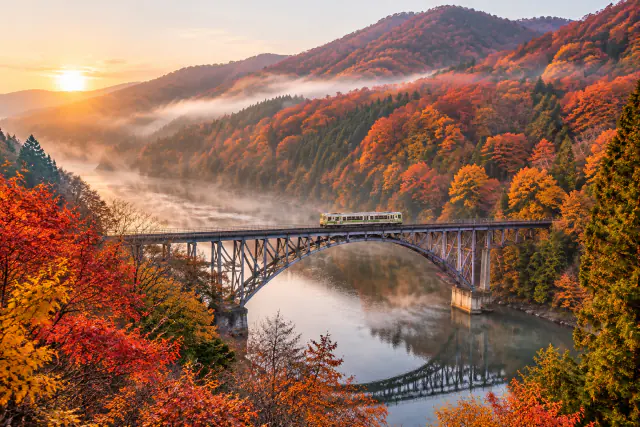 Fukushima Viewpoint · About 1 hour Tadami River First Bridge This is the classic view of a Tadami Line train crossing a railway bridge over the valley. It is especially atmospheric when mist rises from the river in the morning. Fresh green leaves in spring, fall foliage, and winter snow each create a different scene. The viewpoint is on the opposite hillside and takes just a few minutes to reach. You can also ride the Tadami Line across the bridge. Autumn leavesSnow countryMountains
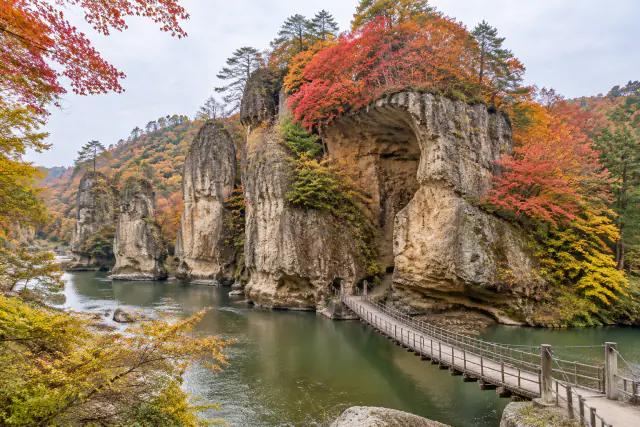 Fukushima Nature · About 30 minutes To-no-Hetsuri River water and wind have carved the cliffs into a row of tower-like rock formations. Cross the suspension bridge to walk through hollows beneath the cliffs. The site is small; 30 minutes is enough, making it easy to combine with Ouchi-juku on the same day. The rocks are most beautiful during the fall foliage season. MountainsAutumn leaves
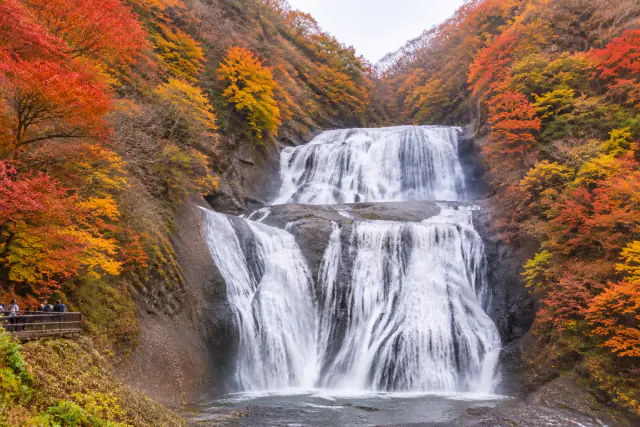 Ibaraki Nature · 1–2 hours Fukuroda Falls This waterfall drops about 120 meters over 4 tiers. Fall foliage covers the cliffs on either side, and in deep winter the falls can partially freeze. Walk through a viewing tunnel to a platform facing the falls, then take an elevator to a higher platform. Take the JR Suigun Line to Fukuroda Station, followed by a bus ride of about 10 minutes and a 10-minute walk. Autumn leavesSnow countryMountains
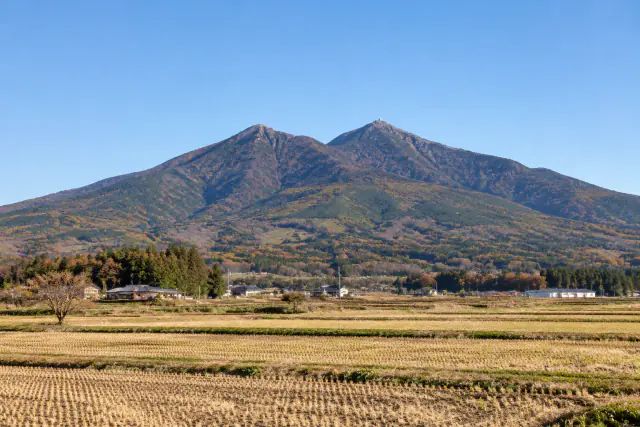 Ibaraki Hiking · Half a day Mount Tsukuba This twin-peaked mountain rises sharply from the Kanto Plain. The walk between its peaks, Nantai and Nyotai, takes a little over 10 minutes. Tsukubasan Shrine sits partway up the mountain. Reach the peaks by cable car or ropeway, or hike from beside the shrine in about 1.5 hours. On clear days, views stretch across the Kanto Plain. In the crisp winter air, you can see Mount Fuji to the west. MountainsAutumn leaves
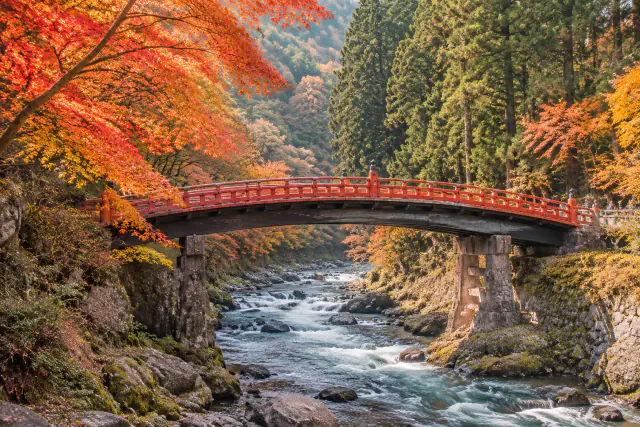 Tochigi Old town · 15–30 minutes Shinkyō Bridge This vermilion arch bridge crosses the Daiya River. It is the first major sight on the way to Tōshō-gū and Nikko's signature gateway. The bridge belongs to Futarasan-jinja. You can pay to walk across it, but most visitors are happy taking photos from the road bridge beside it. In fall, the gorge and colorful trees below set off the vermilion bridge—a classic Nikko postcard view. Autumn leavesHistoric sites
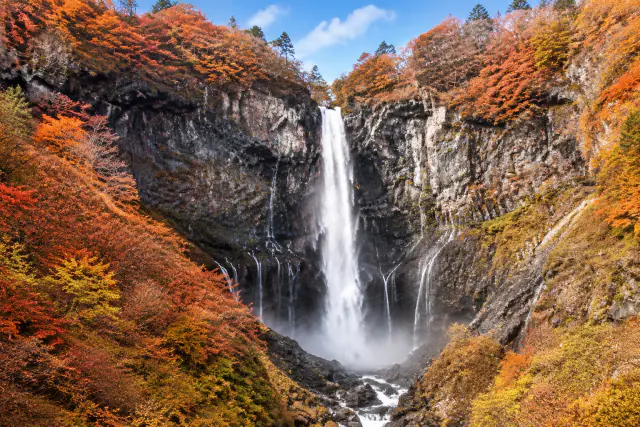 Tochigi Nature · 30–60 minutes Kegon Falls Water from Lake Chūzenji plunges nearly 100 meters over a cliff. It is one of Japan's three most famous waterfalls. The upper observation deck is free. Take the elevator down to the observation deck about 100 meters below for a dramatic head-on view. The surrounding colors are at their best in mid-to-late October, and the falls freeze into icicles in winter. Autumn leavesSnow countryMountains
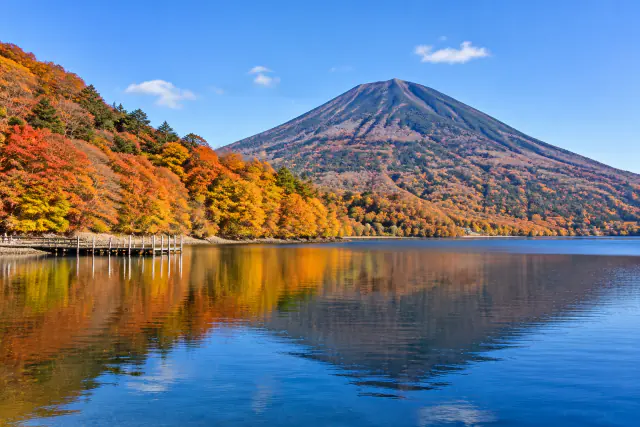 Tochigi Nature · half a day Lake Chūzenji This high-altitude lake sits at about 1,270 meters. It is cool in summer and became a summer retreat for foreign embassies after the Meiji period. Former embassy villas remain along the shore and are open to visitors. The fall colors arrive two or three weeks earlier than in central Nikko. Walk north along the lake to Ryūzu Falls and the Senjōgahara Wetland on an easy half-day trail. Early summer and fall are the most comfortable seasons. Autumn leavesMountains
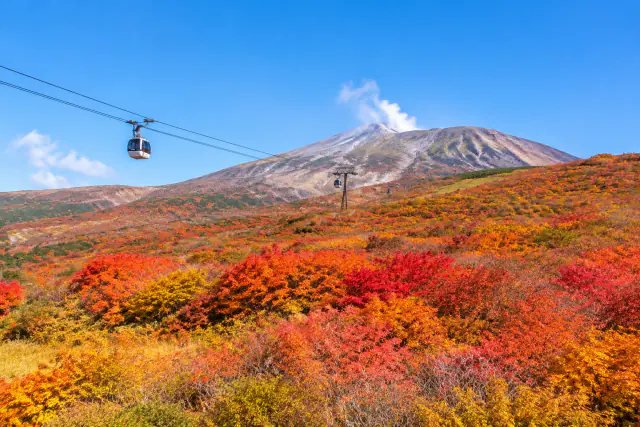 Tochigi Nature · 1–2 days Nasu Highlands This highland resort area lies at the foot of Mount Nasu. It has farms, zoos, museums, and many hot-spring inns. Summers are much cooler than in Tokyo, and the area is a summer retreat for the Japanese imperial family. A ropeway climbs the mountain, and the fall colors are beautiful. Sights are spread out and buses are infrequent, so plan to stay 1–2 days and explore at a relaxed pace. MountainsHot springsAutumn leaves
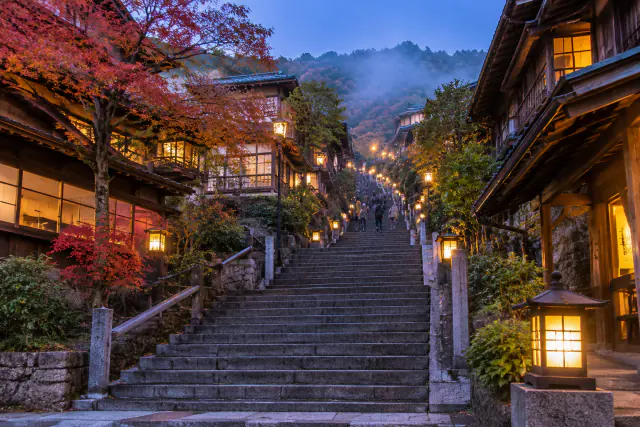 Gunma Old town · Half a day Ikaho Onsen More than three hundred stone steps climb to Ikaho Shrine, lined with inns, shooting galleries, and onsen manju shops that give the street a nostalgic Showa-era feel. The iron-rich Kogane no Yu, or golden water, is brownish in color. Direct highway buses from Shinjuku take about 2 and a half hours. You can also travel via Takasaki and connect to a bus. Hot springsAutumn leaves
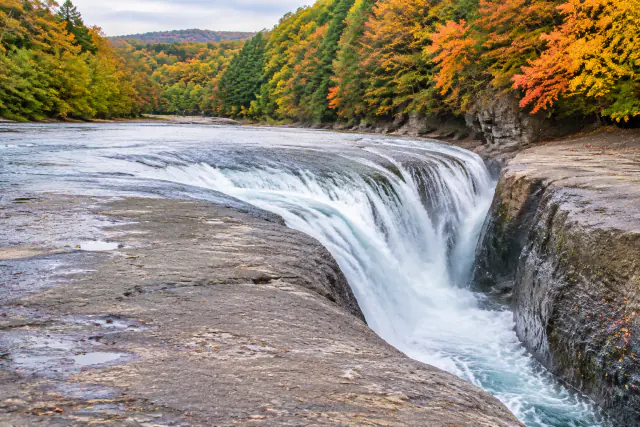 Gunma Nature · 1 hour Fukiware Falls The river plunges into a long fissure carved into the rocky riverbed, earning these falls the nickname “Niagara of the East.” Riverside paths bring you close to the rushing water, with beautiful foliage on both banks in fall. Buses run from Jomo-Kogen Station on the Joetsu Shinkansen or from Numata Station. Autumn leavesMountains
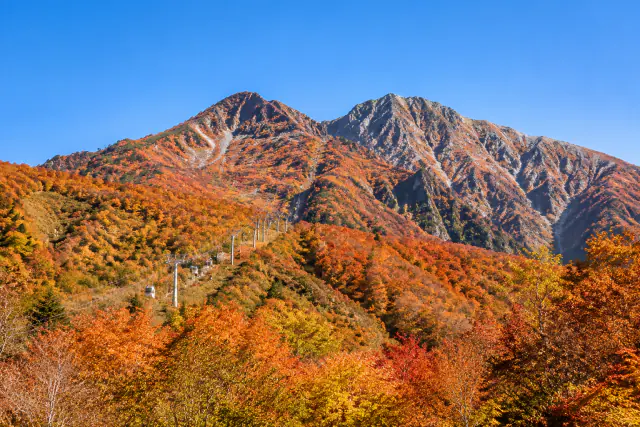 Gunma Hiking · Half a day–1 day Mount Tanigawa This prominent mountain straddles Niigata and Gunma. A ropeway takes you straight to Tenjindaira for views of its rugged cliffs without a hike. The slopes turn red and yellow in fall, and Tenjindaira becomes a ski area in winter. Experienced hikers can climb to the summit from the ropeway station; allow well over half a day for the round trip. Weather changes quickly, so bring proper gear. Buses run to the ropeway station from Jomo-Kogen or Minakami Station. Autumn leavesSnow countryMountains
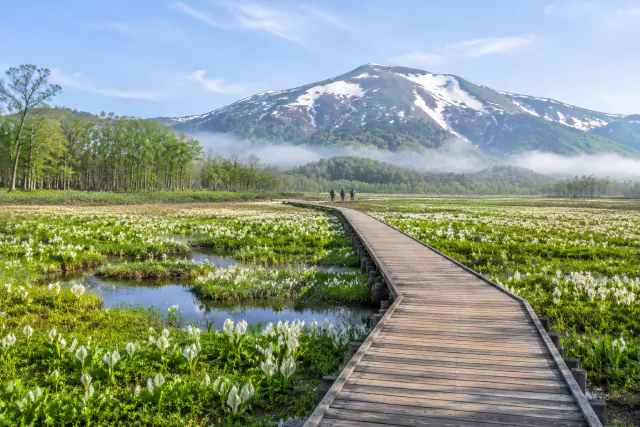 Gunma Hiking · 1 day Ozegahara Marsh Honshu’s largest alpine wetland has boardwalks stretching for several kilometers through open marshland, backed by Mount Shibutsu and Mount Hiuchigatake. Asian skunk cabbage blooms from late May to June, followed by Nikko daylilies in July. The grasses turn gold from late September to early October. From Gunma, the usual entry point is Hatomachitoge Pass. Allow a full day for the round trip. Flower fieldsAutumn leavesMountains
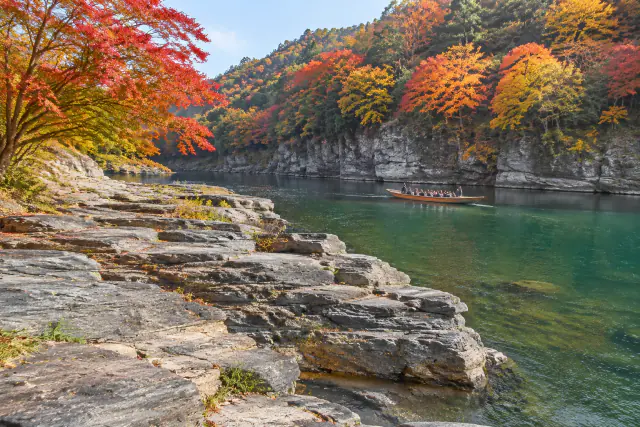 Saitama Nature · Half a day Nagatoro Iwadatami and river cruises Broad stretches of flat, layered rock along the Arakawa River look like tatami mats laid out in steps, with emerald-green water flowing beside them. You can drift downstream in an unpowered wooden boat while the boatman steers with a long pole. The boat splashes through rapids, and the upper and lower sections can be taken separately. The foliage along both banks is best in mid- to late November, and rafting is also available in summer. Autumn leavesMountains
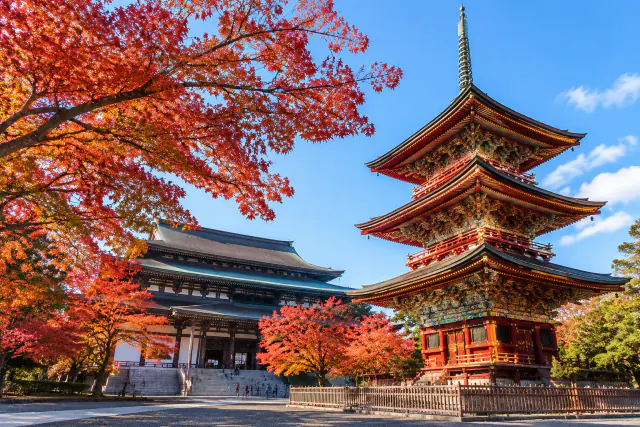 Chiba Temple · 2–3 hours Naritasan Shinshō-ji This thousand-year-old temple is Japan's most popular destination for hatsumōde, the first temple visit of the year. From JR or Keisei Narita Station, walk along Omotesandō for about 13 minutes. The street is lined with old inns, eel restaurants and souvenir shops. The temple grounds include the Main Hall and a three-story pagoda. Behind them, Naritasan Park has ponds and maple trees, with beautiful autumn colors in mid-to-late November. Historic sitesAutumn leaves
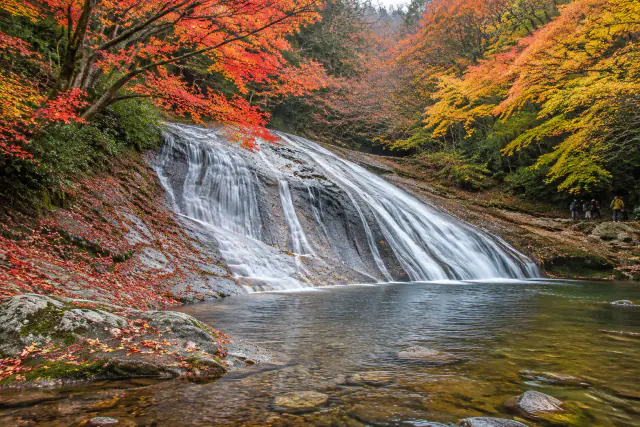 Chiba Nature · Half a day Yōrō Valley The Yōrō River cuts through the Bōsō Hills, creating a valley with several easy riverside trails and waterfalls. The largest, Awamata Falls, is about 30 meters high. The valley's autumn colors arrive late by Kantō standards, peaking from late November to early December. It is a good choice if you miss the colors in Kyoto or Nikko. Take the nostalgic Kominato Railway; canola flowers and cherry blossoms bloom along the line in spring. Autumn leavesMountains
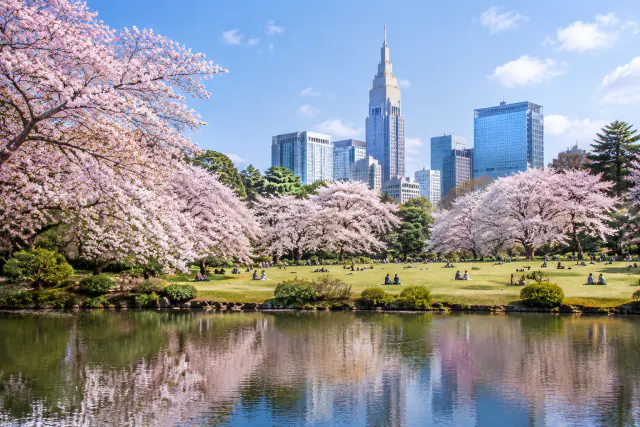 Tokyo Garden · 1.5–2 hours Shinjuku Gyoen National Garden A large garden beside Shinjuku's shopping district, with Japanese, English, and French-style gardens. It has many cherry varieties and a long blossom season, while the ginkgo trees and fall foliage are beautiful in autumn. The broad lawns are ideal for taking a break with a bento. It's a good place to escape the crowds after exploring Shinjuku, and it's a few minutes' walk from Shinjuku-gyoemmae Station. Cherry blossomsAutumn leaves
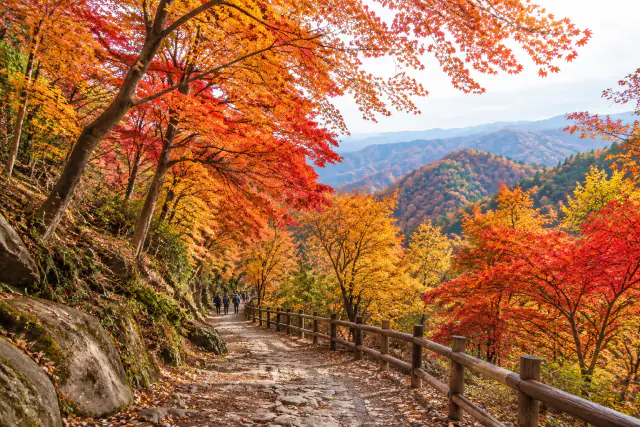 Tokyo Hiking · Half a day Mount Takao About 50 minutes from Shinjuku on the Keio Line and about ¥430 to the foot of the mountain, Mount Takao is a favorite weekend escape for Tokyo residents. Trail 1 takes about 1 and a half hours to reach the 599-meter summit. The cable car cuts the effort in half. On clear days, you can see Mount Fuji from the top. Fall colors are best from late November to early December, and the tororo soba along the trail is worth trying. Autumn leavesMountains
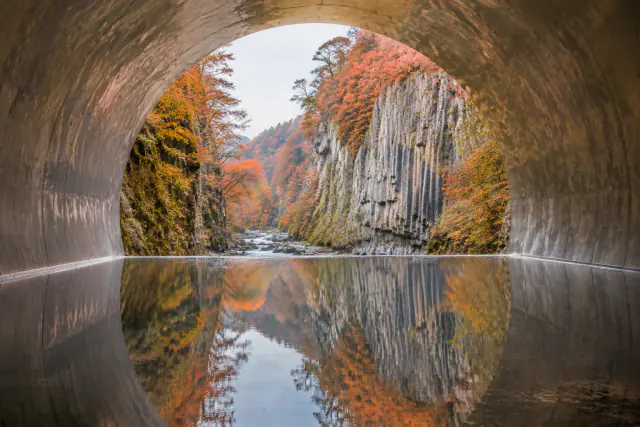 Niigata Nature · 2 hours Kiyotsu Gorge Tunnel One of Japan's three great gorges, this site was transformed into the Tunnel of Light in 2018 by a team led by Chinese architect Ma Yansong. Walk about 750 meters to the end, where a shallow pool reflects the gorge in a circular frame. The bus from Echigo-Yuzawa Station takes about 25 minutes, followed by a walk of about 30 minutes. ArtAutumn leavesMountains
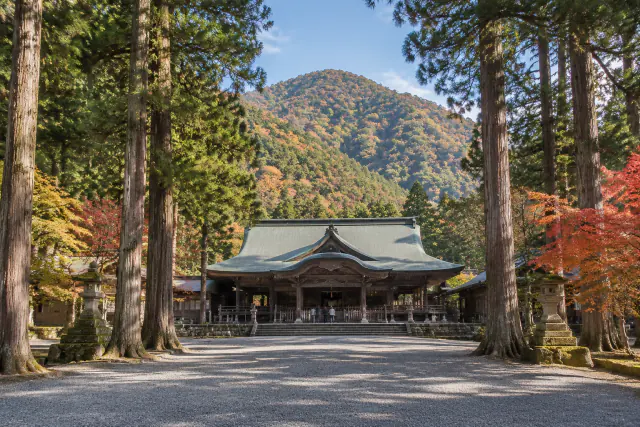 Niigata Shrine · 2–3 hours Yahiko Shrine Echigo's Ichi-no-miya, with a quiet approach lined by ancient trees. A ropeway behind the shrine goes up Mount Yahiko, which is 634 meters high—the same height as Tokyo Skytree. From the summit, you can look over the Echigo Plain and the Sea of Japan, and on clear days, see Sado Island. A chrysanthemum festival takes place in November, when the nearby Maple Valley also turns red. Historic sitesAutumn leaves
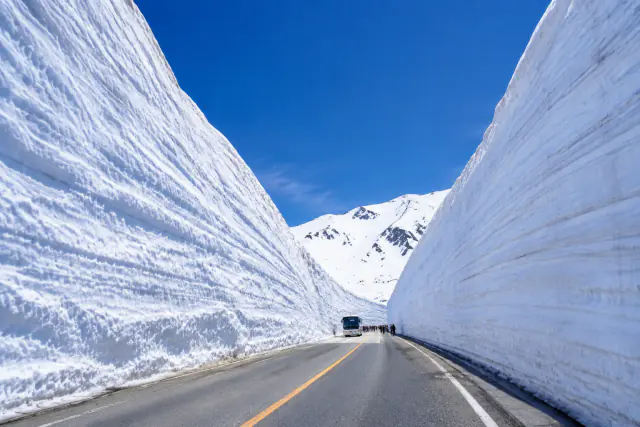 Toyama Nature · 1 day Tateyama Kurobe Alpine Route (Murodo) Murodo, the route’s highest point, sits at about 2,450 meters. In spring, buses pass between snow walls more than ten meters high. The Yuki-no-Otani walking area usually stays open until late June. In summer, a walk around the volcanic Mikurigaike Pond takes about 1 hour. Fall colors arrive early up here. In 2026, the full route operates from April 15 to November 30. Snow countryMountainsAutumn leaves
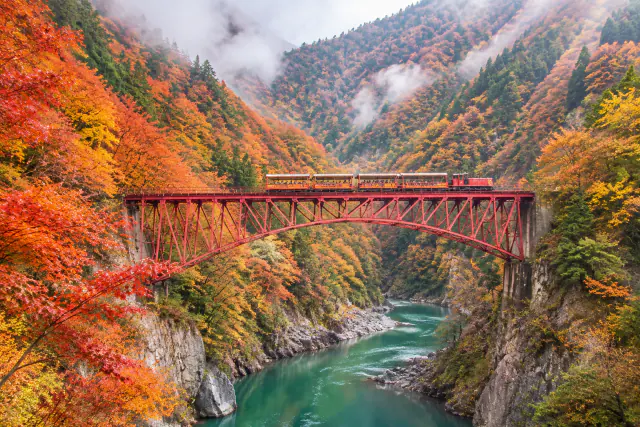 Toyama Nature · Half a day Kurobe Gorge Railway This narrow-gauge train leaves Unazuki Onsen and climbs through a V-shaped gorge to Keyakidaira in about 80 minutes one way. The open cars can be very windy. After the 2024 earthquake, trains have operated only partway along the line. Full service resumes on October 1, 2026. Late October through November is best for fall colors. Stay in Unazuki Onsen after the ride. Autumn leavesMountainsHot springs
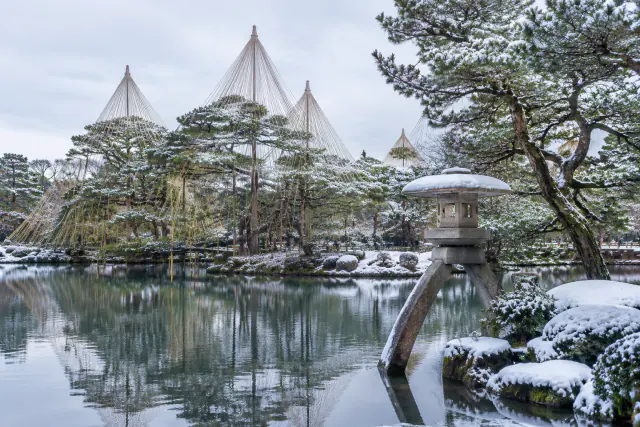 Ishikawa Garden · 1.5–2 hours Kenrokuen Garden One of Japan's three great gardens, Kenrokuen was developed over generations by the lords of the Kaga Domain as a strolling garden. Its signature feature is the Kotoji Toro lantern, with two legs of different lengths, beside Kasumigaike Pond. Starting in November, pine trees are fitted with umbrella-shaped yukitsuri ropes to protect them from heavy snow. The combination of fall colors and snow is one of Kanazawa's most photogenic scenes. The garden is across the street from Kanazawa Castle, so the two are easy to visit together. Autumn leavesSnow countryHistoric sites
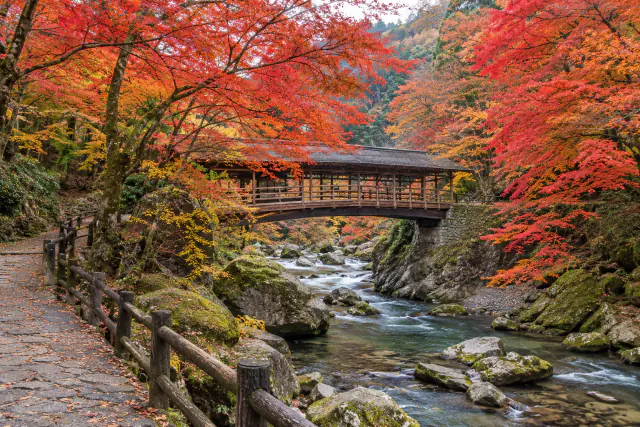 Ishikawa Hot springs · half a day Yamanaka Onsen and Kakusenkei Gorge One of the most atmospheric spots in the Kaga Onsen area, Yamanaka Onsen sits beside Kakusenkei Gorge. A walk along the river takes about 30 minutes and passes the wooden Korogi Bridge and the striking Ayatori Bridge. The fall colors are beautiful. The bus from Kagaonsen Station takes about 30 minutes, and staying overnight lets you enjoy the hot springs. Hot springsAutumn leavesMountains
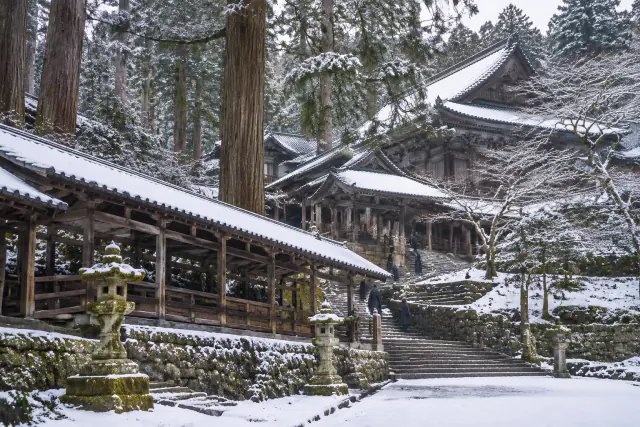 Fukui Temple · 1.5–2 hours Eiheiji Temple The head temple of the Soto school of Zen, founded by Dogen in 1244. More than 100 monks still train here. More than 70 buildings line the mountainside, linked by long wooden corridors. You may see monks moving between buildings during your visit. The ceiling in the Eihei-ji Temple's Eten-no-Ma room is painted with more than 200 bird-and-flower paintings. Historic sitesAutumn leavesSnow country
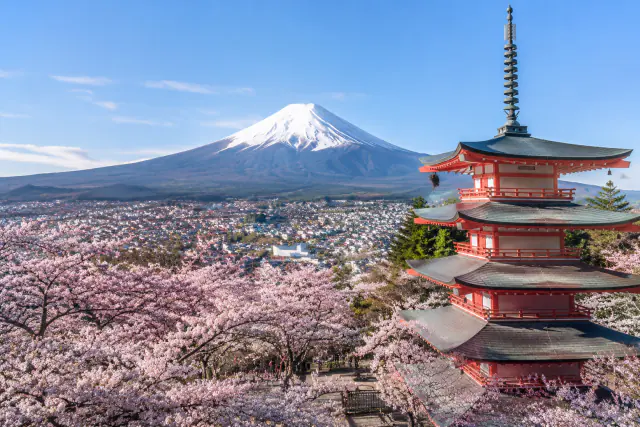 Yamanashi Viewpoint · 1–1.5 hours Arakurayama Sengen Park (Chureito Pagoda) The classic view of a red five-story pagoda, cherry blossoms, and Mt. Fuji is here. From Shimoyoshida Station on the Fujikyu Line, walk about 10 minutes to the foot of the hill, then climb nearly 400 steps to the viewpoint. It looks best during the cherry blossom season in early to mid-April and the fall foliage season in November. On ordinary days, early morning is quieter and the light is softer. Cherry blossomsAutumn leaves
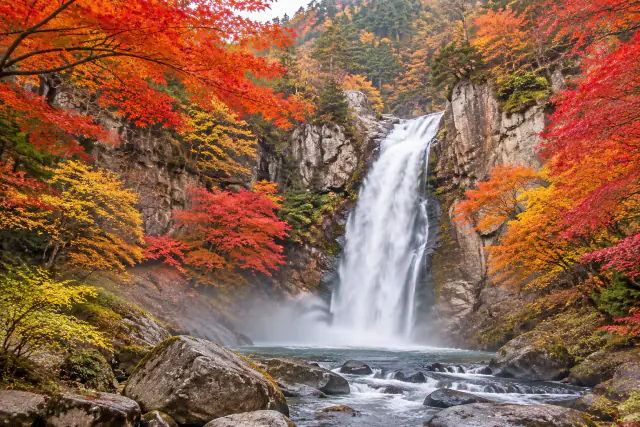 Yamanashi Nature · Half a day Shosenkyo Gorge This granite gorge north of Kofu has a riverside trail that takes about 1 hour. Strange rock formations and pine trees line the gorge, ending at the 30-meter-high Sengataki Waterfall. You can also take a cable car to the summit for views of Mt. Fuji and the Southern Alps. The gorge is most beautiful in November, when the leaves change. Combine it with fruit and winery visits in Kofu for a full day. Buses run from Kofu Station. Autumn leavesMountains
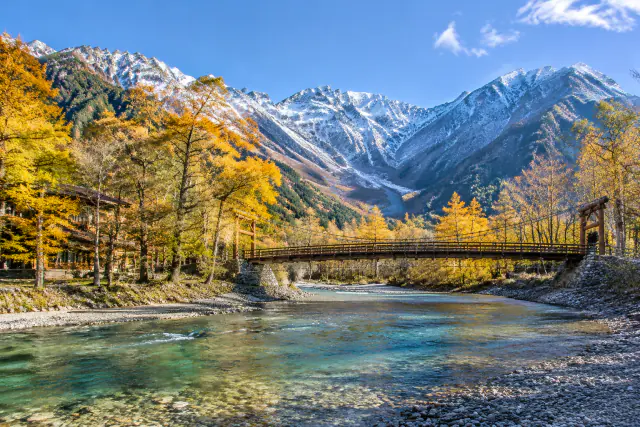 Nagano Nature · Half a day–1 day Kamikochi A high-altitude valley at about 1,500 meters, with the clear blue Azusa River and the Hotaka mountain range in the background. The round trip from Kappa Bridge toward Myojin Pond takes about 2 hours. The trail is flat and easy for beginners. Private cars are prohibited year-round, so change to a shuttle bus at Sawando or Hirayu. The ride takes about 30 minutes. MountainsAutumn leaves
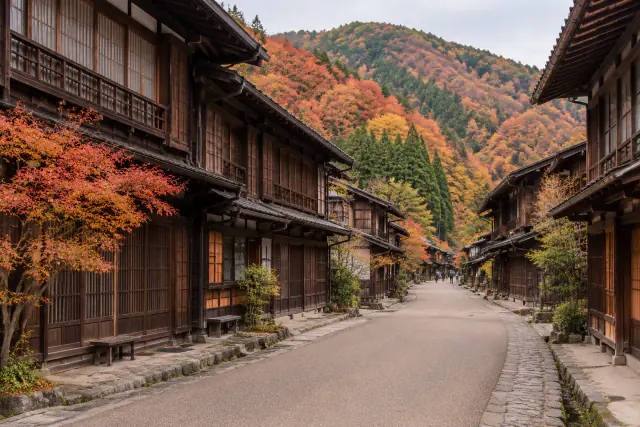 Nagano Old town · Half a day Tsumago-juku One of the best-preserved post towns along the Nakasendo. Even the utility poles have been hidden, making the whole street feel like a return to the Edo period. The classic route is to hike from Magome-juku on the Gifu side to Tsumago. The full trail is about 8 kilometers and takes 2.5–3 hours, crossing Magome Pass and passing stone paths, waterfalls, and teahouses. Take a JR train to Nagiso Station, then walk or take a bus. Historic sitesAutumn leaves
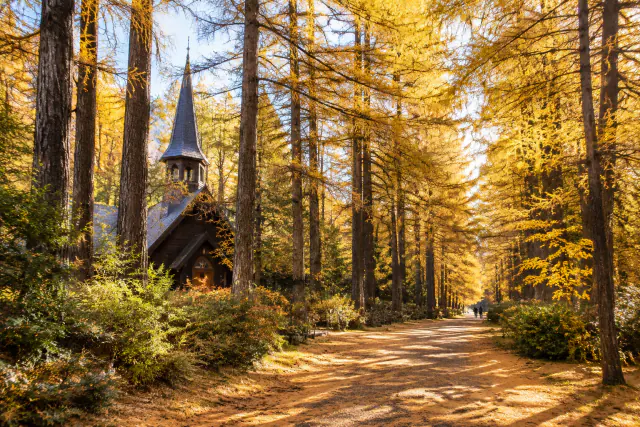 Nagano District · Half a day–1 day Karuizawa A summer resort developed by foreign missionaries during the Meiji era, with villas, churches, and cafés scattered among the trees. A large outlet mall is just outside the south exit of the Shinkansen station, while Old Karuizawa Ginza to the north is a traditional shopping street. Just over an hour from Tokyo, it is ideal for a day trip combining shopping and a walk. The larch trees turn golden in late October. Autumn leaves
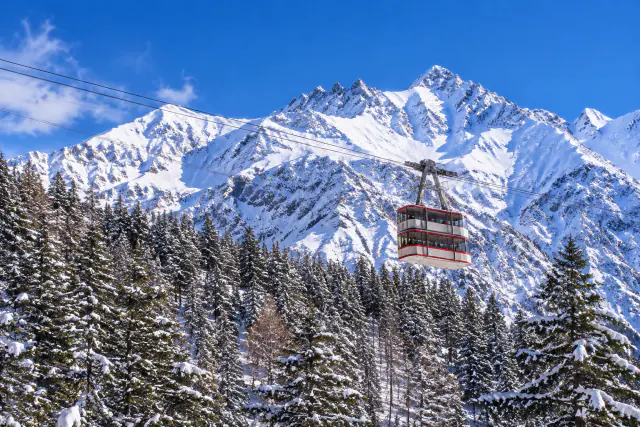 Gifu Viewpoint · Half a day Shinhotaka Ropeway Two ropeway sections carry passengers from the hot-spring town to Nishihotakaguchi at about 2,156 meters. The second section is Japan's only double-decker ropeway. The summit observation deck faces Mount Yari and the Hotaka mountain range in the Northern Alps. In winter, the mountains are covered in snow; in fall, the slopes turn red. The Nohi bus ride from Takayama takes about 1 hour 30 minutes. Snow countryAutumn leavesMountains
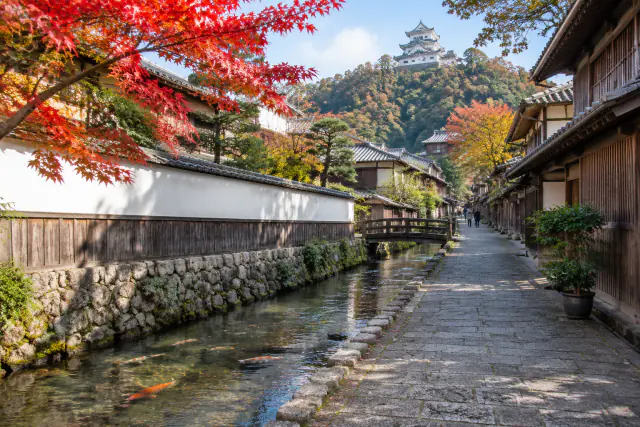 Gifu District · Half a day Gujo Hachiman This small mountain town is surrounded by clear streams. Canals run beside the old streets, and residents still wash vegetables and dishes in shared tiered water basins called mizubune. Gujo Hachiman Castle on the hill is a reconstructed wooden keep that looks especially beautiful with fall foliage. From July–September, the Gujo Odori dance is held for dozens of nights, with all-night dancing during the Bon Festival. The town is also Japan's center for food replicas, and you can try making one yourself. Historic sitesAutumn leaves
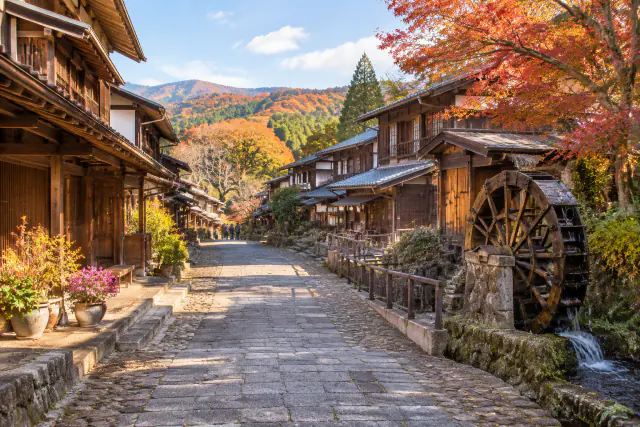 Gifu Hiking · Half a day Magome-juku This post town on the Nakasendo was built along a slope, with wooden houses and waterwheels lining its stone-paved streets. It was the hometown of writer Shimazaki Toson. From here, the hike over Magome Pass to Tsumago-juku in Nagano is about 8 km and takes 2.5–3 hours. It is fairly easy because most of the route is downhill. The bus from JR Nakatsugawa Station takes about 25 minutes. Historic sitesAutumn leaves
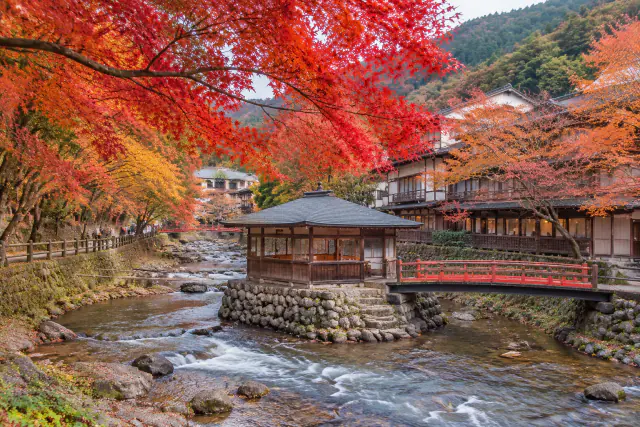 Shizuoka Hot springs · Half a day–1 night Shuzenji Onsen One of Izu's oldest hot-spring resorts, said to have been founded by Kukai. The hot-spring town follows the Katsura River. Tokko no Yu, in the middle of the river, is its landmark, and the nearby bamboo grove is a popular photo spot. Shuzenji Temple stands at the center of town. The area is busiest when the maples turn red in late November. From Mishima, take the Izu-Hakone Railway to Shuzenji Station, then a bus for about 10 minutes. Hot springsAutumn leaves
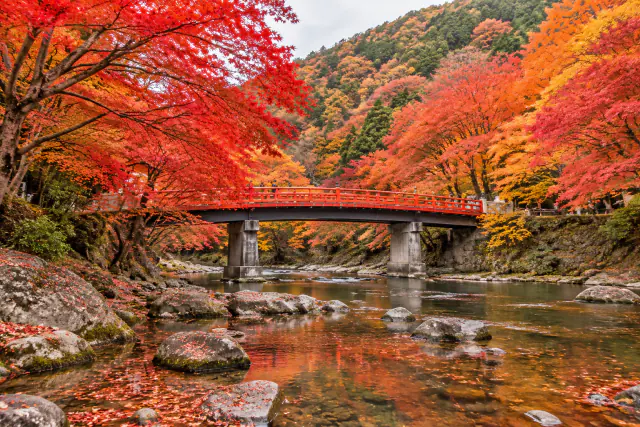 Aichi Nature · 2–3 hours Korankei Gorge This mountain valley in Asuke, Toyota, is lined with about 4,000 maple trees along both banks of the river. The entire valley turns red in mid- to late November, with red Taigetsukyo Bridge providing a classic photo spot. The foliage season brings nighttime illumination and beautiful reflections. Other seasons are quieter, and dogtooth violets bloom on the slopes in spring. There is no direct train. Take a bus from Meitetsu Higashi-Okazaki Station or Toyota-shi Station. Autumn leavesMountains
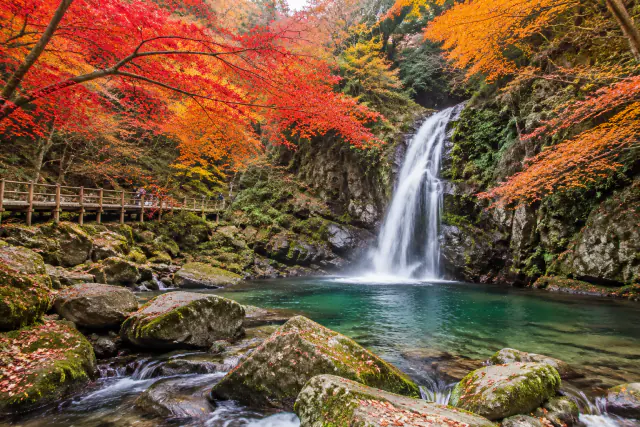 Mie Hiking · 3–4 hours Akame 48 Waterfalls Follow the valley upstream for about 4 km, passing one waterfall and deep pool after another. The water is a clear green. Most of the route consists of maintained paths and stairs, and the one-way walk takes about 1.5 hours. The area is said to have been a place where ninjas trained, and the fall foliage is beautiful. From Kintetsu Akameguchi Station, take a bus for about 10 minutes. MountainsAutumn leaves
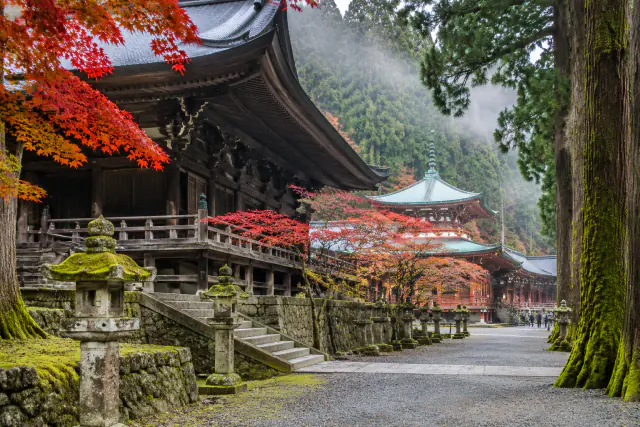 Shiga Temple · Half a day Enryaku-ji The head temple of Japan’s Tendai Buddhist school and a World Heritage Site, Enryaku-ji spans Mount Hiei. Its three areas—Todo, Saito, and Yokawa—sit among deep, quiet woods. The “eternal flame” in the Konpon Chudo hall is said to have burned for more than twelve hundred years. The mountain overlooks Lake Biwa and has beautiful fall foliage. You can take a cable car up from Sakamoto. Historic sitesAutumn leavesMountains
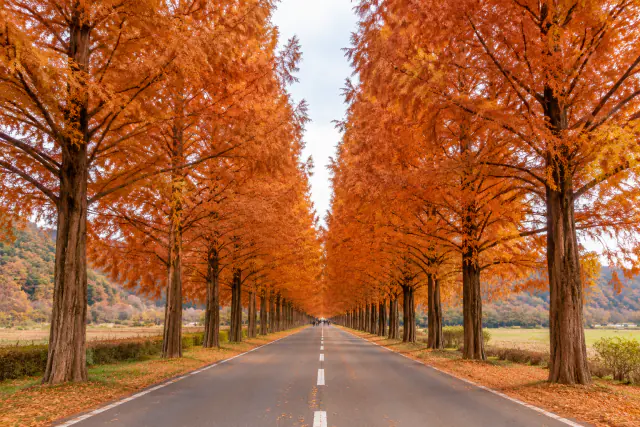 Shiga Nature · 1–2 hours Makino Metasequoia Avenue About 500 metasequoia trees line this roughly 2.4-kilometer road. Their colors change with the seasons: fresh green in spring, deep green in summer, orange-brown in fall, and a white tunnel after winter snow. About 10 minutes by bus or taxi from JR Makino Station, it suits anyone willing to go a little farther for photos. Autumn leavesSnow countryMountains
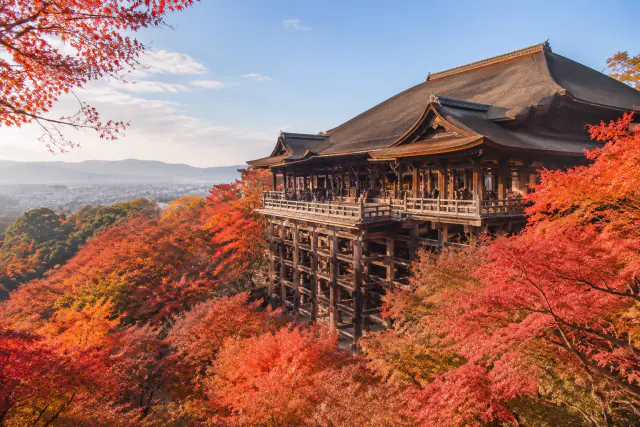 Kyoto Temple · 2–3 hours Kiyomizu-dera & Sannenzaka The wooden Kiyomizu Stage, suspended over the hillside, is one of Kyoto's signature views. Cherry blossoms in spring and fall foliage in autumn spread out below. Walk downhill along the stone-paved lanes of Sannenzaka and Ninenzaka, lined with traditional shops and teahouses, then continue to Yasaka Shrine and Gion. Historic sitesCherry blossomsAutumn leaves
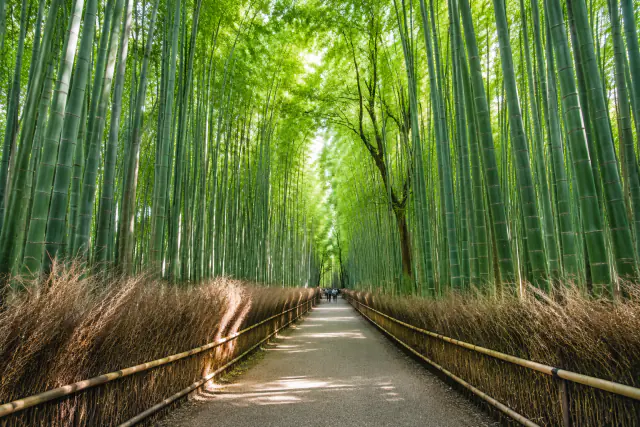 Kyoto Nature · Half a day–1 day Arashiyama & Tenryu-ji This scenic district lies in western Kyoto. The garden at World Heritage-listed Tenryu-ji uses the mountains of Arashiyama as its backdrop. The north gate opens onto the bamboo grove, with smaller temples such as Jojakko-ji farther north. The fall colors are beautiful. Togetsukyo Bridge offers the broadest mountain views, and you can also rent a boat or ride the Sagano Romantic Train. Autumn leavesCherry blossomsMountains
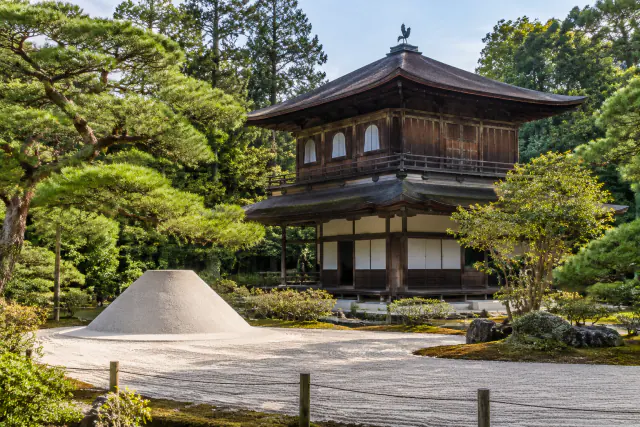 Kyoto Temple · 2–3 hours Ginkaku-ji & Philosopher's Path Ginkaku-ji is not actually silver. The highlights are the white-sand Silver Sand Sea and the moss garden. From the entrance, follow the canal south to the Philosopher's Path, a flat route about 2 kilometers long. In spring it is lined with cherry blossoms, and in fall with colorful leaves. At the end, you can continue to Nanzen-ji and Eikando. Cherry blossomsAutumn leavesHistoric sites
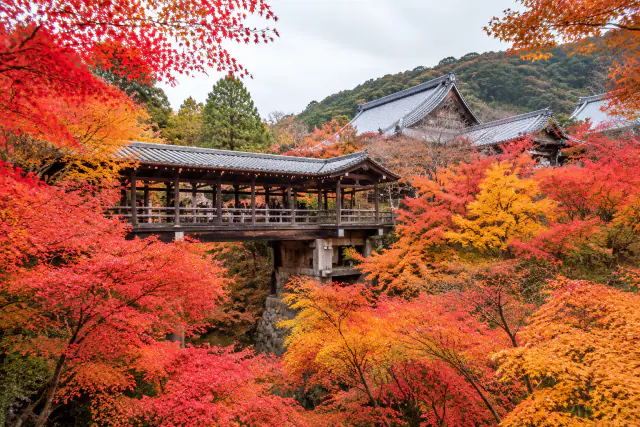 Kyoto Temple · 1–1.5 hours Tofuku-ji One of Kyoto's top fall foliage spots. From the wooden Tsutenkyo Bridge, you can look down over a valley filled with maple trees. In late November, the colors are almost fiery. The abbot's square moss garden is a modern garden masterpiece. It is only one stop from Fushimi Inari, so you can see the foliage in the morning and walk through the torii in the afternoon. Autumn leavesHistoric sites
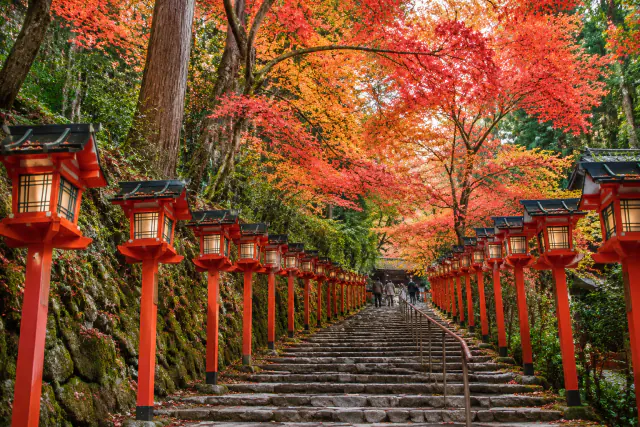 Kyoto Hiking · Half a day Kurama & Kibune A half-day hike in the mountains north of Kyoto. Climb from Kurama-dera through cedar forests and over the ridge to Kifune Shrine, a walk of about 1.5–2 hours. In summer, Kibune is known for kawadoko dining platforms built over the stream. The fall foliage is also beautiful, and temperatures are several degrees cooler than in the city. The Eizan Railway from Demachiyanagi takes about 30 minutes. MountainsAutumn leaves
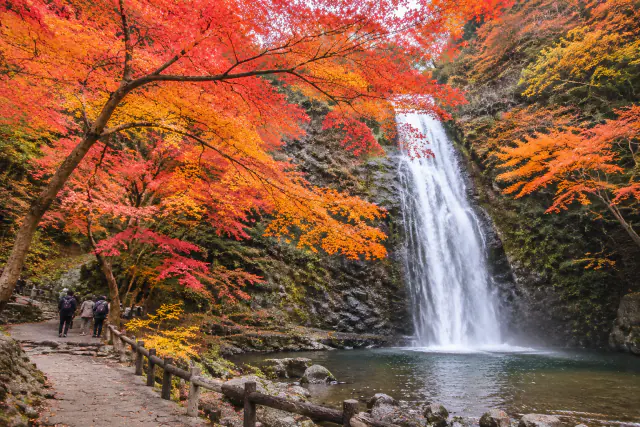 Osaka Hiking · Half a day Minoh Falls This easy hike is in the northern Osaka suburbs. From Hankyu Minoh Station, follow the valley about 3 km to the 33-meter waterfall, passing woods and small temples along the way. The scenery is best during the November foliage season. Shops along the route sell deep-fried maple leaves, which are crisp and sweet like cookies. The trip from Umeda by Hankyu takes about 30 minutes. Autumn leavesMountains
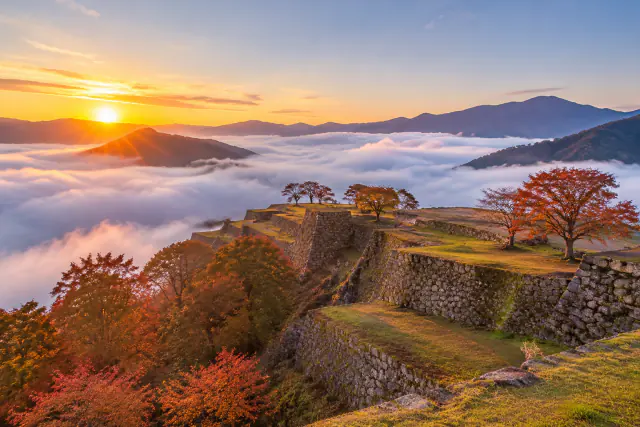 Hyogo Castle · Half a day Takeda Castle Ruins Only stone walls remain of this mountaintop castle. On misty autumn mornings, it seems to float above a sea of clouds, earning it the name “castle in the sky.” The most dramatic views are from Ritsuunkyo across the valley. Access takes some effort: hike from JR Takeda Station or take a seasonal bus. It suits photographers willing to get up early. Historic sitesAutumn leavesMountains
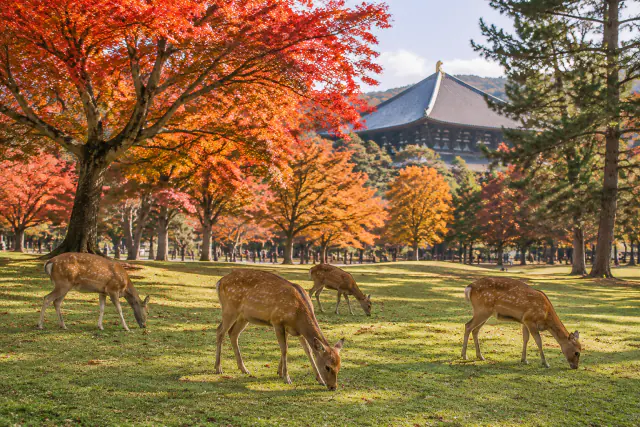 Nara Park · 2–4 hours Nara Park and the deer Todai-ji, Kasuga Taisha, and Kofuku-ji all stand in this large park, where more than 1,000 deer roam across the grass. Vendors sell shika senbei, crackers made for feeding the deer, which bow to ask for food. The park is flat and open, with cherry blossoms in spring and fall foliage in autumn. Take your time and spend a full day walking around. Cherry blossomsAutumn leavesMountains
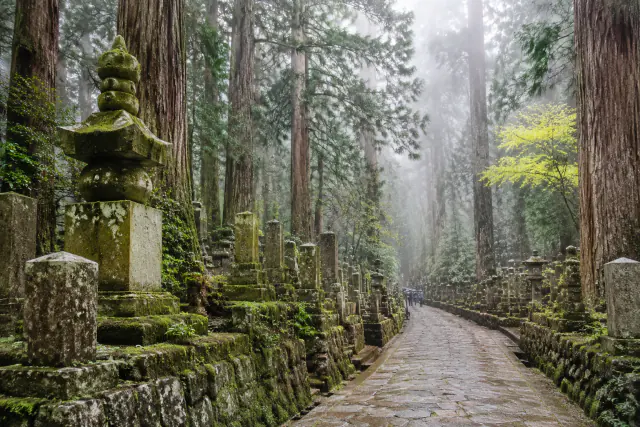 Wakayama Temple · 2–3 hours Koyasan Okunoin The final resting place of Kobo Daishi Kukai. The approach from Ichi-no-hashi to the mausoleum is about 2 km, lined with towering cedars and more than 200,000 gravestones and memorial stupas, from feudal lords to modern companies. It is remarkably cool and quiet. Most temple lodgings offer evening tours, and the atmosphere is even more intense at night. Historic sitesAutumn leaves
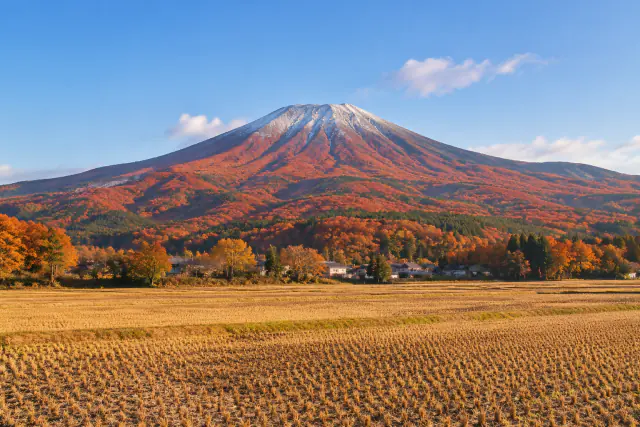 Tottori Nature · Half a day Mount Daisen and Daisenji Temple The highest mountain in the Chugoku region, Mount Daisen looks like Mount Fuji when viewed from the west, earning it the nickname "Mount Fuji of Hoki." If you don't want to climb the mountain, walk from Daisenji Temple along the long stone-paved approach to the Okunomiya Shrine of Ogamiyama. The forest is quiet, and the fall colors are beautiful. In winter, the area becomes a ski resort. About 50 minutes by bus from Yonago Station. MountainsAutumn leavesSnow country
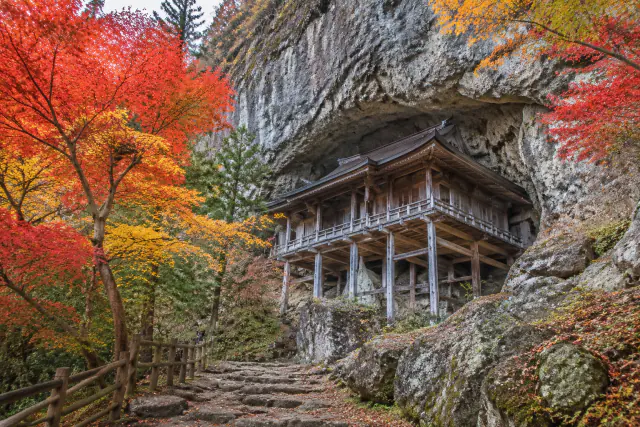 Tottori Hiking · Half a day Mitokusan Nageiredo This temple hall, a designated national treasure, is built into a hollow in a cliff. Its name means "thrown in," reflecting how it appears to have been placed there. Reaching it requires climbing over tree roots and rocks using both hands and feet. The one-way climb takes about 1 hour, and the rules are strict: you must go with at least one other person, and staff inspect your shoes at the entrance. If they are unsuitable, you must change into straw sandals. Snow closes the mountain from December to March. Historic sitesMountainsAutumn leaves
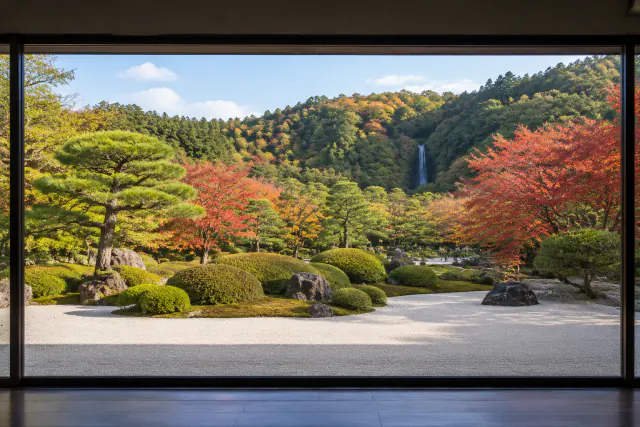 Shimane Museum · 2–3 hours Adachi Museum of Art This museum is known for its garden, which a U.S. magazine dedicated to Japanese gardens has rated Japan’s best for many consecutive years. You cannot walk through the garden; instead, view it through large windows, like a series of paintings hanging on the wall. The museum also holds a collection of modern Japanese paintings, including works by Yokoyama Taikan. Take the museum’s free shuttle from JR Yasugi Station. ArtAutumn leaves
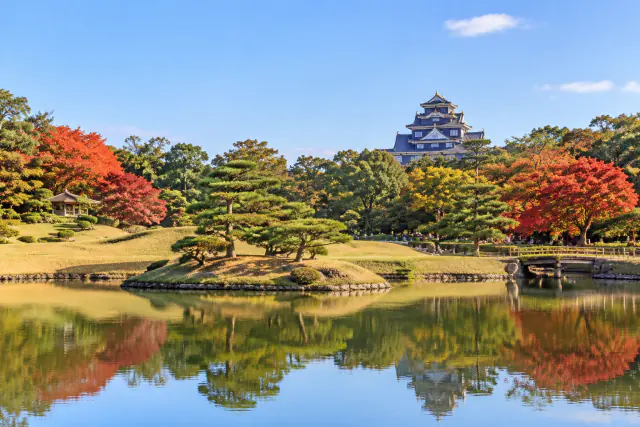 Okayama Garden · 1–1.5 hours Okayama Korakuen Garden One of Japan's three great gardens, along with Kenrokuen in Kanazawa and Kairakuen in Mito. Broad lawns surround ponds and small hills, with open views and Okayama Castle visible in the distance. From Okayama Station, take the tram to "Shiroshita," then walk about 10 minutes. The cherry and plum blossoms are beautiful in spring, and the fall colors are lovely. There is also a nighttime illumination in late November. Cherry blossomsAutumn leaves
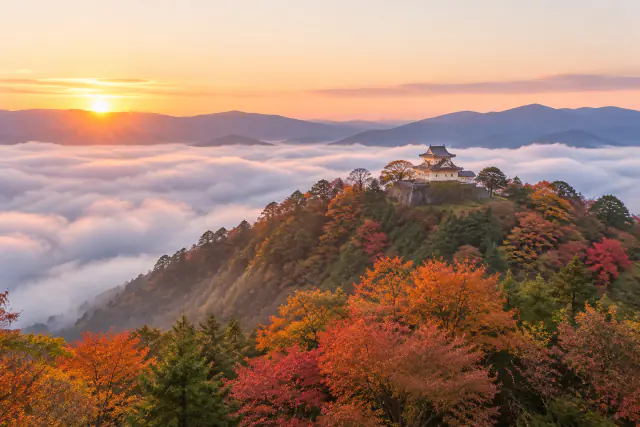 Okayama Castle · Half a day Bitchu Matsuyama Castle This historic castle sits atop a mountain at an elevation of about 430 meters. Its keep is an original from the Edo period. When surrounded by a sea of clouds on fall and winter mornings, it is known as a "castle in the sky." From Okayama Station, take the JR Hakubi Line for about 35–50 minutes to Bitchu-Takahashi Station, then take a vehicle to the middle of the mountain. The final approach requires about 20 minutes of uphill walking. Historic sitesAutumn leavesMountains
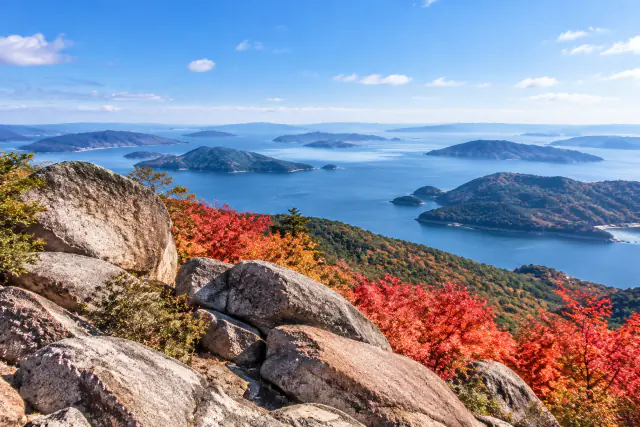 Hiroshima Hiking · Half a day Mount Misen Miyajima's highest peak offers views of the many islands of the Seto Inland Sea. The easiest route is to take the Miyajima Ropeway to Shishiiwa Station, then walk about 30 minutes to the summit. If you are fit, you can hike up from Momijidani Park in about 1.5 hours. In fall, Momijidani turns bright red and is at its most beautiful. MountainsAutumn leaves
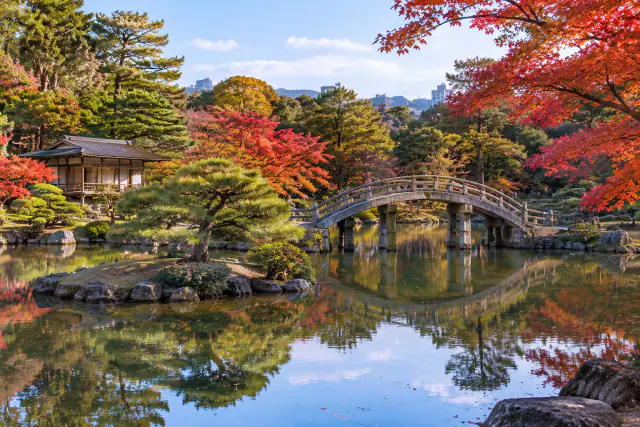 Hiroshima Garden · 1 hour Shukkeien Garden This strolling garden was built for the lords of Hiroshima. It is about a 15-minute walk from Hiroshima Station. Though compact, it is finely designed, and a walk around the pond takes about 40 minutes. Cherry blossoms in spring and fall colors in late November are the highlights. The garden was destroyed in the bombing and has been gradually restored since the war. Cherry blossomsAutumn leaves
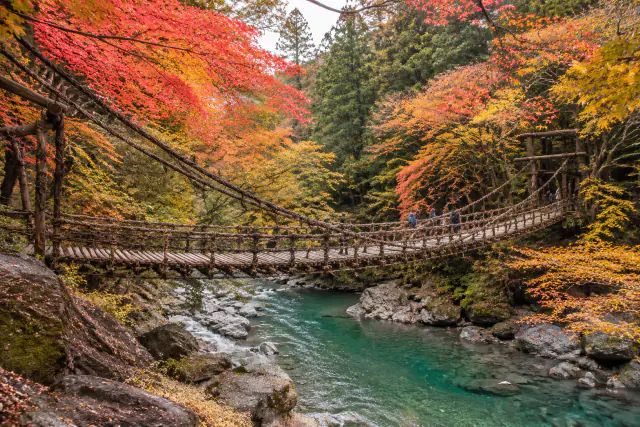 Tokushima Nature · 1 hour Iya Kazurabashi Vine Bridge This suspension bridge is woven from hardy kiwi vines gathered in the mountains. It is about 45 meters long and 14 meters above the water. The gaps between the wooden planks are wide, and the bridge sways as you cross. It is one of Japan's three unusual bridges. The vines are rewoven every three years, and the bridge is one-way. From JR Oboke Station, it takes about 20 minutes by bus. MountainsAutumn leaves
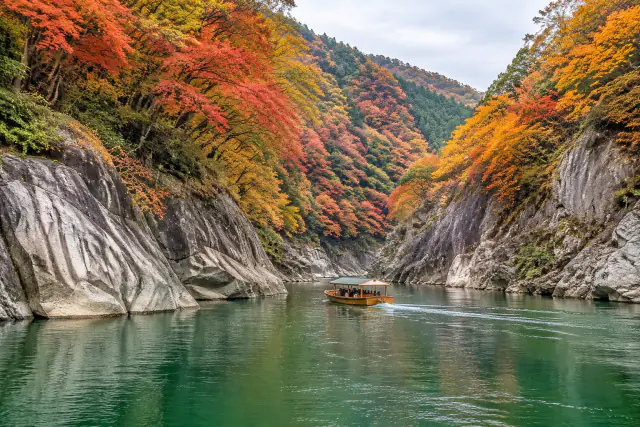 Tokushima Nature · 1–2 hours Oboke Gorge The Yoshino River cut through the mountains of Shikoku to form this gorge. The banks are made of schist carved into patterns by the water, and the river is emerald green. The easiest way to see it is on a sightseeing boat ride of about 30 minutes, with the boatman providing commentary as he rows. For more excitement, try summer white-water rafting. This is one of Japan's best-known rafting stretches. MountainsAutumn leaves
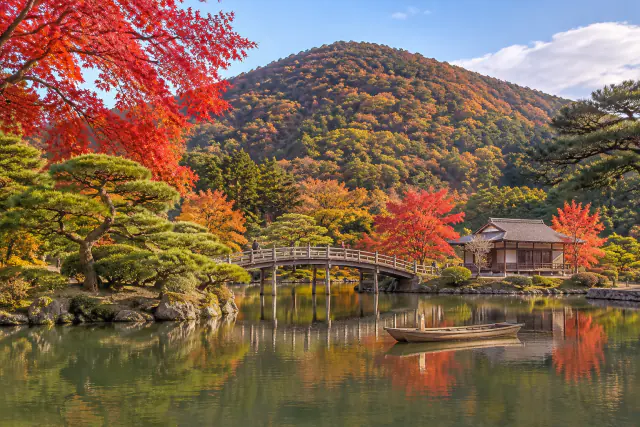 Kagawa Garden · 1.5–2 hours Ritsurin Garden The lords of Takamatsu spent more than 100 years creating this strolling garden, backed by Mount Shiun. It has six ponds, more than a dozen landscaped hills and meticulously pruned pine trees. Take a small boat around South Lake or enjoy matcha at Kikugetsu-tei. From Takamatsu Station, take the JR or Kotoden train to the area around Ritsurin Garden Station. Autumn leavesCherry blossoms
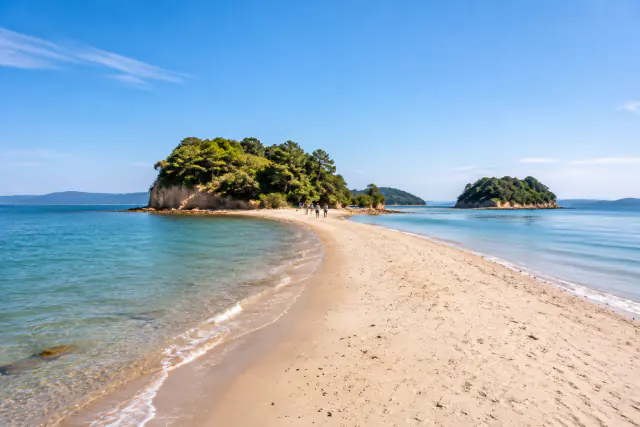 Kagawa Islands · 1 day Shodoshima The second-largest island in the Seto Inland Sea is covered with olive trees and has a distinctly Mediterranean feel. Three main sights are Angel Road, a sandbar visible only at low tide; the Kankakei Ropeway, surrounded by fall foliage; and the white windmill at Olive Park. From Takamatsu Port, the high-speed ferry takes about 35 minutes to Tonosho Port. IslandsAutumn leavesMountains
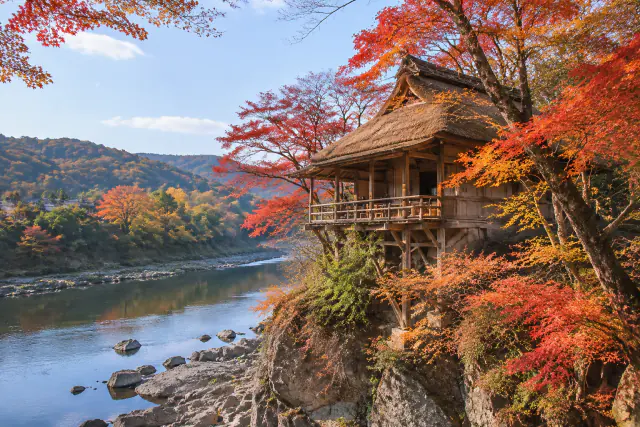 Ehime Old town · Half a day–1 day Uchiko & Ozu These two quiet towns south of Matsuyama are each about 30 minutes away by JR limited express. Uchiko grew wealthy from wood wax and retains white-walled streets and the 1916 Uchiko-za kabuki theater. Ozu has a wooden reconstruction of Ozu Castle and Garyu Sanso, a villa built on a riverside cliff. The fall foliage is beautiful. Historic sitesAutumn leaves
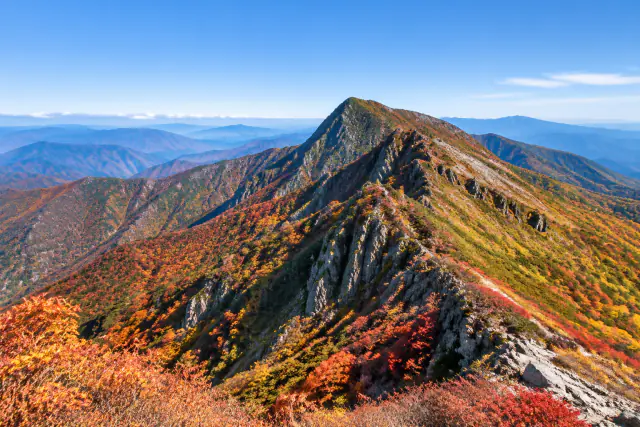 Ehime Hiking · 1 day Mount Ishizuchi Western Japan's highest peak, Mount Ishizuchi is also a sacred mountain on the ancient Shugendo pilgrimage route. Take the Ishizuchi Tozan Ropeway to the middle of the mountain, then allow about 3 hours one way to the summit. The route includes steep sections with fixed chains, but an easier bypass is available. The fall foliage arrives earlier here than in the lowlands and is at its best from late September to mid-October. Snow in winter requires specialized gear. MountainsAutumn leaves
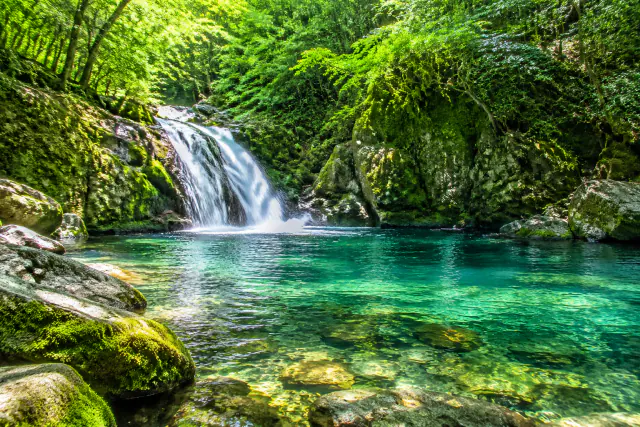 Kochi Nature · Half a day Niyodo River The Niyodo has repeatedly been named one of Japan's best-quality major rivers. On sunny days, its deep pools and waterfalls glow transparent blue-green, a color known as 'Niyodo blue.' Highlights include the mountain waterfall pool Nikobuchi and Yasui Gorge. The area is about a 1–1.5-hour drive from Kochi City. Buses are inconvenient, so consider joining a local day tour. MountainsAutumn leaves
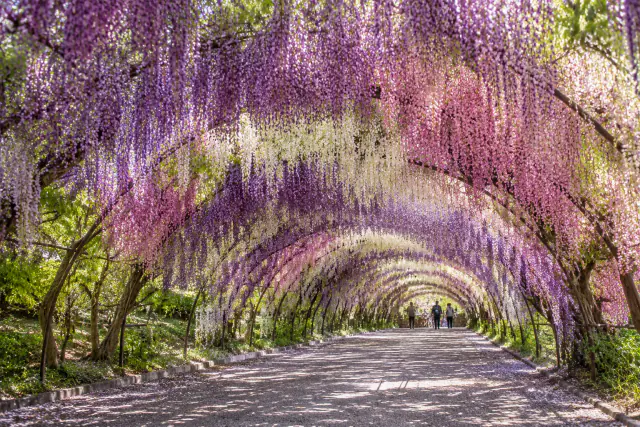 Fukuoka Garden · 1.5–2 hours Kawachi Fujien This privately run wisteria garden is known for its seemingly endless wisteria tunnels during the bloom season, which draws many visitors to northern Kyushu. The flowers usually bloom from late April to early May. The garden also opens briefly for fall foliage. Admission varies with bloom conditions, and tickets are not sold at the gate. Flower fieldsAutumn leaves
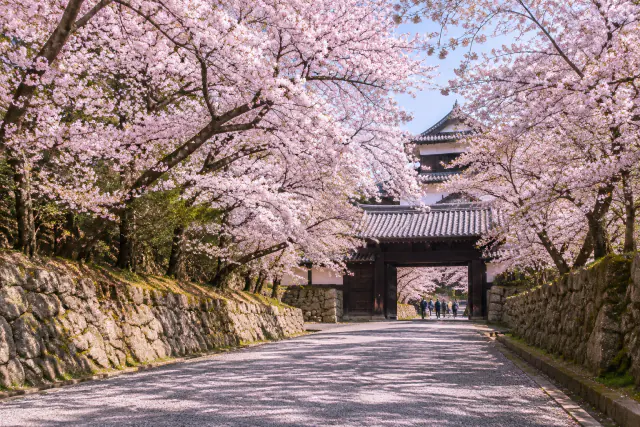 Fukuoka Old town · half a day Akizuki Known as the Little Kyoto of Chikuzen, this small castle town retains its stone walls, old homes, and moat. The Sugi-no-Baba area becomes a tunnel of cherry blossoms in spring, while the ruins of Akizuki Castle are famous for fall foliage. It is usually quiet and ideal for a leisurely walk. Cherry blossomsAutumn leavesHistoric sites
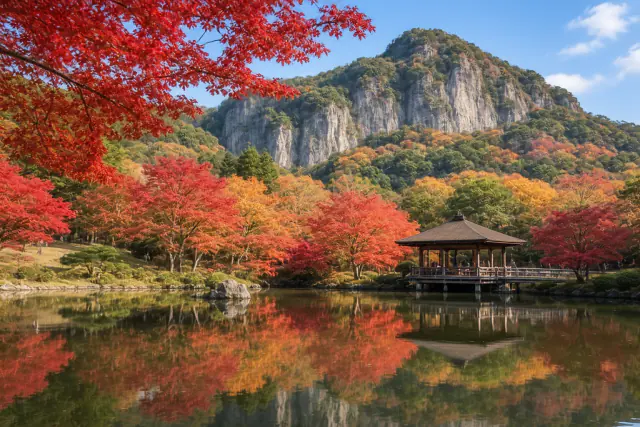 Saga Garden · 1.5–2 hours Mifuneyama Rakuen A large garden built against a steep mountain. In spring, azaleas and cherry blossoms cover the slopes. In fall, leaves are reflected in the ponds, and evening light displays take place. It's in the same small city as Takeo Onsen, making it easy to combine a soak with a garden visit in one day. Autumn leavesFlower fieldsCherry blossoms
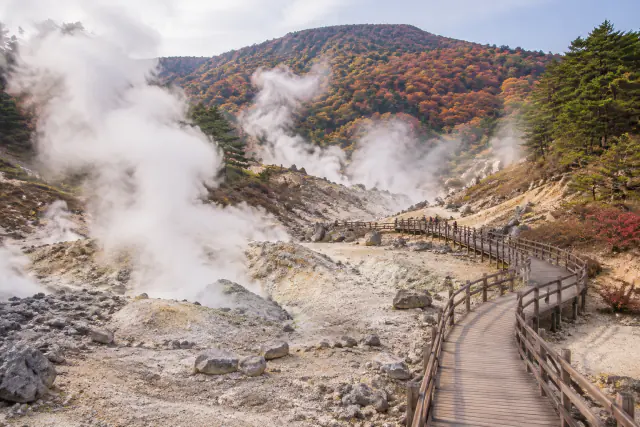 Nagasaki Hot springs · 1 night Unzen Onsen This mountain hot-spring town is known for its sulfur springs. Unzen Hell, with its clouds of white steam, is right beside the town. Follow the wooden walkways to see the vents. Nearby Nita Pass has azaleas in spring, fall foliage, and occasional rime ice in winter. Stay overnight to relax after leaving Nagasaki. Hot springsAutumn leavesMountains
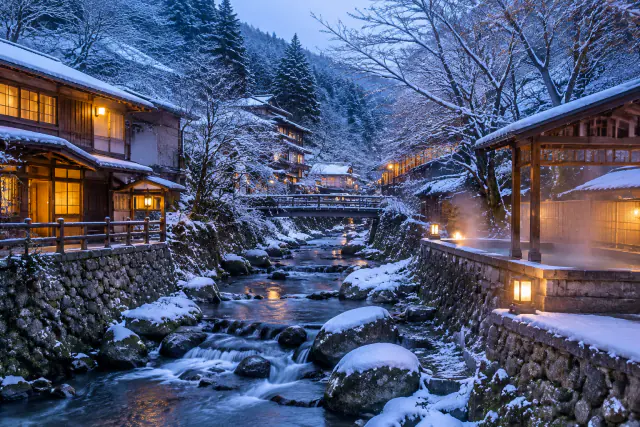 Kumamoto Hot springs · half a day–1 night Kurokawa Onsen A small hot spring town hidden in a mountain valley. About 30 ryokan line the stream, all built with wood and stone, with no high-rises or neon signs. Buy a Nyuto Tegata pass to choose three ryokan for open-air baths. After soaking in the evening, walking along the stream in a yukata is especially relaxing. Hot springsAutumn leavesSnow country
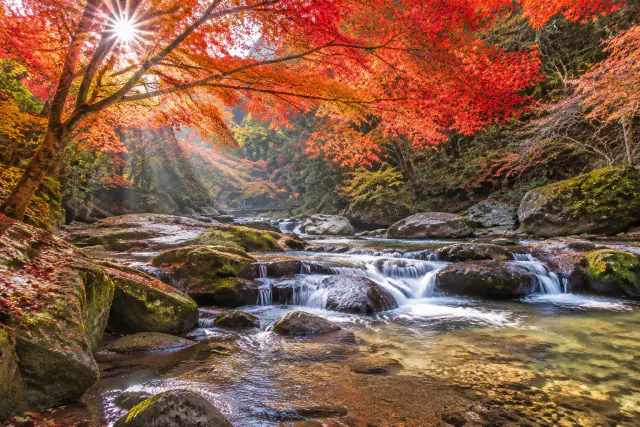 Kumamoto Hiking · 1.5–2 hours Kikuchi Gorge A gorge on the northern side of Aso's outer rim, with clear water and several small waterfalls along the trail. The water's edge is refreshingly cool in summer. November is the most popular time for fall colors, when sunlight filtering through the trees shines on the water. Autumn leavesMountains
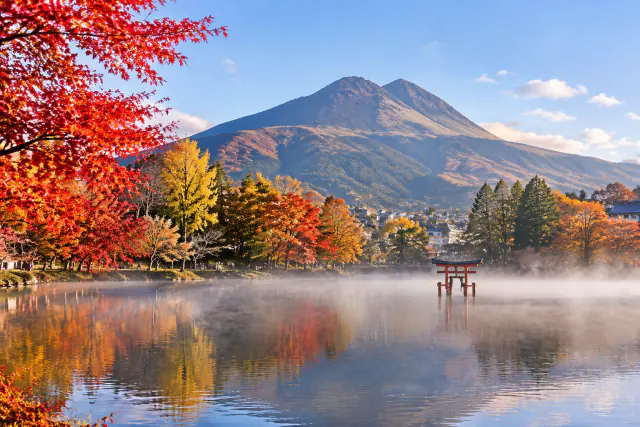 Oita Hot springs · half a day–1 night Yufuin Onsen From the station to Kinrin Lake, Yunotsubo Street is lined with general stores, dessert shops, and small art museums, with twin-peaked Mount Yufu in the background. Daytime crowds are heavy, but the town quiets down after day-trippers leave in the evening, making it worth staying overnight. Hot springsAutumn leaves
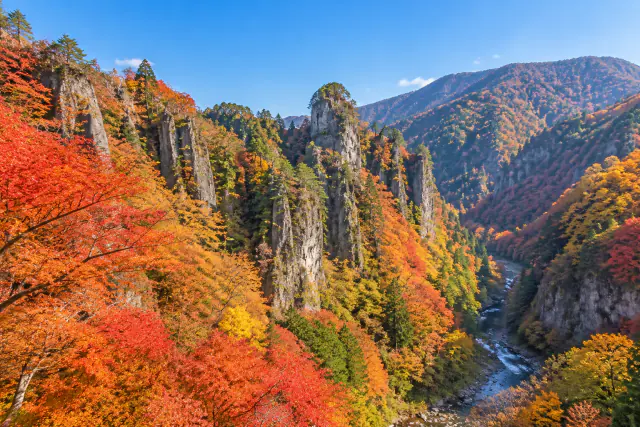 Oita Nature · half a day Yabakei Gorge Strange rock peaks line the Yamakuni River and are considered one of Japan's three great scenic wonders. The gorge is at its best during fall foliage season. At the Hitome Hakkei viewpoint, you can see several peaks at once. Nearby, Aonodomon is a tunnel hand-carved by a monk over 30 years during the Edo period. Autumn leavesMountains
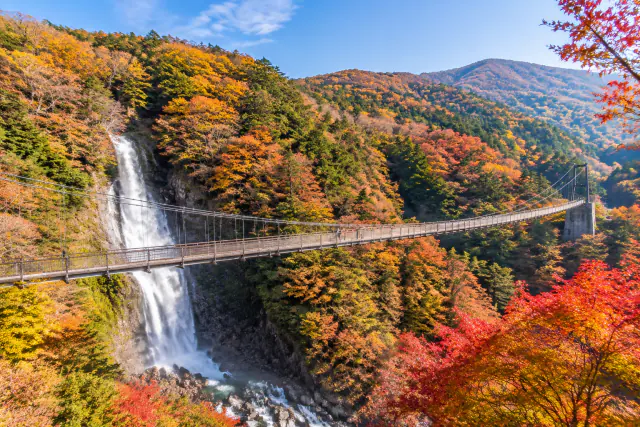 Oita Viewpoint · 1 hour Kokonoe Yume Otsurihashi Japan's highest pedestrian suspension bridge is 390 meters long and 173 meters above the valley floor. You can feel it sway as you cross. The bridge offers views of Shindonotaki Falls, and the surrounding valleys turn bright red in fall. It's a good stop on a day-trip route between Yufuin and Aso. Autumn leavesMountains
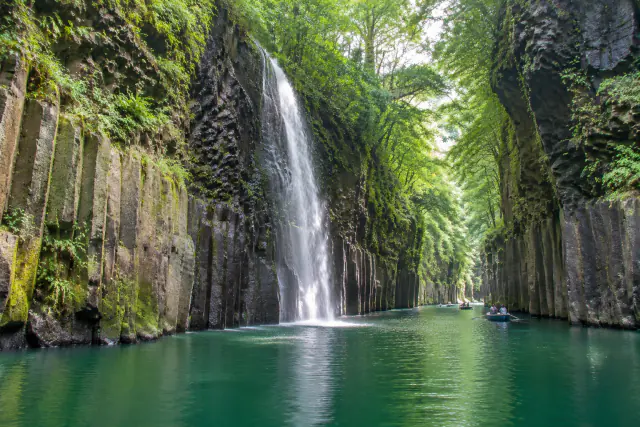 Miyazaki Nature · 1.5–2 hours Takachiho Gorge This gorge was carved by the Gokase River through lava formed when Mount Aso erupted and later cooled. Its walls feature neat columnar joints, and Manai Falls drops from above into the emerald-green water. Walk about 1 kilometer along the gorge trail, or rent a rowboat for a view of the falls from the water. The latter is the classic scene. MountainsAutumn leaves
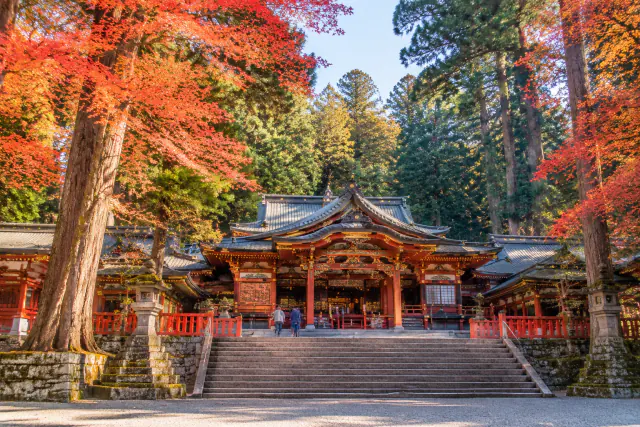 Kagoshima Shrine · 1–1.5 hours Kirishima Jingu Surrounded by towering cedar trees, this vermilion shrine has finely carved, brightly colored buildings and is known as the Nikko of western Japan. The maple leaves along the approach are beautiful in fall. Nearby Kirishima Onsen lets you pair a day of bathing with a shrine visit. Historic sitesAutumn leavesHot springs