Cloudborne Travel
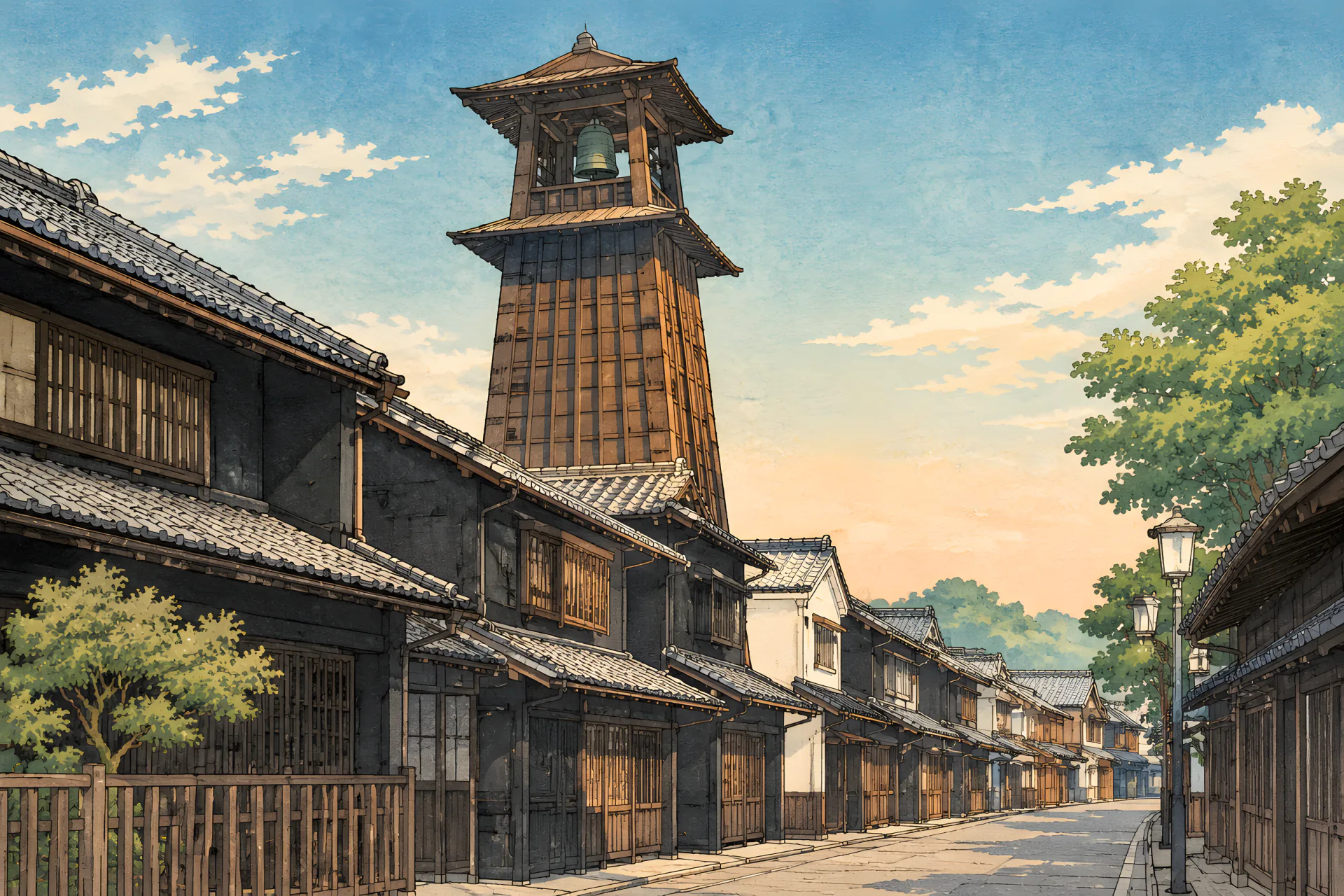
Saitama lies just north of Tokyo, and many Tokyo residents commute from here every day, so transportation is easy. Kawagoe is the best choice for most visitors: its Edo-period warehouse district is beautifully preserved, and it is just a 30-minute train ride from Ikebukuro. Farther west, Chichibu has moss phlox in spring and fall foliage in autumn. At Nagatoro, you can drift down a rocky river gorge in a wooden boat.
For a second trip to Tokyo or a half-day outing without an early start, Kawagoe is the best choice. Chichibu and Nagatoro are better as a full-day trip; the Seibu limited express takes about 80 minutes from Ikebukuro. Omiya has The Railway Museum and a bonsai village, so families and train enthusiasts can easily spend half a day there. Saitama has limited accommodation, so most people return to Tokyo the same day.
In late March, Gongendo Sakura Embankment in Satte combines cherry blossoms with rapeseed flowers. Hitsujiyama Park's moss phlox blooms in late April, and Nagatoro's fall foliage peaks in mid- to late November. Chichibu is very crowded during Golden Week.
Monthly weather
Based on SaitamaBest time to visit Monthly precipitation (mm) Open-Meteo (ERA5), 1996–2025 average
| Month | Average high (°C) | Average low (°C) | Monthly precipitation (mm) | Days with 1 mm or more of precipitation |
|---|---|---|---|---|
| Jan | 9.1 | 0.8 | 62 | 6 |
| Feb | 10 | 1.6 | 62 | 8 |
| Mar(Good time to visit) | 13.6 | 5 | 111 | 11 |
| Apr(Good time to visit) | 18.2 | 10.1 | 121 | 12 |
| May(Good time to visit) | 22.6 | 15.3 | 134 | 12 |
| Jun | 25.6 | 19.4 | 160 | 14 |
| Jul | 29.6 | 23.4 | 148 | 13 |
| Aug | 31 | 24.7 | 108 | 11 |
| Sep(Good time to visit) | 27.2 | 21.2 | 167 | 14 |
| Oct(Good time to visit) | 21.6 | 15 | 193 | 13 |
| Nov(Good time to visit) | 16.5 | 9.1 | 93 | 10 |
| Dec | 11.4 | 3.6 | 62 | 7 |
Sights
-
 1
Kawagoe Warehouse District
川越 蔵造りの町並み
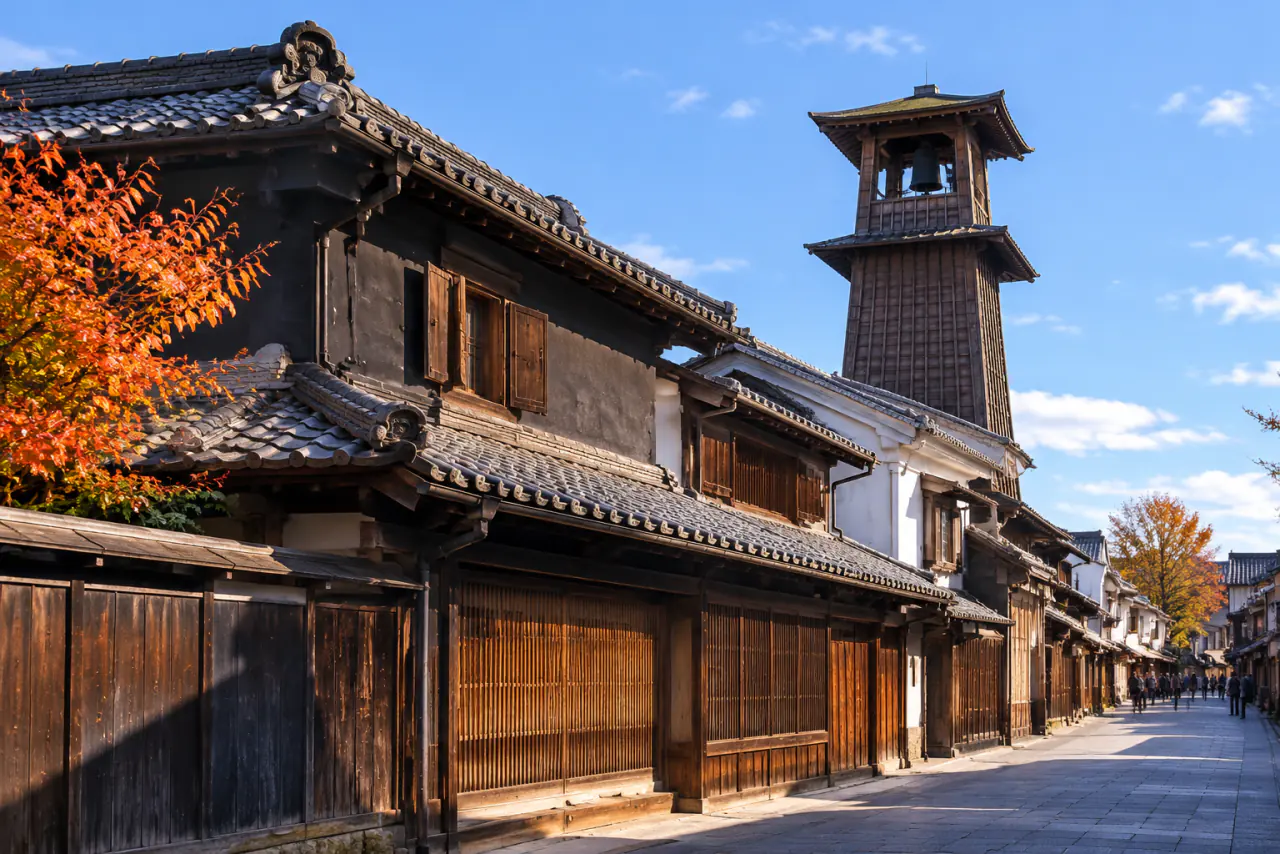
During the Edo period, Kawagoe was a merchant town that supplied Edo. Wealthy merchants built fire-resistant storehouses with thick black-and-gray plaster walls, creating the distinctive warehouse district that survives today. The landmark Toki no Kane clock tower rings several times a day. Nearby Kashiya Yokocho is lined with old-fashioned candy shops, making it a fun place to snack as you walk.
The streets are crowded around noon on weekends. Arrive before 10 a.m. for better photos. The Kawagoe Festival takes place on the third weekend of October, with floats parading through the streets.
-
 2
Kawagoe Hikawa Shrine
川越氷川神社
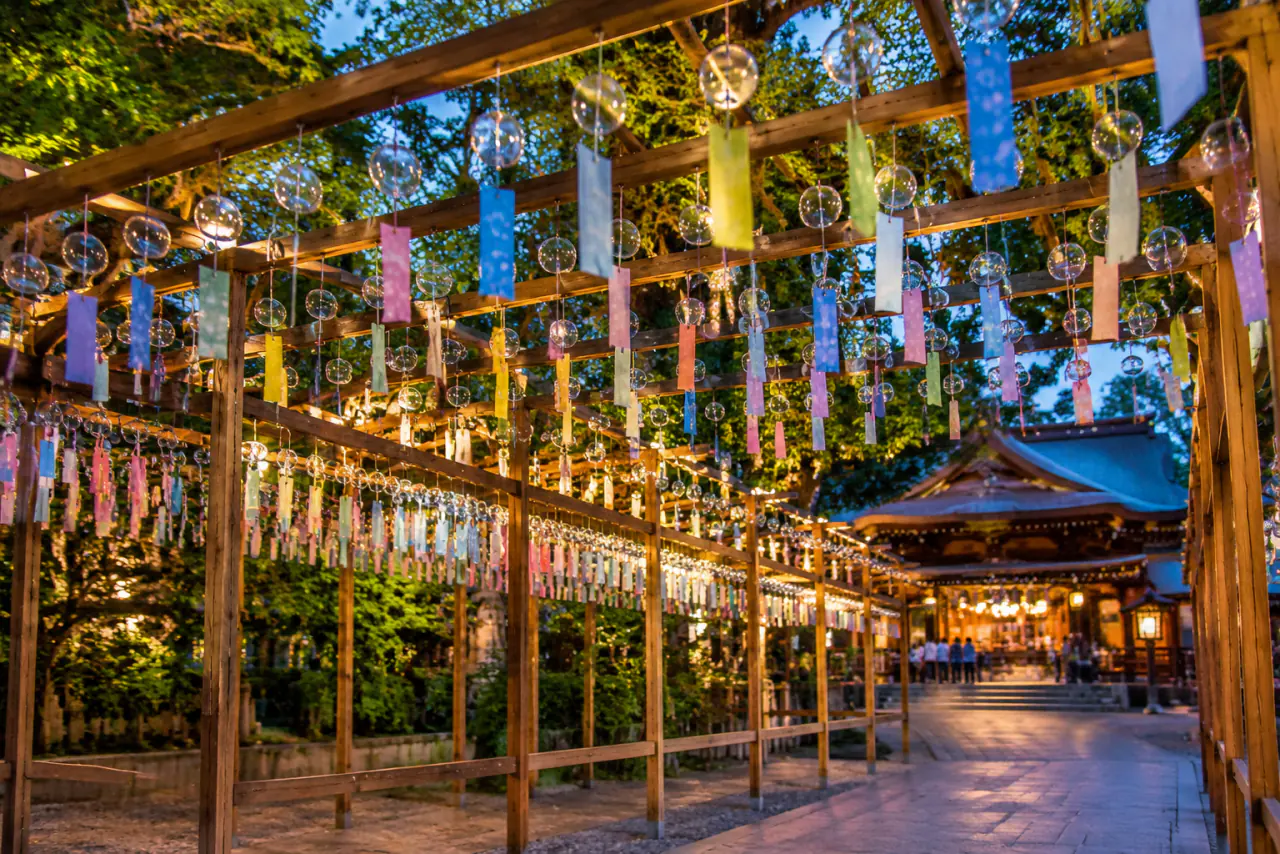
This shrine is famous as a place to pray for love and marriage, and it is within walking distance of the old town. In summer, an arcade is filled with Edo-style wind chimes that tinkle in the breeze and are lit up at night. Visitors can also fish for fortunes written on small sea bream-shaped slips, a popular activity with younger visitors. Cherry blossoms line the Shingashi River behind the shrine in spring.
The wind-chime arcade is a summer event. It looks best after the evening lights come on; check the shrine's website for exact dates.
-
 3
Hitsujiyama Park
羊山公園 芝桜の丘
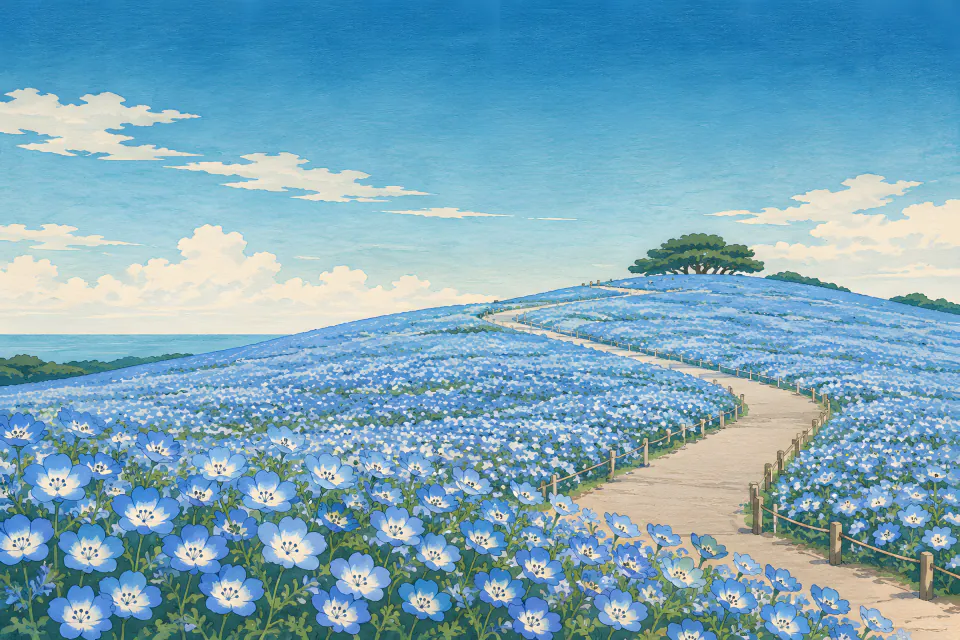
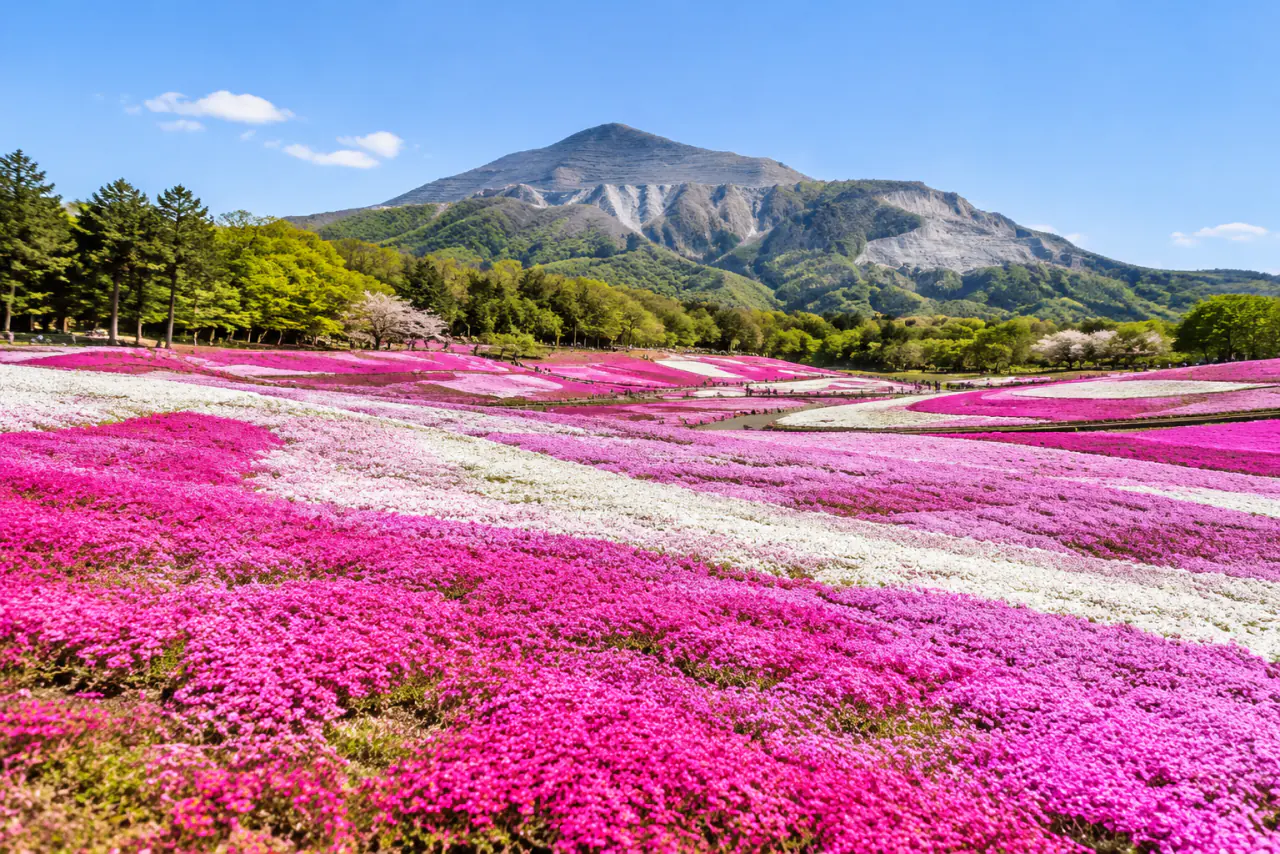
From mid-April to early May, pink, purple, and white moss phlox cover the hillsides in colorful carpets, with Mount Buko rising behind them. It is a 15–20-minute walk from Seibu-Chichibu Station. Outside the blooming season, the park is free and offers a hilltop view over Chichibu.
Limited express tickets sell out quickly during Golden Week, so book ahead in the Seibu app. Admission during the flower season is about ¥300.
-
 4
Nagatoro Iwadatami and river cruises
長瀞 岩畳 · Nagatoro Iwadatami
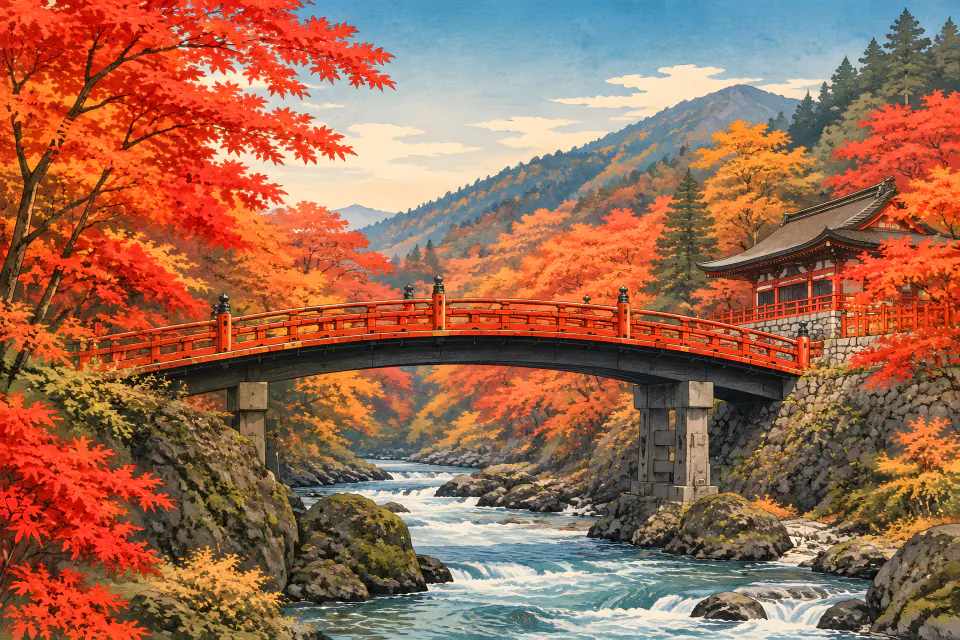
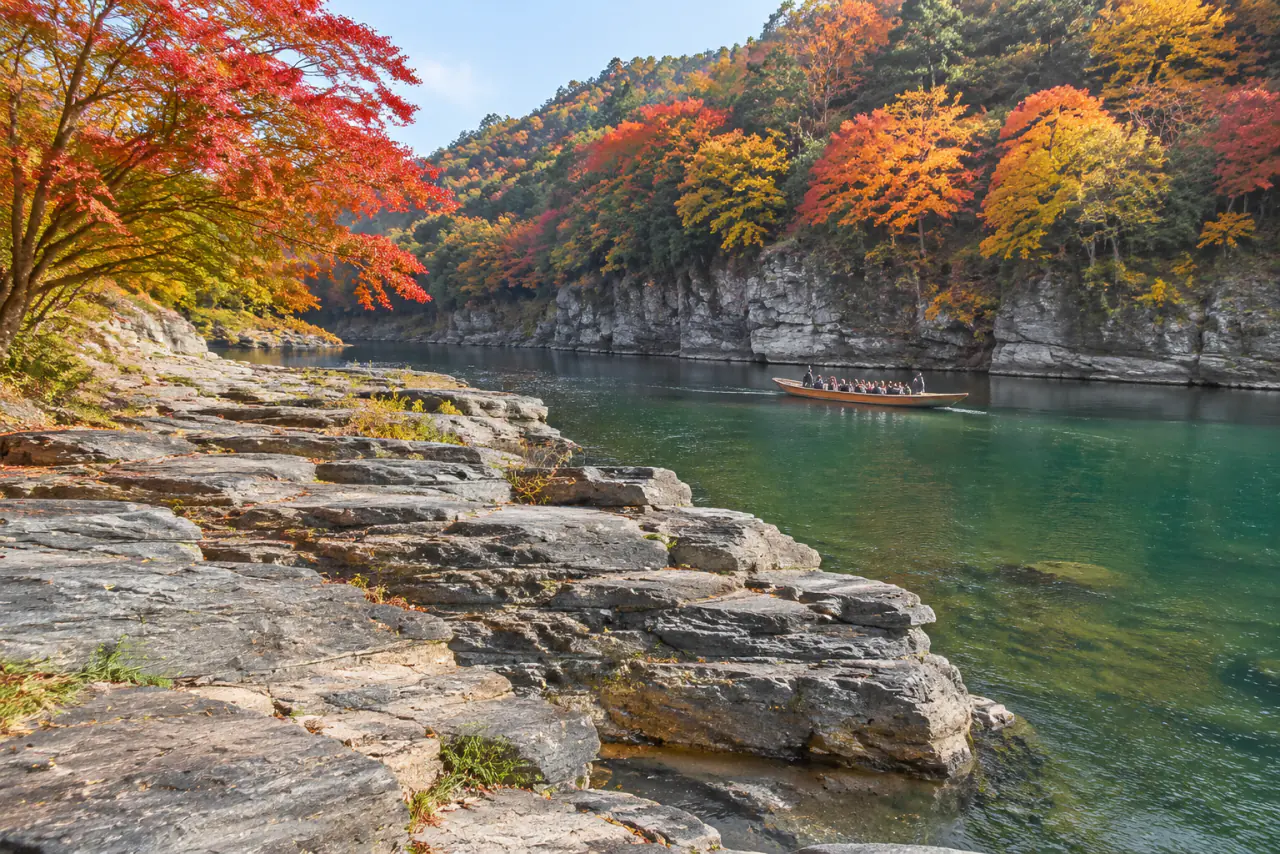
Broad stretches of flat, layered rock along the Arakawa River look like tatami mats laid out in steps, with emerald-green water flowing beside them. You can drift downstream in an unpowered wooden boat while the boatman steers with a long pole. The boat splashes through rapids, and the upper and lower sections can be taken separately. The foliage along both banks is best in mid- to late November, and rafting is also available in summer.
The Chichibu Railway takes about 20 minutes from Chichibu to Nagatoro Station. Cruises stop when water levels are too high or too low.
-
 5
Chichibu Shrine
秩父神社
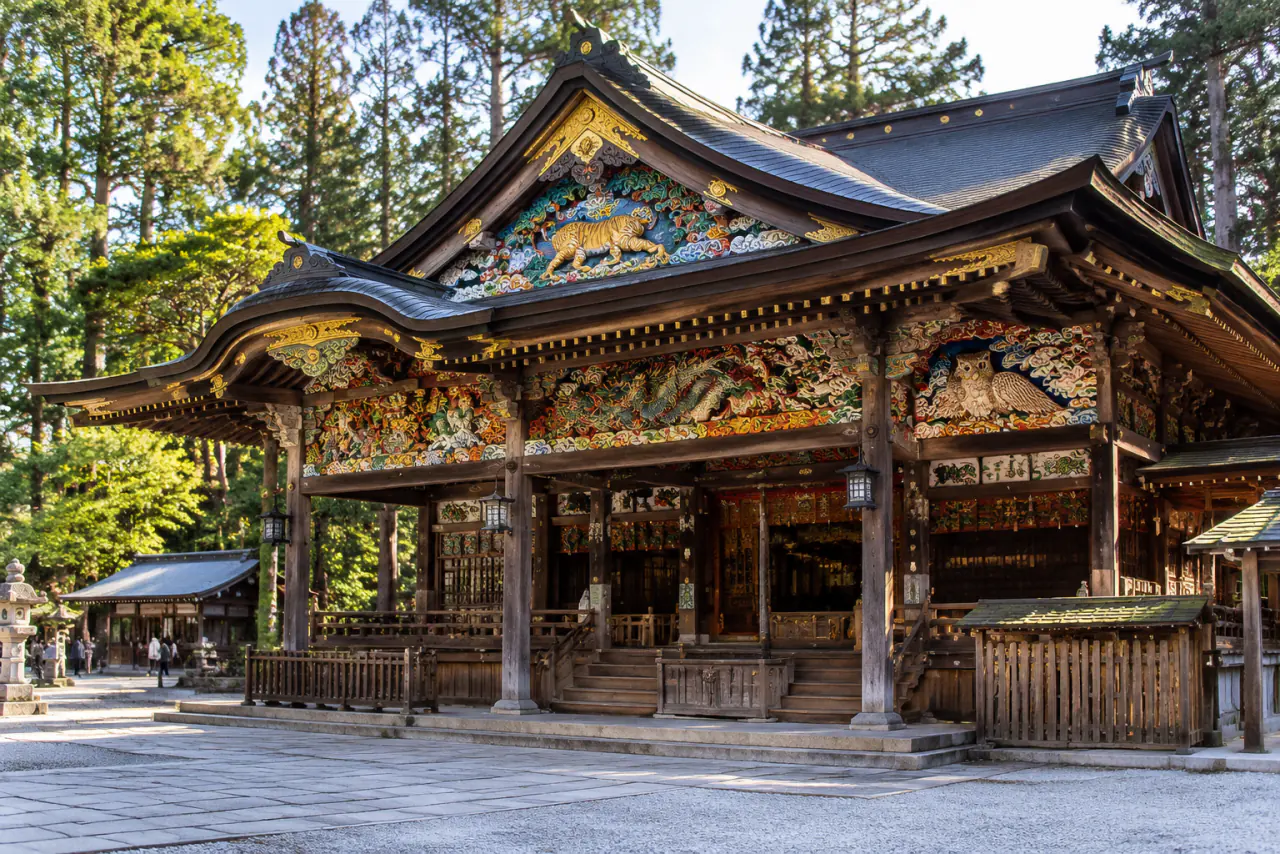
Chichibu's main shrine is known for its finely detailed, colorful carvings. Some are by Hidari Jingoro, who is also credited with the sleeping cat at Nikko Toshogu. Held each year on December 2–3, the Chichibu Night Festival is one of Japan's three major float festivals. Huge floats are pulled uphill through the winter night, accompanied by fireworks. The shrine is about a 15-minute walk from Seibu-Chichibu Station.
The festival night draws enormous crowds. If you cannot find a place to stay, return to Tokyo before the last limited express. You can also watch the festival on large screens.
-
 6
Gongendo Sakura Embankment
権現堂桜堤
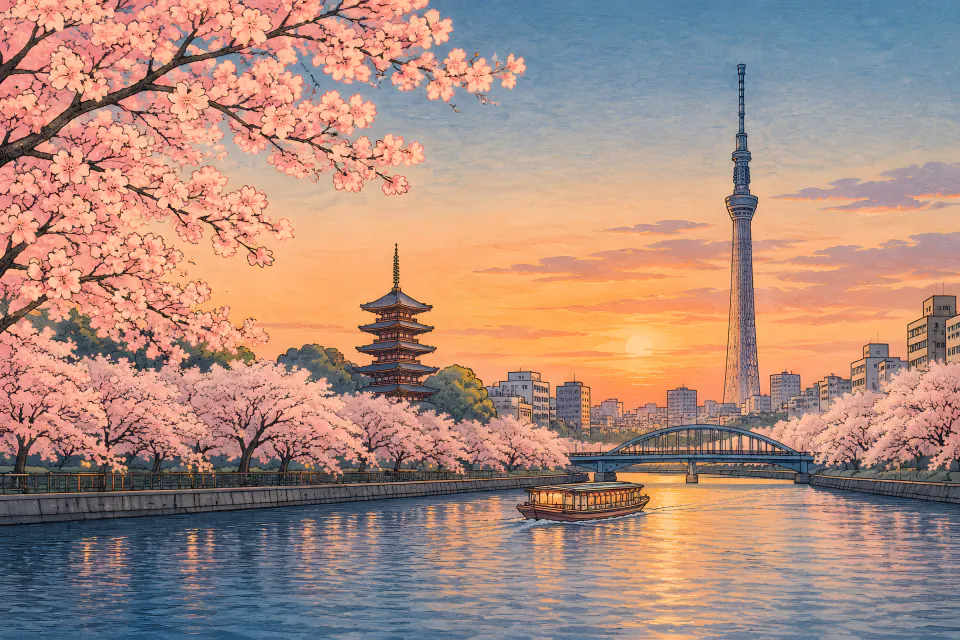
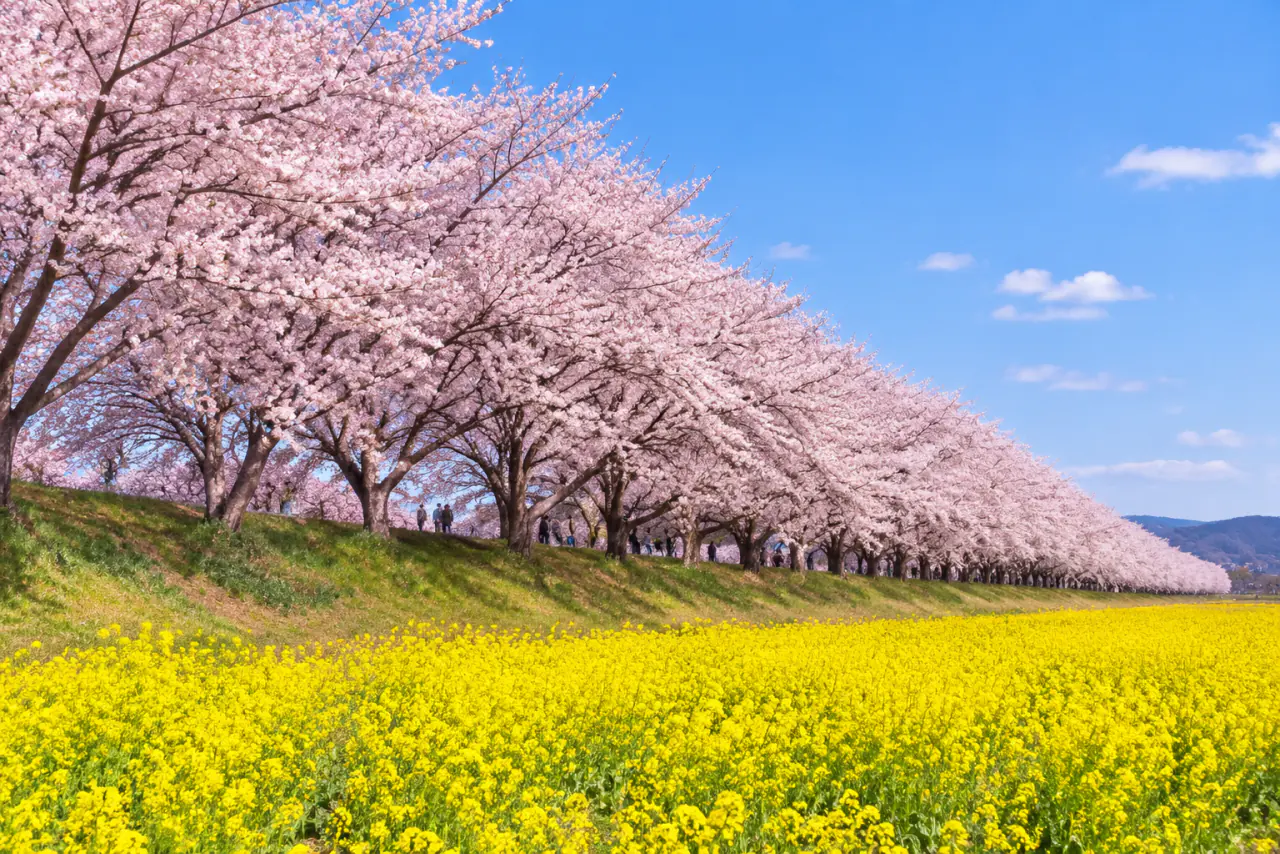
Someiyoshino cherry trees line this roughly one-kilometer-long embankment. From late March to early April, the blossoms bloom alongside rapeseed flowers below, creating a classic Kanto scene of pink and yellow. Hydrangeas bloom in June, followed by red spider lilies in late September. From Satte Station on the Tobu Nikko Line, take a bus to the Gongendo-iriguchi stop, then walk 5 minutes.
Temporary shuttle buses and food stalls operate on weekends during cherry blossom season, when the area gets very crowded. Weekday mornings are more relaxed.
-
 7
The Railway Museum
鉄道博物館
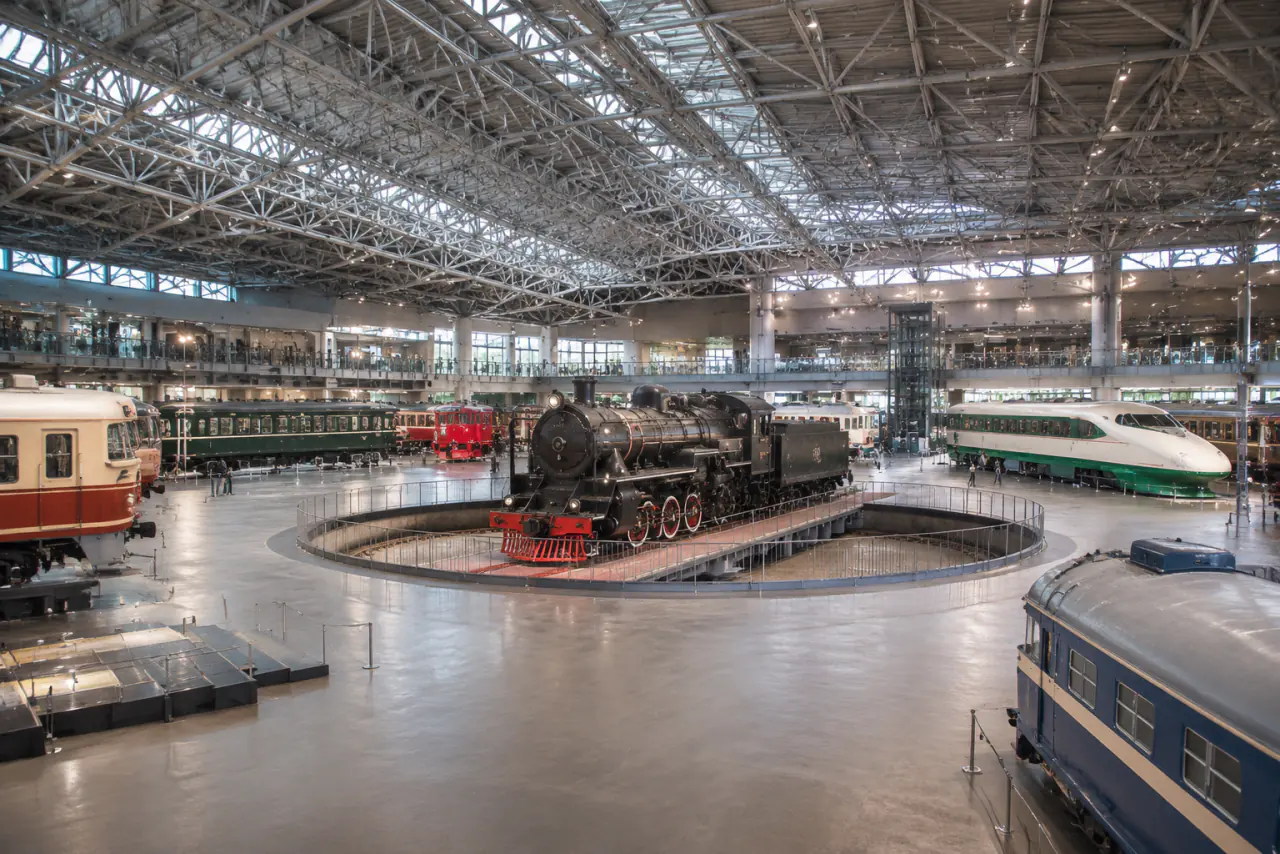
JR East's railway museum is filled with retired steam locomotives, Shinkansen trains, and limited express cars on the first floor. Many can be entered, including the driver's cabs. The simulators are especially popular; the most sought-after ones require a lottery or a separate paid reservation. From Omiya Station, take the New Shuttle one stop to The Railway Museum Station. The museum is right outside the station.
Closed Mondays. The museum recommends buying tickets online in advance; advance tickets are about ¥100 cheaper than same-day tickets.
What to eat
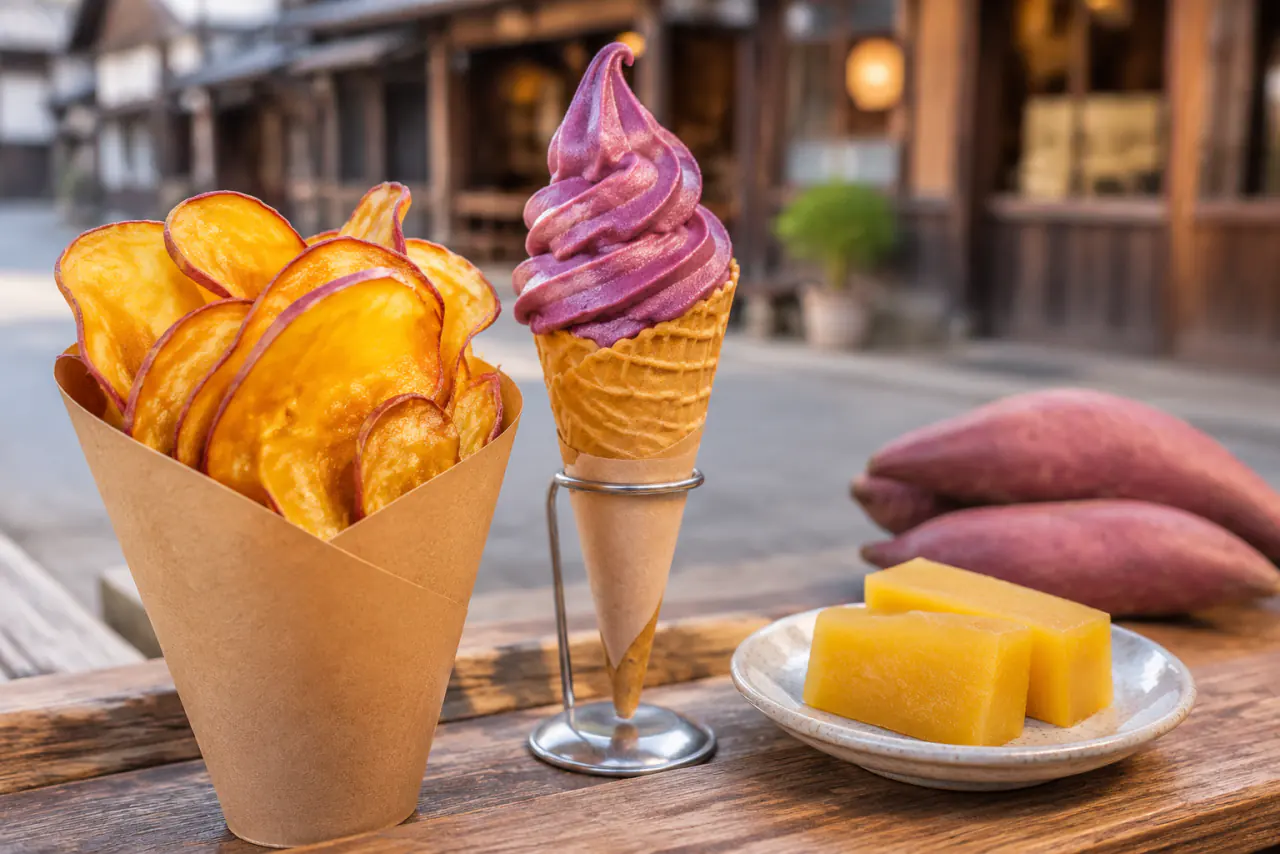
Kawagoe sweet potatoes and desserts
Kawagoe has been known for sweet potatoes since the Edo period. The old town has enough sweet potato treats to keep you snacking as you walk: roasted sweet potatoes, sweet potato ice cream, sweet potato fries, and sweet potato yokan. Prices are modest, and it is normal to try three or four items while walking. Finish them at the shop before moving on.
Kawagoe Warehouse District and Kashiya Yokocho · About ¥300–800 each
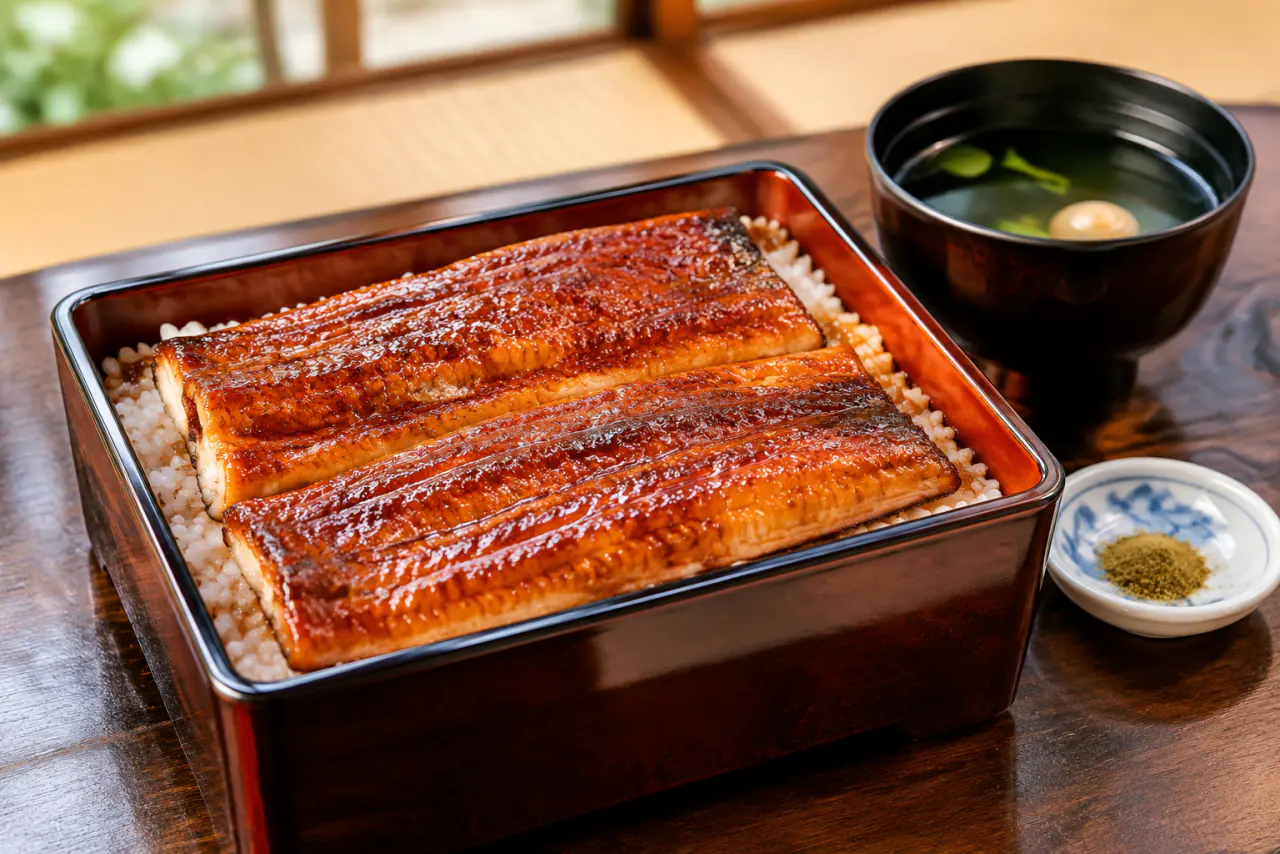
Kawagoe unagi
Kawagoe once relied on river transport, and the nearby rivers were rich in eel. Several century-old eel restaurants still operate around the old town. The Kanto style steams the eel before grilling it, giving the meat a tender texture and a slightly sweet sauce. Popular restaurants can have waits of one or two hours on weekends, so arrive before opening or take a number and explore the streets while you wait.
Around Kawagoe's old town · About ¥4,000–6,000 per person
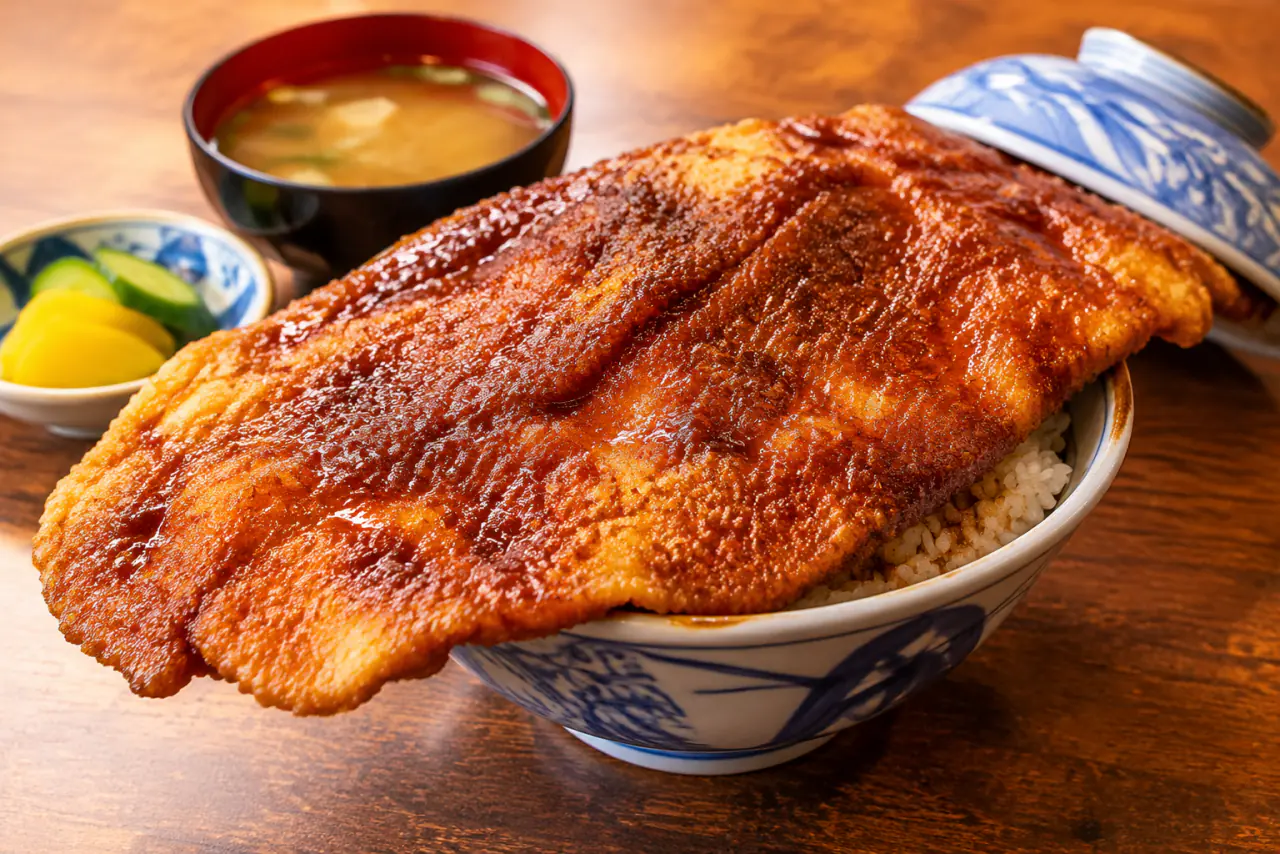
Chichibu waraji katsudon
This Chichibu specialty features a pork cutlet pounded thin and wide until it resembles a straw sandal. It is dipped in a sweet-and-savory sauce and placed over rice, usually with two cutlets per bowl. The portions are generous. Add a bowl of Chichibu soba for a complete meal, especially after a strenuous day of hiking.
Around Seibu-Chichibu Station and Chichibu Shrine · About ¥1,000–1,500 per person
Getting there · Where to stay
Take the Tobu Tojo Line express to Kawagoe Station in about 30 minutes. At about ¥490, it is the fastest and cheapest way to get to Kawagoe.
The Seibu limited express Laview runs directly to Seibu-Chichibu in about 80 minutes, with reserved seats for every passenger. If you skip the limited express, change trains at Hanno. The trip takes about 20 minutes longer and costs half as much.
The JR Keihin-Tohoku Line or Shonan-Shinjuku Line takes about 30 minutes. The Shinkansen also stops at Omiya, making it a transfer point for trains to Tohoku and Hokuriku.
Most people visit from Tokyo as a day trip. If you want to see the Chichibu Night Festival or visit Nagatoro early the next morning, stay near Seibu-Chichibu Station, close to both the hot springs and the station.
Know this before you go
- Tobu offers a discounted round-trip Kawagoe pass for international visitors. Buy it at Ikebukuro Station; it costs less than buying two one-way tickets.
- Seibu offers a 1-day pass and a Nagatoro version that includes the Chichibu Railway. If you are visiting both Chichibu and Nagatoro, it costs less than buying separate tickets.
- Two loop buses serve Kawagoe's old town, but most sights are just 10–15 minutes apart on foot. If you have the energy, walk.
- Seibu limited express trains sell out quickly during the Chichibu Night Festival and moss phlox season. Reserve a seat at least one week ahead.