Cloudborne Travel
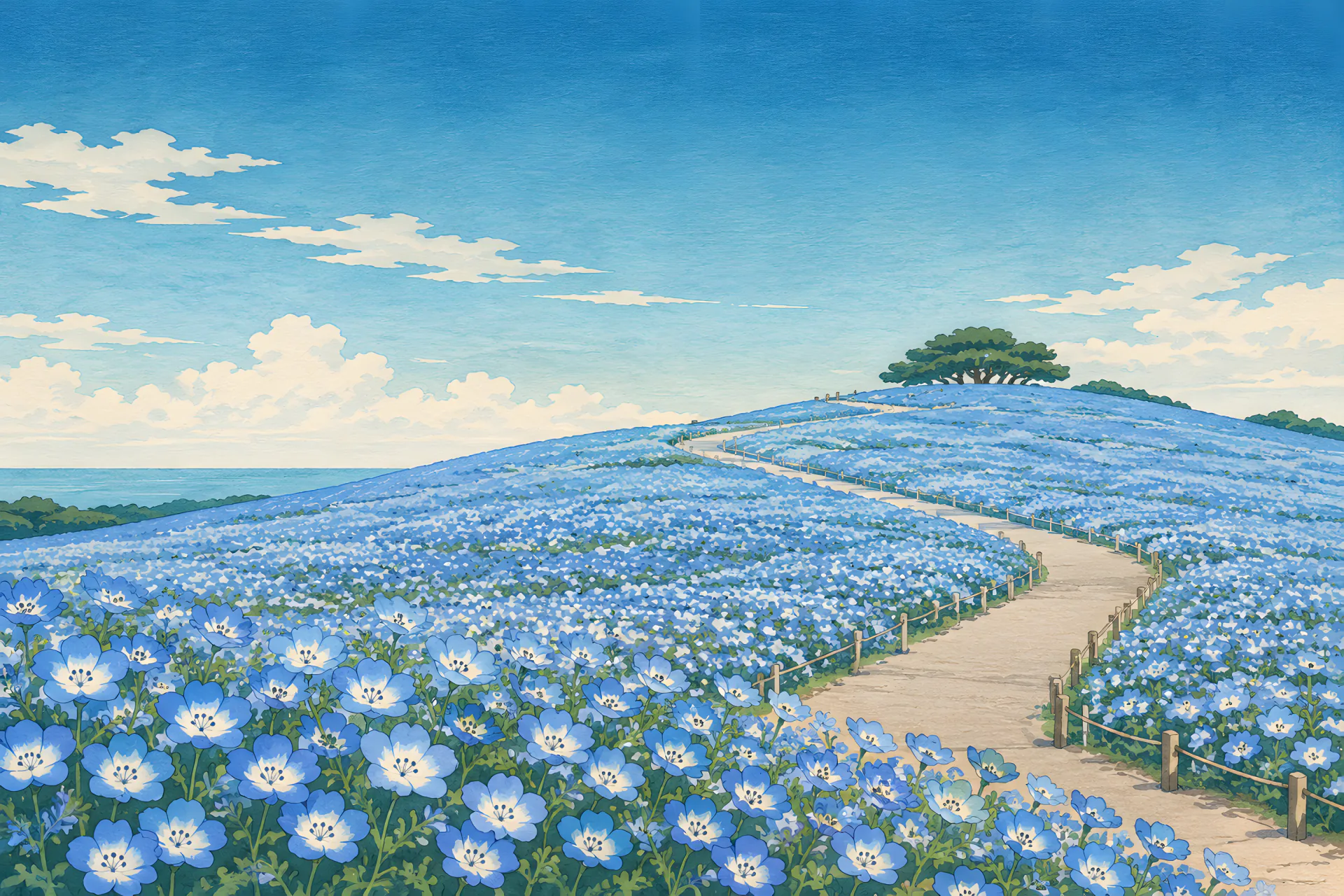
Ibaraki lies northeast of Tokyo. It usually gets little attention, but 2 seasons make it worth a special trip: from late April to mid-May, blue nemophila blanket an entire hillside at Hitachi Seaside Park; from late February through March, more than 3,000 plum trees bloom in succession at Kairaku-en in Mito. In fall, the park's kochia turn red. Farther north, Fukuroda Falls is worth seeing for its fall foliage and winter ice.
Most visitors explore Ibaraki on a day trip from Tokyo. Take a JR Joban Line limited express to Mito, then transfer for Hitachi Seaside Park or Kairaku-en. To see more, stay overnight in Mito and visit the Oarai coast or Mount Tsukuba the next day. Sights are spread out and buses are infrequent, so choosing 1 or 2 highlights is more practical than trying to see everything.
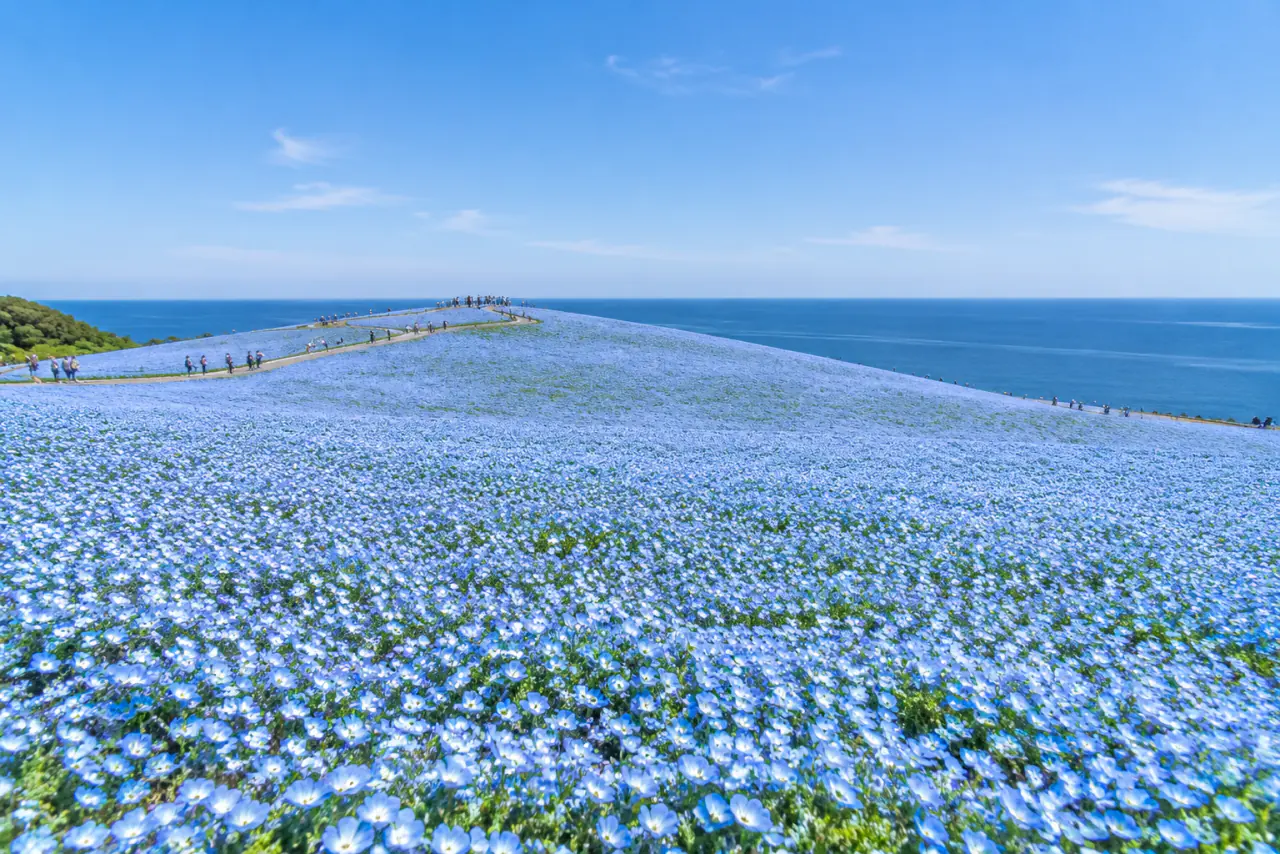
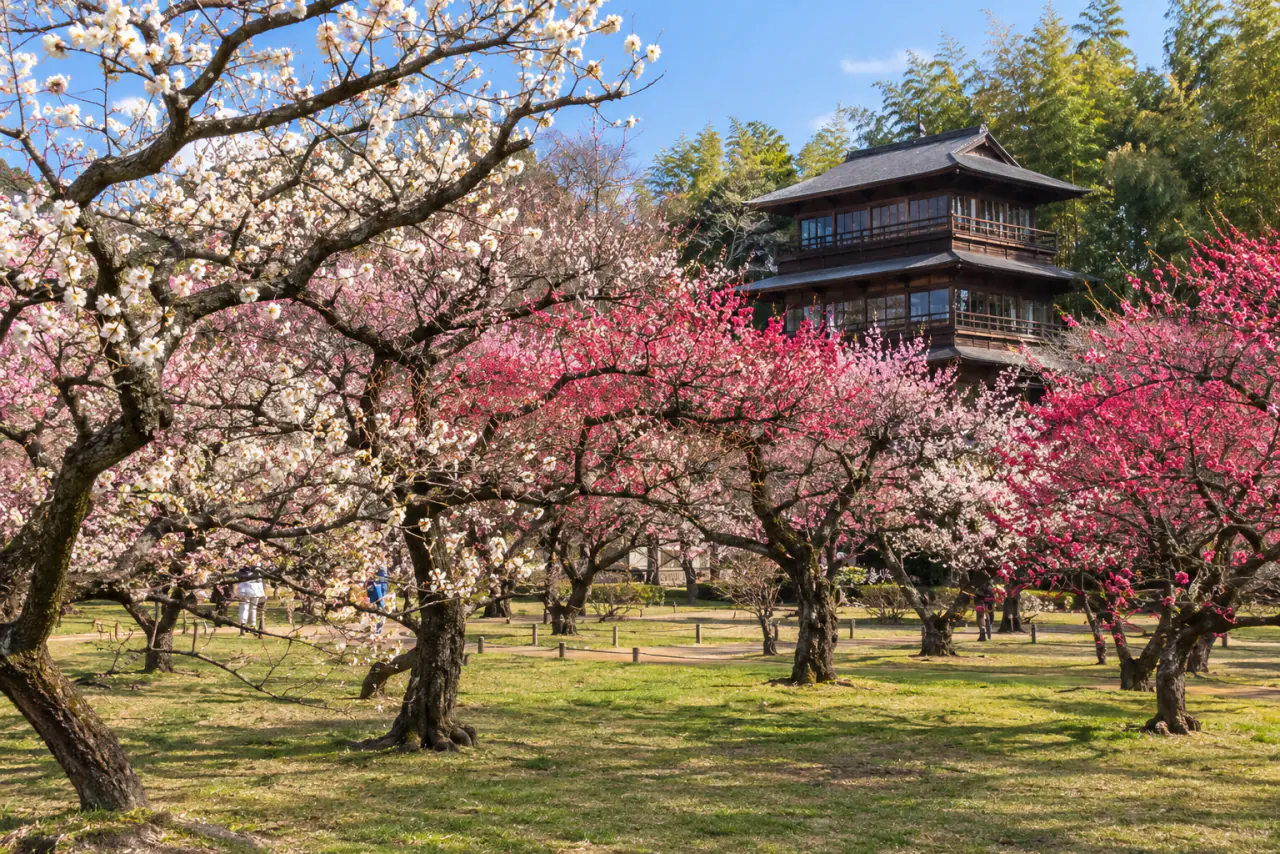
Nemophila bloom from late April to mid-May, and plum blossoms from late February through March. Kochia turn red in October. Hitachi Seaside Park is busiest during Golden Week.
Monthly weather
Based on MitoBest time to visit Monthly precipitation (mm) Open-Meteo (ERA5), 1996–2025 average
| Month | Average high (°C) | Average low (°C) | Monthly precipitation (mm) | Days with 1 mm or more of precipitation |
|---|---|---|---|---|
| Jan | 8.7 | 3.3 | 68 | 8 |
| Feb | 9.2 | 3.5 | 71 | 8 |
| Mar(Good time to visit) | 12.4 | 6.1 | 127 | 13 |
| Apr(Good time to visit) | 16.4 | 10.5 | 131 | 13 |
| May(Good time to visit) | 20.3 | 15.1 | 154 | 13 |
| Jun | 23.1 | 18.8 | 161 | 14 |
| Jul | 26.8 | 22.5 | 160 | 15 |
| Aug | 28.2 | 24 | 115 | 12 |
| Sep(Good time to visit) | 25.5 | 21.5 | 168 | 14 |
| Oct(Good time to visit) | 20.7 | 16.4 | 202 | 14 |
| Nov(Good time to visit) | 16.1 | 11 | 109 | 11 |
| Dec | 11 | 5.8 | 76 | 8 |
Sights
-
 1
Hitachi Seaside Park
国営ひたち海浜公園
Ibaraki's best-known sight. In spring, nemophila cover Miharashi Hill in blue that seems to stretch to the horizon. In October, rounded kochia bushes on the same hillside gradually turn from green to red. The park is large, with a sightseeing train and bicycle rentals. A bus from Katsuta Station's east exit takes about 15 minutes to the park's west entrance.
Bus stops and entrances have long lines on weekends during flower season. Aim to arrive before opening on a weekday. The park is usually closed on Tuesdays.
-
 2
Kairaku-en
偕楽園
One of Japan's 3 great gardens, built in the 19th century by the lord of Mito for the public to enjoy. It has about 3,000 plum trees in more than 100 varieties. The Mito Plum Blossom Festival runs from mid-February to late March. Kobuntei, a wooden pavilion in the garden, overlooks Lake Senba from its upper floor. Take a bus from Mito Station's north exit for about 15 minutes, or walk along Lake Senba for 30 minutes.
Outside the plum blossom festival, admission is free from opening until 9 a.m. Festival admission prices will rise starting in 2027.
-
 3
Fukuroda Falls
袋田の滝
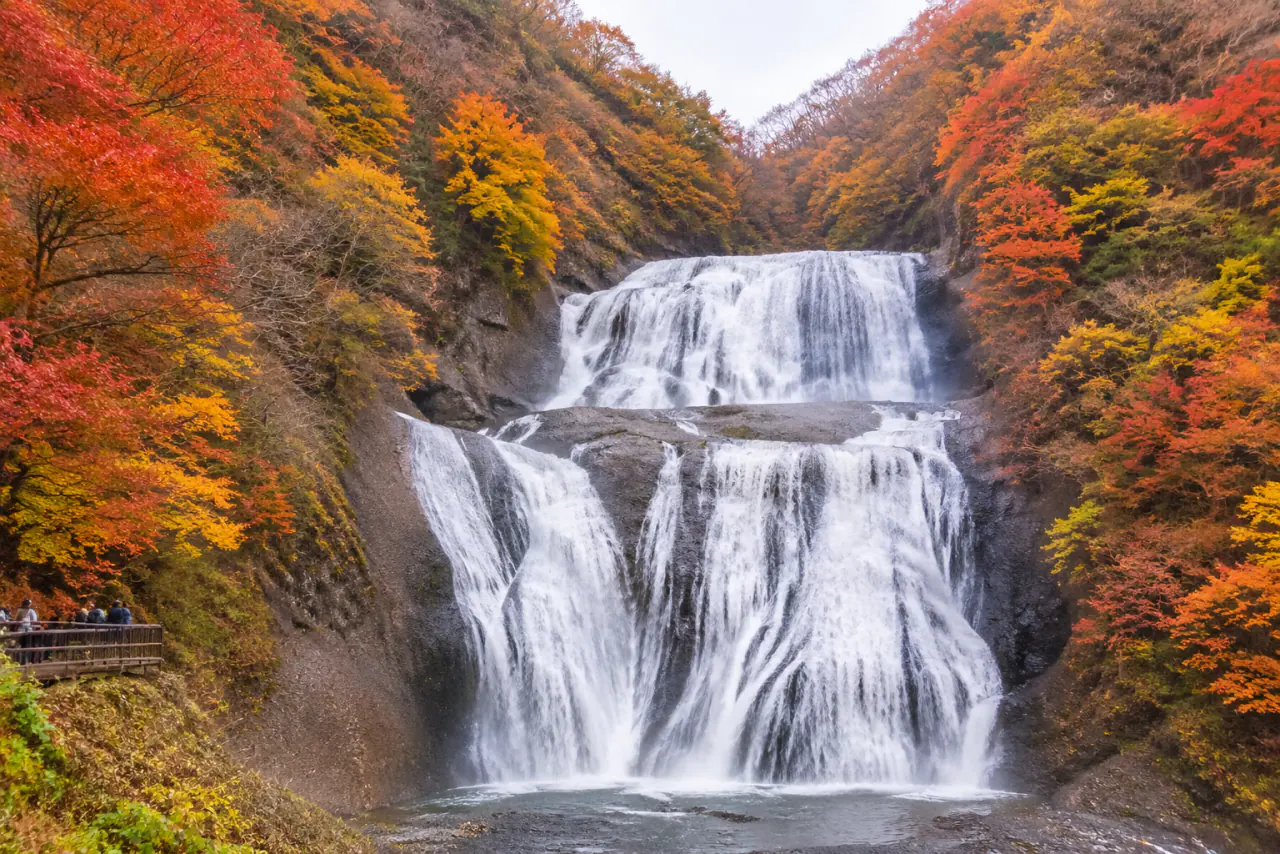
This waterfall drops about 120 meters over 4 tiers. Fall foliage covers the cliffs on either side, and in deep winter the falls can partially freeze. Walk through a viewing tunnel to a platform facing the falls, then take an elevator to a higher platform. Take the JR Suigun Line to Fukuroda Station, followed by a bus ride of about 10 minutes and a 10-minute walk.
Suigun Line trains are infrequent, so check your return schedule first. Evening illuminations are often held during the November foliage season.
-
 4
Mount Tsukuba
筑波山
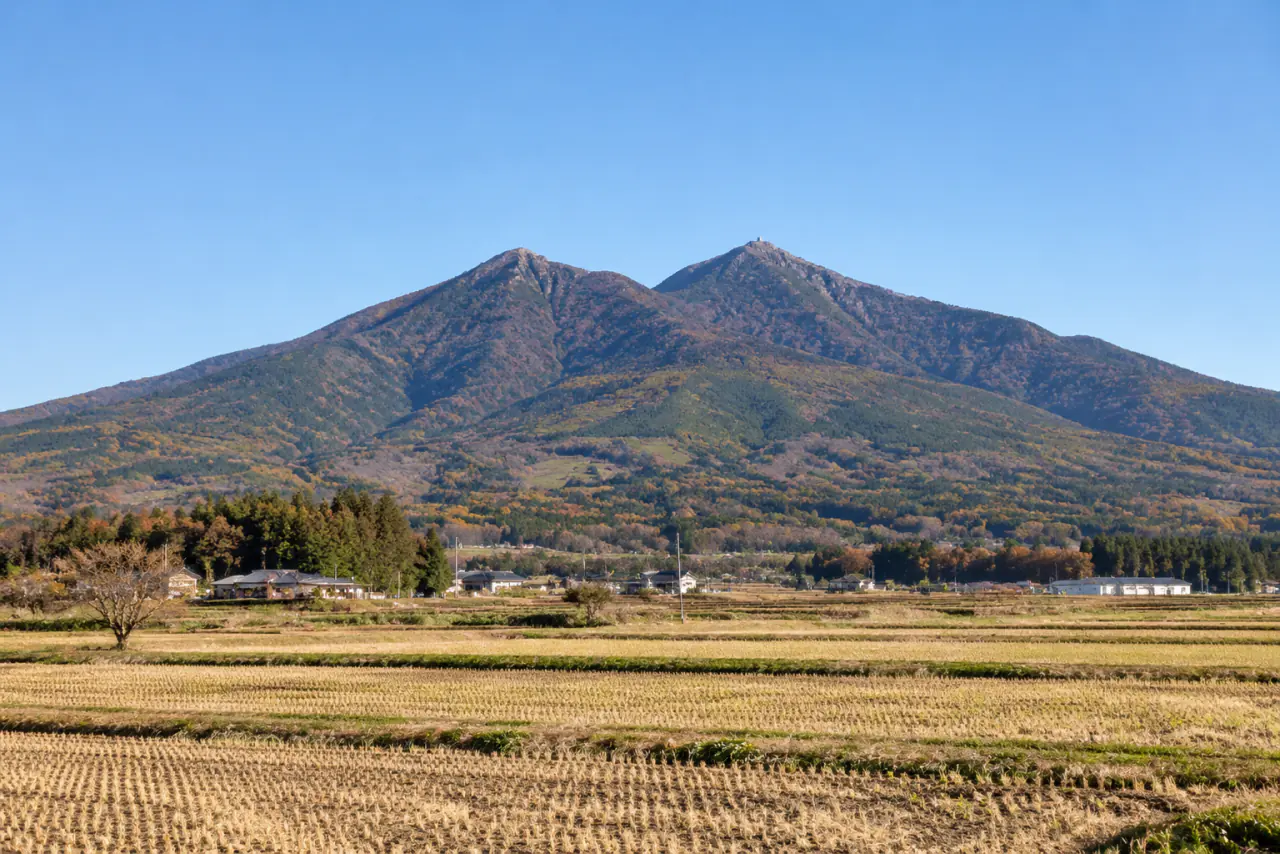
This twin-peaked mountain rises sharply from the Kanto Plain. The walk between its peaks, Nantai and Nyotai, takes a little over 10 minutes. Tsukubasan Shrine sits partway up the mountain. Reach the peaks by cable car or ropeway, or hike from beside the shrine in about 1.5 hours. On clear days, views stretch across the Kanto Plain. In the crisp winter air, you can see Mount Fuji to the west.
Take the Mount Tsukuba shuttle bus from Tsukuba Station. The cable car and ropeway serve different peaks, so choose based on which peak you want to visit.
-
 5
Ōarai Isosaki Shrine
大洗磯前神社
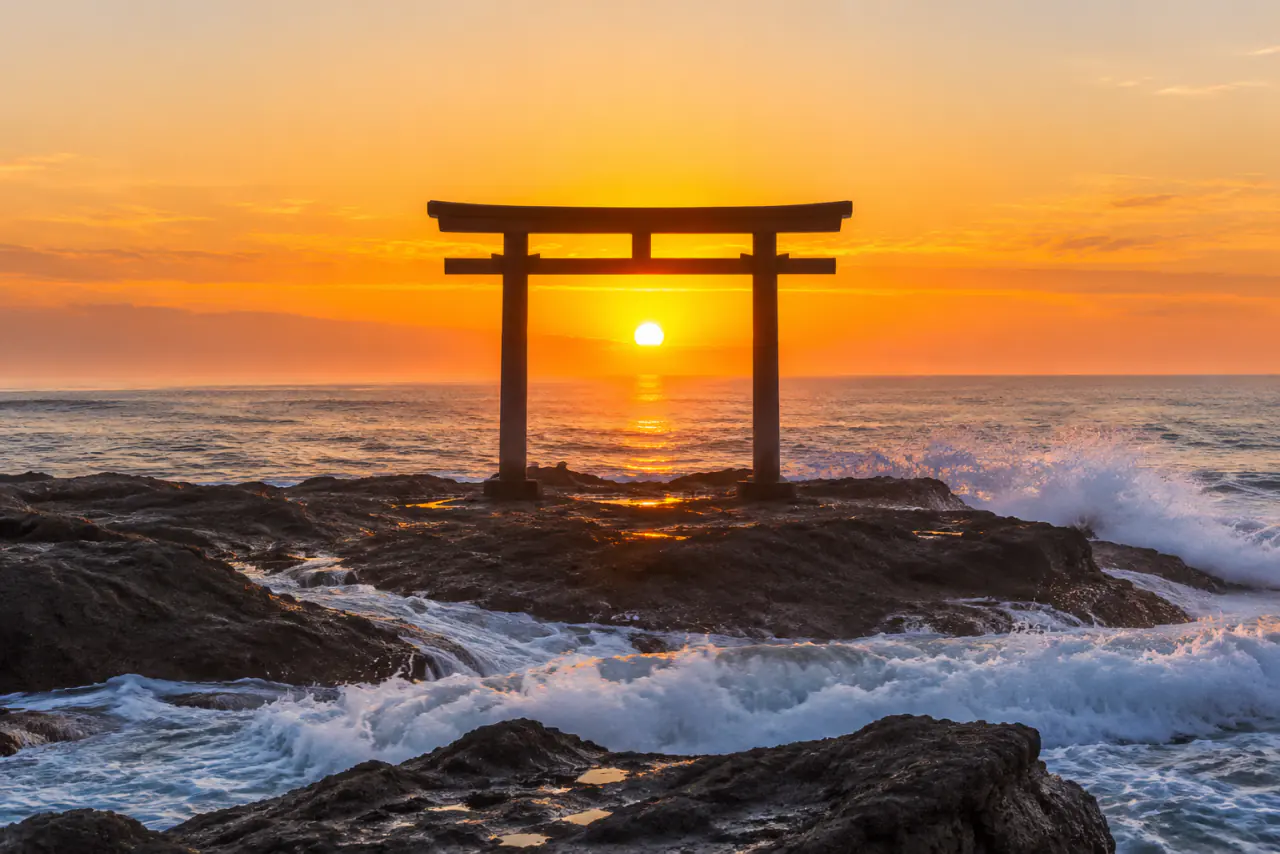
The shrine itself stands on a small hill, but its best-known feature is Kamiiso no Torii, a torii gate on coastal rocks. Waves crash dramatically around it, and the rising sun silhouettes the gate at dawn. Nearby are Aqua World Ibaraki Prefectural Oarai Aquarium and a seafood market. You can combine a visit with Mito in the same day.
Stay in Oarai or Mito if you want to photograph the torii at sunrise. From Mito, take the Kashima Rinkai Railway to Oarai Station, then transfer to a loop bus.
-
 6
Kashima Jingu
鹿島神宮
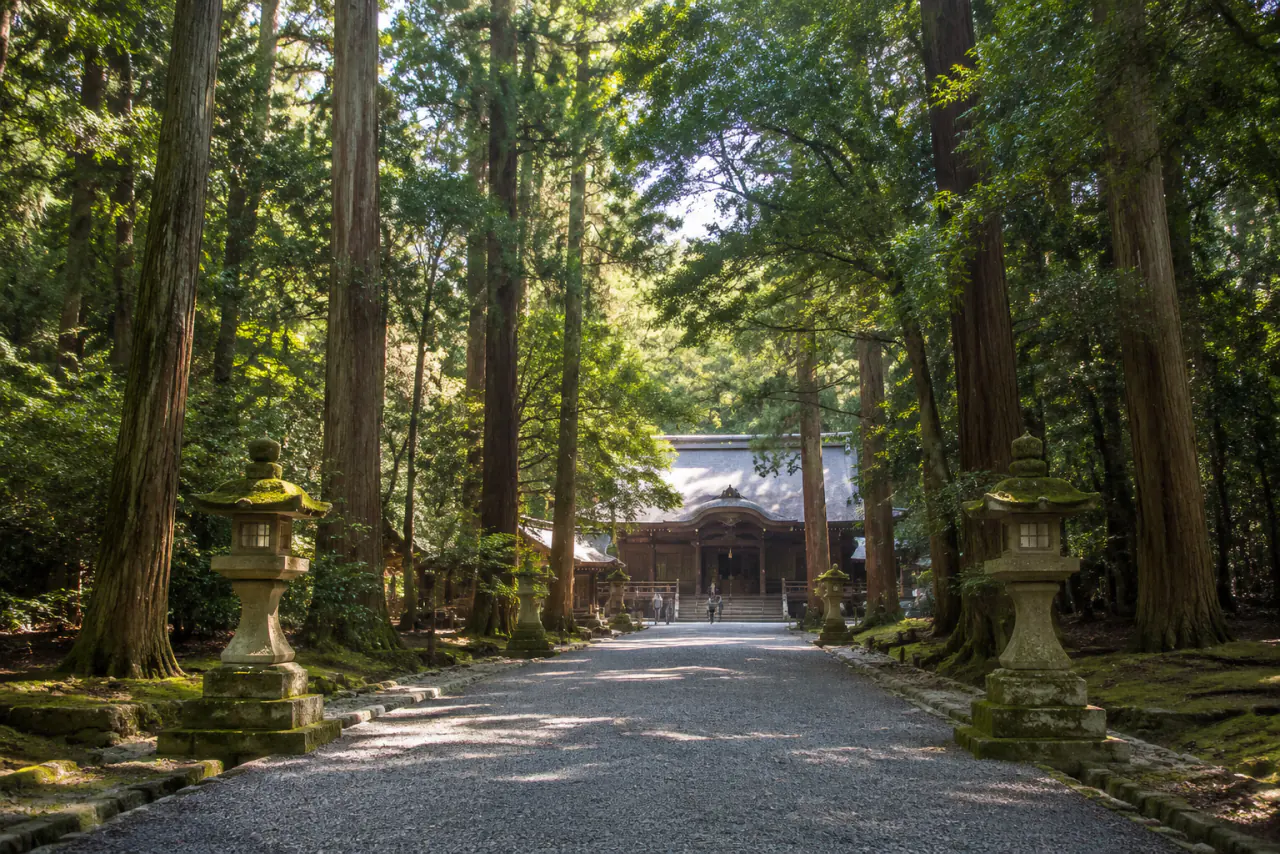
One of the oldest shrines in Kanto, dedicated to a god of martial arts and long revered by samurai. Beyond the approach lies a quiet, ancient forest. At the far end is Mitarashi Pond, fed by a natural spring. Sacred deer are also kept on the grounds. A direct highway bus from Tokyo Station is simpler than making several train transfers.
Combine it with Katori Jingu in Chiba. The shrines sit across the Tone River from each other, about 20 minutes apart by car.
What to eat
Mito natto
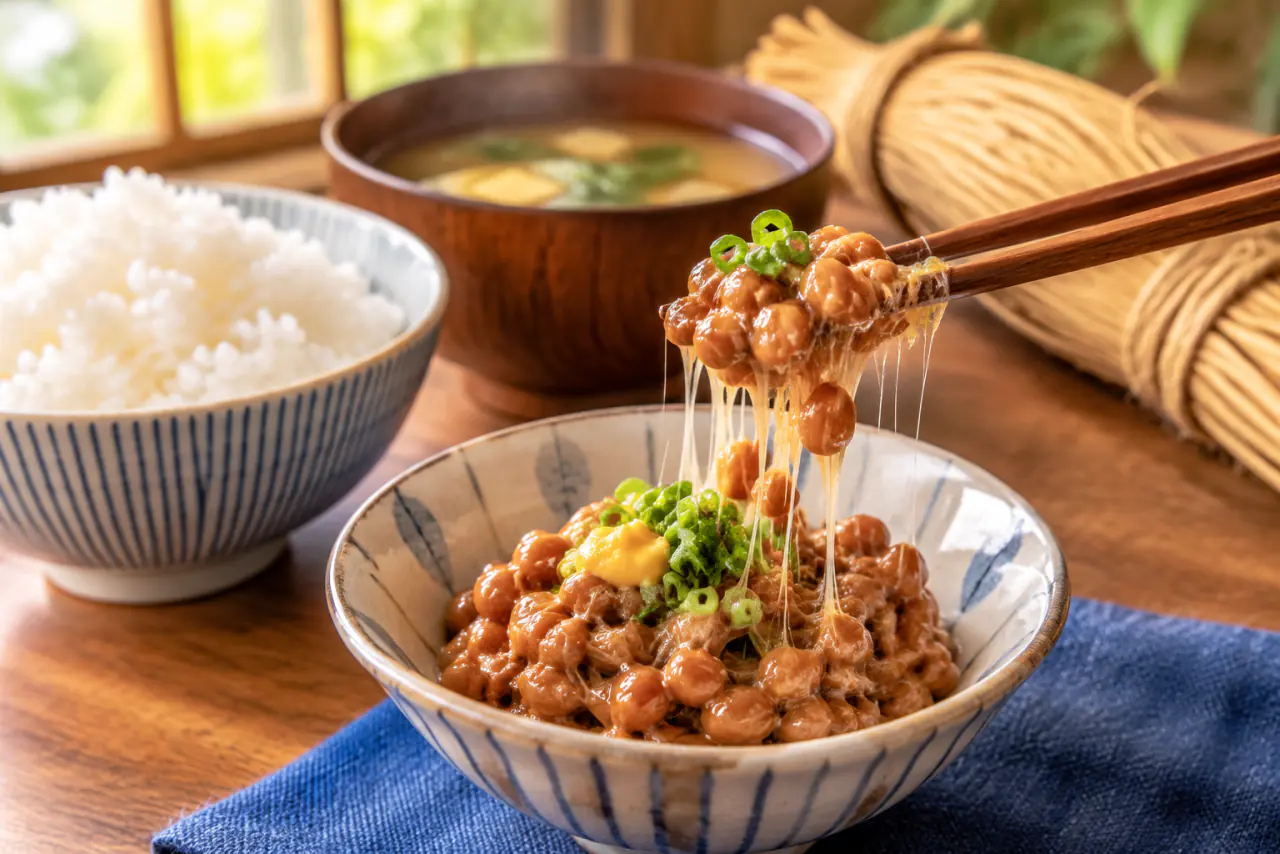
Mito is synonymous with natto. Small fermented soybeans mixed with sauce and mustard and served over white rice are an everyday local breakfast. Station gift shops sell traditional straw-wrapped natto as well as nonsticky dried natto snacks. The snacks are an easy introduction if you have never tried it.
Gift shops at Mito Station and restaurants nearby
Anko nabe
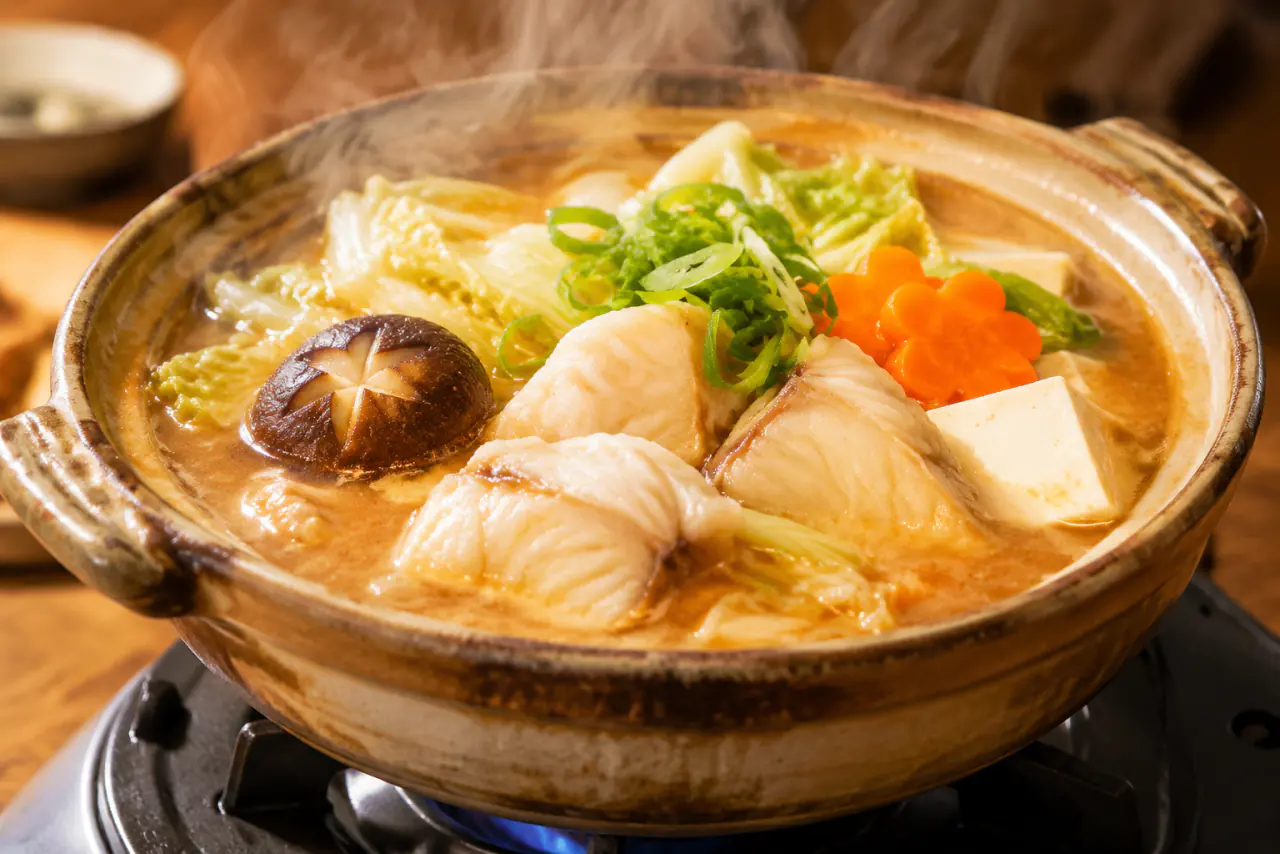
This monkfish hot pot is a signature Ibaraki winter dish. The flesh, skin, and liver cook together in a rich, savory miso broth made with sautéed monkfish liver. It is highly seasonal, at its best from about November through March of the following year. Many restaurants require reservations and a minimum order for 2 people.
Seafood restaurants and ryokan around Oarai and Kitaibaraki · About ¥3,000–6,000 per person
Hoshi imo
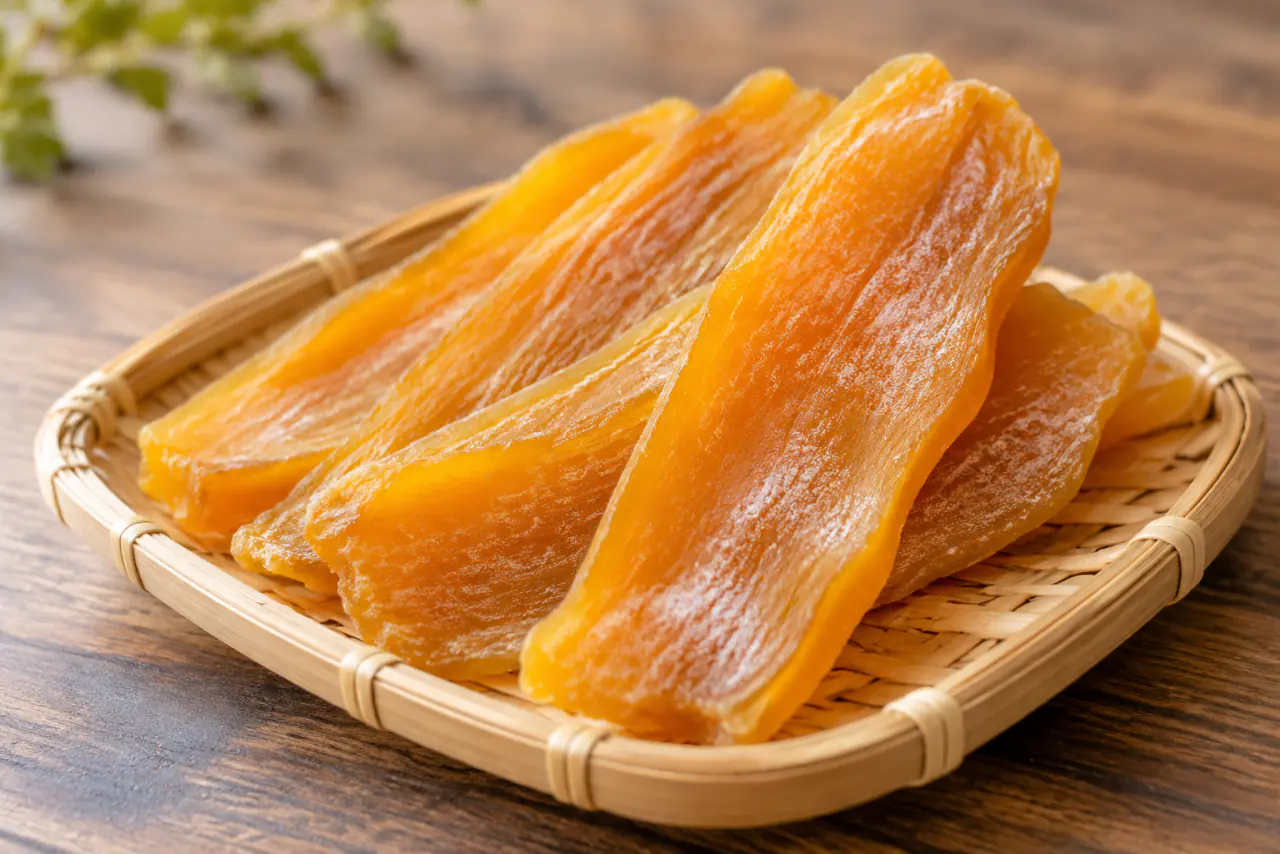
Ibaraki produces the vast majority of Japan's dried sweet potatoes. Steamed sweet potatoes are sliced and sun-dried, giving them a soft, chewy texture and natural sweetness with no additives. Fresh batches are best in winter. Sold at convenience stores and stations, they keep well and make good gifts to take home.
Mito Station and gift shops near Hitachi Seaside Park · About ¥500–1,500 per bag
Getting there · Where to stay
JR Joban Line limited express trains run directly from Tokyo, Ueno, and Shinagawa stations to Mito in a little over 1 hour. For Hitachi Seaside Park, get off at Katsuta Station and transfer to a bus.
The Tsukuba Express rapid service reaches Tsukuba Station in about 45 minutes and costs about ¥1,210. Transfer to a shuttle bus for Mount Tsukuba.
The airport has a small number of international routes, including Shanghai. Services and schedules change frequently, so check the airport's official website before booking. Airport buses run to Mito and Tokyo Station.
Stay near Mito Station for convenient access to Kairaku-en, Hitachi Seaside Park, and Oarai. If you only want to see the flower fields, make it a day trip from Tokyo.
Know this before you go
- Hitachi Seaside Park and Kairaku-en post bloom updates on their official websites during flower season and the plum blossom festival. Check the day before your visit.
- Extra buses run to Hitachi Seaside Park during flower season, but waits of 1 hour are still common on weekends.
- Rural Ibaraki has few buses. If you plan to drive, the requirements depend on where your license was issued. Check official sources for the documents you need to drive legally in Japan.
- Buy a reserved-seat ticket before boarding a Joban Line limited express. Booking through a mobile app is easier than using the ticket counter.