Cloudborne Travel
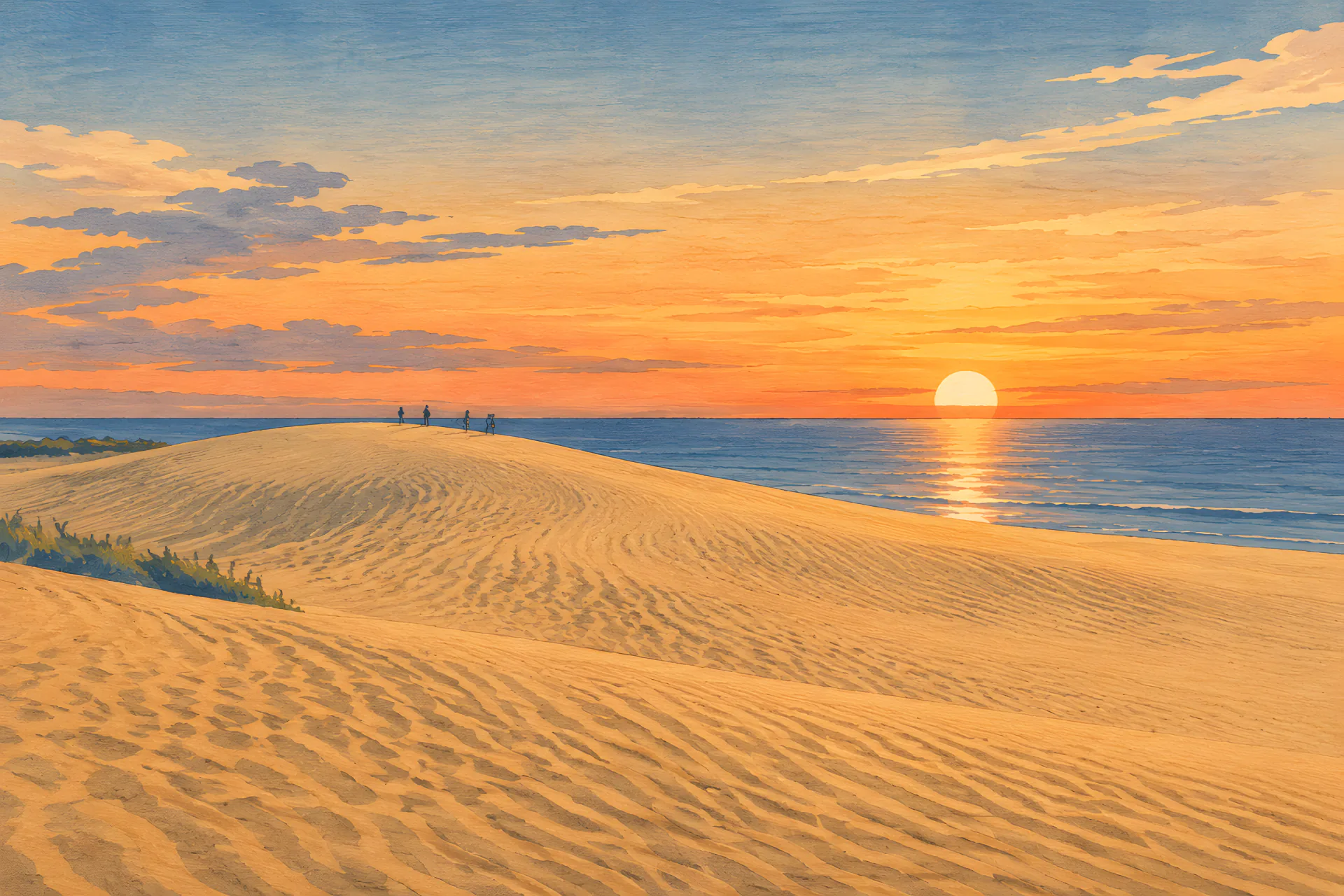
Tottori is Japan's least populous prefecture. It faces the Sea of Japan and stretches long from east to west but is narrow from north to south. In the east, Tottori Sand Dunes roll down to the sea. Central Tottori has Kurayoshi's white-walled historic streets and Misasa Onsen. In the west, you'll find Sakaiminato, the hometown of GeGeGe no Kitaro creator Shigeru Mizuki, and Mount Daisen, known as the "Mount Fuji of Hoki."
Few tourists come here, and the pace is slow. It's a good choice for a second trip to Japan or for anyone who wants to see something different. Public transportation reaches the main sights, but services are infrequent, so check bus schedules before you leave. Winter is snow crab season, and many people come specifically to eat crab and spend a night at a hot-spring ryokan.
Spring and fall are the most comfortable times to visit the dunes; snow crab is in season from November to March; the sand is scorching in summer, while Mount Daisen gets enough snow for skiing in winter.
Monthly weather
Based on TottoriBest time to visit Monthly precipitation (mm) Open-Meteo (ERA5), 1996–2025 average
| Month | Average high (°C) | Average low (°C) | Monthly precipitation (mm) | Days with 1 mm or more of precipitation |
|---|---|---|---|---|
| Jan(Good time to visit) | 8.1 | 4 | 146 | 22 |
| Feb(Good time to visit) | 8.6 | 3.9 | 111 | 17 |
| Mar(Good time to visit) | 12.4 | 6.3 | 132 | 15 |
| Apr(Good time to visit) | 17.4 | 10.5 | 118 | 12 |
| May(Good time to visit) | 22 | 15.5 | 138 | 11 |
| Jun | 25.4 | 20.3 | 168 | 14 |
| Jul | 29.3 | 24.7 | 206 | 16 |
| Aug | 30.8 | 26 | 172 | 15 |
| Sep(Good time to visit) | 26.9 | 22.3 | 219 | 15 |
| Oct(Good time to visit) | 21.7 | 16.5 | 143 | 13 |
| Nov(Good time to visit) | 16.5 | 11.3 | 122 | 15 |
| Dec(Good time to visit) | 10.9 | 6.4 | 153 | 20 |
Sights
-
 1
Tottori Sand Dunes
鳥取砂丘
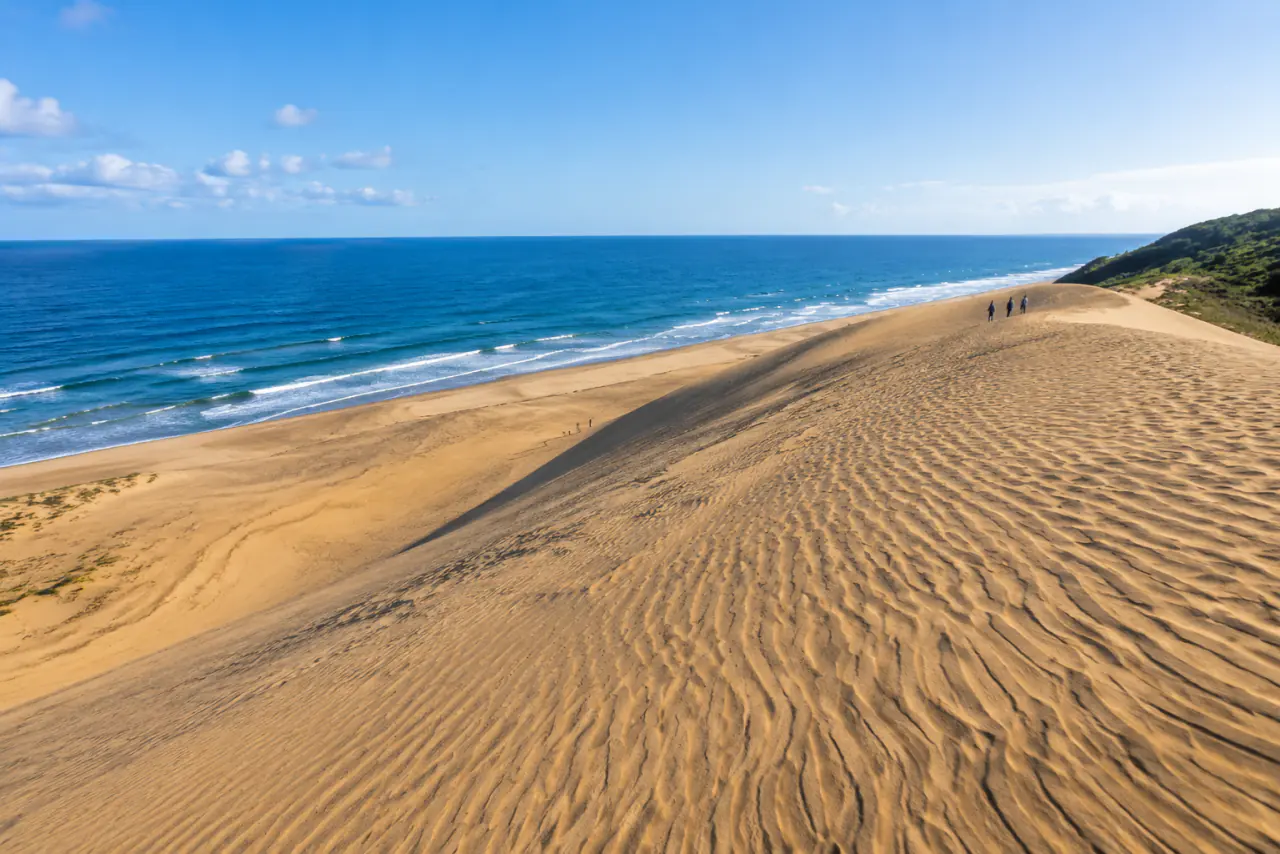
Japan's most famous dunes rise in rolling waves toward the Sea of Japan. Climb the highest slope, known as the Umanose, and many first-time visitors stop in surprise at the view. You can ride camels or go sandboarding. Nearby, the Sand Museum creates huge sculptures of world landmarks from sand, with a different country as its theme each year. About 20 minutes by bus from Tottori Station.
Sand gets into your shoes, so wear shoes that are easy to remove. The sand is very hot at midday in summer, so go in the morning or evening.
-
 2
Uradome Coast
浦富海岸
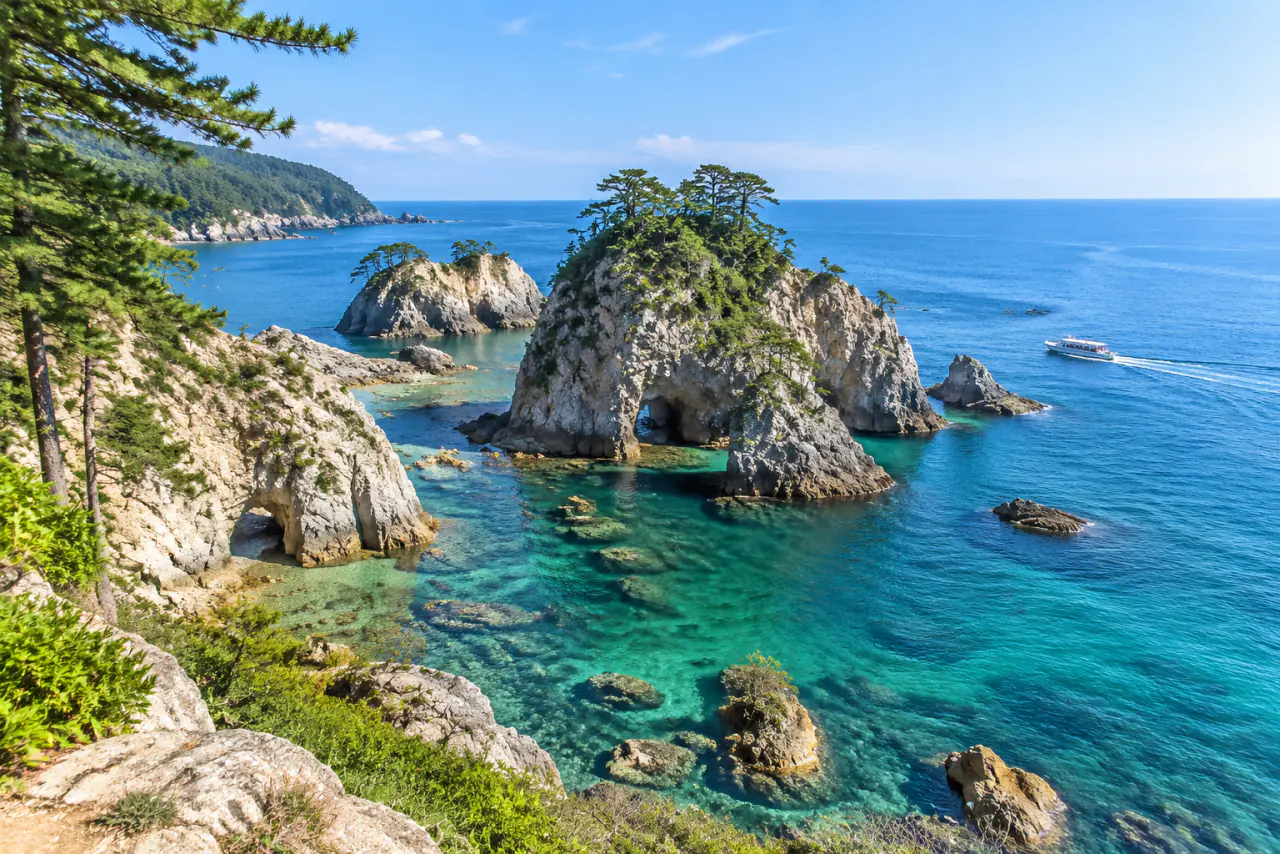
This stretch of coast east of the dunes has caves and islands carved by the waves. The water is crystal clear, earning it the nickname "San'in's Matsushima." The easiest way to see it is on a sightseeing boat around the coast. In summer, you can also kayak or swim at the beach. Take a bus or JR train from Tottori Station to the Iwami area.
Sightseeing boats may stop running in rough weather, so check whether they are operating that day before you go.
-
 3
Mizuki Shigeru Road
水木しげるロード
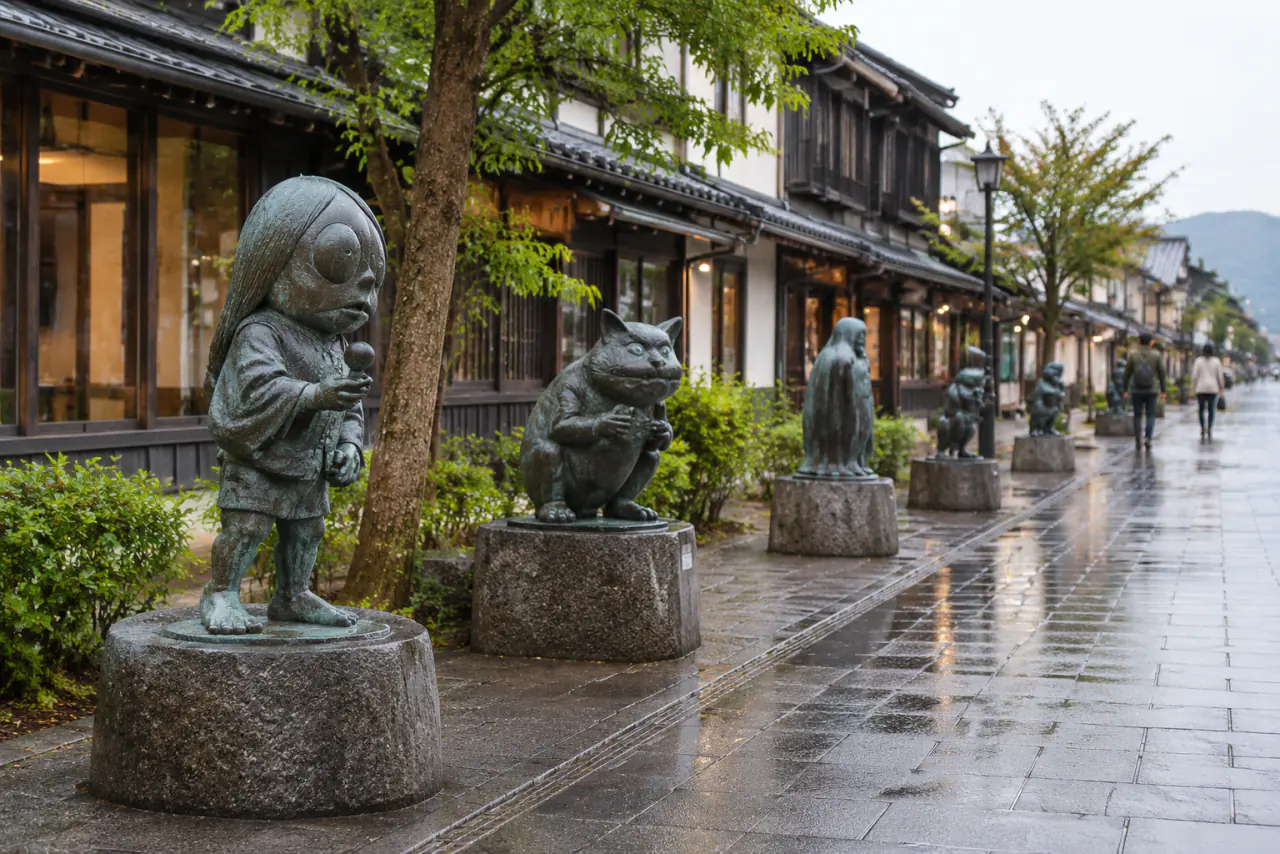
This shopping street in manga artist Shigeru Mizuki's hometown of Sakaiminato is lined with more than 100 bronze statues of yokai from GeGeGe no Kitaro. The Mizuki Shigeru Museum stands at the end. From Yonago Station, take the JR Sakai Line for about 45 minutes. The trains themselves are covered in yokai artwork. At night, the streetlights cast yokai shadows on the ground.
Stop for seafood in Sakaiminato, one of Japan's best-known fishing ports. Crab is plentiful in winter.
-
 4
Mount Daisen and Daisenji Temple
大山・大山寺 · Mount Daisen
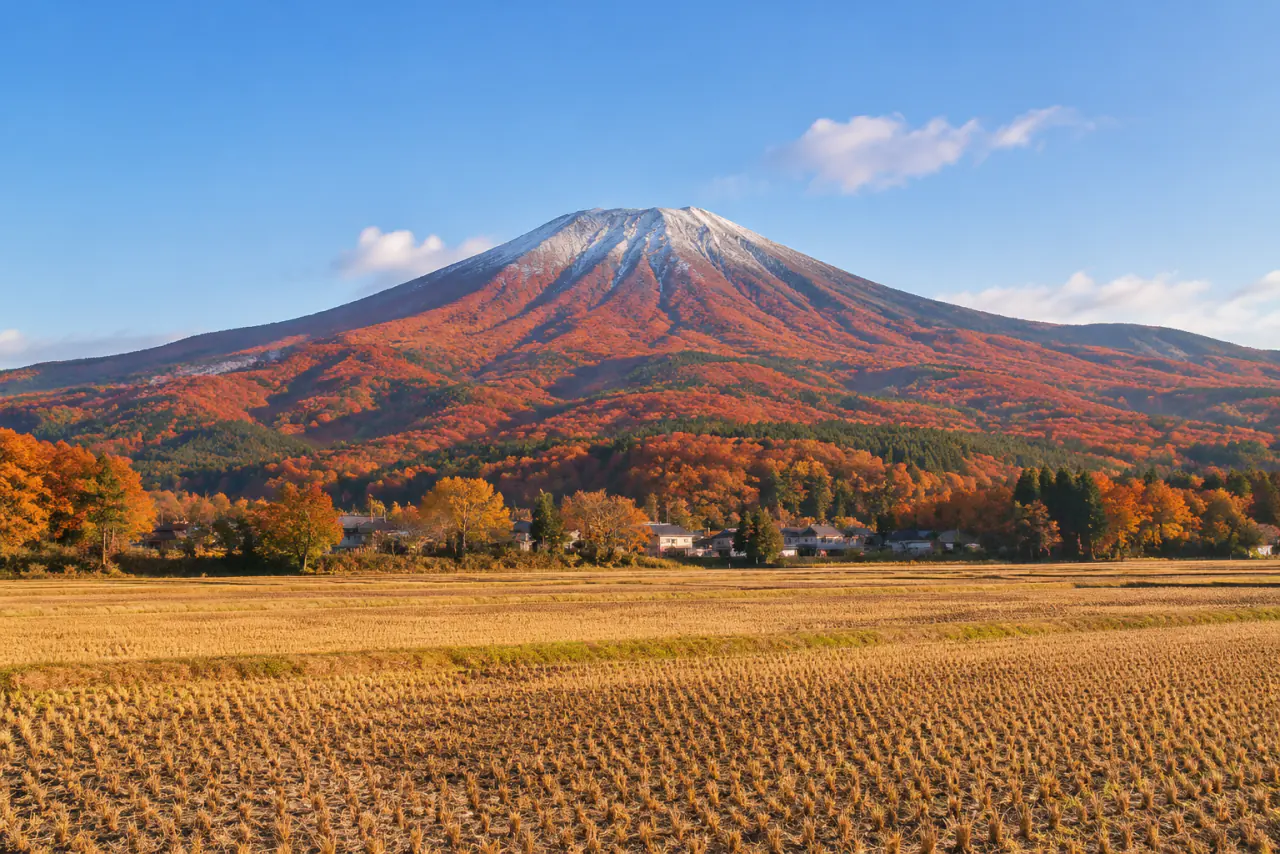
The highest mountain in the Chugoku region, Mount Daisen looks like Mount Fuji when viewed from the west, earning it the nickname "Mount Fuji of Hoki." If you don't want to climb the mountain, walk from Daisenji Temple along the long stone-paved approach to the Okunomiya Shrine of Ogamiyama. The forest is quiet, and the fall colors are beautiful. In winter, the area becomes a ski resort. About 50 minutes by bus from Yonago Station.
It is much colder on the mountain than on the plains, so bring a jacket even in spring and fall.
-
 5
Mitokusan Nageiredo
三徳山三佛寺投入堂
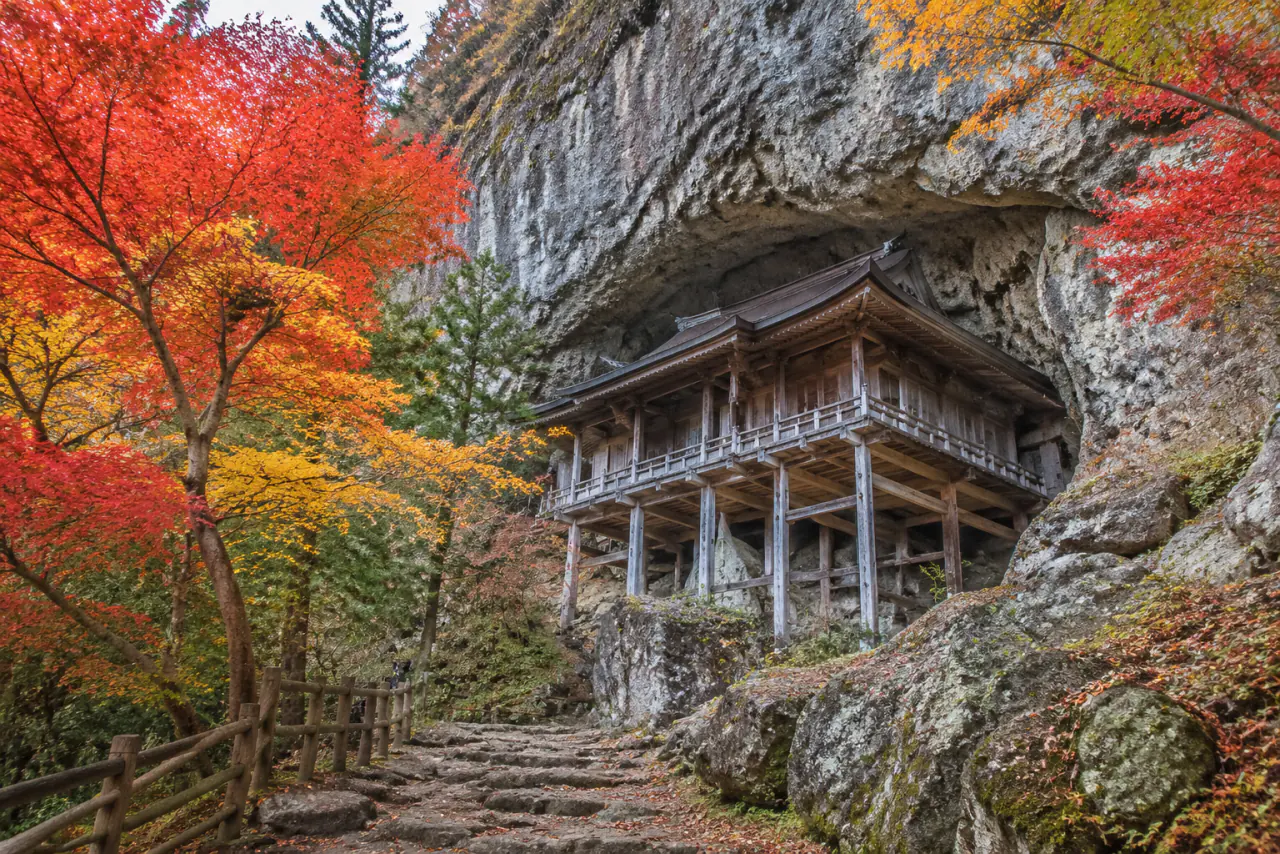
This temple hall, a designated national treasure, is built into a hollow in a cliff. Its name means "thrown in," reflecting how it appears to have been placed there. Reaching it requires climbing over tree roots and rocks using both hands and feet. The one-way climb takes about 1 hour, and the rules are strict: you must go with at least one other person, and staff inspect your shoes at the entrance. If they are unsuitable, you must change into straw sandals. Snow closes the mountain from December to March.
Reception is open about 8:00–15:00. Wear hiking shoes, keep both hands free, and don't bring a large backpack.
-
 6
Misasa Onsen
三朝温泉
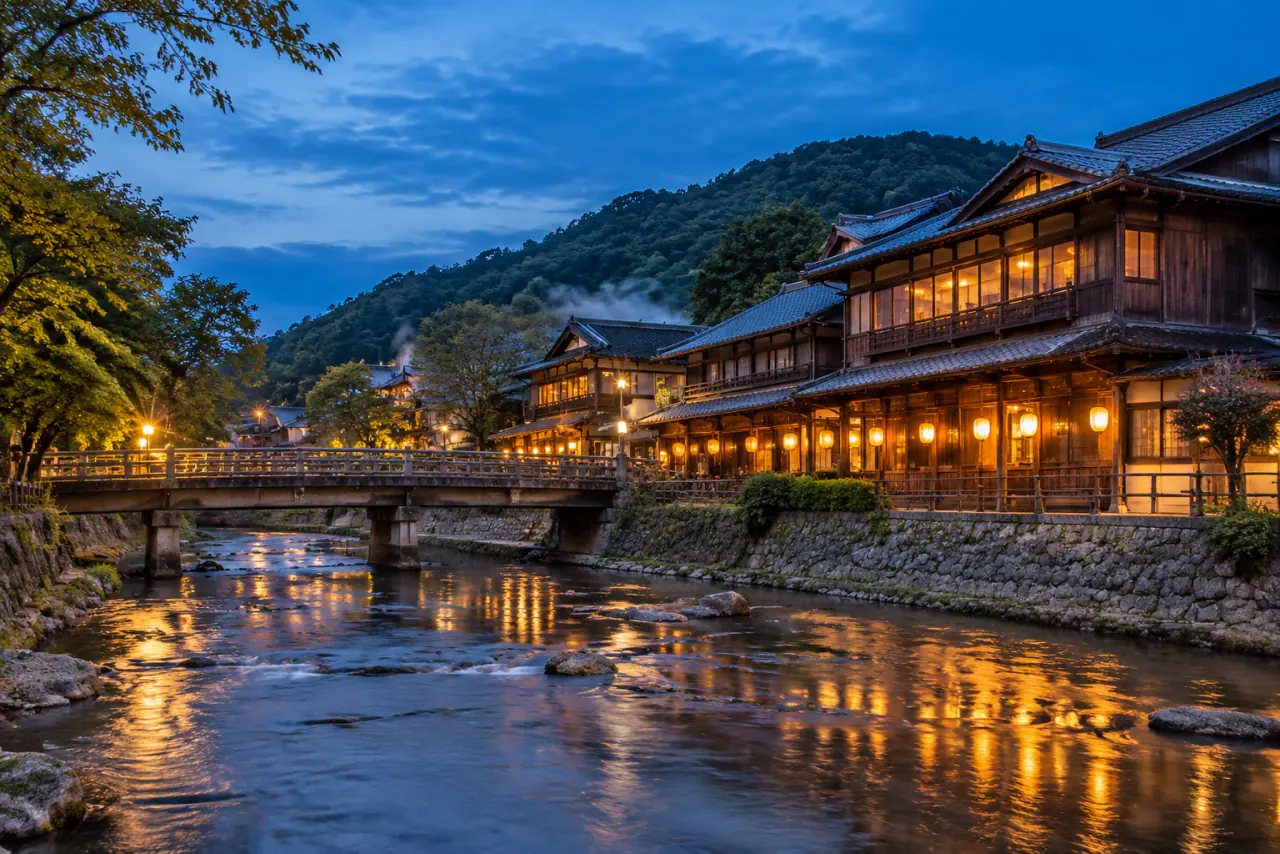
This historic hot-spring town is known for its radon-rich waters and stretches along the Mitoku River. A row of lanterns along the river creates a lovely atmosphere at night. Beneath the bridge is Kawara-buro, a completely open-air bath with no privacy—whether you get in is up to you. The town also has regular public baths and foot baths. About 20 minutes by bus from Kurayoshi Station. It works well as a same-day visit with Mount Mitoku.
-
 7
Kurayoshi White-Walled Storehouses
倉吉白壁土蔵群
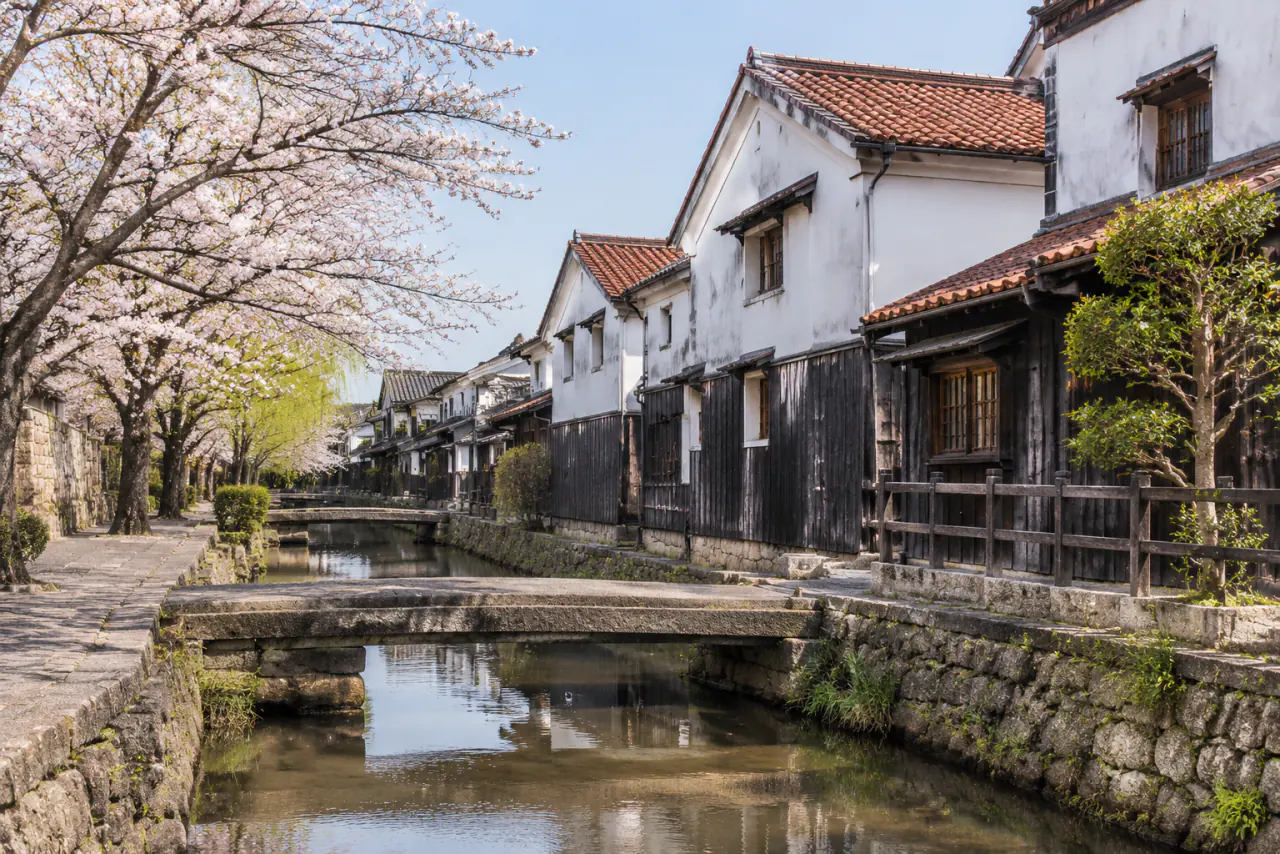
White-walled, red-tile storehouses line the Tamagawa River in a row, linked by small stone bridges. Many now house cafes, soy sauce shops, and general stores. The area is compact and takes a little over an hour to explore at a relaxed pace. About 15 minutes by bus from Kurayoshi Station. Stop here on the way to Misasa Onsen.
-
 8
Tottori Hanakairo Flower Park
とっとり花回廊
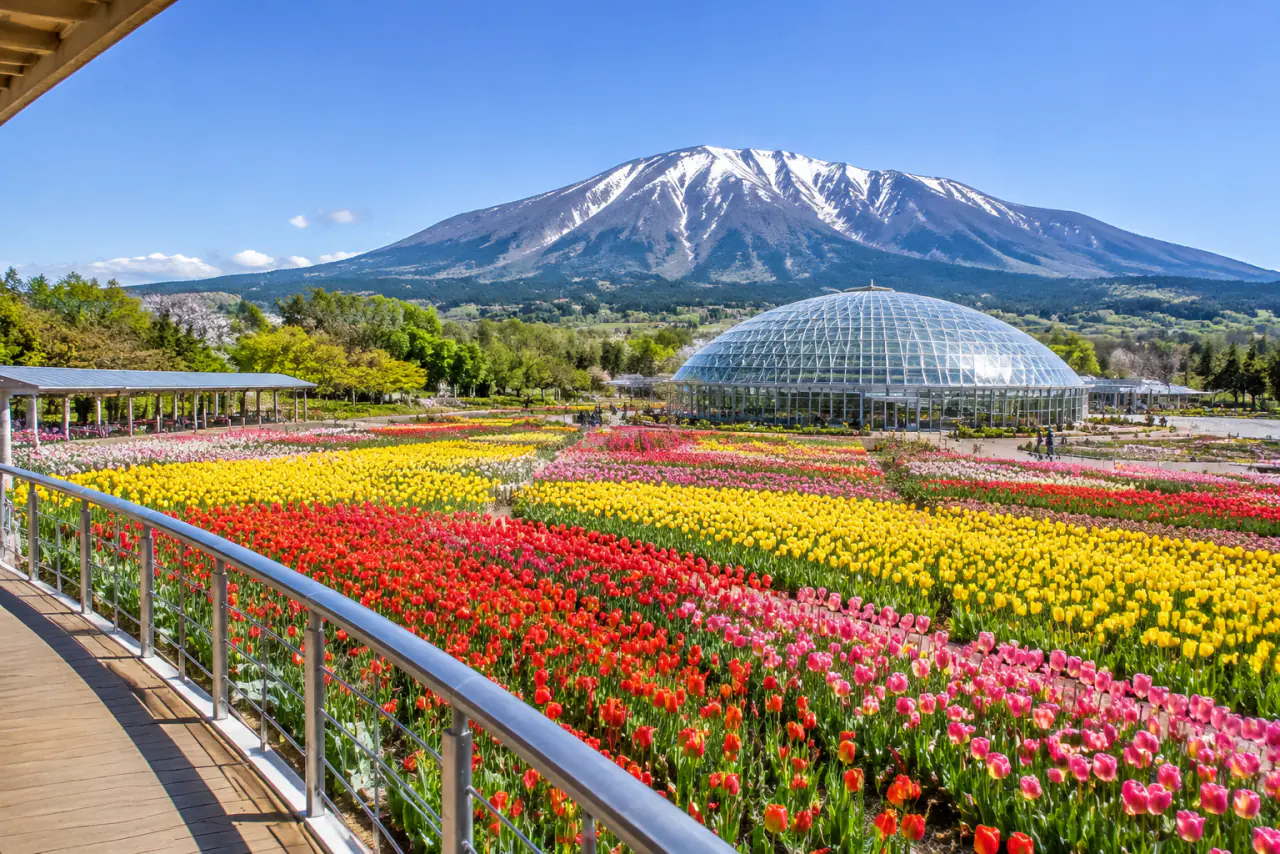
One of Japan's largest flower parks, Tottori Hanakairo has a circular walkway around broad flower fields, with Mount Daisen in the background. Tulips bloom in spring, lilies in early summer, and cosmos in fall. Winter brings a large-scale illumination show. Public transportation is limited, so plan it for the same day as Mount Daisen.
What to eat
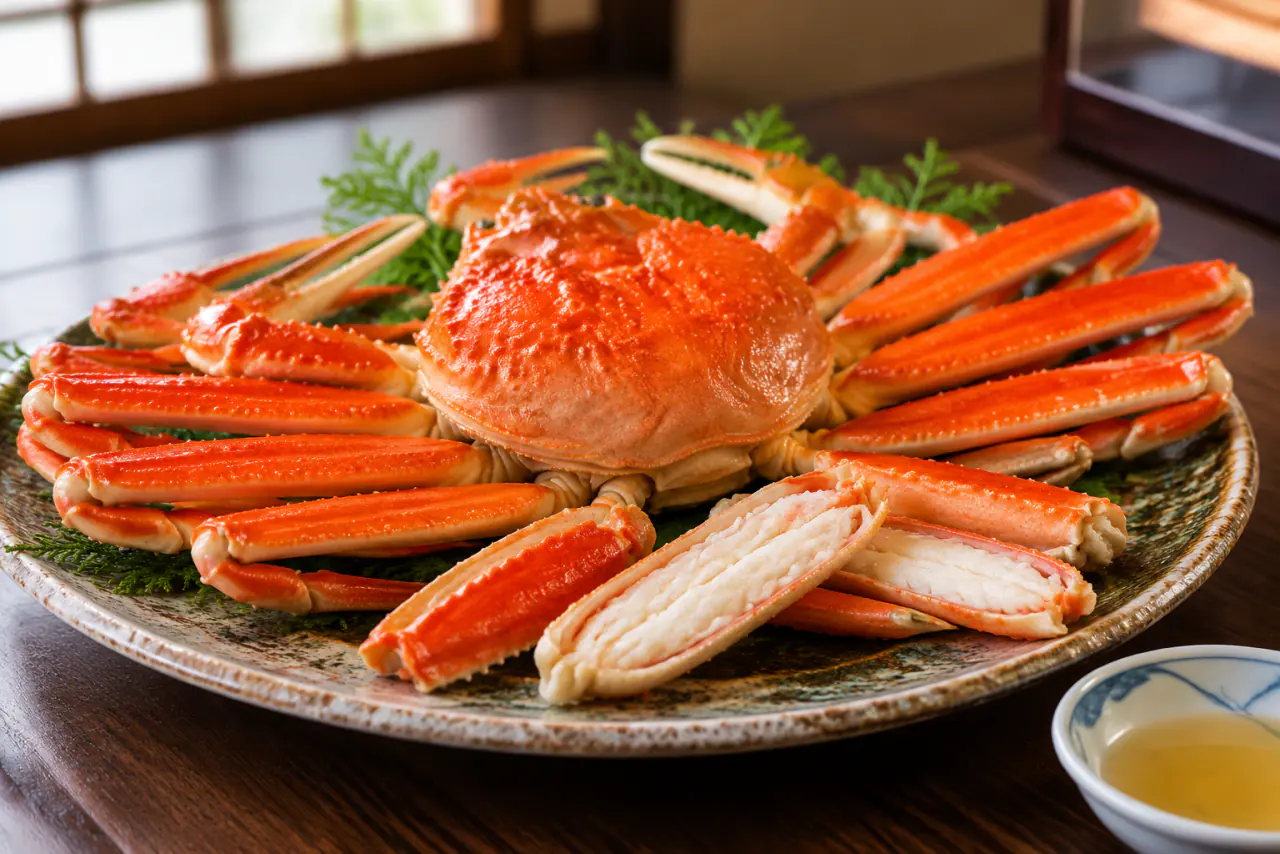
Matsuba crab
The San'in region's name for male snow crab. It has long legs and sweet meat. The season runs from the opening of the fishing season in November through March. You can eat it as sashimi, charcoal-grilled, or in a crab hot pot. A crab kaiseki dinner at a hot-spring ryokan is the easiest option, but also the most expensive.
Ryokan around Tottori Station, Sakaiminato, Misasa Onsen, and Kaike Onsen · Crab meal sets from about ¥8,000 per person
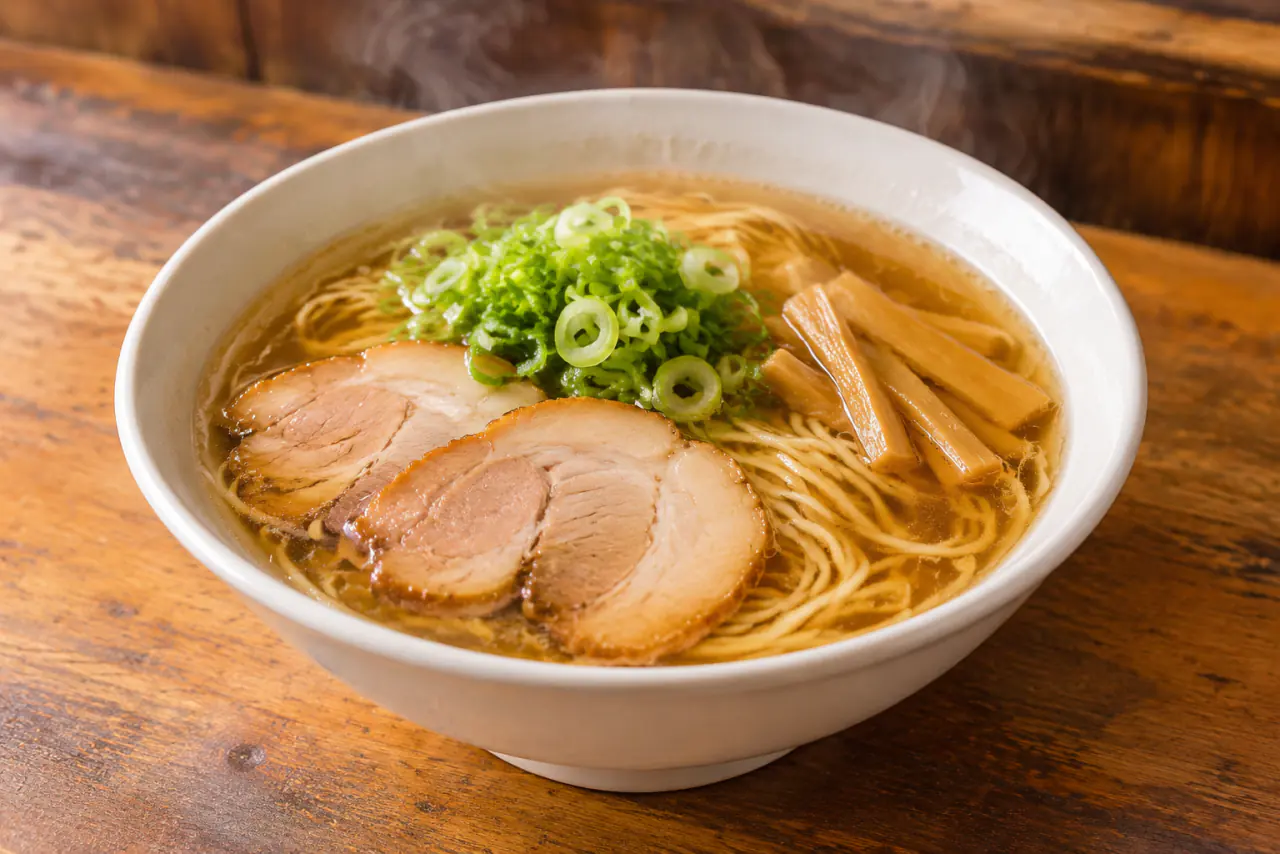
Beef-bone ramen
A ramen style unique to central and western Tottori. The broth is made from beef bones and has a hint of sweetness. It is lighter than pork-bone ramen, and locals eat it as an everyday meal. Many shops have been open for decades.
Long-running ramen shops around Yonago and Kurayoshi · About ¥700–1,000 per bowl
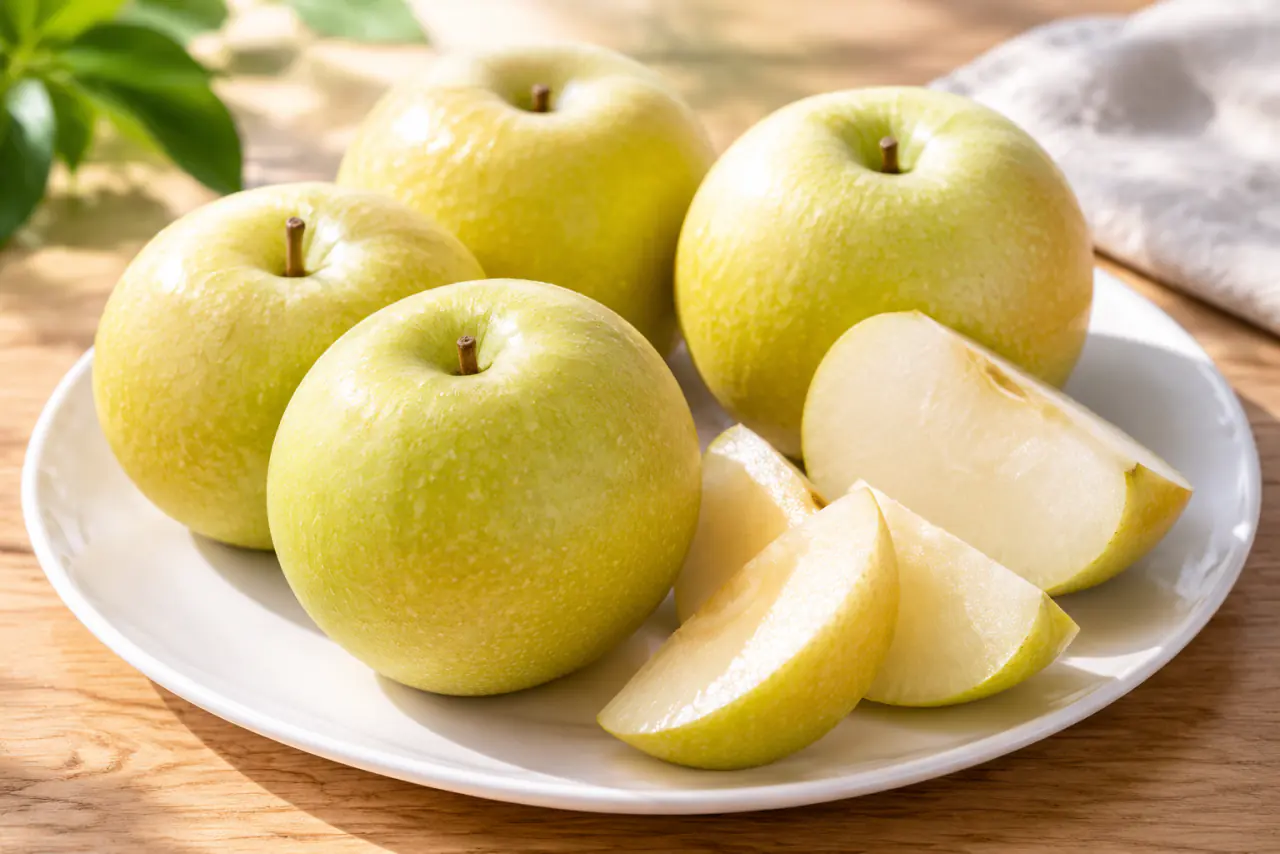
20th Century pear
Tottori's signature fruit has green skin, a crisp texture, plenty of juice, and a slight tartness. It is in season from late August to September. At other times, look for pear juice, pear jelly, or pear-flavored ice cream.
The gift shops at Tottori Station and the 20th Century Pear Museum in Kurayoshi
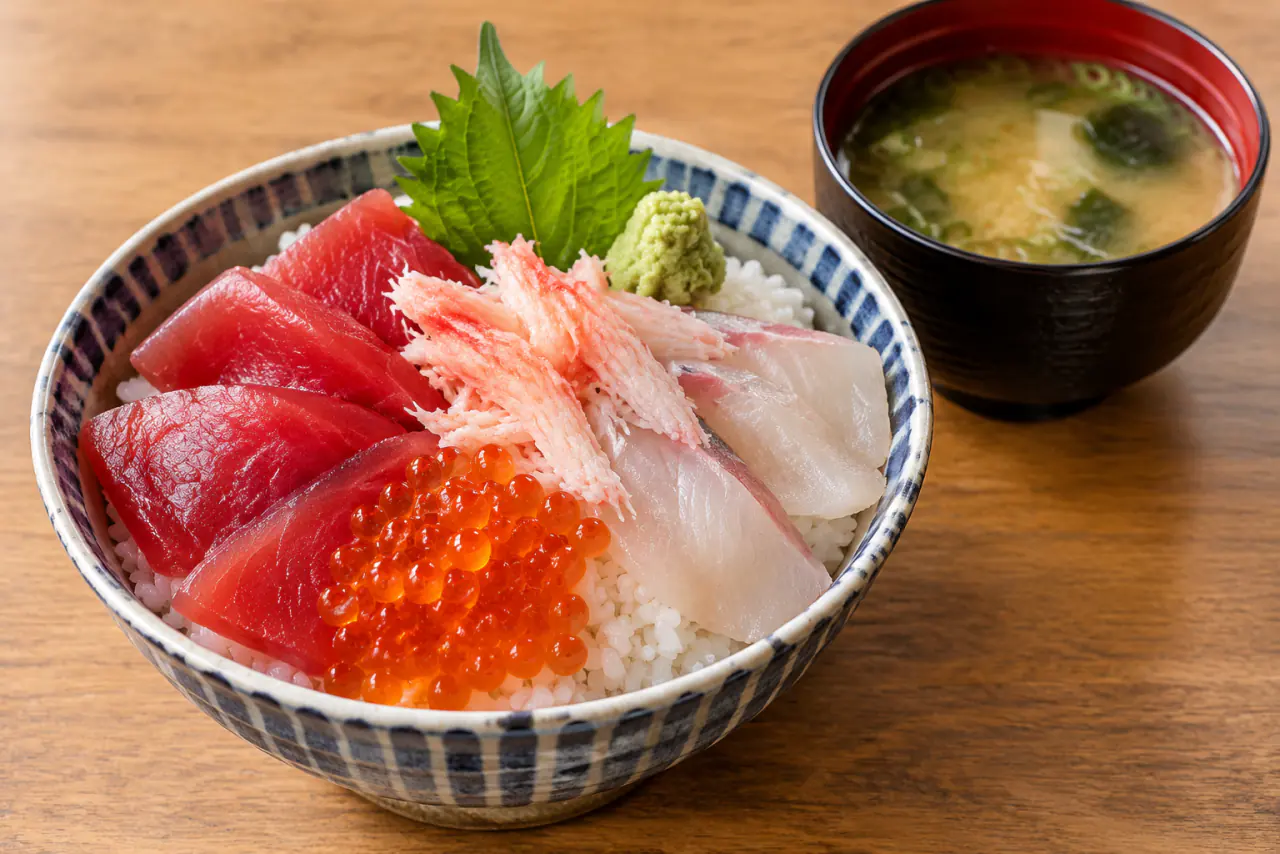
Sakaiminato seafood rice bowl
Sakaiminato is one of Japan's largest fishing ports by landing volume, with exceptionally fresh tuna, salmon, and crab. After visiting Mizuki Shigeru Road, head to a fish-market restaurant by the harbor for a seafood rice bowl.
Market restaurants between Sakaiminato Station and the fishing port · About ¥1,500–3,000 per bowl
Getting there · Where to stay
About 2.5 hours to Tottori Station on the JR Super Hakuto Limited Express
About 1 hour 50 minutes to Tottori Station on the JR Super Inaba Limited Express
About 1.5 hours by JR Limited Express; about 30 minutes to Yonago
Stay near Tottori Station in the east for easy access to the dunes and Uradome Coast. In the west, stay in Yonago or Kaike Onsen for closer access to Sakaiminato and Mount Daisen. In central Tottori, consider Misasa Onsen.
Know this before you go
- Eastern and western Tottori are about 100 kilometers apart. Cover them by region over 2 days instead of trying to go back and forth in a single day.
- International visitors can buy the JR Tottori–Matsue Pass. It costs about ¥4,000 for 3 days and works well for a trip that also includes Shimane.
- Bus services are infrequent. Check the last bus back before you leave each sight.
- The Sea of Japan coast gets frequent rain and snow in winter. Bring a waterproof jacket and shoes with good traction.