Cloudborne Travel
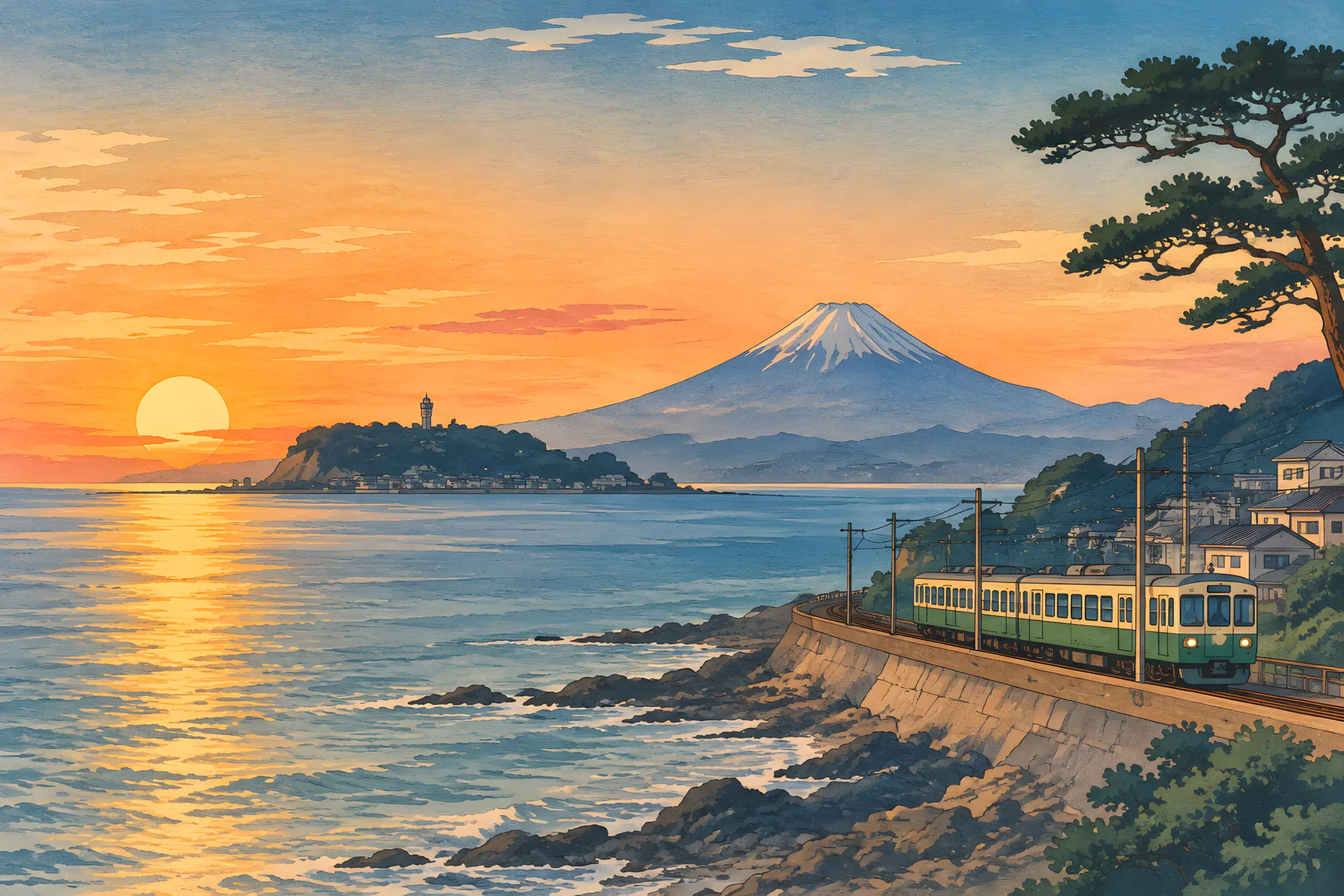
Kanagawa lies just south of Tokyo. Its three top destinations are Kamakura, a samurai capital more than 800 years ago, with the Great Buddha, ancient temples, and a small seaside train; Hakone, a hot-spring and volcanic area where a full loop requires mountain trains, cable cars, and a sightseeing boat; and Yokohama, a port city with easy waterfront walks, night views, and Chinatown.
Kamakura and Yokohama both make easy day trips from Tokyo. Hakone is best with one night at a hot-spring inn, followed by the loop the next day. If this is your second time in Tokyo and you want to add something beyond the city, Kanagawa is an easy place to start. All three destinations get crowded on weekends and holidays, so go on a weekday if you can. Kamakura and Hakone have many slopes and stairs, so wear comfortable shoes.
Kamakura's cherry blossoms appear from late March to early April, and June is best for hydrangeas. Hakone's fall colors usually peak around November. The beaches are crowded in summer, while winter is the most comfortable time for hot springs.
Monthly weather
Based on YokohamaBest time to visit Monthly precipitation (mm) Open-Meteo (ERA5), 1996–2025 average
| Month | Average high (°C) | Average low (°C) | Monthly precipitation (mm) | Days with 1 mm or more of precipitation |
|---|---|---|---|---|
| Jan | 9.3 | 3.4 | 67 | 6 |
| Feb | 10 | 3.8 | 69 | 8 |
| Mar(Good time to visit) | 13.1 | 6.9 | 123 | 12 |
| Apr(Good time to visit) | 17.1 | 11.6 | 123 | 12 |
| May(Good time to visit) | 21.1 | 16.4 | 134 | 11 |
| Jun(Good time to visit) | 24.1 | 20 | 167 | 13 |
| Jul(Good time to visit) | 27.8 | 23.8 | 144 | 12 |
| Aug(Good time to visit) | 29.3 | 25.2 | 105 | 11 |
| Sep(Good time to visit) | 26.4 | 22.1 | 165 | 13 |
| Oct(Good time to visit) | 21.3 | 16.6 | 195 | 13 |
| Nov(Good time to visit) | 16.6 | 11.3 | 99 | 10 |
| Dec | 11.8 | 6.2 | 66 | 7 |
Sights
-
 1
Tsurugaoka Hachimangu
鶴岡八幡宮
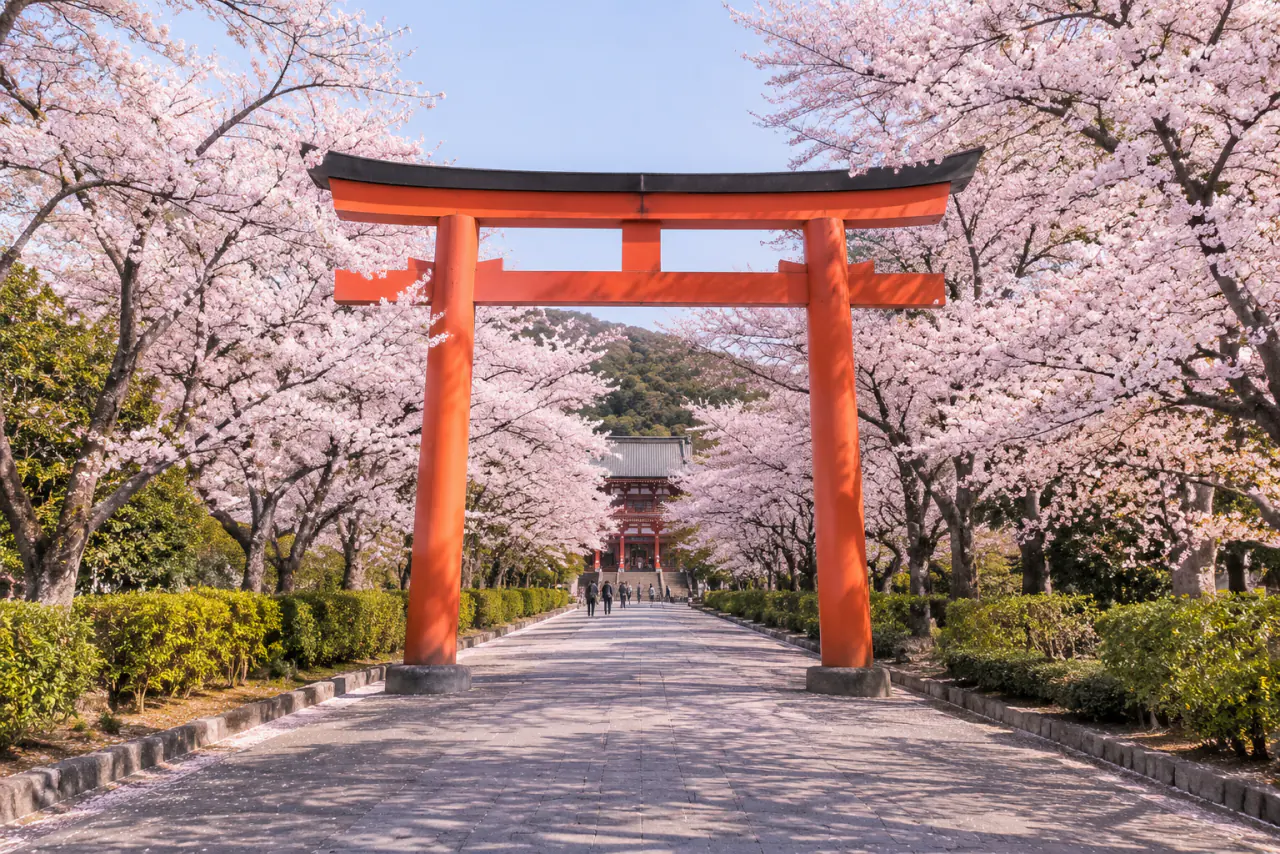
Kamakura's spiritual center, Tsurugaoka Hachimangu was moved to its current location when Minamoto no Yoritomo established his shogunate. From the east exit of Kamakura Station, walk about 10 minutes along Wakamiya Oji's raised central walkway, the Dankazura, lined with cherry trees in spring. Komachi Street, directly opposite, is packed with food and shops and is ideal for a stroll after visiting the shrine.
Komachi Street gets very crowded on weekends. Arrive before 10 a.m. for a more relaxed visit.
-
 2
Kōtoku-in (Great Buddha of Kamakura)
高徳院
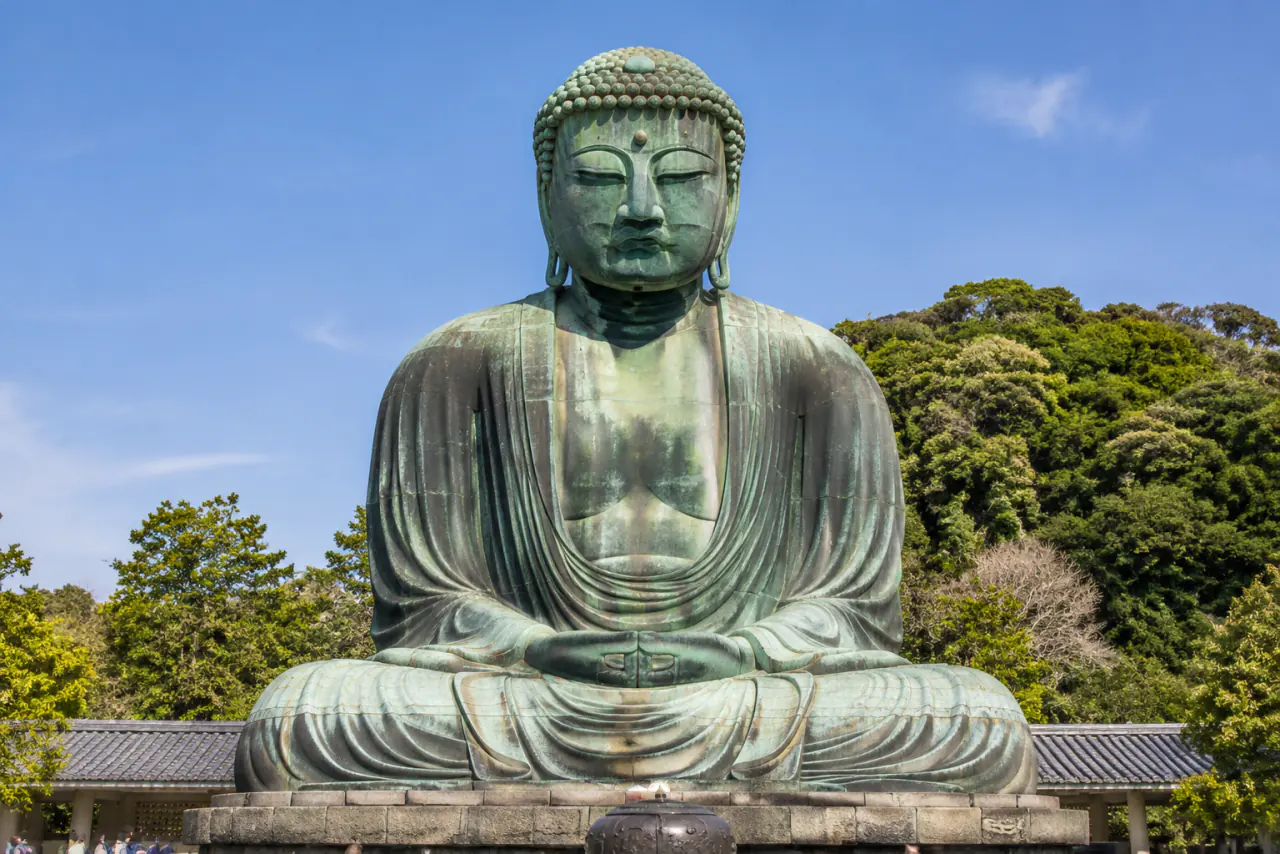
This bronze Amida Buddha stands about 11 meters tall and was cast in the 13th century. After the original hall was destroyed by a tsunami, the statue remained outdoors. It is a 5–10-minute walk from Hase Station on the Enoden. For about ¥50 extra, you can enter the statue and see the casting seams inside—a hit with children.
Hase-dera is only a few minutes away, so visit both together. Entry inside the Buddha ends at 4:30 p.m.
-
 3
Hase-dera
長谷寺
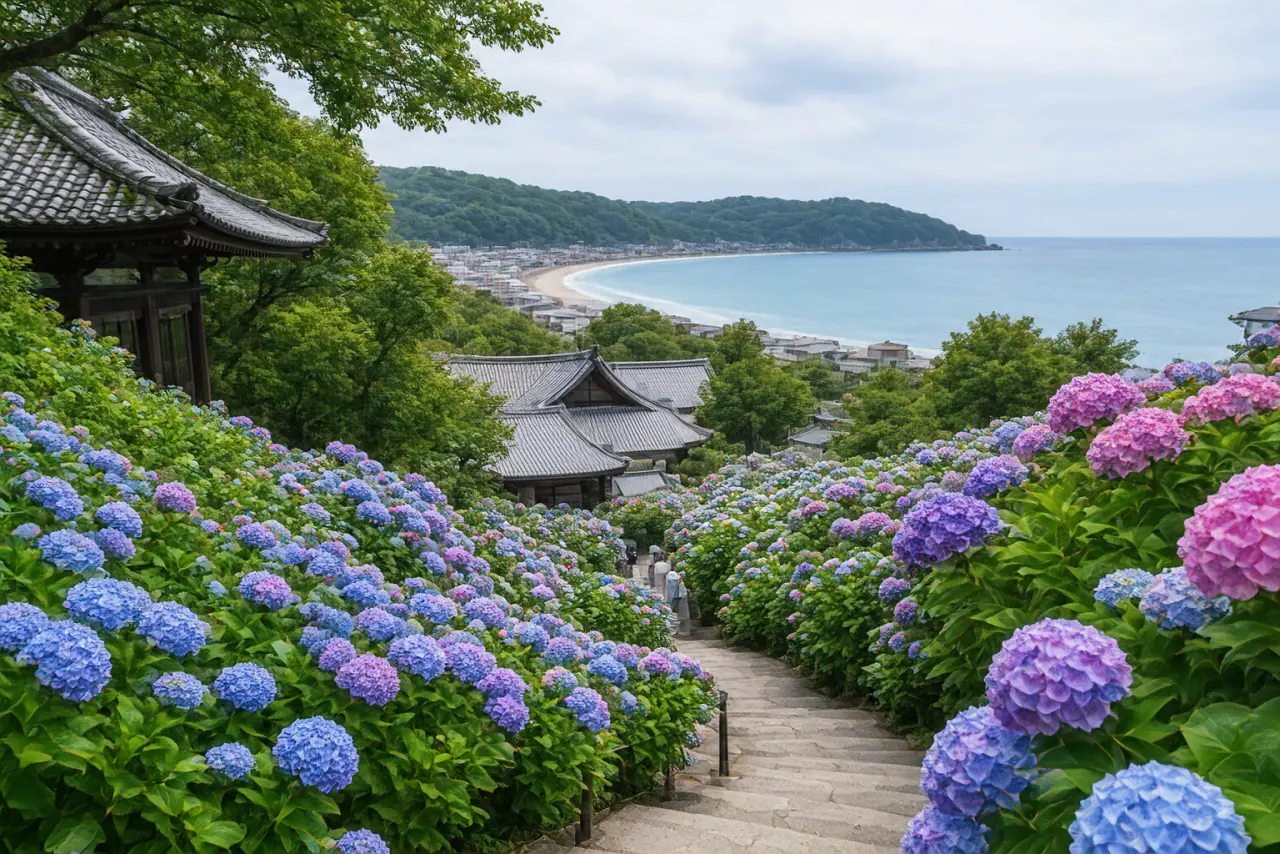
Built halfway up a hillside, this temple houses a more than 9-meter-tall Eleven-Headed Kannon in its Kannon Hall. The observation platform overlooks Kamakura Bay. Flowers bloom here year-round, with the hydrangeas on the hillside being the most famous in June. It is a 5-minute walk from Hase Station and lies along the same route as the Great Buddha of Kamakura.
During hydrangea season, you need a numbered ticket for the hillside path. Waits can be long on weekends, so go early on a weekday if possible.
-
 4
Enoshima
江の島
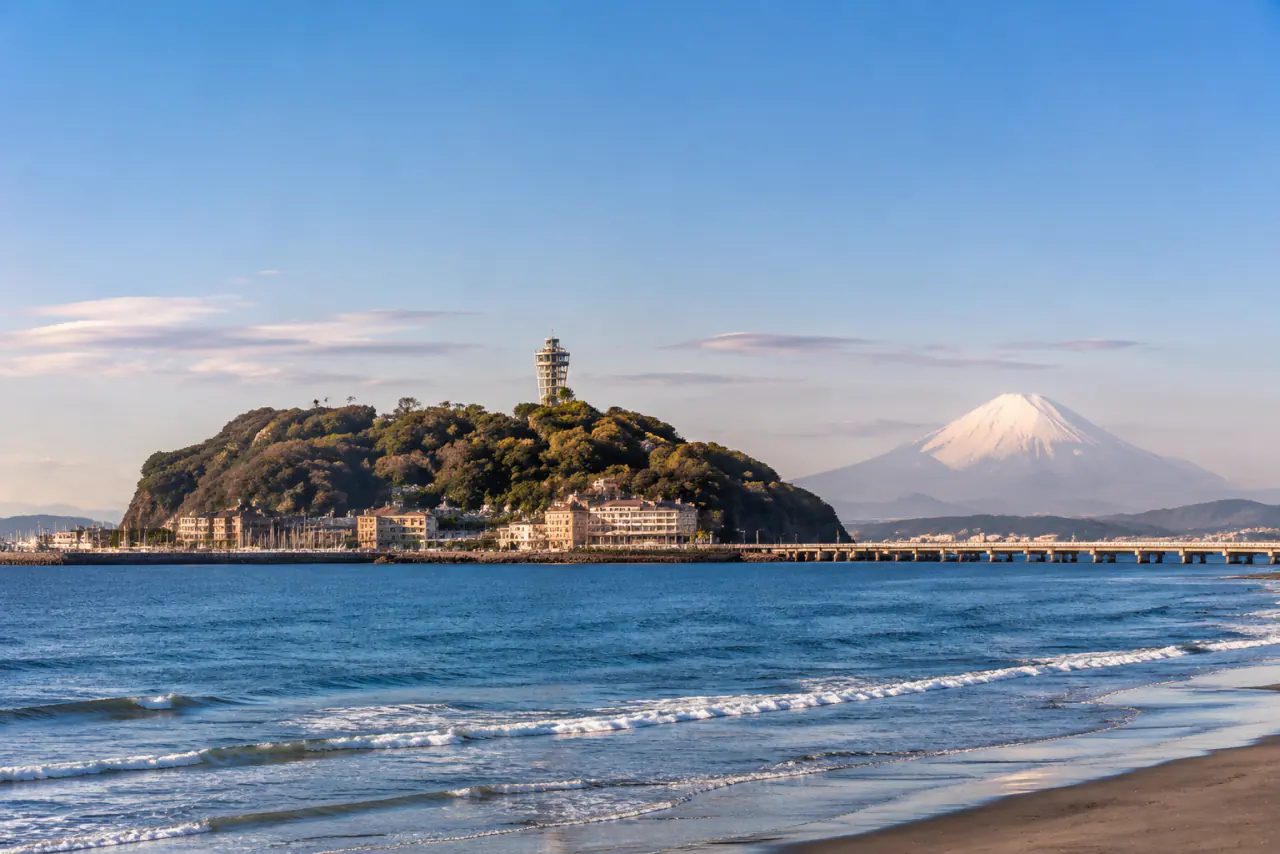
This small island is connected to the mainland by a long bridge. It is home to Enoshima Shrine, the Sea Candle observation lighthouse, and seaside Iwaya Caves. On clear days, you can see Mount Fuji across the water. The ride from Kamakura on the Enoden takes about 25 minutes and passes the famous railroad crossing featured in Slam Dunk. The island has many slopes, but visitors with average fitness can take the paid escalators uphill.
For views of Mount Fuji, choose a clear winter evening. From Shinjuku, take Odakyu trains; the trip takes about 65–75 minutes.
-
 5
Hakone-Yumoto Onsen
箱根湯本温泉
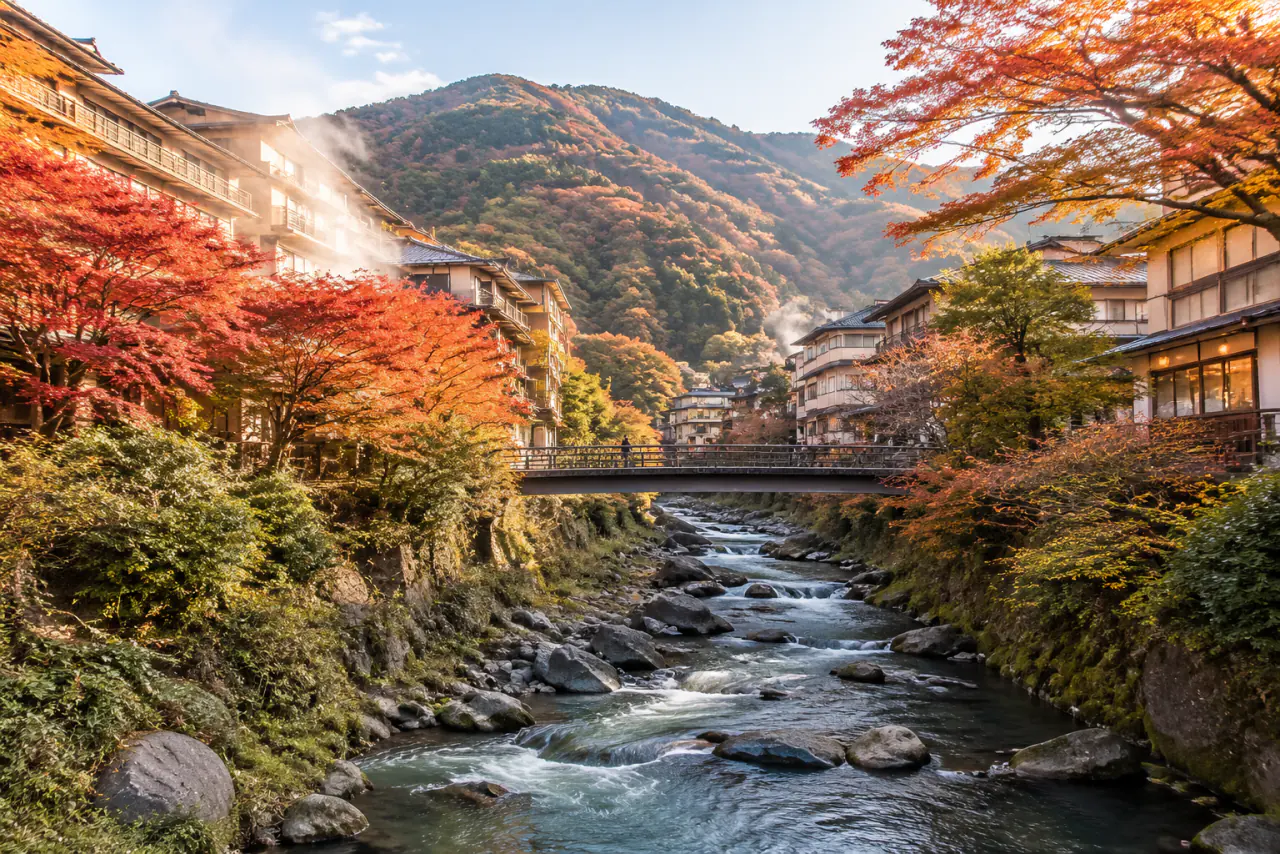
The final stop of the Romancecar and Hakone's largest hot-spring town. The shopping street in front of the station sells fish cakes, onsen manju, and other snacks. Along the river, several day-use hot springs welcome visitors, so you can bathe without staying overnight. From here, transfer to the mountain railway toward Gora and Owakudani—the starting point of the Hakone loop.
Many public baths do not admit guests with tattoos. If this is a concern, choose an inn with a private bath.
-
 6
Hakone Open-Air Museum
彫刻の森美術館
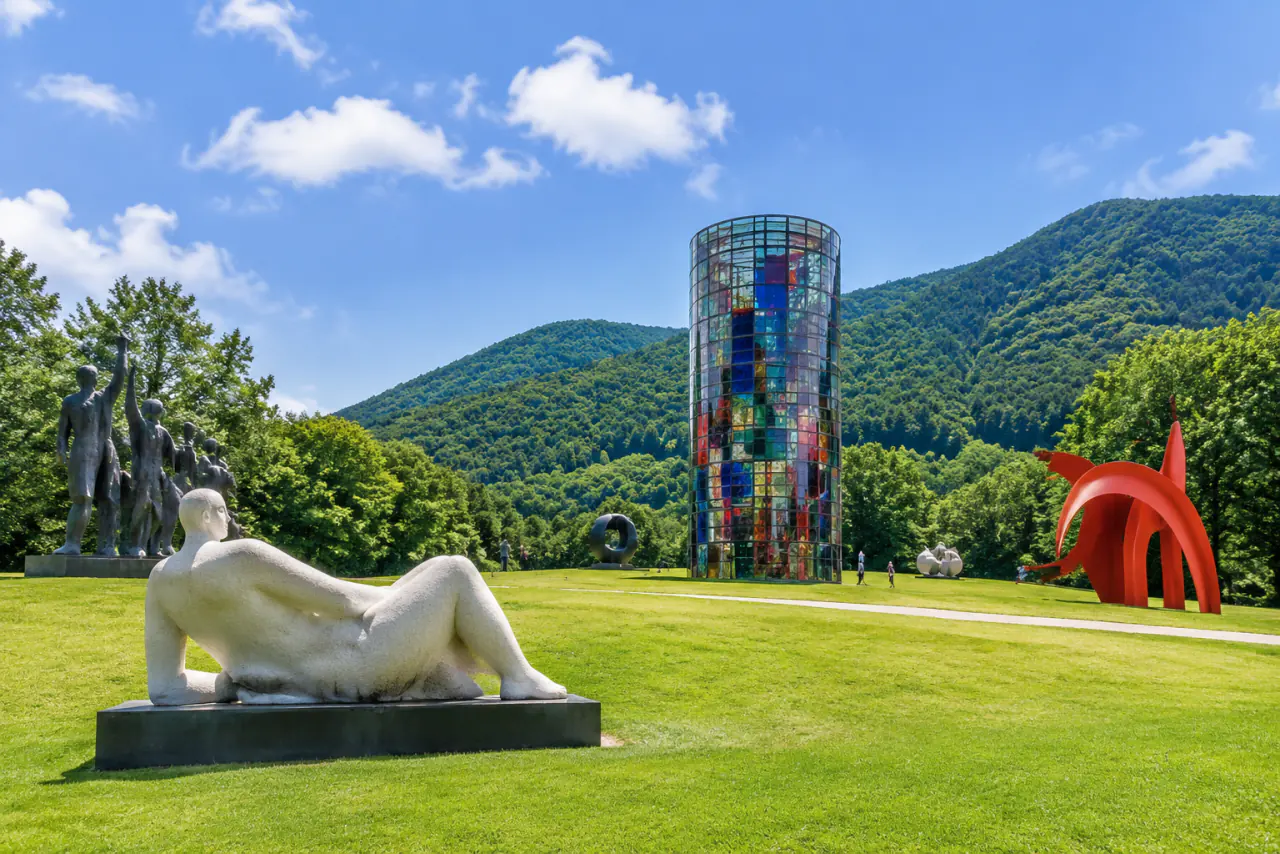
More than 100 sculptures are displayed across grassy hills at this open-air museum, with Hakone's mountains as a backdrop. It is an easy place to explore while walking. The Picasso Pavilion holds many ceramics and paintings, and you can climb inside the colorful stained-glass tower, Symphonic Sculpture. There is also a free foot bath for tired feet.
The museum is next to Chokoku no Mori Station on the mountain railway. Online tickets from the official website are about ¥200 cheaper than tickets bought on-site.
-
 7
Owakudani
大涌谷
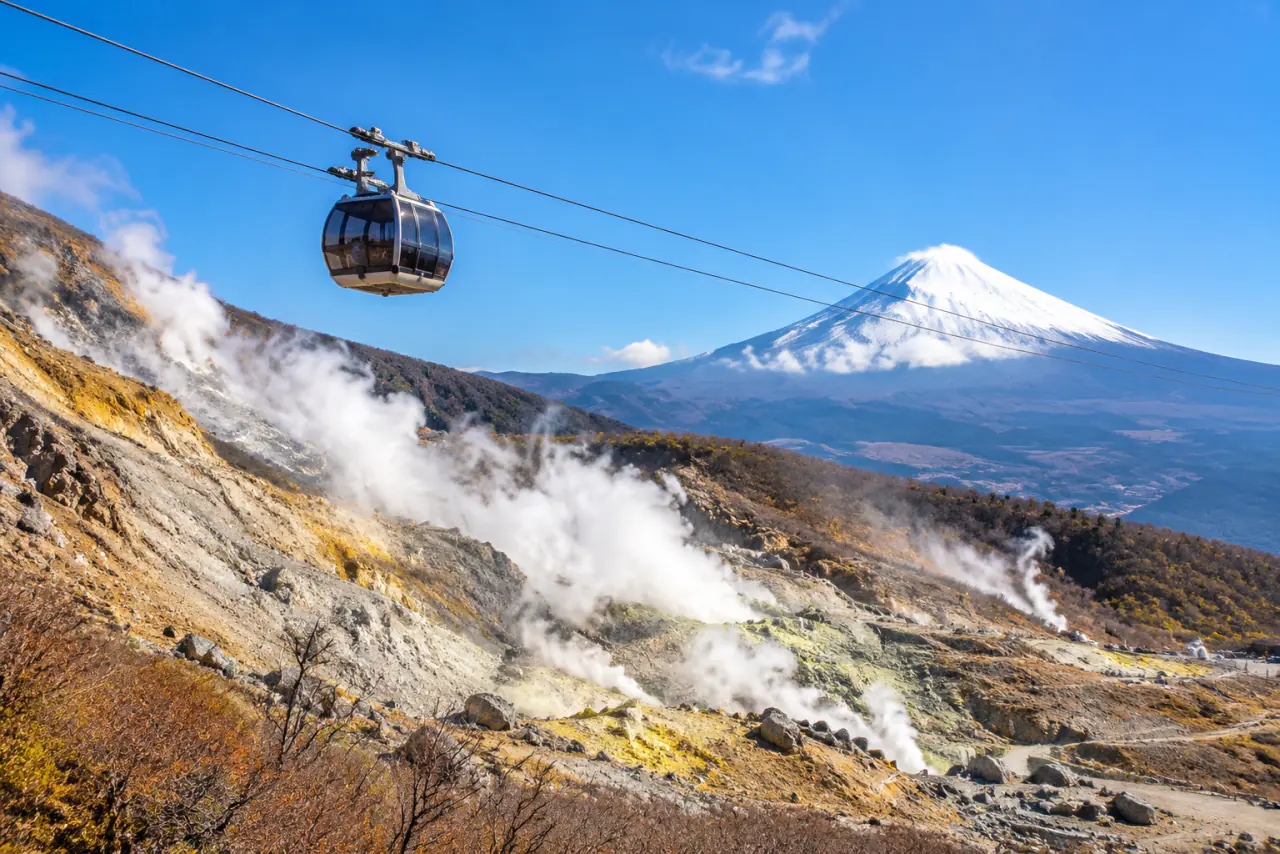
This valley was formed by a volcanic eruption about 3,000 years ago and still vents sulfurous smoke. On clear days, you can see Mount Fuji. Owakudani is the midpoint of the Hakone loop: take the cable car up, continue to Togendai, board the sightseeing boat across Lake Ashi, and get off at Moto-Hakone. The torii gate standing in the lake at Hakone Shrine is one of the area's signature photo spots.
The mountain may close temporarily when volcanic gases are concentrated. In winter, the cable car often stops in sections for maintenance, with replacement buses running instead. Check the official website before leaving.
-
 8
Minato Mirai 21
みなとみらい21
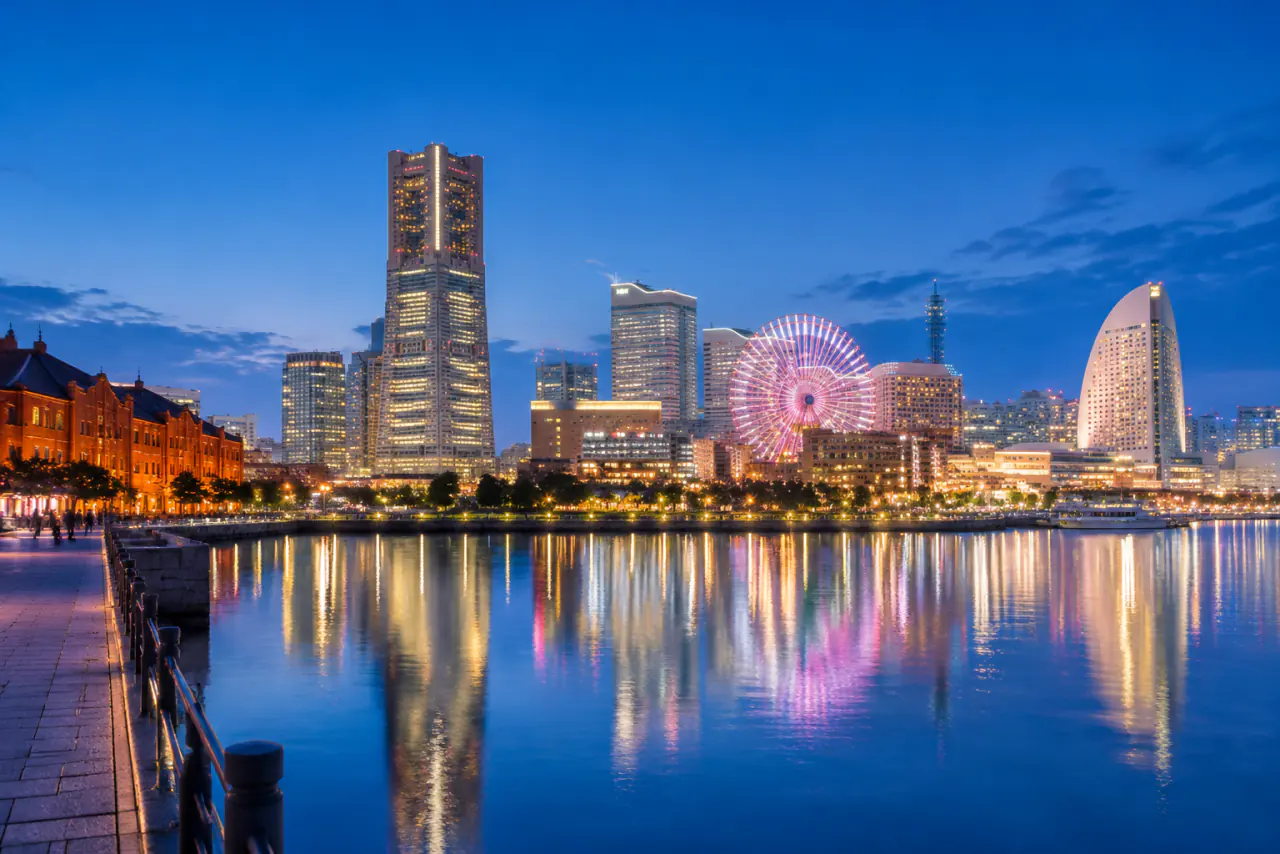
Yokohama's modern waterfront district is home to a Ferris wheel, Red Brick Warehouse, and seaside promenades. It looks best after the lights come on at dusk. Walk along the water to Yamashita Park and Chinatown in about half an hour, with sea views all the way. The Cup Noodles Museum is nearby, where you can design a cup of noodles to take home.
From Shibuya, take a through service on the Toyoko Line onto the Minatomirai Line. Get off at Minatomirai or Bashamichi Station for the shortest walk.
What to eat
Shirasu don
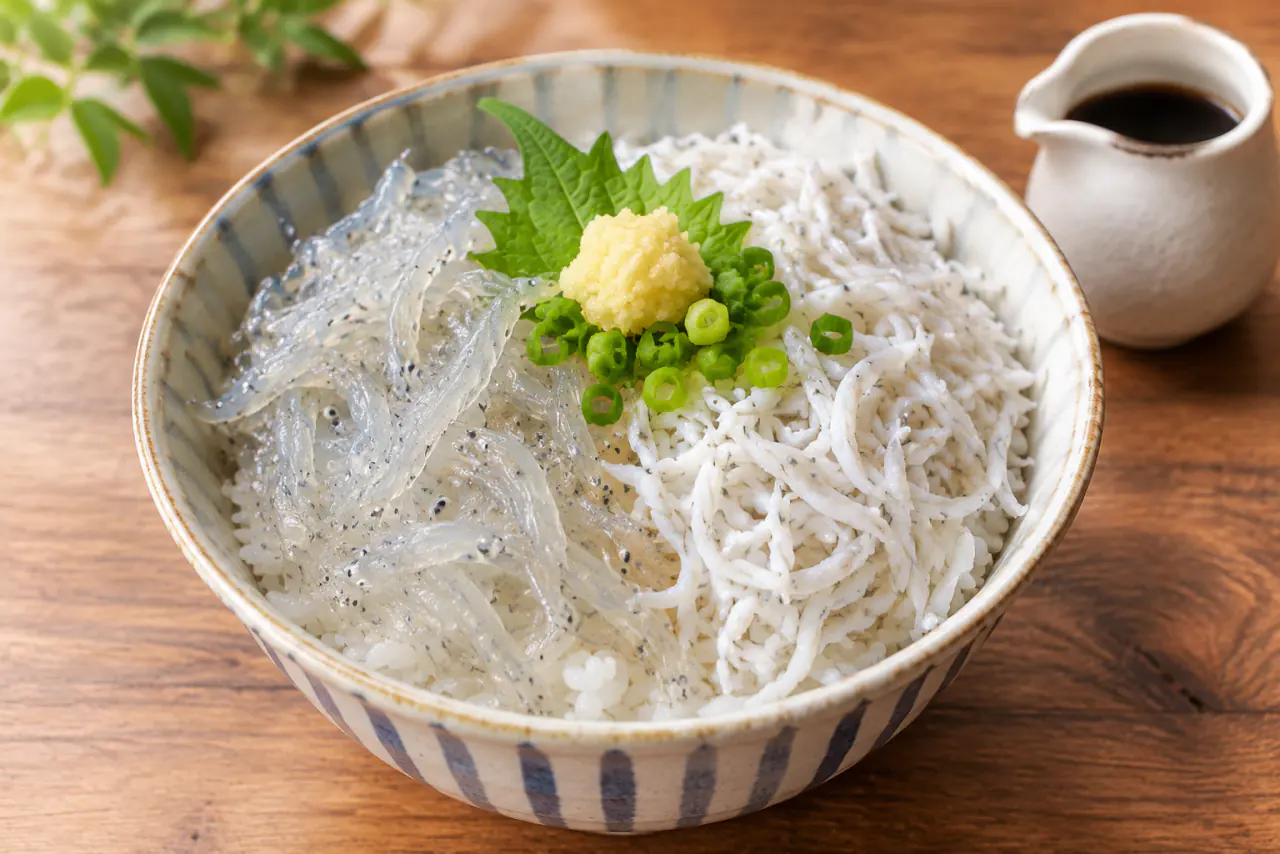
These tiny white fish are caught offshore around Kamakura and Enoshima and served over rice with grated ginger and soy sauce. They come cooked, called kama-age, or raw. The raw version is sweet and fresh, but is available only when the day's catch is fresh. Fishing is closed from winter to early spring, so only the cooked version is available then.
Enoshima's approach, Kamakura's Komachi Street, and the Koshigoe area · About ¥1,500–2,500 per person
Owakudani black eggs
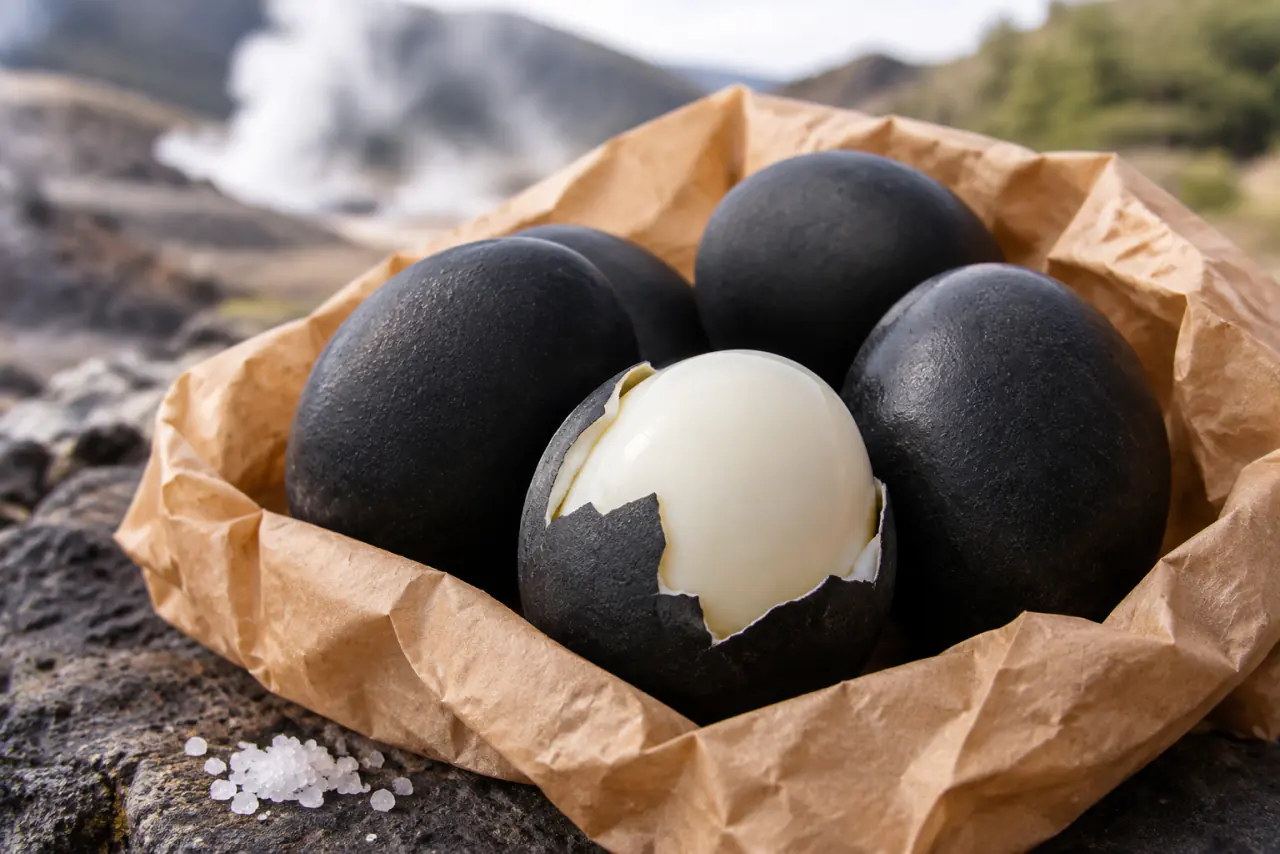
These eggs are boiled in Owakudani's hot-spring pools, which turn the shells black with sulfur and iron. Inside, they taste like ordinary hard-boiled eggs. Local lore says that eating one adds seven years to your life. They are usually sold in bags of several eggs and make a good snack during the loop.
The shop beside Owakudani Cable Car Station
Yokohama-style ie-kei ramen
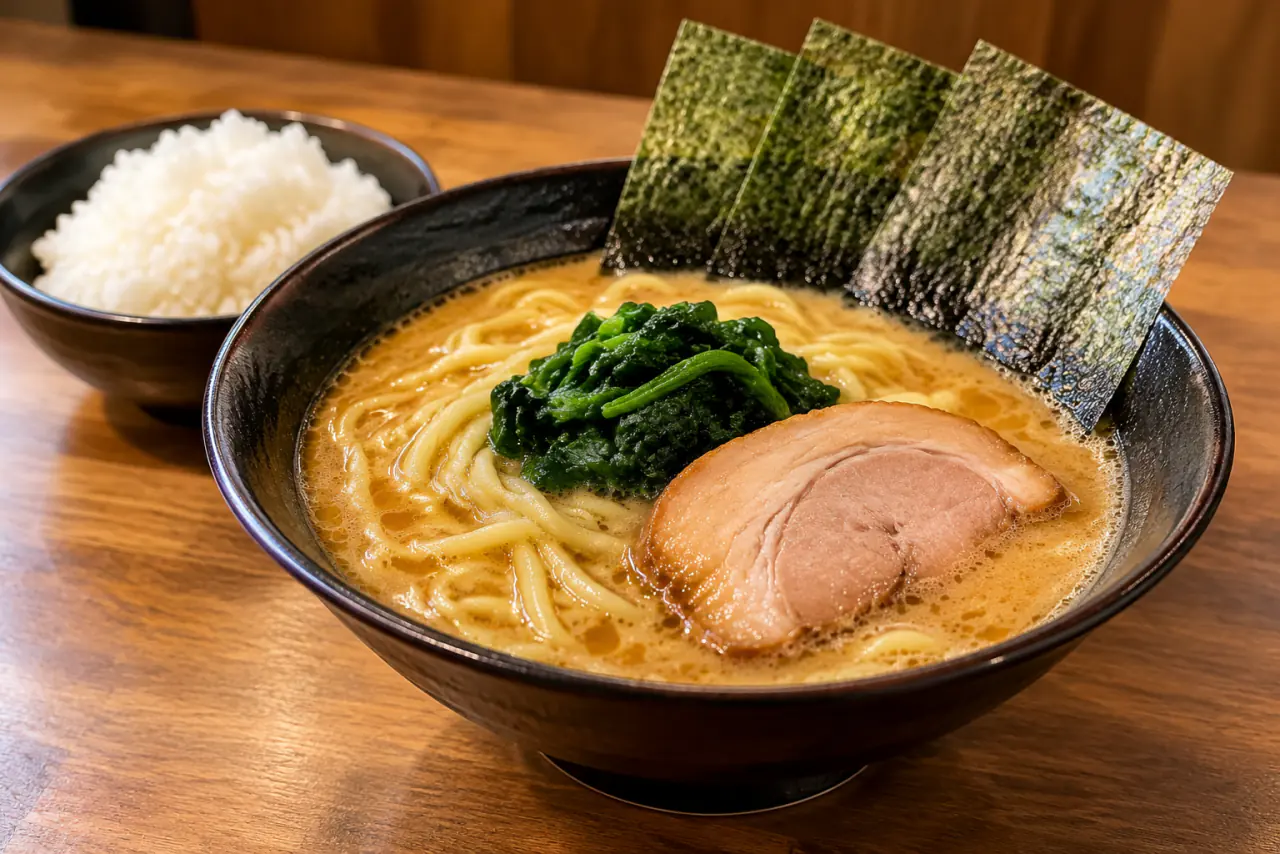
This Yokohama-born ramen has a rich pork-bone and soy sauce broth, thick straight noodles, spinach, and large sheets of nori. When ordering, you can choose the noodle firmness, broth strength, and amount of oil. For a first order, regular is fine for everything. Dipping the nori in the broth and wrapping it around rice is a common way to eat it.
Around Yokohama Station and Kannai · About ¥900–1,300 per bowl
Hato Sabure cookies
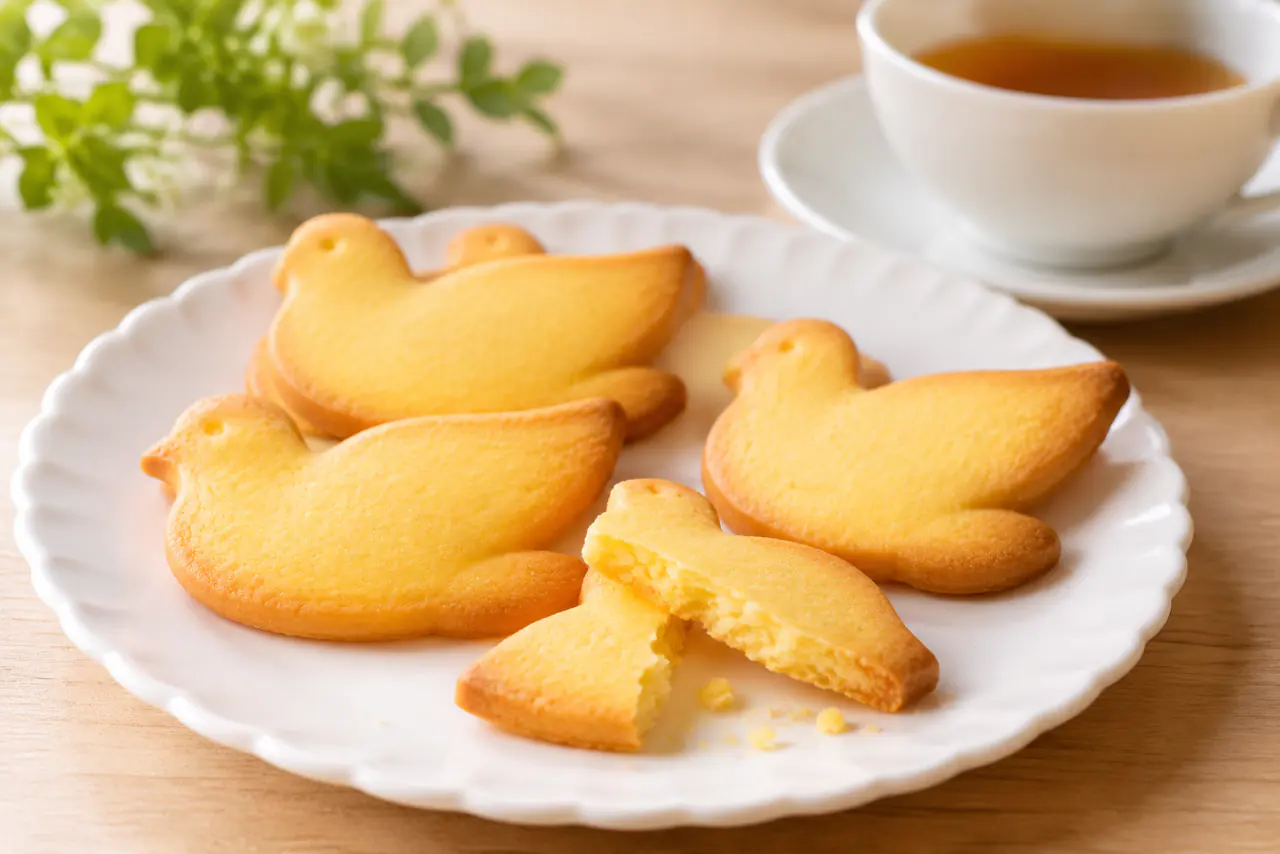
These dove-shaped butter cookies are made by Toshimaya, a long-established Kamakura confectioner. They are crisp and not too sweet, and the individual wrapping makes them easy to share. They are one of Kamakura's most common souvenirs. The main shop on Wakamiya Oji is the most convenient, and they are also sold around Kamakura Station.
Toshimaya's main shop on Wakamiya Oji and around Kamakura Station · About ¥1,000–2,000 per box
Getting there · Where to stay
From Shinagawa, take the JR Tokaido Line for about 15 minutes. From Shibuya, take an express train on the Tokyu Toyoko Line for about 25 minutes, costing about ¥310.
The Odakyu Romancecar runs directly to Hakone-Yumoto in about 85 minutes and costs about ¥2,470. Without the limited express, change trains at Odawara; the trip takes about 2 hours and costs half as much.
The JR Yokosuka Line runs directly from Tokyo Station to Kamakura in about 1 hour. From Shinjuku, take the Shonan-Shinjuku Line, or take Odakyu trains and change to the Enoden at Fujisawa.
The Keikyu Line takes about 30 minutes from Haneda Terminals 1 and 2 to Yokohama Station, without going into central Tokyo.
In Yokohama, stay around Minato Mirai or Kannai for easy access to the night views. In Hakone, stay at a hot-spring inn in Hakone-Yumoto or Gora, so you can take the loop at a relaxed pace the next day. Kamakura is usually visited as a day trip from Tokyo.
Know this before you go
- From Shinjuku to Hakone, the Hakone Freepass (about ¥7,100 for 2 days) includes round-trip travel and transportation within the area. The Romancecar requires an additional surcharge of about ¥1,200 each way.
- If you are visiting only Kamakura and Enoshima, the Enoshima-Kamakura Free Pass from Shinjuku costs about ¥1,640 and allows unlimited rides on the Enoden.
- The Hakone loop involves several transfers. Leave large luggage at your Tokyo hotel or in storage rather than taking it on the mountain railway.
- Enoden platforms can have long lines on weekends in Kamakura. The sights are not far apart, so walking is often faster.