Cloudborne Travel
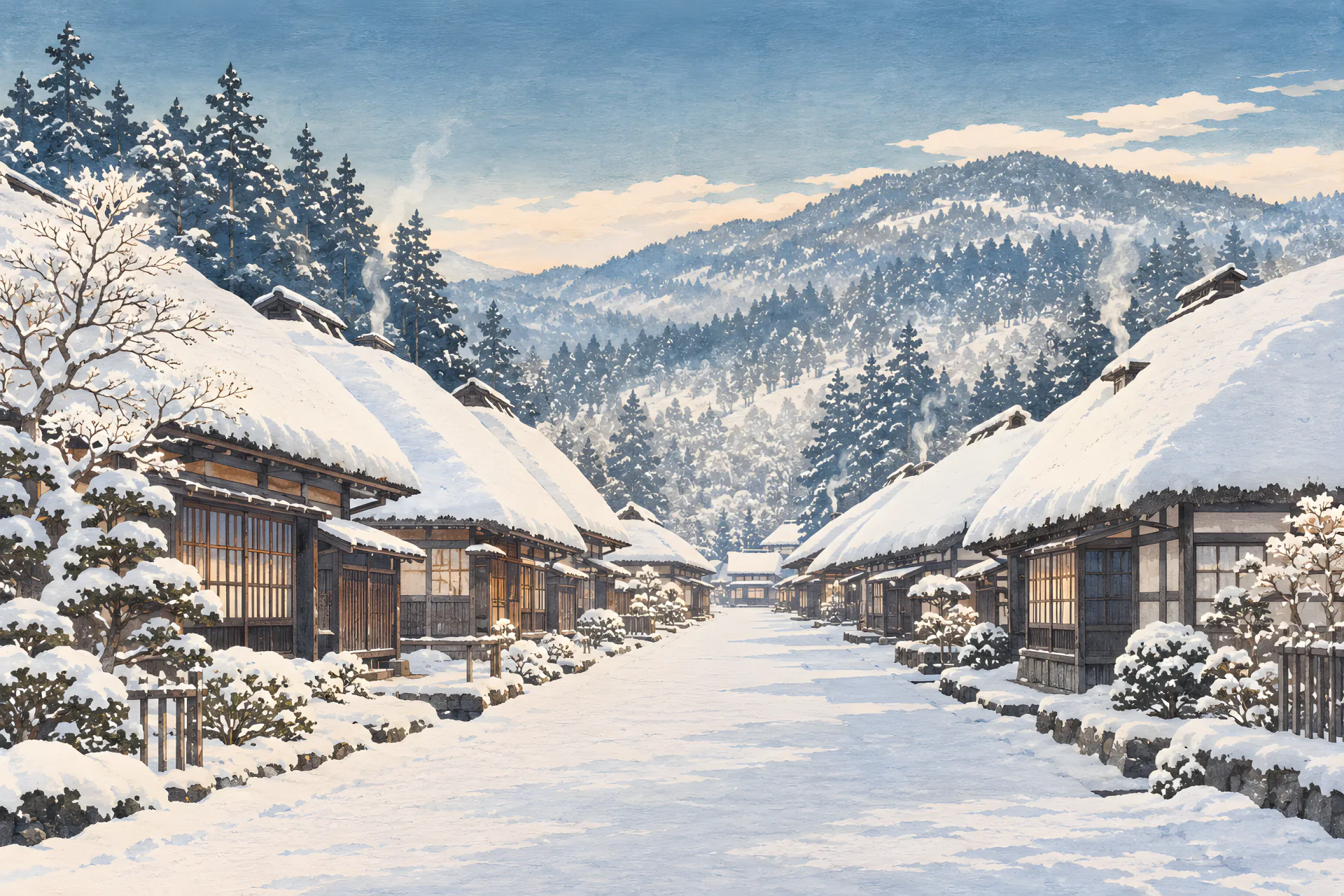
Fukushima is the Tohoku prefecture closest to Tokyo, with Shinkansen trains reaching Koriyama in about 1.5 hours. Most visitors head west to the Aizu region: Aizuwakamatsu has Tsuruga Castle and the story of the Byakkotai, while Ouchi-juku's thatched-roof houses lie to the south and Kitakata ramen and the Goshikinuma Ponds are to the north.
Fukushima is one of Tohoku's best cherry blossom destinations in spring. Miharu Takizakura and Hanamiyama Park usually bloom around mid-April. In fall and winter, you can ride the Tadami Line through valleys filled with autumn leaves or snow, but there are very few trains, so plan ahead. Restricted areas around the nuclear power plants are along the Pacific coast; regular attractions in Aizu and central Fukushima are open as usual.
Miharu Takizakura and Hanamiyama Park bloom around mid-April; Aizu's fall foliage peaks in late October; the Ouchi-juku Snow Festival is in February, and January–February is best for snowy scenery.
Monthly weather
Based on FukushimaBest time to visit Monthly precipitation (mm) Open-Meteo (ERA5), 1996–2025 average
| Month | Average high (°C) | Average low (°C) | Monthly precipitation (mm) | Days with 1 mm or more of precipitation |
|---|---|---|---|---|
| Jan(Good time to visit) | 5.5 | -1.5 | 64 | 11 |
| Feb(Good time to visit) | 6.6 | -1.1 | 51 | 10 |
| Mar(Good time to visit) | 10.8 | 2 | 92 | 13 |
| Apr(Good time to visit) | 16.9 | 7.2 | 103 | 12 |
| May(Good time to visit) | 22.2 | 12.8 | 109 | 12 |
| Jun | 25.4 | 17.6 | 138 | 14 |
| Jul | 28.9 | 22.1 | 189 | 19 |
| Aug | 30.1 | 23.1 | 168 | 18 |
| Sep(Good time to visit) | 26.3 | 19.1 | 163 | 14 |
| Oct(Good time to visit) | 20.4 | 12.3 | 141 | 11 |
| Nov(Good time to visit) | 14.6 | 6.1 | 70 | 10 |
| Dec(Good time to visit) | 8.3 | 1.4 | 60 | 12 |
Sights
-
 1
Tsuruga Castle
鶴ヶ城
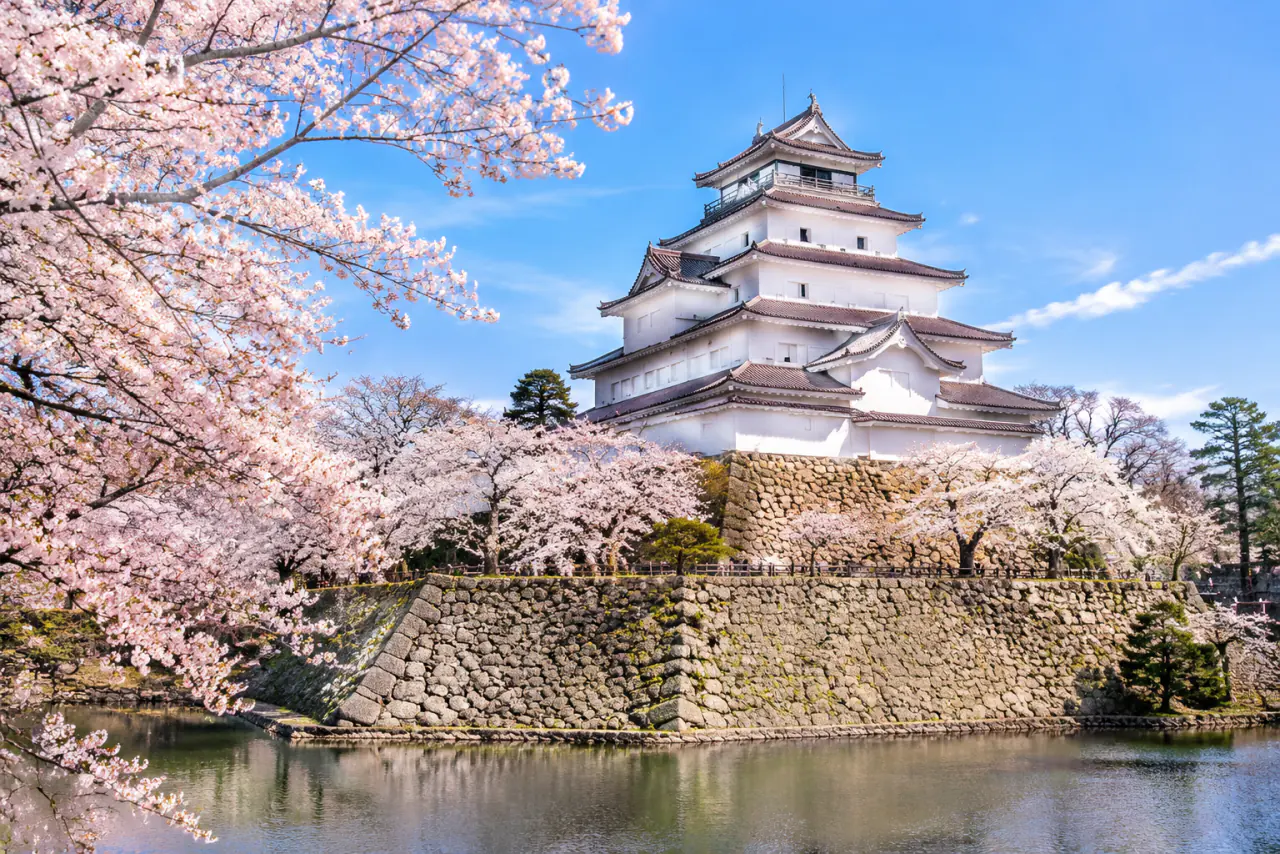
Aizu forces held this castle for a month during the Boshin War. The current keep is a reconstruction, with an unusual red-tile roof. Inside is a history museum, and the top floor has views across the city. Around 1,000 cherry trees bloom around the castle in mid-to-late April, while snow on the red roof makes a beautiful winter scene.
Take the “Haikara” loop bus from the stop in front of Aizuwakamatsu Station to Tsurugajo Iriguchi.
-
 2
Ouchi-juku
大内宿
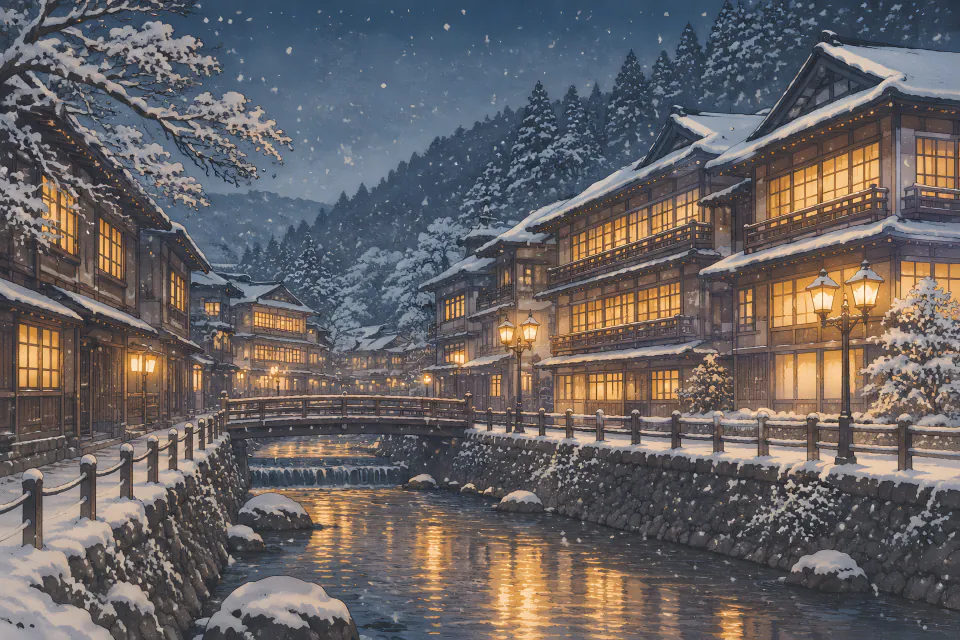
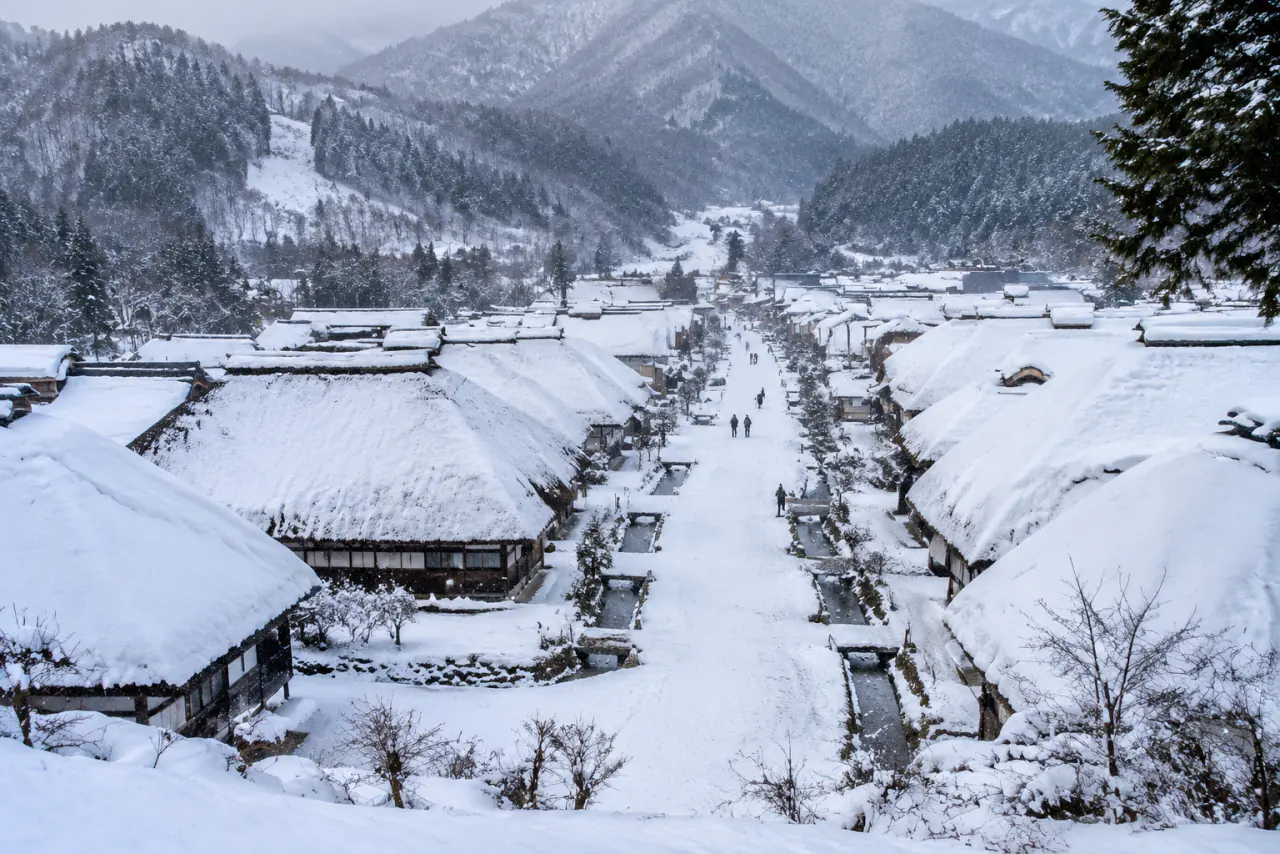
This Edo-period post town has more than 30 old houses with thatched roofs lining a dirt road. Most now house soba restaurants and souvenir shops. Climb the small hill at the end of the village for a view down the entire street. The snow-covered roofs are especially beautiful in winter, and a lantern-lit Snow Festival is held every February.
Public transportation is inconvenient. A day bus tour or private taxi from Aizuwakamatsu is easier.
-
 3
Goshikinuma Ponds
五色沼
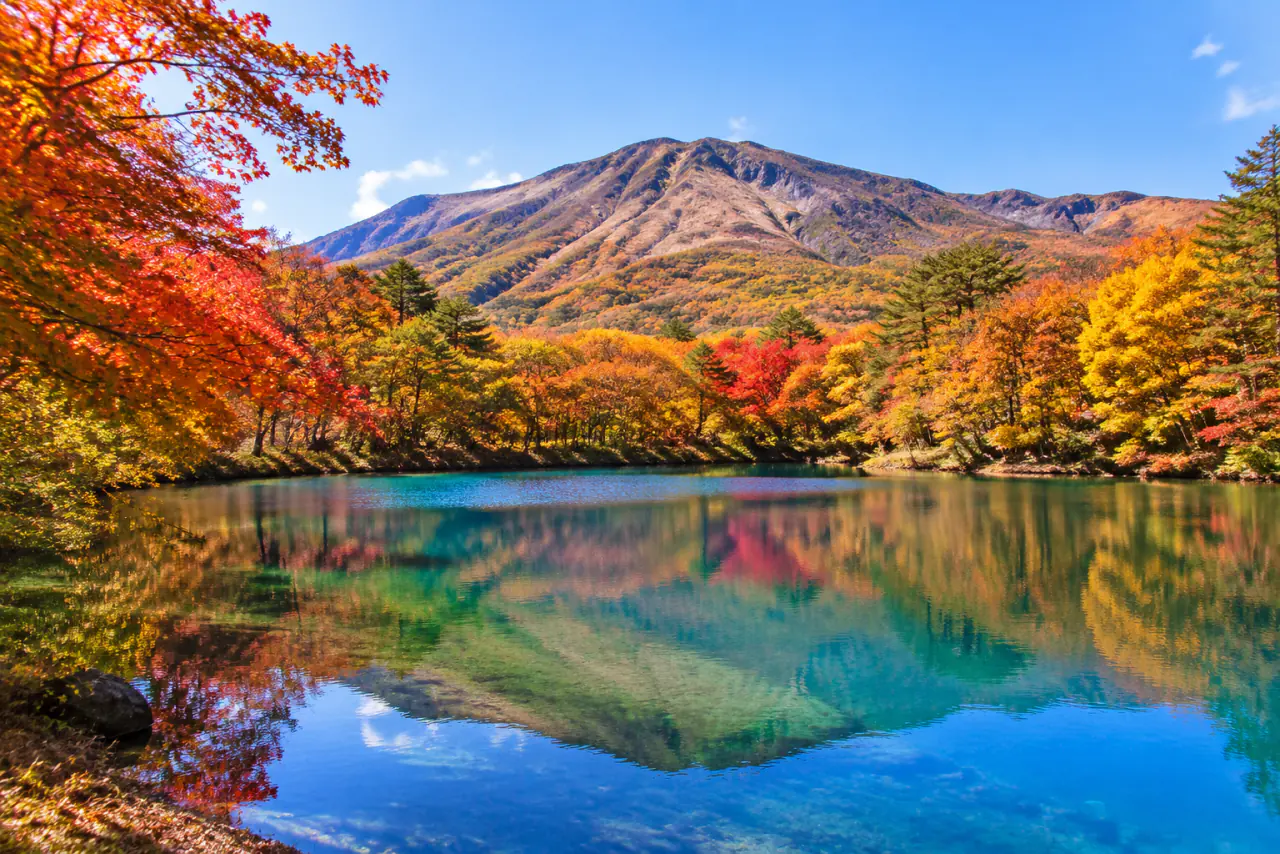
This chain of small lakes formed after Mount Bandai erupted in 1888. Each pond has a different color, from emerald green to cobalt blue, depending on volcanic minerals in the water, the weather, and the light. The lakeside trail is about 3.6 kilometers and takes a little over an hour on mostly gentle terrain. Late October, when fall foliage contrasts with the blue water, is the best time to visit.
Take a bus from Inawashiro Station; the ride takes about 30 minutes. Snow covers the trail in winter, so wear snowshoes or join a tour.
-
 4
Tadami River First Bridge
只見川第一橋梁
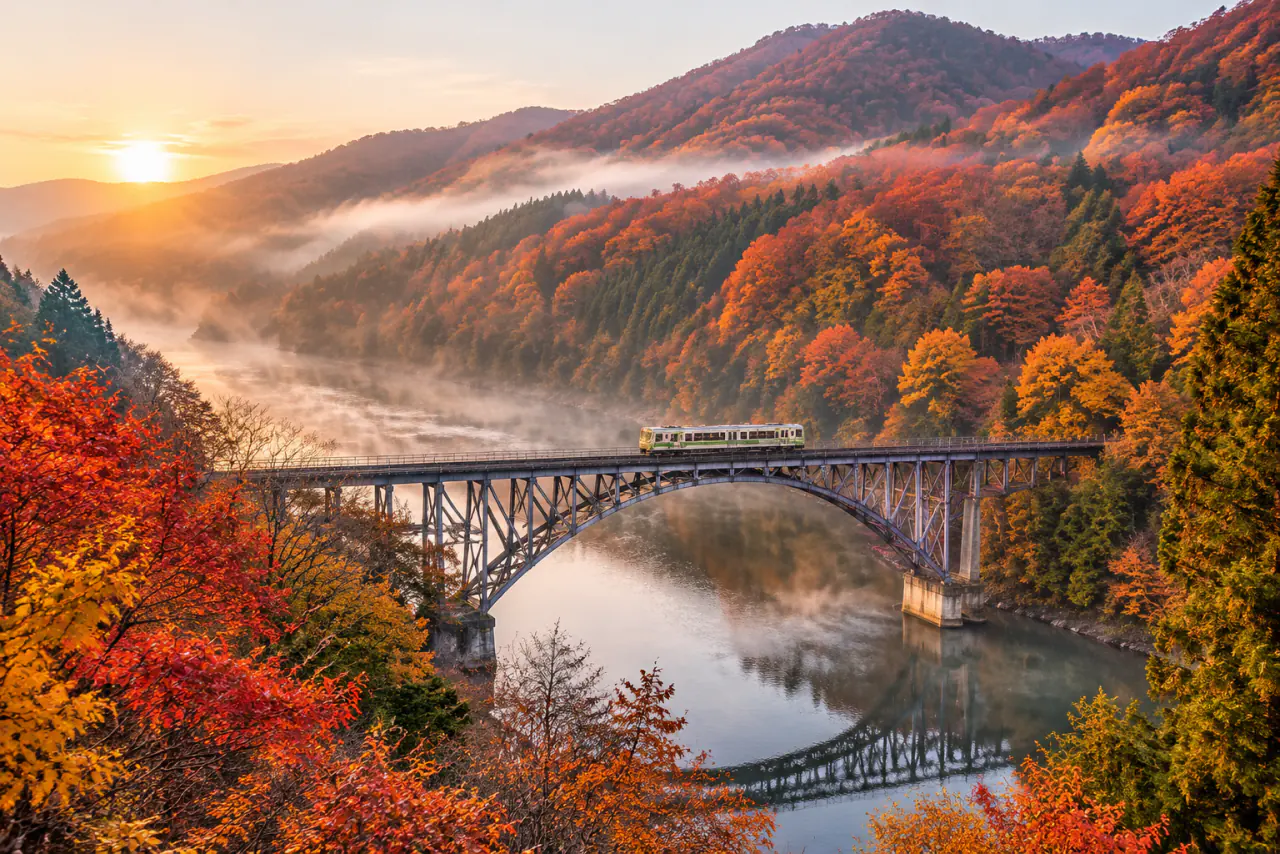
This is the classic view of a Tadami Line train crossing a railway bridge over the valley. It is especially atmospheric when mist rises from the river in the morning. Fresh green leaves in spring, fall foliage, and winter snow each create a different scene. The viewpoint is on the opposite hillside and takes just a few minutes to reach. You can also ride the Tadami Line across the bridge.
Only a few Tadami Line trains run each day, so check the crossing times before you go.
-
 5
Iimoriyama & Sazaedo
飯盛山・さざえ堂
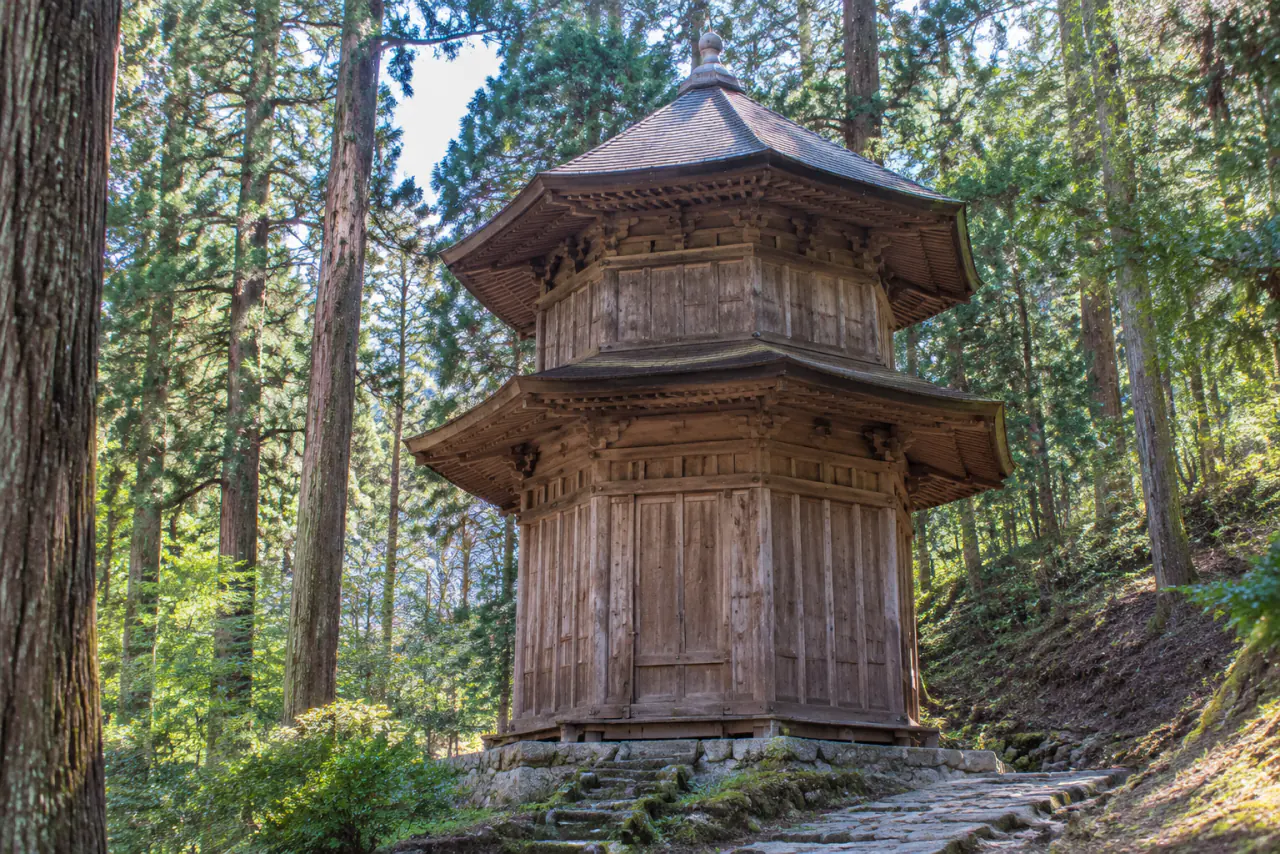
Iimoriyama is where the young Byakkotai members took their own lives during the Boshin War, and their graves are on the mountain. Sazaedo, a wooden double-helix pagoda on the hillside, has two nonintersecting ramps for going up and down. It is one of a kind in Japan. You can reach it by loop bus from Tsuruga Castle.
The stone steps up the mountain are somewhat steep. A paid moving walkway is available beside them.
-
 6
Miharu Takizakura
三春滝桜
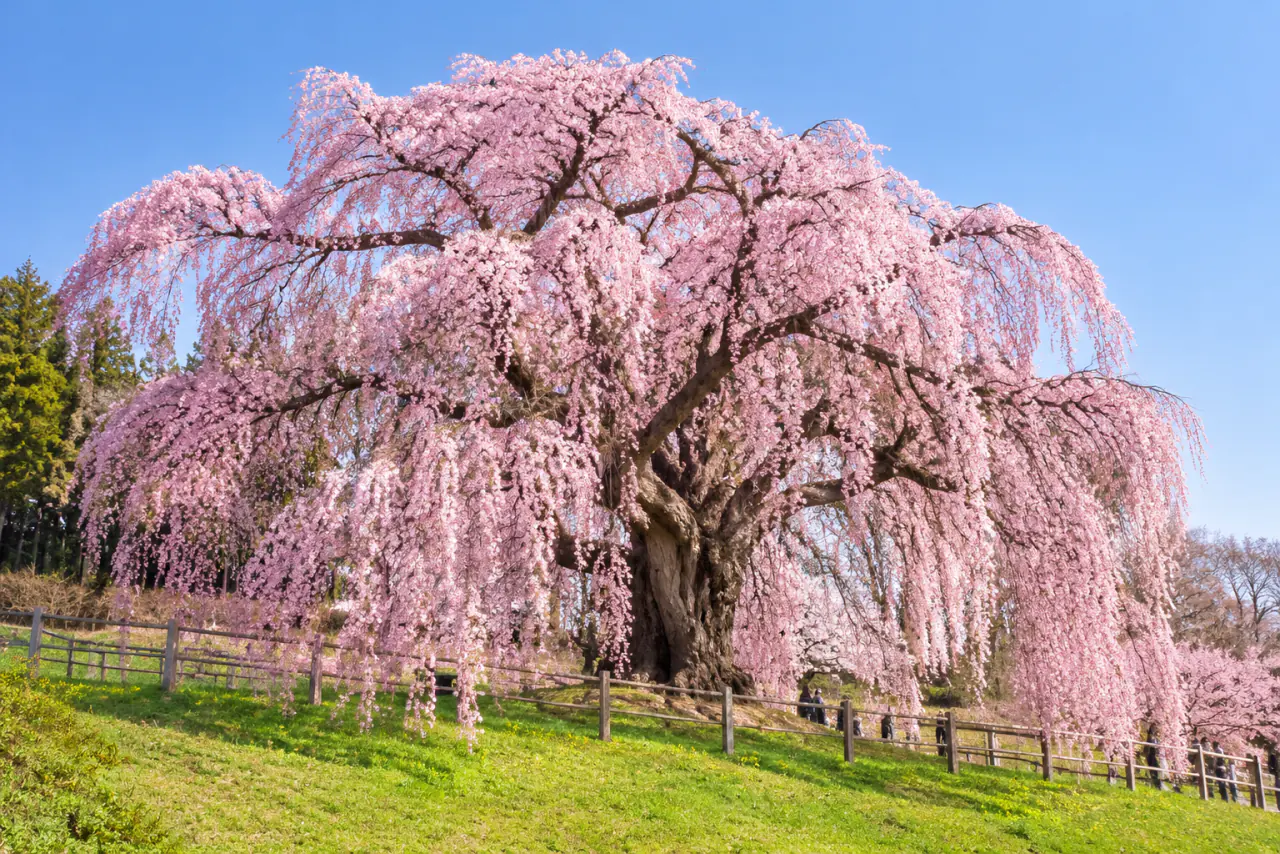
This red weeping cherry tree is said to be more than 1,000 years old. Its branches cascade like a waterfall, and it is one of Japan's “Three Great Cherry Trees.” There is only one tree, but the view from beneath it is powerful. It usually blooms in mid-April. During the bloom period, admission is charged and temporary buses run from Miharu Station.
It gets extremely crowded during bloom. Arrive before 7 a.m. to avoid tour groups.
-
 7
Hanamiyama Park
花見山公園
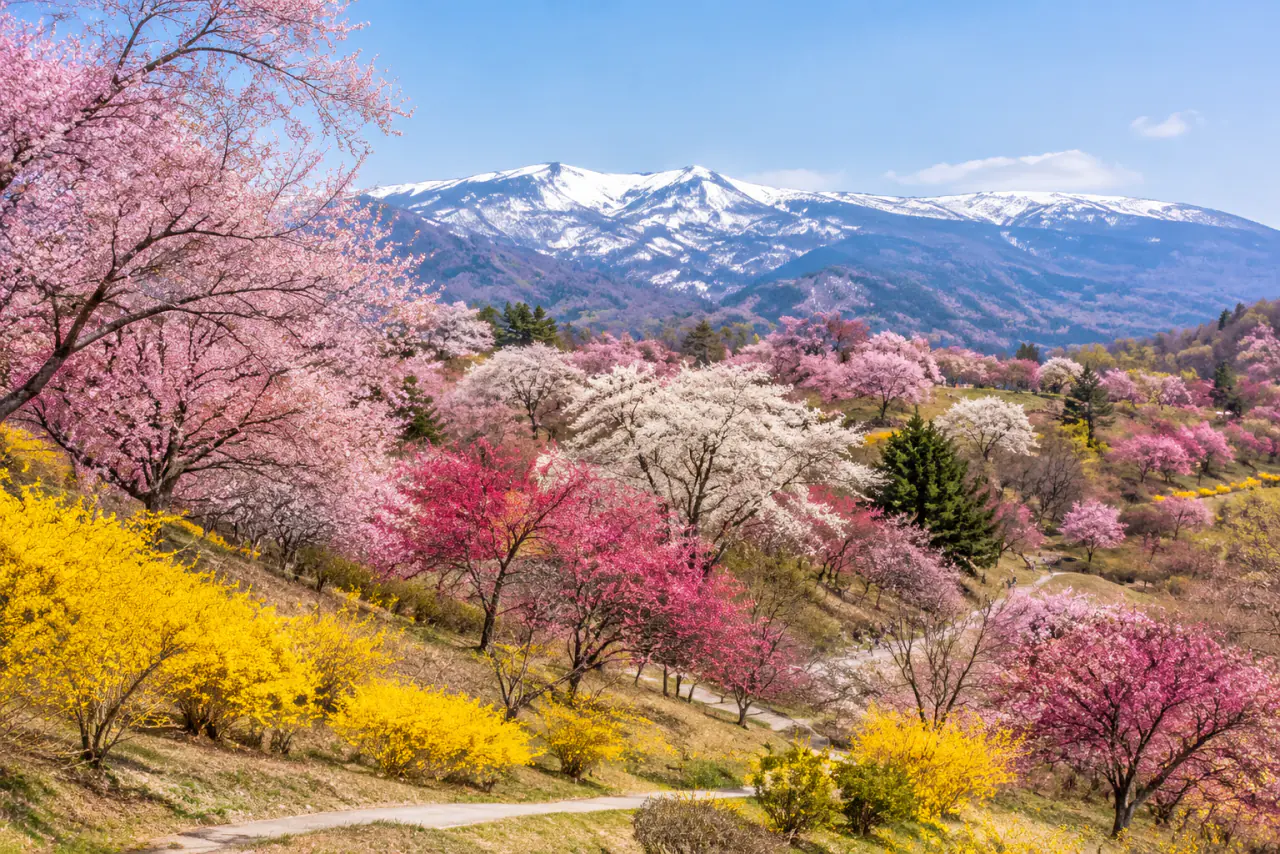
A flower farmer opened this family-owned hillside to the public for free. In early to mid-April, cherry blossoms, forsythia, magnolias, and peach blossoms bloom together in shades of pink, yellow, and white, with the still-snowy Azuma Mountains in the distance. A full loop takes about 1 hour, and several routes of different lengths are available.
Temporary buses run from Fukushima Station during bloom. Private cars cannot drive close to the park.
-
 8
To-no-Hetsuri
塔のへつり
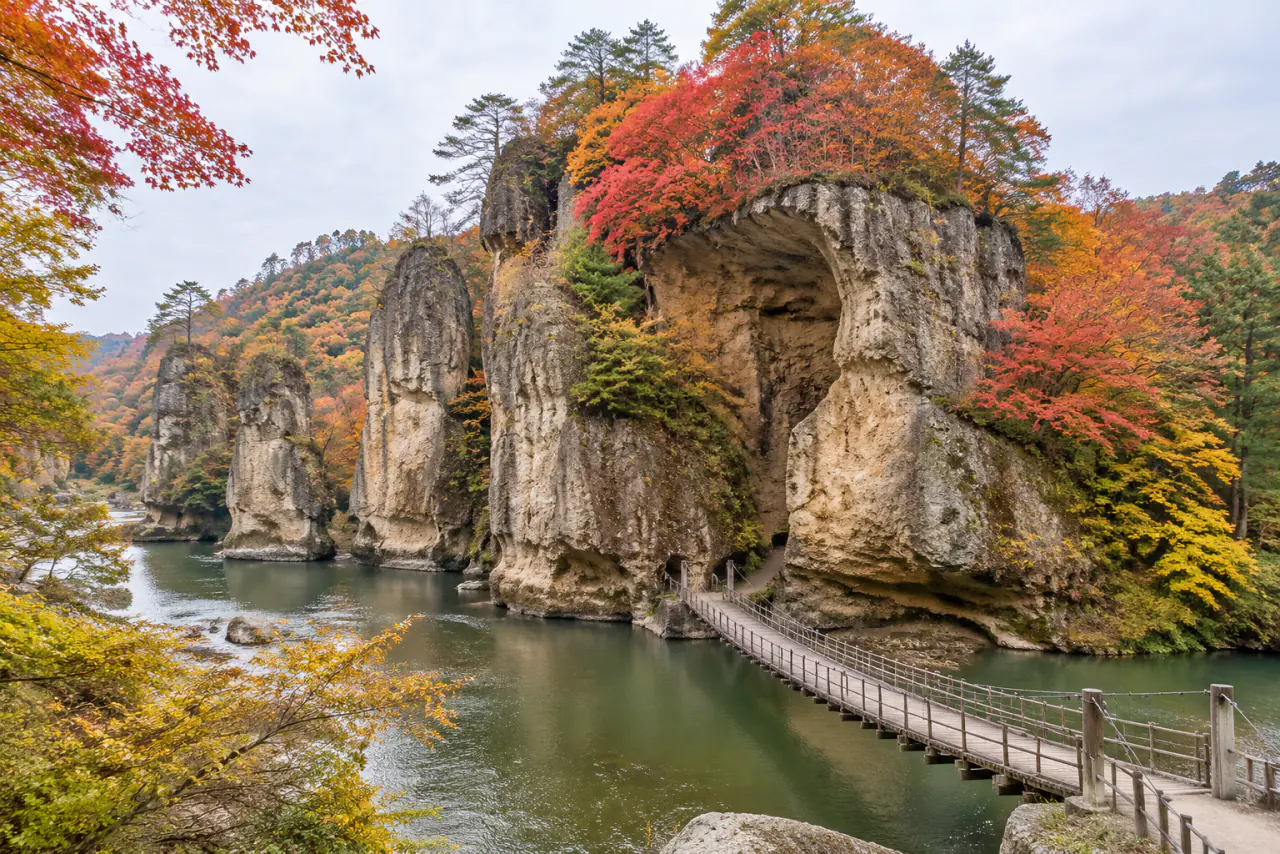
River water and wind have carved the cliffs into a row of tower-like rock formations. Cross the suspension bridge to walk through hollows beneath the cliffs. The site is small; 30 minutes is enough, making it easy to combine with Ouchi-juku on the same day. The rocks are most beautiful during the fall foliage season.
From To-no-Hetsuri Station on the Aizu Railway, it is about a 5-minute walk. The suspension bridge sways.
What to eat
Kitakata ramen
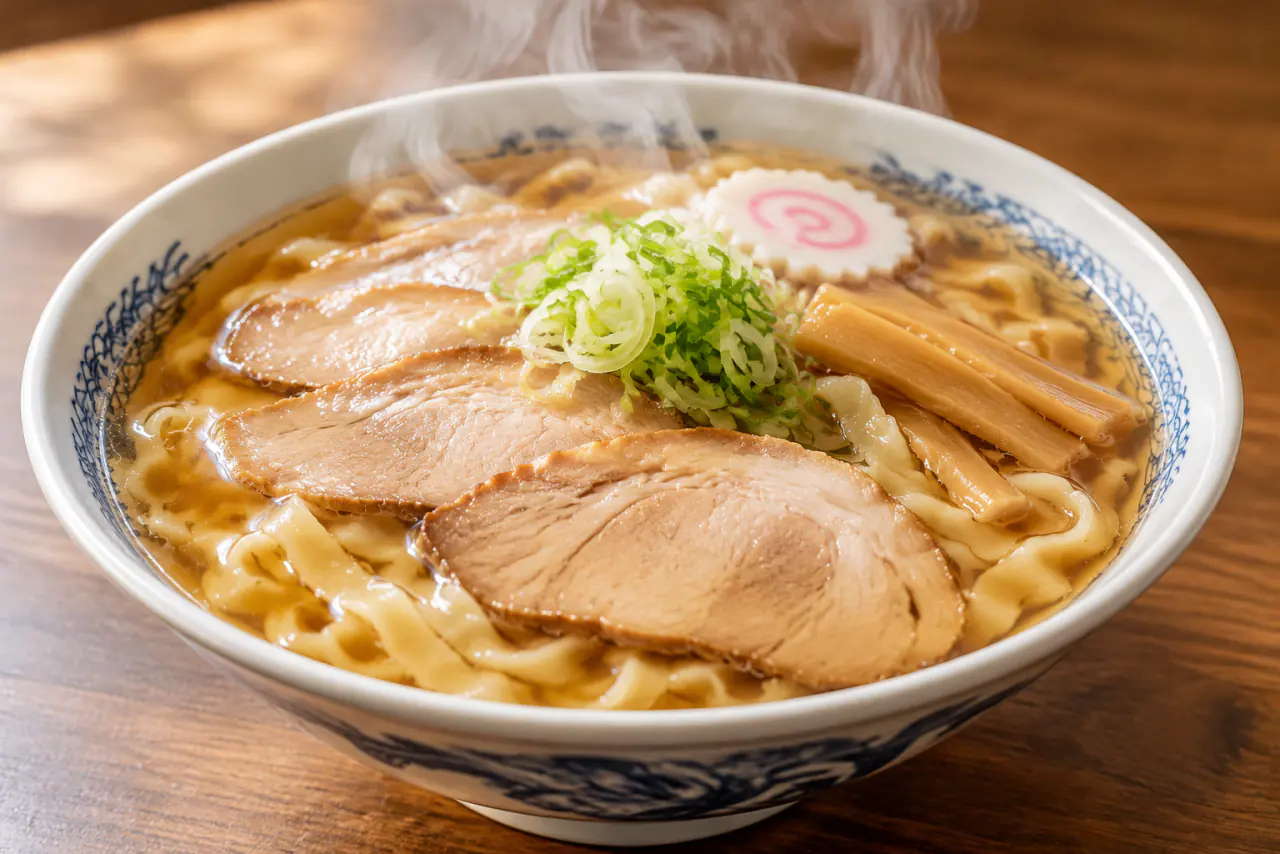
One of Japan's three great ramen styles: thick, wide, curly noodles in a clear soy sauce and pork broth, topped with slices of chashu pork. People in Kitakata often eat ramen for breakfast, and many shops open at 7 or 8 a.m.
Central Kitakata, about 20 minutes by JR train from Aizuwakamatsu · About ¥800–1,200 per bowl
Negi soba
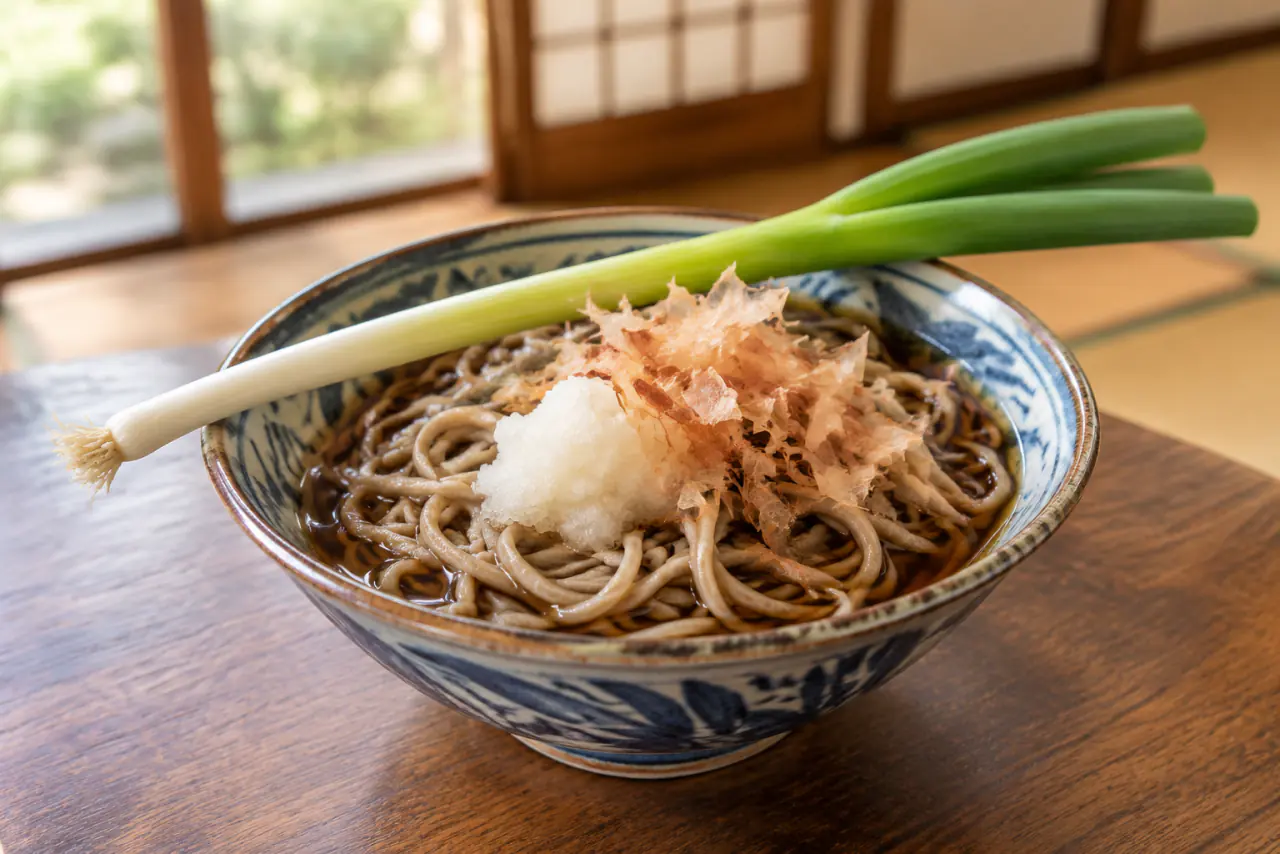
Ouchi-juku's signature way to eat soba: use a whole green onion instead of chopsticks to lift the noodles, taking a bite of the onion when you like. It is mainly for fun, and the onion is fairly spicy. If you do not want to bite it, use it only to pick up the noodles.
Soba restaurants in Ouchi-juku's old houses · About ¥1,300–1,800 per bowl
Aizu sauce katsudon
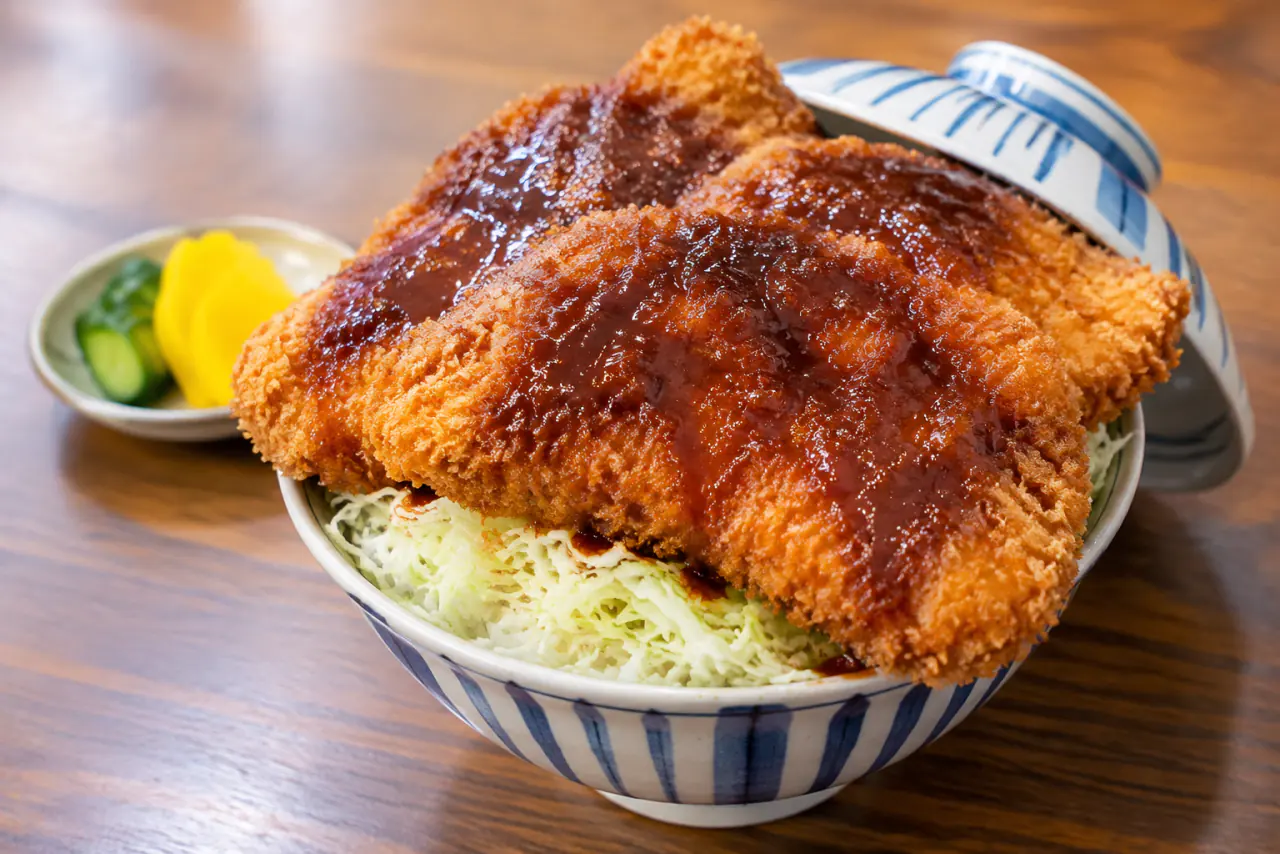
A breaded pork cutlet covered in a sweet-savory sauce and served over sliced cabbage and rice. In Aizu, the cutlet is often bigger than the bowl, leaving no room to put the lid on. Portions are generous.
Central Aizuwakamatsu · About ¥1,200–1,800 per bowl
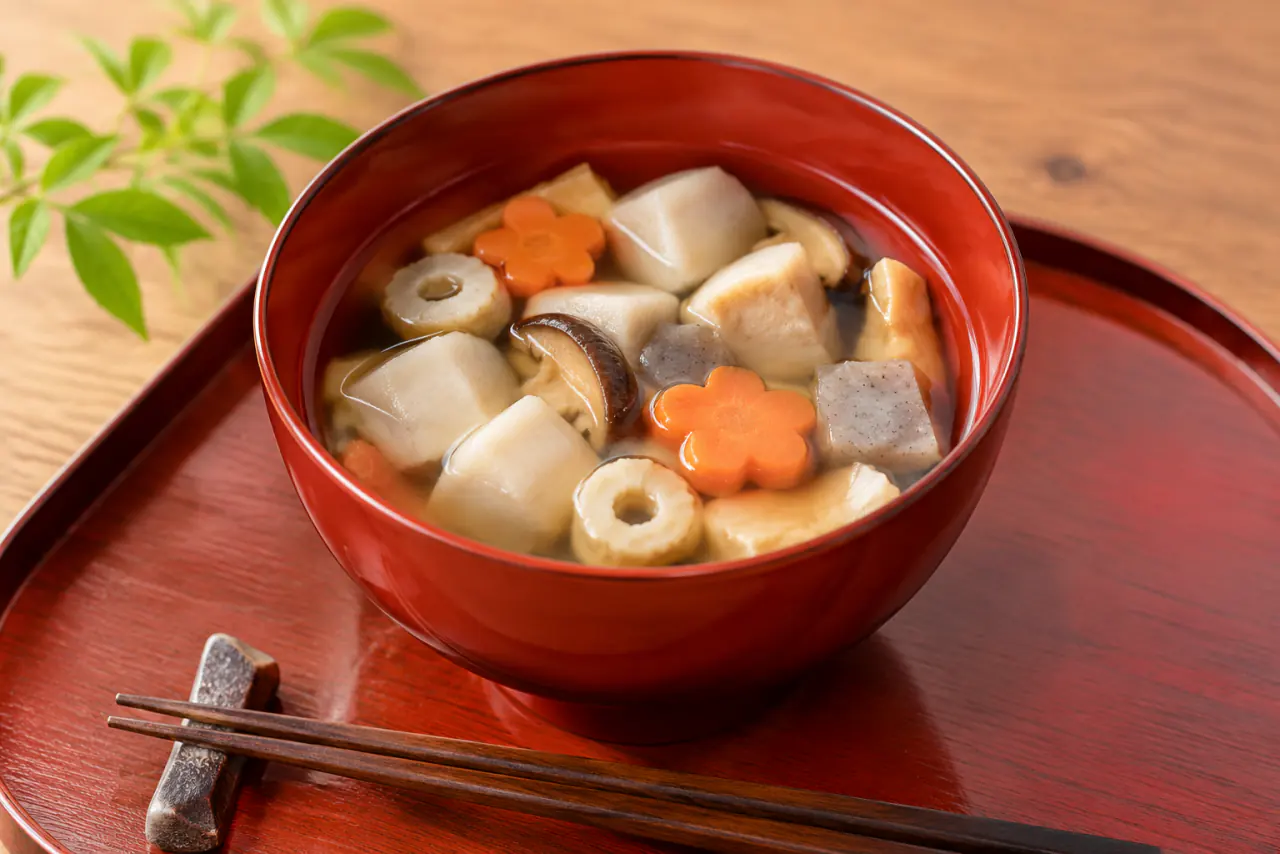
Kozuyu
A clear soup made with dried scallops and filled with taro, shiitake mushrooms, konjac, wheat gluten, and other small ingredients. It was traditionally served at festivals. The flavor is light, and it is often served in a special shallow lacquer bowl.
Local restaurants in Aizuwakamatsu and ryokan in Higashiyama Onsen · About ¥500–800 per bowl
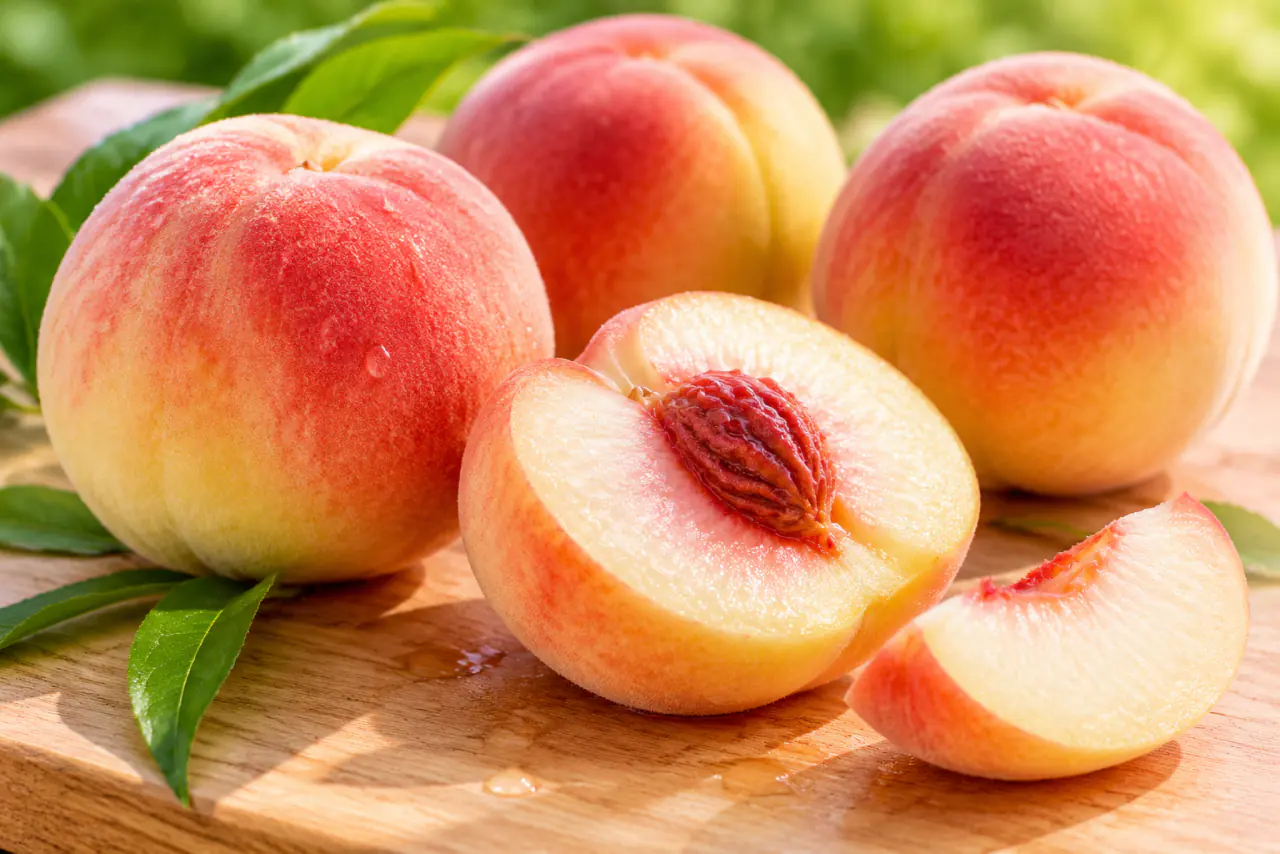
Fukushima peaches
Fukushima is one of Japan's major peach-growing regions. Peaches are in season from July–September and are very juicy and sweet. Orchards in the countryside around Fukushima offer fruit picking, and station fruit shops sell sliced peaches as well.
The “Fruit Line” area around Fukushima · About ¥300–800 each
Getting there · Where to stay
The Tohoku Shinkansen takes about 1 hour 20 minutes or more to Koriyama and about 1.5 hours to Fukushima
The JR Ban'etsu West Line takes about 1–1.5 hours to Aizuwakamatsu
The Aizu Railway takes about 40–50 minutes to Yunokami Onsen Station, followed by a bus or taxi to Ouchi-juku
Stay near Aizuwakamatsu Station or Higashiyama Onsen for easy access to Tsuruga Castle, Ouchi-juku, and Kitakata. During cherry blossom season, stay near Koriyama or Fukushima Station.
Know this before you go
- Whether your licence is valid for driving in Japan depends on the licence and documents you hold; check the official rules. Ouchi-juku and the Goshikinuma Ponds can also be reached by seasonal buses or local day tours.
- The Tadami Line and Aizu Railway have infrequent service. Check the schedules in advance; missing one train may mean waiting two or three hours.
- Attractions in central Aizuwakamatsu are spread out, so a one-day loop-bus pass is cheaper than paying for individual rides.
- Miharu Takizakura and Hanamiyama Park have short bloom periods. Check the bloom forecast a week before your trip and then set your dates.