Cloudborne Travel
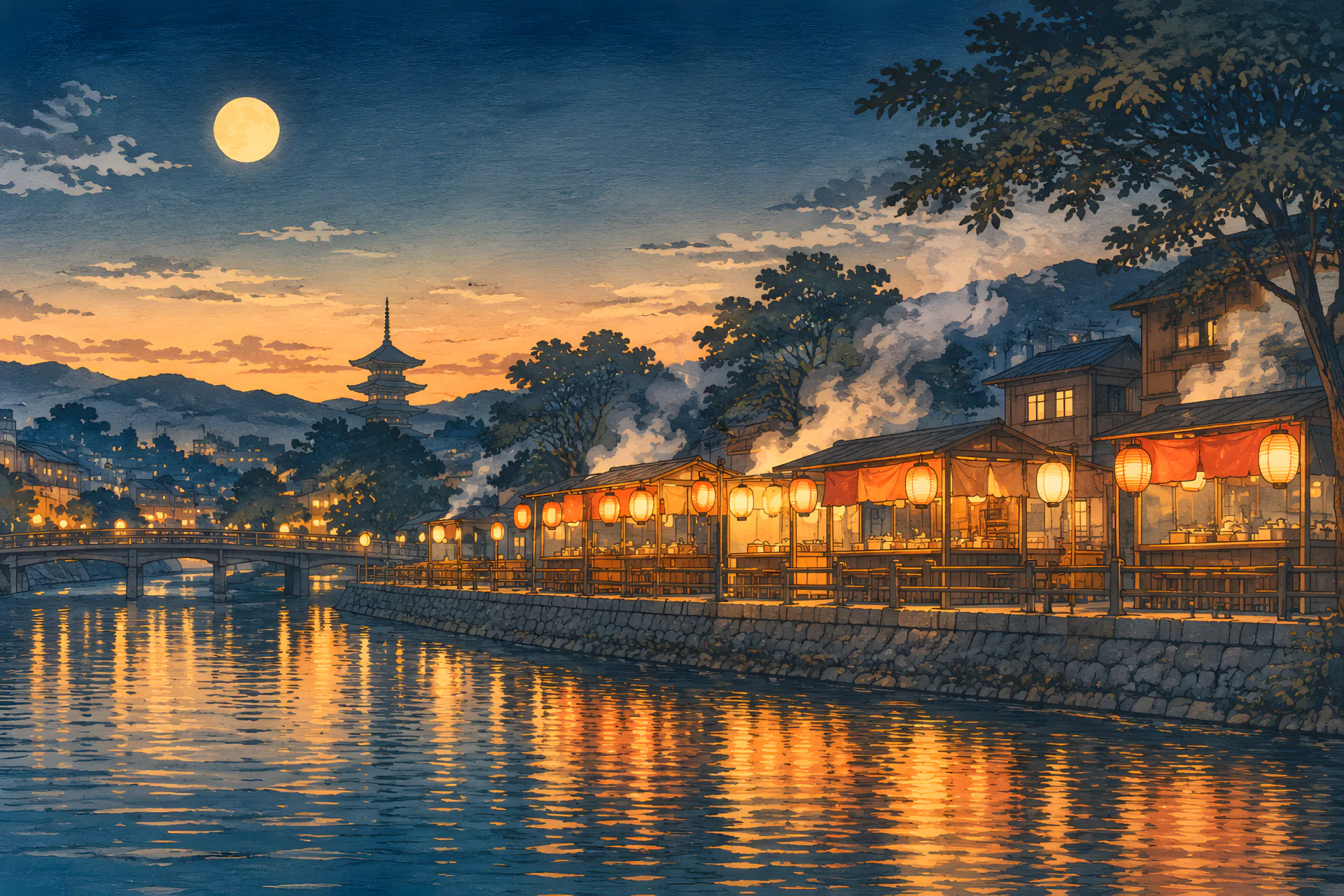
Fukuoka is Kyushu's largest city and the main gateway to the region. The airport is remarkably close to downtown, and the subway reaches Hakata Station in just a few minutes. You can land and be eating ramen or exploring yatai the same day. The city is compact and slower-paced than Tokyo or Osaka, making it a good choice for first-time visitors and anyone who wants an easier trip.
One day is enough for the city: visit shrines and parks by day, then eat around Nakasu and Tenjin at night. With more time, take day trips to Dazaifu, Yanagawa, or Mojiko. Farther afield, Yufuin, Nagasaki, and Kumamoto are all reachable from Hakata, so many travelers use Fukuoka as the starting and ending point of a Kyushu trip.
See cherry blossoms and wisteria in spring, and enjoy hot pot in the cool fall weather. The Hakata Gion Yamakasa takes place in early July. June is the rainy season, and typhoons are possible in summer and fall.
Monthly weather
Based on FukuokaBest time to visit Monthly precipitation (mm) Open-Meteo (ERA5), 1996–2025 average
| Month | Average high (°C) | Average low (°C) | Monthly precipitation (mm) | Days with 1 mm or more of precipitation |
|---|---|---|---|---|
| Jan | 10.5 | 2.9 | 63 | 10 |
| Feb | 11.9 | 3.7 | 76 | 9 |
| Mar(Good time to visit) | 15.6 | 6.5 | 111 | 11 |
| Apr(Good time to visit) | 20.5 | 10.8 | 125 | 11 |
| May(Good time to visit) | 25 | 15.7 | 155 | 11 |
| Jun | 27.7 | 20.6 | 294 | 16 |
| Jul | 31.3 | 24.8 | 271 | 18 |
| Aug | 32.8 | 25.4 | 193 | 15 |
| Sep(Good time to visit) | 29.5 | 21.7 | 178 | 14 |
| Oct(Good time to visit) | 24.4 | 15.6 | 99 | 8 |
| Nov(Good time to visit) | 18.6 | 9.7 | 89 | 9 |
| Dec | 12.7 | 4.7 | 66 | 9 |
Sights
-
 1
Dazaifu Tenmangu
太宰府天満宮
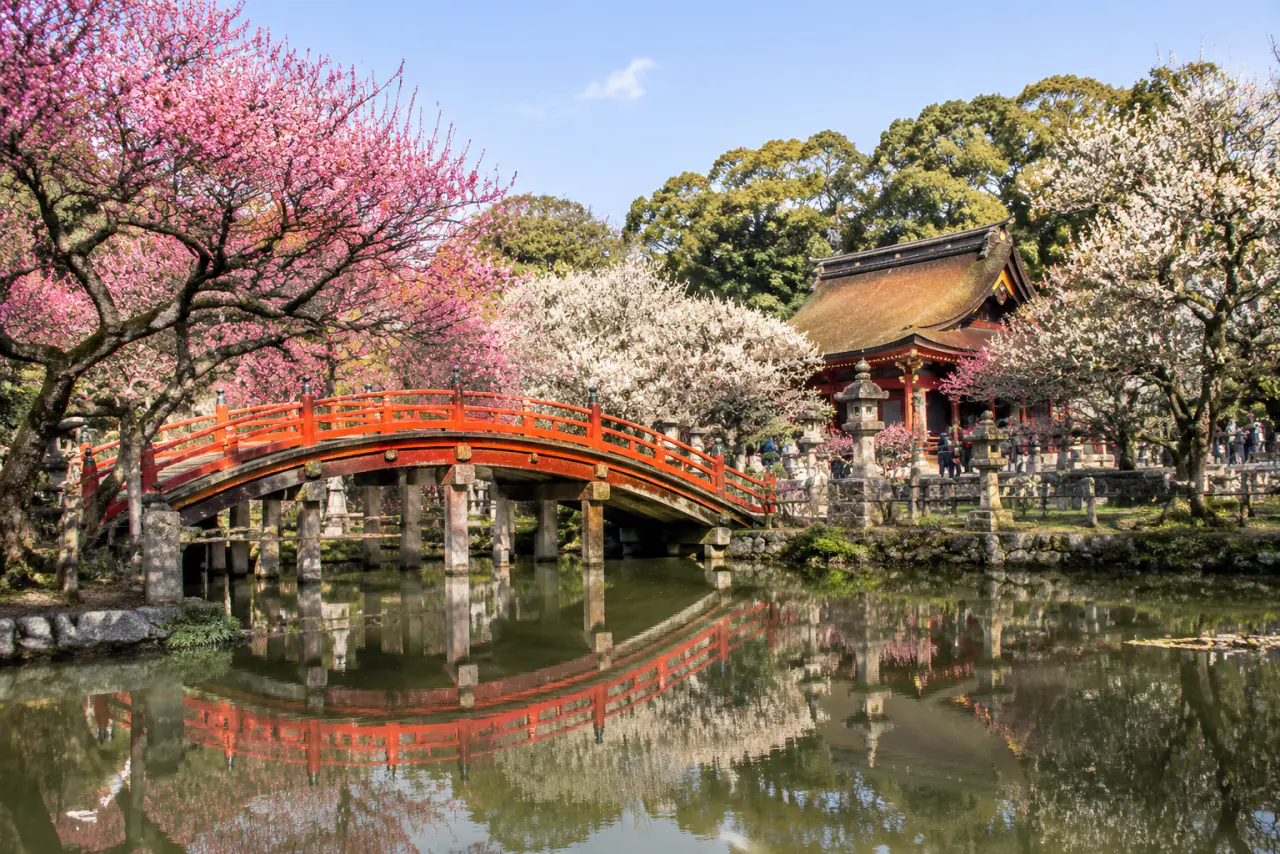
Dedicated to Sugawara no Michizane, the deity of learning, this shrine draws many visitors seeking good luck before exams. Plum blossoms fill the grounds in early spring, and the approach is lined with shops selling umegae mochi. Eating one as you walk is part of the experience. The Kyushu National Museum is right next door. Take the escalator through the tunnel behind the shrine to reach it, and you can see both in half a day.
Take the Nishitetsu train from Tenjin in about 30 minutes, changing at Nishitetsu Futsukaichi. Weekends get busy after 10 a.m., so go early.
-
 2
Kushida Shrine
櫛田神社
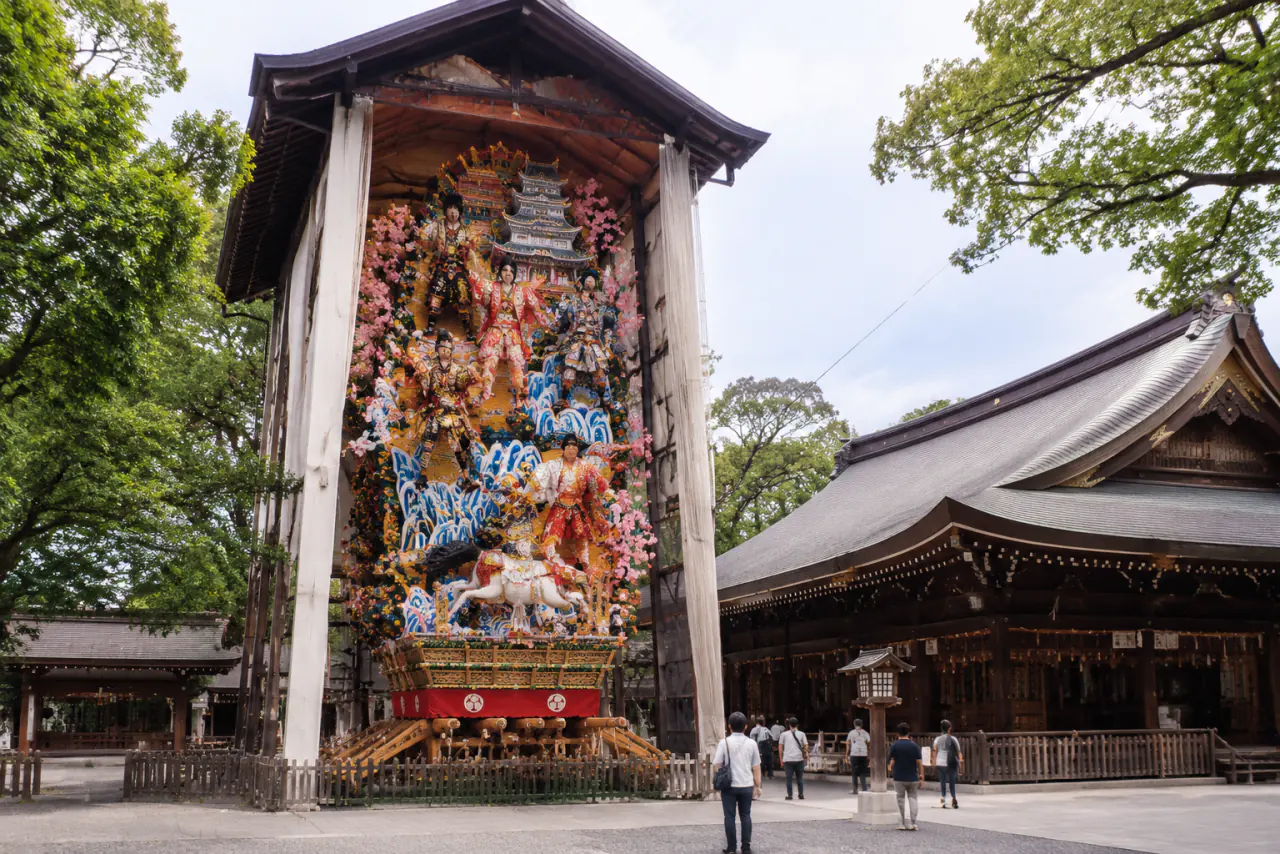
Hakata's main guardian shrine and the starting point of the Hakata Gion Yamakasa festival. A decorative float more than ten meters high is displayed here year-round, so you can see one even outside the July festival. It is a short walk from Hakata Station and Nakasu, making it an easy stop while exploring downtown. Kawabata Shopping Arcade is just beyond it.
During the Yamakasa festival from July 1–15, the Oiyamanarashi race takes place early in the morning. Check the time in advance if you want to watch; crowds are very large.
-
 3
Ohori Park & Fukuoka Castle Ruins
大濠公園・舞鶴公園
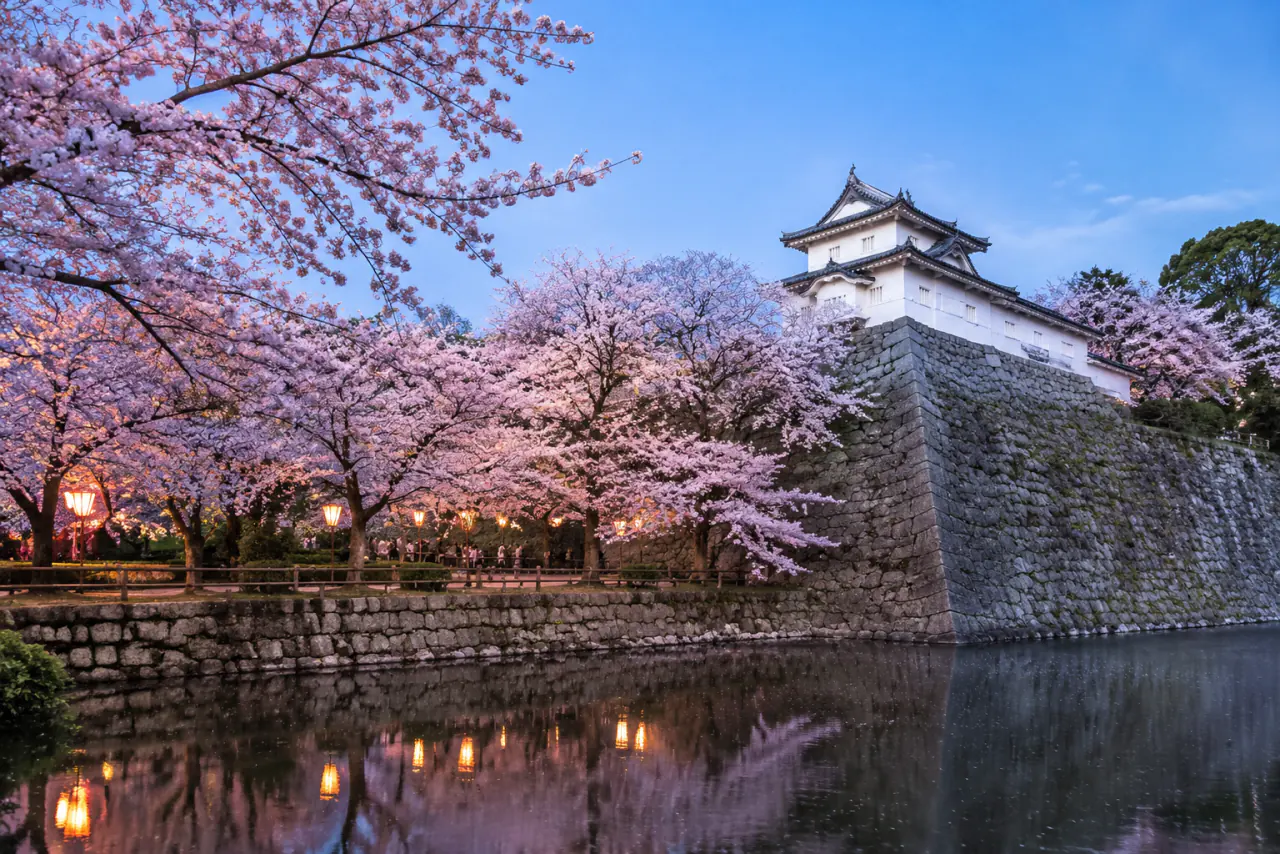
A large lake fills the center of Ohori Park, where locals jog and walk their dogs. One lap around the lake is about 2 kilometers. Nearby Maizuru Park contains the ruins of Fukuoka Castle, including its stone walls. It is the city's most popular cherry blossom spot in spring, with evening illuminations. Rest at the lakeside Starbucks or Japanese garden when you need a break.
Get off at Ohori Koen Station and you are there. Weekend evenings during cherry blossom season are very crowded, so weekdays are more comfortable.
-
 4
Mojiko Retro
門司港レトロ
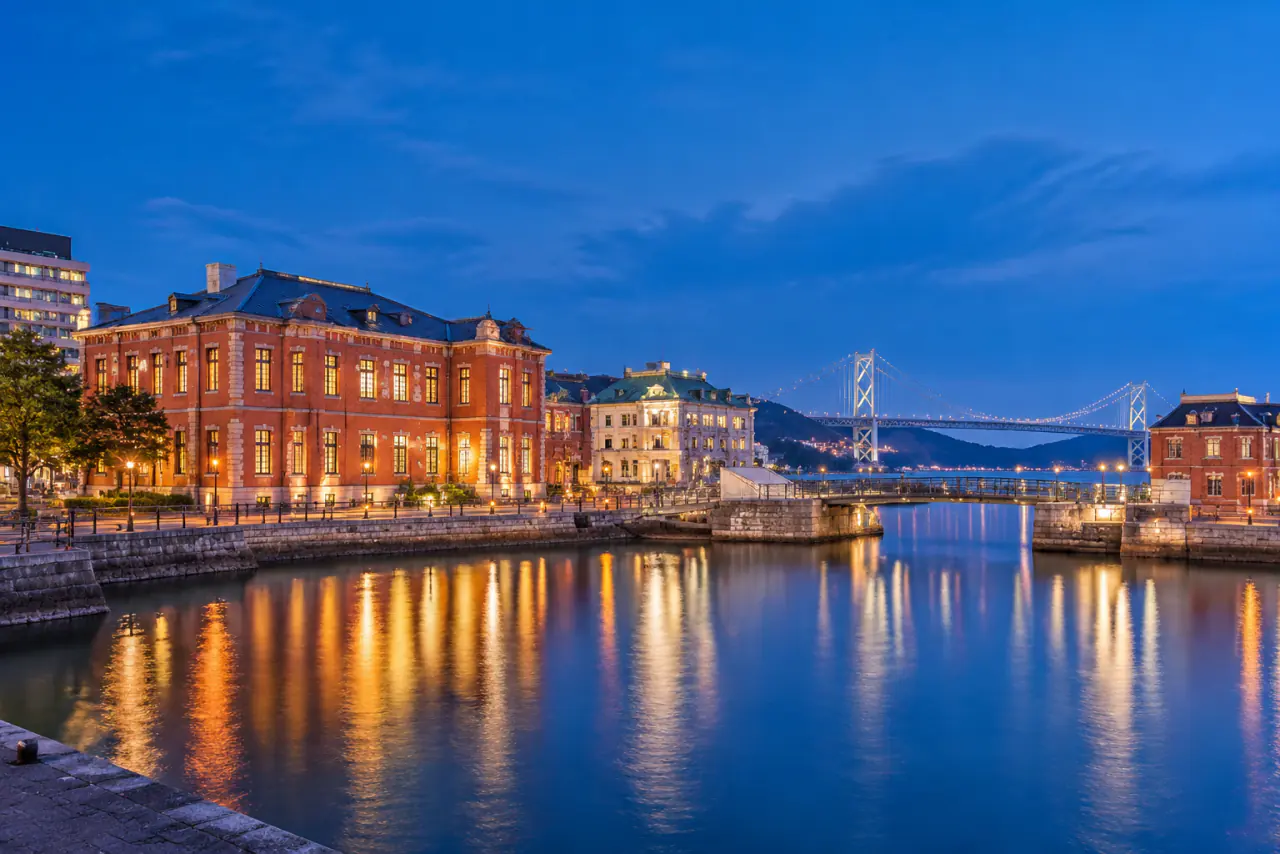
This former international trading port preserves a group of red-brick Western-style buildings and the restored Mojiko Station. The waterfront is great for photos, and a ferry takes about 5 minutes to reach Karato Market in Shimonoseki, across the strait, for sushi. Plan half a day to a full day. Go in the afternoon, stay for the night view, and then return to Fukuoka.
Take the shinkansen from Hakata to Kokura, then transfer to a local JR train to Mojiko. Karato Market is busiest around noon on weekends.
-
 5
Yanagawa River Cruise
柳川川下り
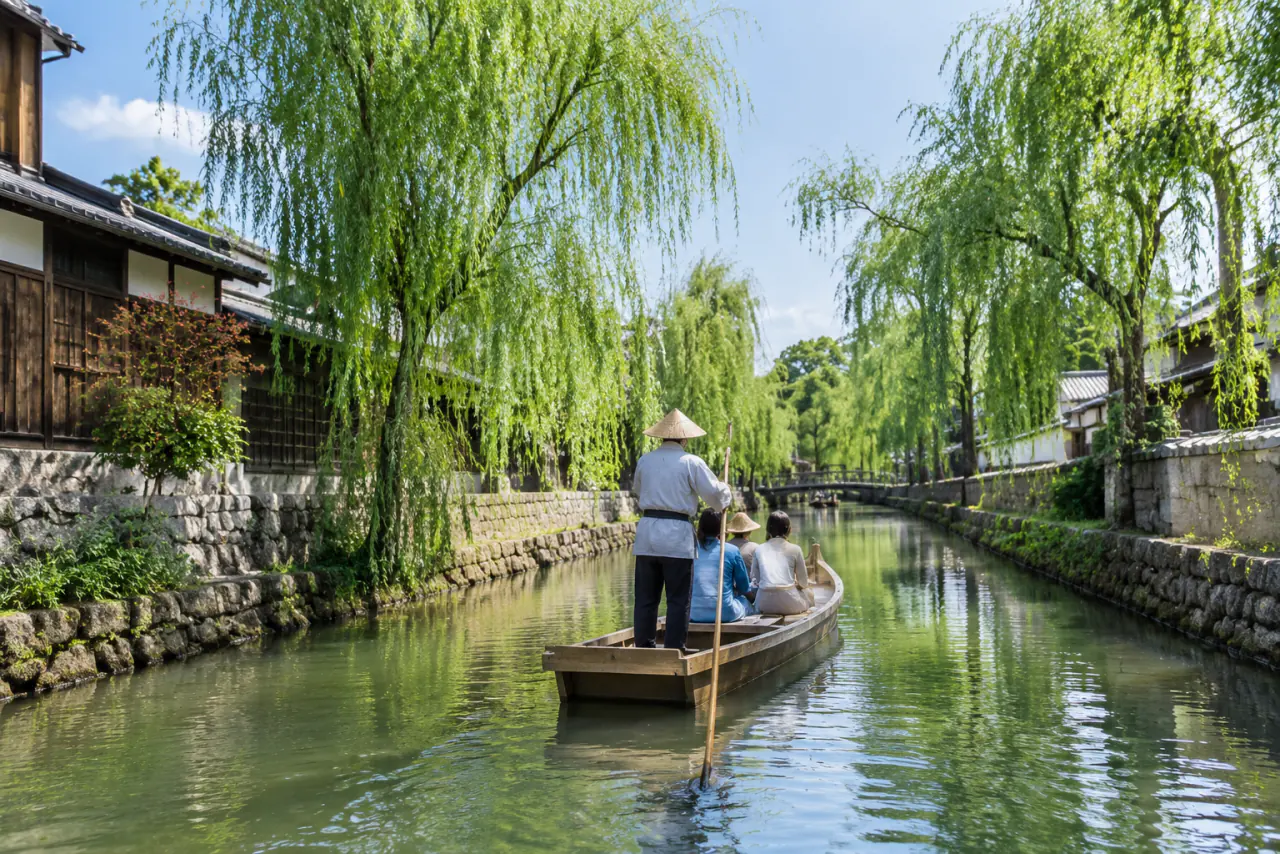
Yanagawa is a small city threaded with canals. Boatmen slowly pole flat-bottomed boats past willows and old homes on a ride lasting about an hour, with commentary and songs along the way. After getting off, eat a serving of steamed eel over rice—the classic Yanagawa itinerary.
Take the Nishitetsu limited express from Tenjin in about 50 minutes. Boats have kotatsu heaters in winter; bring a hat and sun protection in summer.
-
 6
Kawachi Fujien
河内藤園
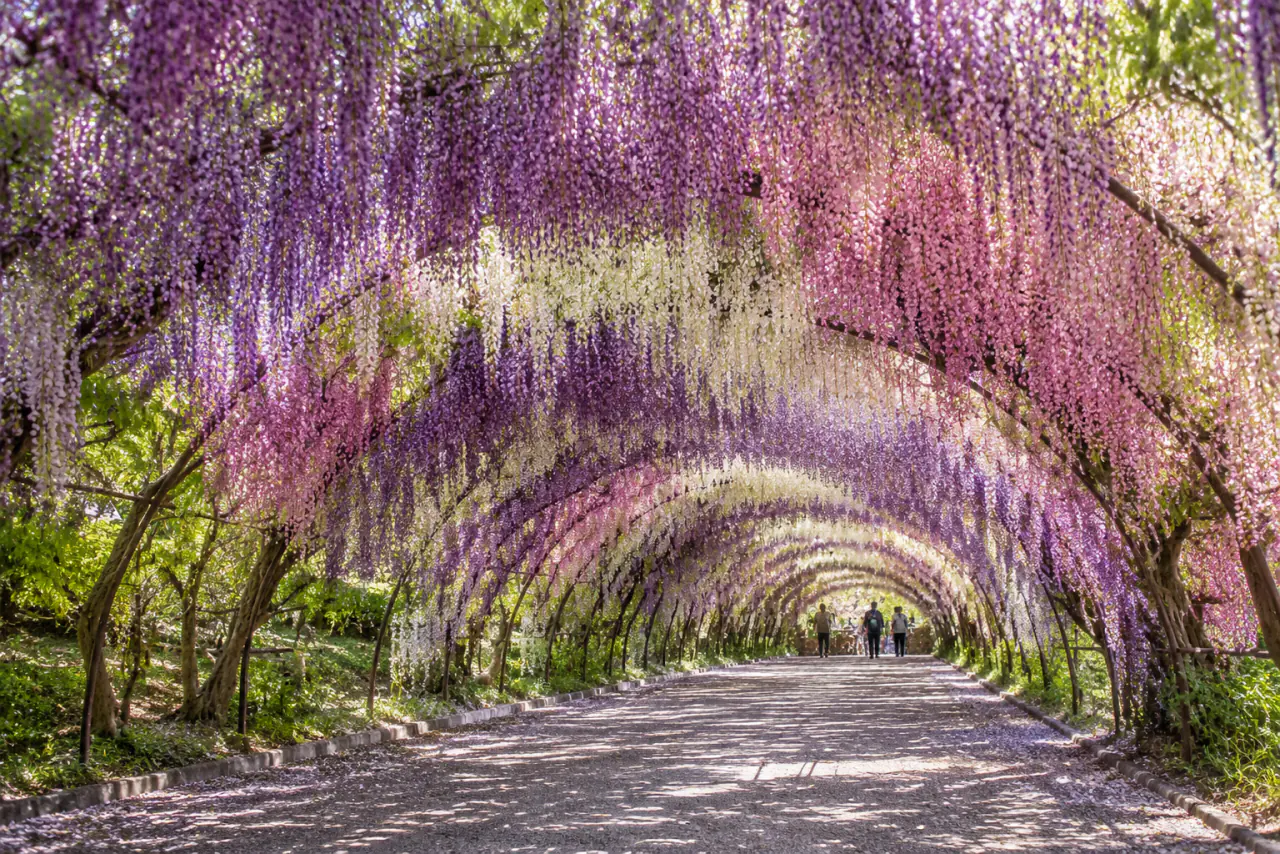
This privately run wisteria garden is known for its seemingly endless wisteria tunnels during the bloom season, which draws many visitors to northern Kyushu. The flowers usually bloom from late April to early May. The garden also opens briefly for fall foliage. Admission varies with bloom conditions, and tickets are not sold at the gate.
You must buy a timed-entry ticket in advance through the official website or at a convenience store. There is no public transportation nearby, so a tour or private car is recommended.
-
 7
Sakurai Futamigaura, Itoshima
桜井二見ヶ浦
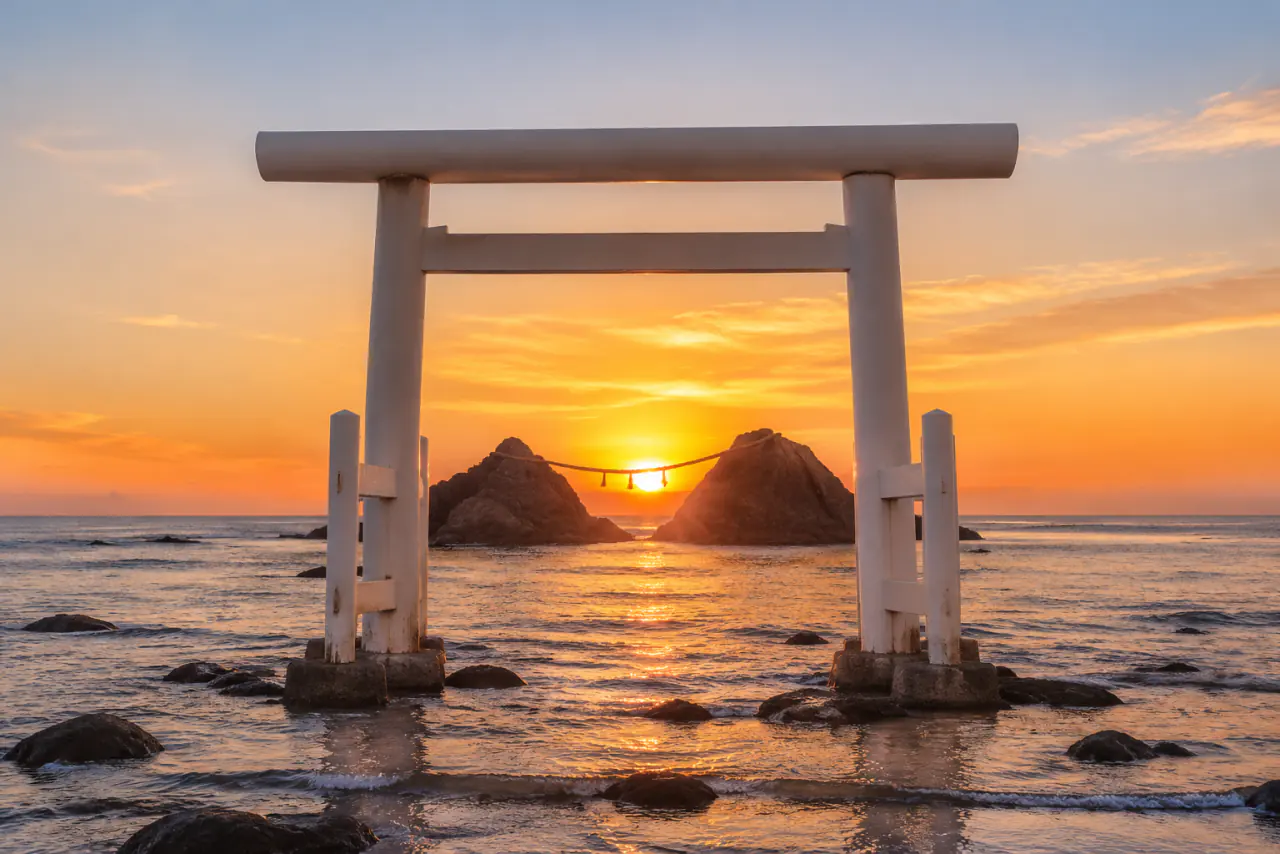
Two sacred rocks stand in the sea, joined by a shimenawa rope, with a white torii on the shore. The view is best around sunset. Itoshima's coast has many seaside cafés, making it a good half-day drive for ocean views. It is a popular weekend escape for Fukuoka residents.
Bus service is infrequent. Driving rules depend on your licence, so check the official requirements before renting a car. A day tour or private car is recommended; arrive before sunset.
-
 8
Akizuki
秋月
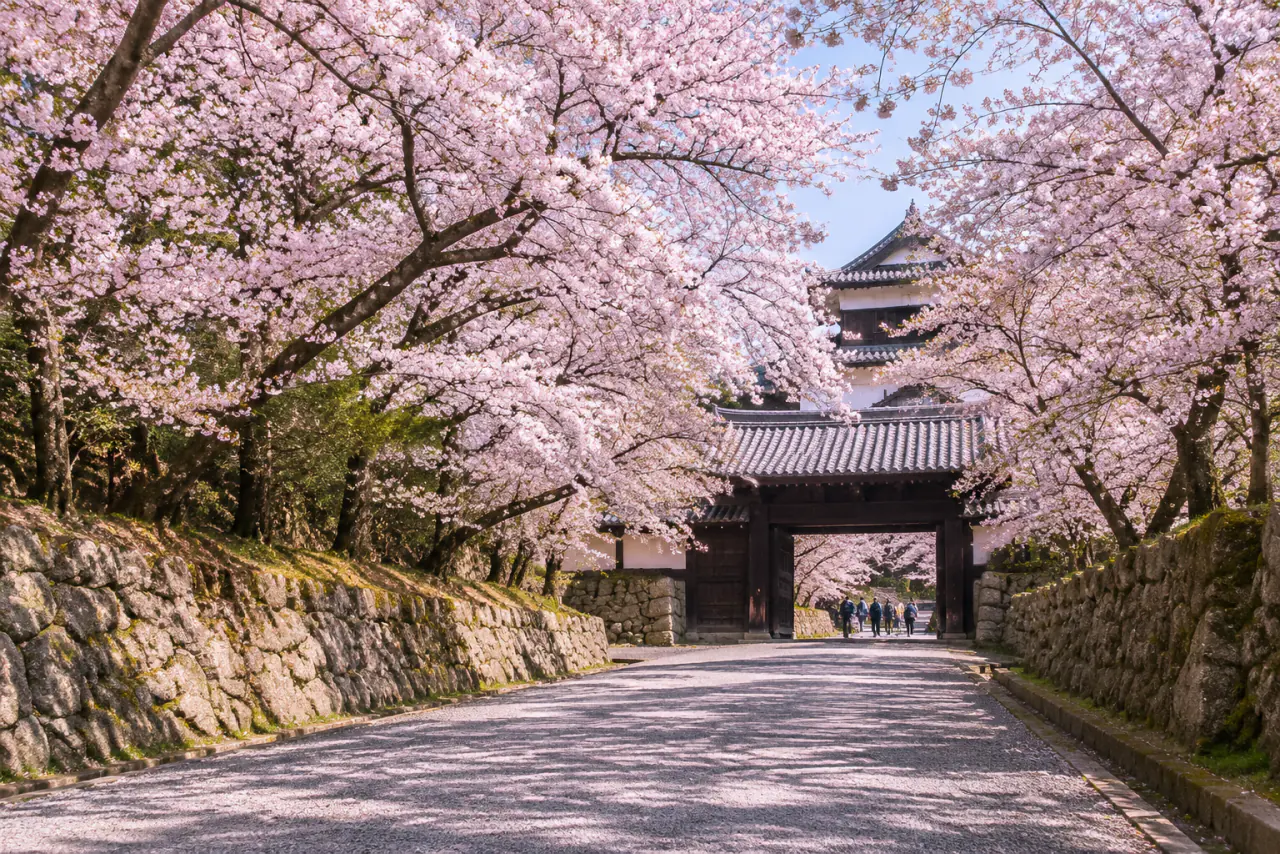
Known as the Little Kyoto of Chikuzen, this small castle town retains its stone walls, old homes, and moat. The Sugi-no-Baba area becomes a tunnel of cherry blossoms in spring, while the ruins of Akizuki Castle are famous for fall foliage. It is usually quiet and ideal for a leisurely walk.
Take a bus from Amagi Station. Services are infrequent, so check the return schedule before setting out. Traffic can be heavy on fall foliage weekends.
What to eat
Hakata ramen
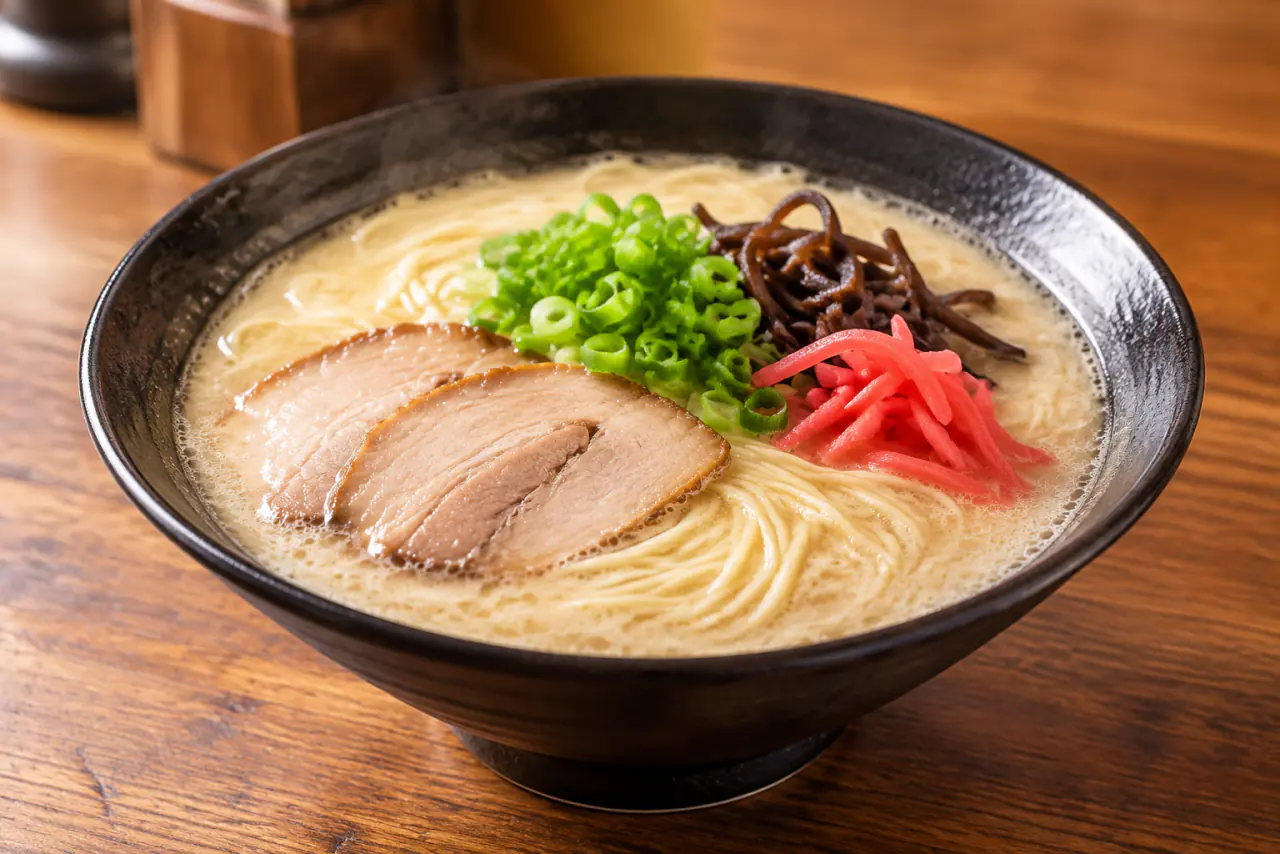
Thin, straight noodles in a milky pork-bone broth. You can choose how firm you want the noodles. If you still have broth left, order a side of noodles called kaedama. This refill is a classic Hakata ramen custom.
All around Hakata Station, Nakasu, and Tenjin; yatai also serve it · About ¥800–1,200 per bowl
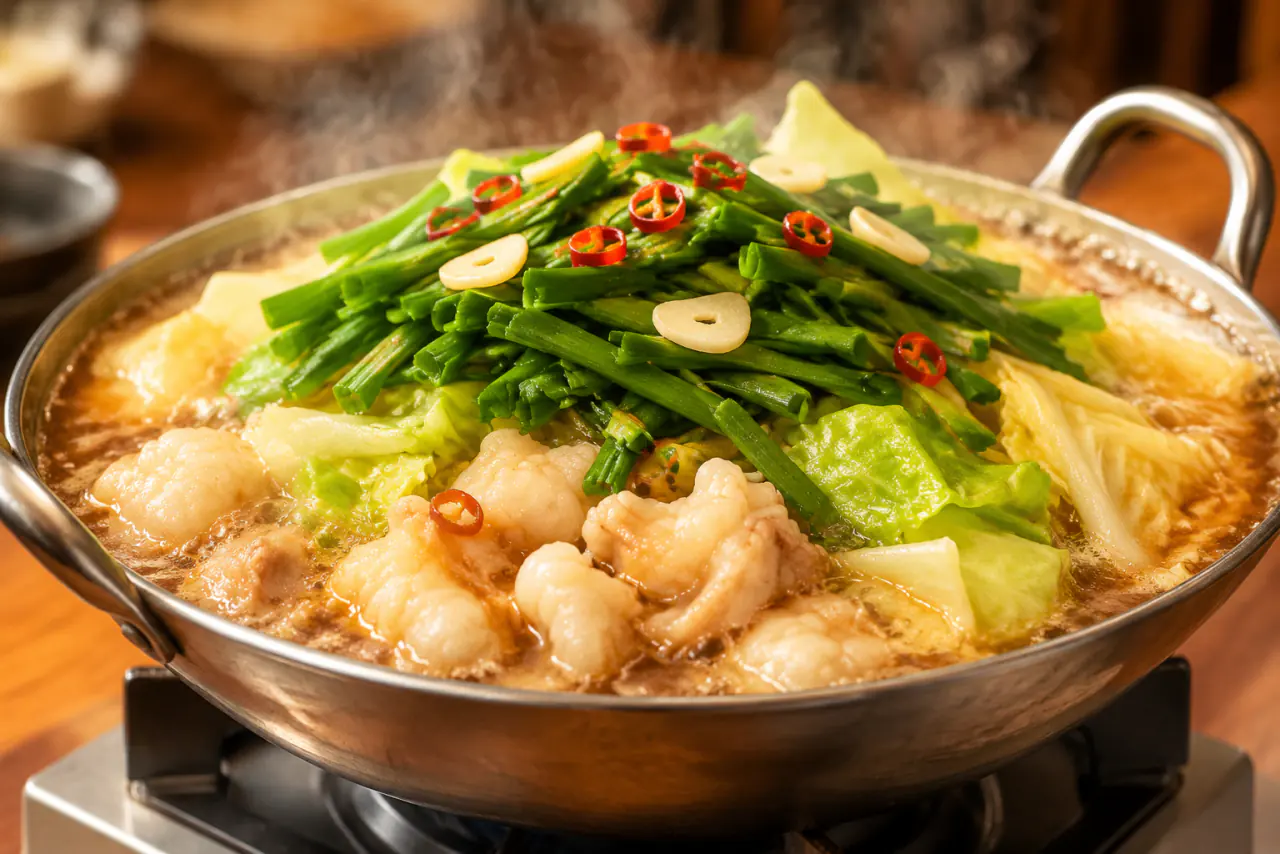
Motsunabe
Beef offal simmered with plenty of garlic chives, cabbage, and sliced garlic. Common broths include soy sauce and miso. Finish with noodles or zosui rice porridge. It is especially comforting in winter.
Izakaya around Hakata Station, Tenjin, and Nakasu · About ¥2,000–3,500 per person
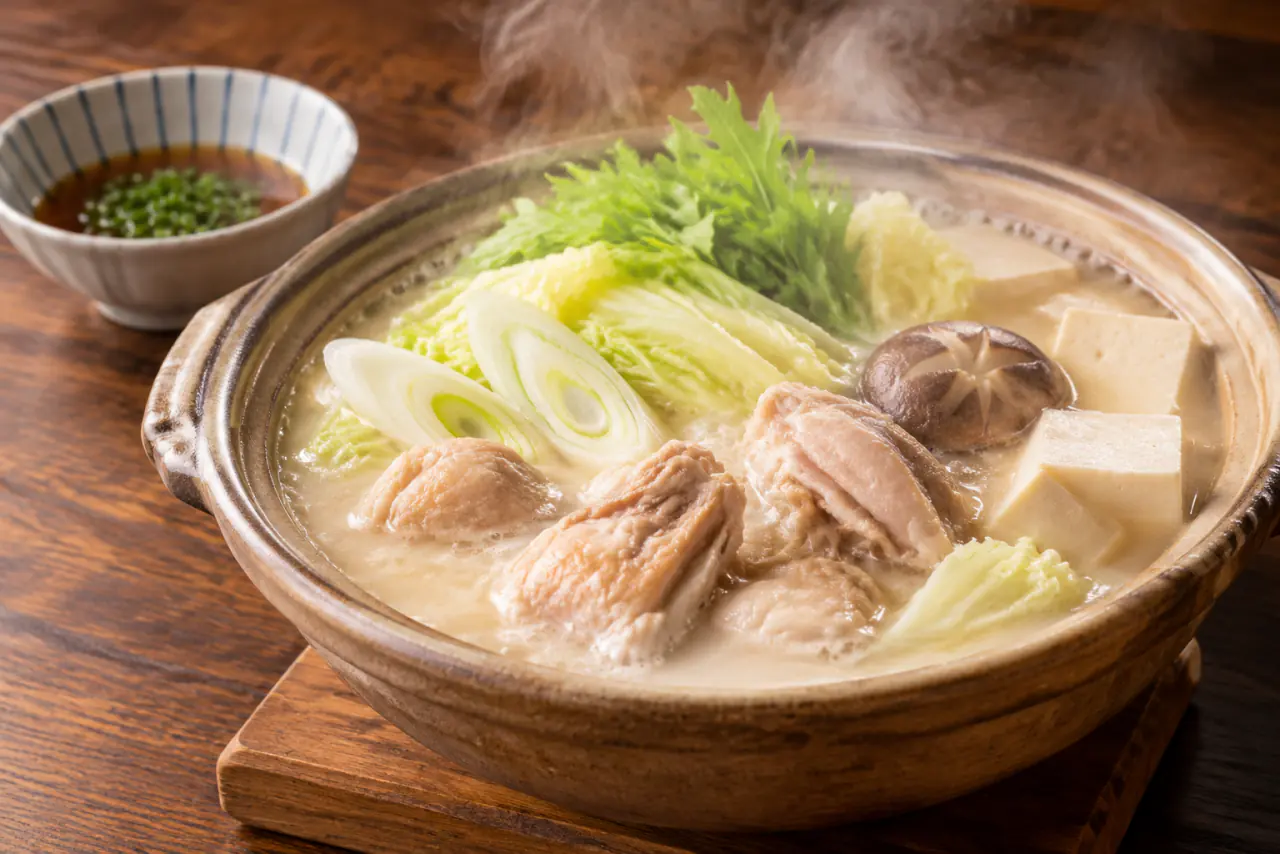
Mizutaki
A whole chicken is simmered for hours into a milky-white broth. Drink a bowl of the plain broth first, then add the chicken and vegetables. The flavor is mild and suits diners who prefer lighter food.
Long-established specialty restaurants in Hakata, Nakasu, and Tenjin · About ¥3,000–6,000 per person
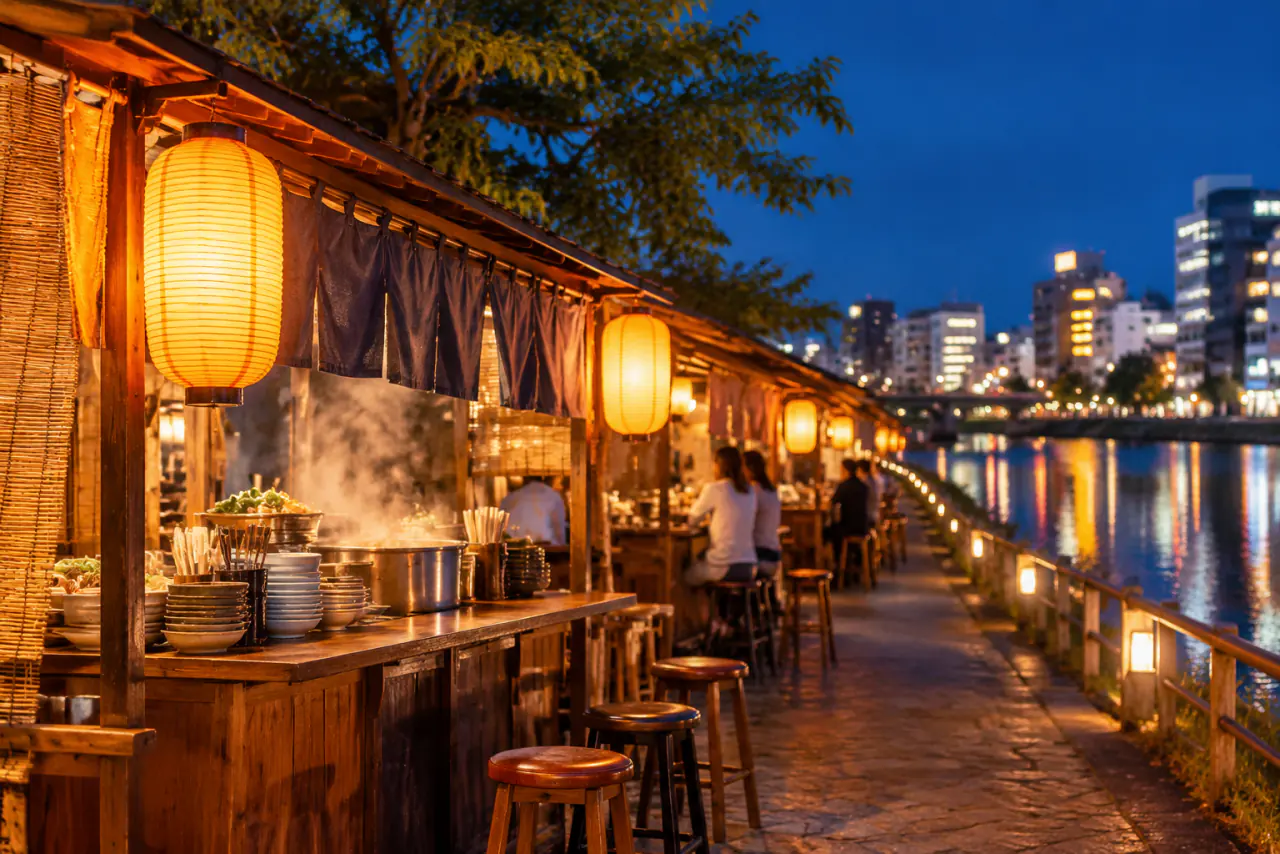
Yatai street stalls
These stalls are set up along the streets in the evening and serve ramen, oden, skewers, and stir-fried noodles. Around ten people squeeze onto the seats. The atmosphere is the main attraction, so try one or two dishes and move on to the next stall.
Along the Naka River in Nakasu, Tenjin, and the Nagahama area · About ¥2,000–3,000 per person
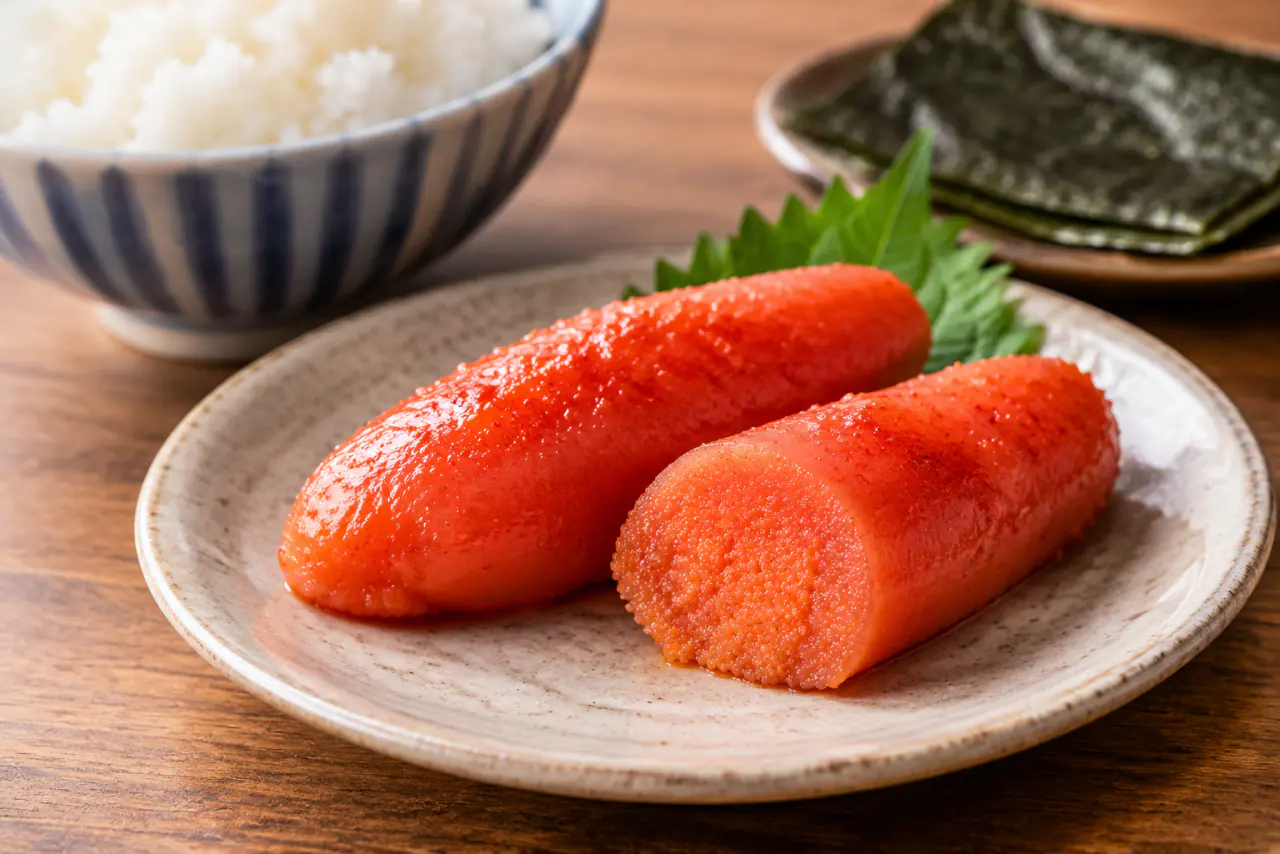
Mentaiko
Pollock roe cured with spicy seasonings, and Fukuoka's most famous souvenir food. Eat it with white rice, use it in onigiri, or mix it into pasta. Many shops also sell mentaiko baguettes.
Souvenir areas at Hakata Station and Fukuoka Airport, plus department-store basements
Getting there · Where to stay
The domestic terminal connects directly to the subway, and Hakata Station is about 5 minutes away; from the international terminal, take the free shuttle bus to the domestic terminal or a direct bus to Hakata Station in about 20 minutes
Sanyo Shinkansen: about 2.5 hours from Shin-Osaka to Hakata and about 5 hours from Tokyo to Hakata; flying is usually cheaper
Kyushu Shinkansen: about 35 minutes from Hakata to Kumamoto and from 1 hour 20 minutes to Kagoshima-Chuo
Take a limited express and transfer to the Nishi Kyushu Shinkansen at Takeo Onsen on the same platform; the fastest trips take about 1 hour 20 minutes
Stay around Hakata Station or Tenjin. Hakata Station is best for shinkansen connections and the airport; Tenjin and Nakasu have more restaurants, bars, and shopping. The two areas are only a few subway stops apart, so either works well.
Know this before you go
- Look for Nishitetsu sightseeing passes for Dazaifu and Yanagawa. They combine train fares with attraction discounts and cost less than buying everything separately.
- Yatai generally open in the evening. They may not operate on rainy or very windy days.
- The international terminal is separate from the subway station, so allow time for the shuttle bus when catching a flight.
- The shinkansen from Hakata to Kokura is operated by JR West and is not covered by the JR Kyushu Rail Pass.