Cloudborne Travel
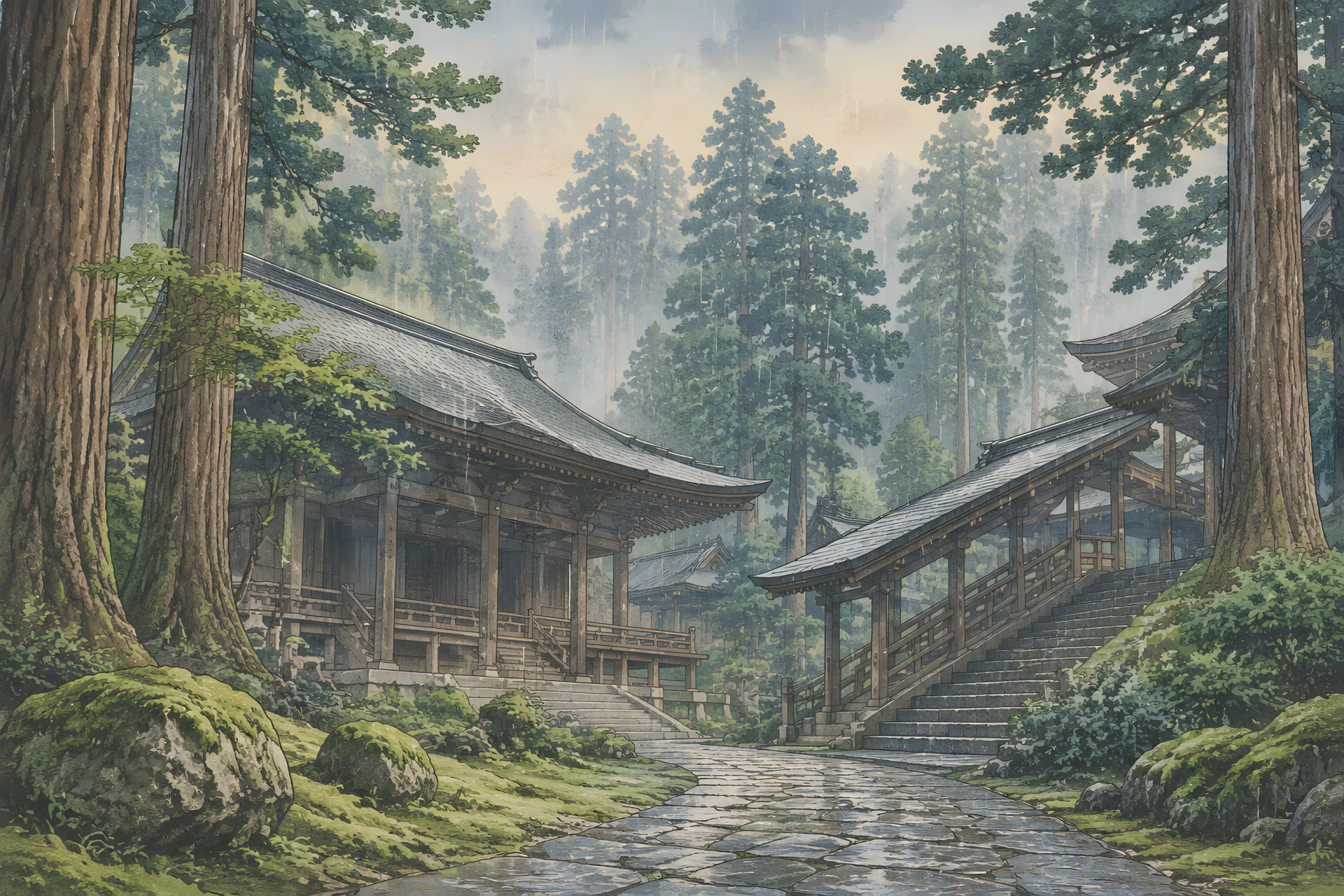
Fukui lies between Kanazawa and Kyoto and was once a place many travelers simply passed through by train. Since the Hokuriku Shinkansen extension to Tsuruga opened in 2024, Fukui is much easier to reach: about 25 minutes from Kanazawa and about 3 hours direct from Tokyo. Dinosaur statues fill the area around Fukui Station because most of Japan's dinosaur fossils have been found here.
The three best reasons to make a special trip are Fukui Prefectural Dinosaur Museum in Katsuyama, Eiheiji Temple in the mountains, and the Tojinbo Cliffs on the Sea of Japan. They lie in different directions, so you can visit at most two in one day using the Echizen Railway and buses. In winter, save the evening for Echizen crab and stay in Awara Onsen.
Echizen crab season runs from the opening of the fishing season in early November through March; Eiheiji is best for fall colors in November and snowy scenery in January–February; Maruoka Castle's cherry blossoms bloom in early April.
Monthly weather
Based on FukuiBest time to visit Monthly precipitation (mm) Open-Meteo (ERA5), 1996–2025 average
| Month | Average high (°C) | Average low (°C) | Monthly precipitation (mm) | Days with 1 mm or more of precipitation |
|---|---|---|---|---|
| Jan(Good time to visit) | 7 | 1.7 | 213 | 23 |
| Feb(Good time to visit) | 7.6 | 1.9 | 152 | 18 |
| Mar(Good time to visit) | 11.7 | 4.8 | 172 | 17 |
| Apr(Good time to visit) | 17 | 9.6 | 157 | 13 |
| May(Good time to visit) | 21.6 | 14.8 | 172 | 13 |
| Jun | 25.2 | 19.6 | 199 | 14 |
| Jul | 29.2 | 24.1 | 268 | 17 |
| Aug | 30.7 | 25.2 | 182 | 14 |
| Sep(Good time to visit) | 27.2 | 21.6 | 212 | 14 |
| Oct(Good time to visit) | 21.7 | 15.4 | 175 | 13 |
| Nov(Good time to visit) | 16.1 | 9.8 | 179 | 16 |
| Dec(Good time to visit) | 10 | 4.5 | 234 | 23 |
Sights
-
 1
Fukui Prefectural Dinosaur Museum
福井県立恐竜博物館
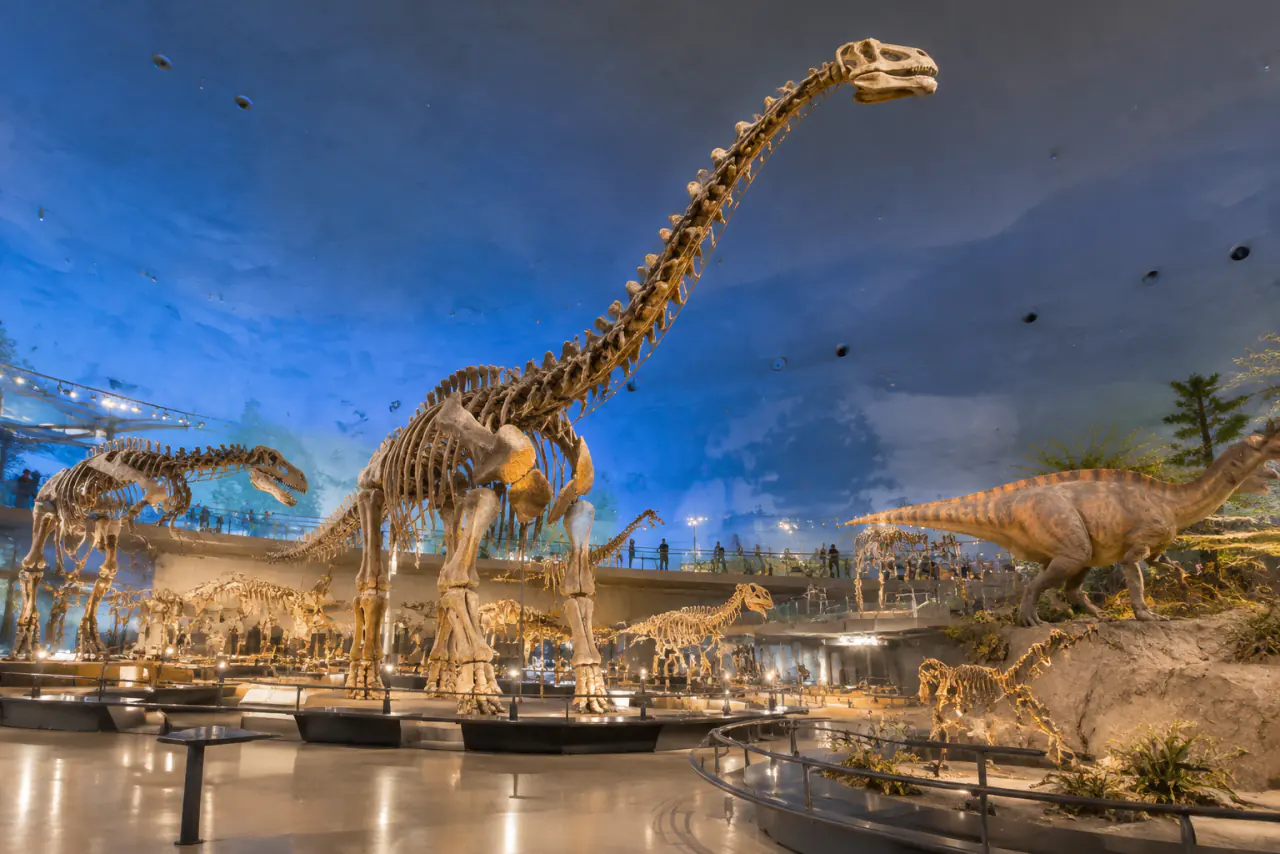
One of the world's three major dinosaur museums, housed in a silver, egg-shaped building filled with dozens of dinosaur skeletons. A Tyrannosaurus robot moves and roars at the entrance. Adults and children can easily spend 2–3 hours here. From Fukui Station, take the Echizen Railway Katsuyama Eiheiji Line to the last stop, Katsuyama, in about 1 hour, then take a bus for about 15 minutes.
Timed admission tickets should generally be bought in advance. Tickets go on sale 60 days ahead. Same-day tickets are sold at the museum only if spots remain.
-
 2
Eiheiji Temple
大本山永平寺
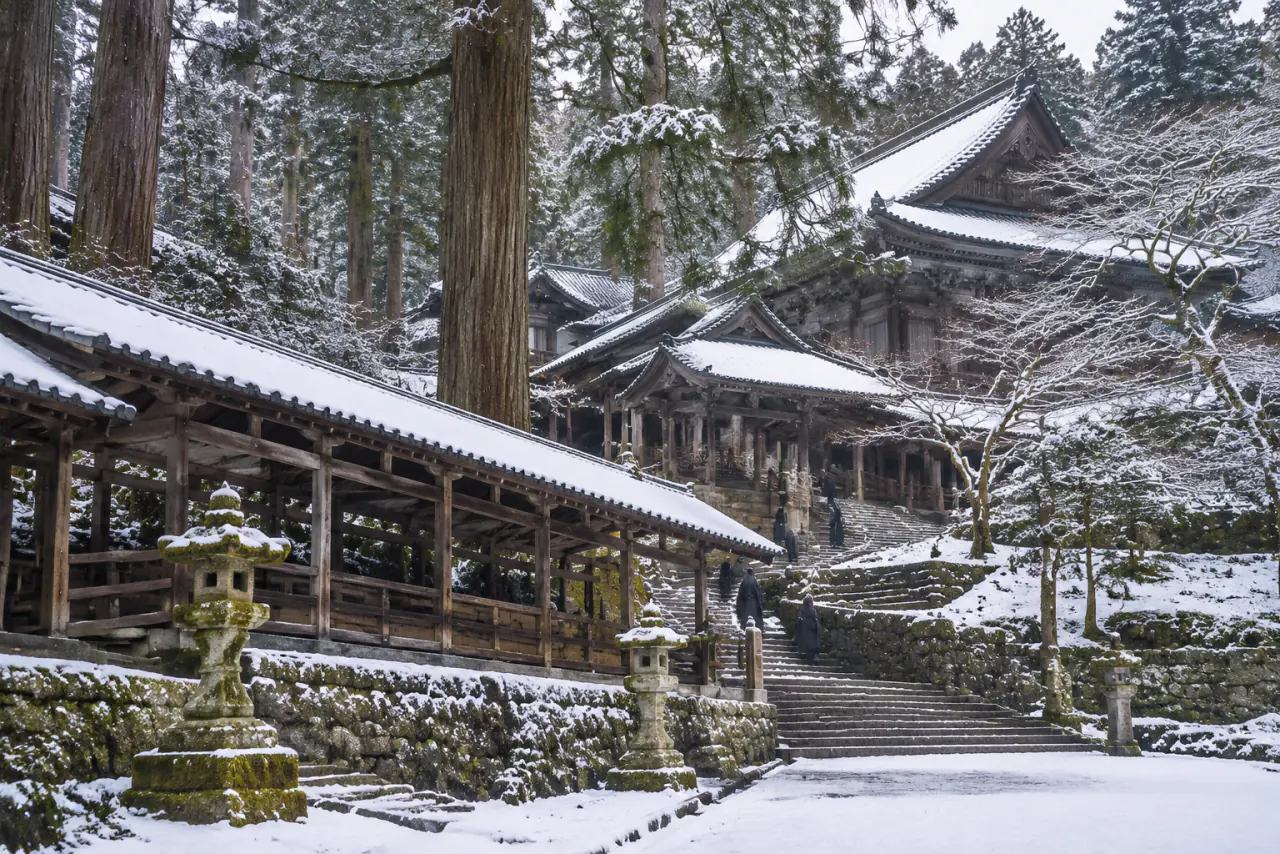
The head temple of the Soto school of Zen, founded by Dogen in 1244. More than 100 monks still train here. More than 70 buildings line the mountainside, linked by long wooden corridors. You may see monks moving between buildings during your visit. The ceiling in the Eihei-ji Temple's Eten-no-Ma room is painted with more than 200 bird-and-flower paintings.
You must remove your shoes and walk on wooden floors, so wear thick socks in winter. From Fukui Station, the Eiheiji Liner bus takes about 30 minutes.
-
 3
Tojinbo Cliffs
東尋坊
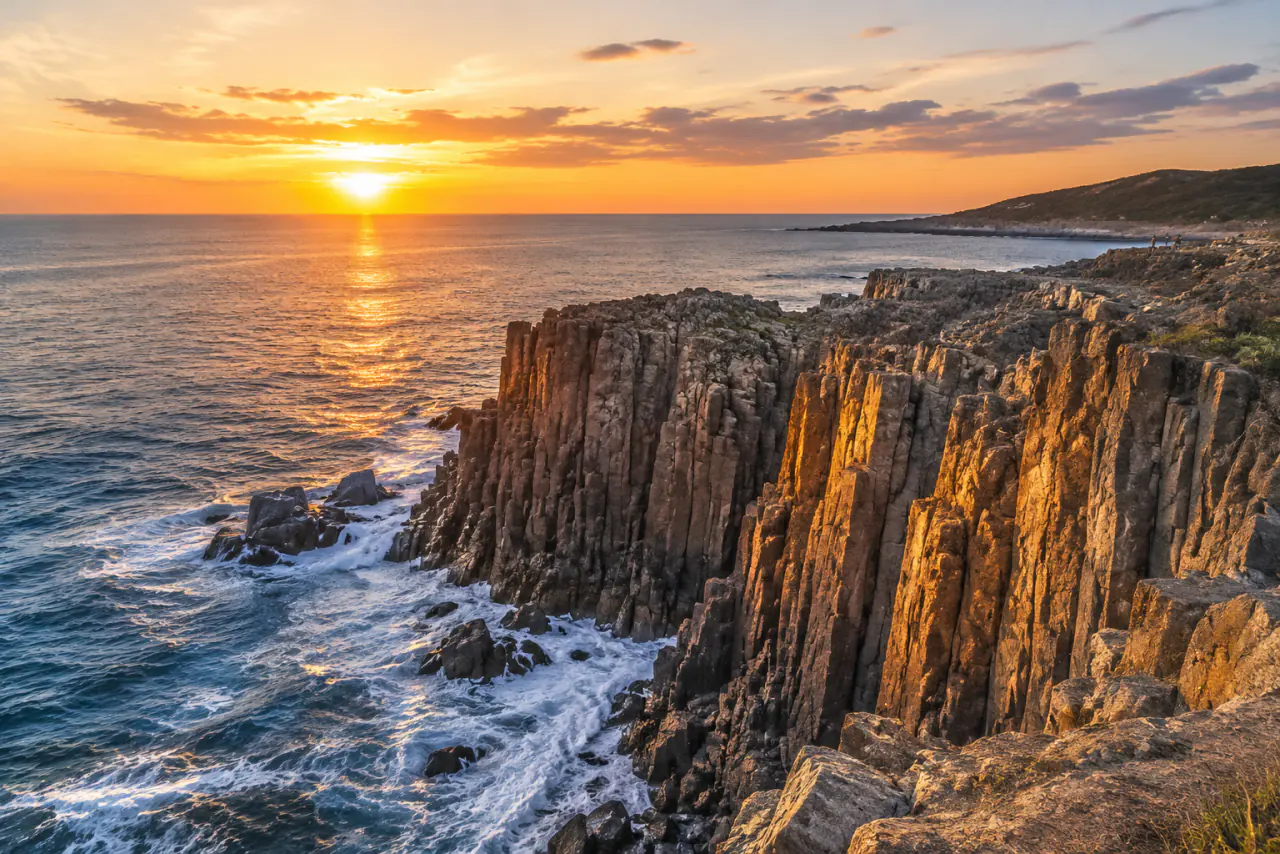
These columnar-rock cliffs stretch for about 1 kilometer along the Sea of Japan. The highest points are more than 20 meters above the waves below. Walk along the cliff tops or take a boat tour from the water. The cliffs are especially beautiful at sunset, when the sun sinks into the Sea of Japan. From Awaraonsen Station, take a bus for about 40 minutes, or take the Echizen Railway to Mikuni Minato and transfer.
There are no guardrails along the cliffs. Rocks are slippery in strong winds and after rain, so stay away from the edge.
-
 4
Ichijodani Asakura Clan Ruins
一乗谷朝倉氏遺跡
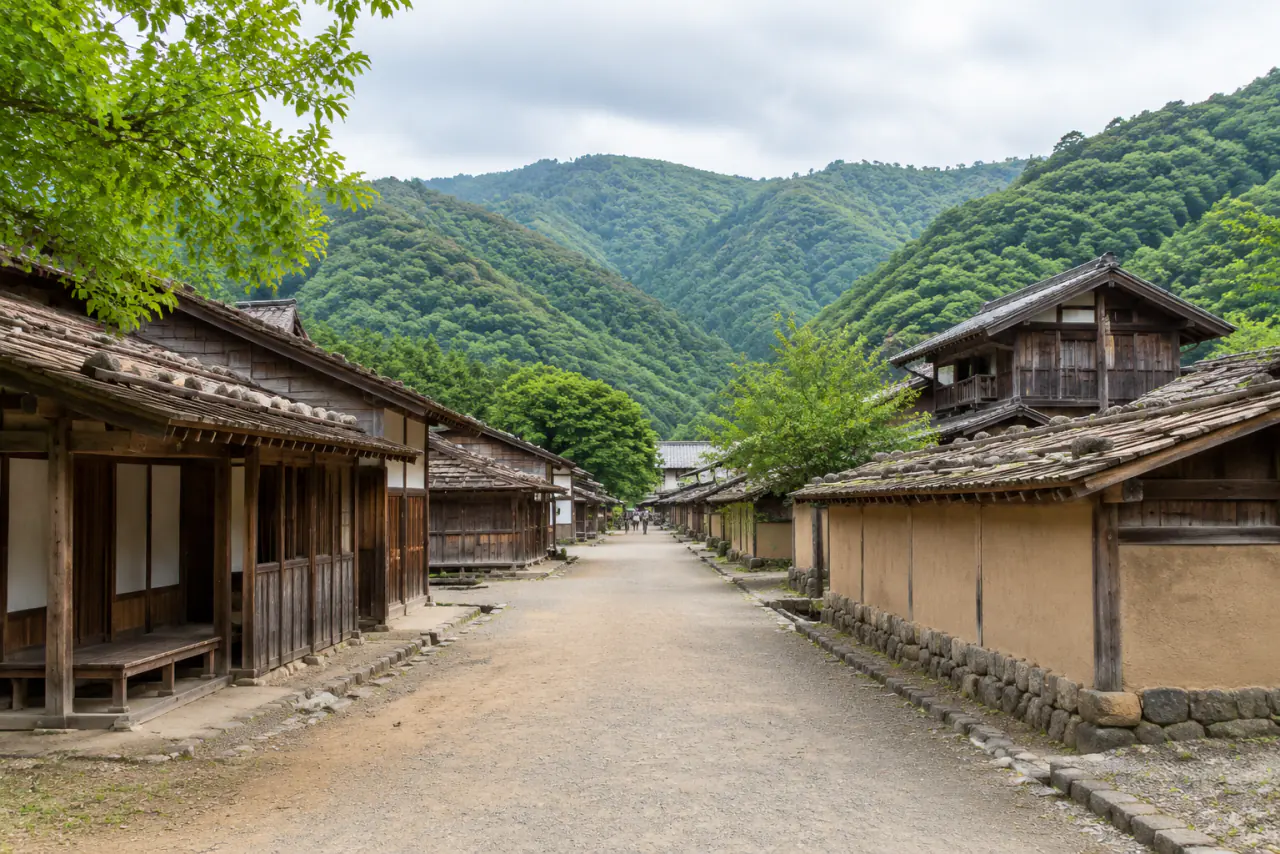
This castle town belonged to the Sengoku-period Asakura clan. After Oda Nobunaga burned it down in 1573, it lay buried beneath farmland for 400 years. Excavations uncovered a restored section of samurai residences and merchant streets that feels like a Sengoku film set. The museum next to Ichijodani Station displays excavated artifacts and a full-scale reconstruction of the Asakura residence. The restored streets are a little farther away. From Fukui Station, the JR Kuzuryu Line takes about 15 minutes.
The Kuzuryu Line may have only one train every 1–2 hours, so check the return schedule first.
-
 5
Maruoka Castle
丸岡城
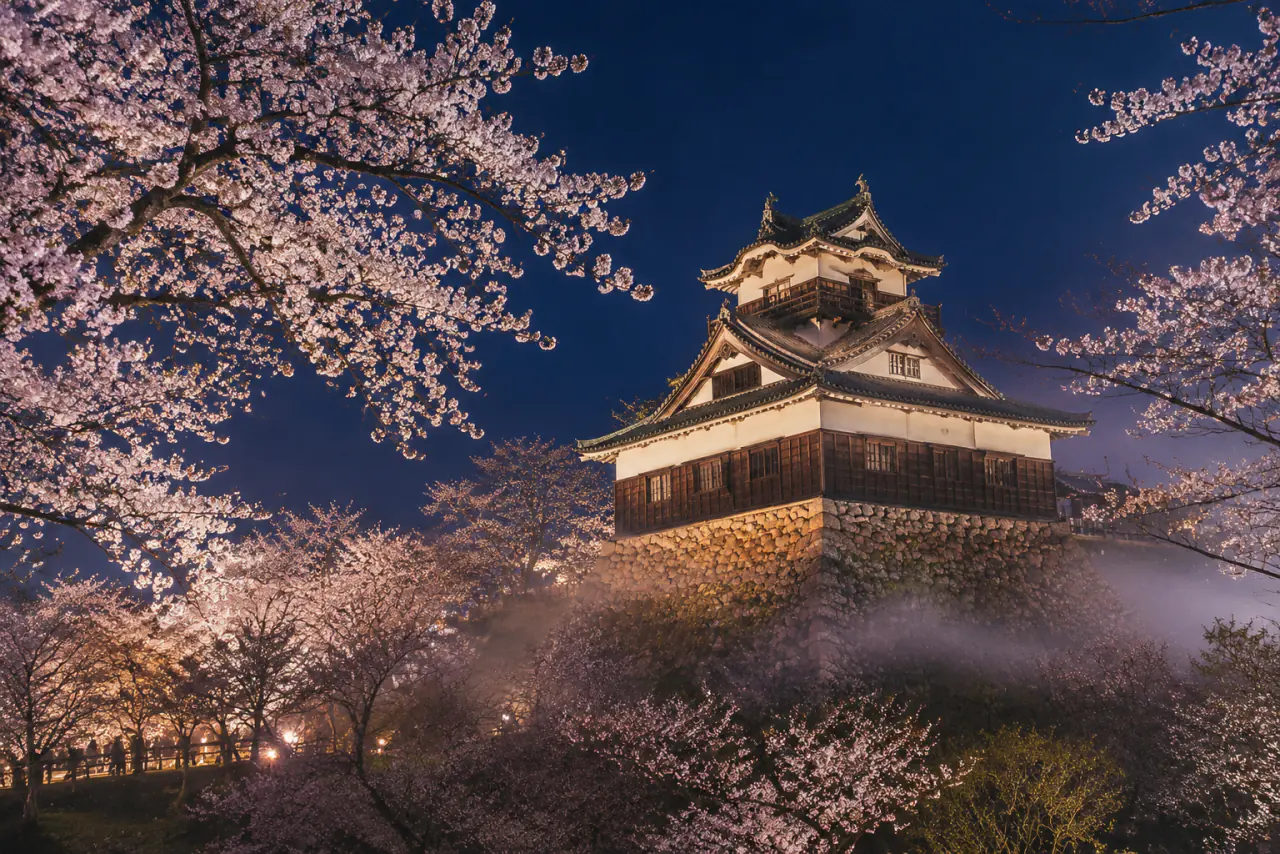
One of Japan's 12 surviving original castle keeps. It is small, with a simple appearance and a roof covered in stone tiles. About 400 cherry trees bloom on the castle hill in early April, and the grounds are lit up at night. When the mist is heavy, the whole castle seems to float above the clouds, earning it the nickname “Kasumi Castle.” Take a bus from Fukui Station or Awaraonsen Station.
The stairs inside the keep are extremely steep, and you must climb while holding a rope. Wear comfortable walking shoes.
-
 6
Mikata Five Lakes
三方五湖
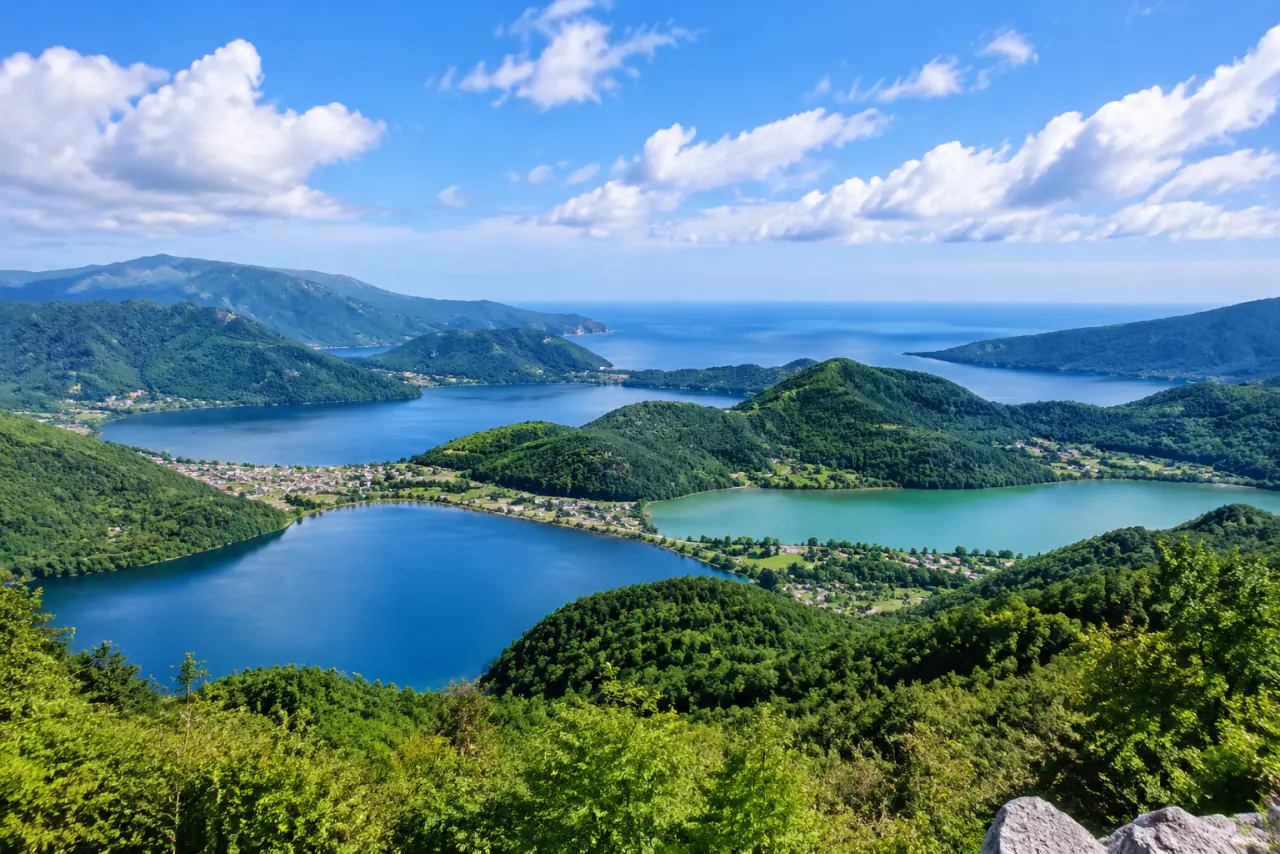
Five connected lakes beside Wakasa Bay, each with a different salt concentration and a different shade of blue. From the mountaintop park, you can see all five lakes and the Sea of Japan. Take a cable car or chairlift to the top. The lakes are in the Wakasa region of southwestern Fukui, far from central Fukui and more convenient to visit from Tsuruga or the Kansai area.
The lake views from the mountaintop park are best on a clear day. Public transportation is limited, so consider joining a local sightseeing tour.
-
 7
Awara Onsen
あわら温泉
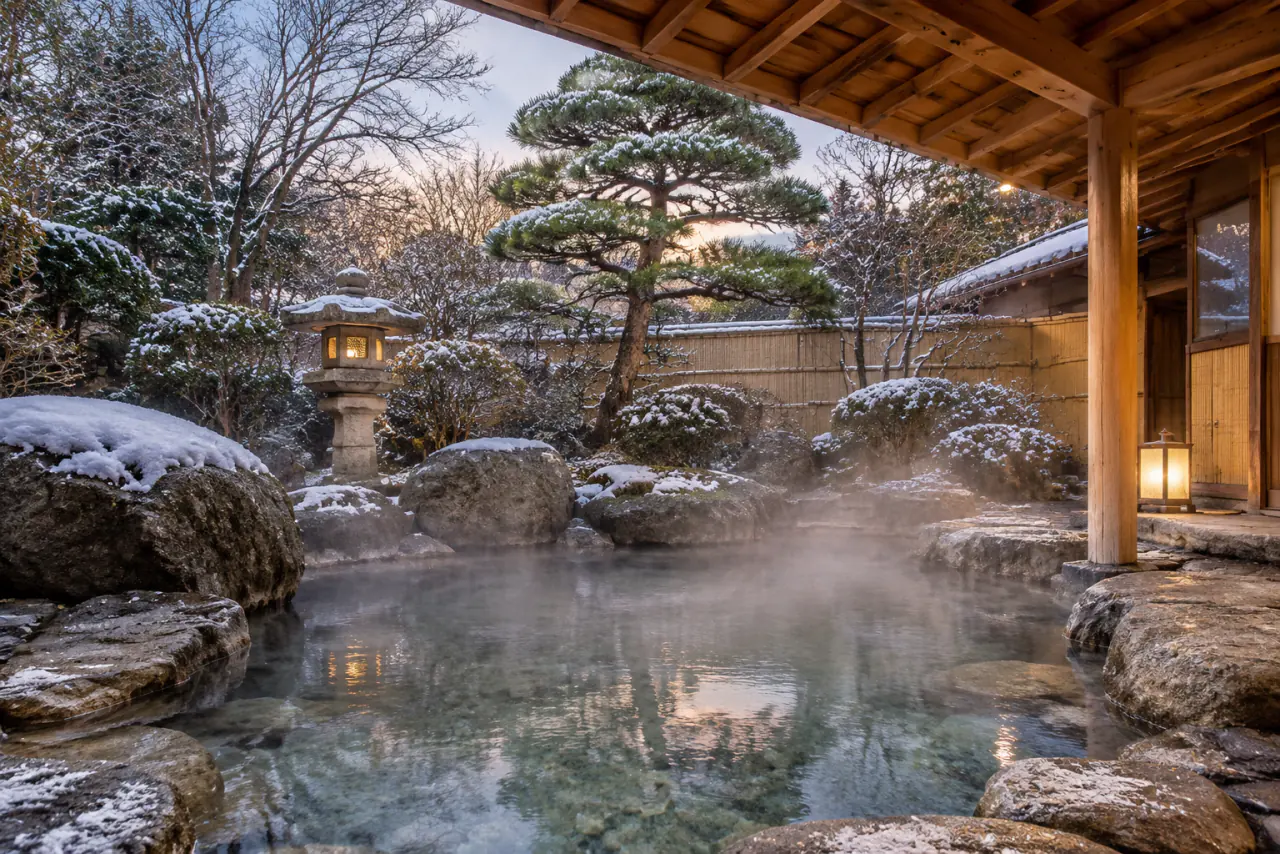
Fukui's largest hot-spring town, with more than 100 years of history and many large ryokan. In winter, many hotels offer Echizen crab meal plans. Close to both Tojinbo and Maruoka Castle, it makes a convenient base for seaside sightseeing and crab meals. The Hokuriku Shinkansen stops at Awaraonsen Station, while the hot-spring district is near Awara Yunomachi Station on the Echizen Railway.
The Shinkansen station and hot-spring district are some distance apart. Take a bus, taxi, or the Echizen Railway.
What to eat
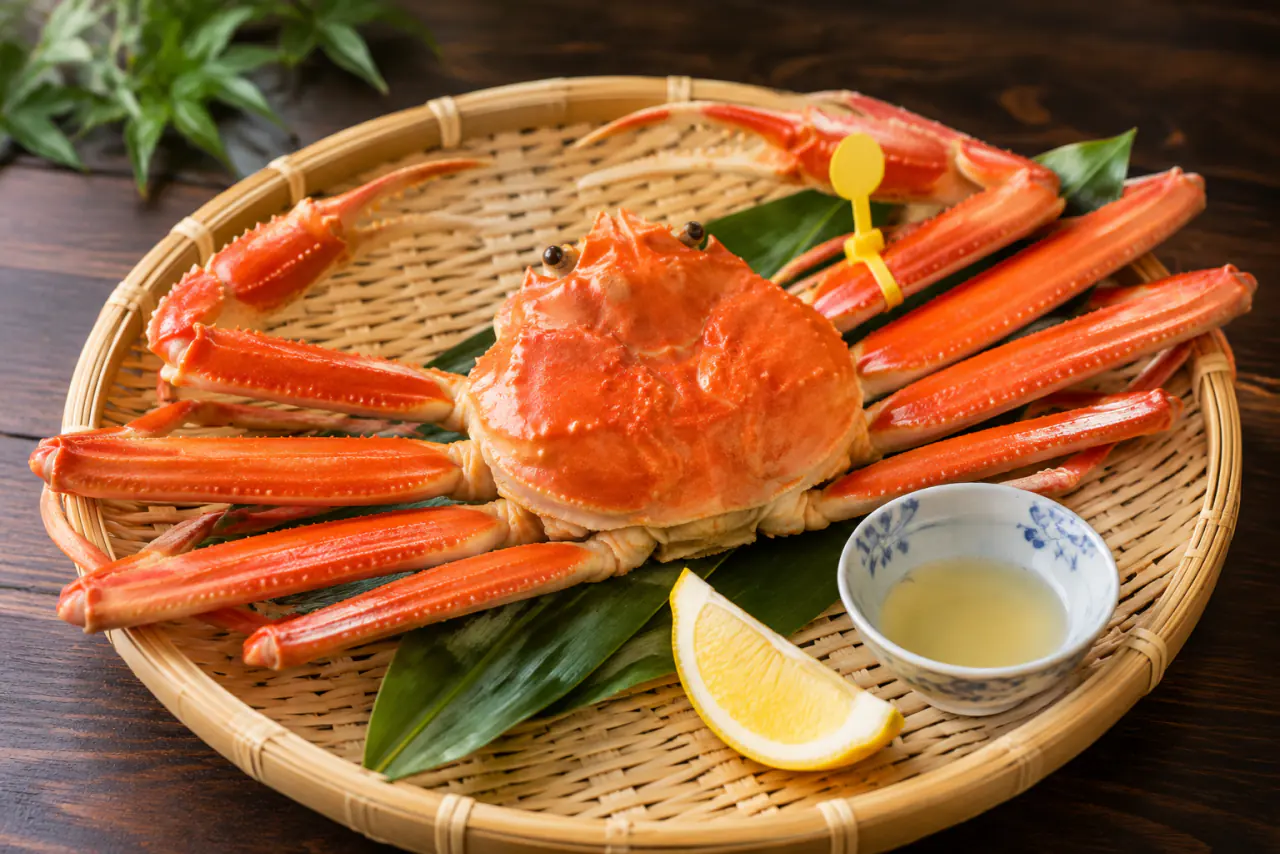
Echizen crab
Male snow crab caught in Fukui, identified by a yellow tag attached to its leg. The season opens in early November. It is delicious boiled, grilled, or in a hot pot. Female crab, known as Seiko crab, is much cheaper but has a shorter season.
Ryokan and restaurants around Awara Onsen, Mikuni Port, and Echizen Town · Whole male crabs are often sold at market price; paying more than ¥10,000 for one is common
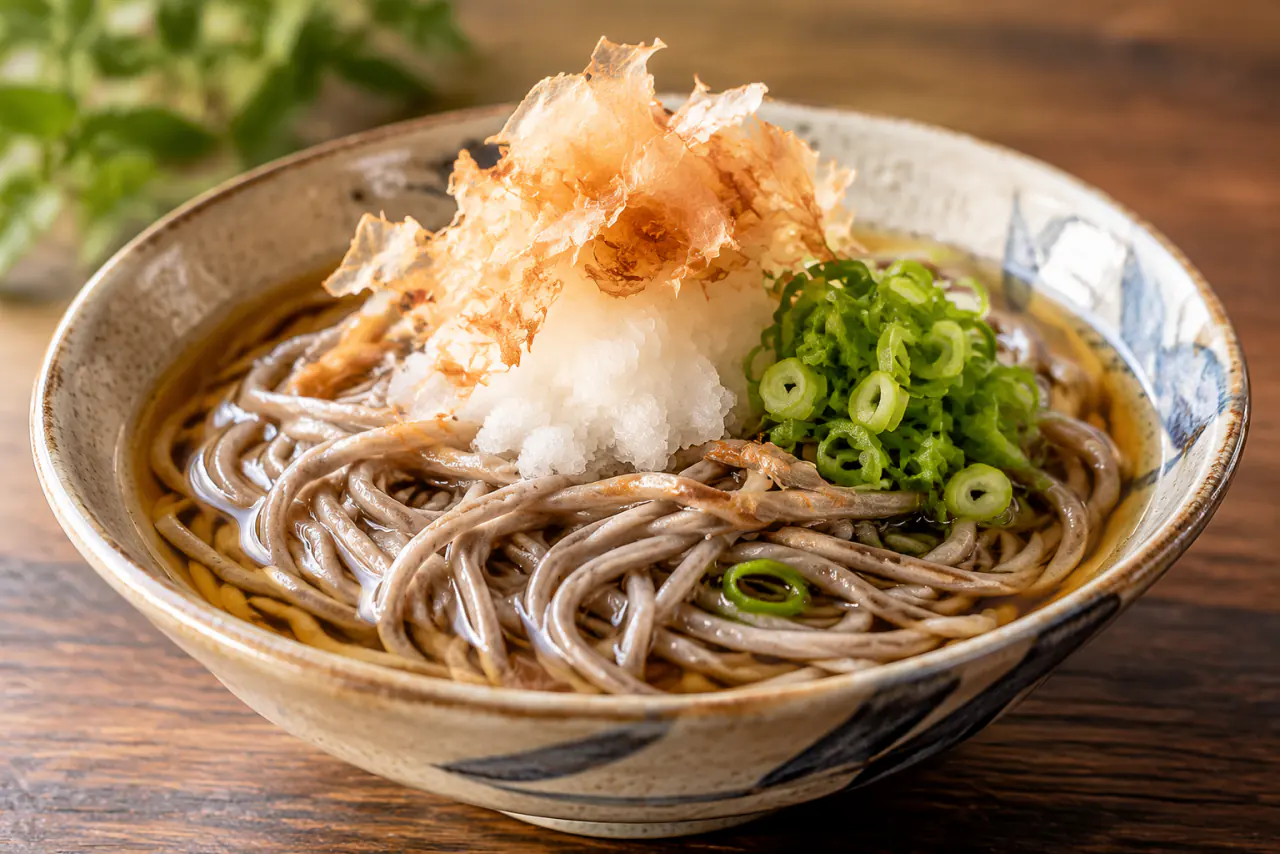
Echizen grated daikon soba
Cold soba topped with spicy grated daikon sauce, bonito flakes, and scallions. The daikon's sharp bite makes the noodles especially refreshing and is a staple of Fukui cuisine.
Soba shops around Eiheiji, Maruoka, and central Fukui · About ¥800–1,500 per person
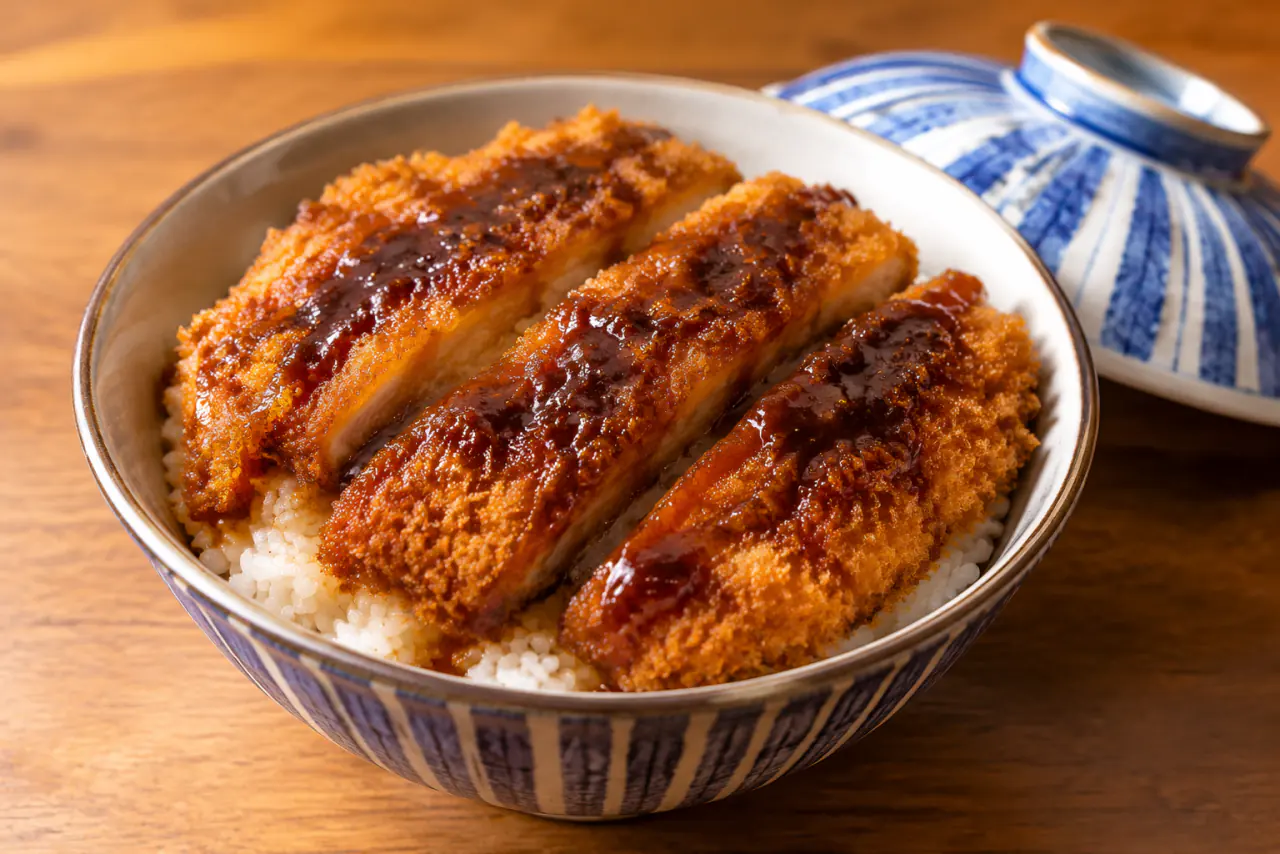
Sauce katsudon
Fukui's version of katsudon: a thin pork cutlet coated in fine breadcrumbs and fried until crisp, then dipped in sweet Worcestershire-style sauce and served over rice without an egg.
Long-established yoshoku restaurants around Fukui Station and downtown · About ¥1,000–1,500 per person
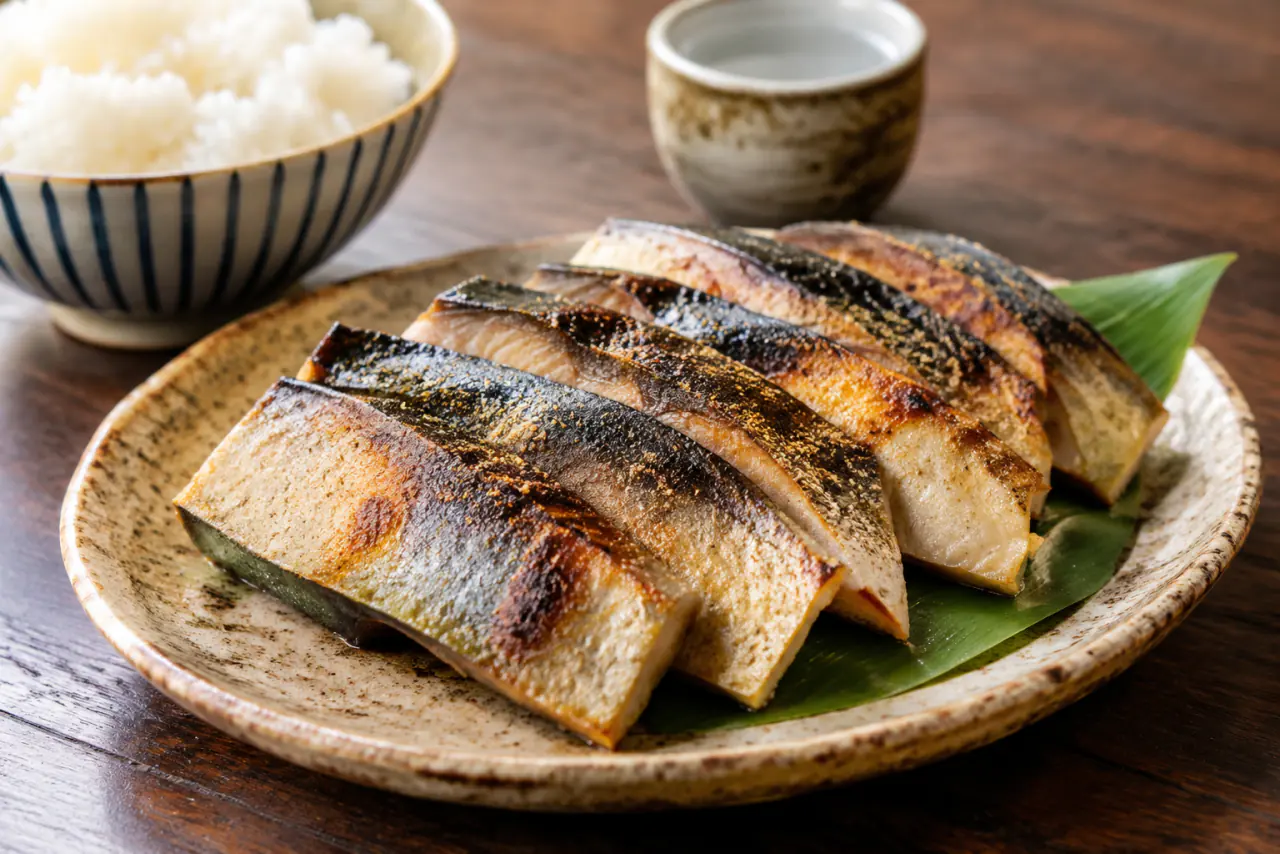
Heshiko preserved mackerel
Mackerel from the Wakasa region cured in rice bran and salt for more than a year, with a rich, salty flavor. Slice it thin, grill it lightly, and serve it with white rice or ochazuke. It also goes well with drinks.
Diners and souvenir shops around Obama and the Mikata Five Lakes
Getting there · Where to stay
About 25 minutes to Fukui on the Hokuriku Shinkansen
About 3 hours direct to Fukui on the Hokuriku Shinkansen
Take the limited express Thunderbird to Tsuruga, then transfer to the Hokuriku Shinkansen; about 1 hour 50 minutes total to Fukui
The closest airport to Fukui. Take a bus to Komatsu Station, then transfer to the Hokuriku Shinkansen to Fukui
Stay near Fukui Station, where the Shinkansen, Echizen Railway, and buses to Eiheiji depart. For hot springs and crab, stay in Awara Onsen, which is close to Tojinbo.
Know this before you go
- The Echizen Railway is a private railway and is not covered by JR passes. You need it to reach the dinosaur museum and Eiheiji.
- Tickets for the dinosaur museum often sell out early during peak season and on weekends. Buy them once your date is set.
- Echizen crab prices vary by size and grade. Ask the price before ordering, and do not order immediately just because the menu says “market price.”
- Your driver's license may not be valid for driving in Japan. Check the requirements for your license with an official source. Because Fukui's sights are spread out, a local sightseeing bus may be a better option.