Cloudborne Travel
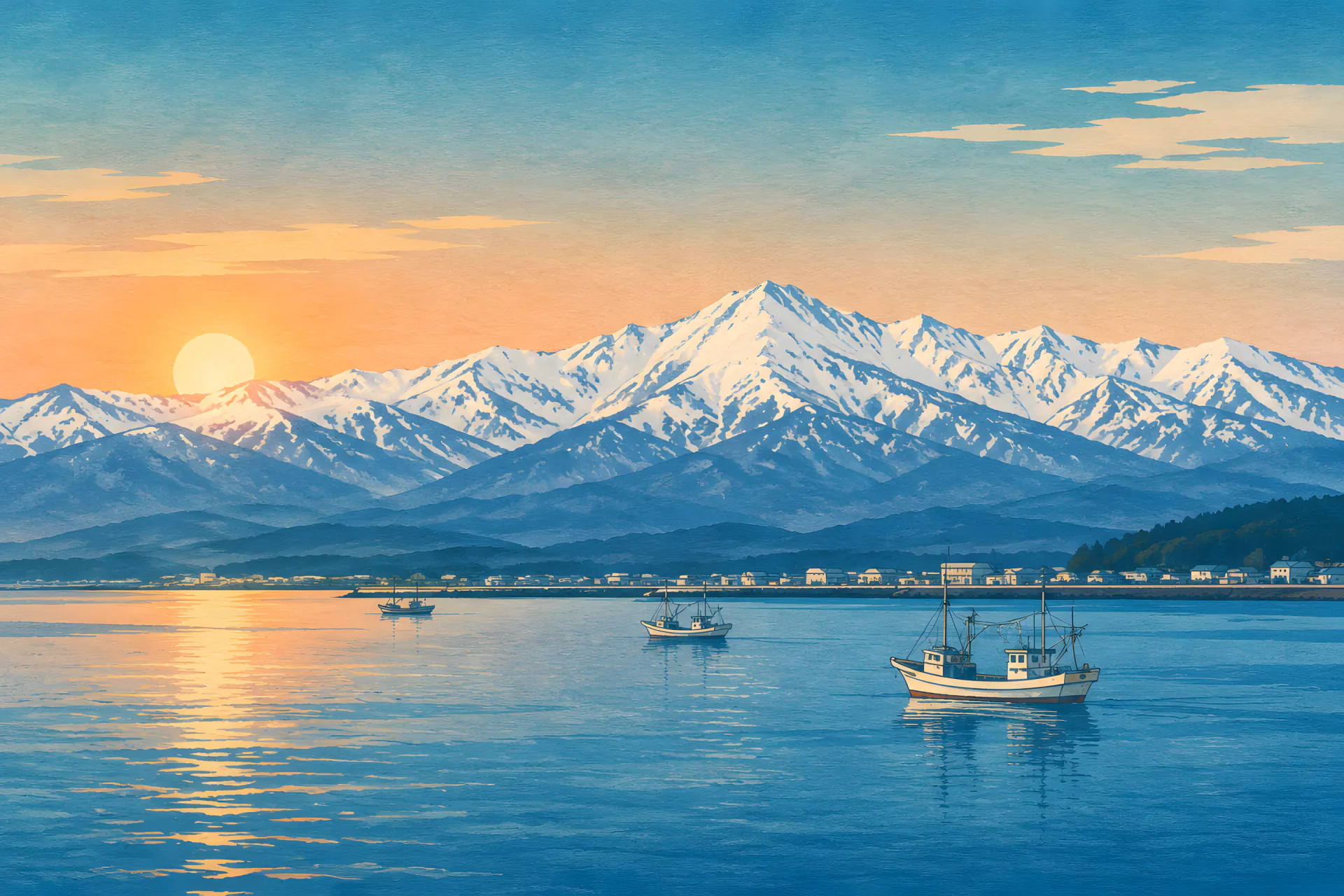
Toyama is best known for the Tateyama Kurobe Alpine Route. From Tateyama Station on the Toyama side, cable cars, highland buses, electric buses, and a ropeway take you across the Northern Alps to Ogizawa in Nagano. Spring brings the towering snow walls of Yuki-no-Otani, while fall brings alpine foliage. Allow a full day for a one-way crossing, including waits and sightseeing.
Toyama city is compact. Half a day is enough for its glass art museum, designed by Kengo Kuma, and canal park. Two other sights deserve a separate trip: the much quieter Gokayama villages, which share World Heritage status with Shirakawa-go, and the Kurobe Gorge Railway, scheduled to reopen its full route in October 2026. Kanazawa is only about 20 minutes away by Shinkansen, so you can also visit from a base there.
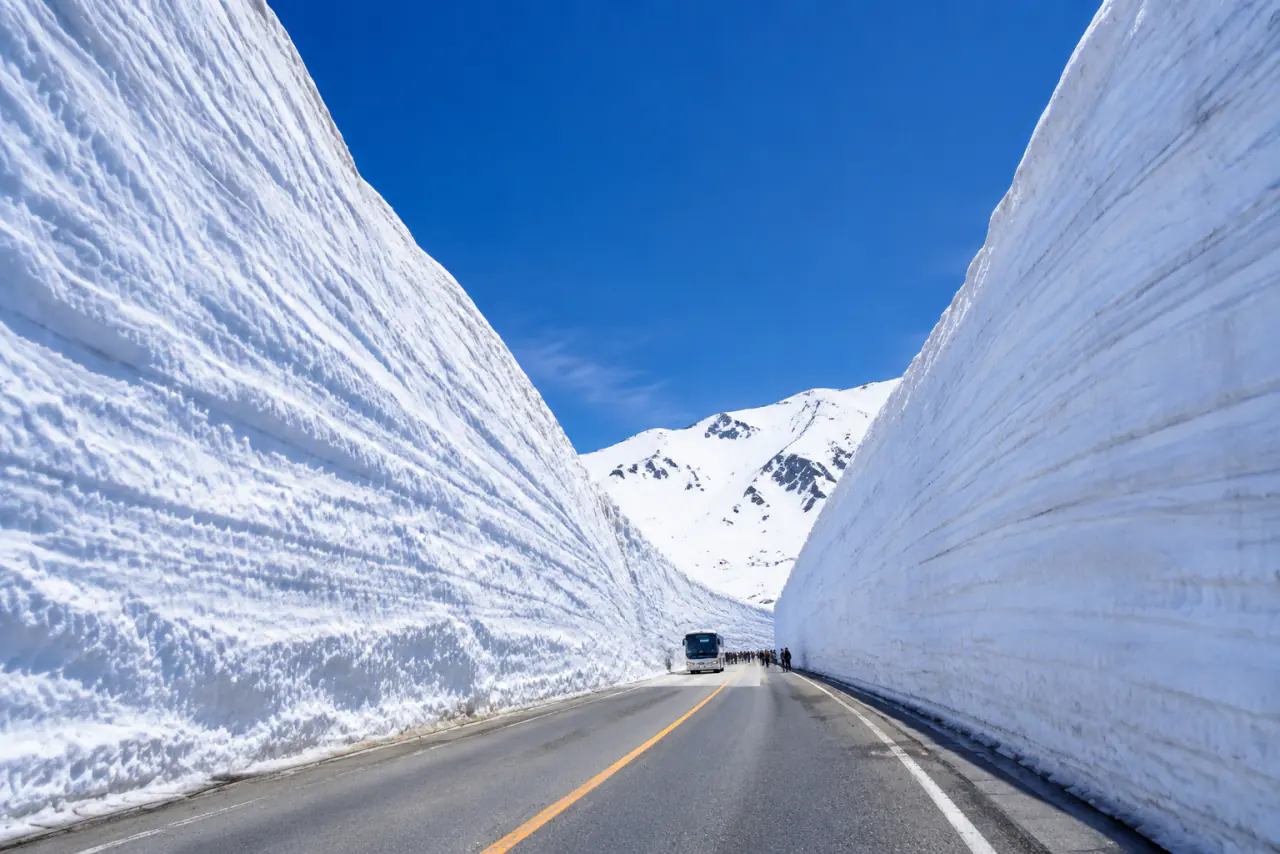
The snow walls are open from mid-April to late June. Fall colors start at higher elevations in late September and spread downhill through November. The entire Alpine Route closes in winter, a good season for seafood and snowy mountain views across the bay.
Monthly weather
Based on ToyamaBest time to visit Monthly precipitation (mm) Open-Meteo (ERA5), 1996–2025 average
| Month | Average high (°C) | Average low (°C) | Monthly precipitation (mm) | Days with 1 mm or more of precipitation |
|---|---|---|---|---|
| Jan(Good time to visit) | 6.4 | 1.5 | 213 | 23 |
| Feb(Good time to visit) | 7.1 | 1.5 | 166 | 19 |
| Mar(Good time to visit) | 11.4 | 4.1 | 184 | 19 |
| Apr(Good time to visit) | 17.5 | 9.1 | 157 | 15 |
| May(Good time to visit) | 22.8 | 14.7 | 162 | 14 |
| Jun | 26.1 | 19.5 | 199 | 15 |
| Jul | 30 | 24 | 257 | 19 |
| Aug | 31.3 | 25 | 194 | 16 |
| Sep(Good time to visit) | 27.3 | 21.2 | 215 | 16 |
| Oct(Good time to visit) | 21.4 | 14.9 | 180 | 14 |
| Nov(Good time to visit) | 15.7 | 9.2 | 173 | 17 |
| Dec(Good time to visit) | 9.6 | 4.2 | 221 | 23 |
Sights
-
 1
Tateyama Kurobe Alpine Route (Murodo)
立山黒部アルペンルート 室堂
Murodo, the route’s highest point, sits at about 2,450 meters. In spring, buses pass between snow walls more than ten meters high. The Yuki-no-Otani walking area usually stays open until late June. In summer, a walk around the volcanic Mikurigaike Pond takes about 1 hour. Fall colors arrive early up here. In 2026, the full route operates from April 15 to November 30.
In peak season, buy a WEB ticket on the official website to reserve your departure time. The mountains are about 15℃ colder than the lowlands, so bring a warm jacket and sunglasses.
-
 2
Kurobe Dam
黒部ダム
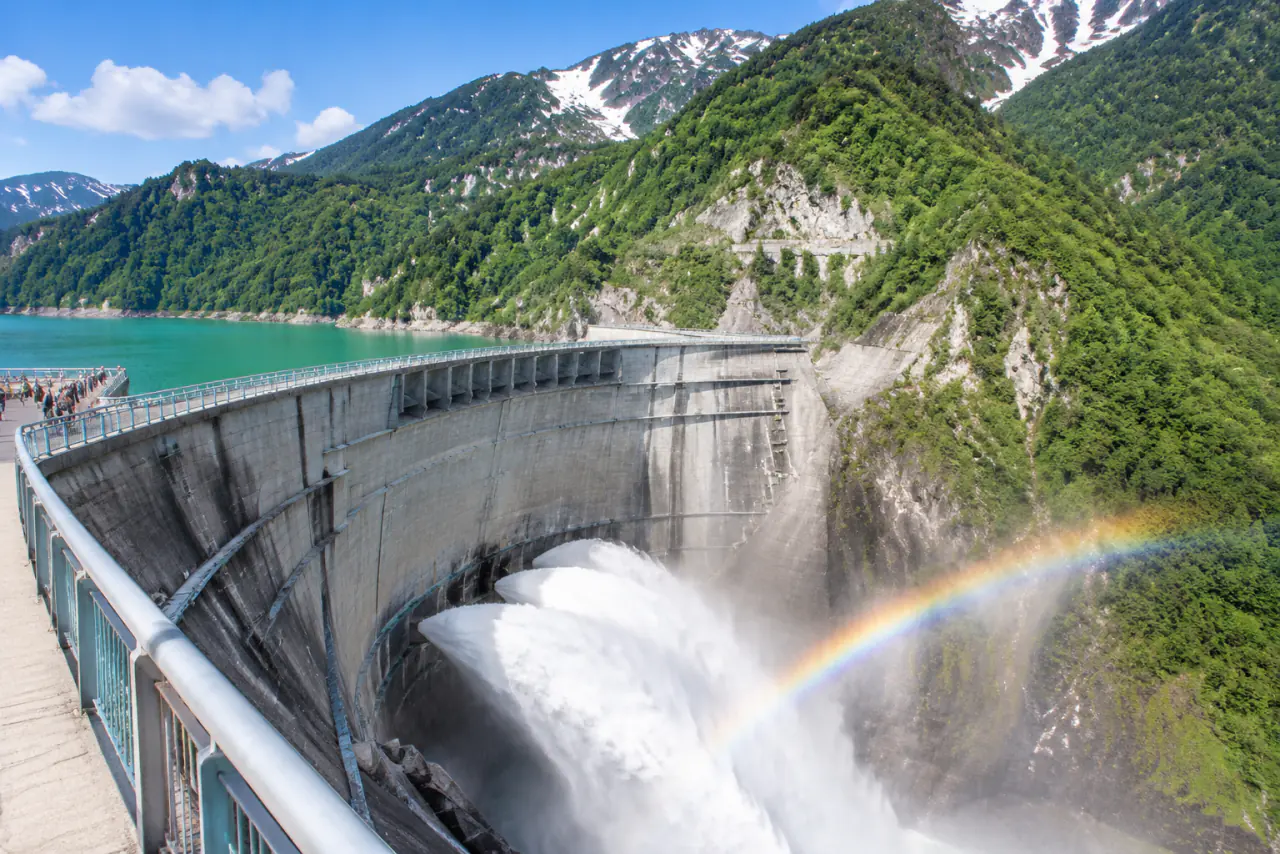
Japan’s tallest arch dam stands about 186 meters high and is a highlight midway along the Alpine Route. Climb about 220 steps to the observation deck for a view of the entire dam. Sightseeing water releases in summer and fall often create rainbows in the spray. Ogizawa on the Nagano side offers the quickest access; from Toyama, you must first cover much of the route.
A one-way trip along the full route costs about ¥10,940. If you have too much luggage, use the route’s baggage forwarding service.
-
 3
Kurobe Gorge Railway
黒部峡谷鉄道
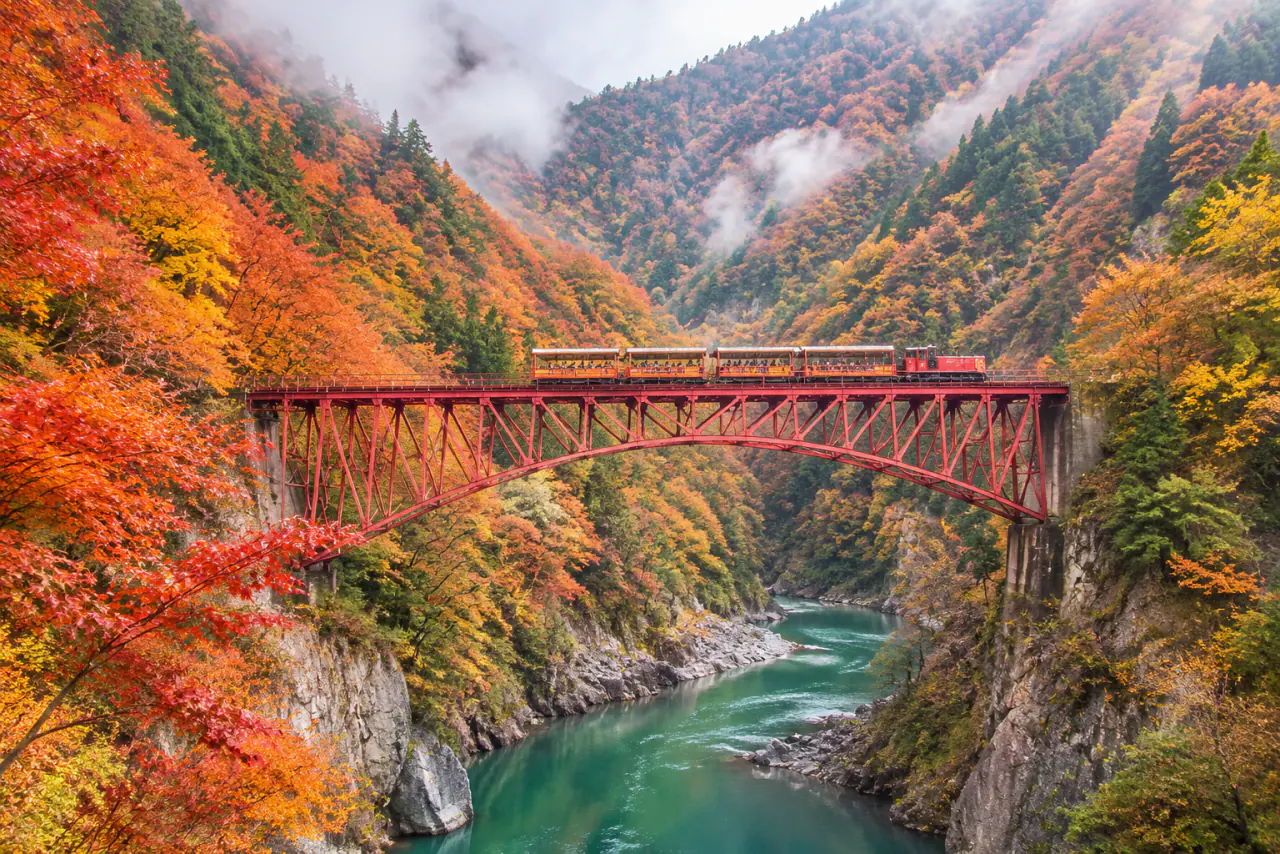
This narrow-gauge train leaves Unazuki Onsen and climbs through a V-shaped gorge to Keyakidaira in about 80 minutes one way. The open cars can be very windy. After the 2024 earthquake, trains have operated only partway along the line. Full service resumes on October 1, 2026. Late October through November is best for fall colors. Stay in Unazuki Onsen after the ride.
The railway closes in winter. Some areas around Keyakidaira Station remain closed for repairs, and booking methods vary by section. Check the official website before you go.
-
 4
Gokayama Ainokura
五箇山 相倉合掌造り集落
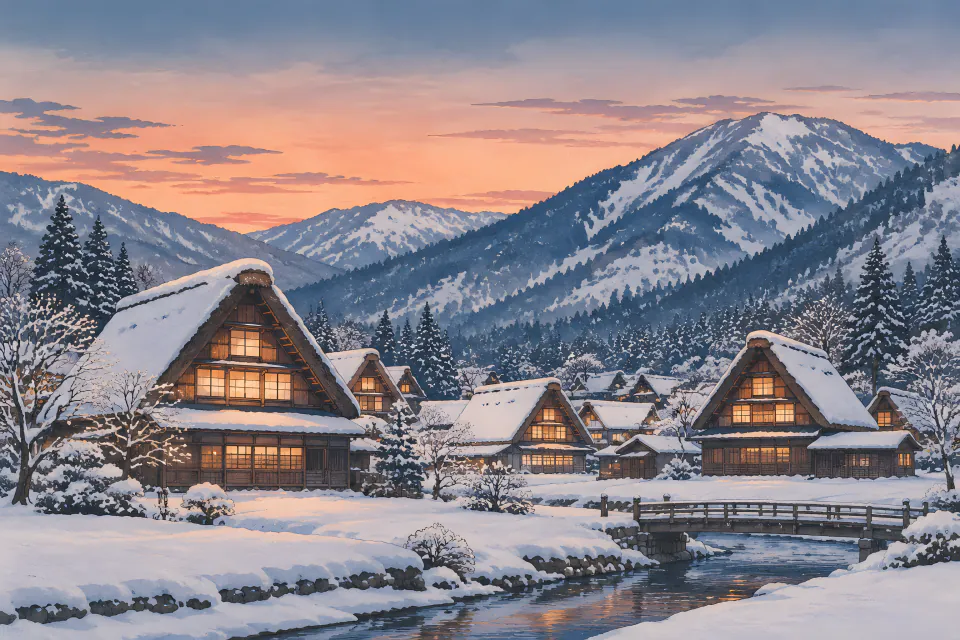
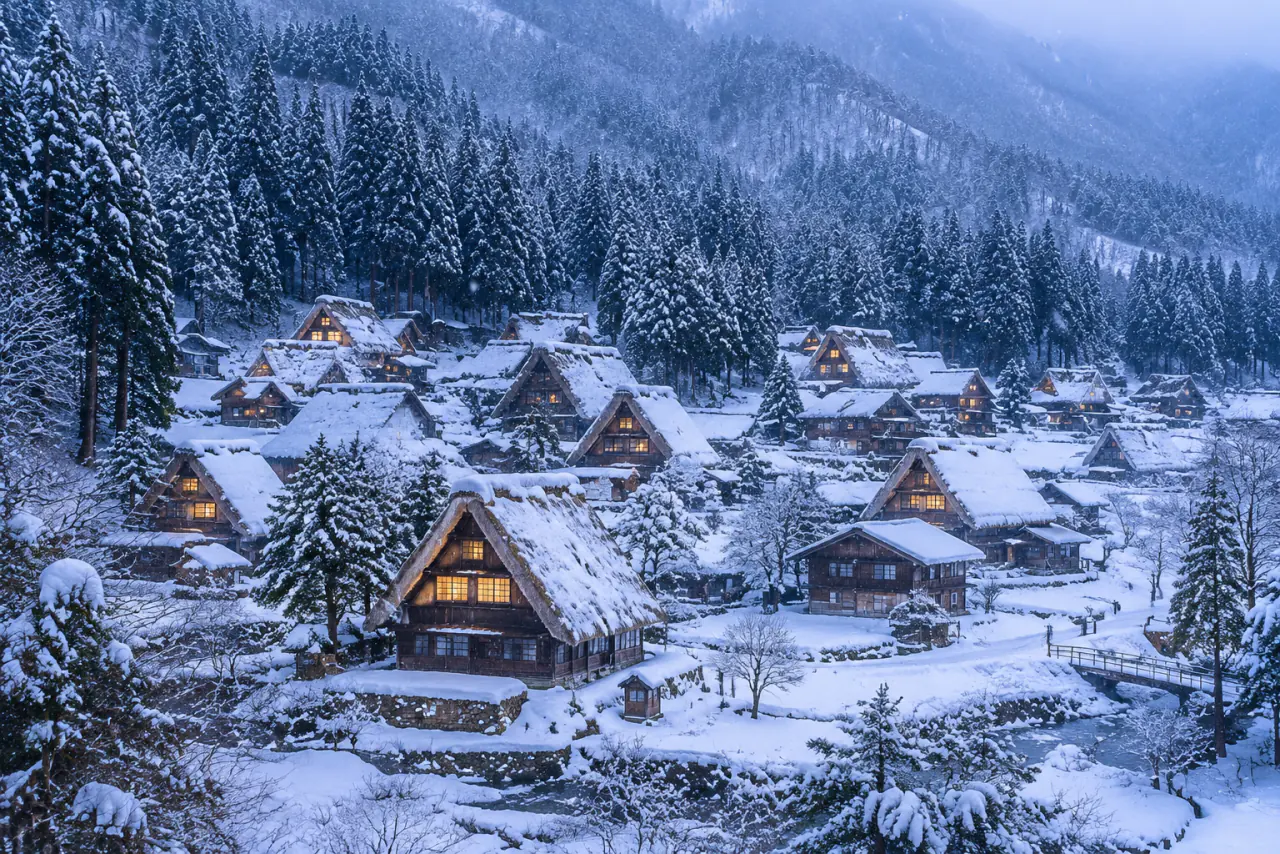
This village of gassho-style houses shares World Heritage status with Shirakawa-go in Gifu. More than 20 thatched houses dot the hillside. With far fewer crowds than Shirakawa-go, it feels more like an everyday mountain village. Stay overnight in a traditional house; snowy winter nights are especially peaceful. The World Heritage Bus runs from Shin-Takaoka Station, and access from Shirakawa-go is also easy.
People live here, so stay out of private yards. Roads can be slippery in winter; wear shoes with good traction.
-
 5
Toyama Glass Art Museum
富山市ガラス美術館
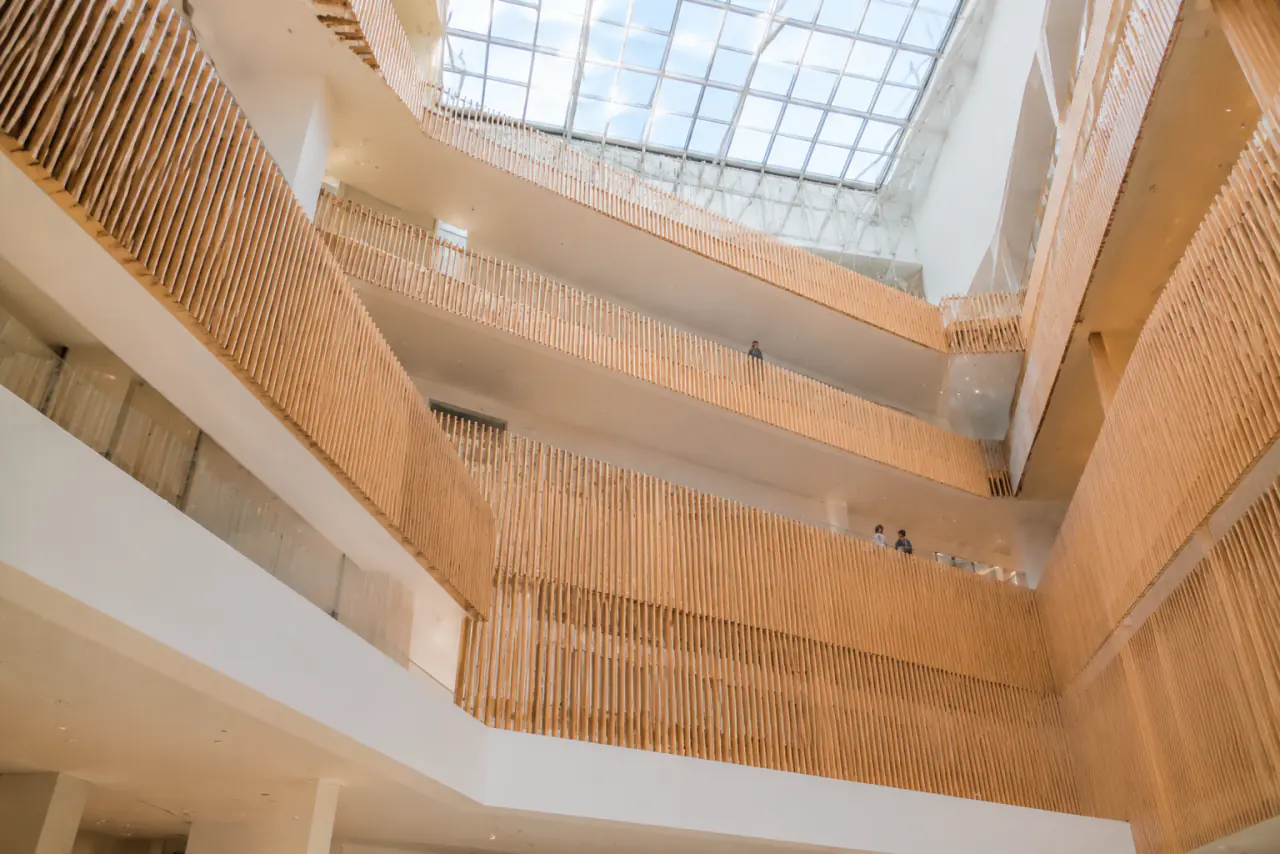
The museum occupies TOYAMA Kirari, designed by Kengo Kuma, where layers of wooden slats rise around the atrium. It shares the building with the city library. The permanent Glass Art Garden on the 6th floor features vividly colored works by American glass artist Dale Chihuly. About 10 minutes by tram from Toyama Station, it makes a good rainy-day stop.
The building’s public areas and library are free; exhibition galleries require a ticket. Check the calendar for regular monthly closing days.
-
 6
Fugan Canal Kansui Park
富岩運河環水公園
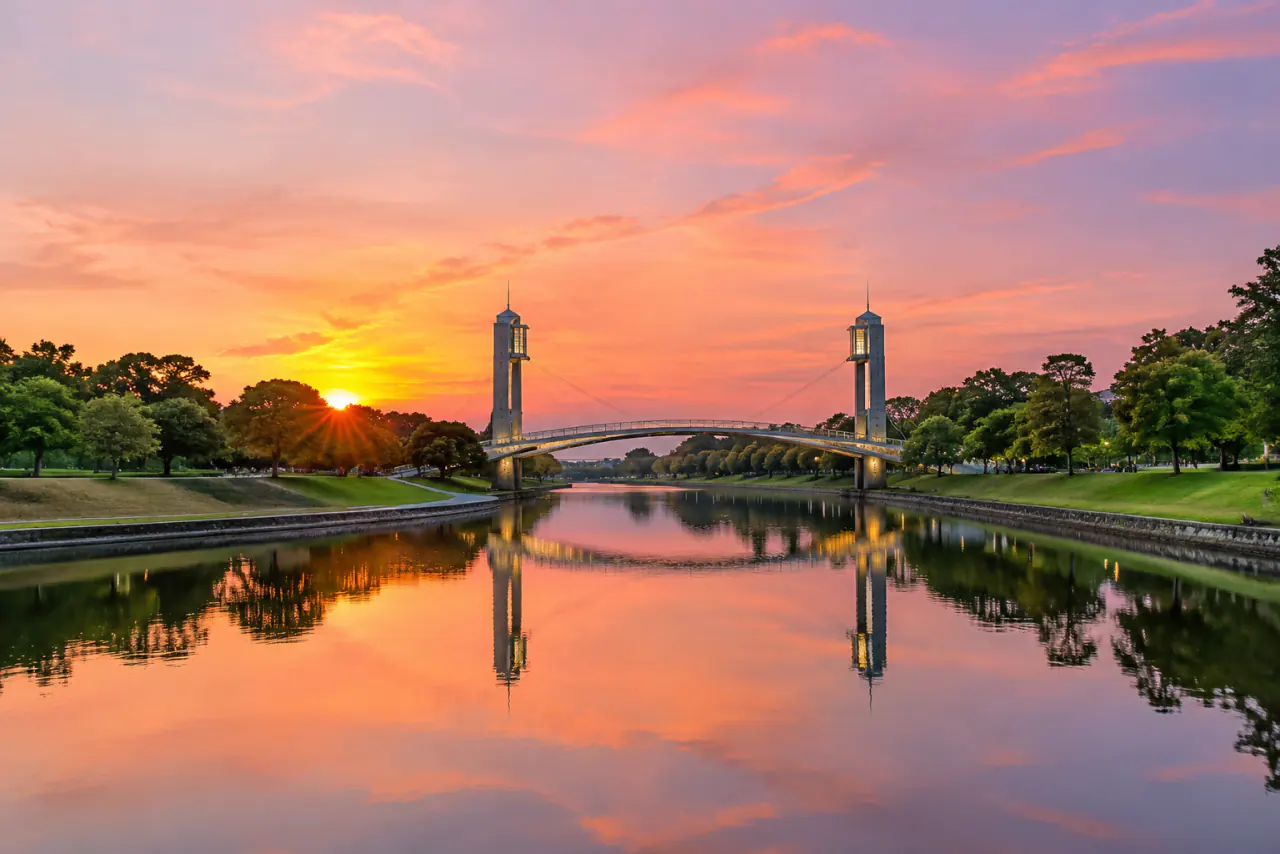
This canal park is about a 10-minute walk from Toyama Station’s north exit. At night, lights between the twin towers of Tenmon Bridge reflect on the water. A waterfront Starbucks is often called the “most beautiful Starbucks” for its setting. Come for an evening stroll and sunset; there is no need to set aside a separate trip.
On clear days, the observation rooms in the Tenmon Bridge towers offer views of the distant Tateyama mountain range.
-
 7
Amaharashi Coast
雨晴海岸
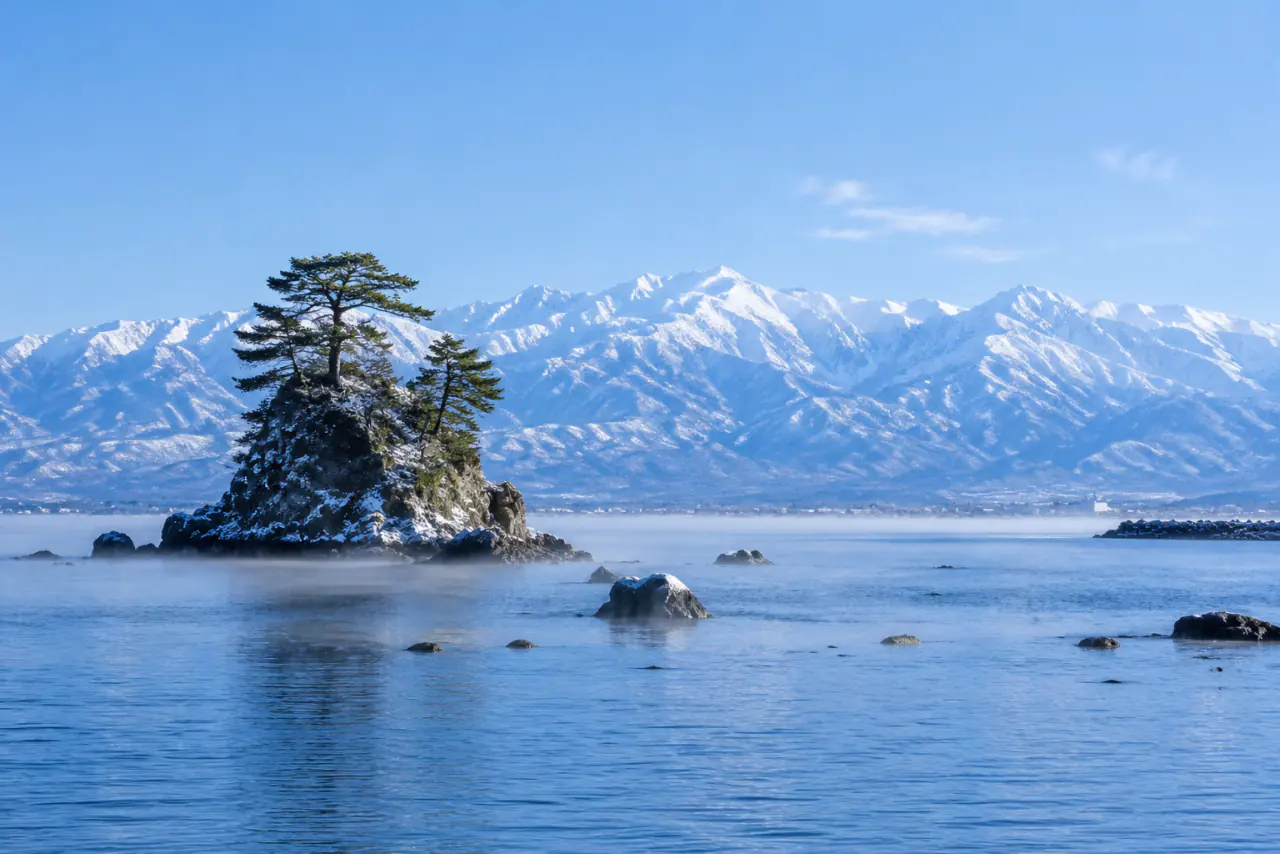
Off the coast of Takaoka, the small rocky islet of Meiwa stands against the 3,000-meter peaks of the Tateyama mountain range across Toyama Bay. Snowy mountains rising straight beyond the sea are a rare sight worldwide. Clear, cold winter mornings offer the best chance of seeing them; summer is often hazy. It is about a 10-minute walk from Amaharashi Station on the JR Himi Line.
Himi Line trains are infrequent, so check your return departure in advance. For snowy mountain views, choose a clear morning in November–February.
-
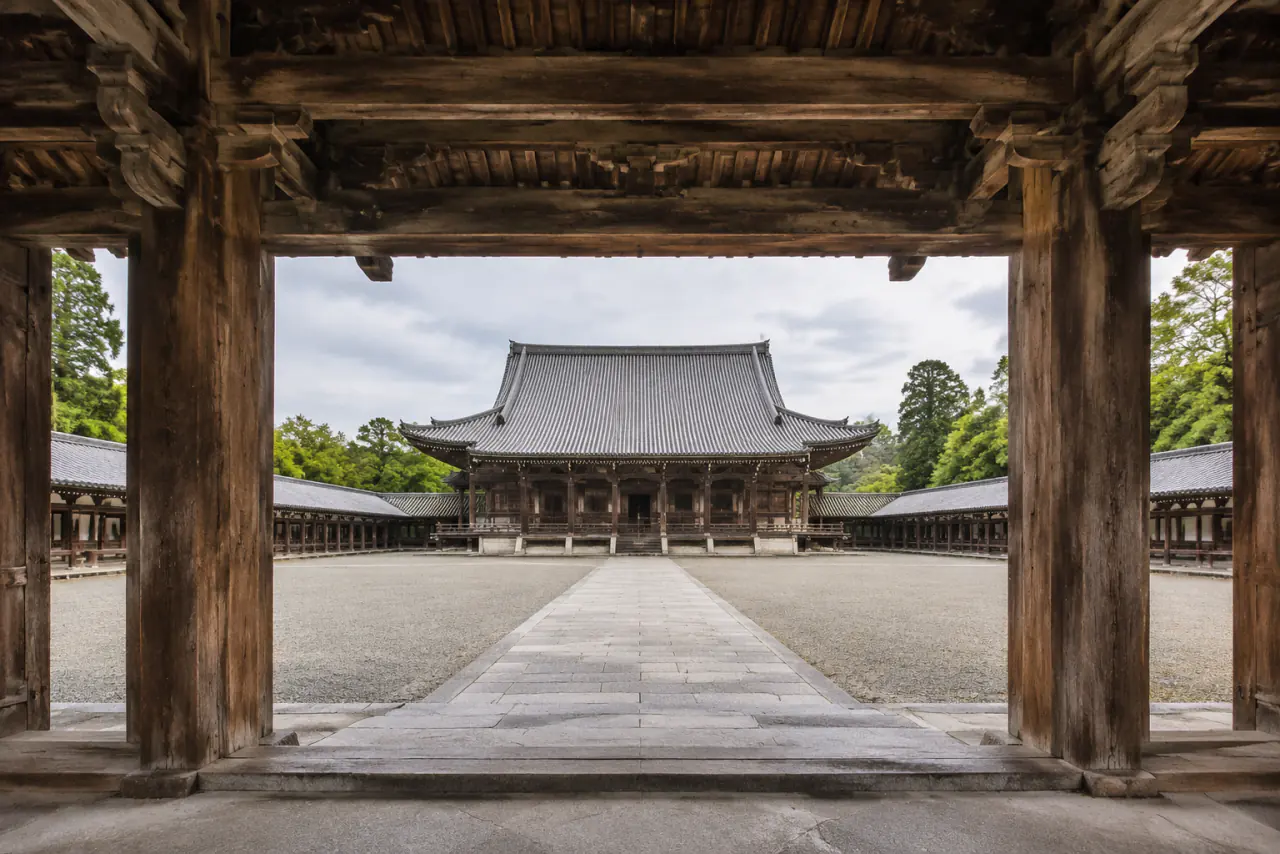 8
Zuiryuji Temple
高岡山 瑞龍寺
This is the family temple of Maeda Toshinaga, the second lord of the Kaga Domain. Its main gate, Buddha hall, and Dharma hall are all National Treasures. Covered corridors enclose the buildings in a neat square, giving the grounds a strong sense of Zen order. About a 10-minute walk from Takaoka Station’s south exit, it can be combined with the Great Buddha of Takaoka in half a day.
The Buddha hall has lead roof tiles, giving it a different color from most temples. Look up as you enter.
What to eat
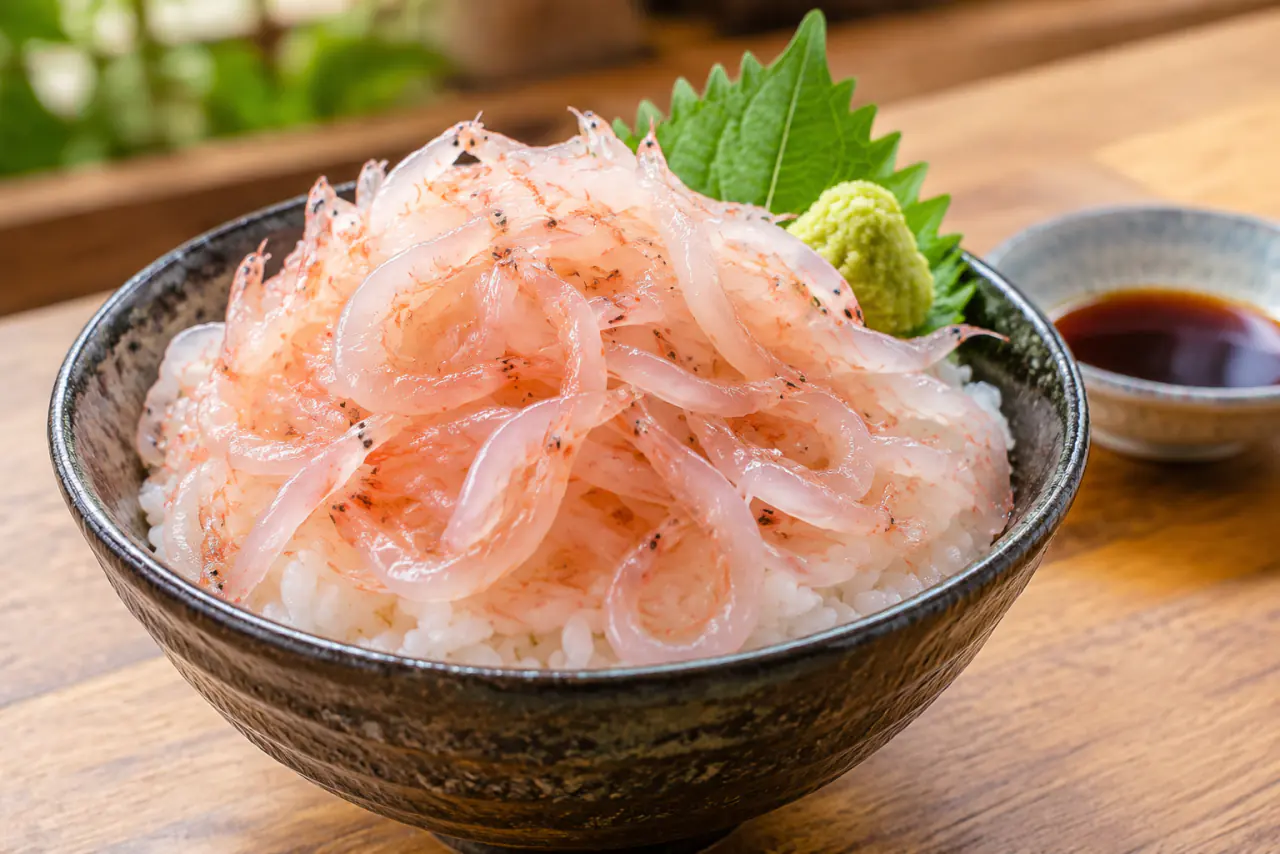
Shiroebi (white shrimp)
These tiny, translucent shrimp have a pink tint and are commercially harvested on a large scale only in Toyama Bay. Known as the “jewels of Toyama Bay,” they taste sweet when raw and are also served as tempura or over rice.
Seafood restaurants and white shrimp rice bowl shops in and around Toyama Station · About ¥1,500–3,000 per rice bowl
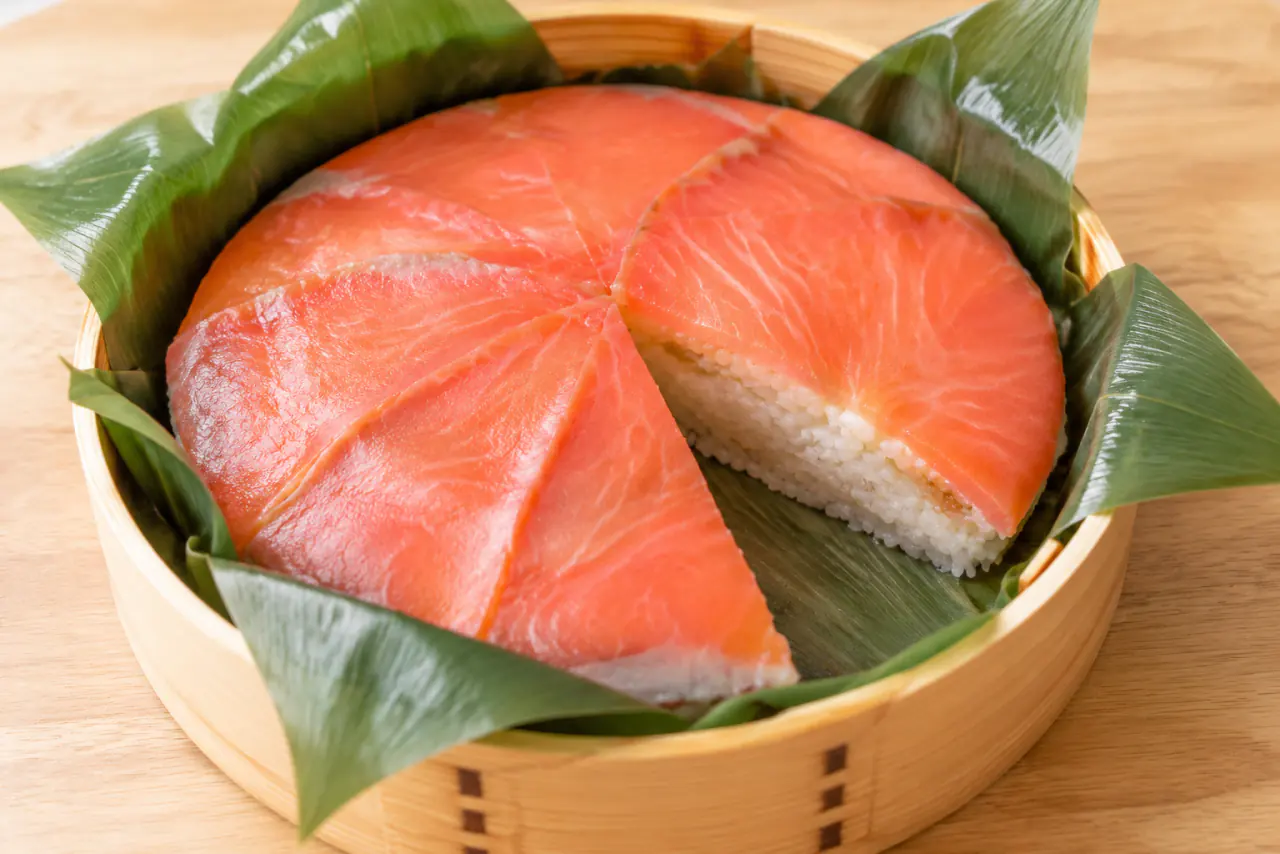
Masu no sushi
Cured trout slices are laid over vinegared rice, wrapped in bamboo leaves, and pressed into a round wooden box. Toyama’s best-known station bento is tangy, lightly sweet, and refreshing—ideal for eating on the Shinkansen.
Bento shops and souvenir shops at Toyama Station · About ¥1,500–2,500 per box
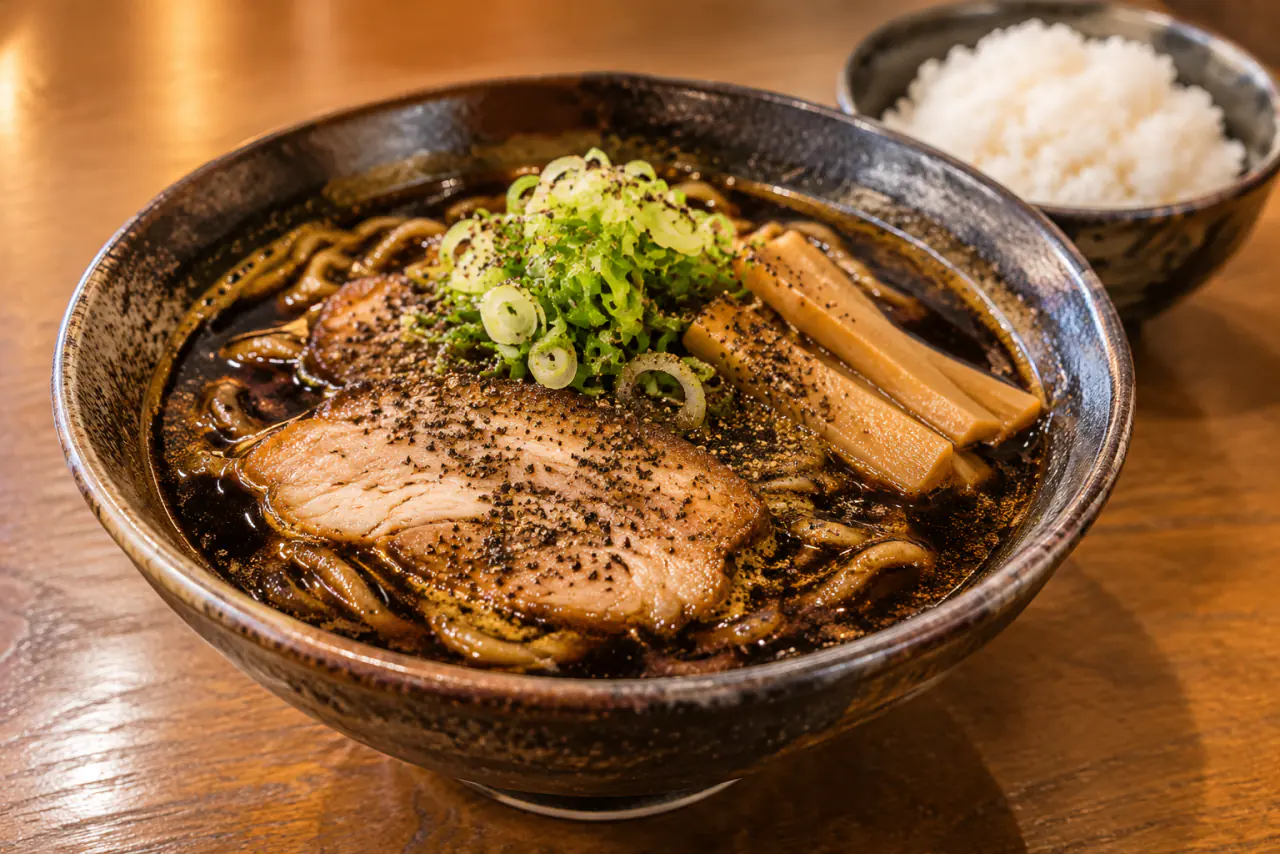
Toyama black ramen
The broth is almost black with concentrated soy sauce, very salty, and topped with plenty of coarsely ground black pepper. Originally made for manual laborers to eat with rice, it is still commonly paired with a bowl of plain rice.
Ramen shops in central Toyama and around Toyama Station · About ¥900–1,200 per bowl
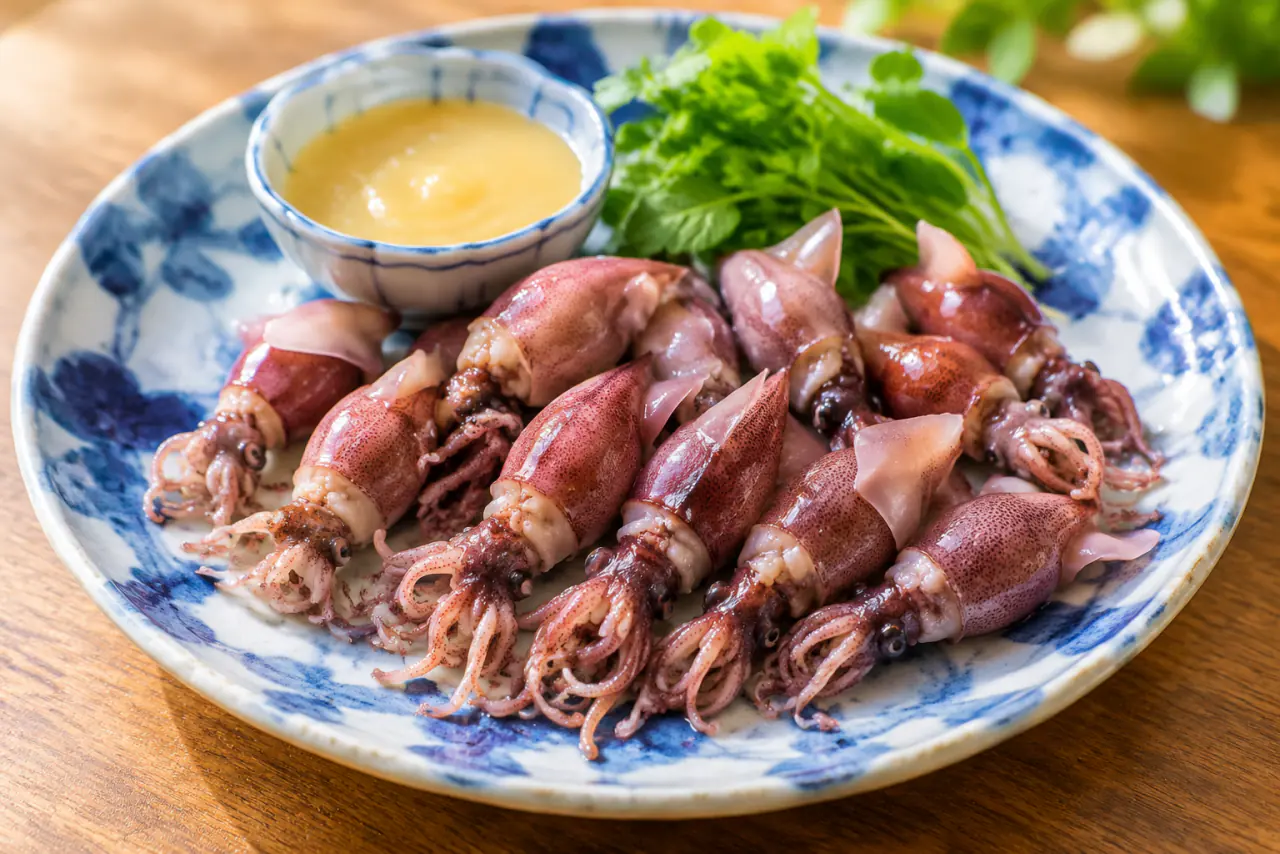
Hotaruika (firefly squid)
A Toyama Bay specialty in March–May, these tiny squid glow blue. They are most often boiled and served with vinegared miso, but also come raw in a soy-based marinade called okizuke or grilled on skewers.
Casual restaurants around Namerikawa and Uozu, and izakaya in Toyama city
Getting there · Where to stay
About 2 hours 10 minutes to Toyama Station on the Hokuriku Shinkansen Kagayaki service
About 20 minutes by Hokuriku Shinkansen, making a day trip easy
Take a bus from Shinano-Omachi to Ogizawa, then cross the Alpine Route to the Toyama side. Allow a full day.
About 4 hours to Toyama via Takayama on the Hida limited express, with the option to stop in Takayama
The area around Toyama Station is the most convenient base, with trains to Tateyama Station, buses to Gokayama, and the Hokuriku Shinkansen all departing here. For mountain sunrises and starry skies, book a mountain hotel in Murodo.
Know this before you go
- The entire Alpine Route closes from December to mid-April of the following year. Winter visits to Toyama center on seafood and snowy mountain views across the bay.
- The Alpine Route uses 6 types of transportation, and each transfer can involve a wait in peak season. Start with the first departure of the morning for a more relaxed trip.
- Toyama Airport’s Shanghai and Dalian routes are currently suspended. Travelers can fly to Komatsu, Nagoya, or Tokyo instead.
- Hokuriku gets plenty of winter rain and snow. Carry a folding umbrella year-round.
- Whether you can drive in Japan depends on your license and accompanying documents; check the official requirements. Buses and local JR trains are options for reaching Gokayama and Amaharashi.