Cloudborne Travel
Yamaguchi Prefecture lies at the western tip of Honshu, with sea on three sides and Fukuoka across the Kanmon Strait. Its sights are spread far apart. In the east, Iwakuni's Kintai Bridge is close to Hiroshima. In the west, Shimonoseki draws visitors for fugu and Karato Market. Along the Sea of Japan coast to the north are Tsunoshima Bridge and the red torii gates of Motonosumi Shrine. Inland lie the Akiyoshidai karst plateau and Hagi Castle Town.
Public transportation connects only some of these sights. Kintai Bridge is an easy side trip from Hiroshima, as is Shimonoseki from Fukuoka. Along the northern coast, services are sparse and stops are far from the sights. To see Tsunoshima Bridge and Motonosumi Shrine in one day, join a local day tour or travel with someone licensed to drive in Japan. Driving eligibility depends on your license; check the official requirements.
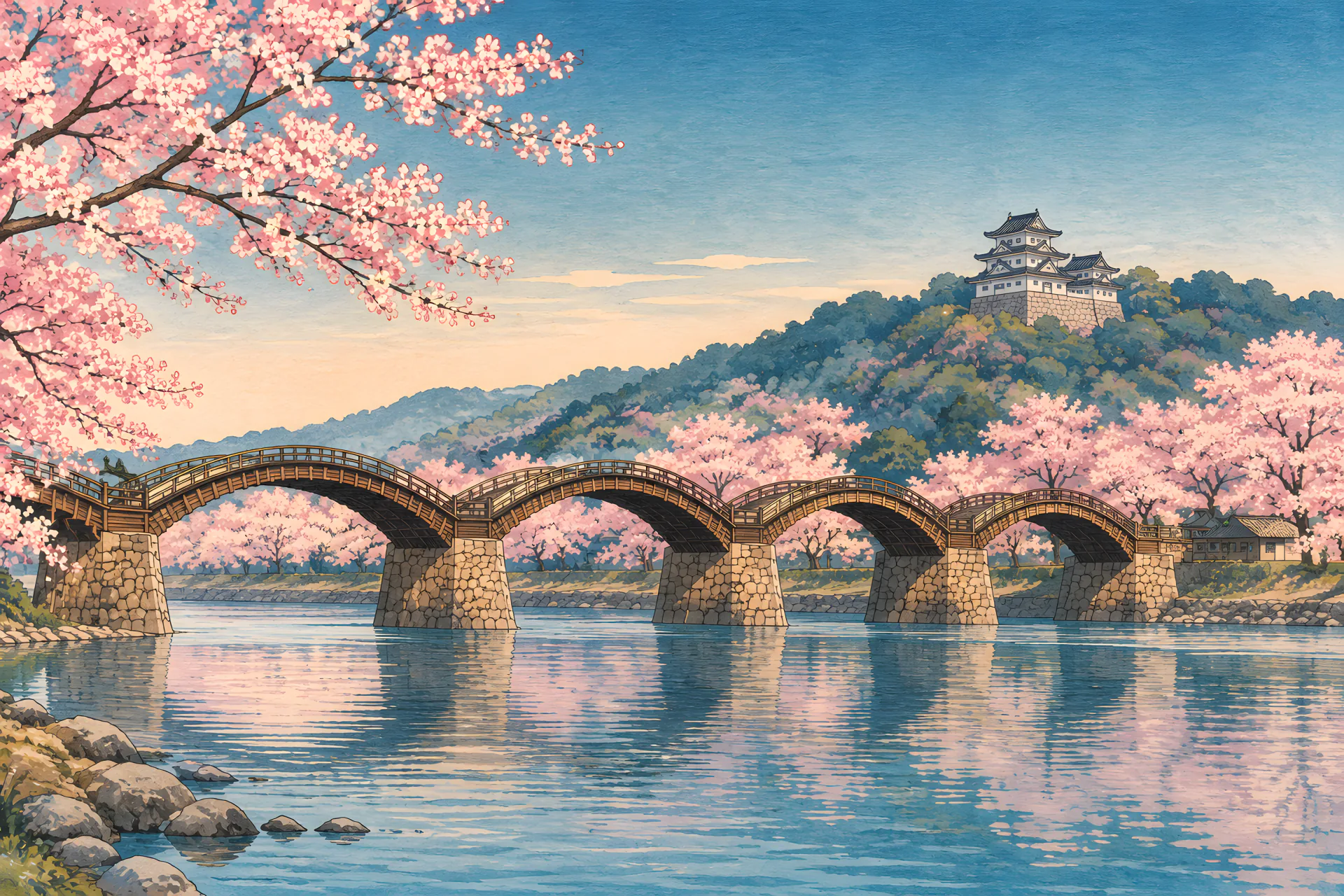
See cherry blossoms at Kintai Bridge in early April and Tsunoshima's bluest seas in summer. Winter is fugu season. Akiyoshidai's grasslands are burned each February.
Monthly weather
Based on YamaguchiBest time to visit Monthly precipitation (mm) Open-Meteo (ERA5), 1996–2025 average
| Month | Average high (°C) | Average low (°C) | Monthly precipitation (mm) | Days with 1 mm or more of precipitation |
|---|---|---|---|---|
| Jan | 10 | 2.9 | 61 | 10 |
| Feb | 11.3 | 3.4 | 72 | 10 |
| Mar(Good time to visit) | 15.2 | 6.1 | 117 | 11 |
| Apr(Good time to visit) | 20.2 | 10.4 | 132 | 11 |
| May(Good time to visit) | 24.5 | 15.1 | 155 | 11 |
| Jun(Good time to visit) | 27.5 | 19.9 | 243 | 15 |
| Jul(Good time to visit) | 31.2 | 24.3 | 271 | 17 |
| Aug(Good time to visit) | 32.8 | 25.2 | 185 | 15 |
| Sep(Good time to visit) | 29.4 | 21.4 | 189 | 13 |
| Oct(Good time to visit) | 24.2 | 14.9 | 96 | 8 |
| Nov(Good time to visit) | 18.3 | 9.4 | 81 | 8 |
| Dec | 12.3 | 4.7 | 64 | 9 |
Sights
-
 1
Kintai Bridge
錦帯橋
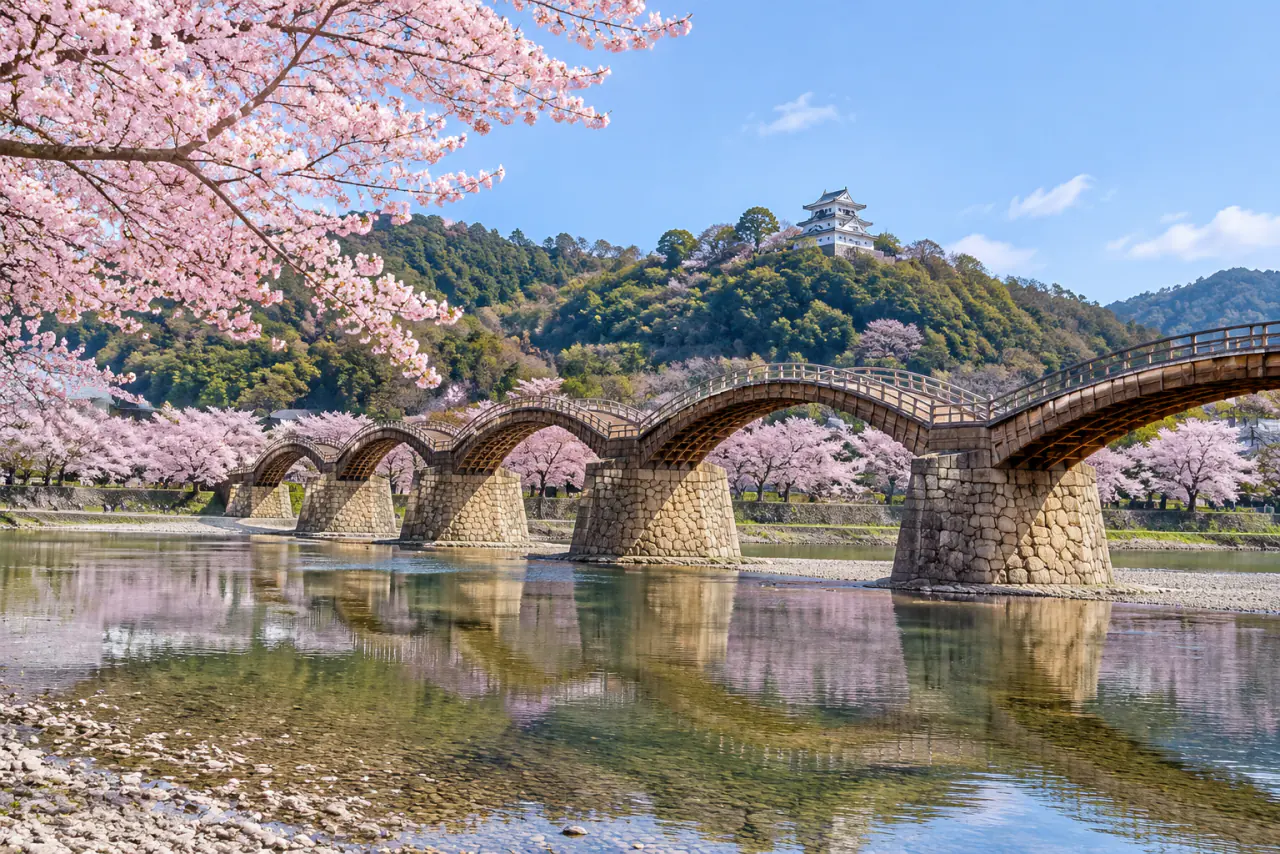
This wooden bridge spans the Nishiki River in five graceful arches and is considered one of Japan's three great bridges. There is a fee to cross. Kikko Park is on the far bank, with a ropeway up to Iwakuni Castle. Early April is the busiest time, when cherry blossoms line both banks. Fall brings colorful foliage. Allow half a day for a trip from Hiroshima.
A combination ticket covers Kintai Bridge, the ropeway, and Iwakuni Castle. Buy it at the bridge ticket office for better value.
-
 2
Motonosumi Shrine
元乃隅神社
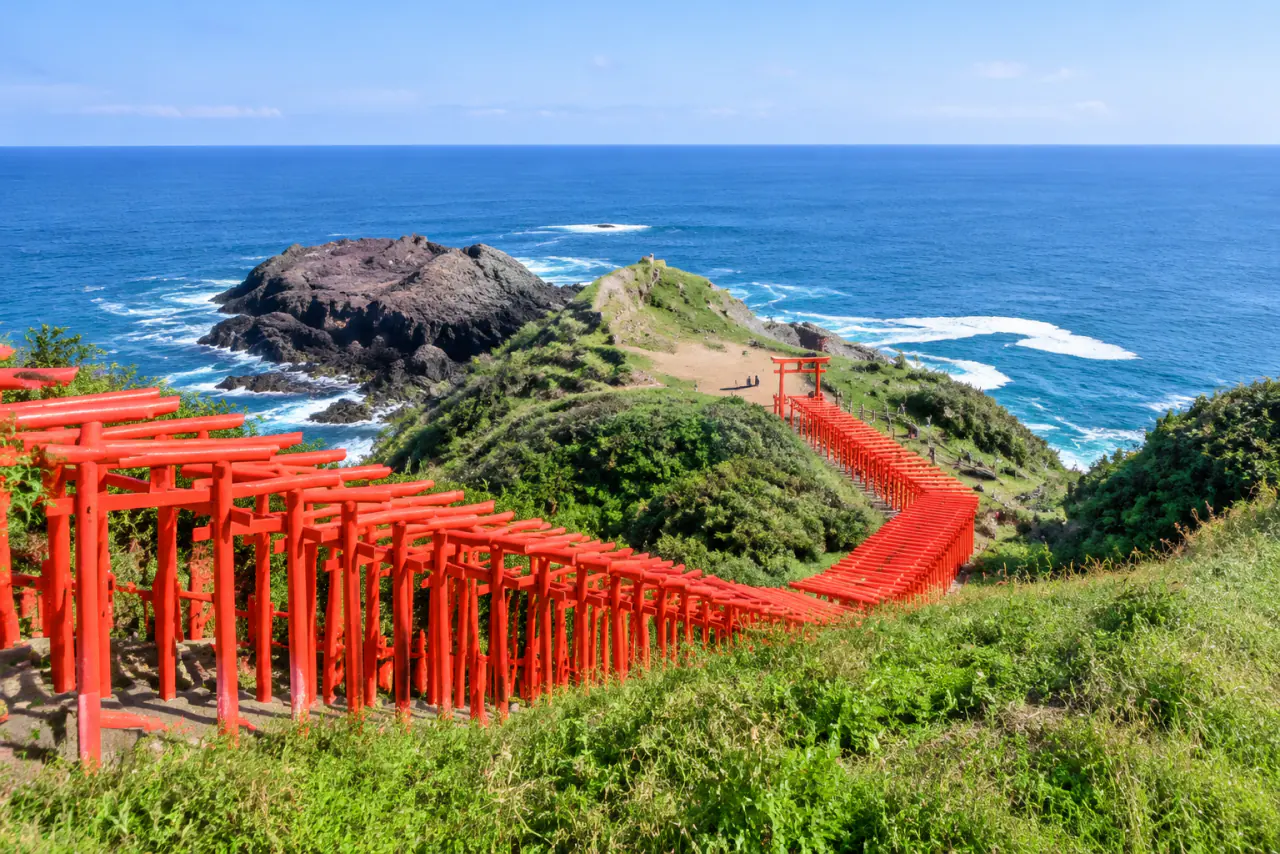
A line of 123 red torii gates follows the cliff down toward the Sea of Japan. The blue sea, green grass, and red gates make a striking photo. An offering box sits about 5 meters up on the large torii gate; landing a coin inside is said to grant your wish. Public transportation nearby is almost nonexistent, so most visitors combine it with Tsunoshima Bridge on a day tour or by car.
The coast is windy. High winter waves make it even more dramatic, and colder. Confirm your return transportation before going.
-
 3
Tsunoshima Bridge
角島大橋
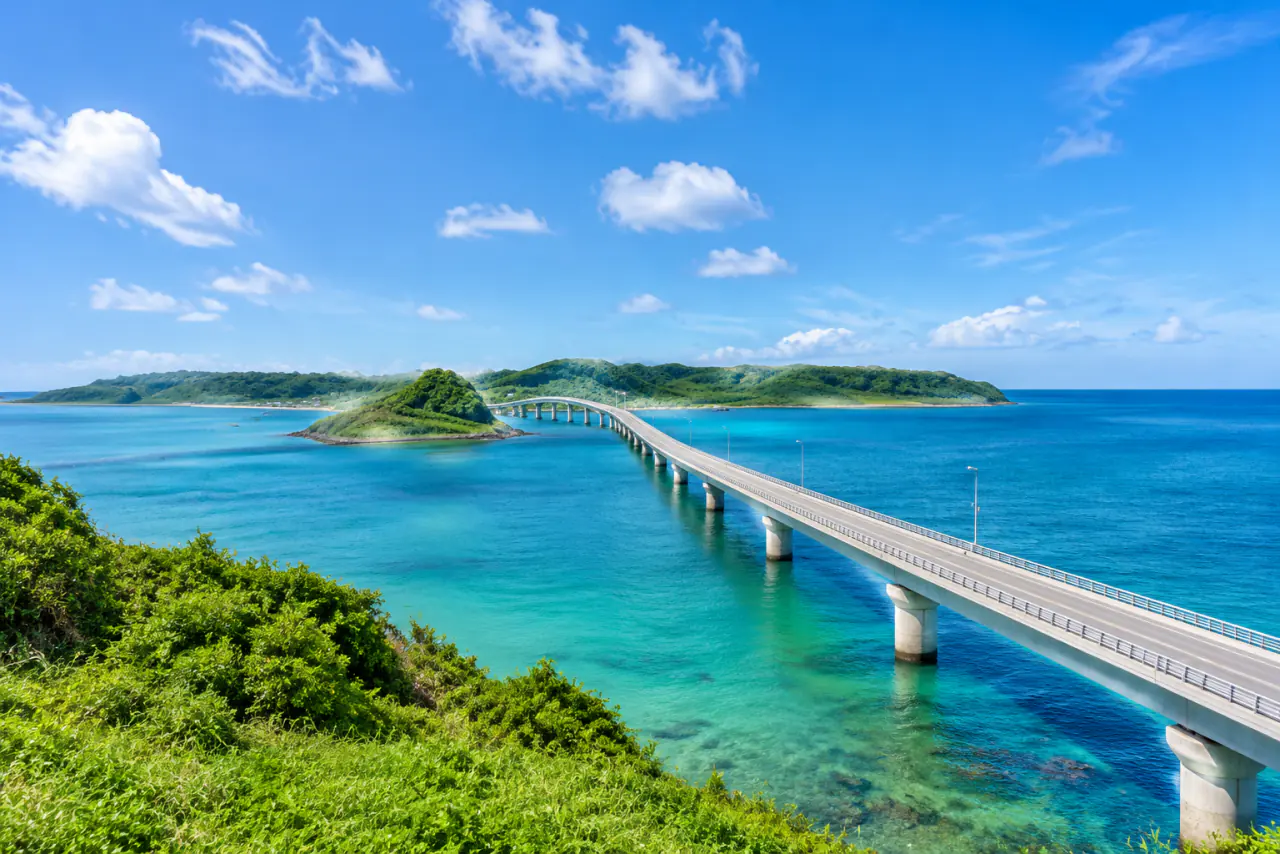
This toll-free bridge stretches about 1.8 kilometers over unusually clear, emerald-green water. It has appeared in many car commercials. The classic view is from Amagase Park at the mainland end. Across the bridge, Tsunoshima has a lighthouse and sandy beaches where you can swim in summer.
The water looks its best around midday in clear weather. The bridge closes in strong winds.
-
 4
Akiyoshidai & Akiyoshido Cave
秋吉台・秋芳洞
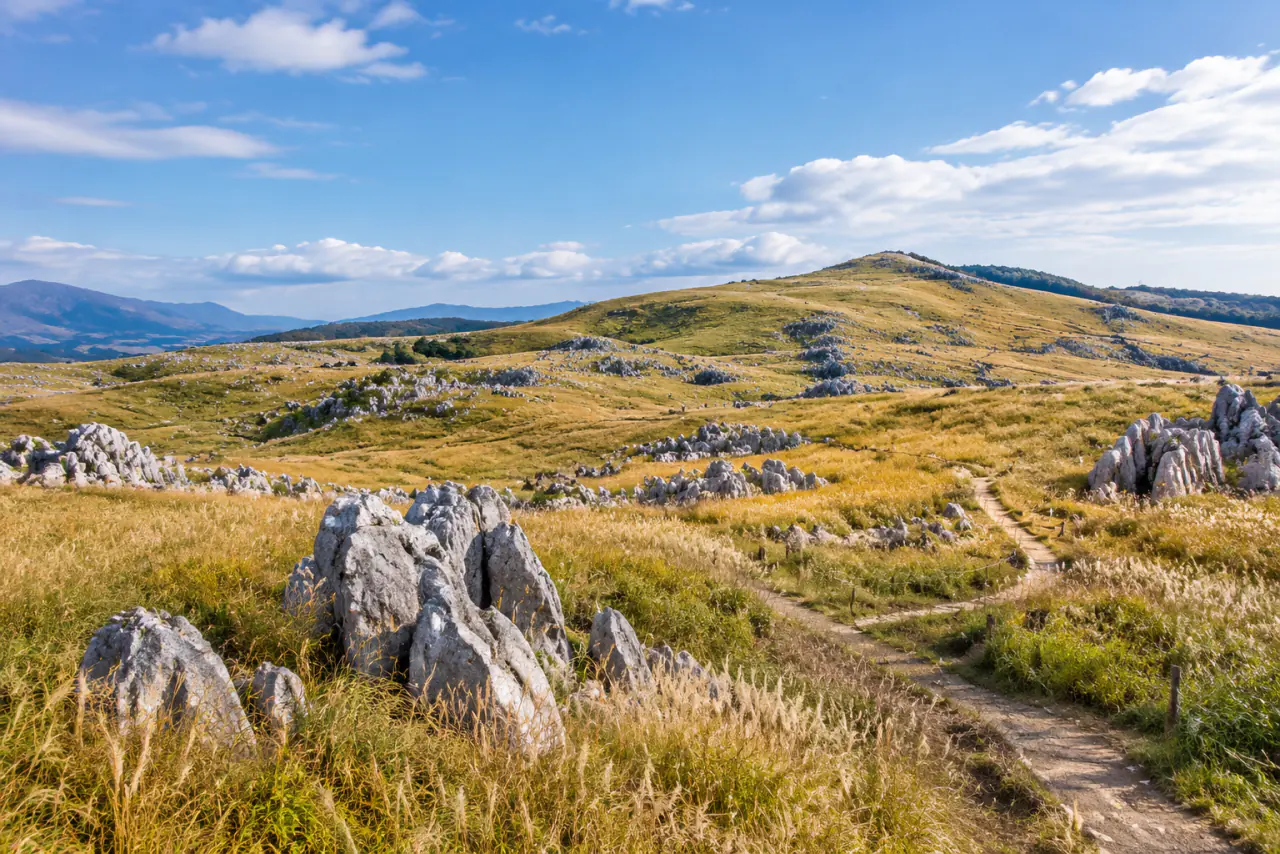
Above ground, white limestone outcrops dot the grasslands of Japan's largest karst plateau. Below lies Akiyoshido Cave, one of Japan's largest limestone caves. It stays around 17°C year-round, making it a cool retreat in summer. The path through the cave is about 1 kilometer long. Walk through to the exit, then take an elevator up to the plateau's observation deck.
The cave floor is wet and slippery, so avoid flip-flops. Admission is slightly higher in summer and during Golden Week.
-
 5
Hagi Castle Town
萩城下町
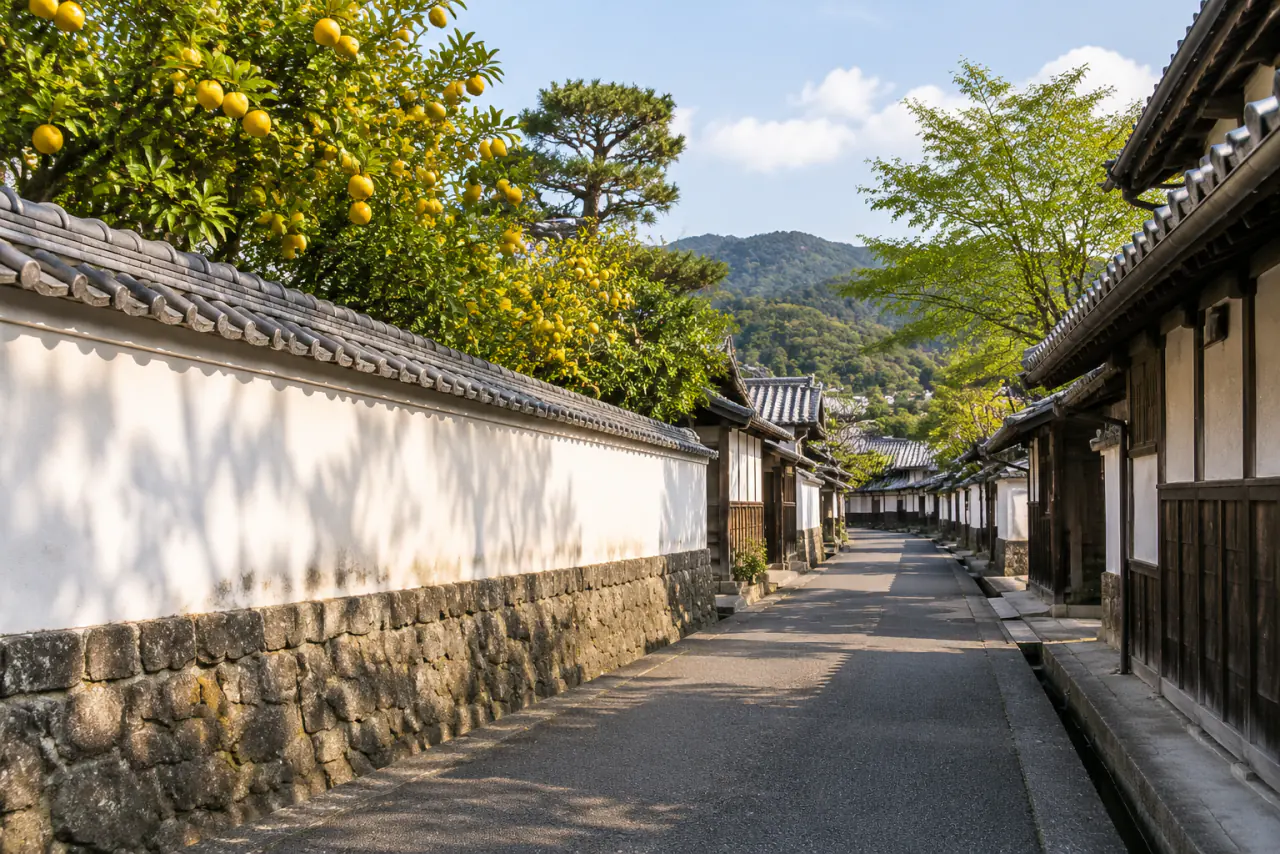
Once the castle town of the Choshu domain during the Edo period, Hagi preserves streets of samurai residences enclosed by white plaster walls, earthen walls, and summer orange trees. Rent a bicycle to explore at an easy pace. Several key figures in the Meiji Restoration came from here, and related sites, including Shokasonjuku Academy, have World Heritage status. Hagi ware pottery is also well known; look for a teacup to take home.
-
 6
Karato Market
唐戸市場
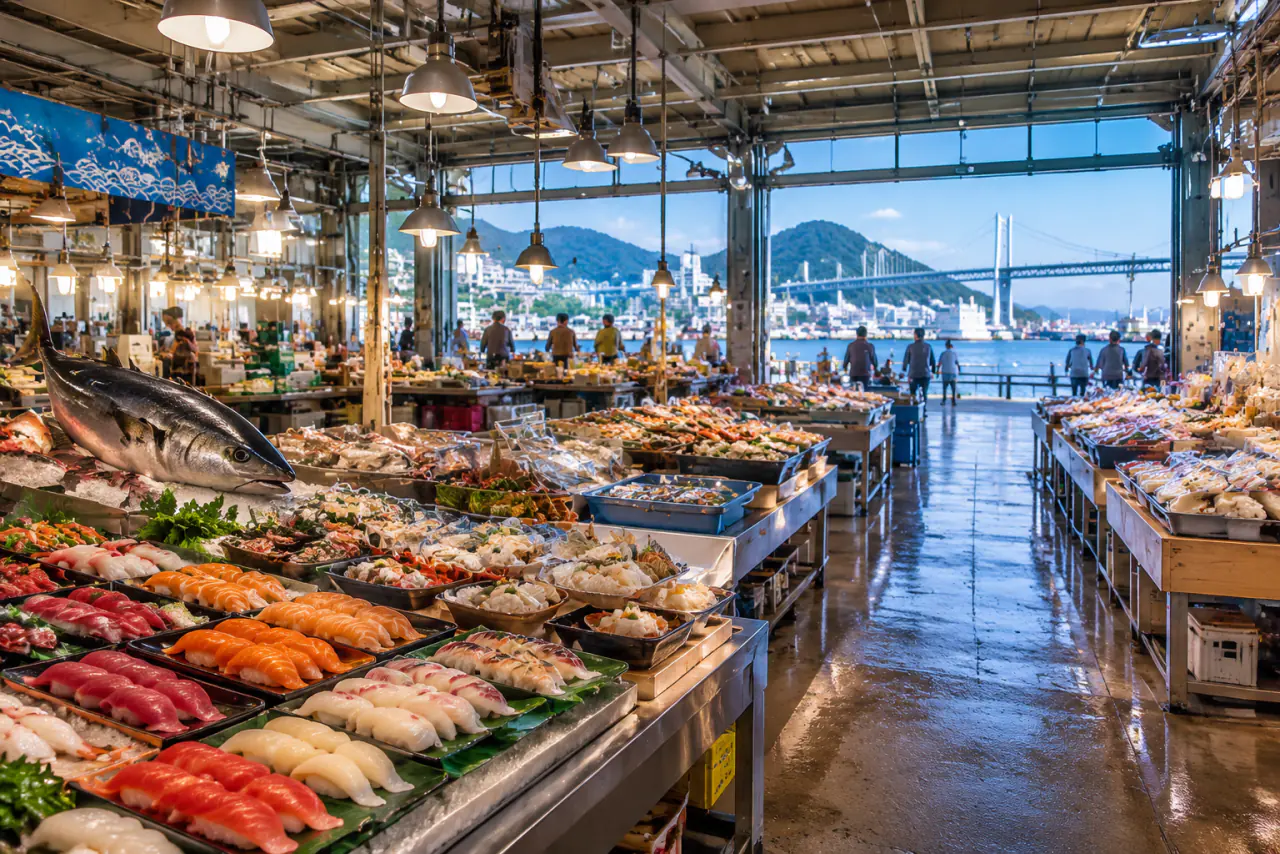
This seafood wholesale market in Shimonoseki hosts the Iki Iki Bakan-gai food market on Friday through Sunday mornings and holiday mornings. Stalls sell freshly made sushi and fugu dishes. Take your food to the waterfront and eat with a view of Mojiko in Kyushu across the strait. A ferry takes just a few minutes to cross to Mojiko for a stroll.
Most sushi stalls close before 3 p.m., and the best items sell out in the morning. Arrive early.
-
 7
Nagato Yumoto Onsen
長門湯本温泉
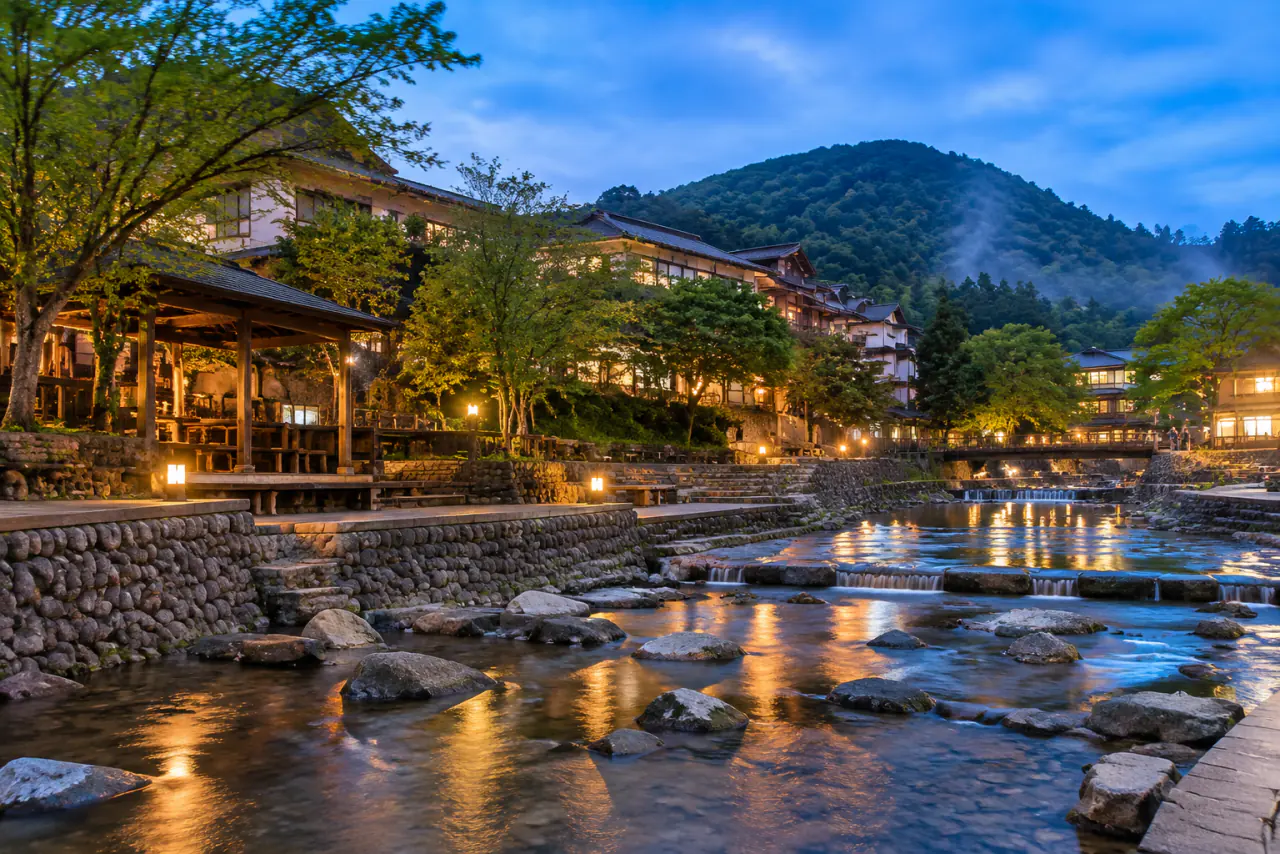
One of Yamaguchi's oldest hot spring resorts, Nagato Yumoto Onsen stretches along the Otozure River. The hot spring district has been renovated in recent years, with riverside paths, foot baths, cafes, and soft lighting at night. At Onto public bathhouse, mild spring water flows directly from the source. Stay here for easy access to Motonosumi Shrine and Tsunoshima the next day.
What to eat
Fugu dishes
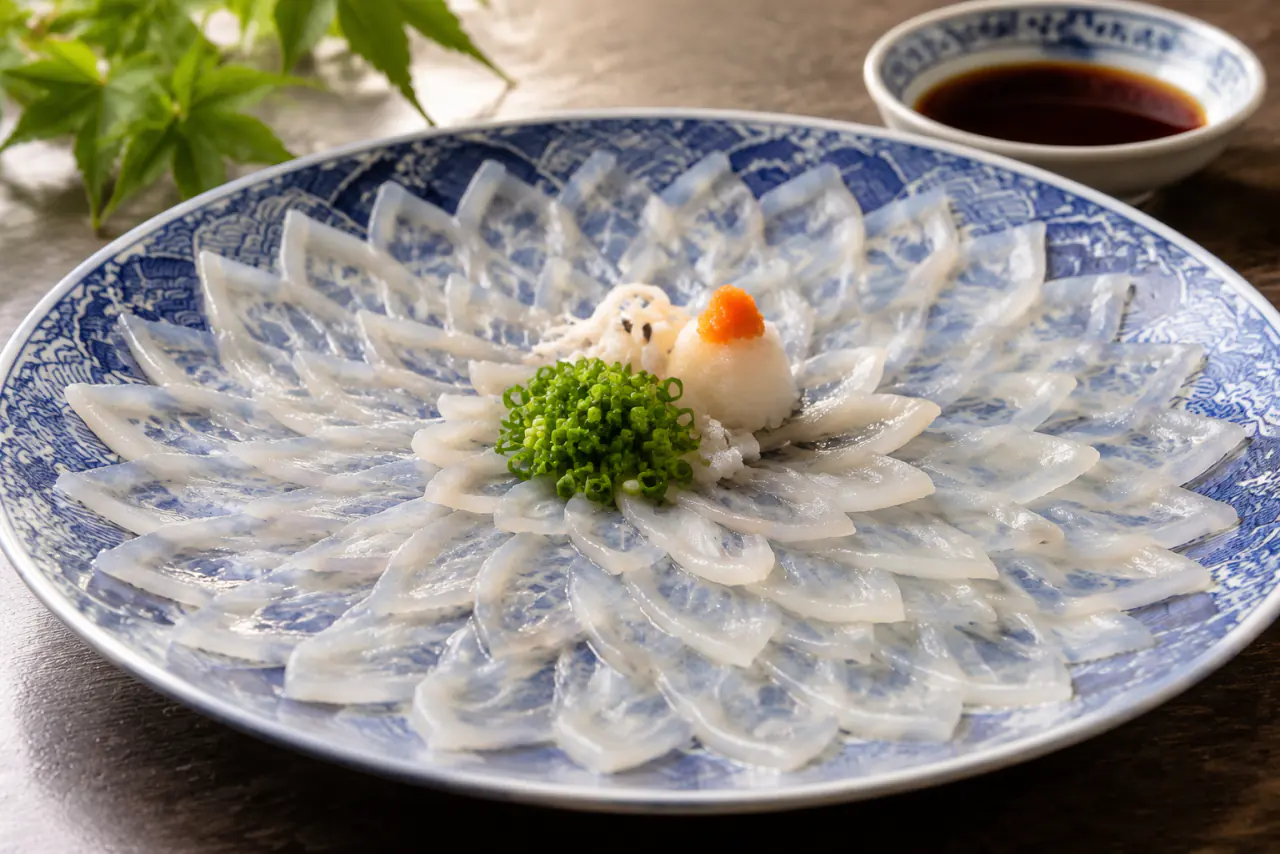
Shimonoseki is a major hub for Japan's fugu trade. Locally, the fish is called fuku, which also sounds like the word for good fortune. A standard set meal includes translucent slices of fugu sashimi, hot pot, and rice porridge to finish. Winter is peak season. Eat only at reputable, licensed restaurants.
Restaurants around Karato Market and Shimonoseki Station · Set meal: about ¥5,000–15,000 per person
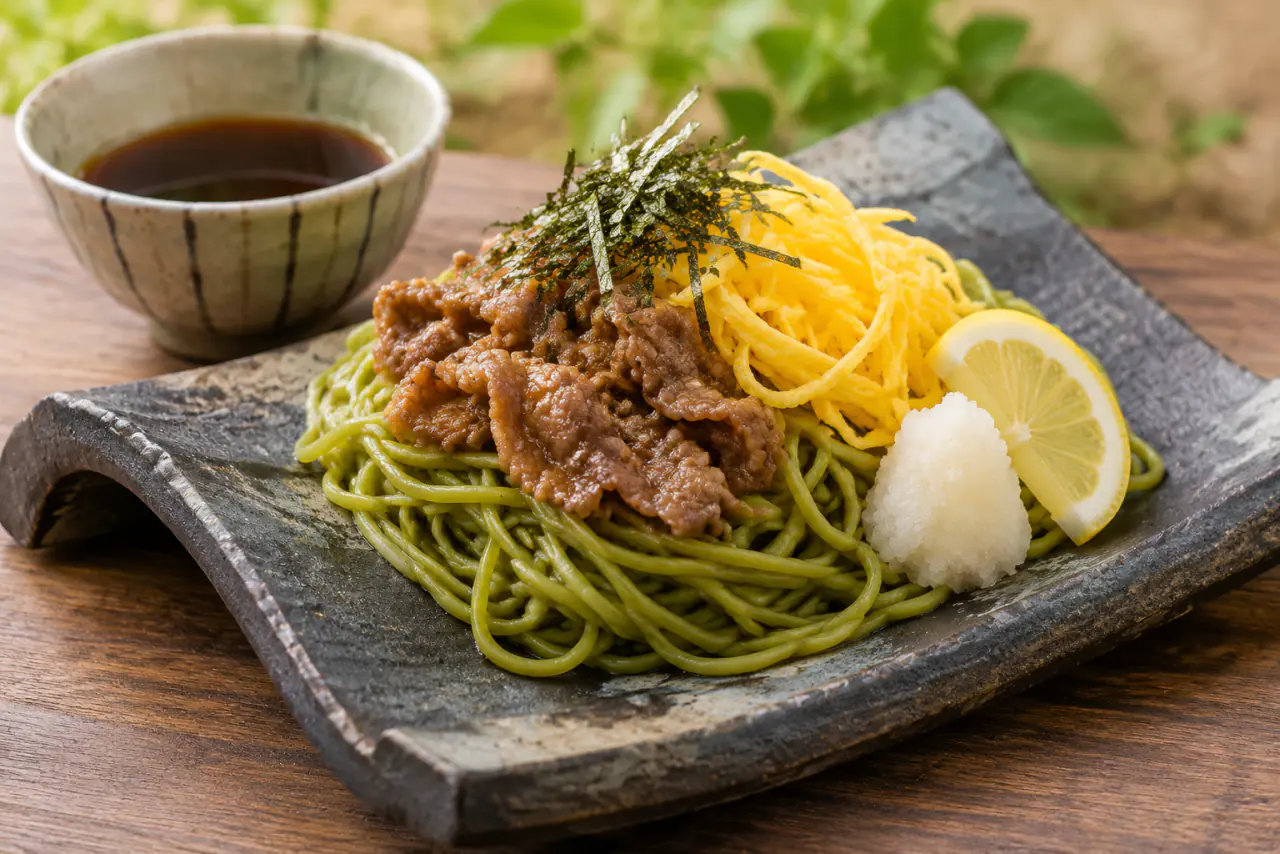
Kawara soba
Matcha soba noodles are served on a hot roof tile, topped with shredded beef, thin strips of egg, and nori. Dip them into warm sauce as you eat. The noodles touching the tile turn crisp. The dish is said to have been inspired by soldiers cooking on roof tiles during the Satsuma Rebellion.
Originated around Kawatana Onsen in Shimonoseki; also served elsewhere in the city · About ¥1,000–1,500 per person
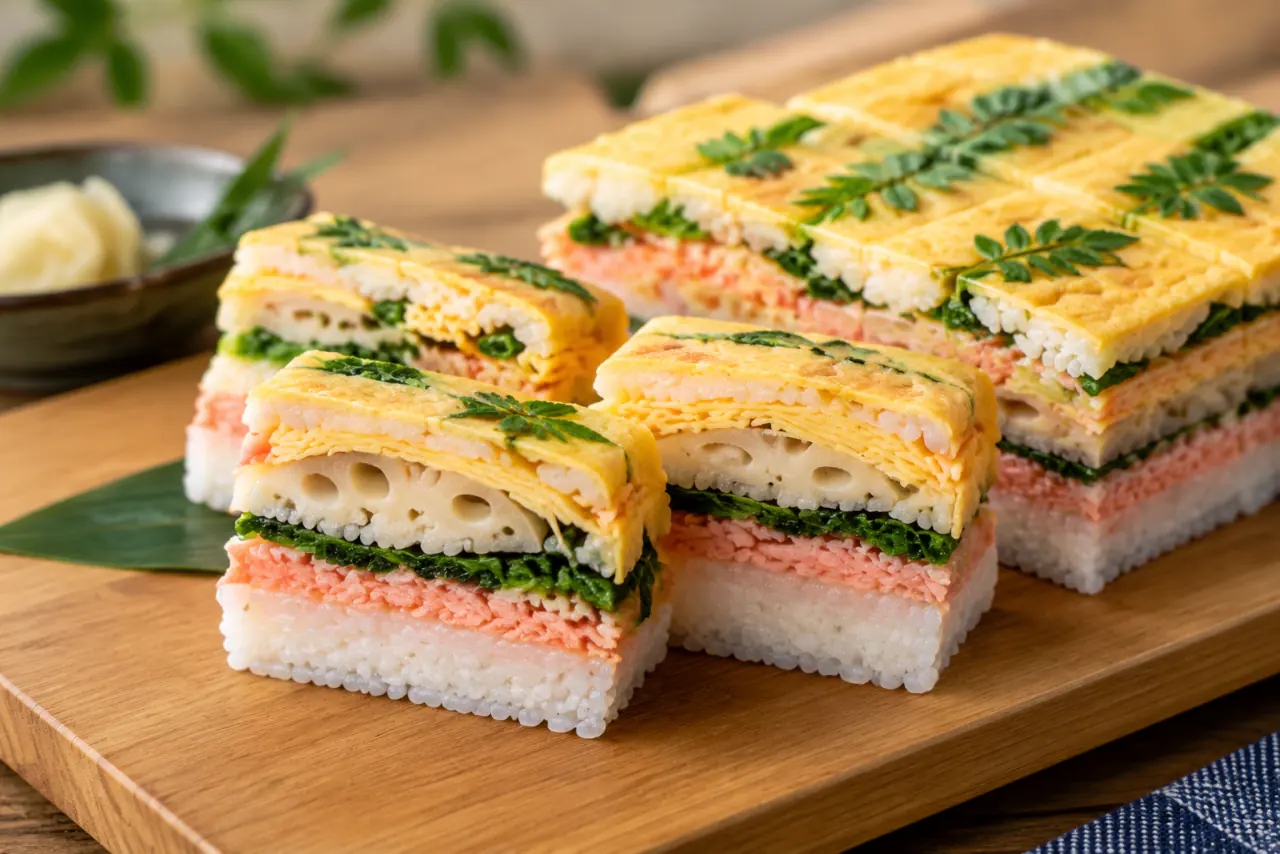
Iwakuni sushi
This pressed sushi is built in layers inside a large wooden mold, with lotus root, fish flakes, and thin strips of egg. Sliced open, it resembles a colorful layer cake. Once a preserved food in the Iwakuni domain, it is now sold at shops around Kintai Bridge.
Casual restaurants and souvenir shops around Kintai Bridge
Getting there · Where to stay
Take the Shinkansen to Shin-Iwakuni Station in about 15 minutes, then a bus to Kintai Bridge in about 15 minutes
Take the Shinkansen from Hakata to Shin-Shimonoseki Station in about 15–20 minutes, then a bus to the Karato area
Served by the Shinkansen, with buses to Akiyoshidai in about 45 minutes and Hagi in a little over 1 hour
For Kintai Bridge alone, take a day trip from Hiroshima. For Shimonoseki, stay near Shimonoseki Station. To combine the northern coast with Akiyoshidai, stay at Nagato Yumoto Onsen or Yuda Onsen in Yamaguchi City.
Know this before you go
- Buses along the northern coast are infrequent, so join a day tour if you are not driving. Driving eligibility in Japan depends on your license; check the official requirements.
- Karato Market's sushi stalls operate only on Friday through Sunday mornings and holiday mornings. They will not be open on other weekdays.
- Eat fugu only at reputable restaurants. Do not buy fish from unknown sources to prepare yourself.
- The ferry from Shimonoseki to Mojiko takes about 5 minutes, so you can visit two prefectures in one day.