Cloudborne Travel
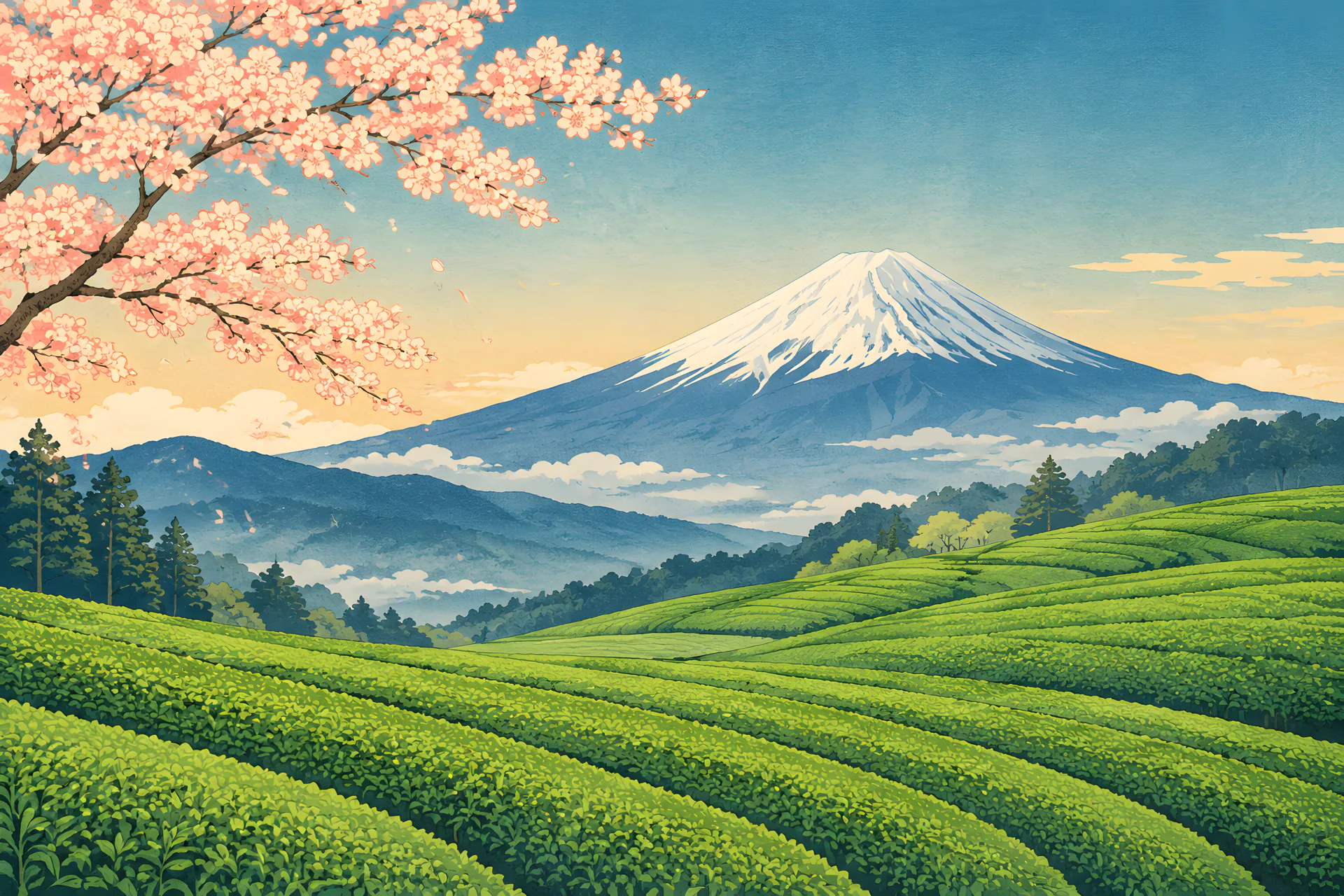
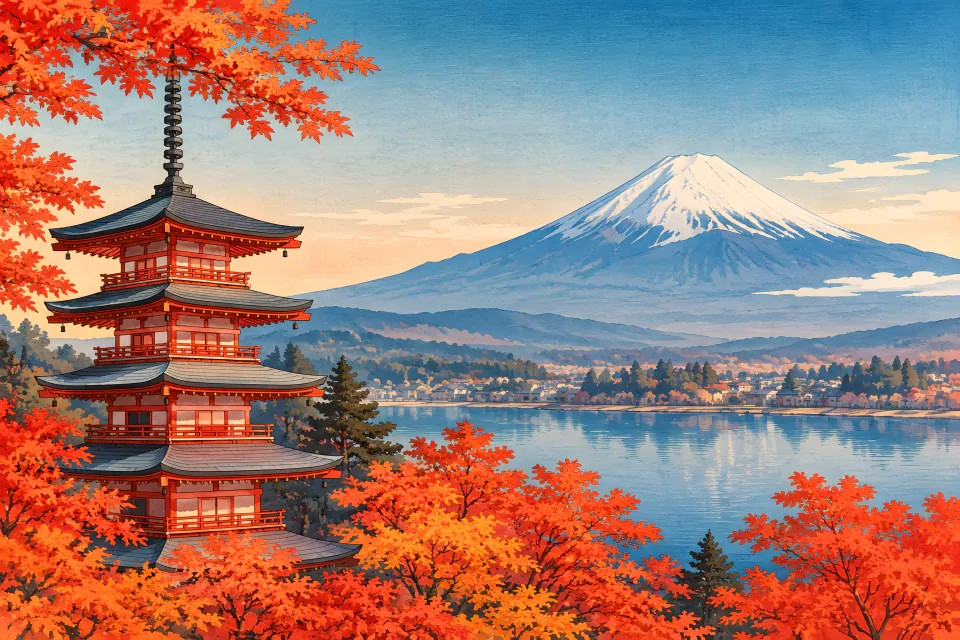
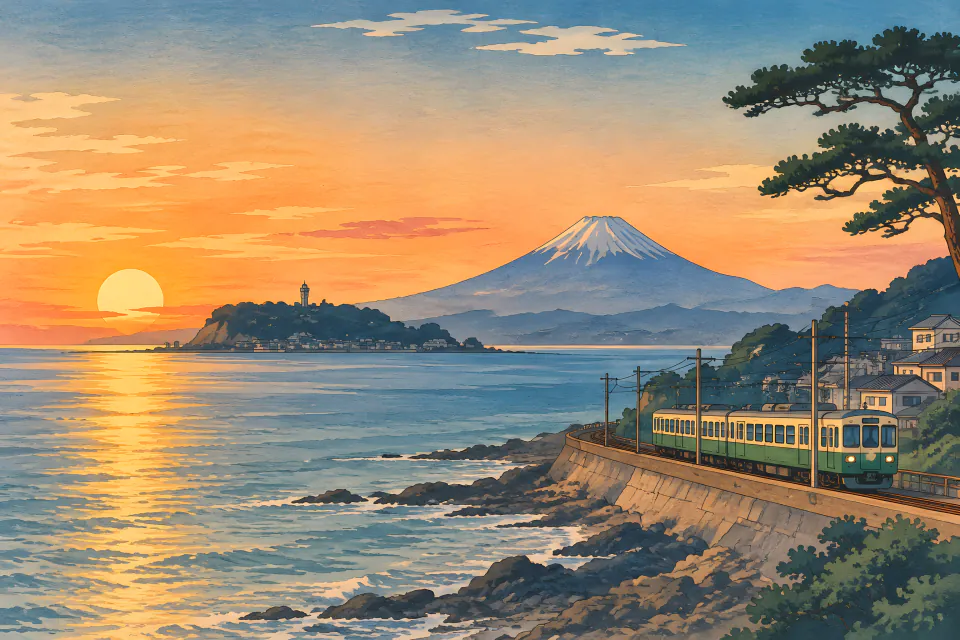
Shizuoka lies south of Mount Fuji, with Yamanashi on the other side of the mountain. This side offers wider views: Miho no Matsubara brings Mount Fuji, the sea, and pine trees into one scene, while Nihondaira overlooks Suruga Bay. Fujinomiya is home to the head shrine of Japan's Sengen shrines, and in summer you can climb Mount Fuji from the Fujinomiya Trail. The Tokaido Shinkansen runs through the prefecture, taking about 1 hour from either Tokyo or Nagoya.
The Izu Peninsula in the east is where Tokyo residents go for weekend hot-spring trips. Atami is the closest to Tokyo, Shuzenji has a bamboo grove, and Kawazu's early cherry blossoms open in February. Shizuoka is also Japan's largest tea-producing region. Its green tea, Shizuoka oden, and Hamamatsu eel are all worth trying. The prefecture stretches a long way from east to west, so plan the Mount Fuji area and Izu as separate trips.
Mount Fuji is clearest from November–February; Kawazu cherry blossoms bloom in February; new tea arrives in April–May; summers are often cloudy, but you can climb Mount Fuji from July–September.
Monthly weather
Based on ShizuokaBest time to visit Monthly precipitation (mm) Open-Meteo (ERA5), 1996–2025 average
| Month | Average high (°C) | Average low (°C) | Monthly precipitation (mm) | Days with 1 mm or more of precipitation |
|---|---|---|---|---|
| Jan(Good time to visit) | 10.5 | 5.5 | 88 | 8 |
| Feb(Good time to visit) | 11 | 5.7 | 124 | 10 |
| Mar(Good time to visit) | 13.9 | 8 | 212 | 13 |
| Apr(Good time to visit) | 17.5 | 11.9 | 231 | 14 |
| May(Good time to visit) | 21.2 | 16.2 | 246 | 14 |
| Jun | 24.2 | 20.1 | 294 | 17 |
| Jul | 27.9 | 24 | 329 | 18 |
| Aug | 29.1 | 25.2 | 213 | 17 |
| Sep(Good time to visit) | 26.7 | 22.8 | 263 | 16 |
| Oct(Good time to visit) | 22.2 | 18 | 239 | 14 |
| Nov(Good time to visit) | 17.6 | 12.9 | 153 | 12 |
| Dec(Good time to visit) | 12.8 | 7.9 | 90 | 8 |
Sights
-
 1
Miho no Matsubara
三保松原
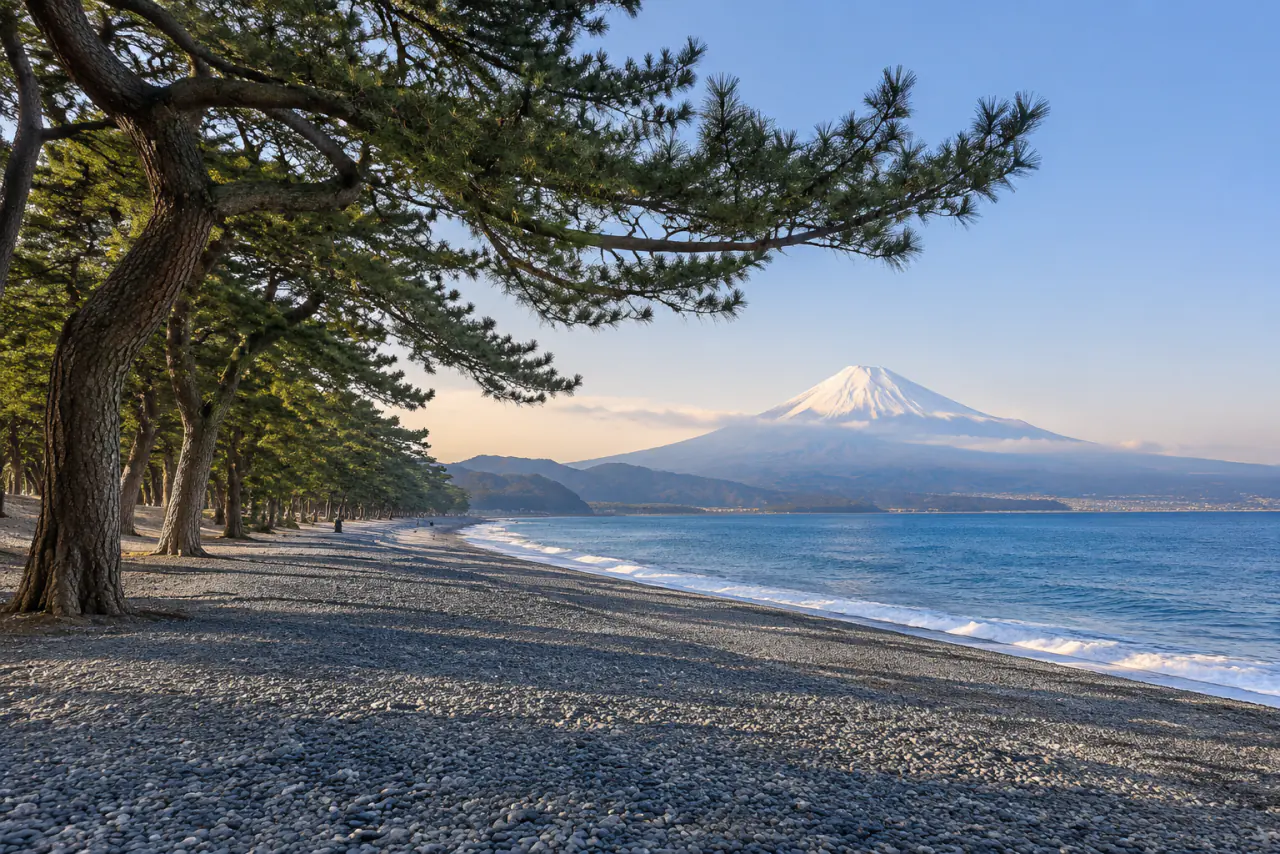
A seaside pine grove stretching about 7 km, with views of Mount Fuji across Suruga Bay. It has appeared in ukiyo-e prints and waka poetry since ancient times. In 2013, it was registered as a component of the Mount Fuji World Heritage Site. Walk from the pine grove's Kami no Michi wooden path to the shore, then visit the nearby museum to learn about the Hagoromo legend. About 25 minutes by bus from Shimizu Station.
Winter mornings offer the best chance of seeing Mount Fuji with a snow-covered summit. The coast is windy, so bring a windbreaker.
-
 2
Nihondaira Yume Terrace
日本平夢テラス
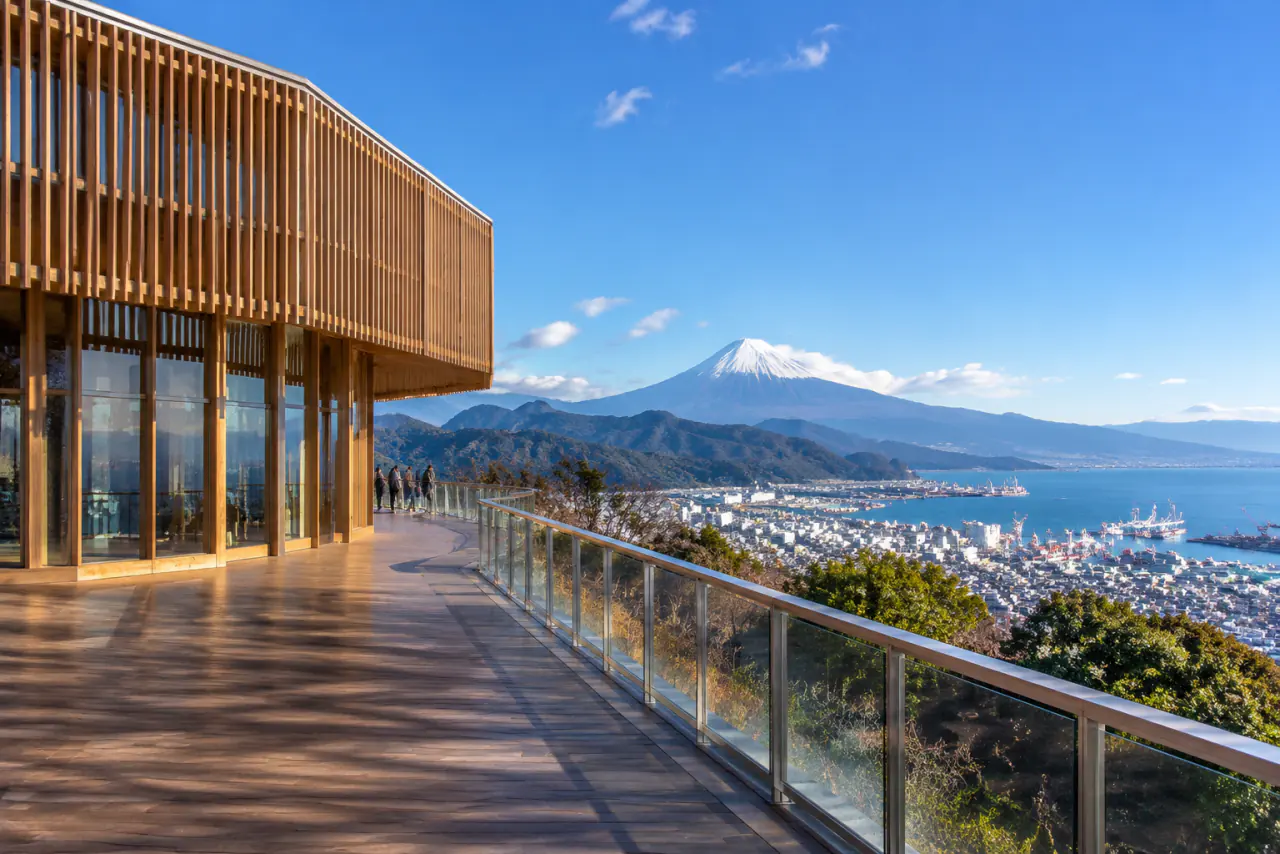
An observation facility at the summit of Nihondaira in Shizuoka City, designed by Kengo Kuma. A wooden lattice wraps around the octagonal building and its surrounding gallery, with views of Mount Fuji, Suruga Bay, and Shimizu Port. You can take the ropeway down to Kunozan Toshogu, the original burial place of Tokugawa Ieyasu. About 40 minutes by bus from Shizuoka Station.
The views are beautiful at sunset and at night, but the last bus runs relatively early. Check the schedule before you go.
-
 3
Fujisan Hongu Sengen Taisha
富士山本宮浅間大社
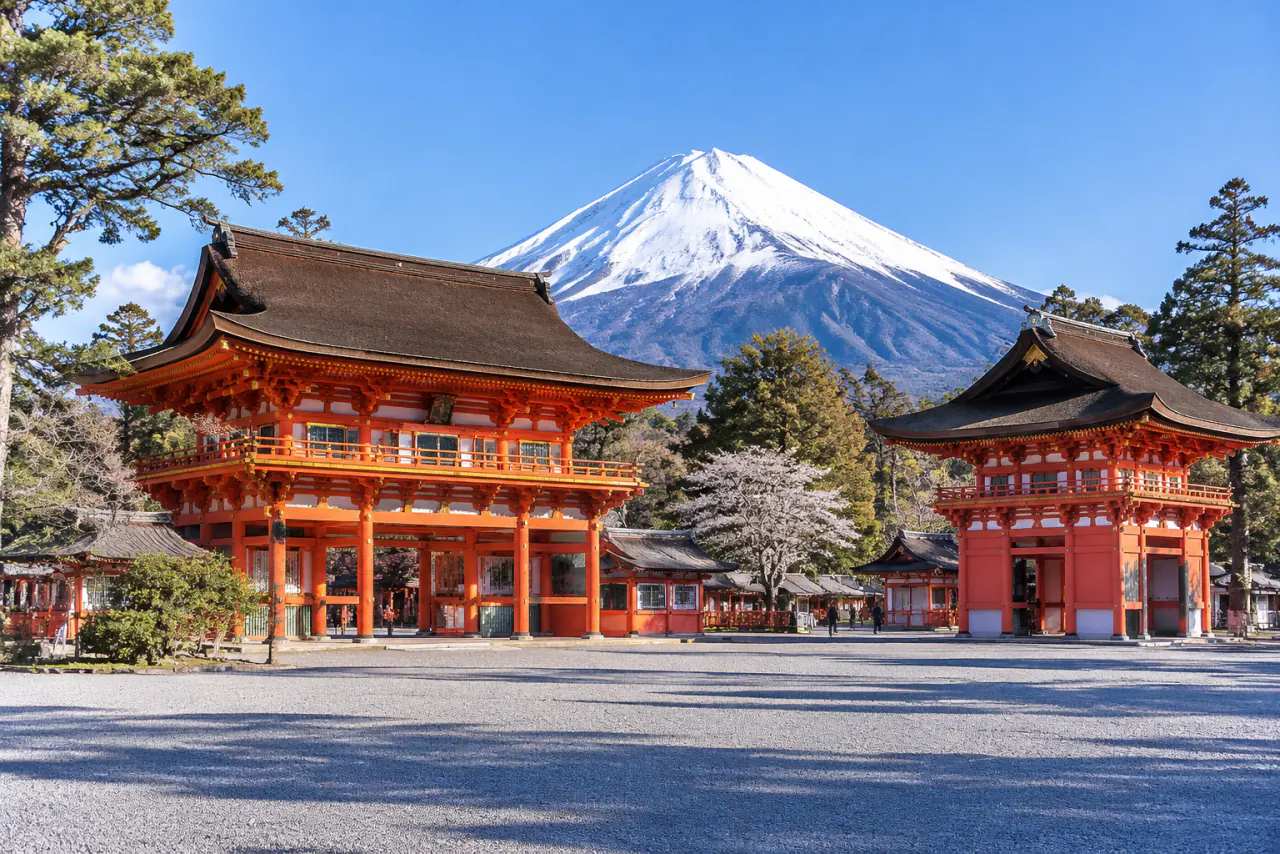
The head shrine of more than 1,000 Sengen shrines across Japan, dedicated to the deity of Mount Fuji. Everything above the eighth station of Mount Fuji legally belongs to the shrine. The main hall is an unusual two-story structure. The Wakutama Pond on the grounds is fed by a spring of snowmelt from Mount Fuji, clear enough to see the bottom. About a 10-minute walk from JR Fujinomiya Station.
Omiya Yokocho in front of the shrine serves Fujinomiya yakisoba, making it a convenient lunch stop.
-
 4
Shiraito Falls
白糸の滝
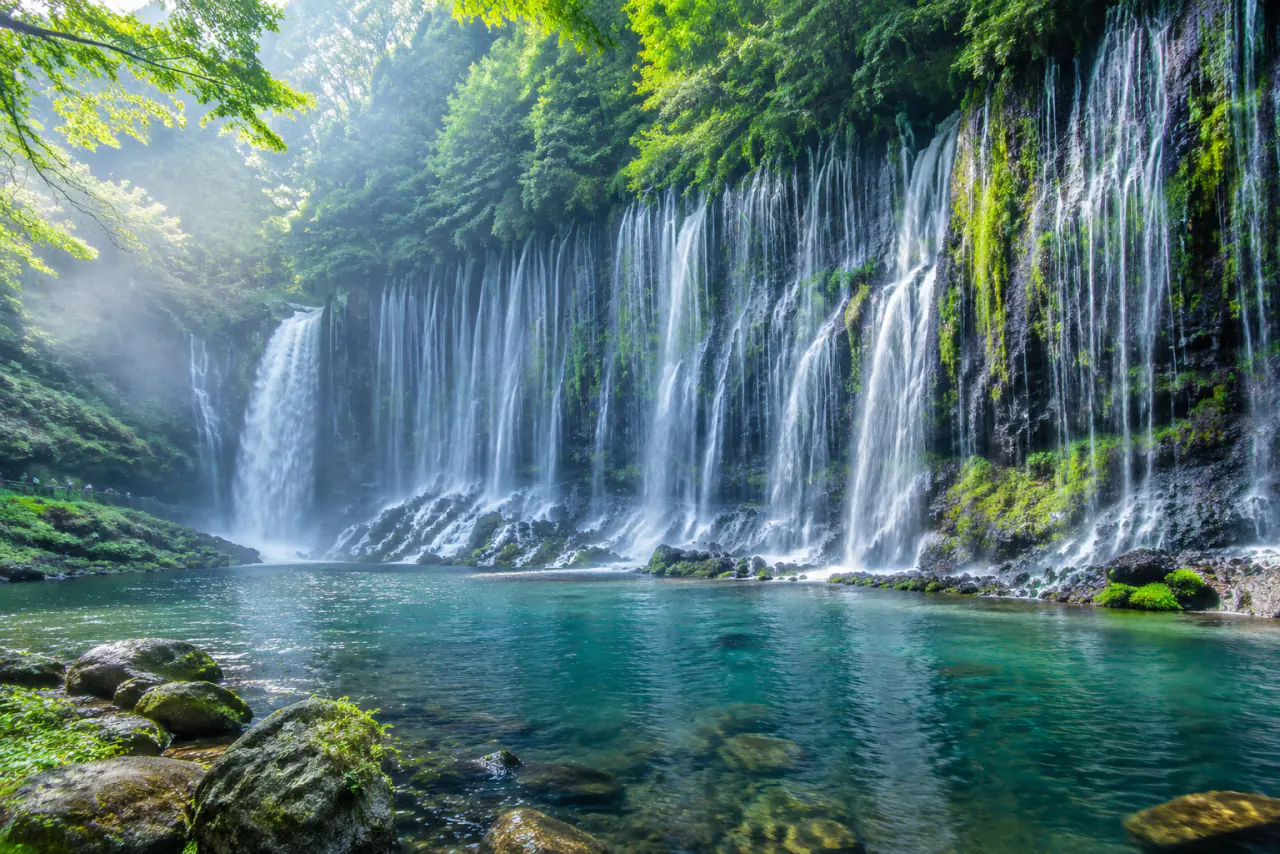
Snowmelt from Mount Fuji seeps through cracks in the rock to form a curved curtain of water about 150 meters wide, like countless white threads hanging over the moss. It is also part of the Mount Fuji World Heritage Site. Nearby Otodome Falls has a much heavier flow. About 30 minutes by bus from Fujinomiya Station. Pair it with Sengen Taisha for a half-day outing.
The trail has steps and is slippery after rain. It is considerably cooler here than in the city in summer.
-
 5
Mt. Fuji Fujinomiya Trail
富士山 富士宮ルート
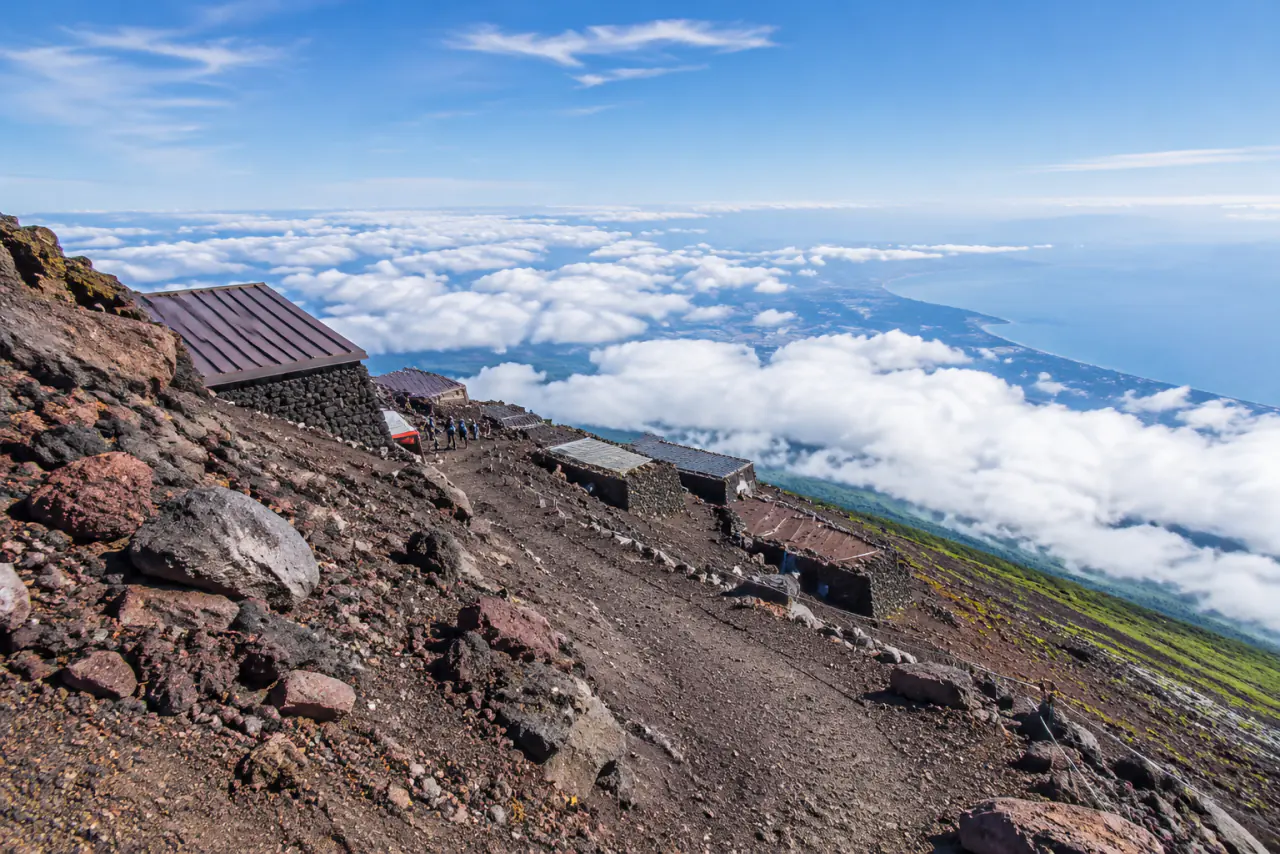
Starting at the Fujinomiya 5th Station, about 2,400 meters above sea level, this is the highest and shortest of the four trails to the summit, but it is also steeper. In summer, buses run to the 5th Station from Mishima and Shin-Fuji stations on the Shinkansen. The 2026 climbing season runs from July 10 to September 10. A mountain hut reservation is required to enter between 2 p.m. and 3 a.m.
Register in the Shizuoka Prefecture FUJI NAVI app, complete the learning test, and pay the fee first. Private cars are restricted on the road to the 5th Station in summer.
-
 6
Shuzenji Onsen
修善寺温泉
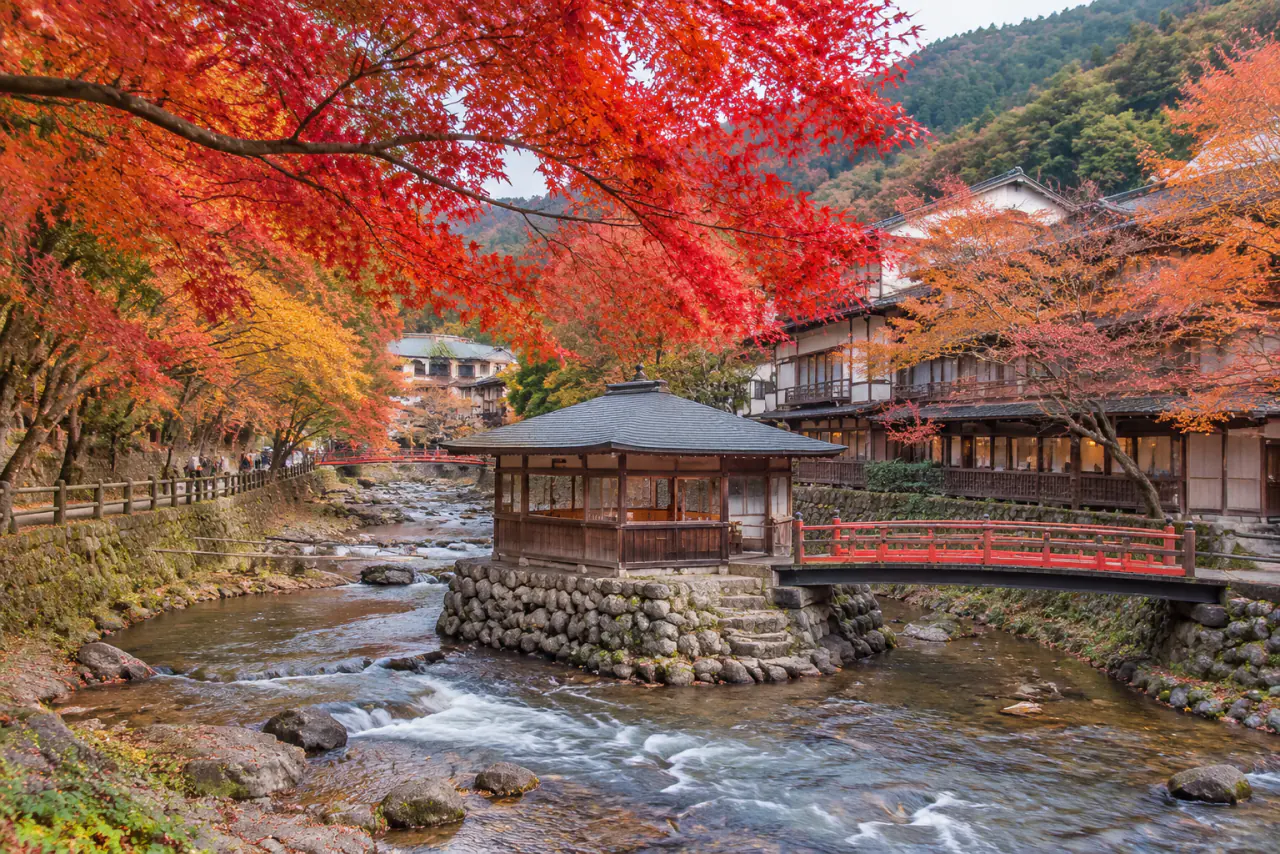
One of Izu's oldest hot-spring resorts, said to have been founded by Kukai. The hot-spring town follows the Katsura River. Tokko no Yu, in the middle of the river, is its landmark, and the nearby bamboo grove is a popular photo spot. Shuzenji Temple stands at the center of town. The area is busiest when the maples turn red in late November. From Mishima, take the Izu-Hakone Railway to Shuzenji Station, then a bus for about 10 minutes.
The bamboo grove is lit up in the evening, when it is quiet and less crowded. The town has free foot baths.
-
 7
Kawazu Cherry Blossoms
河津桜並木
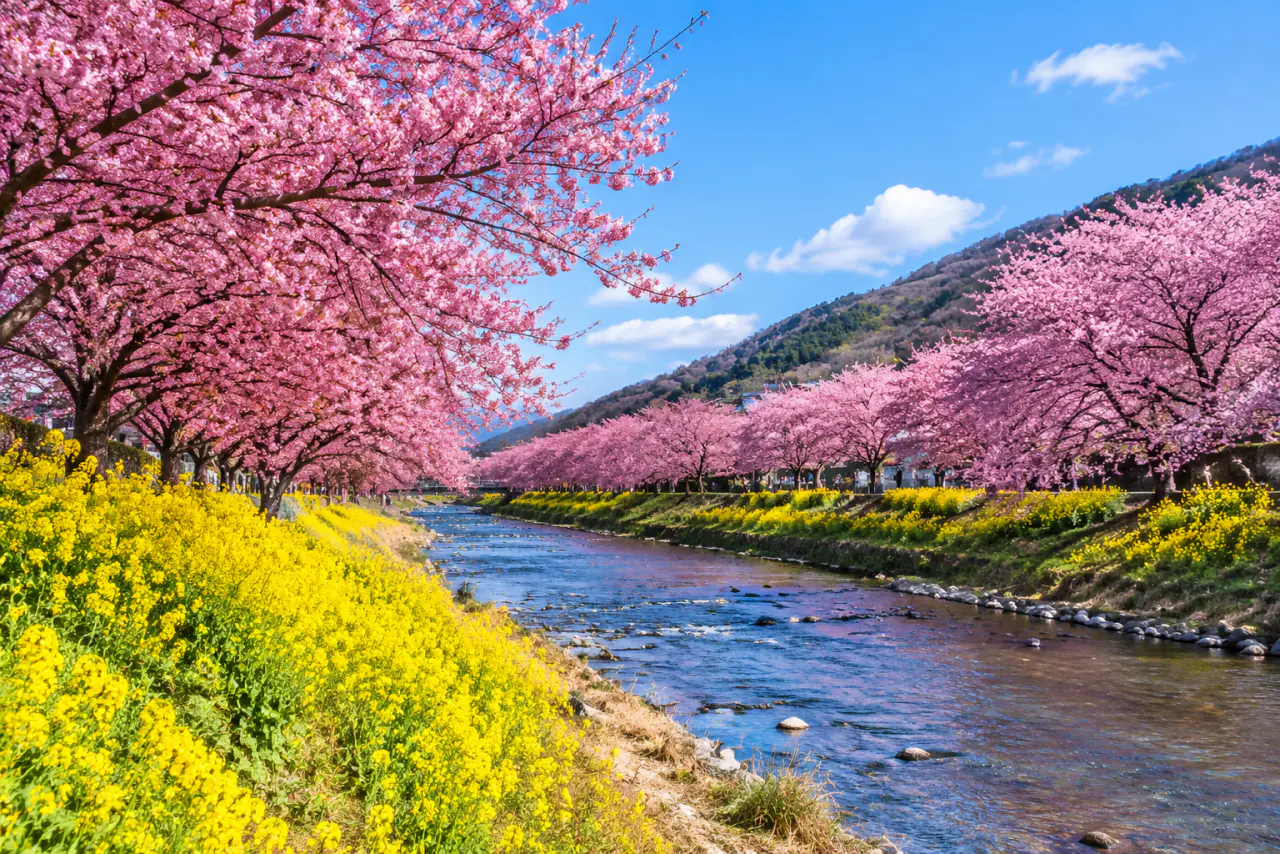
Kawazu cherry trees bloom early and have deeper-colored flowers than Somei Yoshino trees. They usually bloom from early February to early March. From Izu-Kyuko Kawazu Station, follow the Kawazu River. Cherry trees line both banks for several kilometers, with fields of yellow rapeseed flowers below. You can see the blossoms more than a month earlier than in Tokyo, making this a good choice for a late-winter or early-spring trip.
Weekend traffic is severe during the cherry blossom festival, so take the train. The Izu-Kyuko Line and the Odoriko limited express run from Atami and Ito.
-
 8
Atami Onsen
熱海温泉
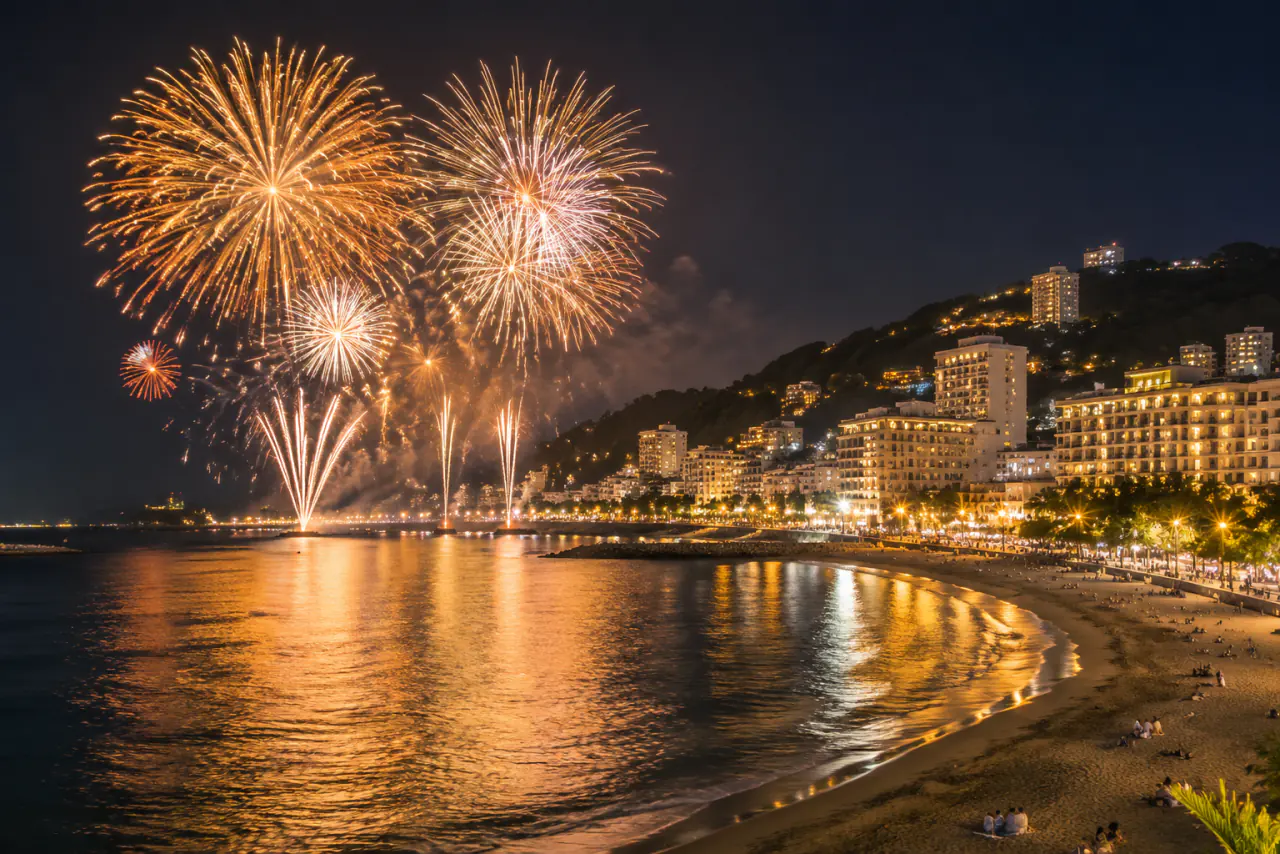
A seaside hot-spring town less than 1 hour from Tokyo by Shinkansen. The shopping street in front of the station sells dried fish and onsen manju. Walk downhill to the beach and seaside promenade. Many hotels have rooms facing Sagami Bay. Fireworks are held over the water many times a year, with the most events in summer. It is ideal for a relaxing overnight trip from Tokyo.
Atami is built on a slope. The route from the station to the coast is downhill, so take a bus or taxi back to save energy.
What to eat
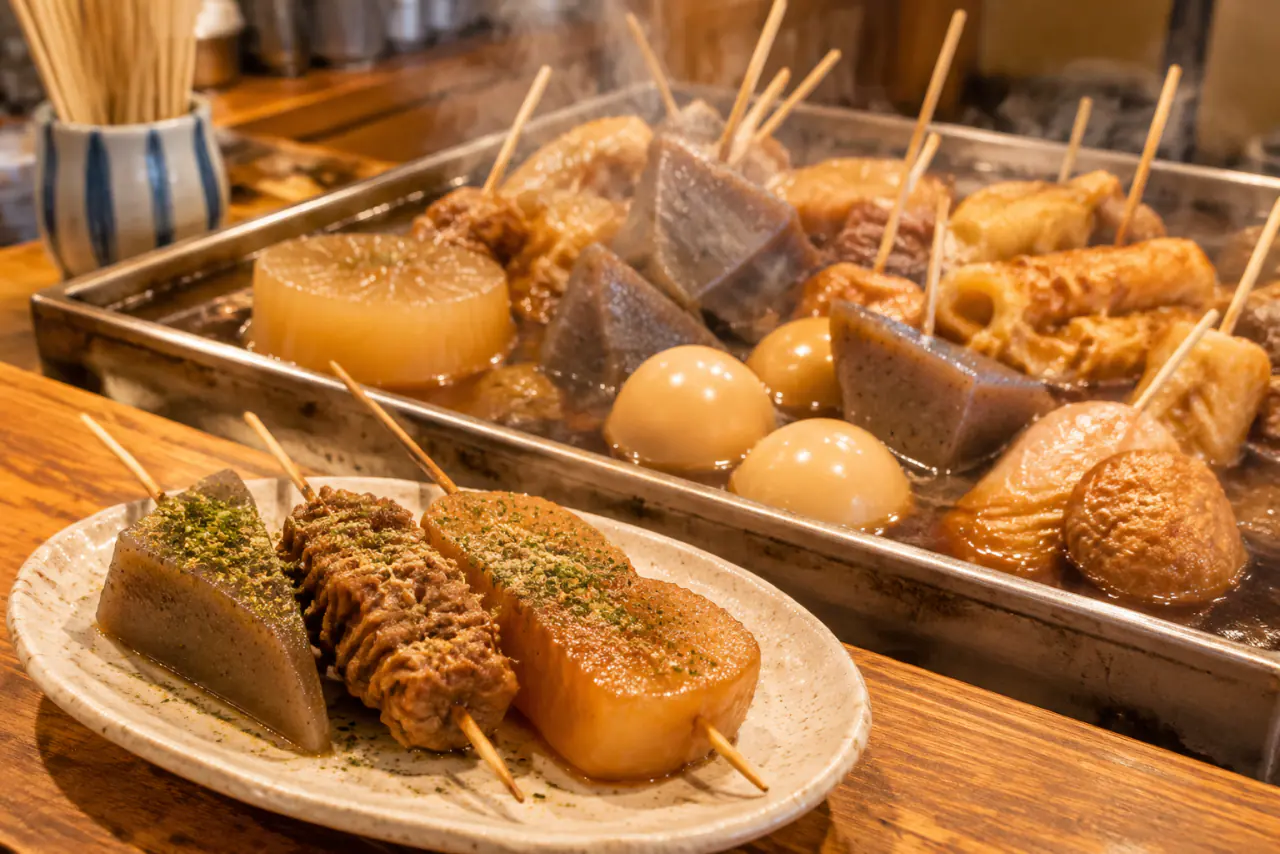
Shizuoka oden
The broth is a dark soy-based soup made with beef tendon. Ingredients are served on bamboo skewers and finished with aonori and dried fish powder. Be sure to try the black mackerel fish cake called kuro hanpen.
Oden shops around Aoba Yokocho near Shizuoka Station · About ¥100–200 per skewer
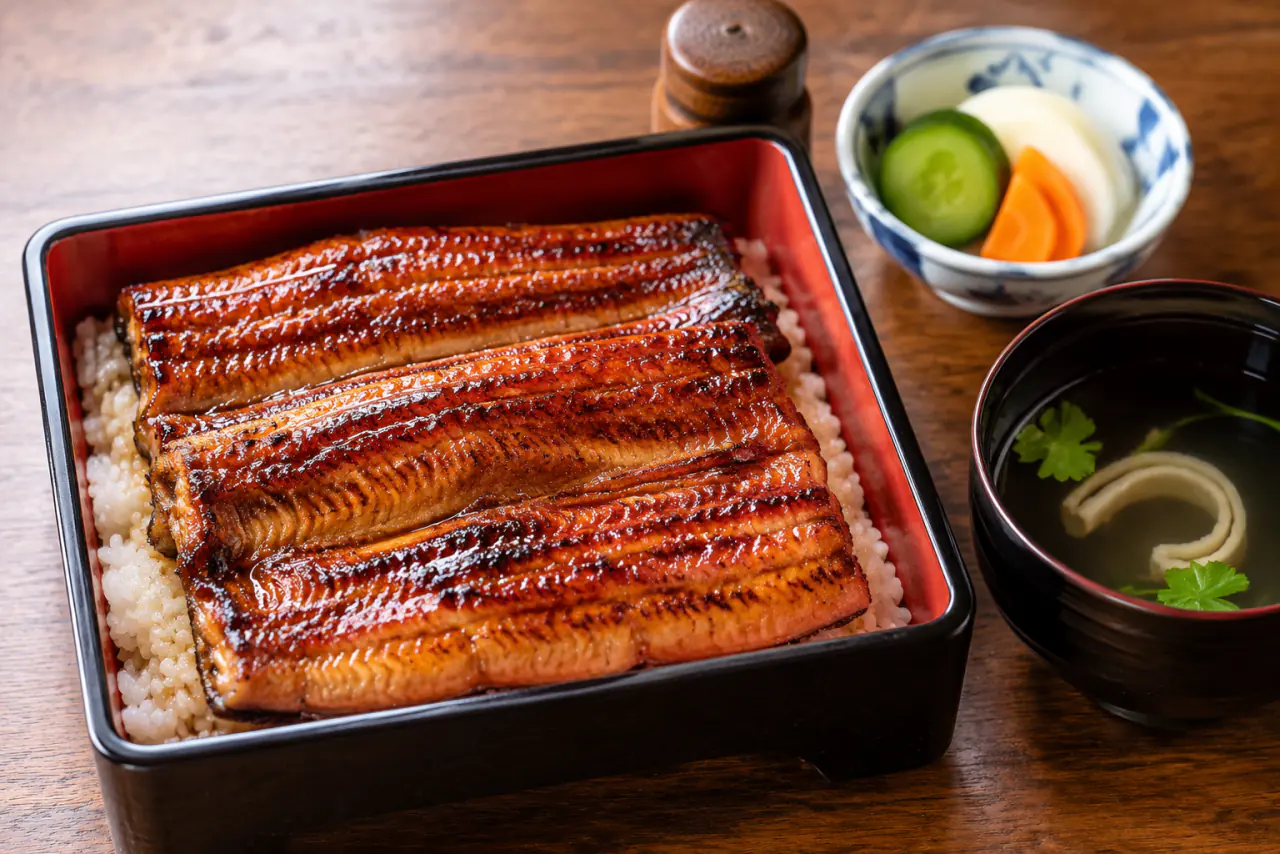
Hamamatsu eel rice
Lake Hamana is considered the birthplace of eel farming in Japan. The Kanto style steams the eel before grilling it, making the meat tender. The Kansai style grills it without steaming, giving the skin a crisper texture. Ask the restaurant which style it serves when ordering.
Eel restaurants around Hamamatsu Station and Lake Hamana · About ¥4,000–6,000 per person
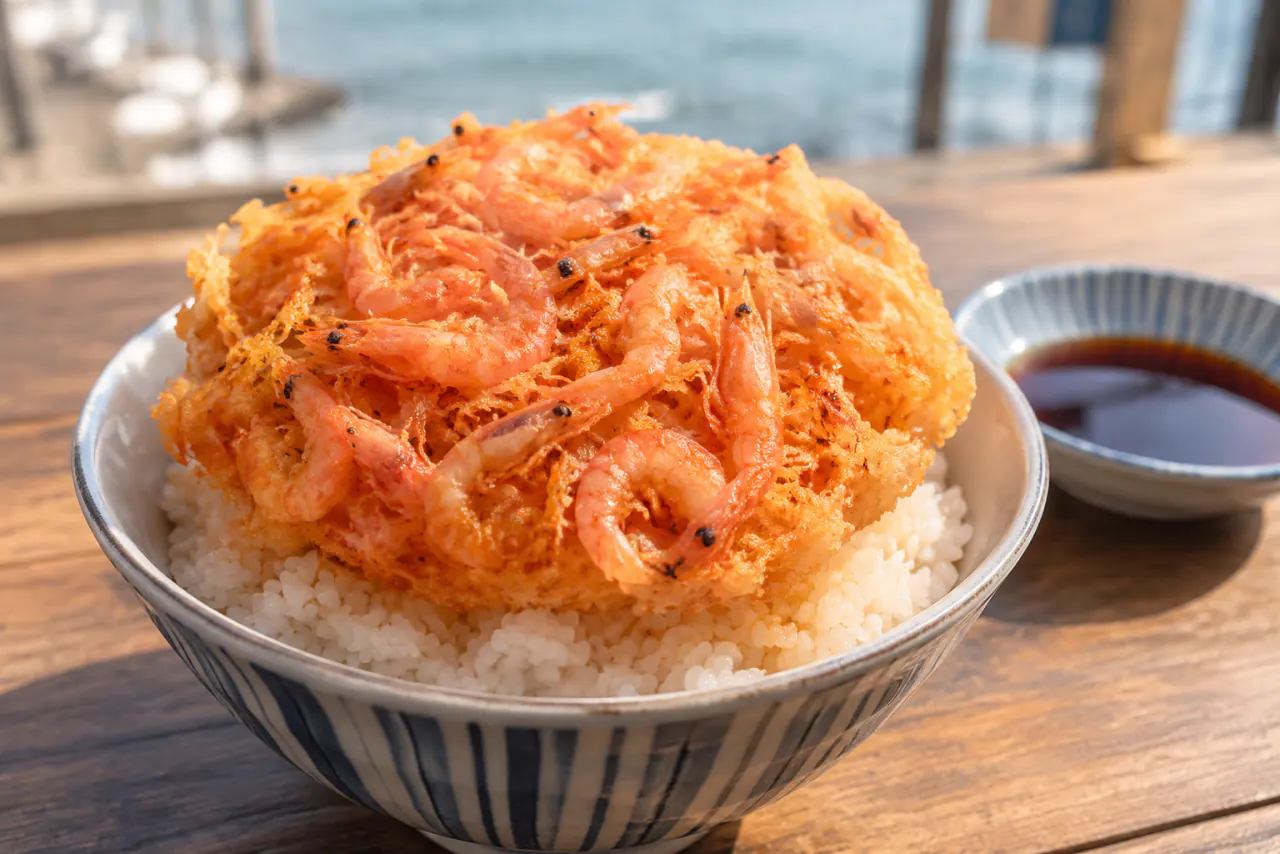
Sakura shrimp
These tiny pink shrimp are commercially caught only in Suruga Bay, with fishing seasons in spring and autumn. They are sweet raw and even better fried into kakiage fritters. Dried shrimp also make a good souvenir.
Fishermen's restaurants around Yui and Kanbara in Shimizu Ward, Shizuoka City
Shizuoka green tea
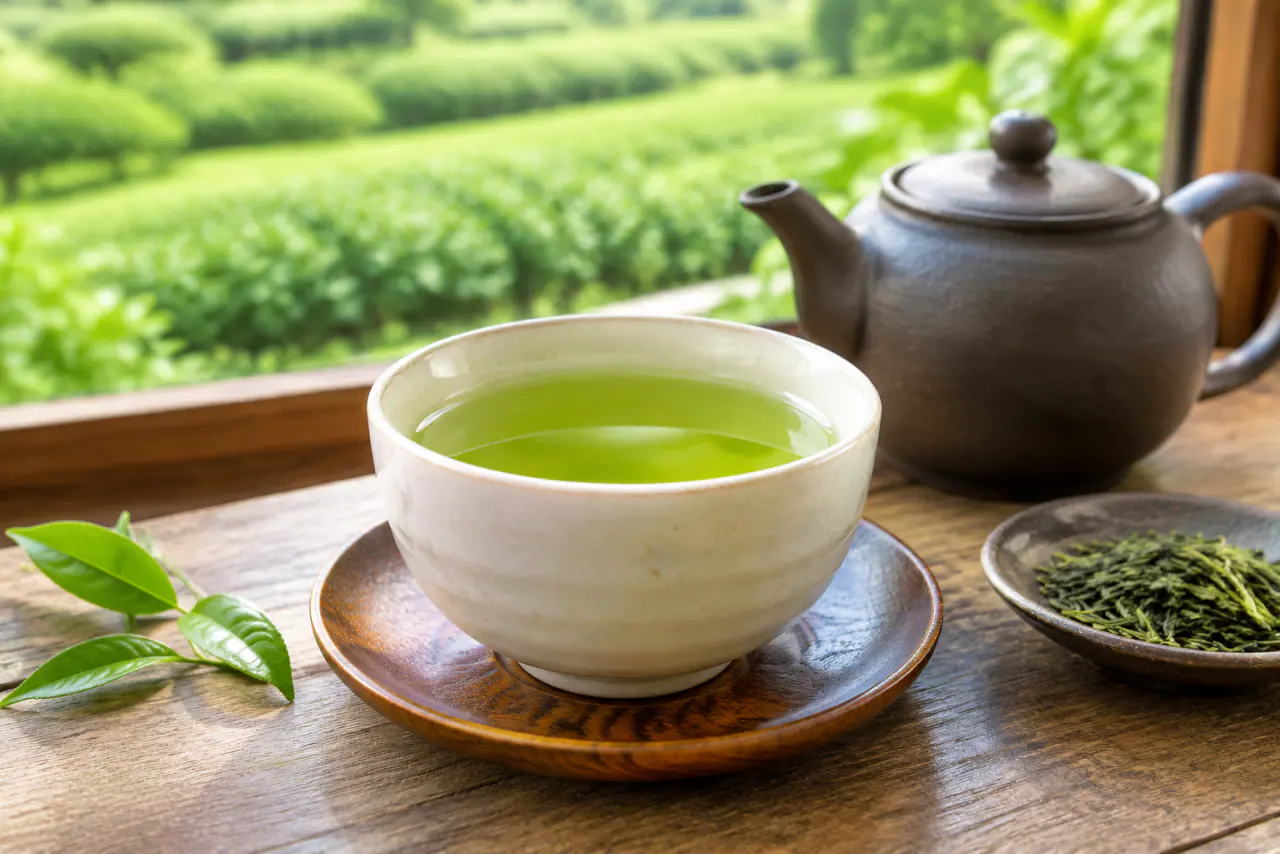
Shizuoka produces more tea than any other prefecture in Japan. The most common style is fukamushi-cha, steamed longer to produce a deep green color. New tea arrives in April–May, and you will find tea farm visits, matcha desserts, and tea souvenirs throughout the region.
Tea shops around Shizuoka Station, the Makinohara Plateau, and Nihondaira
Getting there · Where to stay
About 45 minutes to Atami and 1 hour–1 hour 20 minutes to Shizuoka by Tokaido Shinkansen
About 1 hour to Shizuoka and 30 minutes to Hamamatsu by Tokaido Shinkansen
About 35 minutes to Shuzenji by the Izu-Hakone Railway
Buses run to Shizuoka Station. International flight schedules change often, so check the official website before departure.
For Mount Fuji and Miho no Matsubara, stay near Shizuoka Station or Fujinomiya, both convenient for trains and buses. For hot springs, stay in Atami or Shuzenji. Atami is closest to Tokyo, while Shuzenji is quieter.
Know this before you go
- The Nozomi on the Tokaido Shinkansen does not stop at stations in Shizuoka Prefecture. Take the Hikari or Kodama instead.
- Visitors can buy the Mt. Fuji–Shizuoka Area Tourist Pass Mini. It is valid for 3 days and covers JR local trains and many buses in the prefecture, but not the Shinkansen.
- Mount Fuji is often hidden by clouds. Winter mornings offer the best chance of seeing it, while clouds usually build in the evening.
- Check whether your licence is valid for driving in Japan before renting a car. In Izu, you can rely on the Izu-Kyuko Line, Izu-Hakone Railway, and buses.