Cloudborne Travel
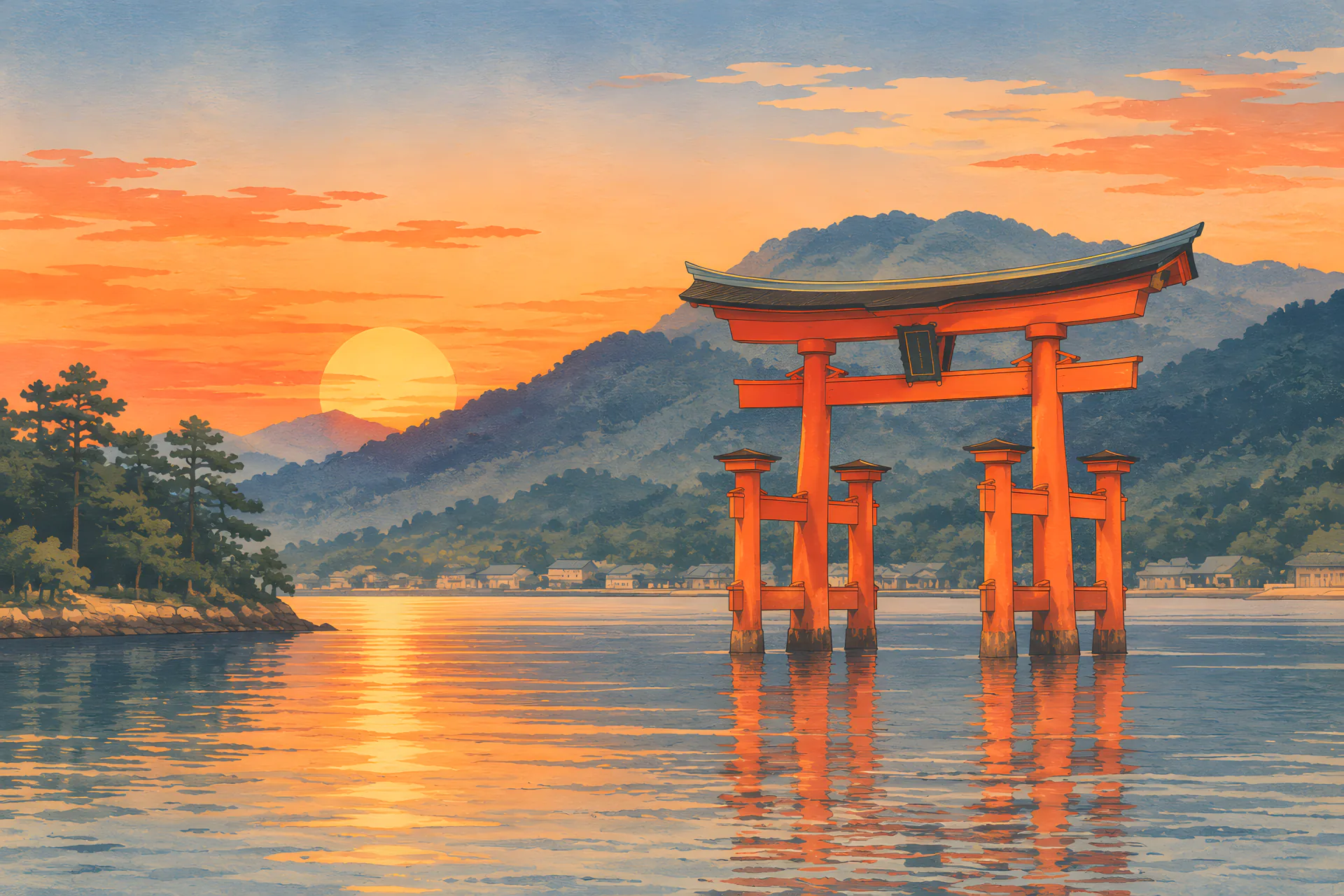
Hiroshima Prefecture lies on the Seto Inland Sea in western Honshu. Its two best-known sights are the Atomic Bomb Dome and Peace Memorial Park, and the great torii gate on the sea at Miyajima. Both are World Heritage sites, and each is less than 1 hour from Hiroshima Station. If this is your first trip to western Japan, Hiroshima is an easy place to start.
With two extra days, head east to the seaside historic districts of Onomichi and Tomonoura, or cycle from Onomichi across the islands to Shikoku on the Shimanami Kaido. The pace is slower than in Tokyo or Osaka, and the food is hearty: layered Hiroshima-style okonomiyaki cooked on a griddle, and oysters in winter, are worth a special trip.
Cherry blossoms are best in early April, and fall colors peak in mid- to late November. Winter is oyster season. Hotels fill up around August 6 because of the many memorial events.
Monthly weather
Based on HiroshimaBest time to visit Monthly precipitation (mm) Open-Meteo (ERA5), 1996–2025 average
| Month | Average high (°C) | Average low (°C) | Monthly precipitation (mm) | Days with 1 mm or more of precipitation |
|---|---|---|---|---|
| Jan | 9.9 | 2.1 | 55 | 9 |
| Feb | 11.2 | 2.6 | 68 | 10 |
| Mar(Good time to visit) | 15.3 | 5.5 | 112 | 12 |
| Apr(Good time to visit) | 20.5 | 10.2 | 126 | 11 |
| May(Good time to visit) | 25 | 15.4 | 148 | 10 |
| Jun | 27.8 | 20.3 | 214 | 15 |
| Jul | 31.5 | 24.7 | 244 | 16 |
| Aug | 33.1 | 25.5 | 178 | 14 |
| Sep(Good time to visit) | 29.5 | 21.5 | 190 | 13 |
| Oct(Good time to visit) | 24.1 | 14.9 | 108 | 9 |
| Nov(Good time to visit) | 18.2 | 9 | 76 | 8 |
| Dec | 12.2 | 4.1 | 63 | 10 |
Sights
-
 1
Itsukushima Shrine
嚴島神社
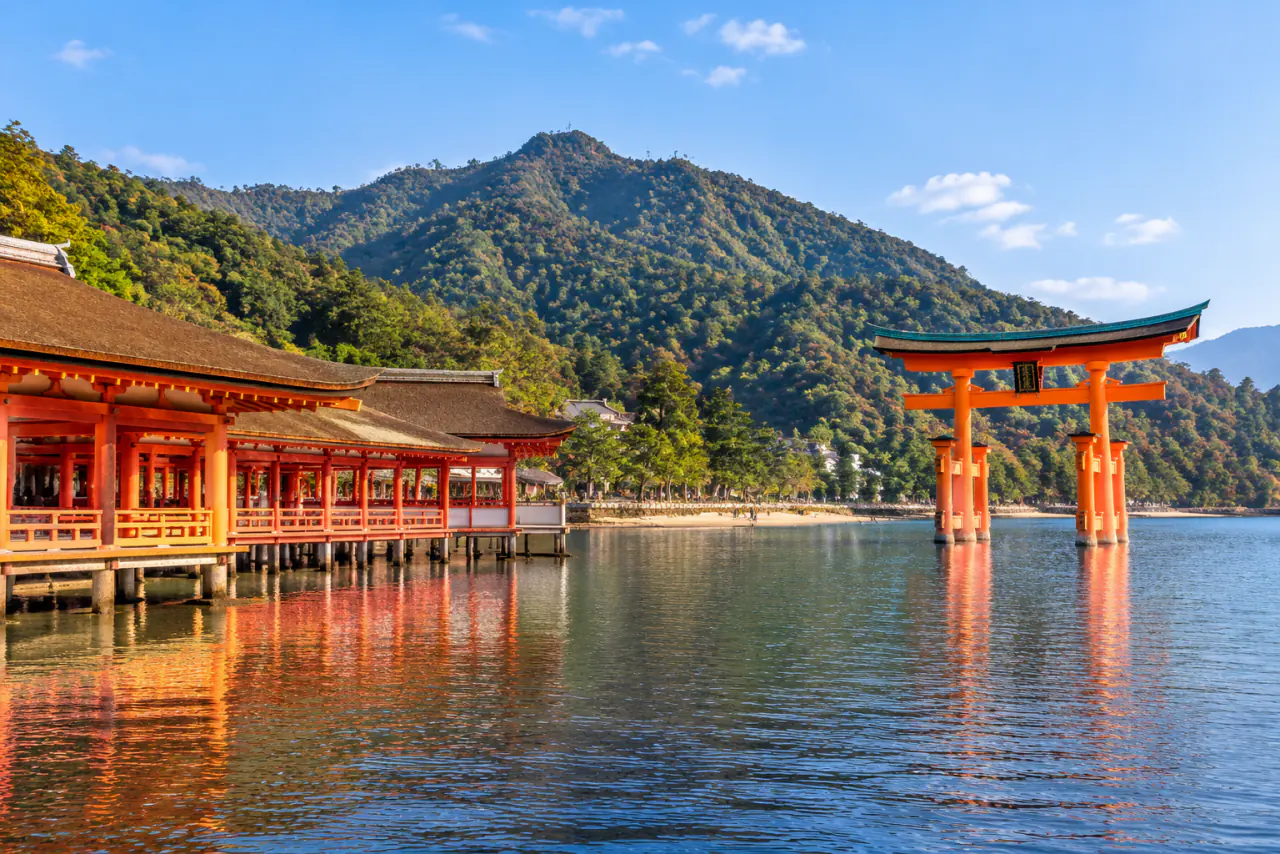
The great torii gate on the sea and vermilion corridors are Miyajima's signature sights. At high tide, the gate appears to float on the water; at low tide, you can walk to its base. Both views are worth seeing, so check the tide chart before you go. Walking around the shrine buildings takes about 30 minutes. Do not feed the deer on the island. They may snatch paper bags and maps.
The shrine is quietest after the day-trippers leave in the evening. The torii gate is lit up after dark, so staying overnight is well worth it.
-
 2
Mount Misen
弥山
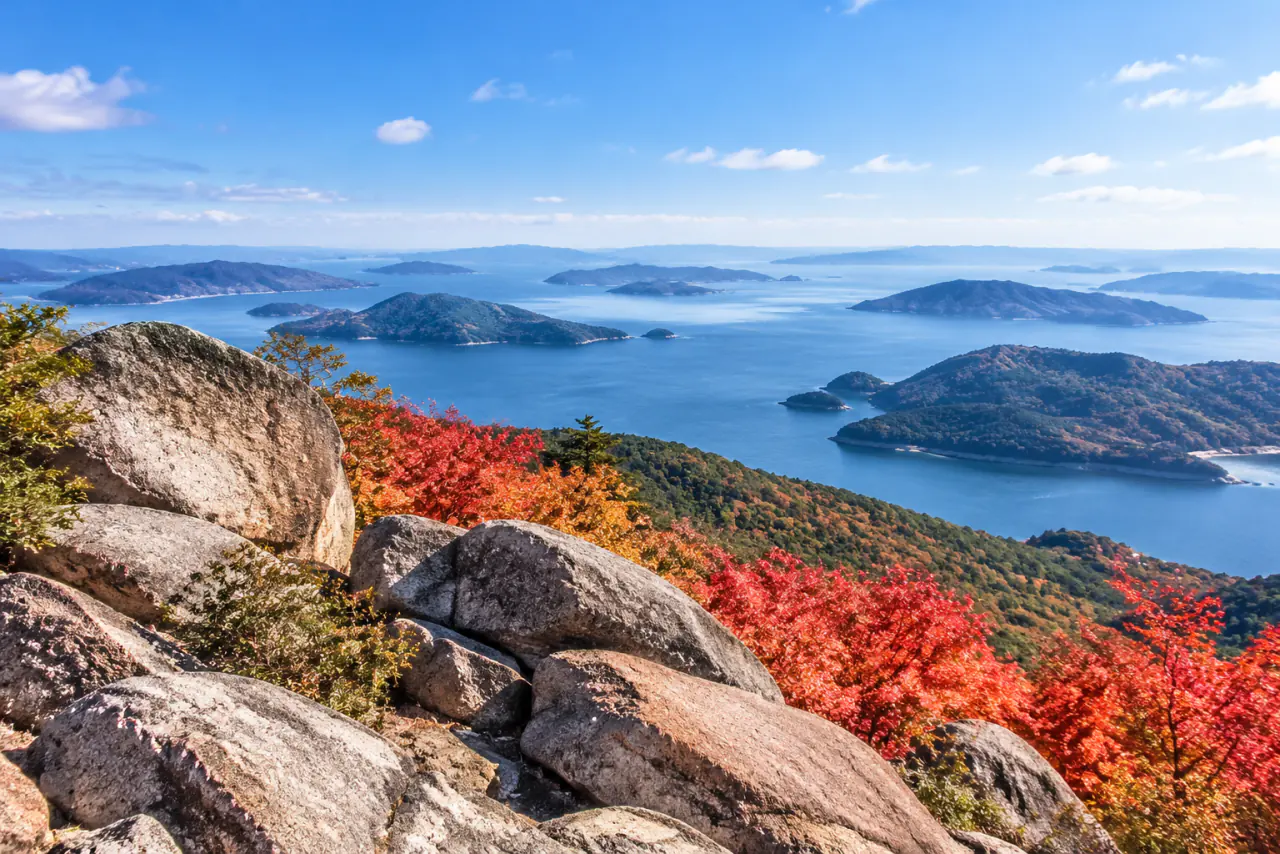
Miyajima's highest peak offers views of the many islands of the Seto Inland Sea. The easiest route is to take the Miyajima Ropeway to Shishiiwa Station, then walk about 30 minutes to the summit. If you are fit, you can hike up from Momijidani Park in about 1.5 hours. In fall, Momijidani turns bright red and is at its most beautiful.
The ropeway's last downhill departure is around 16:30, so do not linger too long at the summit. The trail has many steps; wear athletic shoes.
-
 3
Peace Memorial Park
平和記念公園
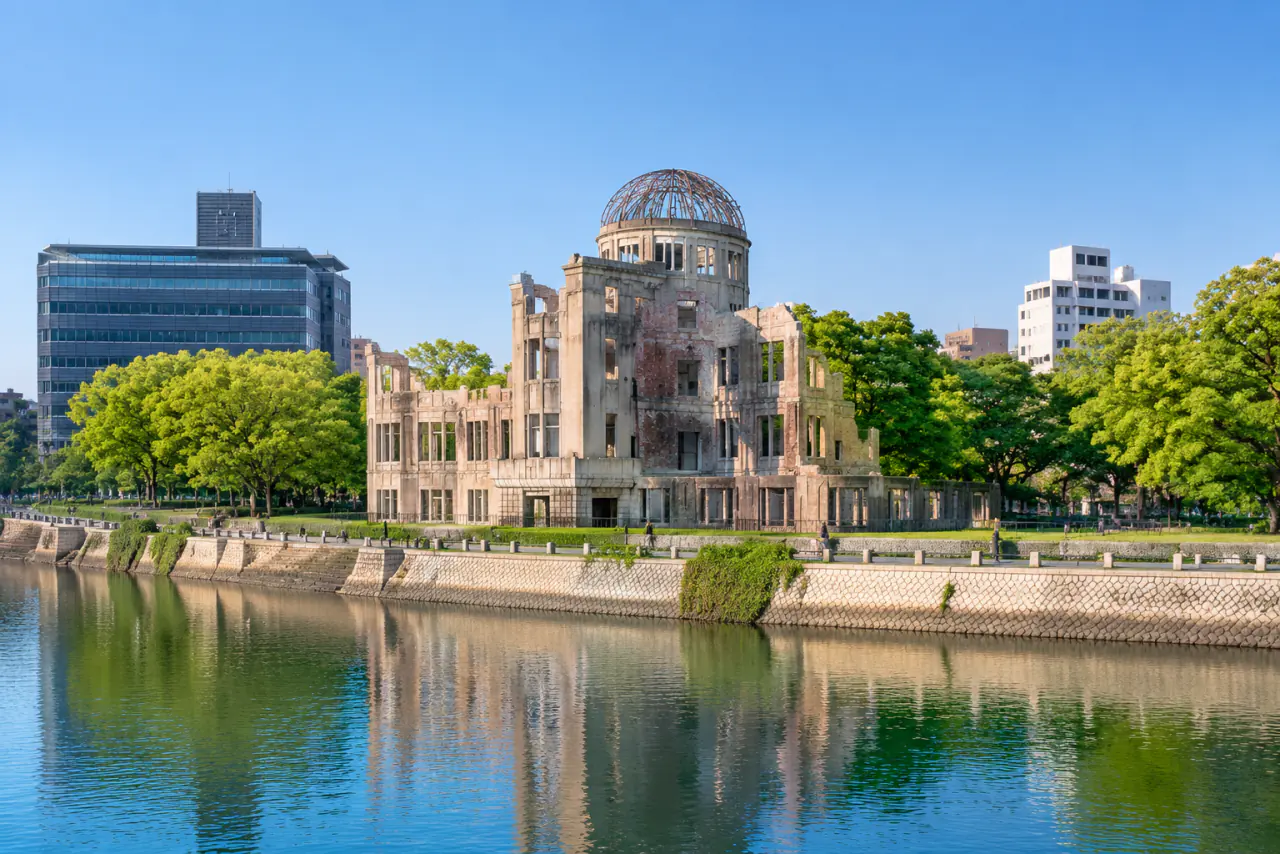
The Atomic Bomb Dome stands across the river much as it did after the 1945 bombing. The Peace Memorial Museum is at the south end of the park. Its exhibits are frank and difficult, so allow plenty of time to take them in. From Hiroshima Station, take the streetcar to Atomic Bomb Dome-mae Station; the ride takes about 15 minutes. The park and dome are free.
From 7:30–8:30 in the morning, the museum admits only visitors with online reservation tickets, so it is much less crowded.
-
 4
Shukkeien Garden
縮景園
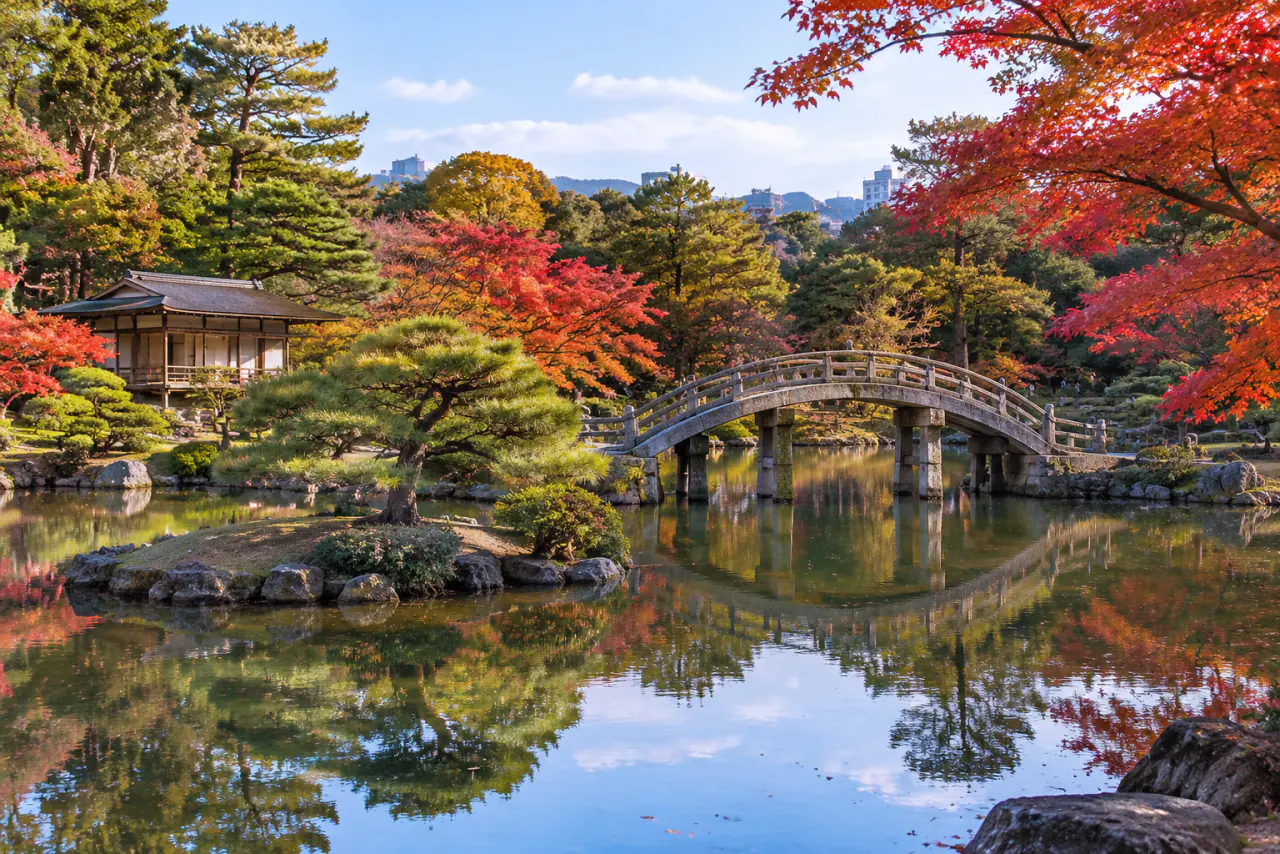
This strolling garden was built for the lords of Hiroshima. It is about a 15-minute walk from Hiroshima Station. Though compact, it is finely designed, and a walk around the pond takes about 40 minutes. Cherry blossoms in spring and fall colors in late November are the highlights. The garden was destroyed in the bombing and has been gradually restored since the war.
-
 5
Onomichi slopes and Senko-ji
尾道・千光寺 · Onomichi & Senko-ji
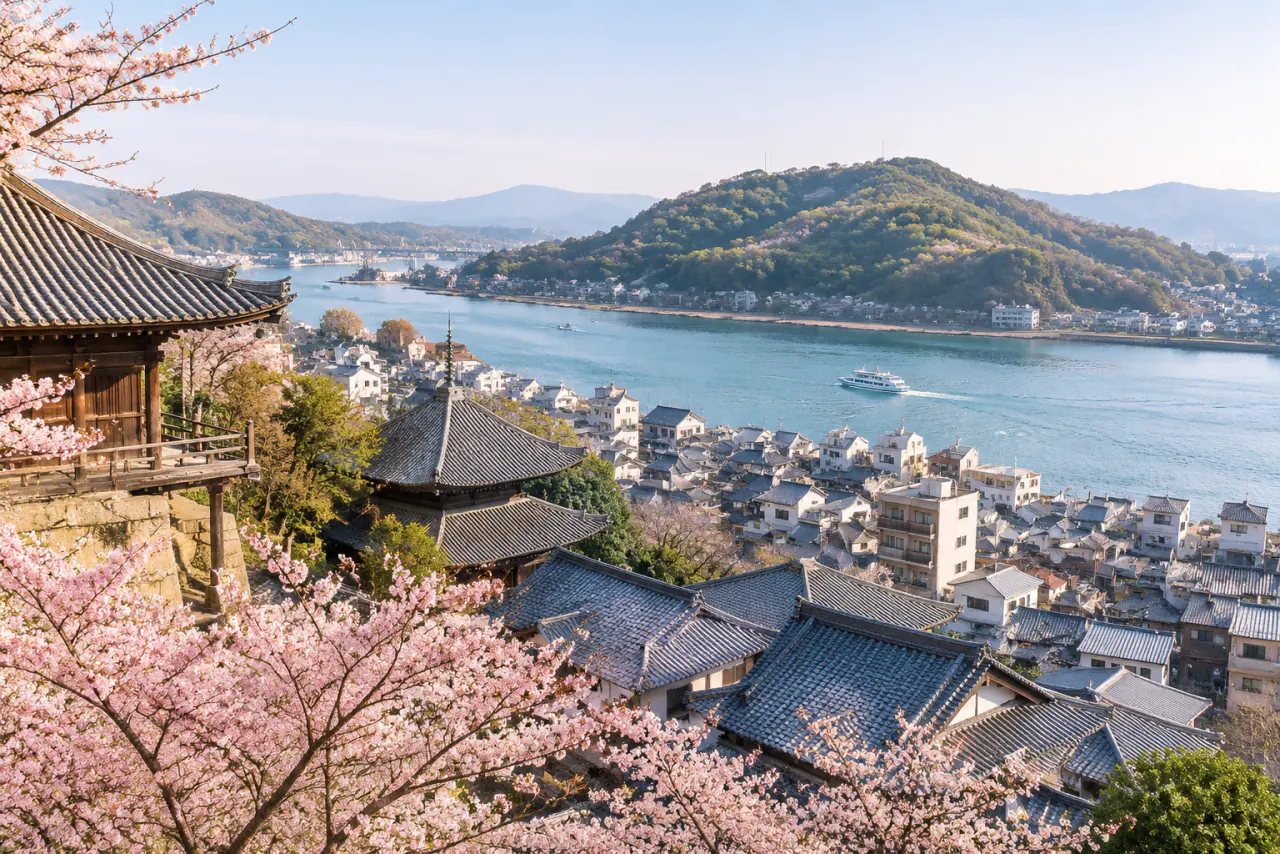
This port town is packed with temples and old houses on the hillsides. Take the ropeway up to Senko-ji Park for views of the Onomichi Channel, then walk downhill along stone steps and lanes where cats roam. Onomichi is also the starting point for the Shimanami Kaido. Stay the night before and set out early the next morning for an easy start.
The slopes are all steps, so do not take your luggage uphill. Leave your bags at Onomichi Station first.
-
 6
Kosan-ji Temple and Miraishin no Oka
耕三寺・未来心の丘 · Kosan-ji Temple
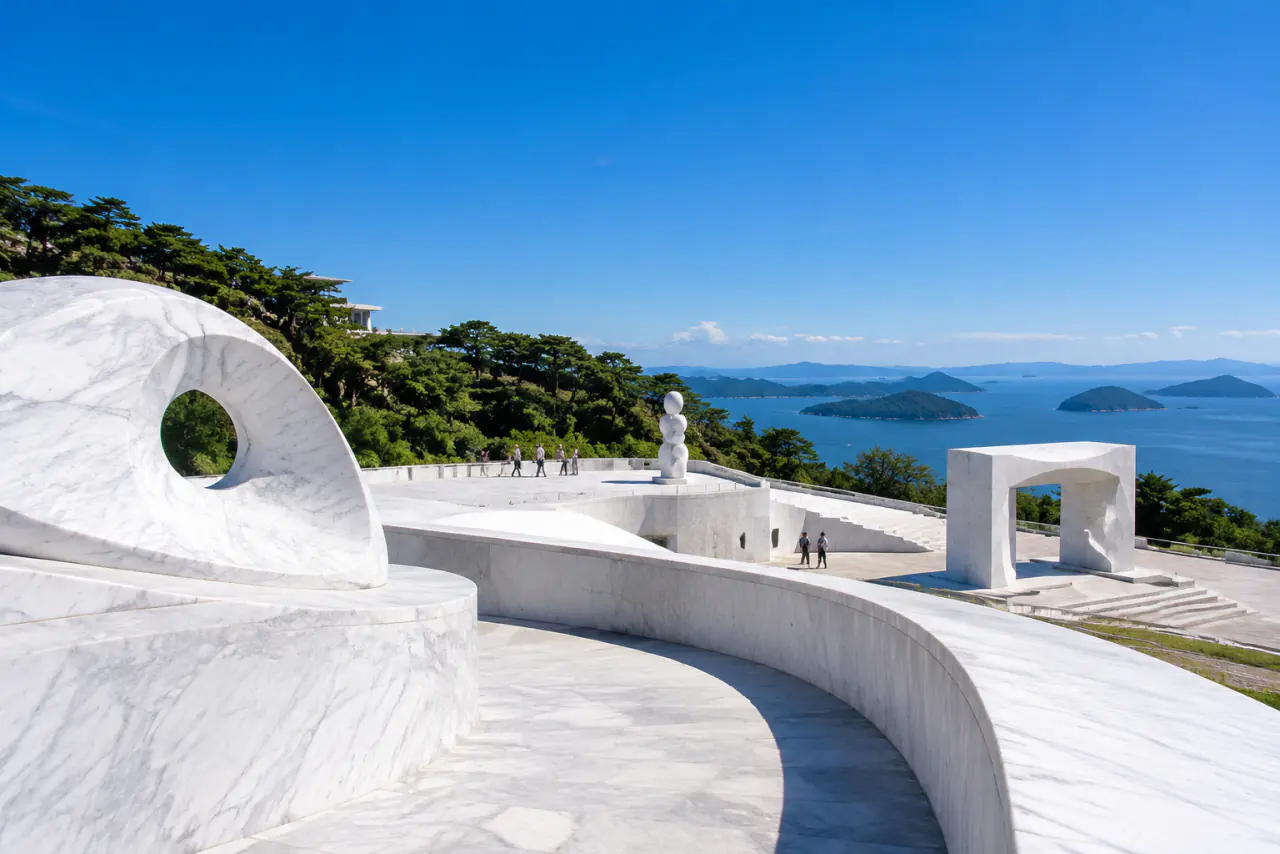
This unusual temple on Ikuchijima was built by an industrialist in memory of his mother. Its vivid buildings imitate famous structures from Nikko, Kyoto, and elsewhere. Behind the temple, Miraishin no Oka is a large collection of white marble sculptures that look striking under a blue sky. Come by boat from Onomichi or cycle over on the Shimanami Kaido. On the way, explore Setoda's old shopping street and try a lemon dessert.
-
 7
Okunoshima (Rabbit Island)
大久野島 · Okunoshima
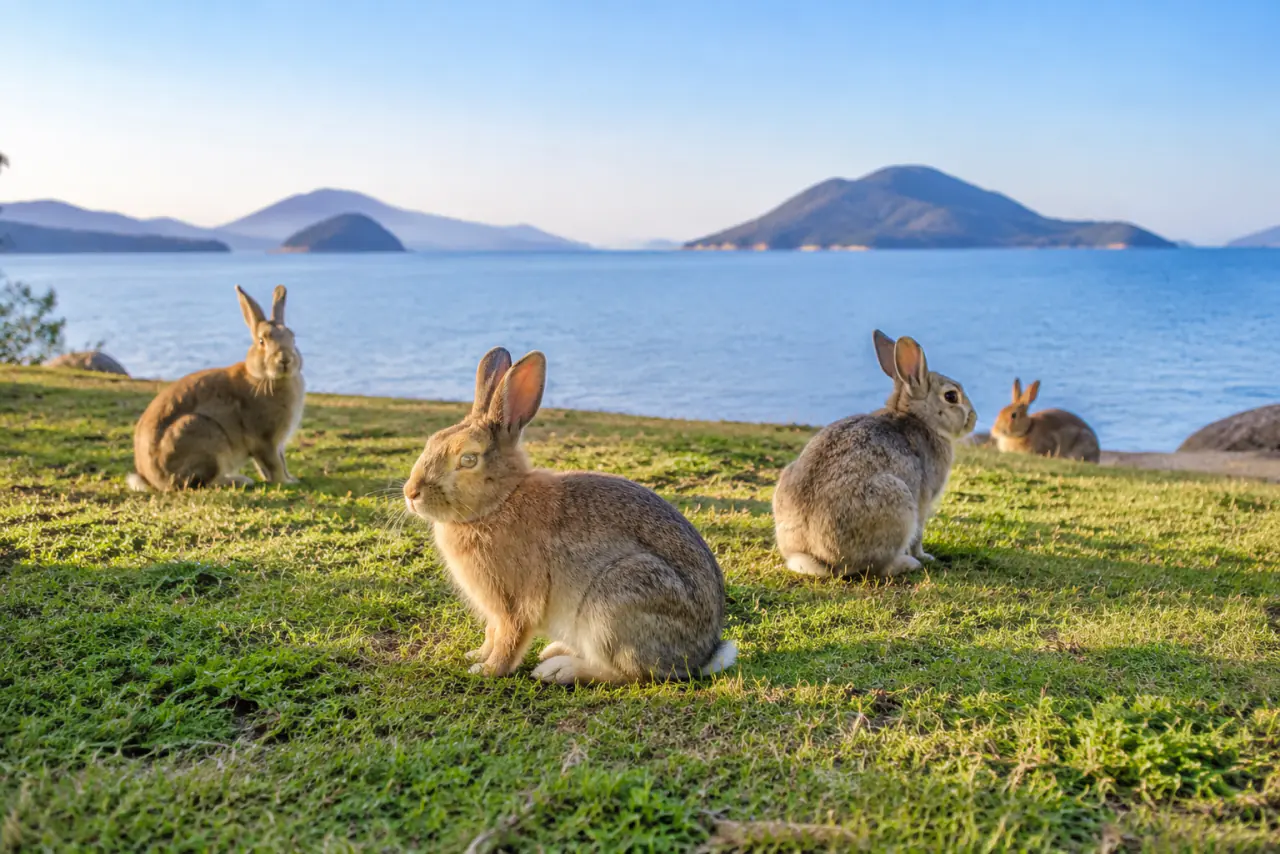
Hundreds of wild rabbits roam this island. The ferry from the pier beside JR Tadanoumi Station takes about 15 minutes. During World War II, the island secretly produced poison gas; ruins and a poison gas museum remain. The rabbit population has fallen noticeably in recent years. Do not hold or chase the rabbits. Put food on the ground and take away anything they do not finish.
The island has only one resort hotel and limited supplies. Bring water and rabbit food before you leave.
-
 8
Tomonoura
鞆の浦
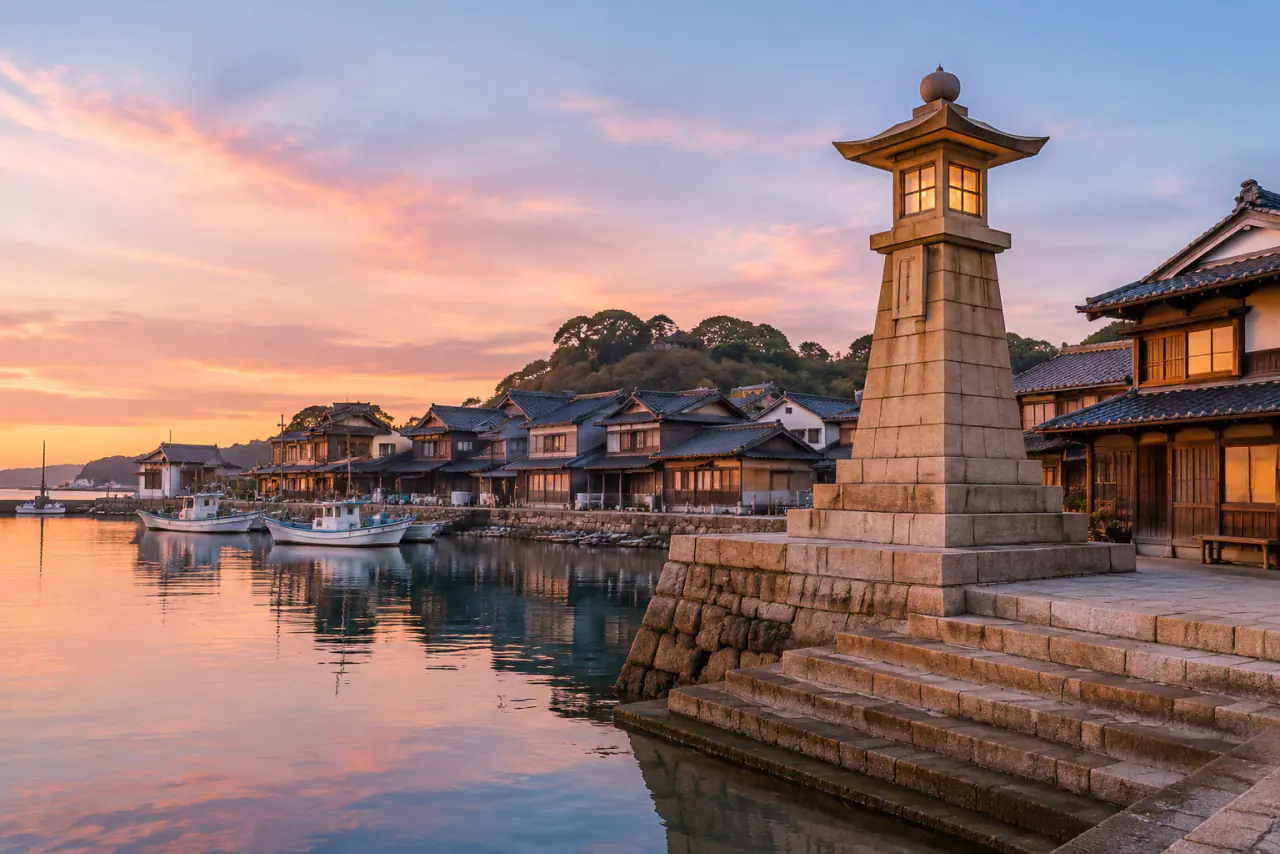
This old port town on the Seto Inland Sea still has stone night lanterns and a stepped pier much as they appeared in the Edo period. It also helped inspire Hayao Miyazaki's Ponyo. The bus from Fukuyama Station takes about 30 minutes. Half a day is ideal, and you can take a ferry for a few minutes to nearby Sensui Island.
What to eat
Hiroshima-style okonomiyaki
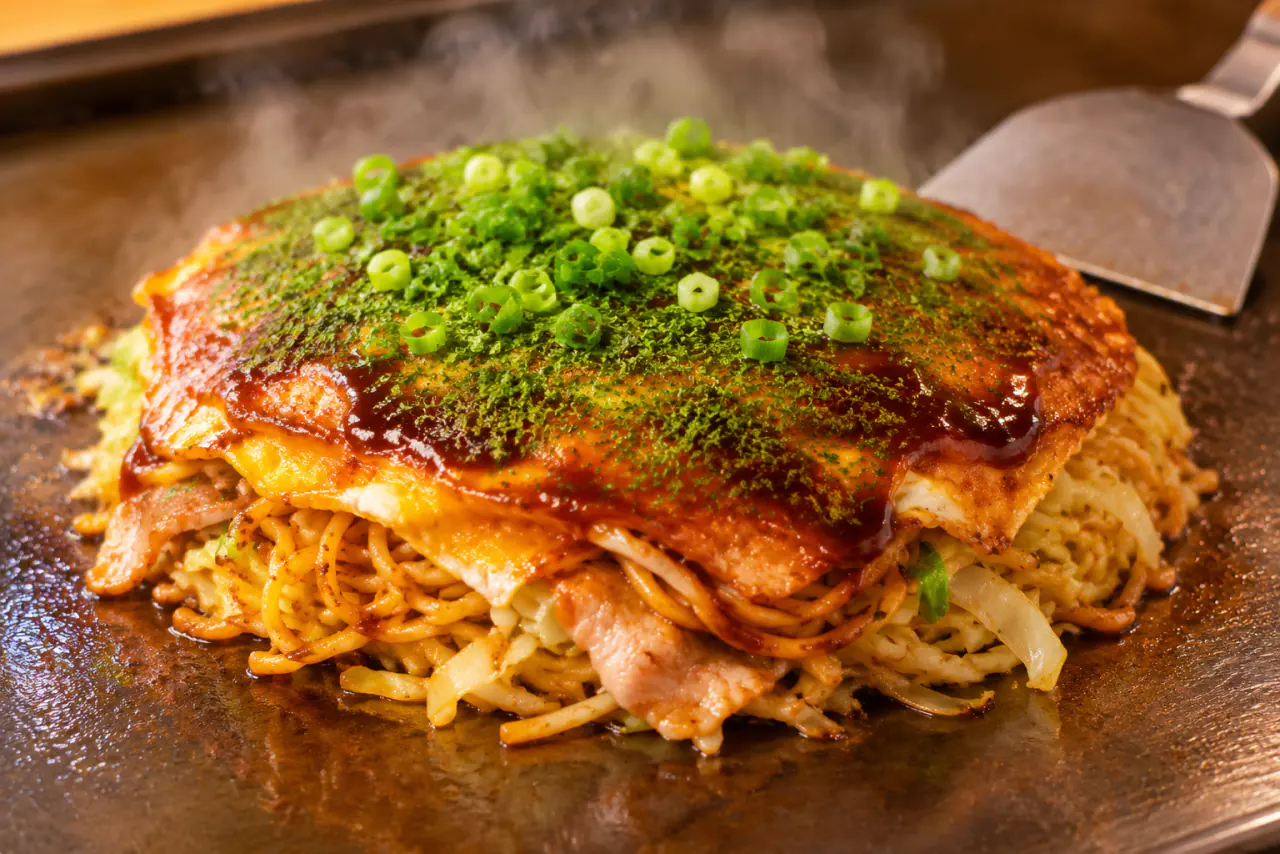
The biggest difference from Osaka-style okonomiyaki is the layering. A thin crepe-like batter is topped with plenty of cabbage, bean sprouts, and pork, followed by yakisoba and an egg. Watch the cook work at the griddle and eat it straight from the hot plate with a small spatula for the classic experience.
Restaurants are concentrated in the food floors in and around Hiroshima Station and around Okonomimura downtown · About ¥1,000–1,600 per person
Hiroshima oysters
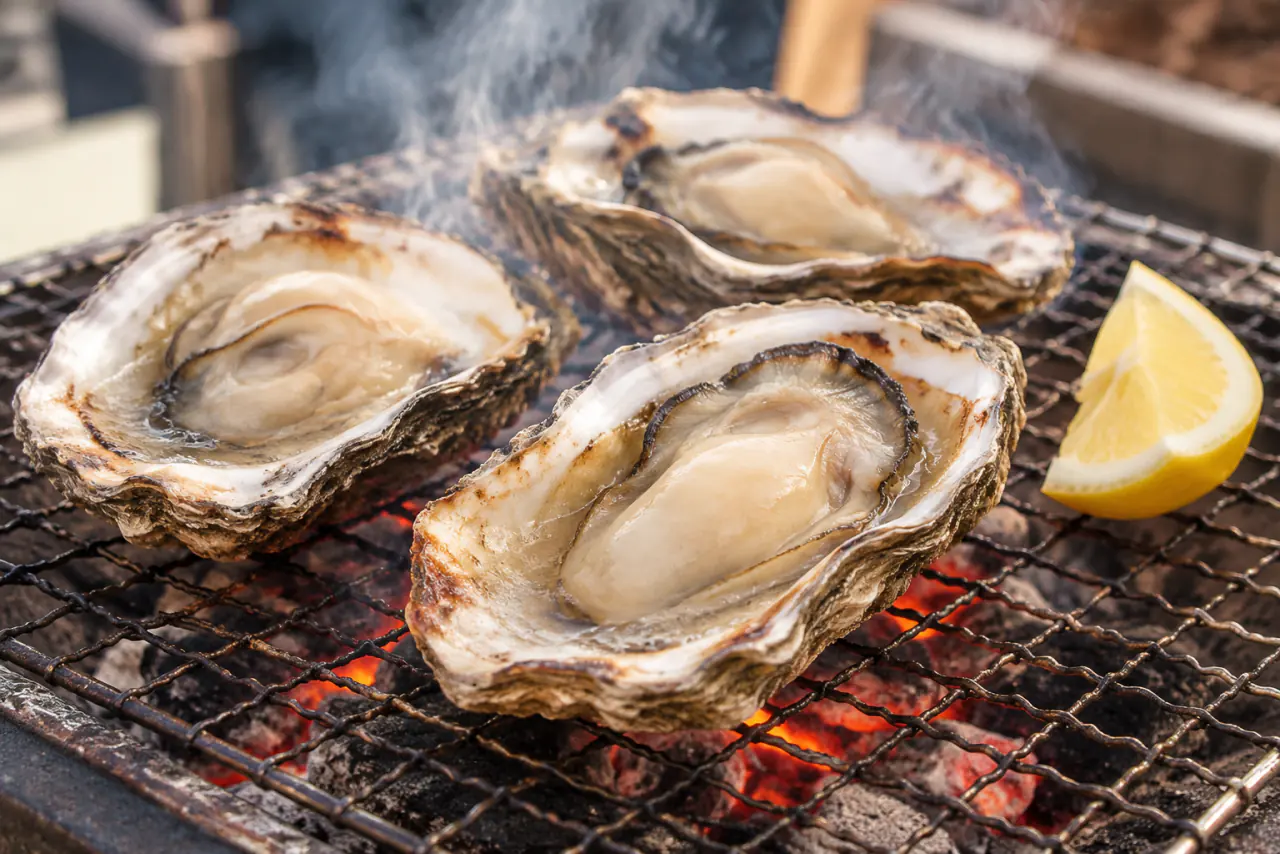
Hiroshima is Japan's top oyster-producing prefecture, and the oysters are plumpest from November to February of the following year. Miyajima's Omotesando Shopping Street has freshly grilled oysters, as well as fried oysters and oyster rice. If you have a sensitive stomach, go easy on raw oysters and choose grilled or fried instead.
Omotesando Shopping Street on Miyajima and izakayas in Hiroshima
Anago meshi
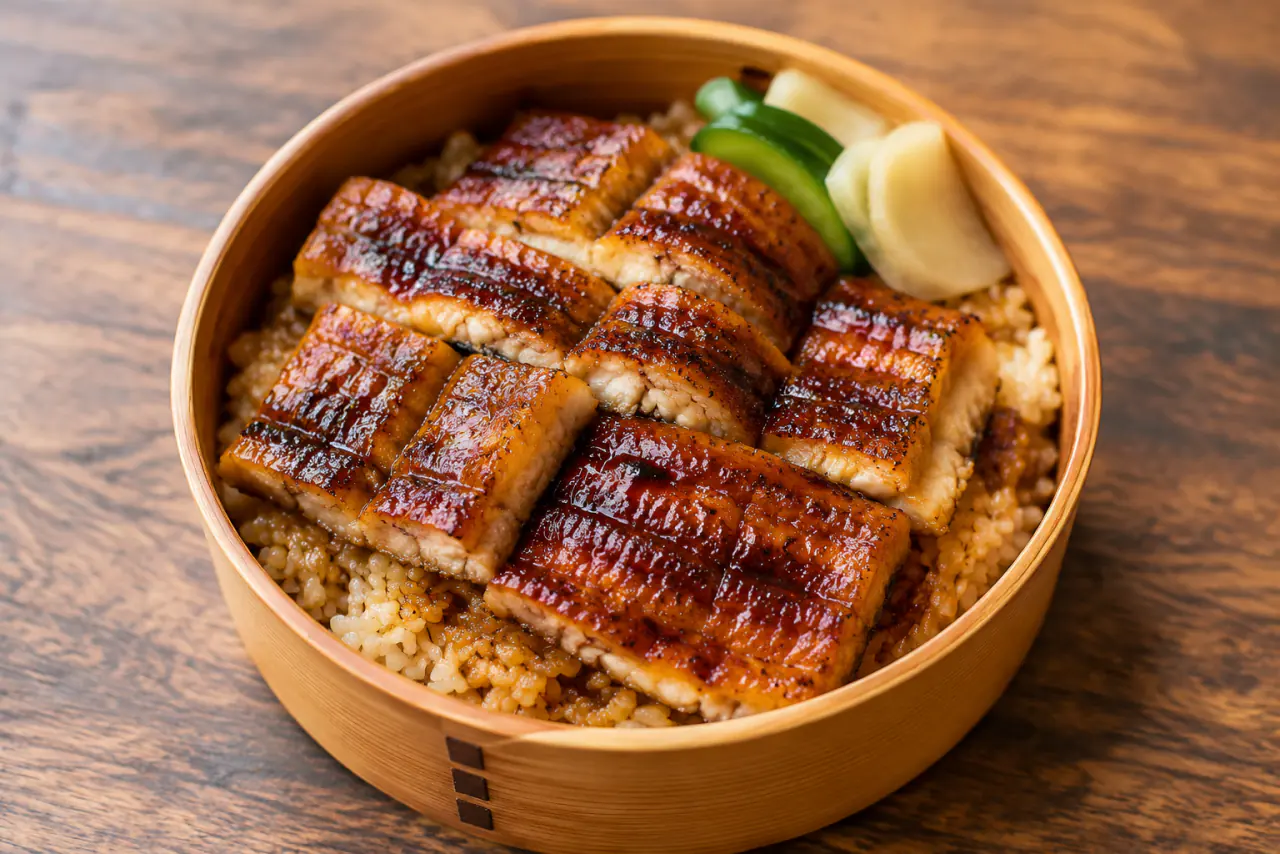
A Miyajima specialty: grilled conger eel with a lightly charred aroma over rice seasoned with sauce. It is milder than eel rice and still tastes good cold. Many people buy a bento near Miyajimaguchi and eat it on the ferry.
Near the Miyajimaguchi ferry terminal and on Miyajima · About ¥2,000–3,500 per person
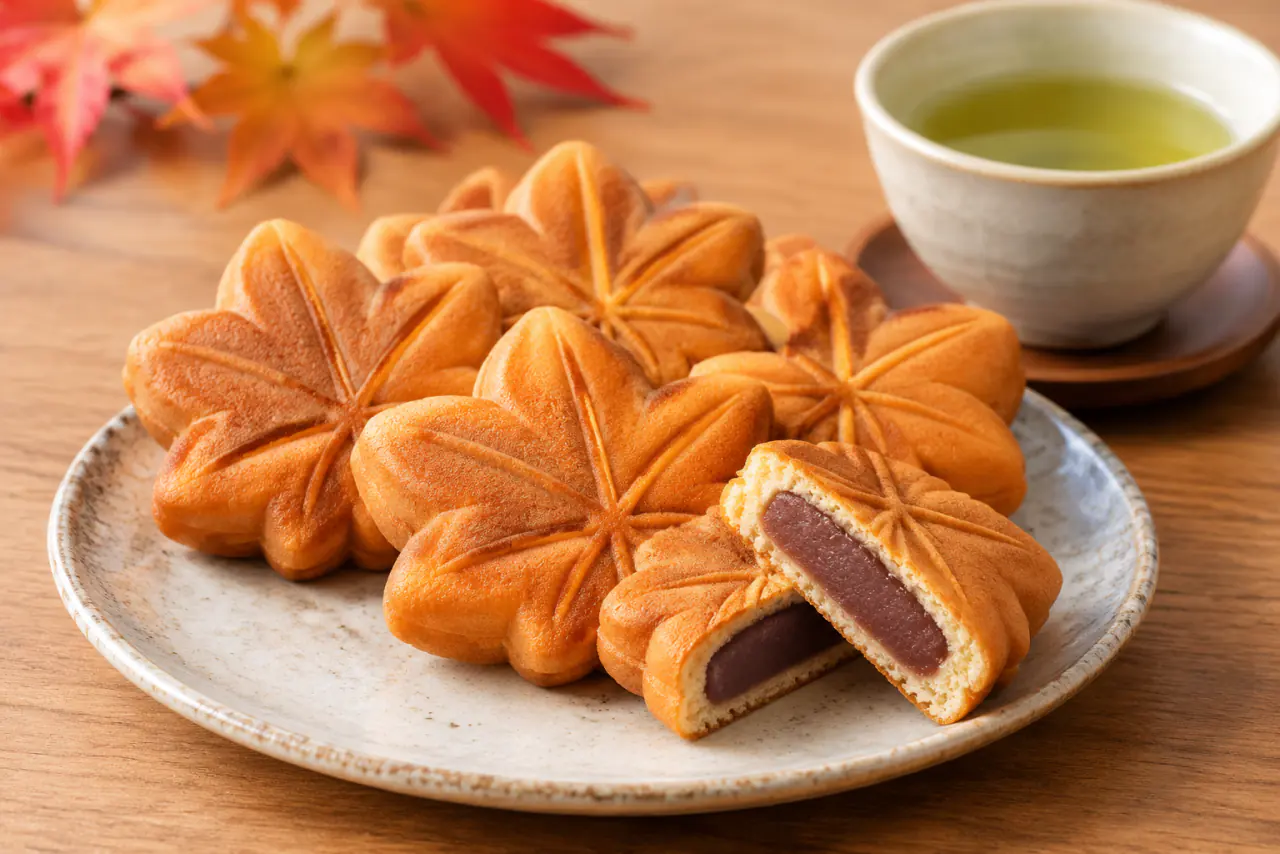
Momiji manju
These small maple-leaf-shaped cakes traditionally contain red bean paste, but you can also find flavors such as custard, matcha, and cheese. Miyajima sells freshly baked versions, as well as battered and deep-fried agemomiji. Eat them hot.
Omotesando Shopping Street on Miyajima and the souvenir area at Hiroshima Station
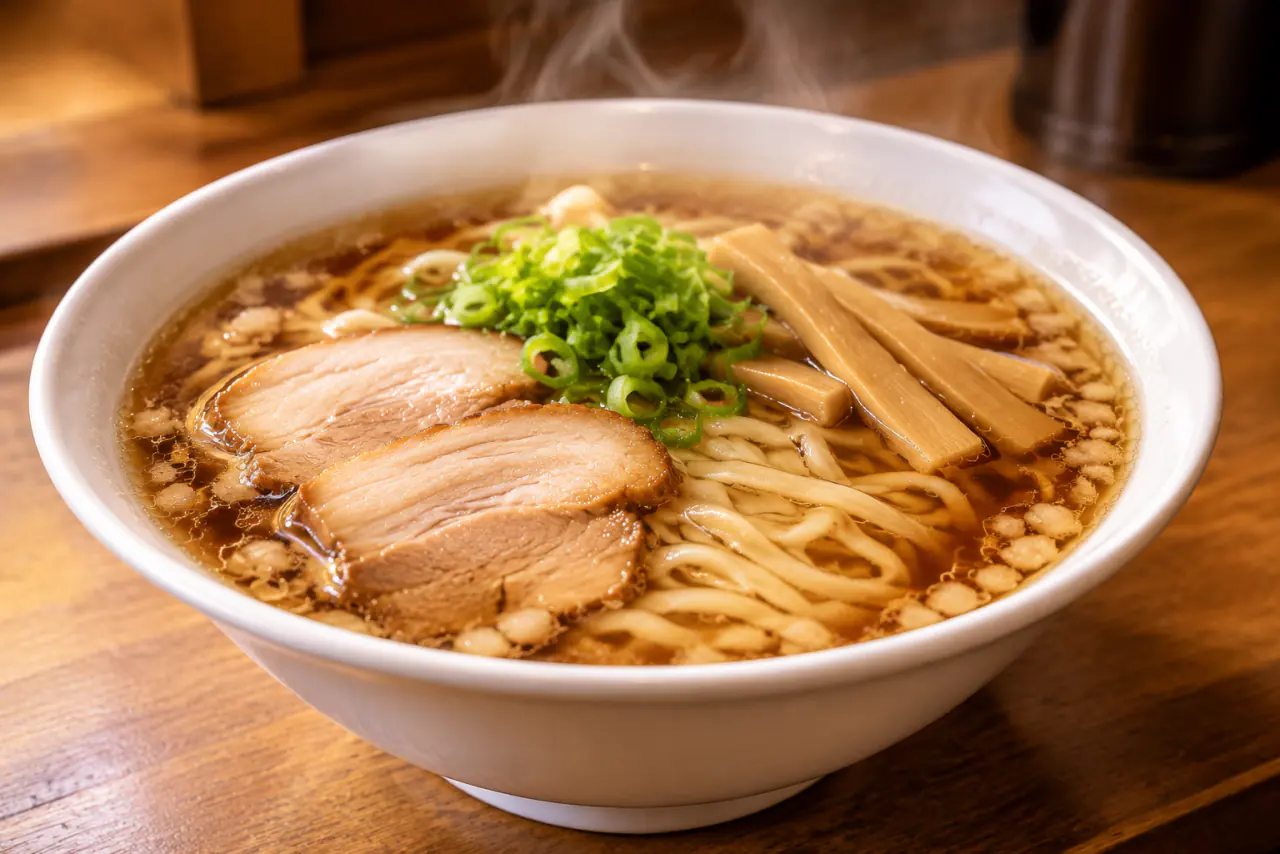
Onomichi ramen
This ramen has a clear soy sauce broth dotted with pork back fat and flat noodles. It tastes lighter than it looks. A bowl is just the thing after walking Onomichi's slopes.
Around the area between Onomichi Station and Onomichi Hondori Shopping Street · About ¥800–1,100 per bowl
Getting there · Where to stay
The Sanyo Shinkansen takes about 1 hour 20–40 minutes from Shin-Osaka to Hiroshima Station, depending on the train
The airport bus takes about 50 minutes to Hiroshima Station Shinkansen Exit and costs about ¥1,500
The Shinkansen takes about 1 hour from Hakata to Hiroshima Station
Take the JR Sanyo Line about 30 minutes to Miyajimaguchi, then take a ferry for about 10 minutes. The ferry costs about ¥200, plus an admission tax of about ¥100
For a first visit, stay around Hiroshima Station, where you can catch the Shinkansen, airport buses, and JR trains to Miyajima. To see the great torii gate without the crowds, spend a night on Miyajima. Onomichi is a good starting point for a Shimanami Kaido cycling trip.
Know this before you go
- The ferry to Miyajima charges an additional admission tax of about ¥100. It is collected with the ferry fare, or deducted automatically when you tap a transit card at the gate.
- The keep at Hiroshima Castle closed on March 22, 2026. You can no longer go inside, but you can view it from outside and explore Ninomaru.
- Streetcars operated by Hiroden are the easiest way to get between sights in the city. Transit cards can be used directly.
- Staying overnight on Miyajima lets you see the great torii gate in the quiet of evening and early morning. It is a much better experience than a day trip.