Cloudborne Travel
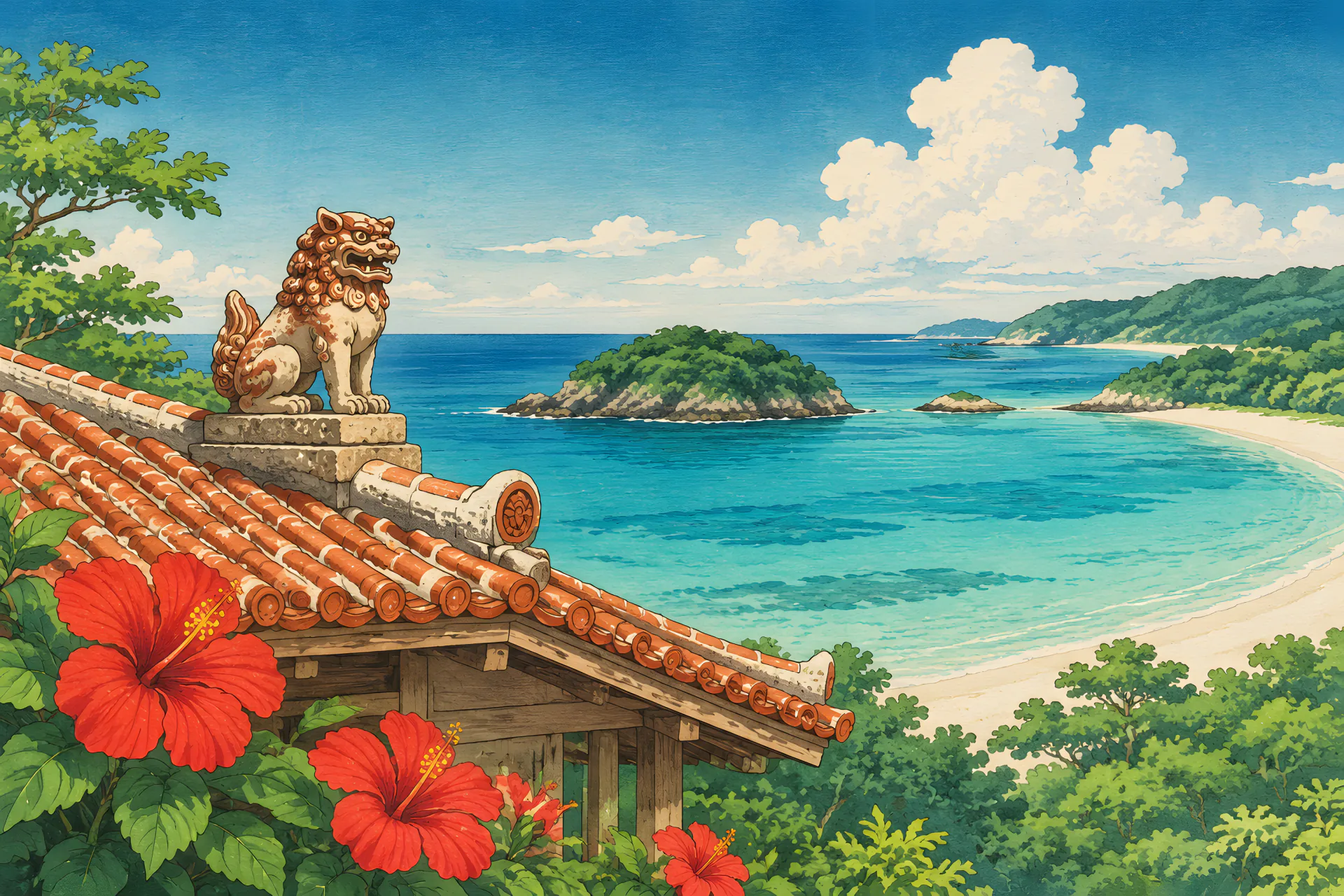
Okinawa is Japan's southernmost prefecture, made up of more than 100 islands. It was once the independent Ryukyu Kingdom, so its architecture, food, and music are quite different from mainland Japan. Naha and Ryukyu Kingdom sites are in the south of the main island. The central area has U.S. military bases and resort hotels, while the north is home to Okinawa Churaumi Aquarium and clearer water.
For a first visit, stay in Naha. Use the monorail and buses to explore the south, then join one or two day tours to the north. Whether you can drive in Japan depends on your licence and the required documents, so check the official rules; many online self-drive guides may not apply. For even bluer water, fly about 1 hour from Naha to Ishigaki Island or Miyakojima. From Ishigaki, you can also take a ferry to Taketomi Island.
April and October–November are the most comfortable months. The swimming season runs roughly from April–October. Typhoons are common from July–October, and you can see Taiwan cherry blossoms in January–February.
Monthly weather
Based on NahaBest time to visit Monthly precipitation (mm) Open-Meteo (ERA5), 1996–2025 average
| Month | Average high (°C) | Average low (°C) | Monthly precipitation (mm) | Days with 1 mm or more of precipitation |
|---|---|---|---|---|
| Jan | 19.1 | 17 | 97 | 11 |
| Feb | 19.3 | 17.2 | 97 | 11 |
| Mar(Good time to visit) | 20.4 | 18.3 | 121 | 12 |
| Apr(Good time to visit) | 22.1 | 20.4 | 151 | 12 |
| May(Good time to visit) | 24.5 | 23.1 | 226 | 15 |
| Jun(Good time to visit) | 26.9 | 25.7 | 228 | 16 |
| Jul(Good time to visit) | 28.6 | 27.4 | 137 | 12 |
| Aug(Good time to visit) | 28.7 | 27.4 | 190 | 15 |
| Sep(Good time to visit) | 28 | 26.7 | 202 | 15 |
| Oct(Good time to visit) | 26.3 | 24.9 | 143 | 12 |
| Nov(Good time to visit) | 23.9 | 22.2 | 119 | 12 |
| Dec | 20.8 | 18.9 | 129 | 12 |
Sights
-
 1
Shuri Castle
首里城
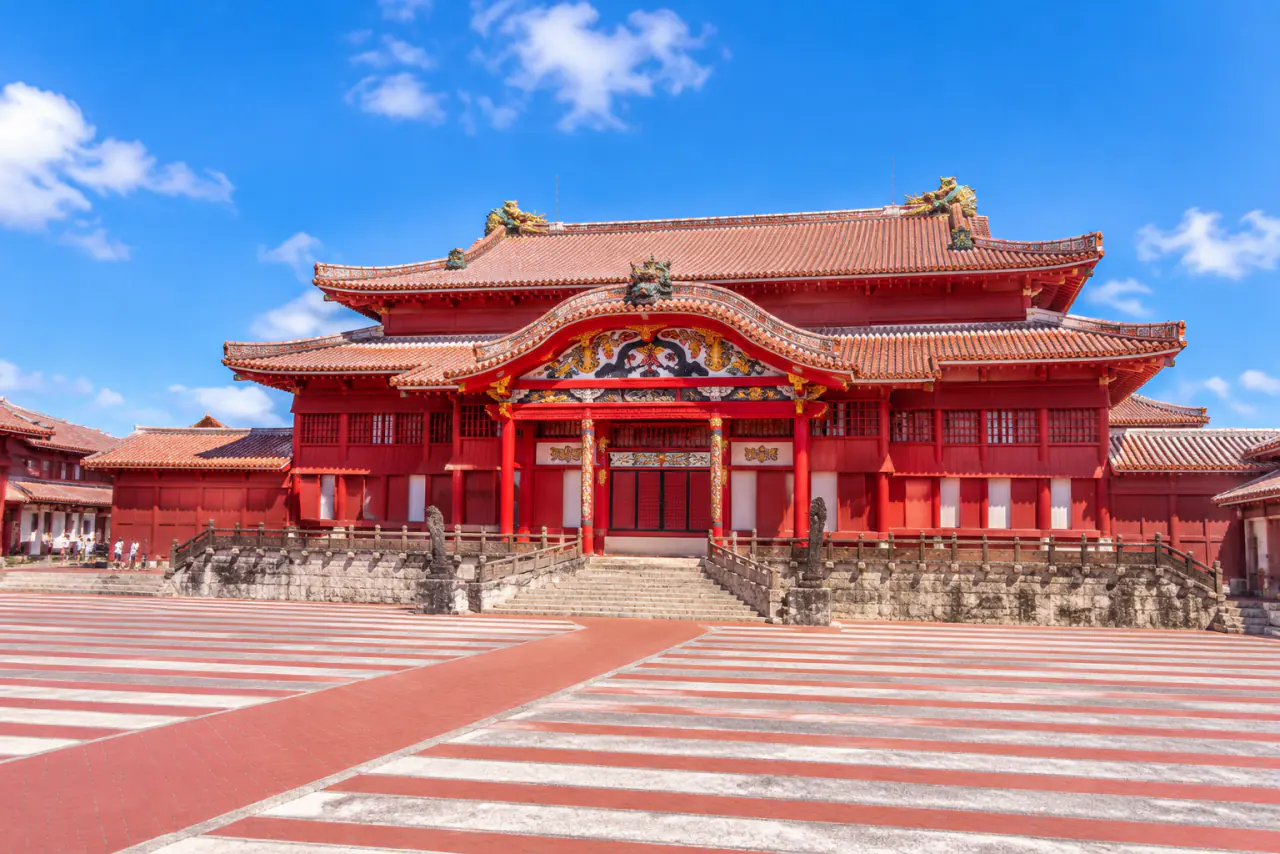
The royal castle of the Ryukyu Kingdom. A fire destroyed the Seiden in 2019, and the reconstructed main hall will reopen on November 23, 2026. The red palace blends Chinese and Japanese styles, while the castle walls curve along the hillside. Shuri Castle Ruins and Sonohyan-utaki Ishimon are part of a World Heritage Site.
Online reservations are required for a 30-minute time slot inside the main hall. Same-day tickets may be available if there are openings. Shuri Station is about a 15–20-minute walk away.
-
 2
Kokusai Street and Makishi Market
国際通り・第一牧志公設市場 · Kokusai Street & Makishi Market
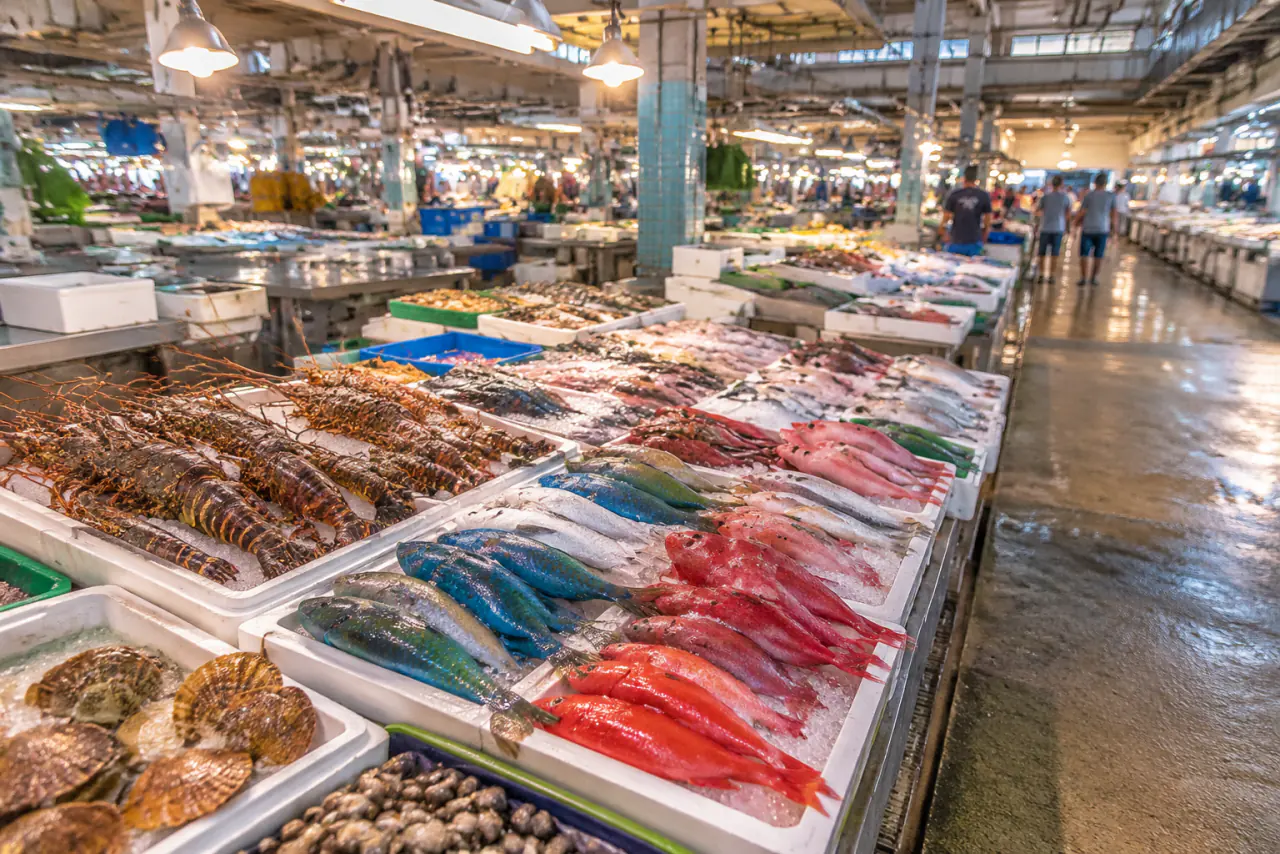
Naha's liveliest street stretches for about 1.6 kilometers, lined with souvenir shops, restaurants, and bars. Turn onto Market Main Street, where the First Makishi Public Market sells fish and meat on the first floor. You can take your purchases upstairs and have a vendor cook them for an additional fee. For many visitors, this is their first meal in Okinawa.
Walk from Kencho-mae Station to Makishi Station to cover the full length of the street. Before buying seafood at the market, ask how it is priced.
-
 3
Sefa-utaki
斎場御嶽
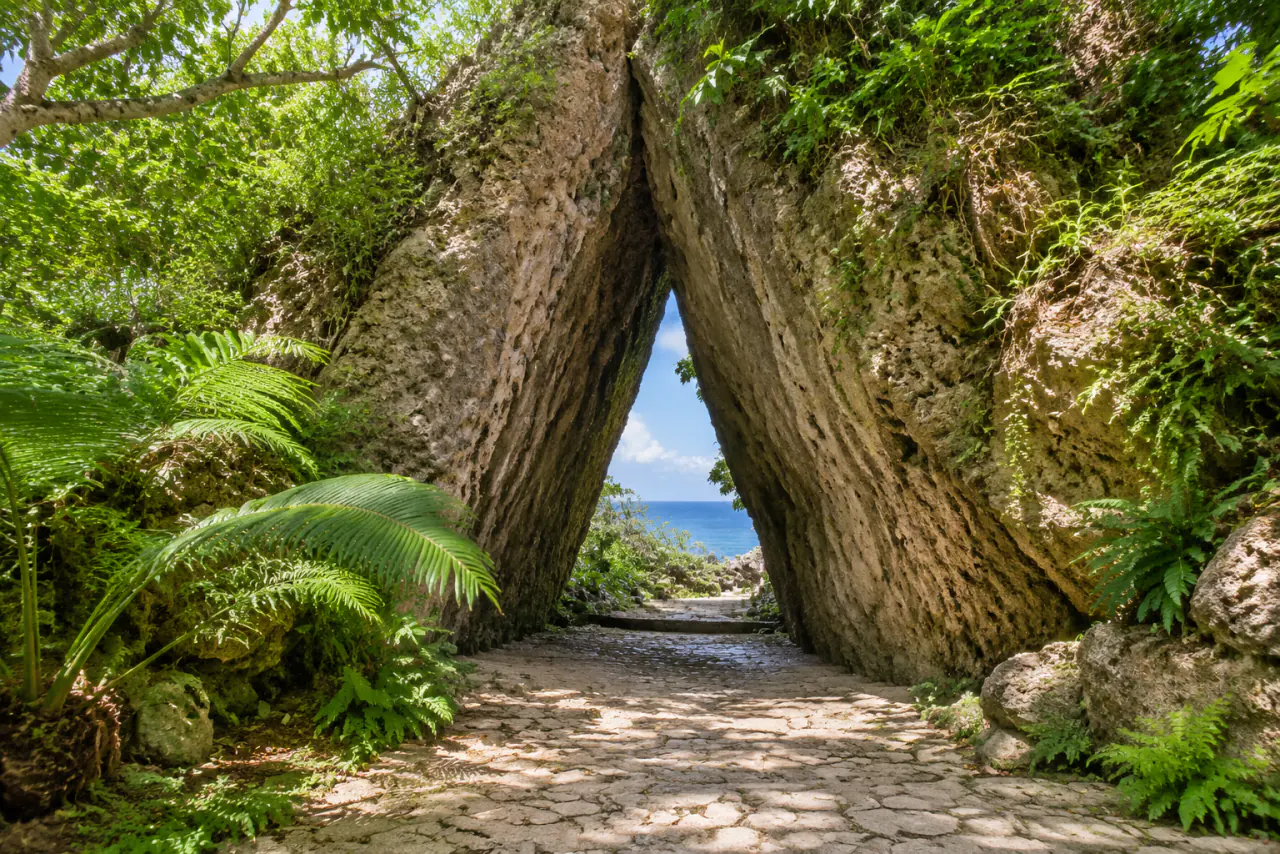
The most sacred site of the Ryukyu Kingdom and a World Heritage Site. Follow a stone path through the forest and giant rocks to a triangular opening formed by two leaning boulders. From inside, you can look out toward Kudaka Island, known as the island of the gods. People still come here to pray, so keep quiet during your visit.
Buy a ticket at the Nanjo City Regional Products Center, then walk about 10 minutes to the entrance. The site closes for two periods each year, so check before you go.
-
 4
Okinawa Churaumi Aquarium
沖縄美ら海水族館
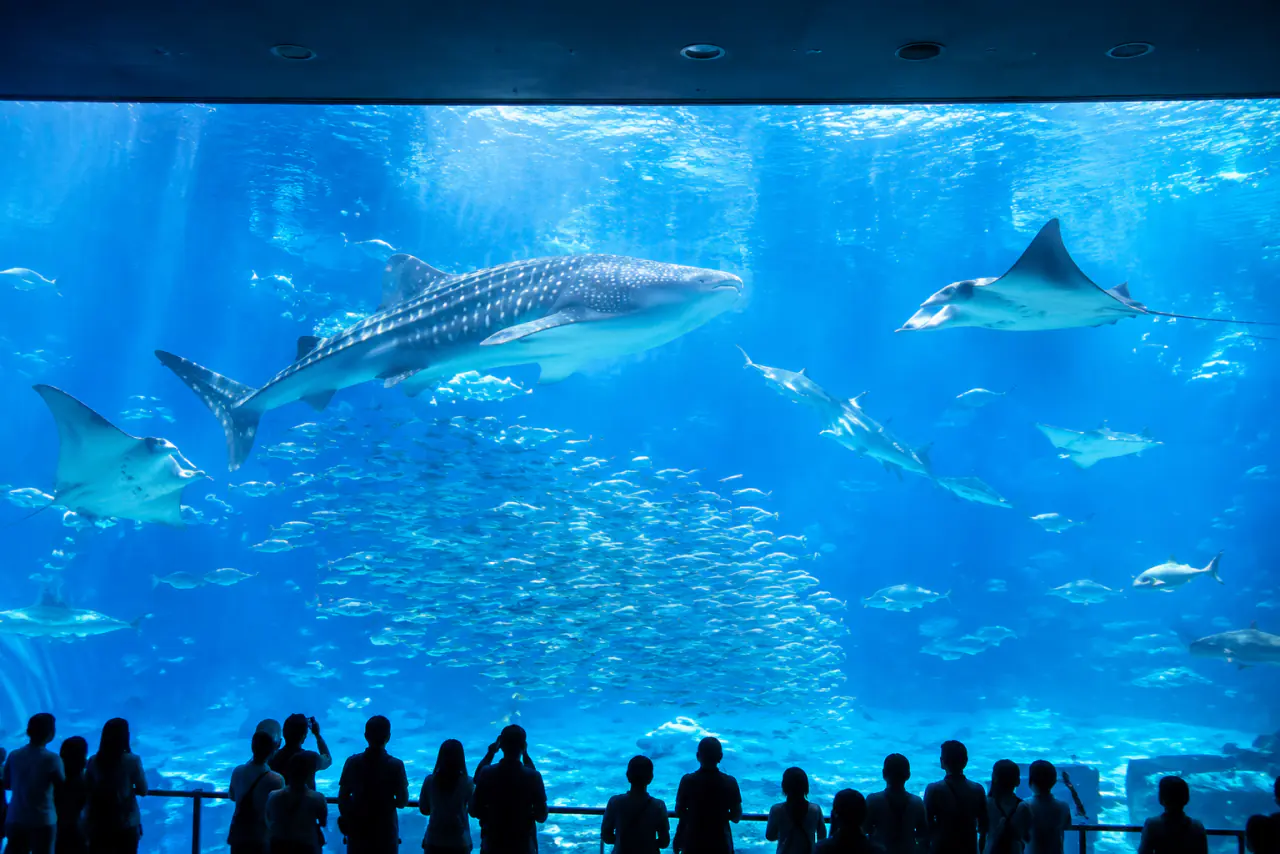
The main attraction is the massive Kuroshio Sea tank, where whale sharks and giant manta rays glide slowly past. You can sit and watch for a long time. The aquarium is inside Ocean Expo Park, which is free to enter and also has dolphin shows and Emerald Beach. It is more than 2 hours by car from Naha, so combine it with Kouri Island and Nakijin Castle Ruins in one day.
Highway buses run directly from Naha Airport and take about 2.5 hours. The main tank has scheduled feeding talks, so check the times when you enter.
-
 5
Kouri Island
古宇利島
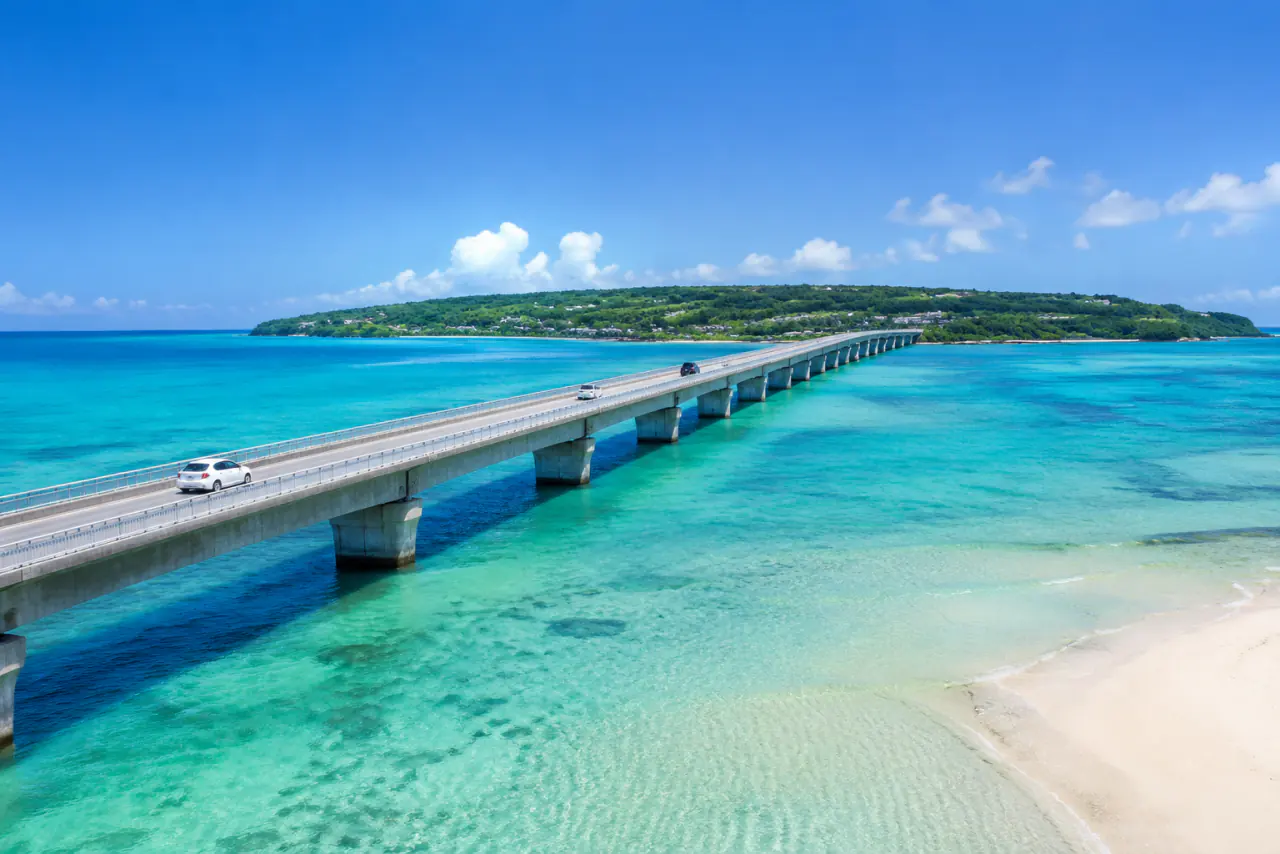
This small island is linked to the main island by a bridge nearly 2 kilometers long. As you cross, clear pale-blue water stretches out on both sides. It is one of Okinawa's classic views. A beach on the north side has a heart-shaped rock, and the island has plenty of seaside cafés and food trucks. Half a day is enough to drive around it.
Public transportation is inconvenient. Whether you can drive depends on your licence and the required documents, so joining a northern Okinawa day tour is the easiest option. Most tours stop here.
-
 6
Cape Manzamo
万座毛
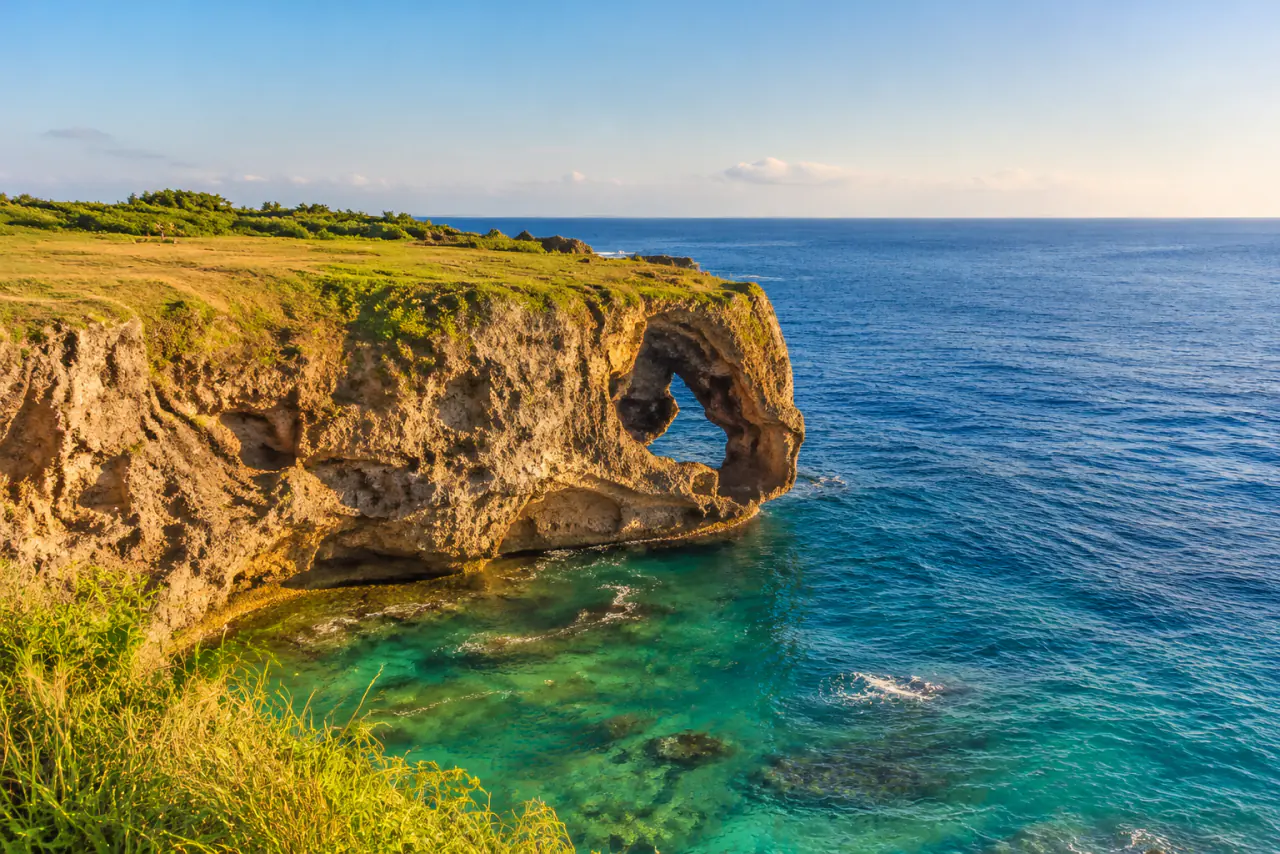
A flat coral plateau on the coast of Onna Village. Legend says that a Ryukyu king praised it as a place where 10,000 people could sit. At the tip, a cliff resembling an elephant's trunk reaches into the sea. From above, the water changes color in layers. With many resort hotels nearby, it is best visited at sunset.
Many northern Okinawa day tours stop here. If you are staying in Onna Village, walk over in the evening for sunset.
-
 7
Nakijin Castle Ruins
今帰仁城跡
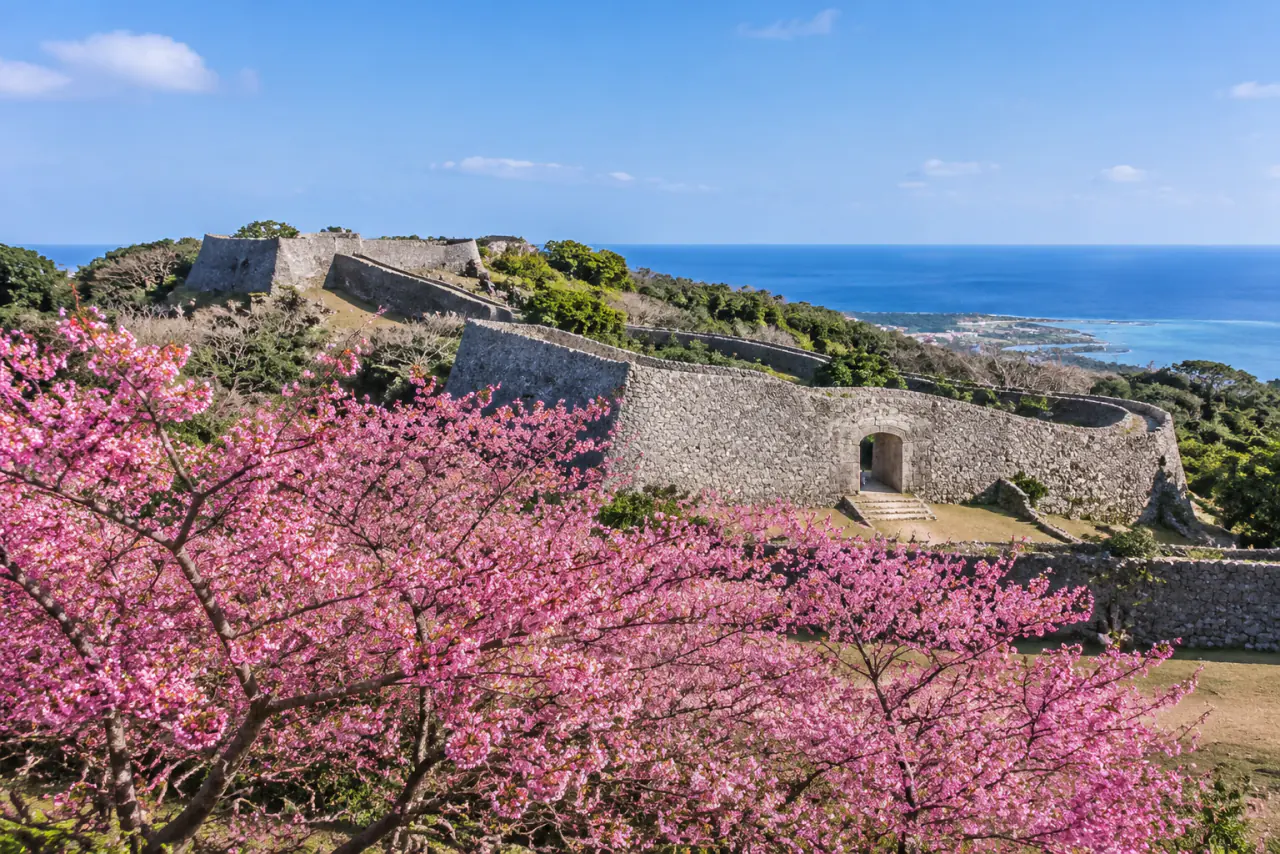
The castle of the king of Hokuzan before the Ryukyu Kingdom was unified. Its limestone walls rise and curve along the hillside, with views of the distant sea. No buildings remain inside, only the walls and sacred sites. It is a World Heritage Site. From late January to early February, deep-pink Taiwan cherry blossoms fill the area in front of the gate.
It is close to Okinawa Churaumi Aquarium, so visit both on the same day. Weekends are crowded during cherry blossom season, so try to go in the morning.
-
 8
Kabira Bay, Ishigaki
川平湾
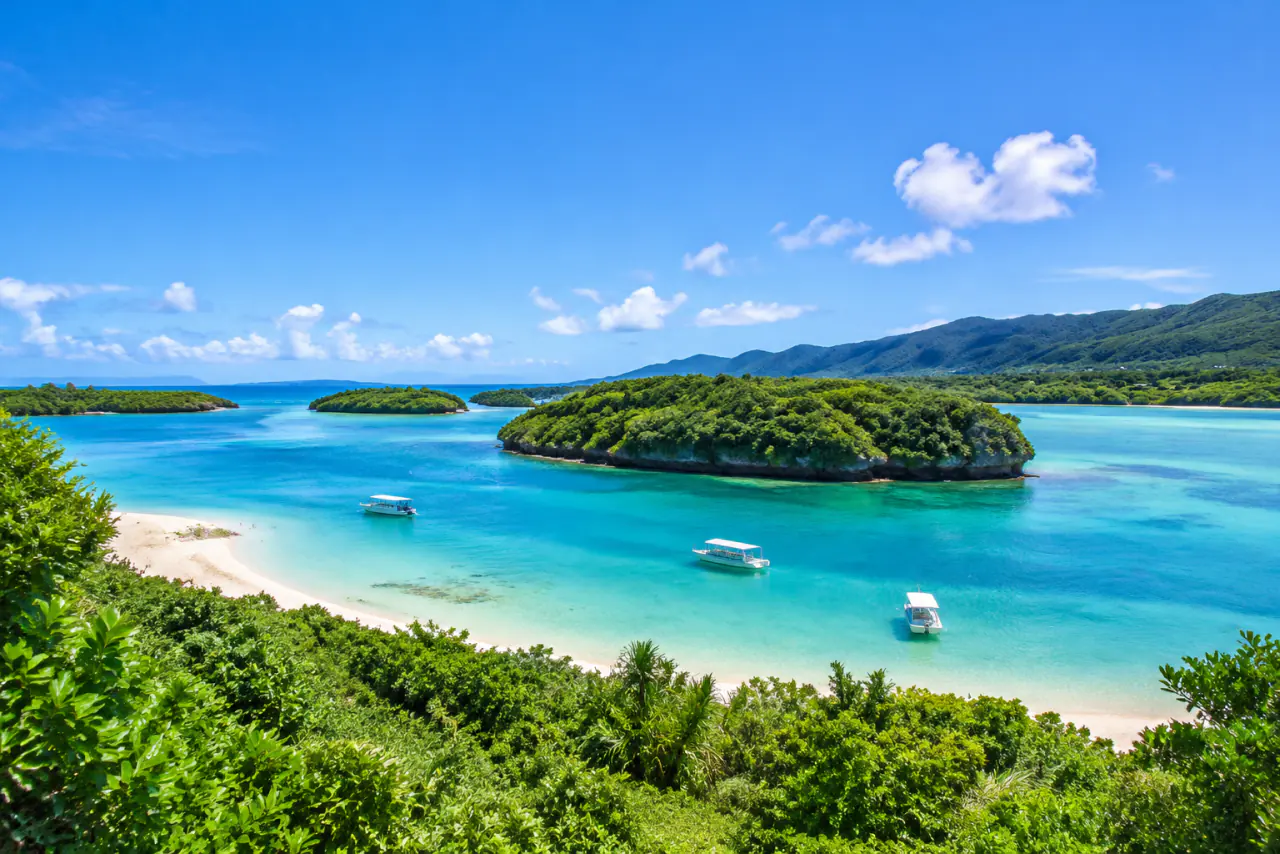
A bay in northern Ishigaki Island, with white sand and layers of blue-green water. The colors are brightest in good sunlight. Swimming is prohibited in the bay, but you can take a glass-bottom boat to see coral and tropical fish. Each trip takes about 30 minutes, making it suitable for non-swimmers.
Buses run from central Ishigaki to Kabira, but services are infrequent. The water looks best around midday on sunny days.
-
 9
Taketomi Island
竹富島
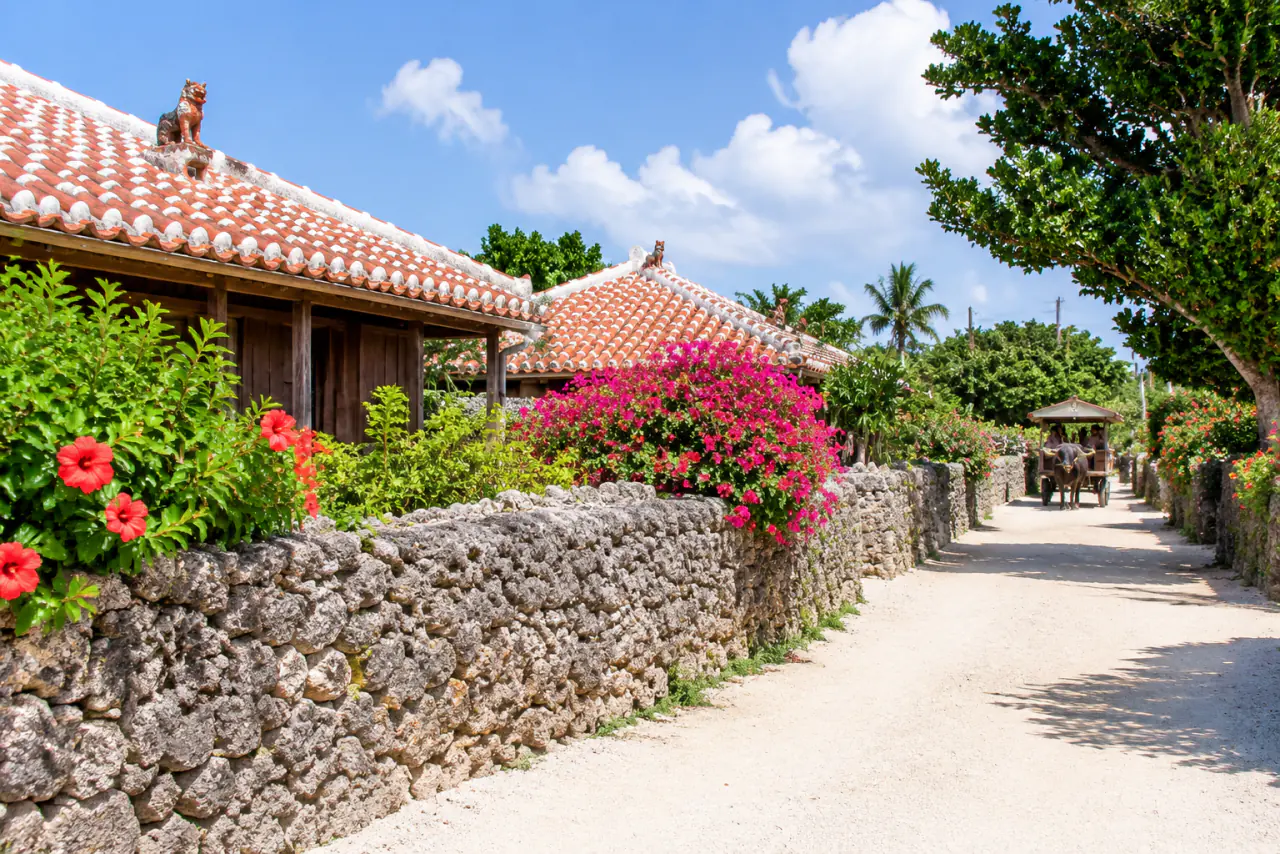
A small island just over 10 minutes by ferry from Ishigaki Port. Red-tile roofs, low coral-stone walls, and white-sand paths preserve the traditional Yaeyama village landscape. Take a slow water buffalo cart ride around the village, or rent a bicycle to visit Nishi Pier at sunset and search for star sand on the beach. It works as a half-day or full-day trip.
There are many ferries, but confirm the last return sailing in advance. The white-sand paths can be slippery by bicycle, so ride slowly.
-
 10
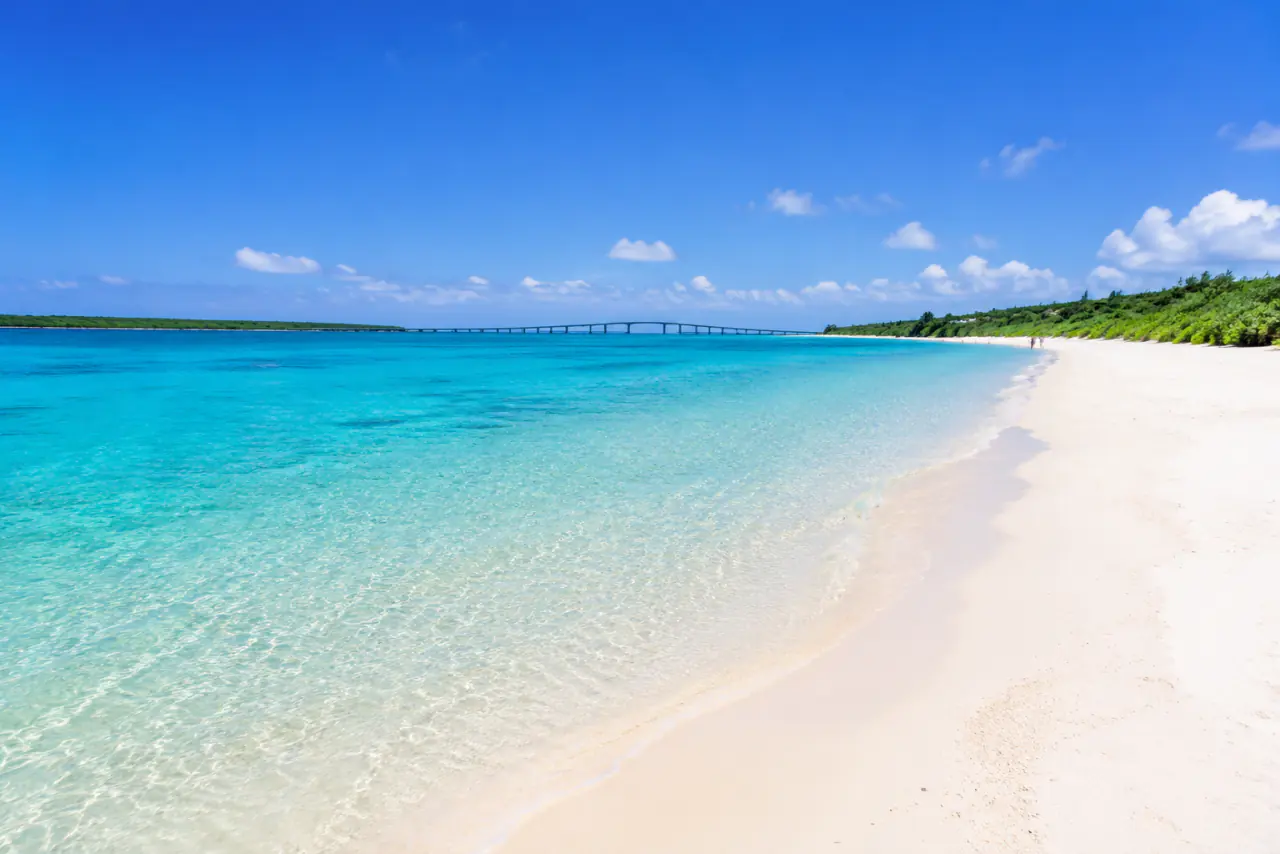
Yonaha Maehama Beach, Miyakojima
与那覇前浜
A roughly 7-kilometer white-sand beach on the south side of Miyakojima. Its water is famous as Miyako blue and is often ranked among Japan's most beautiful beaches. Nearby, the 3.5-kilometer Irabu Bridge links Miyakojima and Irabu Island. It is Japan's longest toll-free bridge, with shades of blue stretching all the way across.
Buses are infrequent on the island. Whether you can drive depends on your licence and the required documents, so consider hiring a car with a driver, renting an electric-assist bicycle, or joining an island day tour.
What to eat
Okinawa soba
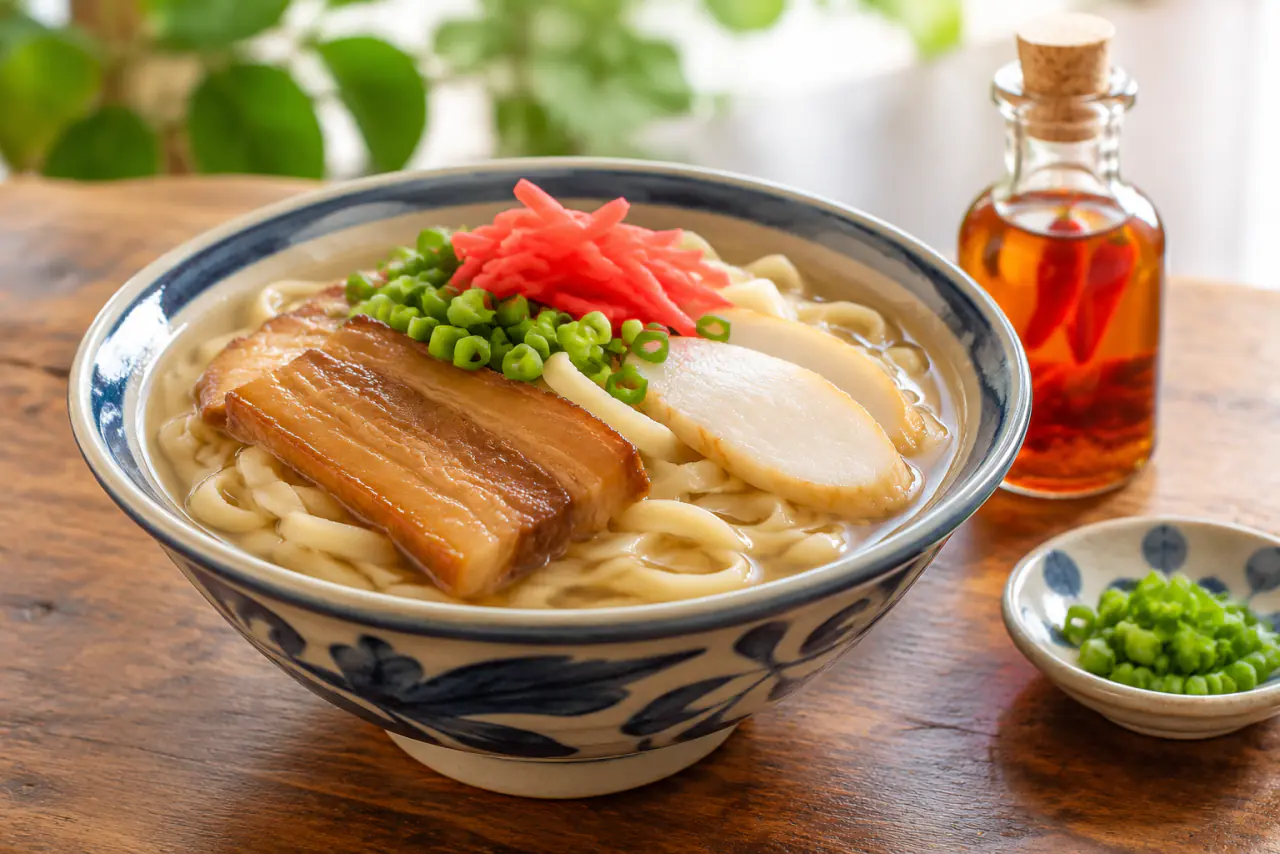
Despite its name, this is a thick wheat noodle rather than buckwheat soba. The broth combines pork bones and bonito, topped with tender braised pork belly or pork ribs. Locals season it with a few drops of awamori infused with chili peppers.
Noodle shops and diners in central Naha and around the main island · About ¥700–1,200 per bowl
Goya champuru
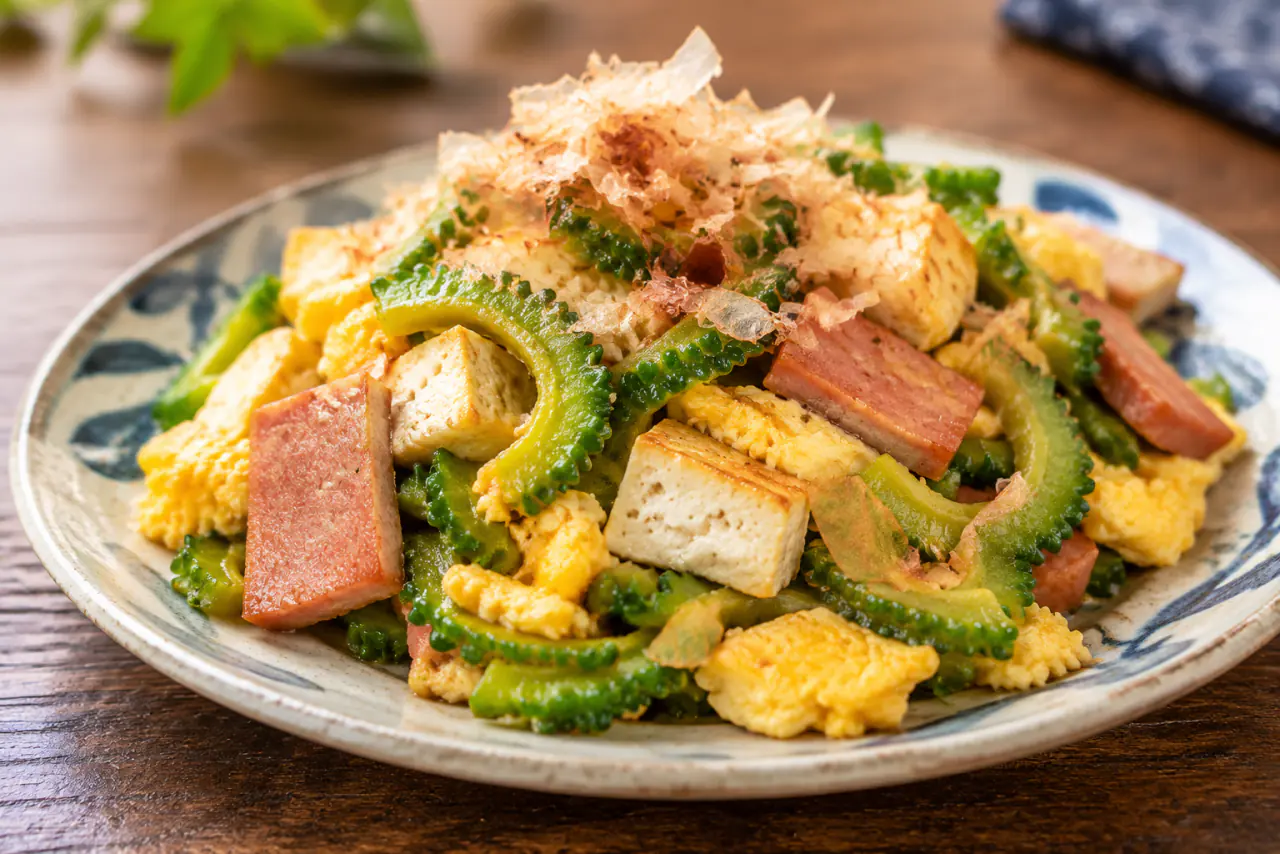
Bitter melon stir-fried with tofu, eggs, and luncheon meat. The eggs and tofu soften the bitterness, making it a satisfying dish with rice. In Okinawan, champuru means stir-fried together.
Okinawan restaurants and izakayas in Naha · About ¥700–1,000 per serving
Taco rice
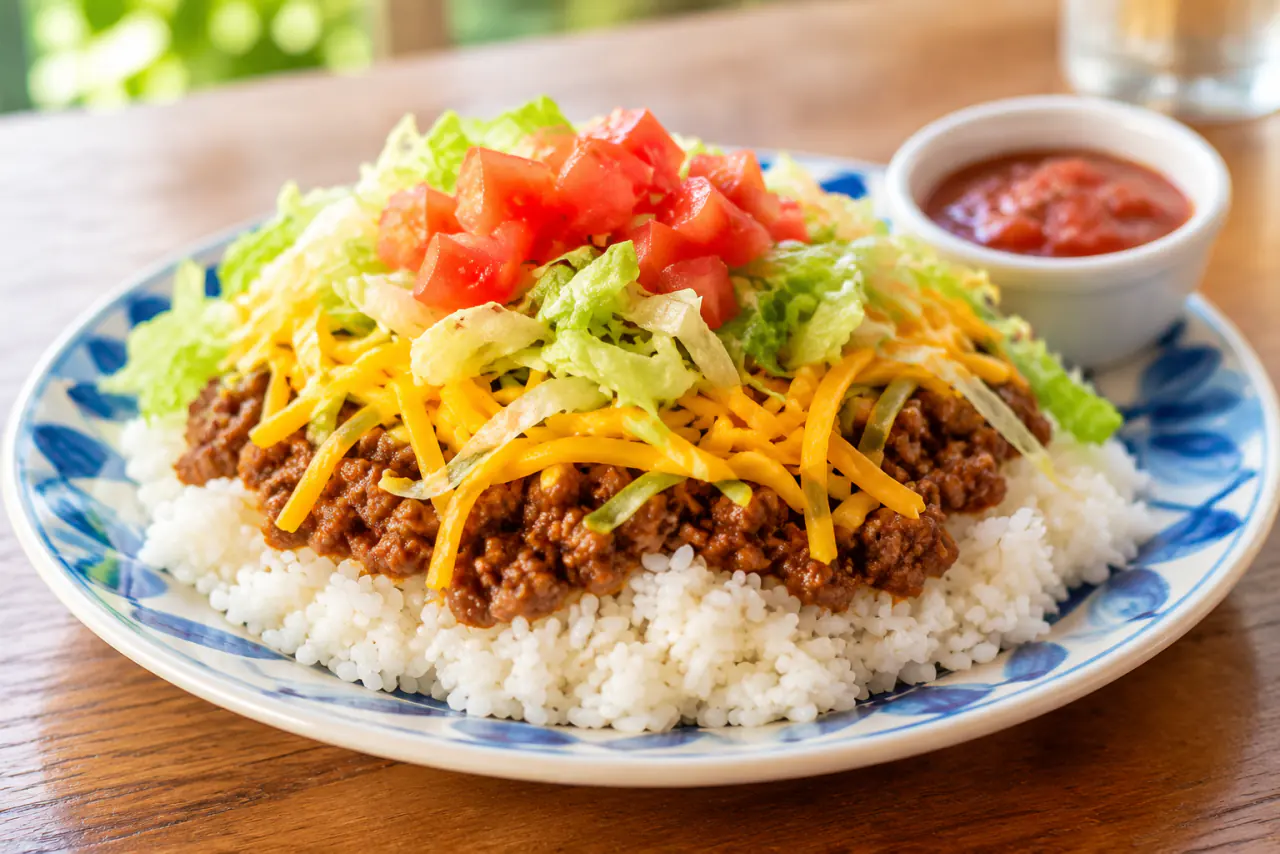
A fusion dish born near the U.S. military bases: seasoned ground meat, cheese, lettuce, and tomatoes from a Mexican taco are served over white rice, then topped with salsa. Portions are large, and the dish is cheap and quick when you are short on time.
Fast-food restaurants and diners in Kin Town and central Naha · About ¥600–1,000 per serving
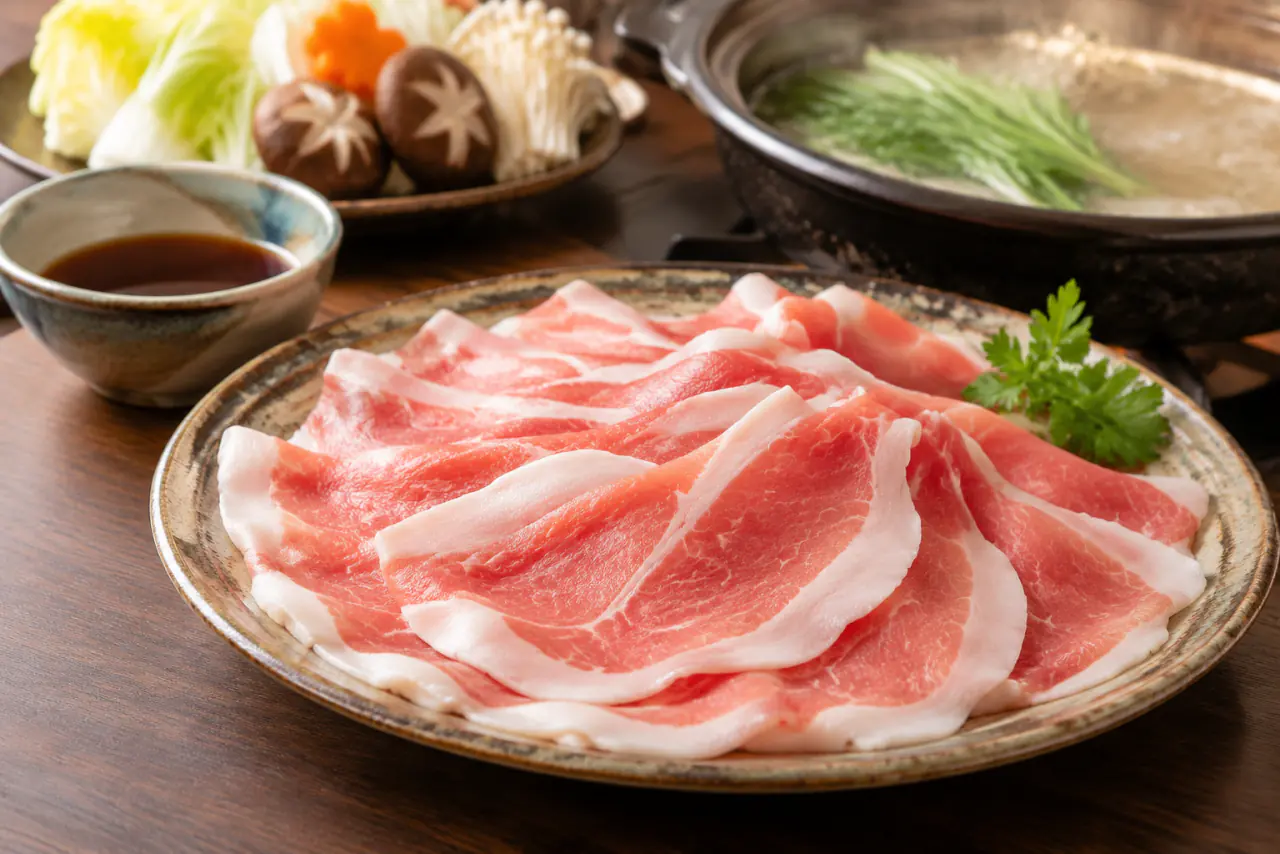
Agu pork
A local Okinawan breed of black pig. It has plenty of fat without being greasy, with a slightly sweet flavor. It is excellent in hot pot or grilled, and menus marked アグー feature it.
Yakiniku and hot-pot restaurants in Naha and around the main island · About ¥3,000–6,000 per person
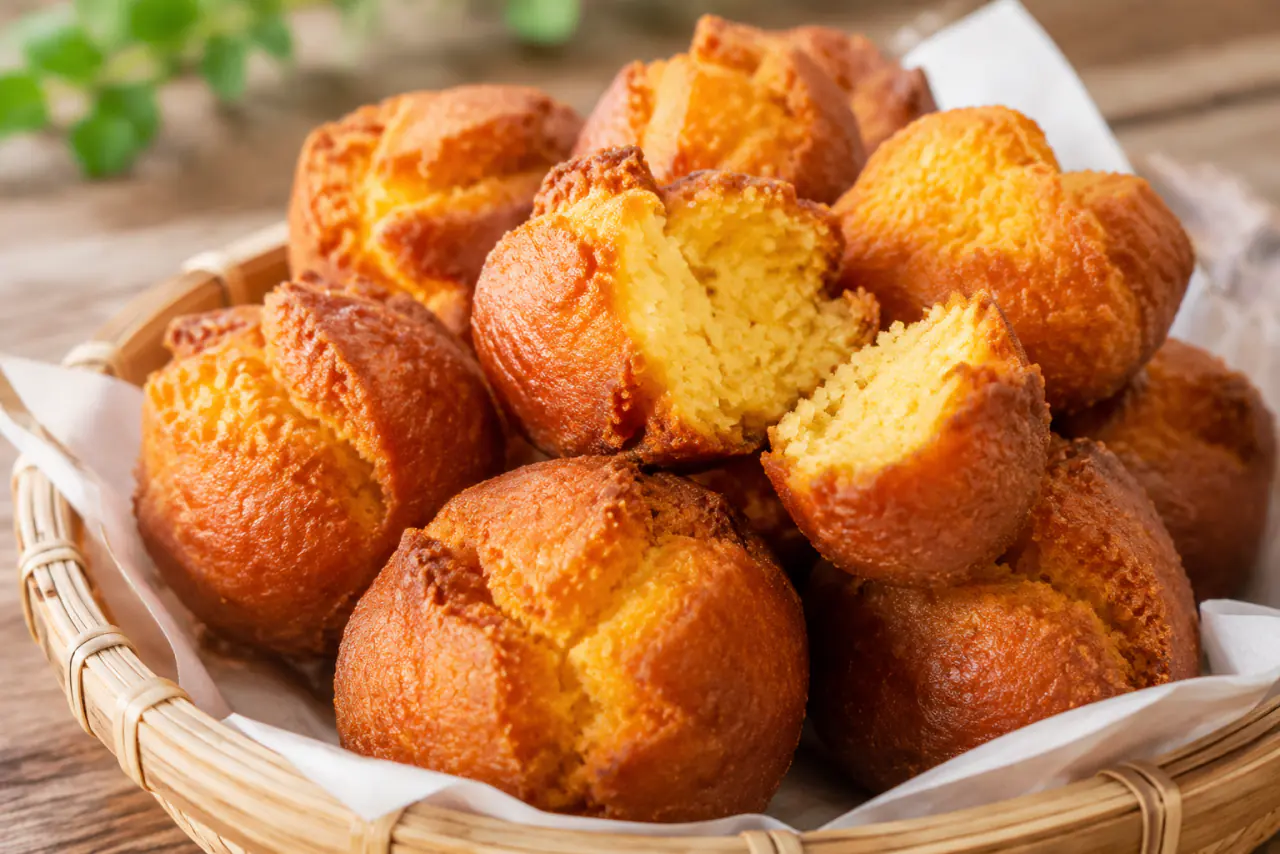
Sata andagi
Okinawan fried doughnuts with a crisp outside and dense center. The cracks formed during frying look like a smiling face. They are best fresh, but keep well after cooling and make a good souvenir.
Snack shops and souvenir stores around Kokusai Street and Makishi Market · About ¥100–200 each
Getting there · Where to stay
The monorail takes about 13 minutes to Kencho-mae Station (Kokusai Street) and costs about ¥290. Contactless credit card payment is accepted.
All have direct flights to Naha, taking about 1.5–2.5 hours.
Flights to Naha take about 2–3 hours. Low-cost carriers offer many flights, usually making this much more convenient than combining the Shinkansen with a ferry.
Flights from Naha to Ishigaki and Miyako each take about 1 hour. There are also direct flights from Tokyo and Osaka.
For a first visit, stay around Kokusai Street or Kencho-mae in Naha. The monorail makes it easy to reach the airport and Shuri. For more time by the sea, spend one or two nights at a resort hotel in Onna Village or Motobu. On the outlying islands, stay near Ishigaki Port for easy ferry access.
Know this before you go
- Whether you can drive in Japan depends on your licence and the required documents. Okinawa can also be explored by monorail, bus, hired car with a driver, or day tour.
- For Okinawa Churaumi Aquarium and Kouri Island, a northern Okinawa day tour is the easiest option and can cover four or five spots in one day.
- Typhoons are common from July–October, and flights and ferries to the outlying islands may be suspended. Leave one buffer day after island trips.
- The monorail 1-day pass costs about ¥1,000 and is valid for 24 hours after purchase. A round trip to Shuri plus one additional ride makes it worthwhile.
- Okinawa's UV levels are very high. Use sun protection in spring and fall, too, and wear a rash guard when snorkeling.